
Perfect B, Doral, FL. | 03.19.26 | 9 min read.
What a Miami Medical Clinic Sees, Treats, and Expects From Recovery
This content is for educational purposes only and does not constitute medical advice. Consult a qualified medical provider before starting any post-surgical treatment.
What Is Fibrosis Post Lipo, and Why Does It Happen?
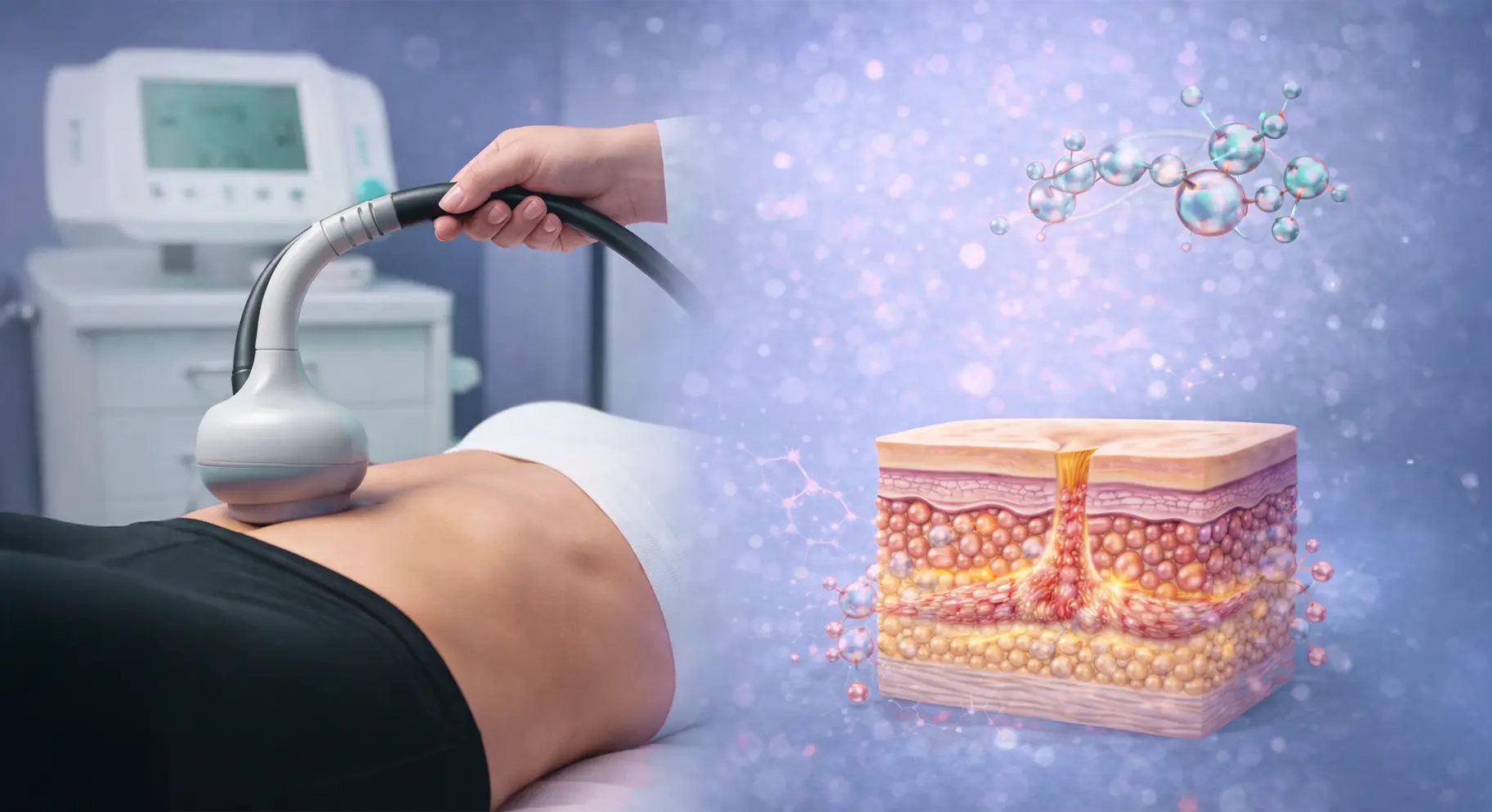
After liposuction, your body launches an aggressive healing response. Collagen floods the treated area, scar tissue forms, and inflammation takes over as the tissue reorganizes itself. For most patients, this process resolves into smooth, even skin. For some, the collagen deposition becomes excessive or uneven, and the result is fibrosis post lipo: hardened, fibrous tissue that sits beneath the surface and doesn’t move the way normal skin does.
Fibrosis is not a complication in the traditional sense. It is part of the normal healing spectrum. But when it becomes prominent, it affects both how you feel (tight, uncomfortable, sometimes tender) and how you look (uneven contour, lumpy texture). With the right clinical approach, it’s highly treatable and, when caught early, often fully reversible.
At our clinic in Doral, FL, post-lipo fibrosis is one of the most common post-surgical concerns we manage. Understanding what it is, how it feels, and how it responds to treatment changes your recovery significantly.
Key Takeaways
- Fibrosis feels firm and rope-like: unlike swelling, which is soft and fluid, fibrosis has resistance you can feel under your fingers.
- Earlier treatment produces faster results: intervention starting 2 to 6 weeks post-op tends to resolve fibrosis more completely than waiting months.
- Lymphatic drainage alone is rarely enough: a combination approach including RF therapy and ultrasound typically produces better outcomes than manual drainage alone.
- 360 lipo and BBL patients present with more widespread fibrosis patterns: these procedures create more systemic inflammation and require longer recovery protocols.
- Even advanced fibrosis at 3+ months can improve: it requires more sessions and patience, but improvement is achievable with consistent clinical care.
Swelling vs. Fibrosis Post Lipo: How to Tell the Difference
Most patients can’t tell the difference between swelling and fibrosis at first, and that confusion often leads to delayed treatment. The distinction matters because they require different interventions.
Swelling after liposuction tends to be soft, fluid-like, and diffuse. Press on it gently and it shifts. It feels almost like a water balloon under the skin. It fluctuates throughout the day, often worse in the morning or after standing for long periods.
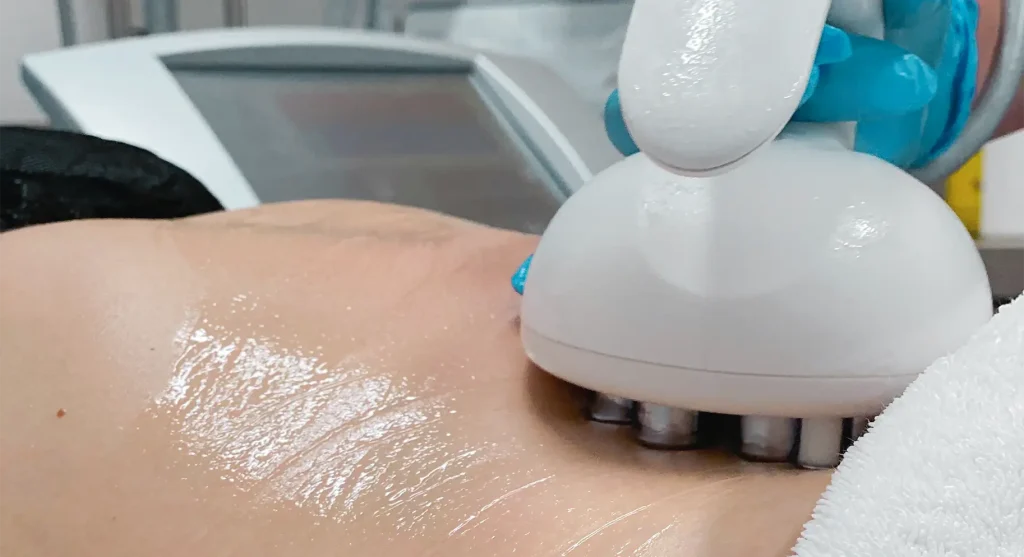
Fibrosis from lipo feels different at the tactile level. It’s firmer, thicker, sometimes rope-like or nodular. When you press on it, there’s resistance. It doesn’t move the way fluid does. It may feel like ridges, uneven bands, or hard patches in specific areas, typically where the cannula passed most frequently during the procedure. That tactile difference during a clinical evaluation is often the clearest diagnostic signal.
Swelling typically peaks around weeks 2 to 4 and then gradually resolves. Fibrosis tends to become more noticeable as swelling fades, which is why patients often come in at weeks 4 to 8 saying “I thought the swelling was going down, but now I feel these lumps.”
Why Fibrosis Forms After Lipo (and Which Procedures Carry Higher Risk)
Liposuction disrupts tissue at a cellular level. The cannula creates micro-channels through the fat layer, and the body seals these channels with collagen-based scar tissue. In ideal healing, this collagen integrates smoothly. When healing is disrupted by inflammation, fluid accumulation, poor compression, or inadequate lymphatic drainage, the collagen can organize irregularly, creating the dense, fibrous bands characteristic of post lipo fibrosis. Patients dealing with post-surgical scarring may also benefit from our scar reduction treatment plan.
Some procedures carry higher fibrosis risk:
- 360 liposuction: treats the full circumference of the torso, which means more tissue disruption and a larger inflammatory response. Patients often present with fibrosis across the flanks, abdomen, and back simultaneously.
- BBL (Brazilian Butt Lift): combines liposuction with fat transfer, creating two healing zones. Fibrosis after BBL can affect both the donor sites and the transferred tissue area.
- Tummy tuck with lipo: layering surgical excision with liposuction increases healing complexity and elevates fibrosis risk, particularly in the lower abdomen.
- High-definition lipo: because it sculpts close to the muscle fascia, the cannula passes through layers more aggressively, increasing the likelihood of irregular collagen deposition.
How a Medical Clinic Diagnoses Post Lipo Fibrosis
At Perfect B in Doral, a post-lipo evaluation starts with a hands-on clinical assessment. We palpate the treated area systematically, feeling for bands, nodules, and areas of hardness that are disproportionate to surrounding tissue. The texture, depth, and distribution of firmness all inform the treatment plan.
- Stage of healing: early fibrosis responds differently than established fibrosis at 3+ months.
- Procedure type: knowing whether the patient had 360 lipo, standard abdominal lipo, or a BBL changes the clinical picture entirely.
- Compression compliance: patients who stopped wearing their compression garment early often present with more pronounced fibrosis in specific zones.
- Lymphatic flow assessment: areas where fluid is not moving efficiently tend to develop more significant fibrosis over time.
How to Treat Fibrosis After Lipo: The Combination Protocol
Clinics that offer only lymphatic drainage are working with one tool when three are available. At Perfect B, we use a staged combination protocol that layers interventions based on what the tissue needs at each phase of healing.
Manual Lymphatic Drainage (MLD)
This is the foundation of any post-lipo recovery program. MLD uses gentle, rhythmic pressure to stimulate lymphatic vessel contraction, moving fluid out of the treated area and reducing the inflammatory load that contributes to fibrosis formation. It works best when started early, within 2 to 4 weeks post-op once the surgeon clears the patient.
Radiofrequency (RF) Therapy
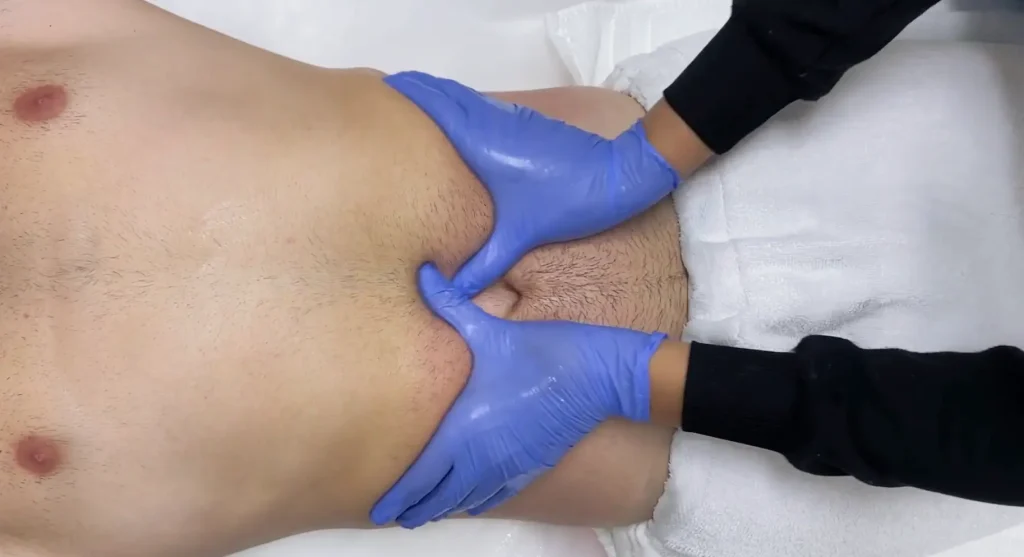
RF energy heats the deep dermis and subcutaneous tissue, which serves two purposes: it softens existing fibrotic bands by disrupting the hardened collagen network, and it stimulates new collagen synthesis that integrates more evenly. For patients with established fibrosis, RF is often the most impactful tool in the protocol. See our skin tightening treatment plan for the full RF approach we use at our Doral clinic. Multiple sessions are typically needed, spaced 1 to 2 weeks apart. A peer-reviewed study in the Journal of Cosmetic Dermatology demonstrating that radiofrequency therapy significantly improves post-surgical skin texture, firmness, and subcutaneous tissue quality in treated patients.
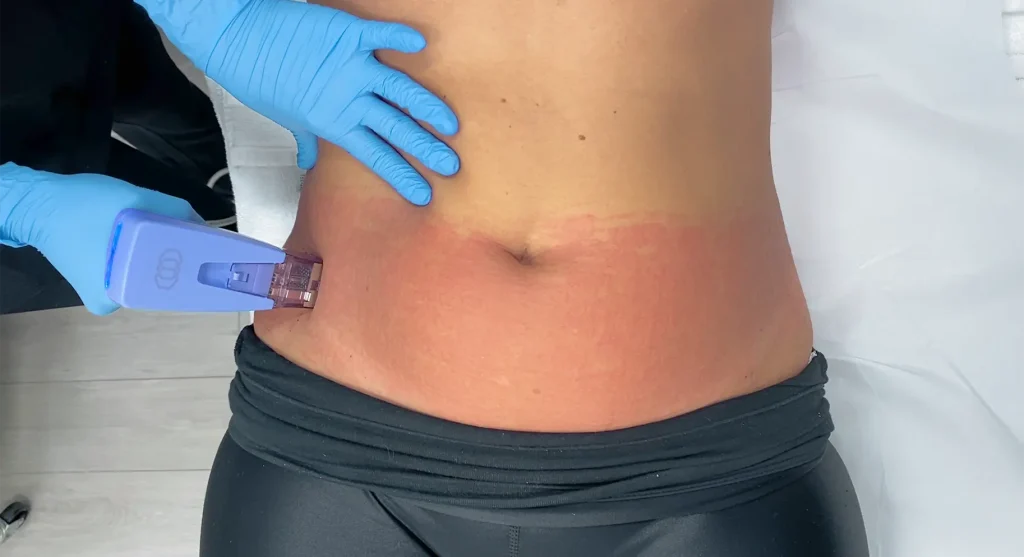
Therapeutic Ultrasound
For denser, more organized fibrotic tissue, ultrasound therapy provides mechanical disruption at the tissue level. It reaches deeper than manual techniques and can break down fibrotic adhesions that are resistant to surface-level treatment. In cases of advanced fibrosis from lipo at 3 months or beyond, ultrasound often forms the first phase of treatment before RF is introduced.
Compression and Home Protocol
Compression garments are not optional. They reduce fluid accumulation between sessions, support lymphatic flow, and help the tissue settle in a smooth, even pattern. Patients who wear their compression consistently between treatment sessions show faster improvement. At home, gentle self-massage along lymphatic pathways can extend the benefit of in-clinic sessions. Healthline’s comprehensive guide to liposuction recovery, covering compression garment use, lymphatic drainage, and what to expect at each stage of post-surgical healing.
When to Start Treatment: Timing Is a Clinical Decision
Most patients benefit from starting post-op care within 2 to 4 weeks of surgery, once the surgeon has cleared them for soft tissue work. At this stage, the lymphatic system is overwhelmed, early fibrosis is forming, and intervention can redirect the healing process before patterns become established.
Patients who come in at 6 to 12 weeks are dealing with more organized fibrosis. Treatment works, but it requires more sessions. Patients at 3 months or beyond are not beyond help. Even advanced post lipo fibrosis responds to consistent treatment over a longer protocol. The risk of starting too early, before 10 to 14 days post-op for most procedures, is that aggressive manual work can increase inflammation and disrupt healing tissue. Surgeon clearance is always the first step.
What to Expect at 4 Weeks, 8 Weeks, and 3 Months
Weeks 2 to 4: Fluid Management Phase
Swelling is still present and lymphatic drainage is the priority. Fibrosis may be beginning to organize beneath the surface but is still soft enough to influence significantly. Patients often feel tenderness and notice uneven texture at this stage.
Weeks 4 to 8: Fibrosis Becomes Palpable
As swelling resolves, fibrosis becomes more noticeable. This is often when patients feel the lumps and hardness most acutely. RF therapy is typically introduced during this phase alongside continued drainage. Patients usually report visible softening within 3 to 4 sessions.
Month 3 and Beyond: Advanced Fibrosis Protocol
Full resolution at this stage is achievable but requires a longer arc. Ultrasound and RF combination protocols drive the most improvement. Most compliant patients see 60 to 80 percent improvement in texture and firmness. Full resolution typically takes 4 to 6 months from the date of surgery, regardless of when treatment started.
Frequently Asked Questions About Post-Lipo Fibrosis
How do I know if I have fibrosis post lipo or just normal swelling?
Swelling feels soft and fluid, like pressure that shifts when you press. Fibrosis feels firm, resistant, and does not move the same way. It tends to feel like specific bands, ridges, or hard patches rather than generalized puffiness. If you notice harder areas after weeks 3 to 4 post-op, a clinical evaluation can confirm whether it’s fibrosis.
Can fibrosis from lipo resolve on its own without treatment?
Mild cases sometimes soften naturally over 6 to 12 months. However, moderate to significant fibrosis rarely resolves completely without intervention. Treatment accelerates softening, improves final contour, and reduces the risk of fibrosis becoming permanent.
How many sessions does it take to treat post lipo fibrosis?
Early, mild cases may respond significantly within 4 to 6 sessions. Established or widespread fibrosis typically requires 10 to 16 sessions over 2 to 3 months. Progress is assessed at each visit and the protocol adjusted accordingly.
Is fibrosis after BBL treated the same as fibrosis after standard lipo?
The approach is similar but must account for the fat transfer sites. Aggressive pressure directly over the buttocks early on is contraindicated because it can disrupt fat graft survival. Treatment focuses on donor site fibrosis first, with buttock work introduced cautiously once the surgeon confirms graft stability.
When is it too late to treat post lipo fibrosis?
There is no hard cutoff. Even fibrosis present for 6 to 12 months can improve with treatment. The key variable is tissue responsiveness, which a clinical evaluation can assess. Don’t assume it is too late without having it evaluated.
Does post-lipo fibrosis treatment hurt?
Manual lymphatic drainage should not be painful. RF therapy involves warmth and mild heat sensation. Ultrasound is typically comfortable. Areas with active fibrosis may feel tender during treatment but the session itself should not cause significant discomfort.
If You Are in the Miami Area and Dealing With Fibrosis Post Lipo
Post-lipo fibrosis is one of the most underaddressed aspects of liposuction recovery. Clinics offering lymphatic drainage alone are providing part of the solution. A full combination approach including RF and ultrasound is what consistently produces better outcomes for patients in Miami and South Florida.
Relevant treatment plans at Perfect B: Skin Tightening | Scar Reduction | Fat Reduction | Stretch Mark Reduction | Diastasis Recti.
At Perfect B in Doral, we work with patients at every stage of post-surgical healing, from week 2 through month 6 and beyond. If you are noticing firmness, uneven texture, or lumps following liposuction, a BBL, or a tummy tuck, a clinical evaluation is the first step to understanding what is happening and what can be done about it.