Perfect B, Doral Fl. | 07.03.26 | 11 min read.
This article is for general educational purposes and is not a substitute for an in-person medical evaluation. Fading post-acne dark marks in skin of color should be personalized to your skin tone, history, and pigment response by a licensed provider.
Post-Acne Dark Marks Are the Real Battle in Deeper Skin
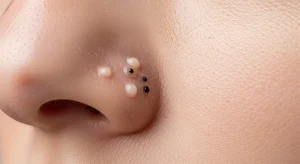
In Fitzpatrick IV to VI skin, the pimple is rarely the thing that keeps people up at night. The brown or black mark it leaves behind is. That flat spot, post-inflammatory hyperpigmentation, or PIH, can linger for months and sometimes close to a year after the breakout has healed. This guide is specifically about those post-acne dark marks in deeper skin: why they form, why they last so long, and how we fade them safely without setting off new pigment.
To be clear on scope: this is the pigment-fading companion piece. If your priority is clearing the active breakouts themselves, start with our full clinical guide to dark skin acne treatment for Fitzpatrick III to VI patients, which covers how to clear the breakouts themselves in melanin-rich skin without triggering new marks. Here, we focus on the aftermath: the dark marks the acne leaves behind.

Key Takeaways
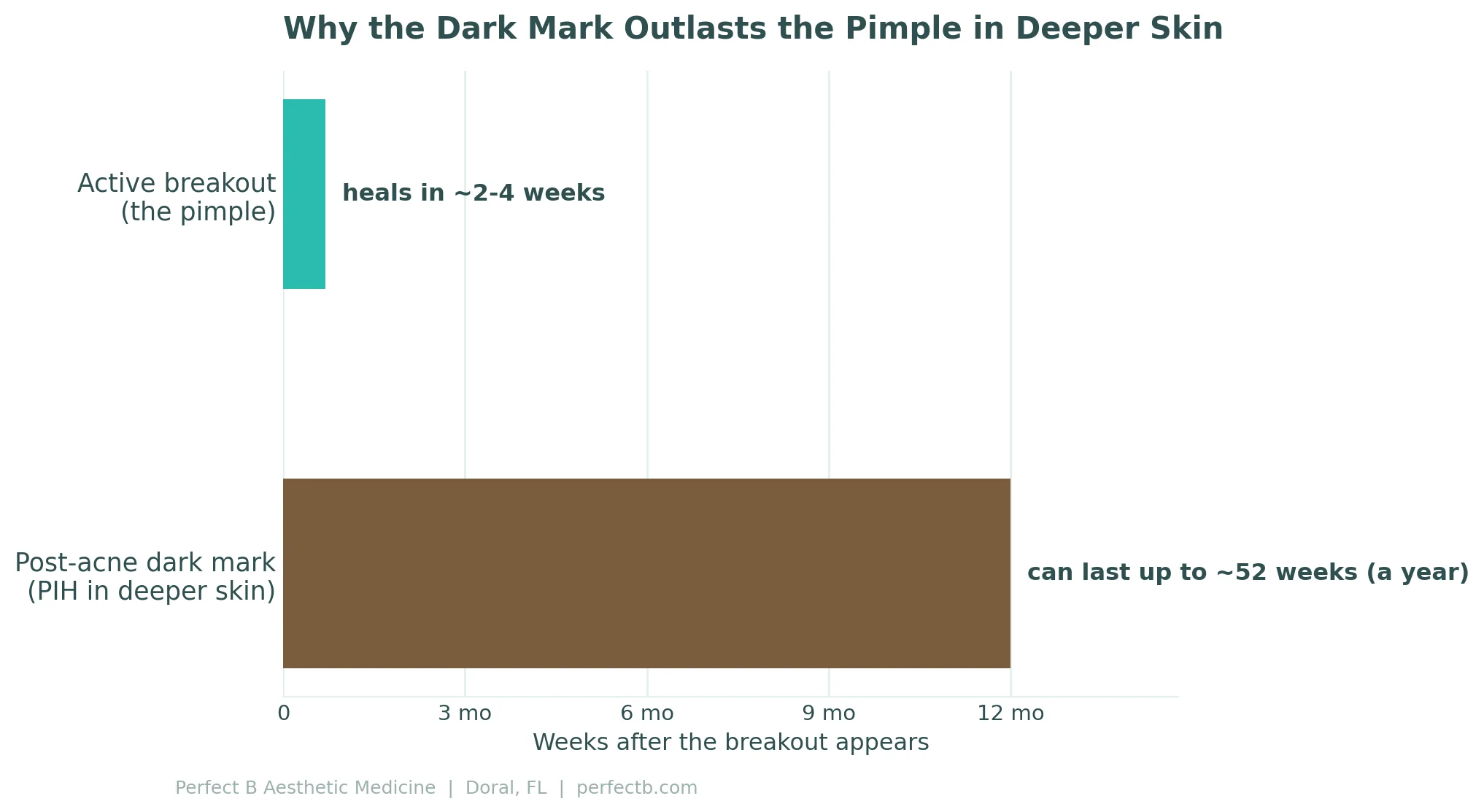
- The dark mark, not the pimple, is the main concern: in Fitzpatrick IV to VI skin the breakout heals in weeks, but the post-acne dark marks can last up to a year.
- Marks are not scars: post-inflammatory hyperpigmentation is flat and fades; a true acne scar is a change in texture and needs different treatment.
- Pigment-fading actives come first: our baseline is azelaic acid, niacinamide, and salicylic acid in a barrier-first protocol that fades marks while calming the skin.
- Aggressive fading backfires: strong lasers, high-strength peels, and harsh actives can burn or deepen PIH, so we use Fitzpatrick-matched settings and often prefer non-heat options.
- Sunscreen is the fade accelerator: daily broad-spectrum SPF 30 or higher is essential, and the myth that darker skin does not need sunscreen keeps dark marks from ever fully fading.
Why Acne Leaves Such Stubborn Dark Marks on Melanin-Rich Skin
The reason comes down to the pigmentary response. Melanocytes in deeper skin are simply more reactive: in response to any inflammation, a pimple, a scratch, an overly aggressive product, they release more pigment. So even after the breakout settles, that extra melanin stays behind as a flat brown or black mark. This is why post-acne dark marks are so much more prominent and long-lasting in Fitzpatrick IV to VI skin than in lighter tones, where a healed pimple often leaves little trace.
This single fact reshapes how we treat the marks. Every choice is filtered through one question first: will this fade the pigment, or could it provoke more? For a deeper look at how these marks form and clear, see our clinical explainer on treating post-inflammatory hyperpigmentation, the flat dark marks that acne leaves behind on melanin-rich skin, and how we fade them safely without new irritation.
Post-Acne Dark Marks vs Acne Scars: Know Which One You Have
This is the distinction that changes everything, and it is where most people get stuck. A post-acne dark mark is a pigment problem: the skin surface is smooth and flat, it is just discolored, and it will fade with time and the right care. A true acne scar is a texture problem: an indentation or raised area where the skin structure itself changed, and no cream will flatten it. In deeper skin the two often appear together, which is why patients assume their marks are permanent when many are not.
Getting this right matters because the treatments are completely different. Flat dark marks respond to pigment-fading actives and sun protection. Textural scars need resurfacing or remodeling procedures. If your concern is genuine indentation or texture rather than color, our companion guide to building a full medical acne and scar treatment plan that sequences pigment care and texture-focused procedures safely for skin of color at Perfect B in Doral walks through that side of the problem.
The Pigment-Fading Actives We Rely On
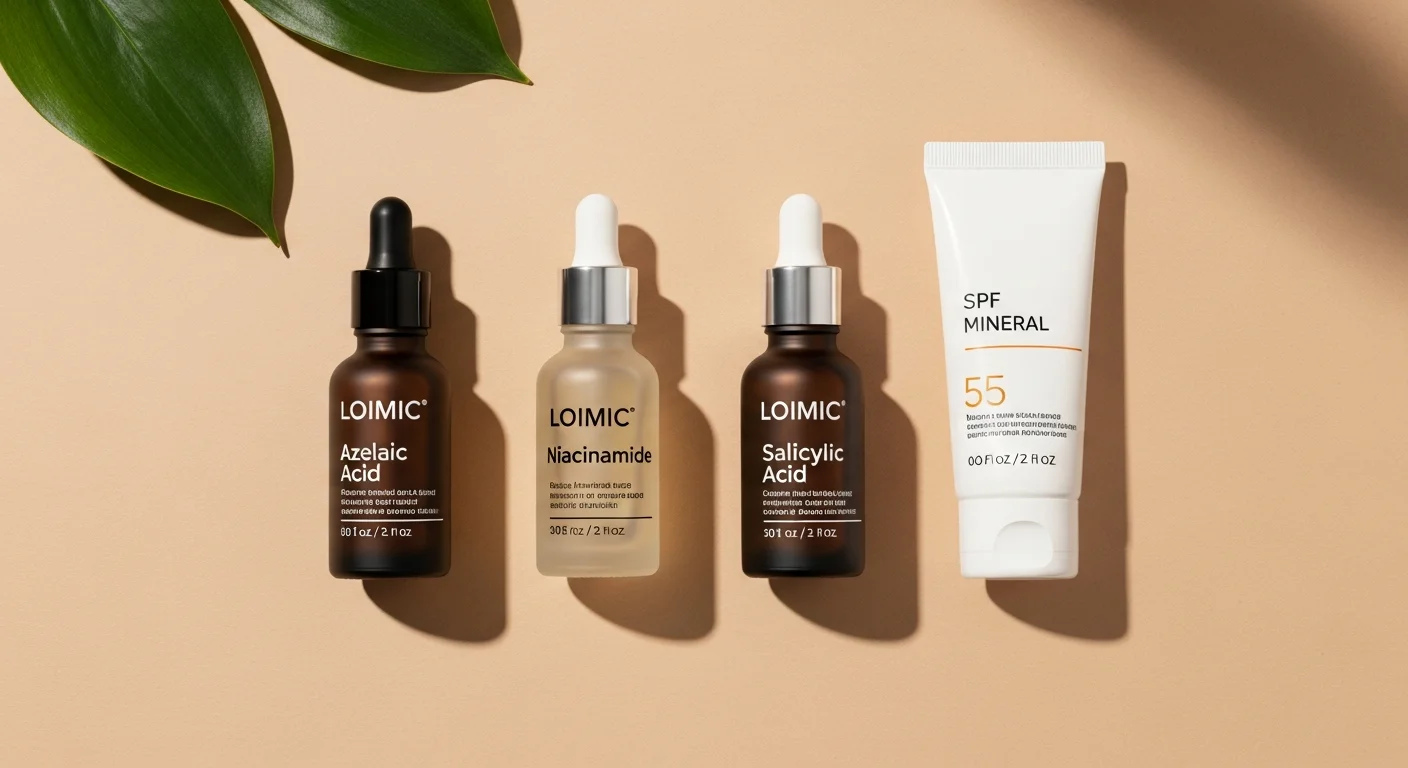
Our foundation for fading post-acne dark marks is a trio of well-tolerated actives working in parallel: azelaic acid to calm inflammation and fade pigment, niacinamide to interrupt pigment transfer and support the barrier, and salicylic acid to keep the pores clear so no new marks form. Together they fade the existing marks while preventing the next round, which is exactly what melanin-rich skin needs.
Azelaic acid in particular is our workhorse because it fades dark marks without the high irritation risk of harsher brighteners. To understand why it suits skin of color so well, read our overview of azelaic acid for post-acne pigmentation, redness, and stubborn dark marks, including how it works, who it suits, and how to layer it safely in darker skin, and our breakdown of the pigment-regulating and skin-barrier benefits of niacinamide for mark-prone and sensitive skin without the sting of harsher actives.
Fading Methods We Are Deliberately Cautious With in Fitzpatrick IV to VI
The irony of dark marks is that the most aggressive attempts to erase them are often what make them worse. We are very careful with aggressive lasers, high-strength chemical peels, and harsh over-the-counter brighteners, because in Fitzpatrick IV to VI skin these can burn or trigger fresh PIH, deepening the exact marks you are trying to fade. The heat and inflammation are what the reactive melanocytes respond to.
Our rule is simple: always use Fitzpatrick-matched settings and, whenever possible, prefer gentle, non-heat-based options. When it comes to fading pigment in deeper skin, patient and conservative beats fast and risky every time.
In-Office Options to Fade Dark Marks Safely in Dark Skin
When topicals need reinforcement, we choose in-office procedures that are safe for the pigment. Gentle chemical peels, HydraFacial, and RF microneedling with very specific, conservative settings can all help fade post-acne dark marks in skin of color, but the approach is always cautious and tailored to your tone. We start low, watch how your skin responds, and build slowly rather than chasing fast results that risk new pigment. The goal is always fading without a fresh mark.
The American Academy of Dermatology emphasizes this same tailored, pigment-safe approach for skin of color; you can review their patient guidance on how acne forms, how it is treated, and why post-inflammatory hyperpigmentation needs extra attention in darker skin tones, with the underlying studies catalogued on PubMed, the U.S. National Library of Medicine database of peer-reviewed research on post-inflammatory hyperpigmentation in skin of color and how clinicians fade it.
How Long Do Post-Acne Dark Marks Really Take to Fade?
Here is the honest timeline. The active breakout typically calms within a few weeks. The dark mark it leaves behind is a much longer story, often fading over many months and, without treatment and sun protection, sometimes lingering close to a year. Consistent pigment-fading care and disciplined SPF speed that up; picking, harsh products, and skipped sunscreen slow it down or make it worse.
Sunscreen: The Non-Negotiable Step for Fading, and the Myth That Blocks It
We insist on daily, religious use of a broad-spectrum SPF 30 or higher. This is not optional when you are fading post-acne dark marks, it is central to it. Sun exposure deepens and prolongs pigment, so every day without protection is a day the marks refuse to fade.
The biggest myth we have to correct? That darker skin does not need sunscreen. It absolutely does. Melanin offers only partial protection, and skipping SPF keeps dark marks locked in, which in the strong South Florida sun can undo months of fading progress. If you take one habit from this entire guide, make it daily sunscreen.
Fading Post-Acne Dark Marks in Miami: Why Skin of Color Needs a Specialist
Miami and Doral are among the most diverse places in the country, and much of our community has Fitzpatrick IV to VI skin that marks easily. That skin deserves a provider who treats pigment every day, not a generic protocol designed for lighter tones. At Perfect B in Doral we build mark-fading plans around your exact tone and pigment history, using conservative, Fitzpatrick-matched care so the marks fade without new ones forming. And if the breakouts themselves are still active, pair this with our complete dark skin acne treatment guide, which explains how we clear breakouts in Fitzpatrick III to VI skin without setting off the very marks this article helps you fade.
Frequently Asked Questions
1. Are my post-acne dark marks permanent?
Usually not. Flat dark marks are post-inflammatory hyperpigmentation, a pigment problem that fades over months with the right care and sun protection. What can be permanent is a true acne scar, which is a change in skin texture rather than color. Most people have more marks than scars.
2. What is the difference between a dark mark and an acne scar?
A dark mark is flat and smooth, just discolored, and it fades. An acne scar is a textural change, an indentation or raised area, and it needs resurfacing or remodeling procedures rather than pigment-fading actives. In deeper skin they often appear together.
3. What are the best ingredients to fade dark marks on dark skin?
Our pigment-fading baseline is azelaic acid, niacinamide, and salicylic acid in a barrier-first routine. Together they fade existing marks, calm inflammation, and keep pores clear so new marks do not form, all with a much lower irritation risk than harsher brighteners.
4. Do I still need sunscreen if I have dark skin and I am trying to fade marks?
Yes, absolutely, and it is the single most important step. Melanin gives only partial protection, and sun exposure deepens and locks in dark marks. Daily broad-spectrum SPF 30 or higher is what allows the marks to fade, especially in the strong Miami sun.
5. How long do post-acne dark marks take to fade?
The breakout calms within weeks, but the mark can take many months to fade and, untreated, sometimes close to a year. Consistent pigment-fading care and daily sunscreen speed it up, while picking, harsh products, and sun exposure slow it down.
6. Can strong brighteners or lasers fade my dark marks faster?
Often the opposite in deeper skin. Aggressive lasers, high-strength peels, and harsh brighteners can inflame melanin-rich skin and trigger fresh PIH, deepening the marks. A gentle, consistent, barrier-first routine with Fitzpatrick-matched procedures fades marks more reliably.
7. Is fading dark marks different for Latinx and Hispanic patients?
The same pigment principles apply across Fitzpatrick IV to VI skin, which includes many Latinx, Hispanic, Black, and South Asian patients we treat in Doral. What matters is matching the actives and any procedure settings to your specific tone and pigment response.

Closing: Fade the Marks Without Making New Ones
Clearing the acne is only half the job in deeper skin. The other half is fading the marks it left, and doing it in a way that does not trigger the next round of pigment. That is the whole philosophy here: fade patiently with pigment-friendly actives, stay conservative with heat and strength, protect with sunscreen every day, and know the difference between a mark that will fade and a scar that needs something else.
If your breakouts have calmed but the dark marks are still holding on, a provider who treats skin of color every day can build you a plan that fades them safely.
- 📍 Visit us at Perfect B, 3905 NW 107th Ave, Suite 104, Doral FL 33178
- 📞 Call or message us at (786) 502-2260
- 💳 Financing available through Cherry, Klarna, Afterpay, and CareCredit