

Perfect B, Doral FL. | 03.22.26 | 7 min read.
This content is for educational purposes only and does not constitute medical advice. Consult a qualified provider before beginning any skin treatment protocol.
Why Monthly Facial Treatments Work , and Why One Visit Per Year Does Not
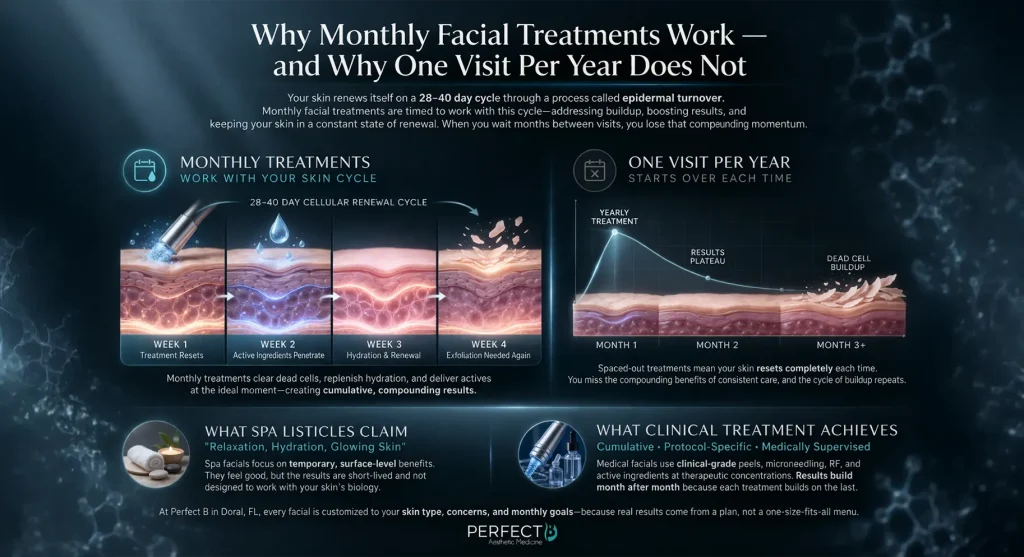
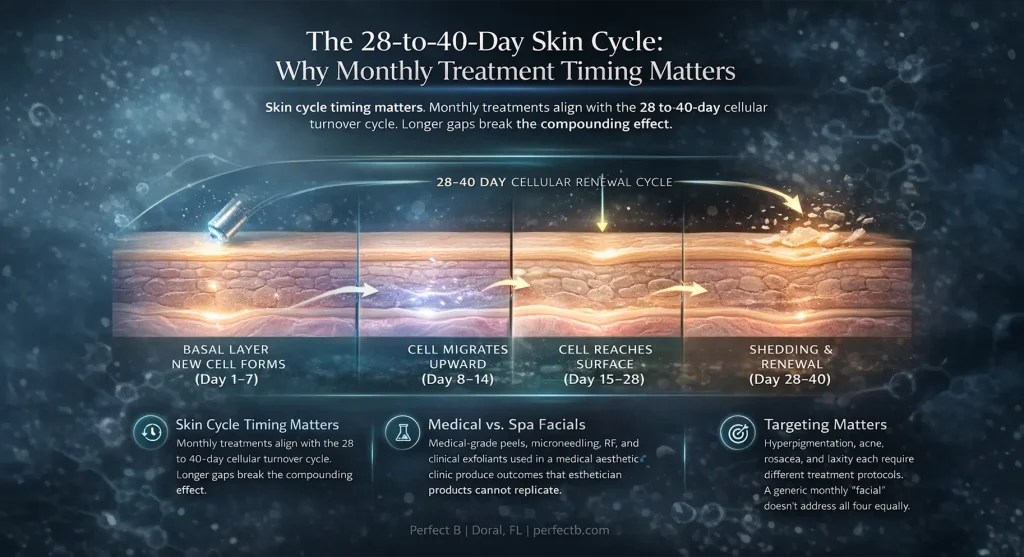
The skin completes a full cellular turnover cycle roughly every 28 to 40 days, depending on age, skin type, and environmental exposure. This cycle, known as epidermal turnover, is well-documented in dermatology literature and underpins the timing rationale for clinical skincare protocols. Monthly facial treatments are timed around this cycle deliberately. A treatment performed every four weeks addresses the skin at the point when the previous treatment’s effects are beginning to plateau, dead cells are accumulating on the surface again, and the next round of cell turnover is underway. Waiting two or three months between appointments means losing the compounding benefit of consistent exfoliation, hydration, and targeted ingredient delivery.
What The Skin Local and similar spa listicles describe as the “benefits of monthly facials” is typically a surface-level summary of relaxation, hydration, and “glowing skin.” That framing undersells what consistent clinical facial treatment actually accomplishes and misrepresents the mechanism. The benefits are cumulative, protocol-specific, and meaningfully different depending on whether the treatment is performed in a medical clinic or an esthetician spa. At Perfect B in Doral, FL, the Perfect B facial treatment protocol is designed around each patient’s specific skin type, concern, and monthly goals, not a one-size-fits-all menu.
Key Takeaways
- Skin cycle timing matters: Monthly treatments align with the 28 to 40-day cellular turnover cycle. Longer gaps break the compounding effect.
- Medical vs. spa facials are not the same: Medical-grade peels, microneedling, RF, and clinical exfoliants used in a medical aesthetic clinic produce outcomes that esthetician products cannot replicate.
- Consistency outperforms intensity: A monthly medium-depth peel outperforms a single annual deep peel in long-term collagen density and texture improvement.
- Targeting matters: Hyperpigmentation, acne, rosacea, and laxity each require different treatment protocols. A generic monthly “facial” doesn’t address all four equally.
- Prevention is cheaper than correction: Consistent monthly maintenance delays the need for more aggressive and expensive interventions like laser resurfacing or filler correction.
The 7 Clinical Benefits of Monthly Facial Treatments
1. Consistent Exfoliation Tied to Cell Turnover
Dead skin cells accumulate at the surface of the stratum corneum throughout the month. When exfoliation is not performed regularly, that accumulation leads to dullness, clogged pores, and reduced penetration of topical active ingredients. Monthly clinical exfoliation, whether via enzyme peels, chemical exfoliants, or physical modalities like dermaplaning, clears the surface at the point in the cycle when removal is most effective. This keeps the skin’s surface renewal process on track and allows serums and treatment products to actually reach viable skin cells instead of sitting on a layer of dead tissue.
2. Sustained Collagen Stimulation
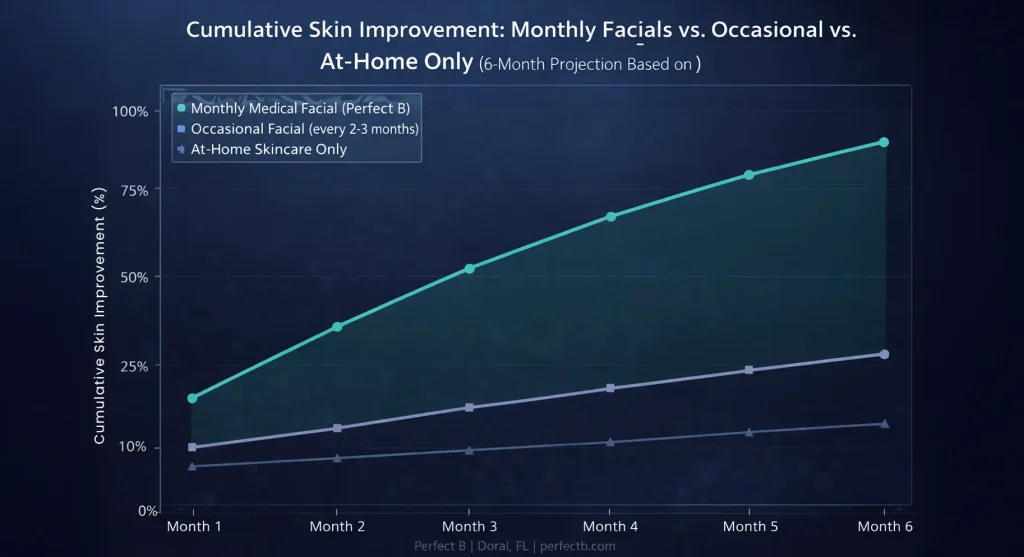
Collagen production is not triggered by a single event , it is stimulated by repeated controlled injury or thermal activation. Monthly microneedling, chemical peels, or RF microneedling treatments create a consistent low-level stimulus for fibroblast activity. The collagen remodeling process, which has been studied extensively in peer-reviewed microneedling and RF research on fibroblast stimulation and dermal collagen density, peaks at 12 weeks for many modalities, but maintaining monthly treatment intervals keeps the stimulus active and prevents the regression that occurs when the skin is allowed to return entirely to baseline between sessions. Over 6 to 12 months, this produces measurable increases in dermal density that are not achievable from a single treatment.
3. Active Ingredient Delivery to Viable Skin
Medical-grade facial treatments use active ingredients at concentrations that are not available in over-the-counter products. Retinoids, alpha-hydroxy acids, vitamin C derivatives, growth factors, and peptide serums applied immediately after professional exfoliation reach the dermis at a meaningfully higher rate than the same ingredients applied to unexfoliated skin at home. Monthly clinical application of these ingredients, timed with the exfoliation step, produces an ingredient delivery effect that daily at-home skincare cannot replicate regardless of product quality.
4. Early Detection of Skin Changes
Monthly appointments with a clinical provider mean that changes in skin texture, pigmentation, vascular patterns, or lesion development are assessed regularly rather than sporadically. Acne breakout patterns, early melasma, rosacea flares, and seborrheic keratoses are all easier to address when caught early. Patients who come in monthly also receive adjusted protocols when seasonal or hormonal factors change their skin’s behavior, rather than continuing a protocol that no longer fits their current condition.
5. Hyperpigmentation Management Requires Repetition
Post-inflammatory hyperpigmentation, melasma, and sun damage respond to treatment protocols that are applied repeatedly over several months. The American Academy of Dermatology outlines why consistent treatment follow-up is essential for melasma management and why single-session peels rarely produce lasting pigmentation control. A single peel or laser session will lighten pigmentation temporarily, but without consistent follow-up, melanin production restimulates and pigmentation returns. Monthly treatments that combine exfoliation, targeted brightening ingredients, and sun protection guidance maintain the progress made in each session and steadily reduce the total pigment load in the skin over time. This is especially true for patients with darker Fitzpatrick skin types, where aggressive single-session treatment carries higher risk than consistent low-intensity monthly protocols.
6. Acne Management Is a Protocol, Not a Treatment
Acne is a chronic condition driven by sebum production, follicular keratinization, bacterial activity, and inflammation. Monthly clinical facial treatments targeting acne address multiple drivers simultaneously: extractions clear active comedones, chemical exfoliation prevents follicular blockage, LED or blue light modalities reduce bacterial load, and prescription-level topicals applied in-clinic reduce sebum production. Treating acne once per quarter and expecting sustained results is not a realistic expectation. Monthly treatment is the minimum frequency to keep acne in active remission while corrective work continues. The Perfect B facial treatment protocol includes an acne-specific modality selection for patients with active breakouts or post-inflammatory scarring.
7. Prevention Defers More Aggressive Intervention
Patients who maintain a consistent monthly facial protocol over 12 to 24 months defer, and in some cases eliminate, the need for more aggressive and expensive interventions. Resurfacing lasers, deep chemical peels, and surgical correction are often the result of years of neglected maintenance rather than inevitable aging. Monthly treatments maintain dermal hydration, prevent collagen degradation through consistent stimulation, and address pigmentation and texture before they reach a severity that requires aggressive treatment. The cumulative cost of monthly facials is typically lower than the cost of corrective treatment needed when maintenance is delayed.
Medical Clinic vs. Esthetician Spa: What the Difference Means for Monthly Facials
Estheticians are trained in skincare application techniques and are licensed to perform specific services, including facial massage, steaming, extractions, and surface-level exfoliation. They are not licensed to perform microneedling, prescribe retinoids, administer chemical peels at clinical concentrations, or use RF energy devices. The “monthly facial” offered at a spa is constrained by scope of practice to the surface of the skin.
At Perfect B in Doral, monthly facial treatments are performed in a medical aesthetics environment. That means access to:
- Medical-grade chemical peels at concentrations and formulations that require clinical oversight
- Microneedling for collagen induction at needle depths not available in a spa setting
- RF microneedling for combined thermal and collagen-stimulation protocols
- PDRN and growth factor serums applied immediately post-exfoliation for accelerated regeneration
- Prescription-strength topicals incorporated into the treatment session
- Clinical skin analysis with each visit to adjust the protocol based on current skin condition
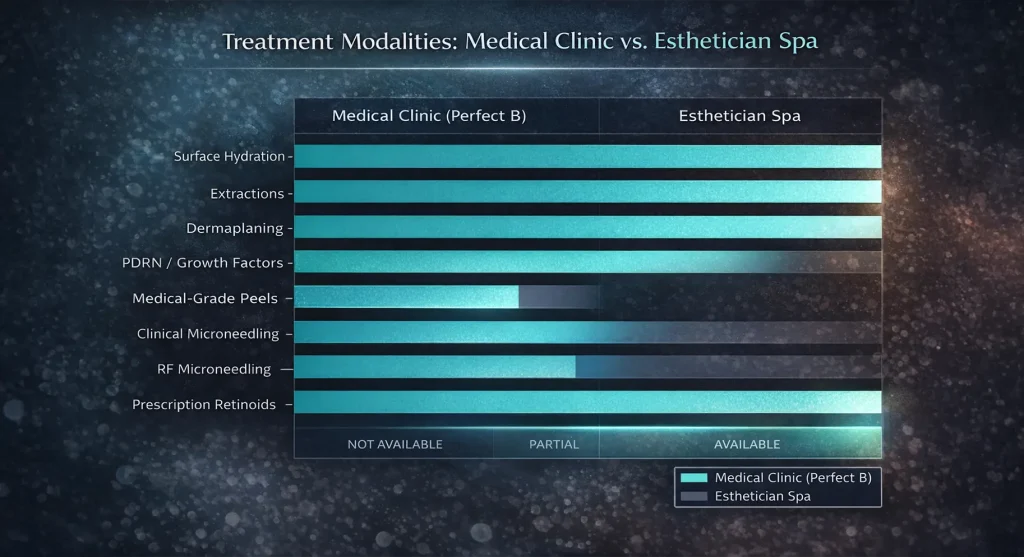
For patients in the Miami area evaluating where to invest in a monthly facial protocol, the clinical distinction between a spa treatment and a medical aesthetic treatment is the key variable. The same monthly cadence applied to a deeper, more targeted treatment produces compoundingly better results over time. For a full overview of the facial treatments available at our Doral clinic and what a monthly protocol looks like in practice, see our Perfect B facial treatment plan at our Doral clinic, which outlines which treatment modalities are included and how protocols are personalized by skin type and concern.
Who Benefits Most from Monthly Facial Treatments?
Monthly clinical facials are appropriate for most adults, but the ROI is highest for patients with active skin concerns that require ongoing management:
- Active or post-inflammatory acne: Monthly treatment prevents new breakouts while correcting existing scarring and pigmentation.
- Hyperpigmentation or melasma: Requires sustained brightening protocols to maintain progress and prevent re-darkening.
- Early skin laxity (mid-30s to mid-40s): Monthly collagen stimulation delays the pace of laxity development before it reaches the threshold where filler or surgical correction becomes the only option.
- Post-procedure maintenance: Patients who have had laser resurfacing, RF, or microneedling benefit from monthly maintenance treatments to extend results.
- Patients on GLP-1 medications: Rapid weight loss accelerates facial volume loss and skin laxity. Research on GLP-1 receptor agonists and facial aging documents the dermatologic effects of rapid weight loss on skin quality and the case for concurrent aesthetic support. Monthly treatments with collagen-stimulating modalities and biostimulators help maintain skin quality during the weight loss phase.
- Any patient seeking prevention over correction: The earlier a monthly protocol begins, the lower the total lifetime cost of maintaining good skin quality.
Frequently Asked Questions About Monthly Facial Treatments
1. How often should you really get a facial?
Monthly, for most patients with active skin concerns or prevention goals. The 28 to 40-day skin cycle makes monthly treatment the logical cadence for maintaining exfoliation, ingredient delivery, and collagen stimulation without allowing regression between sessions. Patients with very mild concerns and no active skin issues may be able to extend to every 6 to 8 weeks, but monthly remains the clinical standard for meaningful long-term improvement.
2. Are monthly facials worth it financially?
Over a 2 to 3-year period, yes , in most cases substantially so. Monthly maintenance consistently performed prevents the degree of skin degradation that requires expensive corrective interventions like CO2 laser resurfacing, which costs significantly more than the total of monthly facials over the same period. The calculation changes depending on starting skin condition and age, but for patients in their 30s and 40s, consistent monthly treatment is typically the most cost-efficient long-term skin investment available.
3. What happens to your skin if you stop monthly facials?
The improvements made during consistent monthly treatment are not permanent. Exfoliation must be maintained as the skin continues to produce dead cells. Collagen production slows when the stimulus of monthly treatment is removed. Hyperpigmentation can recur, particularly with sun exposure. The rate of regression depends on the patient’s skin type, age, and at-home routine, but most patients notice a return of dullness, texture changes, and pigmentation within 2 to 3 months of stopping monthly treatment.
4. Can monthly facials help with acne scars?
Yes, over time. Superficial post-inflammatory hyperpigmentation responds well to monthly chemical exfoliation and brightening protocols within 3 to 6 months of consistent treatment. Atrophic (indented) acne scars require microneedling or RF microneedling to stimulate the collagen needed for structural improvement, and those improvements build over 6 to 12 months of monthly or quarterly treatment. Monthly facial treatments can address both the active acne and the pigmentation component while deeper modalities address structural scarring in parallel.
5. What is the difference between a medical facial and a spa facial?
A medical facial is performed in a clinical setting and may include professional-grade chemical peels, microneedling, RF energy, prescription topicals, and growth factor or PDRN serums. A spa facial is constrained by the esthetician’s scope of practice to surface-level modalities. Both have a place in a skin health routine, but they are not interchangeable, and for patients with active skin concerns, the clinical setting produces meaningfully superior outcomes.
6. Do monthly facials at Perfect B in Doral require a consultation first?
Most patients can book a facial treatment directly at Perfect B without a prior consultation. During the appointment, the treating provider assesses the skin’s current condition and selects the appropriate treatment modality and product protocol. Patients with active prescriptions, significant acne, or complex pigmentation concerns may be directed to a brief clinical intake first to ensure the selected treatment is appropriate for their skin.
Start Your Monthly Facial Protocol at Perfect B in Doral, FL
- 📍 Perfect B | 3905 NW 107th Ave, Suite 104, Doral FL 33178
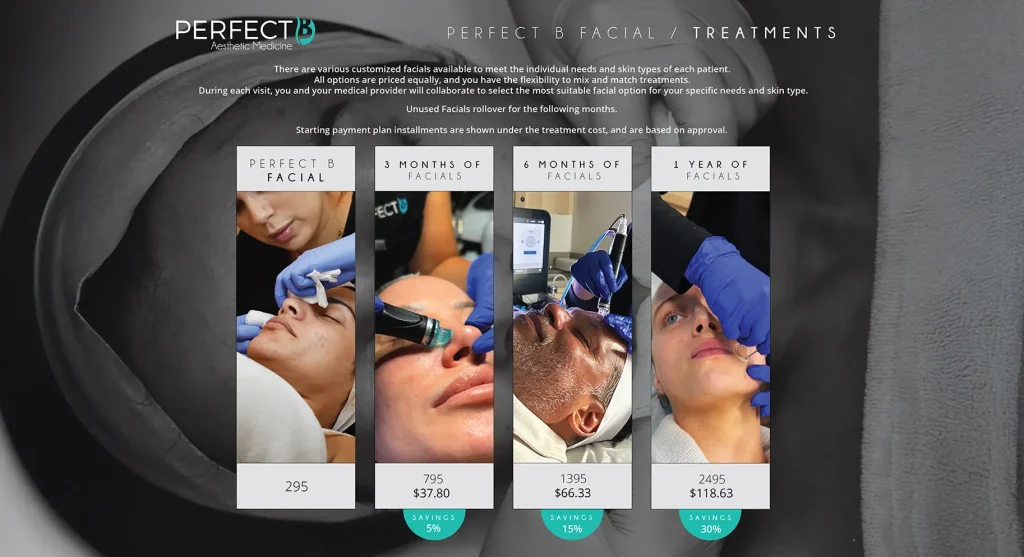
- 📞 Call or message us to schedule your first appointment or ask about monthly membership options
→ Book your monthly facial treatment at Perfect B in Doral, FL