Perfect B, Doral Fl. | 06.09.26 | 9 min read.
This article is for educational purposes only and does not constitute medical advice, diagnosis, or treatment. Hair loss treatment must be evaluated and supervised by a licensed medical provider.
What Makes Women’s Hair Loss Different From What You Read Online
Most content about female hair loss miami fails the patient the same way: it presents a single cause and a single solution for a condition that has multiple distinct types. The reasons a 34-year-old loses hair three months after delivery are biologically different from the reasons a 50-year-old notices her part widening during perimenopause. The reasons a 34-year-old loses hair three months after delivery are biologically different from the reasons a 50-year-old notices her part widening during perimenopause, which are different again from the diffuse shedding triggered by six months of chronic stress or rapid weight loss. At Perfect B in Doral, the evaluation begins with identifying which type you are dealing with, because the treatment that works for one will not work for another.
What the SERP in Miami mostly offers for this question is dermatology clinics with service pages, a few transplant surgeons, and scalp micropigmentation studios. What it does not offer is a medical clinic explaining what GHK-Cu copper peptide does at the hair follicle level, what PDRN salmon DNA therapy adds that PRP alone cannot, or when the combination of all three produces results that none of them achieves individually. That is what this post covers.
Key Takeaways
- Women’s hair loss has multiple distinct causes including female pattern hair loss (FPHL), telogen effluvium, post-partum shedding, and hormonal hair loss, each requiring a different treatment approach.
- GHK-Cu copper peptide works at the follicle level by increasing dermal papilla cell activity, improving blood supply to the follicle, and extending the anagen (growth) phase of the hair cycle.
- PDRN (salmon DNA) adds regenerative signaling that PRP alone does not provide, activating A2A receptors in follicular tissue to drive cell proliferation and reduce inflammatory damage.
- PRP works best for androgenetic alopecia (female pattern hair loss) when applied in 4 to 6 sessions, slowing miniaturization and stimulating dormant follicles that still have growth potential.
- Perfect B in Doral combines all three for patients who have not responded adequately to a single modality, sequencing treatments based on the type and severity of hair loss.
The Main Types of Hair Loss Women Experience and Why They Matter for Treatment
1. Female Pattern Hair Loss (FPHL / Androgenetic Alopecia)
Female pattern hair loss is the most common type in adult women and is driven by the same DHT-related follicle miniaturization that causes male baldness, with a different distribution. Women typically retain the frontal hairline while the central part widens and the crown thins diffusely. Unlike men, women with FPHL often show symptoms beginning in the 30s or 40s, accelerating significantly around perimenopause as estrogen levels drop and the relative androgenic environment shifts. Because the follicles are miniaturizing rather than dead, early intervention with PRP, GHK-Cu, and PDRN produces meaningful results if started before the follicle becomes irreversibly damaged.
2. Telogen Effluvium
Telogen effluvium is a diffuse shedding pattern triggered when a systemic shock pushes a large number of follicles from the active growth phase (anagen) into the resting phase (telogen) simultaneously. The most common triggers in the South Florida population we see at Perfect B are rapid weight loss (including GLP-1 medications like semaglutide and tirzepatide), severe caloric restriction, thyroid dysfunction, iron deficiency, and prolonged psychological stress. The shedding typically begins 2 to 3 months after the trigger and can resolve on its own once the cause is addressed, but PDRN and GHK-Cu can significantly accelerate recovery by supporting follicular re-entry into anagen.
3. Post-Partum Hair Loss
During pregnancy, elevated estrogen extends the anagen phase and prevents normal shedding. After delivery, estrogen drops rapidly and the follicles that were held in the growth phase enter telogen together, producing the wave of shedding most new mothers notice between 3 and 6 months postpartum. This is a normal physiological process and most hair returns within 12 months, but GHK-Cu and PDRN can shorten the recovery timeline and reduce the severity of thinning for patients who find it distressing or whose baseline hair density was already lower than average.
4. Hormonal and Medication-Triggered Hair Loss
Hormonal fluctuations from thyroid disorders, polycystic ovary syndrome, perimenopause, and the discontinuation of oral contraceptives all trigger hair loss through different mechanisms. Additionally, some medications including statins, anticoagulants, antidepressants, and the rapid weight loss associated with GLP-1 receptor agonists can precipitate or worsen shedding. At Perfect B in Doral, we see a significant number of GLP-1 patients presenting with hair thinning and use a PDRN-led protocol specifically designed to support follicular integrity during rapid body composition changes.
What Triggers Hair Loss in Women: The Factors That Matter Most
- Androgens and DHT sensitivity: follicle miniaturization driven by genetic susceptibility to dihydrotestosterone, the primary mechanism in FPHL.
- Estrogen decline: perimenopause and post-partum drops in estrogen remove protective signals from follicles and shift the hormonal balance toward androgenic dominance.
- Nutritional deficits: iron, ferritin, zinc, and biotin deficiencies are frequently underlying or contributing factors in telogen effluvium in the Miami population, particularly in patients on caloric restriction.
- Systemic stress and inflammation: elevated cortisol suppresses follicle growth signals directly and creates a low-grade inflammatory state in the scalp that GHK-Cu and PDRN both address.
- Medications and rapid weight loss: GLP-1 agonists and the weight loss they produce both independently contribute to telogen effluvium, making follicular support increasingly relevant for this growing patient group in South Florida.
GHK-Cu Copper Peptide for Women’s Hair Loss: What It Does at the Follicle Level
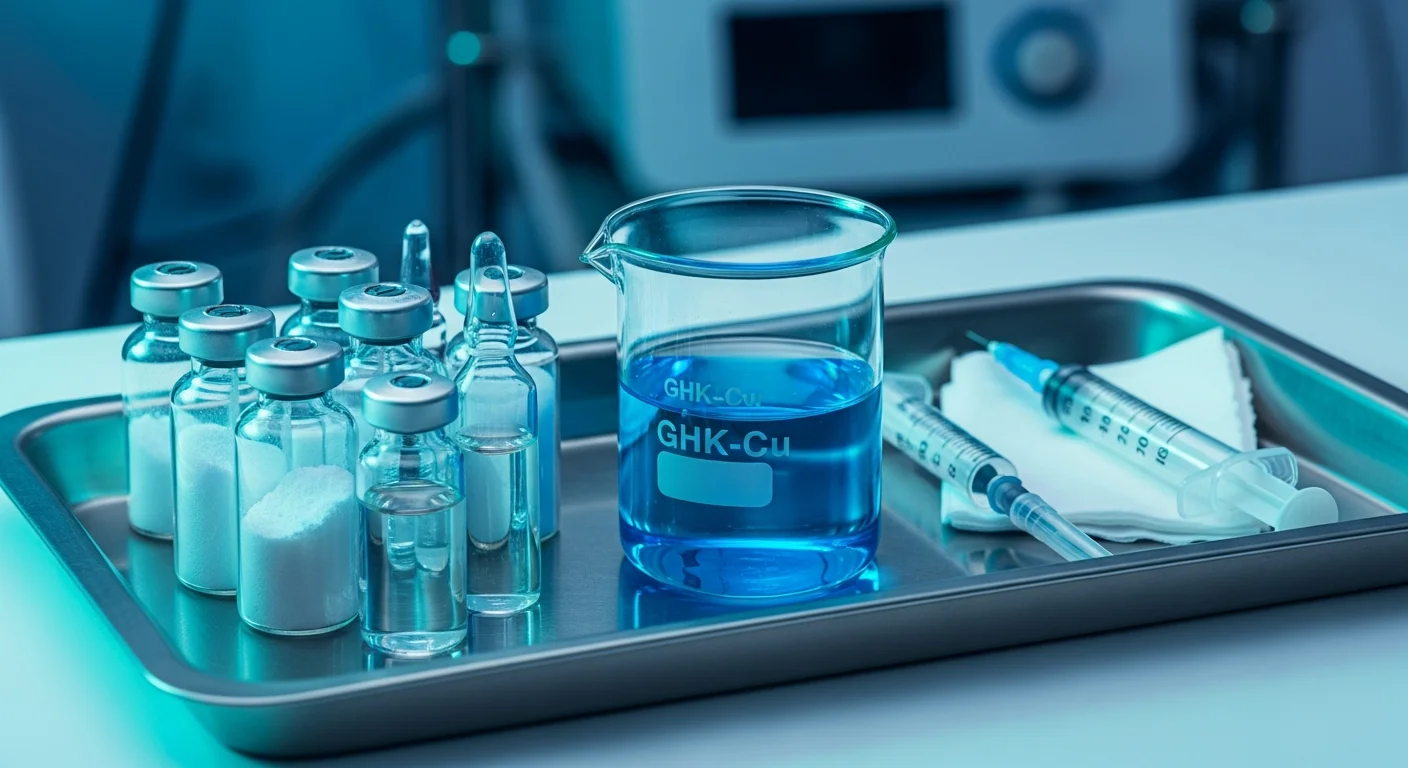
GHK-Cu (copper tripeptide-1) is one of the few compounds with documented direct effects on hair follicle biology. At the follicle level, GHK-Cu increases the size of the dermal papilla, improves scalp vascularization, and extends the anagen phase of the hair cycle. It also activates follicle stem cells and upregulates growth factors including VEGF (vascular endothelial growth factor) and KGF (keratinocyte growth factor), both of which are essential for follicle regeneration. In practical terms, patients running GHK-Cu for hair loss at Perfect B in Doral report decreased shedding within 6 to 8 weeks and visible density improvement by 12 weeks.
The mechanisms are not cosmetic. GHK-Cu role in hair follicle activation and its anti-inflammatory effect on the scalp are documented in published research, including this review of GHK-Cu’s biological activity confirming its ability to upregulate hair follicle-stimulating signals and extend the anagen phase in treated follicles. For patients who want the full clinical breakdown, our dedicated guide covers how GHK-Cu copper peptide specifically targets the mechanisms of hair follicle miniaturization and what the treatment protocol at Perfect B looks like.
See how GHK-Cu fits into a supervised hair loss protocol at Perfect B.
Perfect B’s peptide protocol tool is built on real clinical data from 2,000+ patients treated in South Florida.
Answer 6 questions and see what patients treating hair loss and scalp health are running: which peptides, dosing, cycle length, and when they pause.
PDRN (Salmon DNA) for Hair Loss in Women: The Regenerative Option
PDRN (polydeoxyribonucleotide) derived from salmon DNA works through a different mechanism from both PRP and GHK-Cu, which is precisely why it adds clinical value when combined with them rather than replacing them. PDRN activates A2A adenosine receptors in follicular tissue, driving a regenerative response that includes cell proliferation in the dermal papilla, increased production of collagen IV and fibronectin in the follicular basement membrane, and a direct anti-inflammatory effect on the scalp microenvironment. It also reduces the activity of inflammatory cytokines that damage follicles in both androgenetic and stress-triggered hair loss.
At Perfect B in Doral, PDRN is particularly effective for patients presenting with telogen effluvium driven by GLP-1 medications, rapid weight loss, or nutritional stress, because the regenerative signaling it provides directly counteracts the follicular dormancy those conditions produce. Our dedicated post on PDRN for hair loss covers the full mechanism, what the clinical research shows, and how salmon DNA therapy fits into the treatment protocols we use in South Florida.
PRP for Women’s Hair Loss in Miami: Protocol, Timeline, and Who It Works For
PRP (platelet-rich plasma) therapy for hair loss draws on the patient’s own concentrated growth factors, including PDGF, VEGF, and EGF, to stimulate follicle activity and slow miniaturization in androgenetic alopecia. The platelet concentration is typically 4 to 6 times the baseline level in whole blood, and when injected into the scalp, these growth factors activate dormant follicles and extend the anagen phase similarly to how they accelerate wound healing. PRP cannot revive follicles that have been completely replaced by scar tissue, which is why early intervention matters in FPHL.
The standard protocol at Perfect B in Doral for androgenetic hair loss in women is 4 to 6 sessions spaced one month apart, followed by a maintenance session every 4 to 6 months. Clinical outcomes are well-documented in the research literature, including this controlled study demonstrating significant hair density improvement in women with androgenetic alopecia after a structured PRP protocol, with continued improvement at 6-month follow-up. For patients with telogen effluvium or post-partum hair loss, PRP is combined with GHK-Cu or PDRN rather than used as a standalone because the mechanism of those conditions differs from the DHT-driven miniaturization PRP primarily targets.
When to Combine GHK-Cu, PDRN, and PRP: Perfect B’s Multi-Modal Approach in Doral
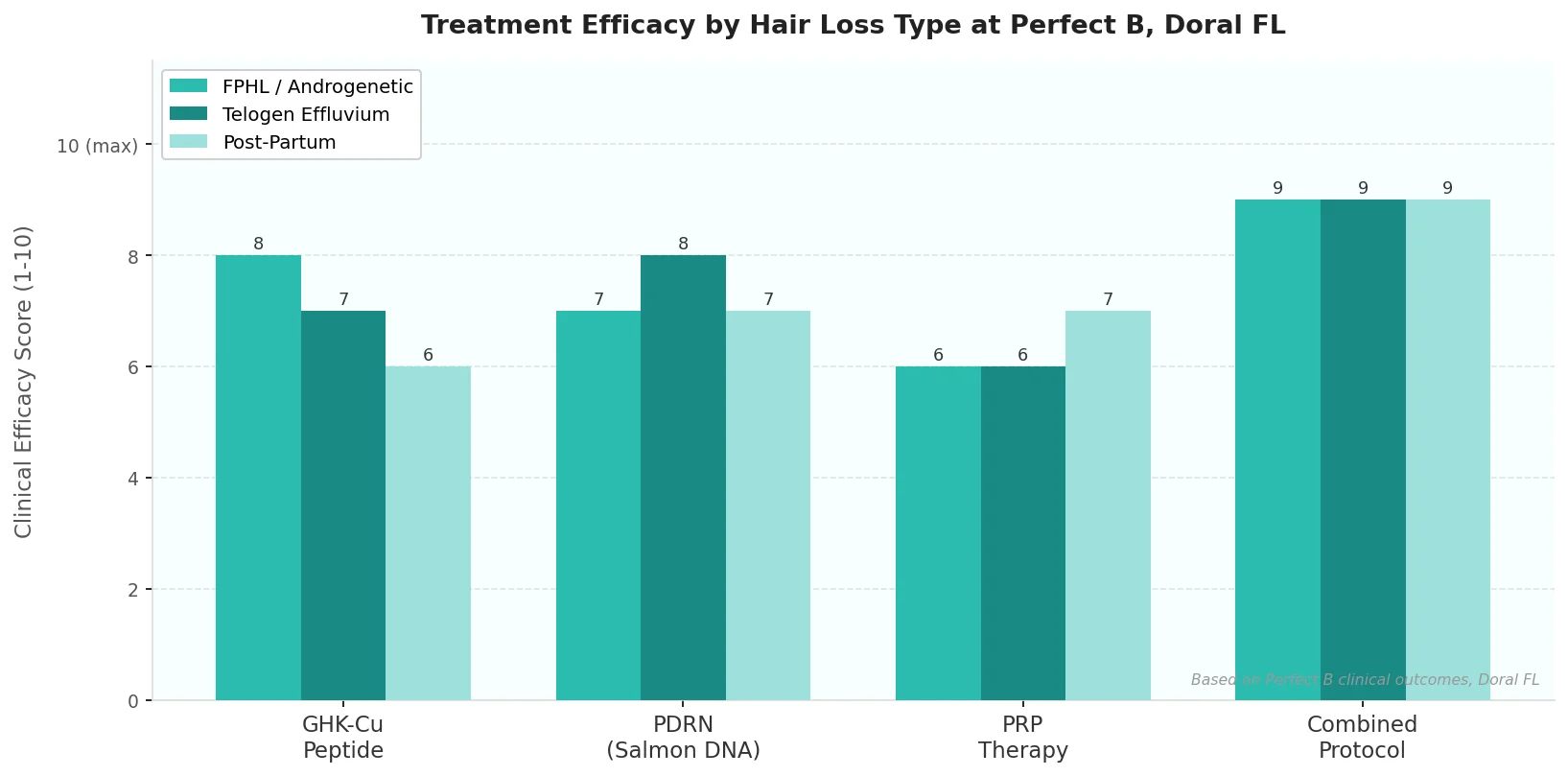
Single-modality treatment for women’s hair loss produces single-modality results. PRP addresses follicular miniaturization through growth factor delivery but does not directly extend the anagen phase or reduce scalp inflammation the way GHK-Cu does. GHK-Cu drives cell proliferation and vascular support but does not provide the A2A regenerative signaling that PDRN adds. PDRN creates the regenerative environment that makes both GHK-Cu and PRP work better, but its individual effect on follicle density is more modest than PRP alone. The combination produces outcomes that no single treatment achieves independently, which is why we recommend it for patients with moderate to significant hair loss or who have not responded adequately to a single modality.
At Perfect B, a combined protocol typically sequences PDRN first to establish the regenerative baseline, then layers GHK-Cu injections in the weeks that follow, with PRP sessions incorporated at monthly intervals. For patients on GLP-1 medications experiencing telogen effluvium, PDRN is the primary treatment and GHK-Cu runs concurrently throughout the GLP-1 cycle. For patients with FPHL, PRP is the primary modality and GHK-Cu is added to extend the follicular response between sessions. Our comprehensive guide to peptides for hair growth covers how GHK-Cu fits into the broader category of peptide treatments used for hair restoration at Perfect B and what clinical evidence supports each.
Who Is a Good Candidate for Hair Loss Treatment at Perfect B in Miami?
The evaluation at Perfect B in Doral is designed to identify which type of female hair loss miami patients are dealing with before recommending any specific treatment. In general, the following profiles are the strongest candidates for the protocols we offer:
- Women 28 to 65 with FPHL or androgenetic alopecia who have noticed a widening part, thinning at the crown, or decreased hair volume over 1 to 3 years.
- Women experiencing telogen effluvium from rapid weight loss, GLP-1 medications, thyroid disorder, iron deficiency, or prolonged stress.
- Post-partum women 3 to 12 months after delivery whose hair shedding has not resolved on the expected timeline or whose density has not returned to baseline.
- Women in perimenopause or early menopause noticing hair thinning concurrent with hormonal changes, particularly those already managing estrogen decline with their provider.
- Women who have tried topical minoxidil or other OTC treatments without satisfactory results and are looking for a medically supervised alternative.
Hair loss caused by active autoimmune conditions, untreated thyroid disease, or nutritional deficiencies that have not been addressed medically requires the underlying condition to be managed first. We identify these situations in the intake consultation and coordinate with the patient’s existing care team when appropriate.
Ready to explore peptide options for hair loss at Perfect B in Doral?
Perfect B’s peptide protocol tool is built on real clinical data from 2,000+ patients treated in South Florida.
Answer 6 questions and see what patients with similar goals are running: which peptides they use, typical dosing, injection schedule, reconstitution steps, cycle length, and when they pause.
Frequently Asked Questions
1. What is the most effective hair loss treatment for women in Miami?
There is no single most effective treatment because the right option depends on the type of hair loss. FPHL responds best to PRP combined with GHK-Cu. Telogen effluvium and post-partum shedding respond best to PDRN with GHK-Cu support. At Perfect B in Doral, we identify your hair loss type in the consultation before recommending a protocol, because applying the wrong treatment to the wrong condition produces minimal results regardless of the treatment quality.
2. How does GHK-Cu copper peptide help with women’s hair loss?
GHK-Cu copper peptide increases dermal papilla size, improves scalp blood supply, extends the anagen growth phase, and activates follicle stem cells. It also reduces scalp inflammation that damages follicles in both androgenetic and stress-triggered hair loss. At Perfect B, we administer GHK-Cu via scalp injection, typically as part of a combined protocol with PRP or PDRN depending on the hair loss type.
3. What is PDRN and how is it used for hair loss in women?
PDRN (polydeoxyribonucleotide) is a regenerative compound derived from salmon DNA that activates A2A adenosine receptors in follicular tissue. It drives cell proliferation, reduces scalp inflammation, and creates a regenerative environment that improves the outcomes of PRP and GHK-Cu when combined with them. At Perfect B in Doral, we use PDRN particularly for patients with telogen effluvium driven by GLP-1 medications, rapid weight loss, or nutritional stress.
4. How many PRP sessions do women need for hair loss?
The standard protocol for women with androgenetic alopecia at Perfect B in Doral is 4 to 6 sessions spaced one month apart, followed by maintenance sessions every 4 to 6 months. Patients typically notice decreased shedding after the second session and visible density improvement by session 4. Post-partum and telogen effluvium patients may respond in fewer sessions because the follicles are dormant rather than miniaturized.
5. Does hair loss treatment work for post-partum hair loss?
Yes, and it works well for most post-partum patients because the follicles are still intact, they are simply held in the resting phase. Post-partum hair loss is a physiological response to the drop in estrogen after delivery, not structural follicle damage. GHK-Cu and PDRN accelerate re-entry into the anagen growth phase and can significantly shorten the duration and severity of shedding compared to waiting for spontaneous recovery.
6. Can GLP-1 medications like Ozempic cause hair loss in women?
Yes. Rapid weight loss produced by GLP-1 receptor agonists (semaglutide, tirzepatide) is a well-documented trigger for telogen effluvium. The mechanism is nutritional stress from caloric restriction combined with rapid body composition changes. At Perfect B in Doral, we see a significant number of GLP-1 patients presenting with hair thinning and use a PDRN-led protocol specifically designed to support follicular integrity during the active weight loss phase.
7. Does Perfect B offer hair loss treatment for women in Doral, FL?
Yes. Perfect B at 3905 NW 107th Ave, Suite 104, Doral FL 33178 offers PRP, GHK-Cu copper peptide, and PDRN salmon DNA therapy for women’s hair loss, individually or in combination depending on the patient’s hair loss type and history. The first step is a consultation that identifies the cause and maps out the appropriate protocol.
Closing: The Clinical Bottom Line on Women’s Hair Loss Treatment in Miami
The frustrating part of women’s hair loss is how long most patients spend on the wrong treatment before finding one that matches their actual condition. Topical products designed for androgenetic alopecia do not accelerate recovery from post-partum shedding. PRP alone does not address the inflammatory and regenerative deficit that makes telogen effluvium worse. And no single treatment at any clinic in Miami addresses the full spectrum of what women’s hair loss involves the way a combined protocol with PRP, GHK-Cu, and PDRN does when matched to the right diagnosis.
At Perfect B in Doral, the starting point is always the evaluation. The treatment options are available. The combination that works is the one that matches what you are actually experiencing, and that determination is what the consultation exists to make.
- 📍 Perfect B | 3905 NW 107th Ave, Suite 104, Doral FL 33178
- 📞 Call or message us at (786) 502-2260 to schedule your women’s hair loss consultation with a licensed medical provider.
- 💳 Buy Now Pay Later: Cherry, Klarna, Afterpay, CareCredit