
Perfect B, Doral FL. | 03.24.26 | 8 min read.
This content is for educational purposes only and does not constitute medical advice. Consult a qualified provider before beginning any skin treatment protocol. For the specifics, see our guide to Tretinoin vs. Hydroquinone: Which One Actually Treats Dark Spots, Wrinkles, and Aging?, including what to expect and how it is handled at Perfect B in Doral.
Hyperpigmentation Treatment in Miami: Why Dark Spots Come Back and What a Plan Changes
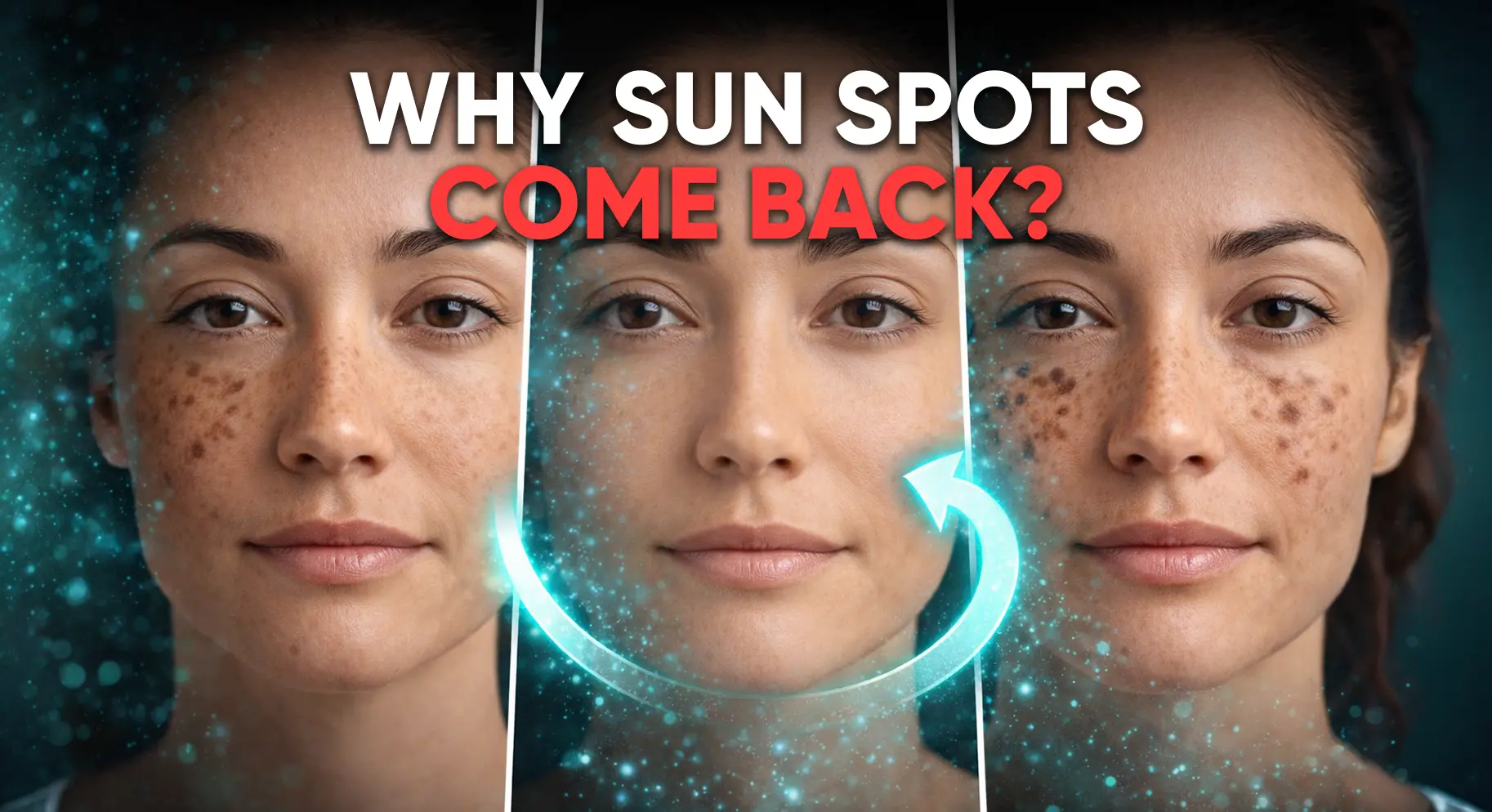
Hyperpigmentation is one of the most common skin concerns in South Florida, and one of the most mismanaged. Patients buy brightening serums, get a single IPL session, or apply a prescription cream for a few months, see improvement, then watch the pigmentation return. The reason it comes back is not that the treatment failed. It is that a single session or an isolated topical does not address the combination of factors driving melanin overproduction in the first place. A useful next read is Wrinkles, Acne, or Dark Spots? A Guide to Choosing Tretinoin vs. Hydroquinone for Skin Brightening Treatment, including what to expect and how it is handled at Perfect B in Doral.
At Perfect B in Doral, FL, hyperpigmentation is treated as a plan, not an appointment. The Perfect B Brightening Treatment Plan combines lasers, chemical peels, microneedling, bleaching creams, oral medications, and IV antioxidant cocktails in a protocol personalized to your specific pigmentation type and skin behavior. The modalities chosen depend entirely on what is causing the pigmentation, how deep it sits in the skin, and how your skin responds to initial treatment. Explore this in depth in our guide to Skin Brightening Treatment: Which Options Actually Work (And Which Don’t), including what to expect and how it is handled at Perfect B in Doral.
Key Takeaways
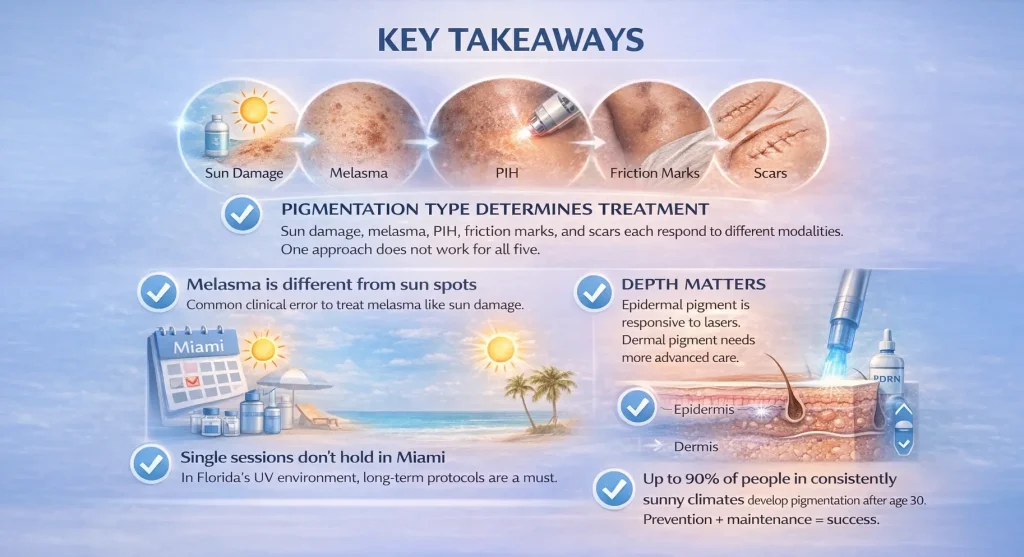
- Pigmentation type determines treatment: Sun damage, melasma, post-inflammatory hyperpigmentation, friction marks, and scars each respond to different modalities. One approach does not work for all five.
- Melasma is different from sun spots: Melasma is hormonally driven and can be worsened by aggressive laser treatment. Treating it the same way as solar lentigines is a common clinical error.
- Single sessions don’t hold in Miami: In Florida’s UV environment, pigmentation recurs without a maintenance protocol. The brightening plan ends with a long-term care phase, not a course of sessions.
- Depth matters: Superficial epidermal pigmentation responds to peels and laser. Dermal pigmentation, common in melasma, requires microneedling, PDRN, and prescription systemic support.
- Up to 90% of people in consistently sunny climates develop pigmentation after age 30. Prevention and maintenance are as important as correction once spots appear.
The Five Types of Hyperpigmentation We Treat in Miami
1. Sun Damage (Solar Lentigines)
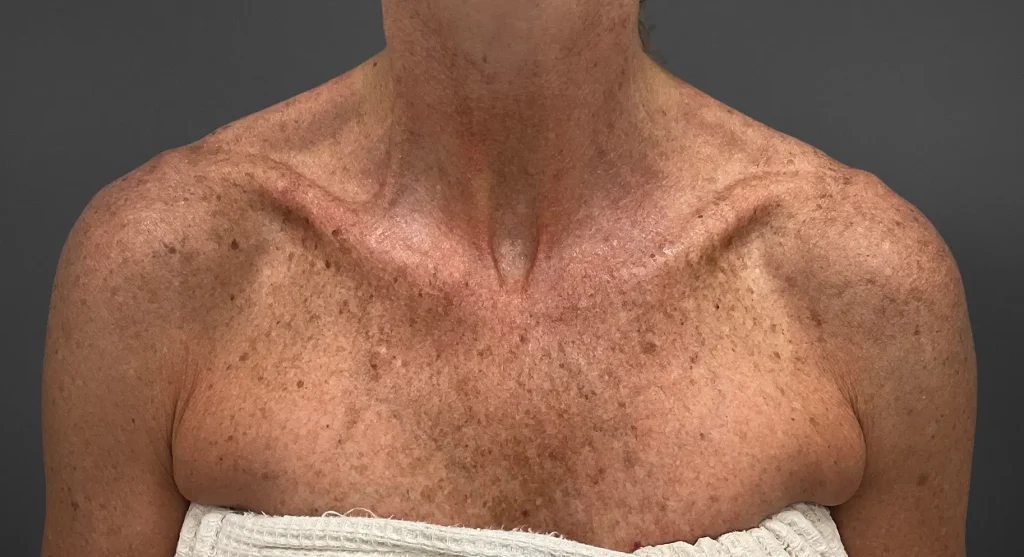
Sun damage accumulates slowly. In Miami, patients who have spent years under direct UV exposure develop flat brown spots on the face, hands, chest, and décolletage. These are epidermal, sitting at or near the skin surface, which makes them among the most responsive to treatment. IPL and Pico laser precisely target melanin in the epidermal layer, breaking up pigment clusters without affecting surrounding tissue. Most sun damage lightens significantly over 2 to 3 laser sessions, with chemical peels and brightening topicals accelerating clearance between sessions. The clinical evidence for IPL in treating solar lentigines documents significant lightening after a short treatment series across multiple controlled studies. See also our detailed guide to Tretinoin and Hydroquinone: Targeting Aging Skin Concerns, including what to expect and how it is handled at Perfect B in Doral.
2. Melasma
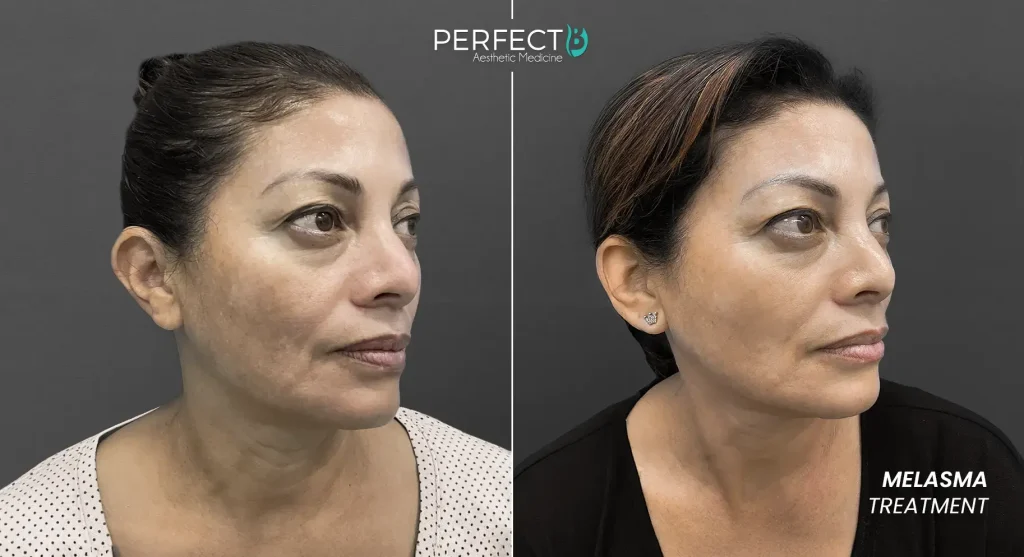
Melasma is driven by hormonal factors, UV exposure, and heat, and it frequently sits in the mid-dermis as well as the epidermis, making surface-only treatments insufficient. More importantly, aggressive laser treatment of melasma can trigger rebound post-inflammatory hyperpigmentation, leaving the skin worse than before. The clinical standard for melasma in Miami is a conservative combination approach: prescription bleaching creams, oral medications that regulate hormonal pigment triggers, and gentle low-fluence laser or peel protocols rather than aggressive single-session treatment. The American Academy of Dermatology outlines the case for consistent multi-modal melasma management and the risk of rebound hyperpigmentation from overly aggressive treatment. For more, read about Perfect B Approach: Clarifying Skin Whitening, Skin Lightening Treatment, Fairness and Brightening Treatments, including what to expect and how it is handled at Perfect B in Doral.
3. Post-Inflammatory Hyperpigmentation (PIH)
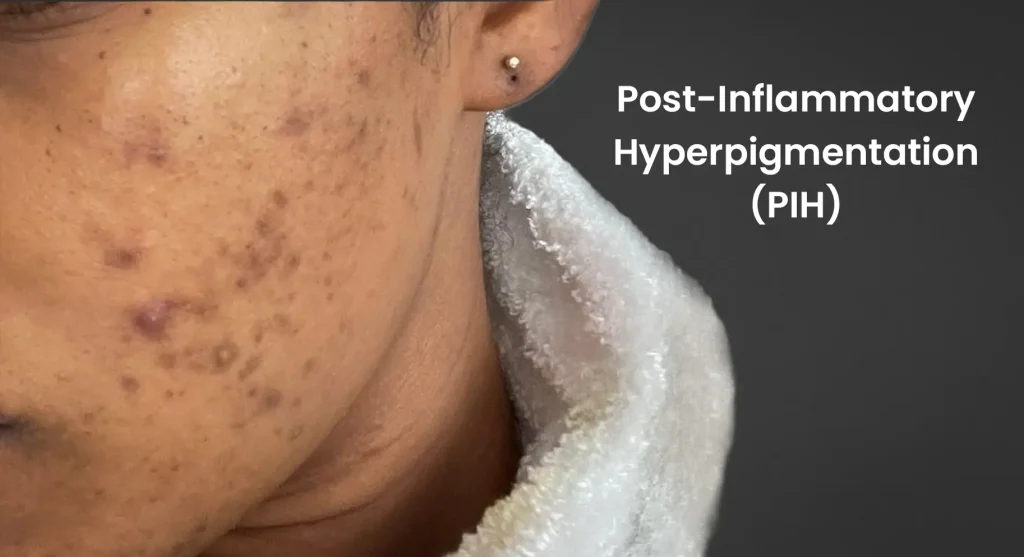
PIH develops after skin trauma, most commonly active acne. When an inflammatory lesion resolves, the healing process can overactivate melanocytes in the area, leaving a flat dark mark. PIH responds well to microneedling (which drives cellular turnover and opens micro-channels for brightening ingredient delivery), chemical peels (which clear epidermal pigment through controlled exfoliation), and PDRN Salmon DNA (which reduces residual inflammation and supports tissue repair). At Perfect B, most microneedling patients treating PIH receive PDRN application in the same session, which accelerates clearing compared to microneedling alone.
4. Friction-Related Pigmentation (Inner Thighs, Underarms)
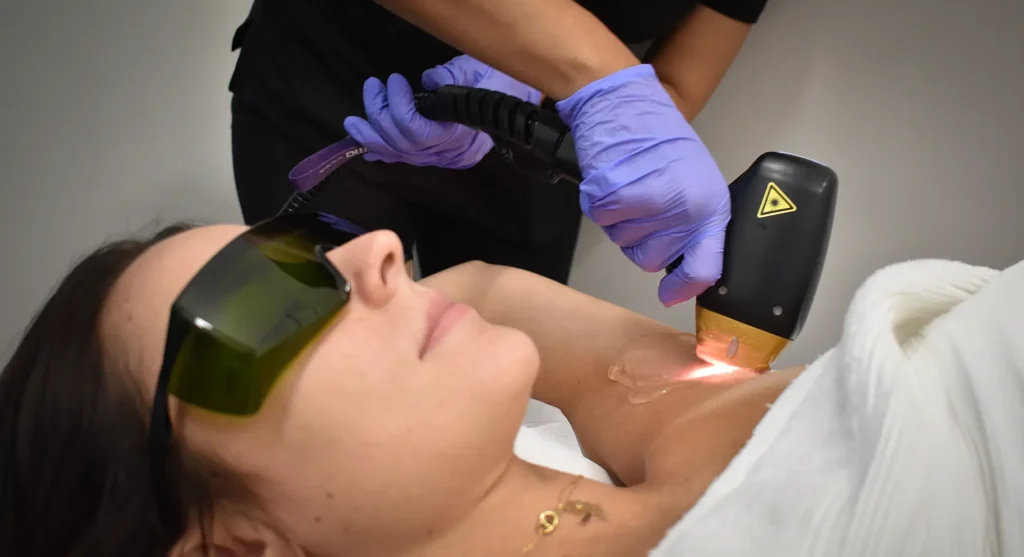
Darkening in the inner thigh, underarms, and other areas of repeated friction is a form of chronic low-grade PIH. The melanin is continuously stimulated by mechanical trauma from skin-on-skin or fabric contact. Treatment requires addressing both the surface pigmentation and the friction stimulus simultaneously. Bleaching creams applied consistently reduce melanin production over time. Chemical peels accelerate epidermal clearance. Laser treatment can target discrete dark areas with precision. Long-term product and habit guidance is as important as in-clinic treatment for this type.
5. Birthmarks and Pigmented Scars
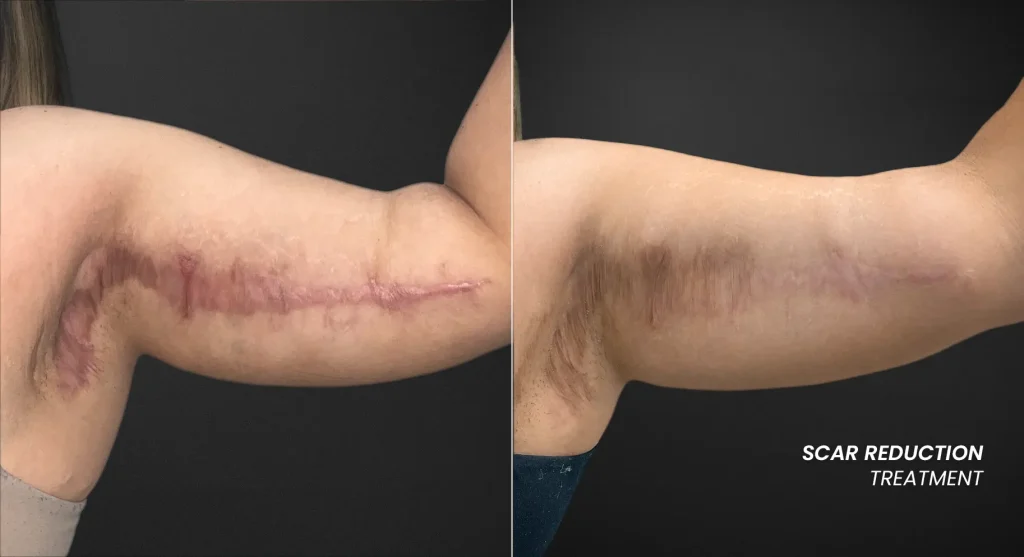
Congenital pigmented lesions and post-procedure scars with pigmentation require the most individualized approach. Depth, density, and pigment type determine which modalities are appropriate and what degree of improvement is realistic. Microneedling with PDRN is commonly used to improve the texture and color of pigmented scars. Some lesions respond to laser treatment; others require clinical assessment before any protocol is designed. At Perfect B, patients with complex pigmented lesions receive an intake assessment before treatment begins.
The Perfect B Brightening Treatment Plan: What It Includes
The Perfect B Brightening Treatment Plan is a coordinated protocol designed around how your skin actually behaves, not a menu of individual services. Modalities are selected at consultation based on pigmentation type, Fitzpatrick skin type, depth of pigmentation, and treatment history. The full toolkit includes:
Lasers and Light-Based Treatments
IPL and Pico laser are used for discrete pigmented lesions, sun damage, and post-inflammatory marks in lighter Fitzpatrick skin types. We frequently stack an IPL or Pico pass with microneedling in the same session for patients where both pigmentation and texture improvement are needed simultaneously. For melasma, lower-fluence passes are used to avoid the rebound risk associated with aggressive settings.
Chemical Peels
Medical-grade chemical peels remove superficial skin layers through controlled exfoliation, accelerating clearance of epidermal melanin deposits. Peel selection depends on skin type and pigmentation type. For patients with melasma, mandelic acid and low-concentration glycolic peels are preferred over aggressive TCA protocols to minimize post-inflammatory risk.
Microneedling with PDRN and Exosomes
Microneedling creates micro-channels that break up pigmentation clusters and open the dermis for maximal penetration of brightening serums and PDRN. Applied immediately after microneedling, PDRN (Salmon DNA) activates tissue repair pathways, reduces residual inflammation, and supports more even melanin distribution as the skin heals. For patients with PIH in Fitzpatrick types IV-VI, the combination of microneedling plus PDRN is often our preferred primary protocol because it avoids the laser risk in darker skin types while still producing strong clearance results. The clinical evidence supporting PDRN in wound healing, skin hydration, and pigmentation reduction makes it one of the most evidence-backed skin boosters for combination brightening protocols.
Medical-Grade Bleaching Creams
Prescription formulations containing hydroquinone, azelaic acid, kojic acid, niacinamide, or combination compounds are significantly more effective than over-the-counter brightening products. These are prescribed as part of the plan and used between in-clinic sessions to maintain continuous melanin suppression. For melasma, topical treatment is not optional, it is the anchor of the protocol.
Oral Medications
For patients with hormonally driven pigmentation, oral medications that regulate internal factors contributing to melanin overproduction are part of the plan. Tranexamic acid, used orally at clinical doses, has significant evidence for melasma reduction by inhibiting a melanocyte stimulation pathway. This is the kind of intervention that requires a medical environment and clinical oversight, not a spa or esthetician setting.
Facials with Deep Exfoliation
Monthly clinical facials incorporating deep exfoliation, brightening serums, and LED therapy maintain the progress made in laser and peel sessions between treatment cycles. They prevent the surface pigment accumulation that undoes in-clinic work when the skin is left without consistent maintenance. Patients in our brightening plan are often enrolled in a monthly facial maintenance protocol that runs in parallel with the active treatment series and sustains results long-term.
IV Antioxidant Cocktails
High-dose intravenous vitamin C, glutathione, and other antioxidants support skin clarity and even tone from the inside. IV glutathione inhibits tyrosinase, the enzyme central to melanin synthesis, making it a clinically relevant systemic complement to topical and in-clinic brightening treatments. IV antioxidant therapy is offered as part of the brightening plan for patients where internal oxidative stress is a contributing factor, particularly those with significant sun exposure history or complex melasma.
Why Miami Makes Hyperpigmentation Harder to Treat
Up to 90% of people living in consistently sunny climates develop some form of visible pigmentation after age 30. South Florida averages over 250 sunny days per year. UV radiation does not pause between treatment sessions. This is why every patient in our brightening plan receives a sun protection protocol as a non-negotiable component, and why the plan transitions to a long-term maintenance phase after the initial treatment series, not a discharge.
Patients who clear their pigmentation over a treatment series and then return to unprotected sun exposure without a maintenance protocol will see pigmentation return within 3 to 6 months. The Perfect B Brightening Treatment Plan anticipates this by building a post-treatment maintenance phase into every patient’s protocol, including topical guidance, periodic in-clinic sessions, and sun protection recommendations suited to Miami’s UV environment.
Frequently Asked Questions About Hyperpigmentation Treatment in Miami
1. How many sessions does it take to treat hyperpigmentation in Miami?
It depends on type and depth. Discrete sun spots on lighter skin types often lighten significantly in 2 to 3 IPL sessions. Melasma, which sits deeper and is hormonally driven, typically requires 4 to 6 or more sessions combined with ongoing topical and oral treatment. Post-inflammatory hyperpigmentation from acne in Fitzpatrick types IV-VI responds well to a 3 to 4 session microneedling and peel plan. Your provider will give you a realistic timeline based on your specific skin at your first appointment.
2. Can hyperpigmentation be fully removed?
For most epidermal pigmentation (sun spots, superficial PIH), significant to near-complete clearing is achievable with a consistent treatment plan. Melasma can be managed and substantially reduced but often requires ongoing maintenance to prevent recurrence, because the hormonal and UV triggers that produced it remain present. Dermal melasma is the most challenging category and requires the most realistic expectations. A clinical assessment tells you which type you have.
3. Is IPL safe for dark skin tones?
Standard IPL carries higher risk of post-inflammatory hyperpigmentation in Fitzpatrick types IV-VI because laser energy is absorbed by background melanin in addition to target pigment. At Perfect B, patients with darker skin tones are more commonly treated with Pico laser at appropriate settings, microneedling with PDRN, skin-type-compatible chemical peels, and topical or oral brightening agents. Skin type is assessed before any laser treatment is recommended.
4. What causes melasma and can it be cured?
Melasma is triggered by UV exposure, hormonal factors (particularly estrogen, progesterone, and thyroid hormones), and heat. It is more common in women and in Fitzpatrick types III-V. It is not permanently curable because the melanocytes that produced the excess pigmentation remain and can be restimulated. It is highly manageable with a consistent plan. Patients who maintain their topical protocol, follow sun protection guidance, and return for periodic maintenance sessions can keep melasma visibly controlled long-term.
5. What is the difference between a brightening facial and the Perfect B Brightening Treatment Plan?
A brightening facial provides surface exfoliation, brightening ingredient delivery, and a temporary glow. It does not address dermal melanin deposits, hormonal pigment drivers, or structural changes associated with long-standing hyperpigmentation. The Perfect B Brightening Treatment Plan is a structured multi-session protocol combining clinical-grade in-office treatments, prescription topicals, and oral medications to produce lasting pigmentation reduction that a facial alone cannot achieve.
6. How long until I see results?
Most patients see visible lightening within 2 to 4 weeks of their first session as surface epidermal pigment clears. Deeper improvement in tone, texture, and residual pigmentation builds across the series. Melasma and deeper dermal pigmentation show the most significant results after 8 to 12 weeks of consistent treatment. The maintenance phase that follows sustains and continues to improve results over the following 6 to 12 months.
Start Your Brightening Plan at Perfect B in Doral, FL
- 📍 Perfect B | 3905 NW 107th Ave, Suite 104, Doral FL 33178
- 🌞 All pigmentation types treated across all Fitzpatrick skin types
- 💳 Buy Now Pay Later: Cherry, Klarna, Afterpay, CareCredit
→ Book your hyperpigmentation consultation at Perfect B in Doral, FL