Perfect B, Doral Fl. | 07.09.26 | 12 min read.
This article is for general educational purposes and is not medical advice, a diagnosis, or a substitute for an in-person evaluation. Laser tattoo removal results, session counts, and timelines vary by person, ink, location, and skin type, and complete clearance is never guaranteed. Treatment must be planned and performed by a trained provider, and pricing is confirmed at a personal consultation.
Laser Tattoo Removal on Hands and Fingers in Miami: Why It Is Harder and What to Expect
If you are researching finger tattoo removal or hand tattoo removal, you have probably already sensed the honest truth: these are among the hardest areas on the body to clear. The skin on the hands and fingers is thin, there is little fat underneath, and circulation is weaker than on the arm or torso, which slows the process the whole treatment depends on. That does not mean removal is impossible, it means you deserve realistic expectations before you start, not a sales pitch.
This guide explains exactly why hands and fingers behave differently, how many sessions to reasonably expect, why finger ink so often fades unevenly, and how the PiQo4 by Lumenis laser is used at our Doral clinic with settings matched to Miami’s tanned and darker skin tones. The goal is an honest picture of what hand and finger tattoo removal actually involves, so you can decide with real information.
Key Takeaways
- Hardest area, honestly: hands and fingers usually need more sessions than the arm or back, and full clearance is not guaranteed.
- Blame the anatomy: thin skin, little fat, and weak lymphatic clearance slow how fast shattered ink is carried away.
- Fingers fade unevenly: ink blowout and migration mean some spots clear faster than others, which is normal here.
- Skin tone matters: darker and tanned skin can be treated, but PiQo4 settings must be matched to your Fitzpatrick type to protect pigment.
- Planned, not guessed: a provider maps your session range and cost at a consultation, and financing keeps a full course manageable.
Why Are Hands and Fingers the Hardest Area to Remove?
Laser tattoo removal works by shattering ink into tiny fragments that your immune system and lymphatic system then carry away over the weeks between sessions. That last part is the catch for hands and fingers. These areas have thin skin, very little fat beneath, and relatively poor circulation and lymphatic drainage compared to the arm, chest, or back. So even when the laser breaks the ink perfectly, your body clears those fragments more slowly here, which stretches out the timeline and adds sessions.
On top of that, hands and fingers are in constant motion and get washed dozens of times a day, so the treated skin is under more stress during healing than a covered area would be. None of this makes finger tattoo removal a bad idea, it simply means the process asks for more patience. Understanding it up front is what separates a satisfied patient from a frustrated one.
Why Finger Ink Fades Unevenly
One thing that surprises people is how patchy finger tattoos can look mid-course. Finger and hand tattoos are often done with heavy ink saturation on very thin skin, and amateur or stick and poke work can deposit ink at inconsistent depths. This leads to ink blowout, where pigment spreads into surrounding tissue, and uneven migration, so some areas hold onto ink while others clear quickly. It is completely normal for a finger tattoo to fade in a blotchy pattern before it evens out over later sessions.
A good provider expects this and treats accordingly, adjusting the plan as the tattoo responds rather than promising a straight line to clear skin. Managing that expectation is part of the job, and it is why a staged, monitored course beats trying to rush the process.
How Many Sessions Does a Hand or Finger Tattoo Take?
Here is the honest answer most sites avoid: hand and finger tattoos usually sit at the higher end of the session range, and some may never reach 100 percent clearance. While a well placed tattoo on the arm might clear in several sessions, hands and fingers often need more, spaced several weeks apart to let the skin recover and the ink clear between visits. The exact number depends on the factors in the table below, which is why a real range is only set after a provider sees your tattoo.
| Factor | Why it matters on hands and fingers |
|---|---|
| Location | Thin skin, little fat, and weak lymphatic clearance slow fading and add sessions |
| Ink depth and blowout | Deep or amateur ink spreads unevenly, so areas fade at different rates |
| Ink color | Black and dark inks respond best; greens and blues typically need more sessions |
| Skin tone (Fitzpatrick) | Darker and tanned skin needs matched settings, which prioritizes safety over speed |
| Tattoo age and saturation | Older, lighter ink often clears more readily than fresh, heavily saturated work |
Because the count varies so much, be wary of any clinic promising an exact number online. For a realistic sense of how clearance progresses over a course, what realistic laser tattoo removal before and after results look like across a full course of sessions and how gradually the ink lightens is a useful reference.
Will a Hand or Finger Tattoo Fully Clear?
Sometimes yes, sometimes it lightens dramatically without reaching complete clearance. Because of the anatomy and the uneven ink common in these areas, hands and fingers carry a higher chance of residual shadowing than a tattoo on the arm. An honest provider will tell you this before you commit, set the goal as significant fading with a realistic shot at full clearance, and never guarantee a blank slate. That candor is exactly what you want from a medical setting rather than a quick promise.
The upside is that even substantial fading often satisfies people who simply want a finger tattoo gone from daily view or prepared for a cover up. The right expectation, set early, is what makes the result feel like a success.
Darker and Tanned Skin: Why Fitzpatrick-Matched Settings Matter
In Miami, most patients have naturally darker or frequently tanned skin, and that changes how tattoo removal must be done. The pigment in your skin, melanin, competes with tattoo ink for the laser’s energy, so aggressive settings can cause burns or leave pale or dark patches. The safe approach is to match the laser settings to your Fitzpatrick skin type, prioritizing protecting your skin over rushing the tattoo, which sometimes means a few more, gentler sessions.
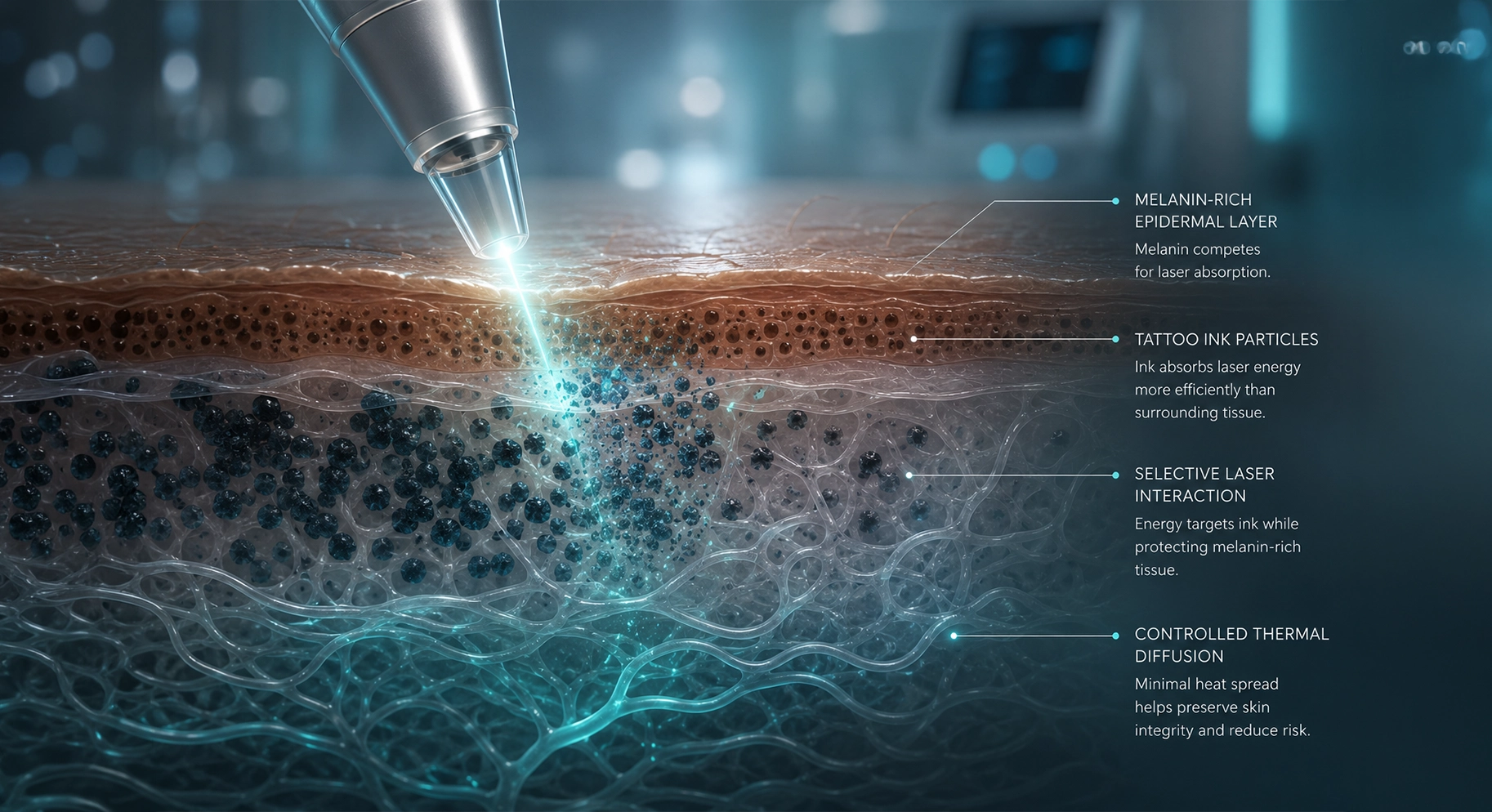
This is not a reason to avoid treatment, it is a reason to choose a provider who does it correctly. For the full picture, how laser tattoo removal is done safely on dark skin in Miami using Fitzpatrick matched PiQo4 settings to lower the risk of pigment changes and burns goes deeper into the protocol.
How PiQo4 by Lumenis Helps on Difficult Areas
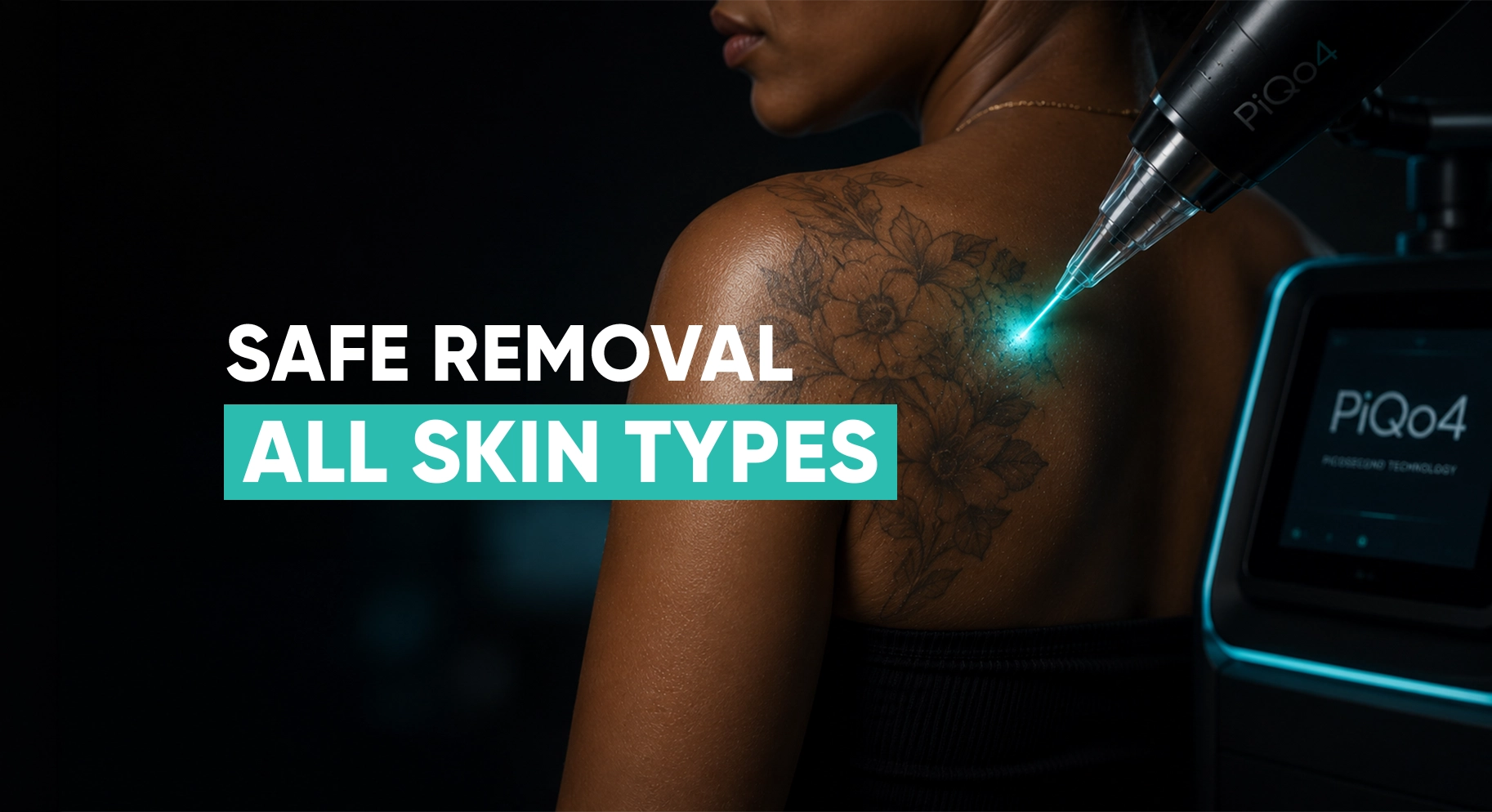
The device matters, especially on stubborn areas like hands and fingers. The PiQo4 by Lumenis uses four wavelengths and both picosecond and nanosecond pulses, which lets a provider target a wider range of ink colors and shatter both large, deep deposits and smaller, shallower fragments. Smaller fragments are easier for the body to carry away, which is exactly the bottleneck on poorly draining areas like the hands.
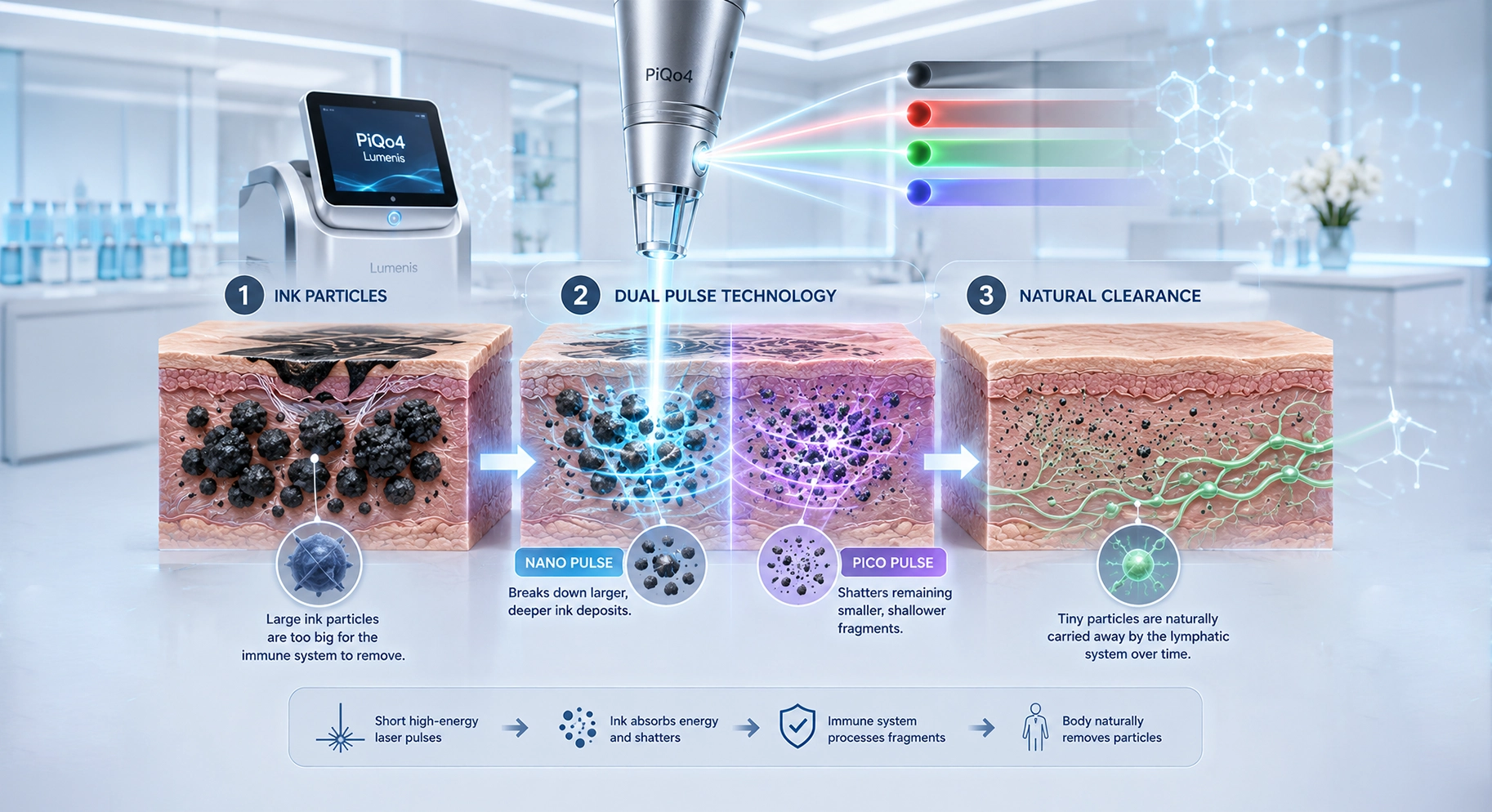
The wavelength range also helps with the colored inks that hands and finger tattoos sometimes include. To understand the technology itself, how the PiQo4 by Lumenis laser uses four wavelengths and both picosecond and nanosecond pulses to shatter ink while protecting the surrounding skin explains why device choice changes results.
Aftercare for Hands You Use and Wash All Day
Aftercare is more demanding on hands and fingers precisely because you cannot rest them. The treated skin needs to be kept clean, moisturized, and protected, but your hands are constantly washing, gripping, and exposed to sun. Diligent aftercare between sessions protects the skin, lowers the risk of complications, and helps each session build on the last. Sun protection is especially important in Miami, since treated skin is more vulnerable to pigment changes.
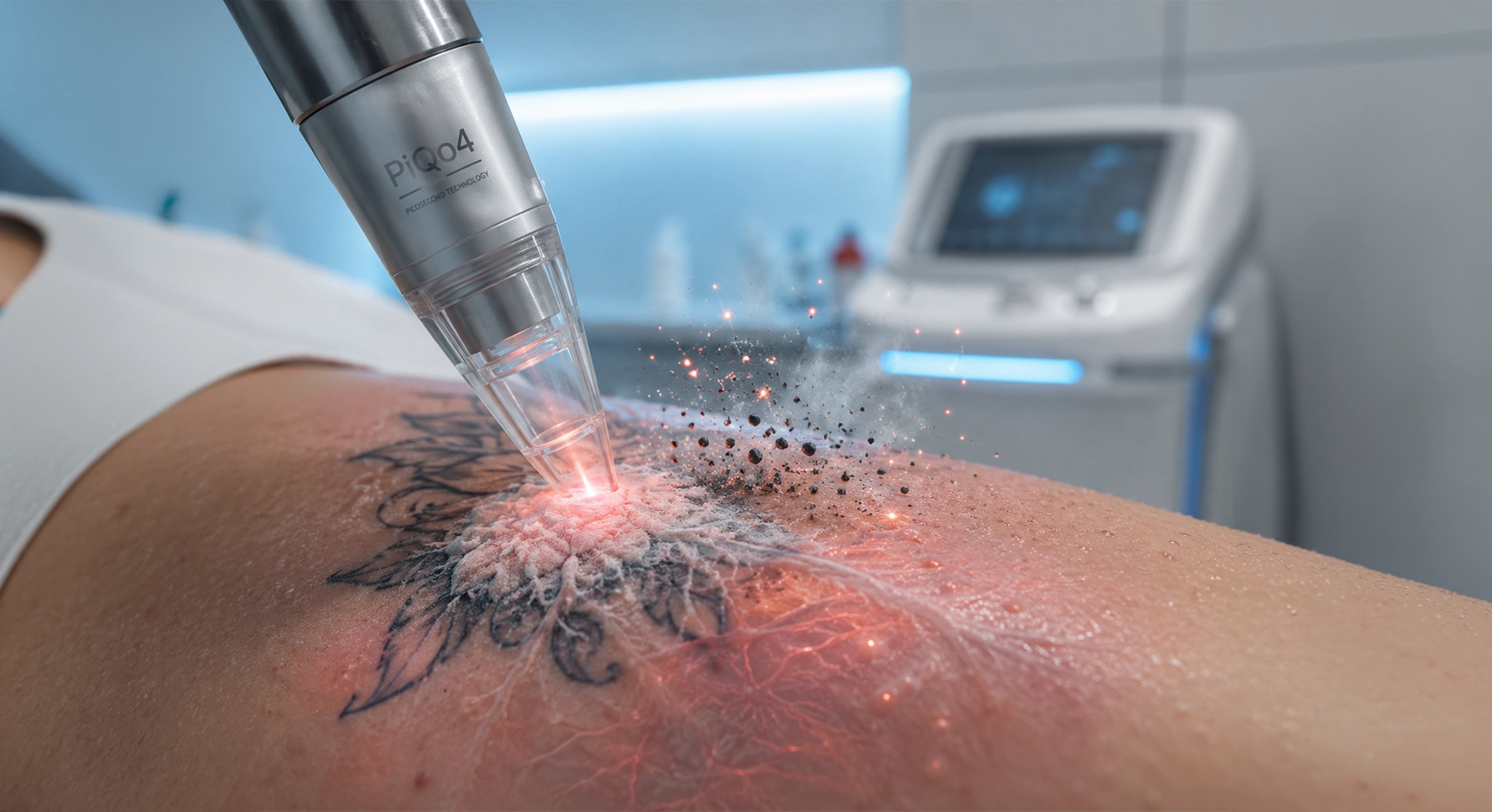
Your provider will give you specific instructions, and following them closely matters more on hands than almost anywhere else. Our full aftercare guide for laser tattoo removal, covering how to protect the treated area and reduce the risk of complications between each session and our session by session guide to how laser tattoo removal heals for South Florida patients, including what each stage looks and feels like walk through the whole process.
Reducing the Risk of Scarring and Pigment Change
Scarring and pigment change are the two risks people worry about most, and both are lower when treatment is done properly. Correct settings, adequate spacing between sessions, and disciplined aftercare all reduce the chance of a burn, a scar, or a light or dark patch. Hands and fingers deserve extra caution because the skin is thin, so a careful provider errs toward gentler, more spaced sessions rather than pushing for speed.
If scarring is a specific concern for you, what actually causes scarring from laser tattoo removal and the steps a proper protocol and good aftercare take to prevent it is worth reading before you begin. The guidance from the American Academy of Dermatology on how dermatologists approach laser tattoo removal and manage its risks echoes the same principle: technique and skin type drive both safety and results.
Cost, Financing, and Booking in Doral
Because hand and finger tattoos vary so much in size, ink, and session count, cost is quoted after a provider evaluates your tattoo rather than as a flat online price. What stays consistent is transparency: you should leave a consultation understanding the likely session range, the spacing, the aftercare, and the cost, along with financing options so a full course fits a monthly budget. Perfect B offers financing through Cherry, Klarna, Afterpay, and CareCredit.
Choosing the right provider is half the outcome. For what to look for, what to look for when choosing a laser tattoo removal provider near you, from the device used to the operator’s training and how they handle skin of color is a practical checklist. According to the United States Food and Drug Administration fact sheet on tattoos and permanent makeup and their removal, professional removal is the safest route.
Frequently Asked Questions
1. How many sessions does a finger tattoo take to remove?
Finger and hand tattoos usually need more sessions than tattoos on the arm or back, spaced several weeks apart, and some may not reach complete clearance. The exact range depends on ink, depth, color, and your skin type, so a provider sets it after seeing your tattoo rather than online.
2. Can hand and finger tattoos be fully removed?
Sometimes, but not always. Because of thin skin and uneven ink, hands and fingers carry a higher chance of residual shadowing than other areas. Most people achieve significant fading, and an honest provider sets that as the realistic goal rather than guaranteeing a blank slate.
3. Why do finger tattoos fade slower or unevenly?
Thin skin, little fat, and weak lymphatic clearance slow how fast shattered ink is carried away, and ink blowout on fingers deposits pigment unevenly. Together this makes finger tattoos fade in a patchy pattern before they even out over later sessions, which is normal.
4. Does hand or finger tattoo removal scar?
The risk is low when treatment is done correctly with proper settings, adequate spacing, and good aftercare. Hands and fingers deserve extra caution because the skin is thin, so a careful provider uses gentler, more spaced sessions to reduce the chance of scarring or pigment change.
5. Is tattoo removal more painful on the hands?
Hands and fingers can feel more sensitive because the skin is thin and close to bone, but sessions are brief and providers use cooling and comfort measures. Most people describe it as tolerable, and your provider can discuss options to keep you comfortable during treatment.
6. Is laser tattoo removal safe on darker or tanned skin?
Yes, when the settings are matched to your Fitzpatrick skin type, which matters in Miami. Because melanin competes with ink for the laser’s energy, a provider prioritizes protecting your skin, which can mean a few more gentle sessions to lower the risk of burns or pigment changes.
7. How long do I wait between sessions?
Sessions are typically spaced several weeks apart to let the skin recover and the body clear shattered ink, and hands may need slightly longer because clearance is slower there. Your provider sets the spacing based on how your skin and tattoo are responding.
8. How should I care for my hands after treatment?
Keep the area clean, moisturized, and protected, avoid picking, and use sun protection, which is critical in Miami. Because hands are used and washed constantly, disciplined aftercare matters more here, and your provider will give you specific instructions to follow between sessions.
Get an Honest Plan for Your Hand or Finger Tattoo
Hand and finger tattoo removal is absolutely doable, it just rewards honesty over hype. The right plan starts with a provider who examines your tattoo and your skin, tells you a realistic session range, matches the PiQo4 settings to your skin tone, and sets expectations you can trust. If complete clearance is unlikely, you will hear that up front, which is exactly the point of choosing a medical setting for it.
Reach out to Perfect B in Doral for an evaluation and a clear plan, with financing available so a full course stays within reach. An honest starting point beats a surprise halfway through.
- 📍 Visit us at Perfect B, 3905 NW 107th Ave, Suite 104, Doral FL 33178
- 📞 Call or message us at (786) 502-2260
- 💳 Financing available through Cherry, Klarna, Afterpay, and CareCredit