
Perfect B, Doral FL. | 05.08.26 | 9 min read.
This post is for educational purposes only and does not substitute for personalized medical advice. GHK-Cu peptide protocols vary based on skin concern, clinical history, and individual response. Consult a licensed medical provider before beginning any peptide treatment.
What GHK-Cu Actually Does in the Skin
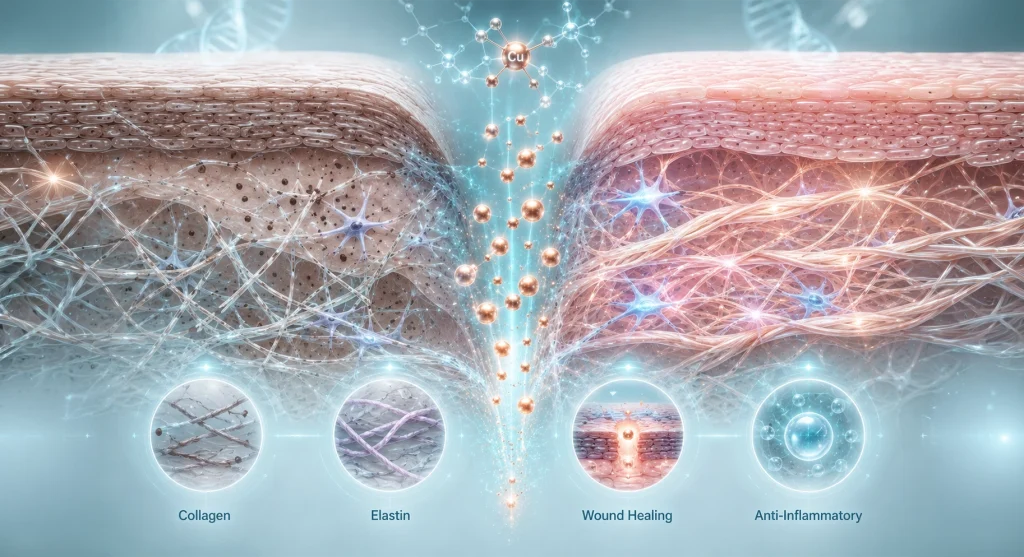
GHK-Cu is a naturally occurring copper-binding tripeptide: glycyl-L-histidyl-L-lysine complexed with a copper ion. It was first isolated in human plasma in 1973, and subsequent decades of research have revealed a mechanism that goes considerably beyond simple collagen stimulation. A landmark review published in Biomolecules documenting GHK-Cu’s regulatory effects on over 4,000 human genes, including significant upregulation of collagen synthesis, anti-inflammatory pathways, and stem cell mobilization established the molecular basis for its clinical use. GHK-Cu does not simply tell fibroblasts to make more collagen. It modulates gene expression across a range of pathways simultaneously.
For skin, the three most clinically relevant effects are collagen and elastin synthesis, wound healing acceleration, and anti-inflammatory regulation. GHK-Cu stimulates the production of collagen types I, II, and III, as well as elastin and the glycosaminoglycans that give skin its volume and hydration. It activates the wound healing cascade by promoting angiogenesis and accelerating the migration of repair cells to the treatment site. And it simultaneously suppresses the inflammatory signals that slow healing and increase the risk of post-inflammatory pigmentation. That anti-inflammatory component is particularly relevant for our patient population in Doral, where Fitzpatrick III-V skin types require a treatment approach that produces repair without triggering the melanocyte response.
The three main repair signals: collagen, wound healing, anti-inflammatory
These three mechanisms do not operate independently. They are coordinated. When GHK-Cu activates its pathways, it is simultaneously building new structural tissue, accelerating the removal of damaged tissue, and suppressing the inflammatory environment that would otherwise slow both of those processes. The clinical result is faster visible improvement with less redness and downtime than equivalent treatments that stimulate collagen without the anti-inflammatory component. This is why GHK-Cu sits at the center of our stacking protocol at Perfect B, rather than functioning as an add-on to other treatments.
Why injectable plus topical produces a different result than topical alone
GHK-Cu applied topically to intact skin has limited dermal penetration. The molecule is small enough to cross the epidermal barrier to some degree, but reaching fibroblasts in the mid-to-deep dermis where the structural work happens requires either injection or a delivery mechanism that bypasses the barrier. This is precisely where the combination with microneedling becomes clinically meaningful, and why we approach GHK-Cu both as an injectable and as a post-needling topical. → See Perfect B’s complete guide to GHK-Cu copper peptide in Doral, FL, covering mechanism, applications for skin and hair, and what a full protocol looks like.
Key Takeaways
- GHK-Cu activates over 4,000 human genes including those controlling collagen synthesis, anti-inflammatory pathways, wound healing, and stem cell mobilization. It is not a simple collagen booster.
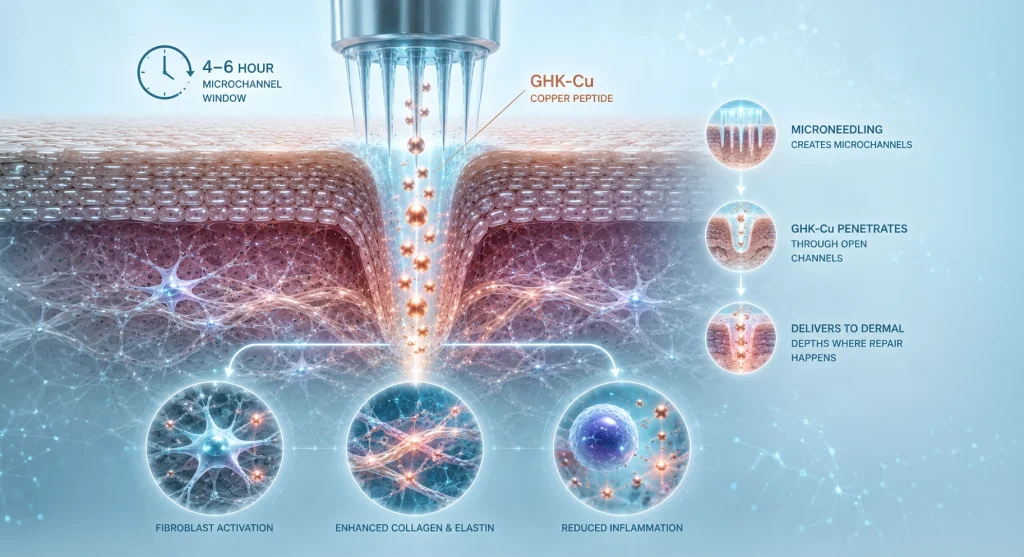
- Microneedling creates microchannels that remain open for 4 to 6 hours, allowing topically applied GHK-Cu to penetrate to dermal depths that intact skin would block. This window is the clinical foundation of the stack.
- At Perfect B, we use GHK-Cu as both an injectable and a post-microneedling topical to activate the systemic repair mechanism while simultaneously delivering the peptide to the dermis through open channels.
- The stack produces faster early improvement than microneedling alone, particularly in the first three weeks. Published clinical data supports accelerated initial response with the combination approach.
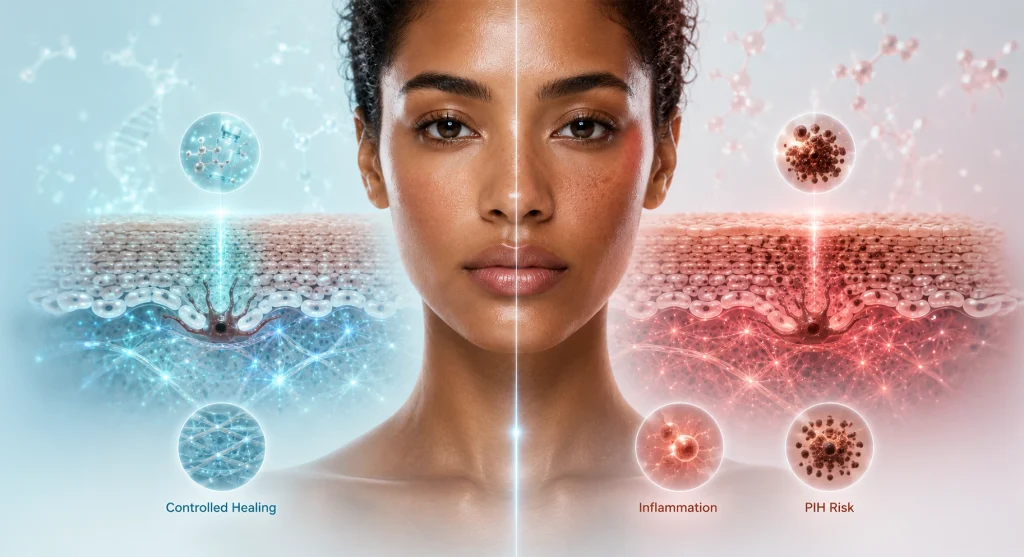
- For Fitzpatrick III-V skin, the anti-inflammatory mechanism of GHK-Cu is an active clinical advantage, reducing the inflammatory response that can lead to post-inflammatory hyperpigmentation in darker skin tones.
Why Microneedling Opens the Door for GHK-Cu
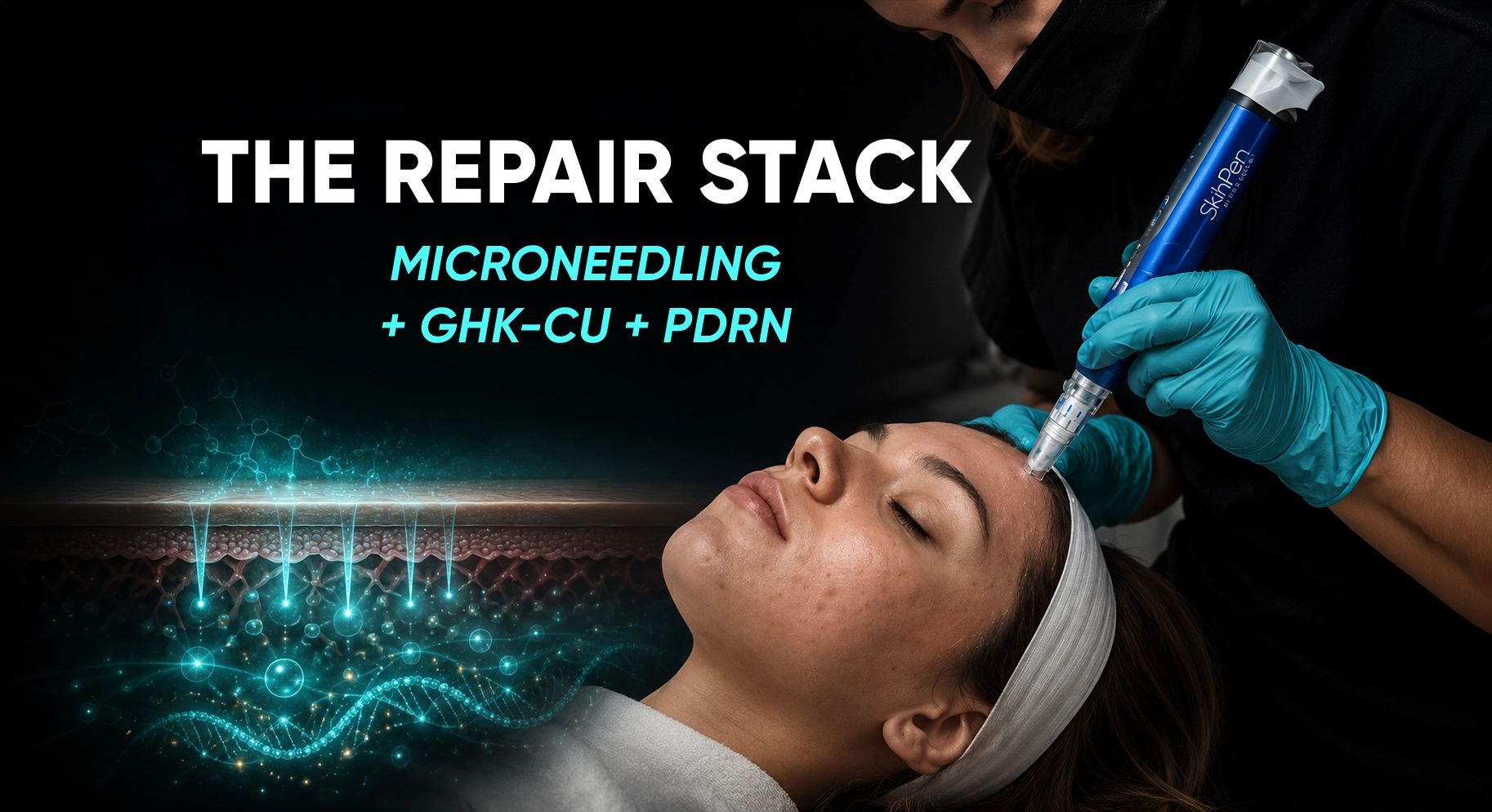
Microneedling creates thousands of controlled micro-injuries in the skin using fine needles set at precise depths. Each needle pass creates a channel that temporarily bypasses the epidermal barrier, providing a direct path from the skin surface into the dermis. In standard microneedling protocols, these channels are the mechanism through which the wound healing cascade is activated. In the Perfect B stacking protocol, they serve a second function: delivery routes for topically applied GHK-Cu that would otherwise be blocked by intact skin.
The microchannel window: 4 to 6 hours of enhanced penetration
The microchannels created by SkinPen microneedling remain functionally open for approximately 4 to 6 hours after treatment. During this window, substances applied to the skin surface can penetrate directly to the dermis at concentrations that approach injectable delivery. This transforms topical GHK-Cu application from a cosmetically limited surface treatment into a clinically relevant dermal intervention. The timing of application matters: GHK-Cu applied within the first 30 minutes of completing the microneedling session achieves the deepest and most consistent penetration. Anything applied after the 6-hour mark is working on progressively closing channels and produces substantially less dermal delivery.
What happens at the dermis level when both are combined
When GHK-Cu reaches fibroblasts in the dermis through post-microneedling application, it amplifies the wound healing cascade already initiated by the needle trauma. The microneedling triggers the inflammatory phase of healing, releasing growth factors that signal fibroblasts to begin collagen production. GHK-Cu, delivered simultaneously to those same fibroblasts, amplifies the collagen signal while suppressing the excess inflammatory response. The result is a stronger collagen stimulus with a faster and calmer recovery than either intervention produces independently. Some practitioners report amplification of fibroblast response by an estimated 40 to 60 percent compared to microneedling alone, based on observational clinical data, though controlled trial data at this scale is still accumulating.
What the Clinical Evidence Says About the Combination
A randomized controlled trial published in the Journal of Cutaneous and Aesthetic Surgery comparing dermaroller monotherapy versus dermaroller combined with copper peptide for acne scars across 16 weeks produced findings that are clinically useful but deserve an honest reading.
The 2025 RCT: dermaroller plus copper peptide vs dermaroller alone
The study followed patients with facial acne scars over 16 weeks using the Goodman and Baron qualitative and quantitative acne scar index. The copper peptide used was a 0.5 to 1 percent GHK-Cu serum booster applied during dermaroller sessions. The combination group showed significantly higher improvement scores than the dermaroller-only group at baseline and Week 3, with p-values indicating statistically significant differences. From Week 6 onward, the p-values showed no significant difference between groups. The study also noted a higher risk of hyperpigmentation in the copper peptide group compared to dermaroller alone.
The honest reading of the data
What the study demonstrates is that copper peptide combined with microneedling produces faster initial improvement than microneedling alone. By Week 16, both groups had similar total improvement. At Perfect B, we interpret this in two ways. First, the acceleration of early improvement is clinically meaningful for patients with time-sensitive goals. Second, the hyperpigmentation risk note directly shapes our protocol for Fitzpatrick IV-V patients, where we apply more conservative needle depths and timing. The evidence does not recommend against using copper peptide with microneedling. It recommends using it with clinical judgment about who you are treating and how.
The Perfect B Protocol: How We Stack GHK-Cu and Microneedling
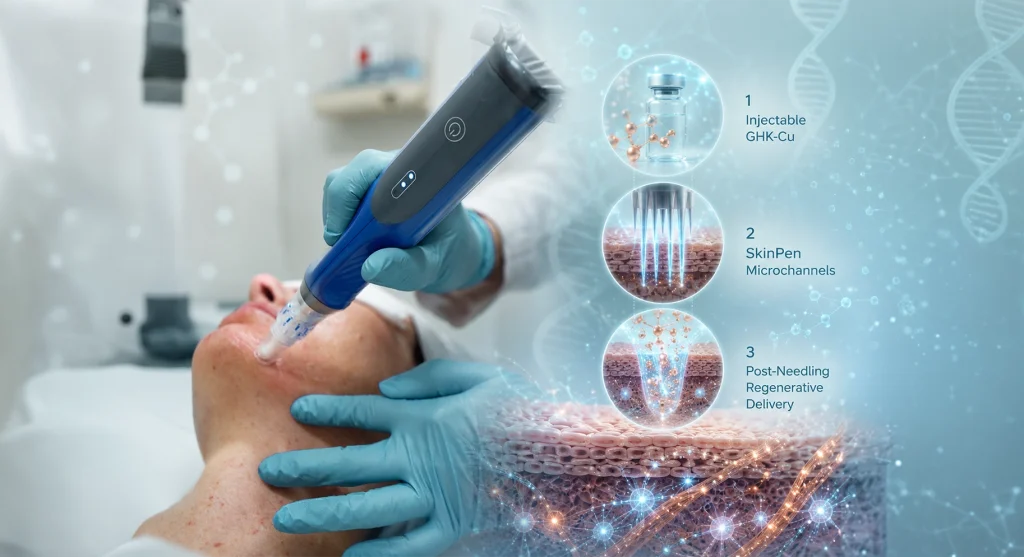
The protocol at Perfect B is not a single treatment. It is a three-step sequence applied within a single session that combines systemic and topical delivery of GHK-Cu with the mechanical collagen stimulus of SkinPen microneedling.
Step 1: GHK-Cu subcutaneous injection
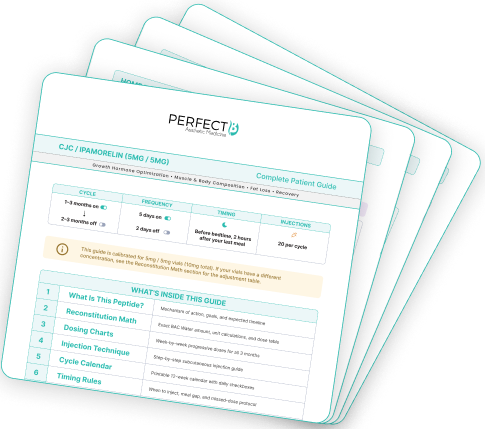
Before or at the session, GHK-Cu is administered via subcutaneous injection. This delivers the peptide systemically, activating the repair pathway from within. The injectable GHK-Cu works at a different tissue level than the topical application that follows. It stimulates fibroblasts and signaling pathways throughout the dermal and subdermal layers, not just at the needle-channel entry points. → See Perfect B’s clinical guide to GHK-Cu dosage and injection protocols in Doral, FL, including cycle timing and reconstitution.
Step 2: SkinPen microneedling calibrated to the concern
Following preparation of the treatment area and topical numbing, the SkinPen session is performed at depth settings calibrated to the specific skin concern. Skin laxity and fine lines are treated at shallower depths than active acne scar correction. The needle depth determines how deep the microchannels reach and therefore how deeply the subsequent topical application can penetrate. This calibration is a clinical decision made at each session based on the current state of the skin, not a fixed protocol setting applied uniformly.
Step 3: GHK-Cu and PDRN topical application through open microchannels
Immediately following the microneedling session, GHK-Cu serum is applied to the treatment area while the microchannels are fully open. Depending on the patient’s clinical picture, we also apply PDRN at this stage. PDRN’s A2A receptor activation adds a second, complementary regenerative pathway to the collagen induction already initiated by the microneedling. The combination of GHK-Cu’s collagen and anti-inflammatory signaling with PDRN’s DNA repair and cellular proliferation pathway produces a broader repair stimulus than either active delivers post-microneedling independently. → Learn how Perfect B approaches SkinPen microneedling treatment planning in Doral, FL, including when and how we integrate skin boosters into the session protocol.
Which Skin Concerns Respond Best to This Stack?
Skin laxity, fine lines, and collagen loss
For patients presenting with the early to moderate signs of intrinsic and extrinsic aging, including skin laxity, superficial to mid-depth fine lines, and loss of skin density, the GHK-Cu plus microneedling stack is one of the most effective non-ablative approaches available. GHK-Cu’s collagen I and III stimulation combined with the wound healing cascade from microneedling produces progressive thickening and tightening of the dermis over a series of sessions. In Miami, where year-round UV exposure accelerates collagen breakdown, this combination addresses both the structural repair and the anti-inflammatory management of photoaged skin simultaneously.
Acne scars and post-acne texture
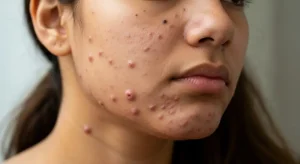
For atrophic acne scars, the combination works through the same layered mechanism. Microneedling initiates collagen induction at the scar depth. GHK-Cu applied through the microchannels amplifies the fibroblast response specifically at the dermis level where the scar structure lives. The anti-inflammatory component is particularly relevant for acne scar patients because many have some ongoing inflammatory activity in the scar tissue. Reducing that inflammation while stimulating collagen production produces a dual benefit that microneedling alone cannot achieve. → See how Perfect B treats acne scars with the SkinPen and post-needling skin boosters in Doral, FL, including session timelines and realistic outcome expectations.
Hair thinning: GHK-Cu plus microneedling for scalp
GHK-Cu’s effects on hair follicles are one of the most clinically interesting applications of the peptide. It stimulates follicle stem cells, prolongs the anagen phase of the hair cycle, and promotes the vascular supply that keeps follicles active. When combined with scalp microneedling, GHK-Cu penetrates directly to the follicle level through needle-created channels. At Perfect B, GHK-Cu injection combined with scalp microneedling is a component of our hair restoration protocols for patients with diffuse thinning where follicle stimulation is the primary goal. Most patients see meaningful improvement after completing 3 cycles, roughly three months of consistent treatment.
Fitzpatrick III-V and Why Skin Tone Affects the Protocol
The JCAS 2025 study specifically noted a higher risk of hyperpigmentation in the copper peptide plus dermaroller group compared to dermaroller alone. This finding is clinically significant for a patient population like ours in Doral, where the majority of patients present with Fitzpatrick III, IV, and V skin tones. Post-inflammatory hyperpigmentation in darker skin is triggered by the inflammatory phase of healing. If that inflammatory response is excessive, or if the skin is pushed too aggressively in a single session, the melanocytes respond by producing excess pigment.
Our protocol adjustments for Fitzpatrick IV-V patients using the GHK-Cu stack include more conservative SkinPen depth settings, lower needle density on the first session, an extended recovery window between sessions compared to lighter skin types, consistent mineral sunscreen guidance beginning two weeks before the first session, and careful timing to avoid treating recently tanned skin. GHK-Cu’s anti-inflammatory mechanism actually partially mitigates the hyperpigmentation risk compared to microneedling without the peptide, but that benefit requires conservative technique to realize.
What to Expect: Timeline and Results in Miami
Session by session: what changes and when
Most patients complete a series of 3 to 5 sessions spaced 4 to 6 weeks apart. The spacing allows the collagen remodeling cycle to progress between sessions. After session one, most patients notice improved skin texture and luminosity within one to two weeks. Fine lines begin to soften. After sessions two and three, the structural improvement deepens. Acne scar floors begin to elevate. Skin density increases noticeably. By session four or five, the cumulative collagen remodeling is substantially visible. The full extent of improvement from any given series continues to develop for three to six months after the final session.
Miami aftercare specifics
In the first 48 hours after a session, avoid direct sun exposure entirely, keep the skin clean and barrier-supported with gentle cleanser and fragrance-free moisturizer, and do not apply active ingredients including retinoids, vitamin C, or chemical exfoliants. In the week following treatment: mineral sunscreen SPF 50 every morning without exception, no pool or ocean exposure for two weeks, no high-sweat outdoor activities for one week. Miami’s humidity maintains skin moisture during healing, which is beneficial, but the heat and bacterial environment require extra care to prevent contamination of the treatment area during the first 72 hours.
Frequently Asked Questions
1. How many GHK-Cu plus microneedling sessions do I need?
Most patients complete 3 to 5 sessions spaced 4 to 6 weeks apart for a full skin rejuvenation course. Hair restoration protocols typically follow a similar spacing with 3 cycles as a starting series. The number of sessions is determined at consultation based on skin concern severity, scar depth, and whether the goal is maintenance or active correction.
2. Can I use GHK-Cu with microneedling if I have dark skin?
Yes, with the right protocol adjustments. The combination is safe and effective for Fitzpatrick III to V skin when the needle depth and session frequency are calibrated conservatively, and when the patient follows consistent sun protection. At Perfect B, Fitzpatrick assessment is part of every pre-treatment evaluation and shapes the entire session protocol.
3. How is the GHK-Cu applied at Perfect B?
We use GHK-Cu both as a subcutaneous injectable and as a topical application post-microneedling. The injectable activates the systemic repair pathway. The post-needling topical delivers the peptide directly to the dermis through open microchannels. The combination of both delivery methods produces results that neither method achieves independently.
4. Is there downtime after a GHK-Cu plus microneedling session?
Most patients experience redness and minor swelling for 24 to 48 hours. By day three, most of the visible reaction has resolved. The skin may feel dry or tight during the first week as healing progresses. Full social presentability typically returns within 3 to 5 days. We advise patients to avoid major social or outdoor commitments in the first 48 hours.
5. Can GHK-Cu be combined with other treatments at Perfect B?
Yes. GHK-Cu is frequently stacked with PDRN post-microneedling. For patients on broader longevity or optimization protocols, GHK-Cu injections may also be combined with NAD+ therapy, BPC-157, or other peptides depending on their clinical goals. The stack is always built on a clinical assessment, not a menu selection.
6. How soon will I see results from the combination?
Visible improvement in texture and luminosity typically appears within one to two weeks of the first session. Structural improvements in scar depth, skin laxity, and collagen density develop progressively over the series and continue to improve for three to six months after the final session. The six-month result is substantially better than the three-month result.
7. Is GHK-Cu safe?
GHK-Cu has an extensive safety record in topical applications and is well-tolerated in injectable protocols at appropriate doses. Contraindications include Wilson’s disease and hemochromatosis, both of which involve copper metabolism disorders. At Perfect B, we review relevant medical history before starting any peptide protocol. Mild temporary redness at the injection site is the most common reported side effect of the injectable.
Closing: Why the Stack Matters More Than the Individual Parts
GHK-Cu and SkinPen microneedling are both effective tools used independently. What happens when they are combined correctly and sequenced specifically is something neither produces alone: a triple-layered repair signal delivered at three tissue levels simultaneously. The injectable activates the systemic pathway. The microneedling initiates the wound healing cascade. The post-needling topical reaches fibroblasts directly through open channels. Each layer amplifies the others.
At Perfect B in Doral, FL, this protocol is not an experiment. It is a structured clinical sequence built on published evidence, adapted to the specific skin biology of our patient population, and refined through practice. The combination of GHK-Cu’s gene-regulatory effects with microneedling’s physical collagen induction produces a result that justifies the layered approach.
📍 Visit us at Perfect B, Doral FL
📞 Call or message us at (786) 502-2260