Perfect B, Doral Fl. | 06.01.26 | 9 min read.
This content is for educational purposes only and does not substitute for medical advice. Back acne that is severe, cystic, or not responding to at-home treatment should be evaluated by a licensed medical provider. For medically guided care, see how acne is treated at Perfect B in Doral with a plan matched to your skin, from topicals through in-office care.
What Is Bacne and Why Does the Back Break Out More Than Other Areas?
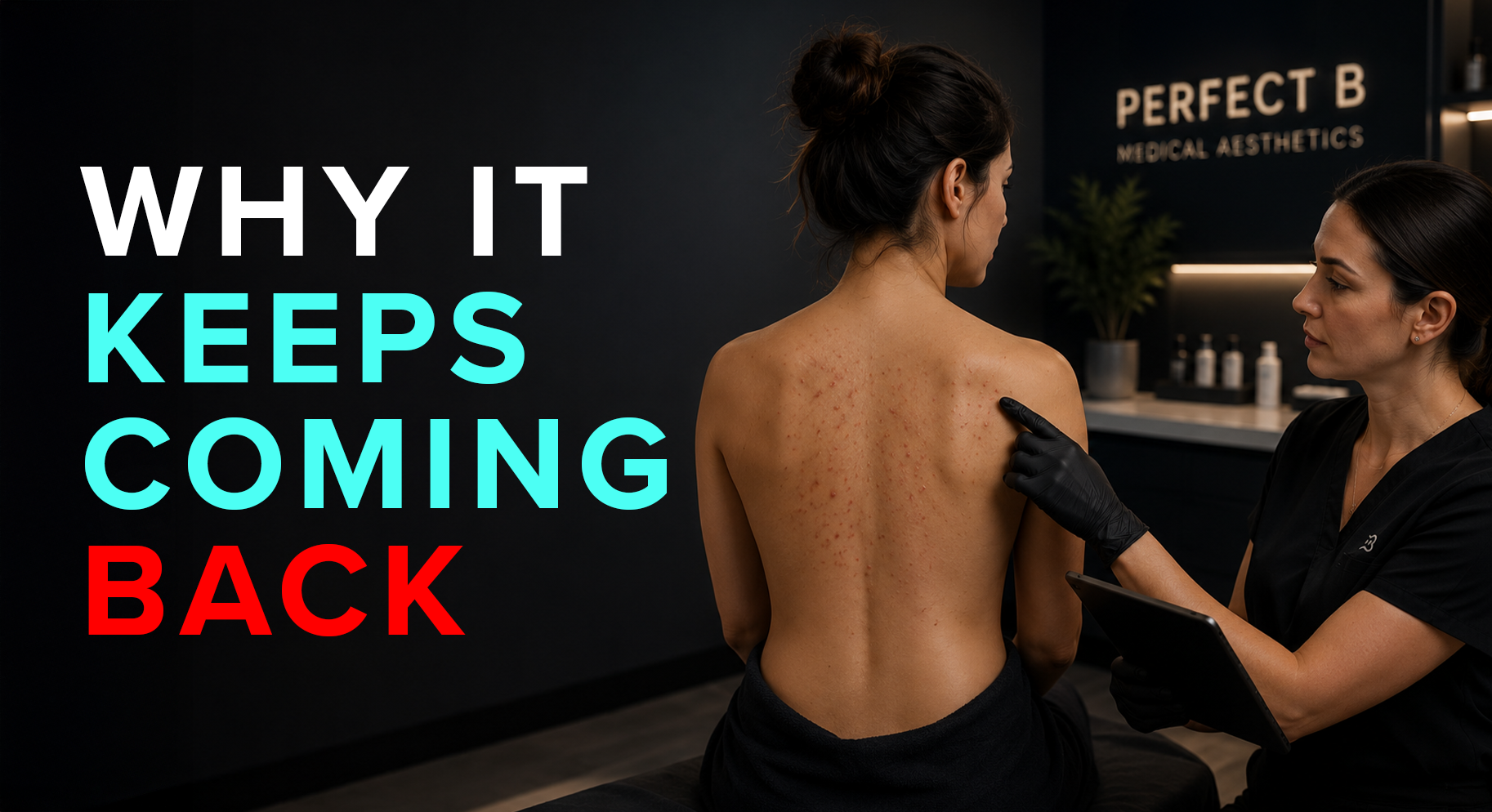
Back acne forms through the same mechanism as facial acne: sebaceous glands overproduce oil, dead skin cells accumulate, and the combination clogs pores. What makes the back particularly prone to breakouts is a combination of factors that are not present to the same degree on the face. The back has a high density of sebaceous glands. It is covered by clothing that traps heat, sweat, and friction against the skin for hours at a time. It is harder to reach for consistent cleansing. And it absorbs shampoo and conditioner runoff during every shower, introducing comedogenic ingredients directly to the pores.
Bacne vs Body Folliculitis: Why the Distinction Matters for Treatment
Not every red bump on the back is acne. Folliculitis, an inflammation or infection of hair follicles usually caused by staph bacteria, produces very similar-looking bumps and is extremely common in athletes and people who sweat heavily. The distinction matters because bacne responds to benzoyl peroxide, retinoids, and salicylic acid, while folliculitis typically requires an antibacterial or antifungal approach. Key differences: folliculitis can appear anywhere hair follicles exist (including the chest, thighs, and buttocks), while true acne is concentrated where sebaceous gland density is highest (upper back and chest). Folliculitis bumps are more uniform in size, while acne produces mixed types including blackheads, whiteheads, papules, and cysts. When in doubt, a clinical evaluation is the most efficient path to the right treatment.
Key Takeaways
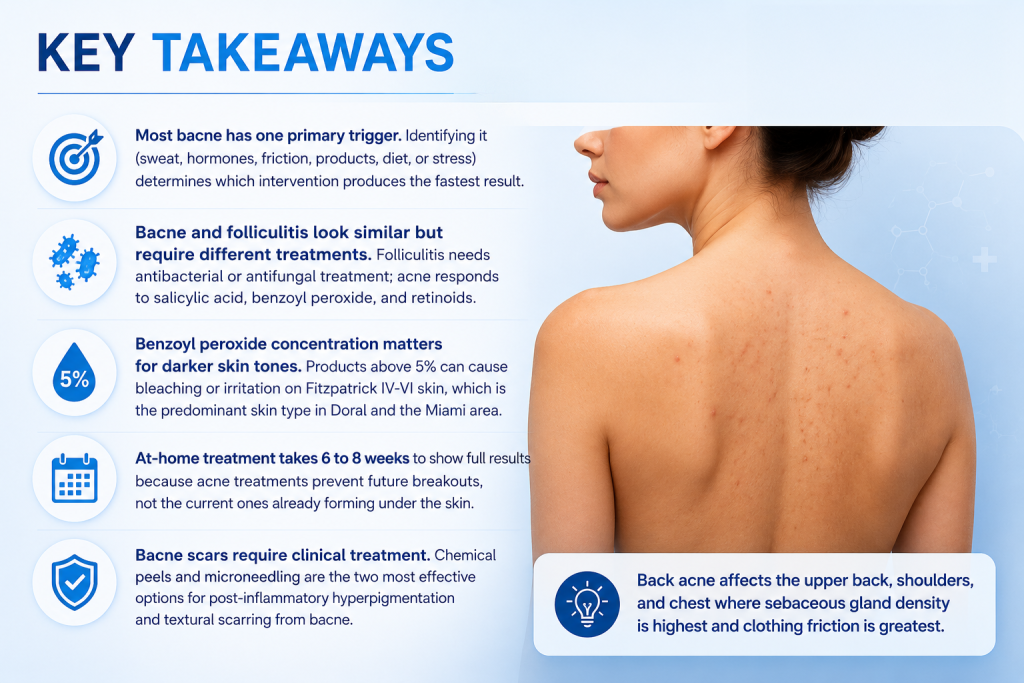
- Most bacne has one primary trigger. Identifying it (sweat, hormones, friction, products, diet, or stress) determines which intervention produces the fastest result.
- Bacne and folliculitis look similar but require different treatments. Folliculitis needs antibacterial or antifungal treatment; acne responds to salicylic acid, benzoyl peroxide, and retinoids.
- Benzoyl peroxide concentration matters for darker skin tones. Products above 5% can cause bleaching or irritation on Fitzpatrick IV-VI skin, which is the predominant skin type in Doral and the Miami area.
- At-home treatment takes 6 to 8 weeks to show full results because acne treatments prevent future breakouts, not the current ones already forming under the skin.
- Bacne scars require clinical treatment. Chemical peels and microneedling are the two most effective options for post-inflammatory hyperpigmentation and textural scarring from bacne.
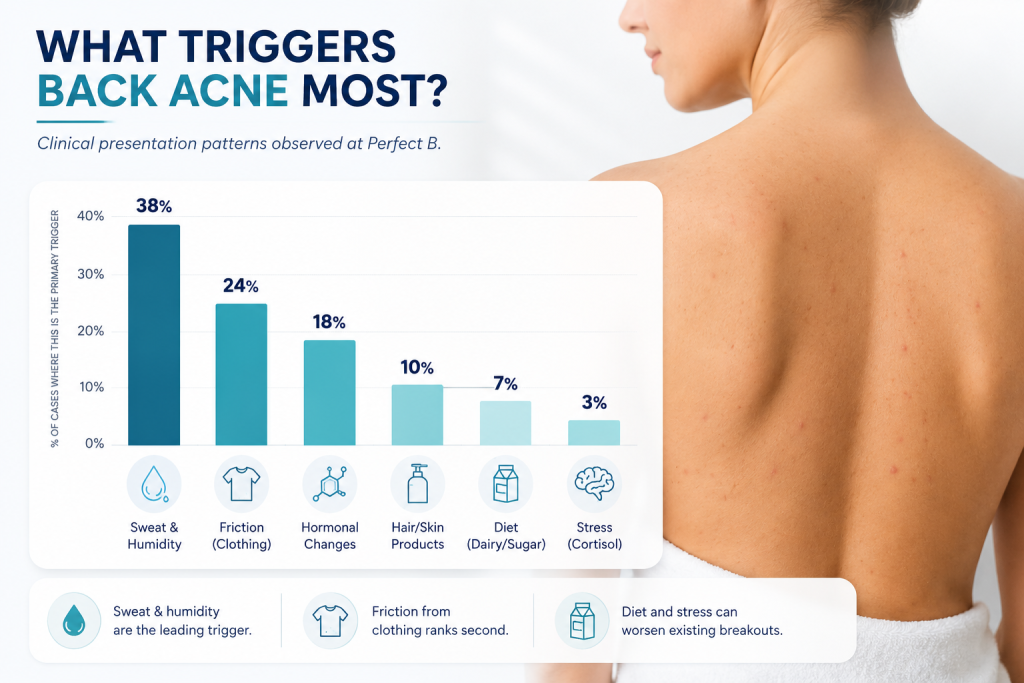
The Six Most Common Back Acne Triggers
1. Heat, Sweat, and Humidity
Sweat itself does not cause acne, but sweat trapped against the skin by clothing, backpacks, or athletic gear creates a warm, humid environment that accelerates pore clogging and bacterial growth. This is the single most common bacne trigger we see at our clinic in Doral, where South Florida’s climate means patients are often in sweat-saturated clothing for hours before they change. The solution is not sweating less, it is reducing the contact time between sweat and skin: change out of workout clothes within 30 minutes, choose moisture-wicking fabrics, and shower before sweat dries on the skin.
2. Friction from Clothing, Backpacks, and Equipment
Mechanical friction from tight clothing, backpack straps, sports equipment, or bra bands physically irritates follicles and accelerates inflammatory acne at the contact point. This subtype is sometimes called acne mechanica. It presents in patterns that mirror the friction source: a band of breakouts across the upper back where a backpack strap sits, or a horizontal line where a bra band rubs. Switching to looser or seamless fabrics in the contact zone reduces this trigger significantly.
3. Hormonal Changes
Androgens drive sebum production. During puberty, menstrual cycles, pregnancy, or hormonal fluctuations from GLP-1 medications and weight loss protocols, sebum output rises and back acne often intensifies. Hormonal bacne typically presents as deeper, more painful lesions concentrated on the lower back and jawline simultaneously, rather than the surface-level blackheads and whiteheads associated with sweat-driven bacne. If breakouts correlate consistently with specific hormonal phases, a clinical evaluation including hormonal labs is the appropriate next step rather than more topical products.
4. Hair and Skincare Products
Shampoo, conditioner, leave-in products, and body lotions that contain silicones, sulfates, coconut oil derivatives, or other comedogenic ingredients run down the back during showering and rinse. Over time, this coats back pores with ingredients that were never intended for pore-prone skin. The fix is straightforward: rinse hair products off the back thoroughly, or switch to non-comedogenic hair and body care formulations. Patients who cleared their facial acne years ago and still have persistent bacne often find this is the remaining variable.
5. Diet: Dairy, High-Glycemic Foods, and Protein Powder
High-glycemic foods (white rice, bread, sugary drinks) and dairy products have been associated with increased acne severity in multiple studies, likely through their effect on insulin and IGF-1 signaling, which in turn upregulates sebum production. Whey protein powder, which is dairy-derived, is a commonly overlooked trigger in patients with active training routines. Patients who cut whey and replace it with a plant-based protein often notice meaningful improvement in bacne within four to six weeks.
6. Stress and Cortisol
Cortisol stimulates sebaceous glands directly. Chronic stress, poor sleep, and high training volumes without adequate recovery all elevate cortisol. This is rarely the sole bacne trigger but frequently amplifies all others. Patients who experience predictable bacne flares during high-stress periods (exam periods, job transitions, overtraining phases) benefit from addressing the cortisol load as part of the treatment plan rather than only escalating topical regimens.
Types of Back Acne: Whiteheads, Blackheads, Cysts, and Nodules
Identifying the type of back acne determines which treatment tier is appropriate. Mild surface lesions respond well to consistent at-home protocols. Deep cystic and nodular acne typically requires clinical treatment, and attempting to manage it at home with over-the-counter products delays resolution and increases scarring risk.
- Whiteheads and blackheads (comedonal acne): the mildest and most responsive to salicylic acid and gentle exfoliation. These are clogged pores, not infected ones.
- Papules and pustules: red or white-topped inflamed lesions. Respond to benzoyl peroxide and topical retinoids. Do not squeeze; it drives the infection deeper and increases scarring probability.
- Cystic acne: deep, painful fluid-filled lesions that do not come to a head. Very high scarring risk. Requires clinical evaluation. OTC products do not effectively treat cysts.
- Nodular acne: hard, deep lesions without fluid. The most severe form. Requires prescription oral or topical treatment and frequently leaves significant scarring without clinical intervention.
At-Home Back Acne Treatment: What the Active Ingredients Actually Do
Salicylic Acid: The Best Starting Point for Comedonal Bacne
Salicylic acid is oil-soluble, which means it penetrates into the pore and dissolves the sebum and dead cell buildup that causes blackheads and whiteheads. A 2% salicylic acid body wash used as a leave-on for 30 to 60 seconds before rinsing is an effective first-line option for mild to moderate bacne. It also has mild anti-inflammatory properties, making it suitable for sensitive skin types. According to Cleveland Clinic’s clinical overview of back acne confirms that salicylic acid and benzoyl peroxide body washes used consistently over several weeks are among the most well-supported OTC interventions for non-cystic bacne.
Benzoyl Peroxide: Effective but Requires Care on Darker Skin
Benzoyl peroxide kills Cutibacterium acnes (the primary acne-causing bacterium) through oxidation and reduces inflammation. It is highly effective for inflamed papules and pustules. The critical consideration for patients with Fitzpatrick IV-VI skin, which is the predominant skin type in the Doral and Miami area, is concentration. Products with 10% benzoyl peroxide can cause bleaching of darker skin tones and trigger post-inflammatory hyperpigmentation. Starting at 2.5% or 5%, applying as a wash rather than a leave-on, and patch-testing before full application reduces this risk significantly. A clinical review in the Journal of the American Academy of Dermatology confirms that 5% benzoyl peroxide wash delivers comparable efficacy to higher concentrations for back and chest acne with a substantially better tolerability profile.
Retinoids: For Patients Who Want Longer-Term Pore Regulation
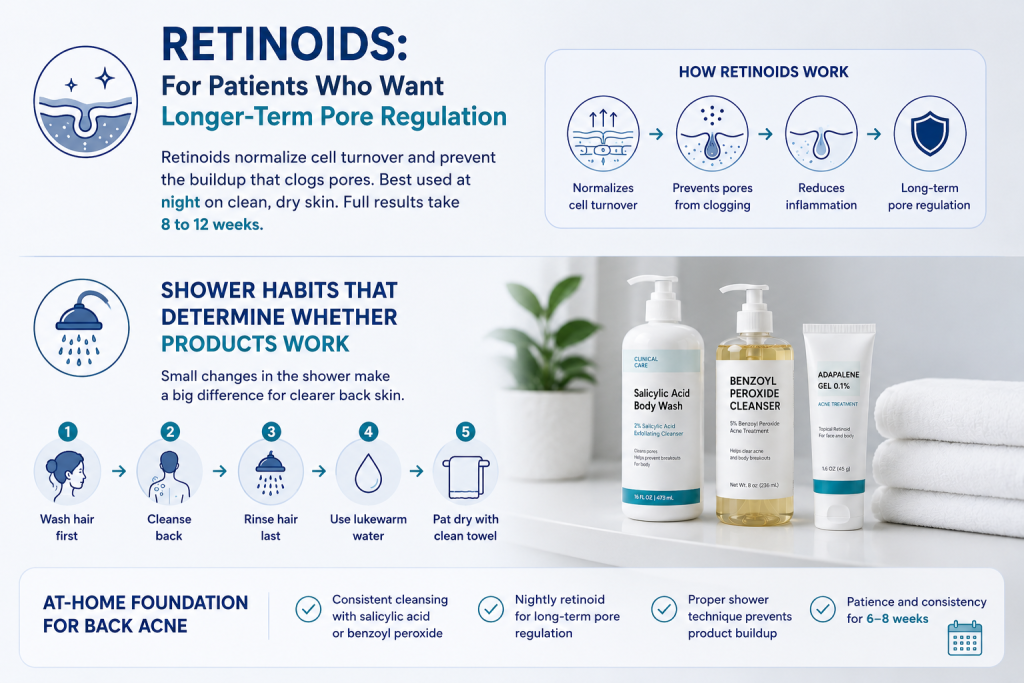
Topical retinoids (prescription tretinoin or over-the-counter adapalene 0.1%) normalize skin cell turnover, preventing the buildup that clogs pores. They work best as a maintenance step after initial clearing with benzoyl peroxide or salicylic acid. Retinoids increase photosensitivity, so SPF becomes mandatory when using them. Apply at night to clean, fully dry skin. Full results take 8 to 12 weeks.
Shower Habits That Determine Whether Products Work
The order of operations in the shower matters. Rinse hair last, after washing the back, so that shampoo and conditioner residue does not settle on already-cleaned pores. Use lukewarm water rather than hot, which strips the skin barrier and triggers compensatory sebum production. Pat dry with a clean towel rather than rubbing, which irritates active lesions. Change pillowcases and t-shirts every two to three days if bacne extends to the upper back and is visible above a shirt collar.
Clinical Treatments for Back Acne and Bacne Scars
At-home treatment addresses the active acne. Clinical treatment becomes the appropriate step when at-home protocols have not cleared moderate to severe lesions after 8 to 12 weeks of consistent use, when cystic or nodular acne is present, or when bacne has left scars that require active resurfacing to improve.
Chemical Peels for Active Back Acne
Professional-grade chemical peels applied to the back deliver higher concentrations of exfoliating acids than any OTC product, penetrating deeper into the follicle to clear congestion and reduce the bacterial load. Salicylic acid, glycolic acid, and combination peels are the most commonly used for body acne. A series of four to six treatments spaced two to four weeks apart typically produces significant clearing for moderate bacne. The advantage over OTC products is not just concentration but also the ability to customize the peel to the patient’s skin type, including appropriately conservative formulations for darker Fitzpatrick types that minimize PIH risk.
Microneedling for Bacne Scars
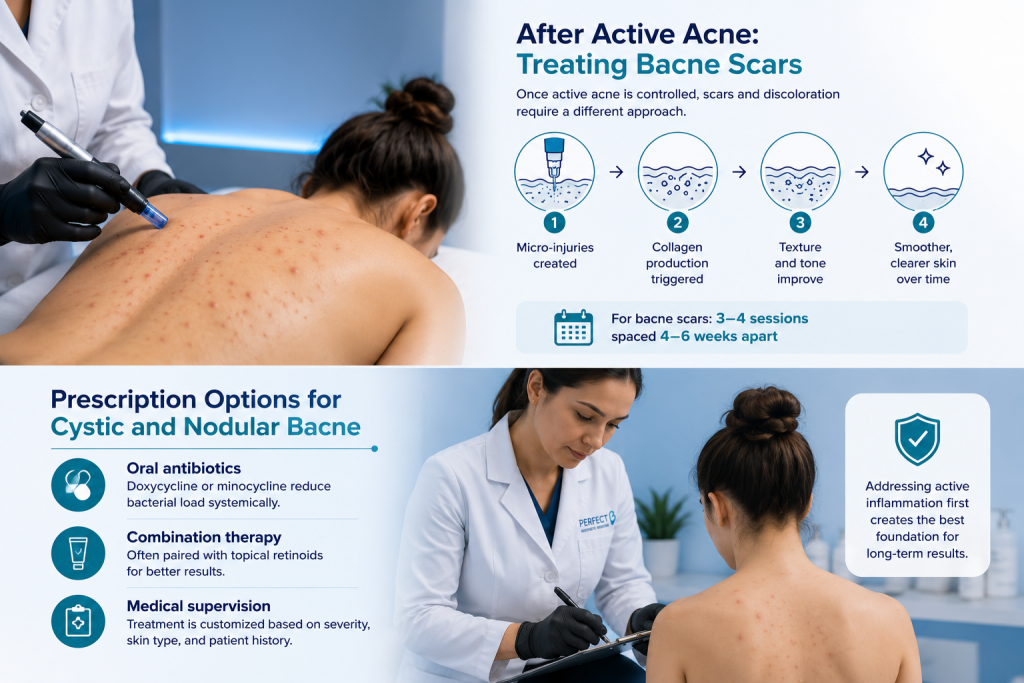
Once active bacne is controlled, residual scarring including post-inflammatory hyperpigmentation (dark spots) and textural changes from healed cysts and nodules requires a different intervention. Microneedling creates controlled micro-injuries in the skin that trigger collagen remodeling, improving both texture and tone over a series of treatments. Our full guide on what microneedling feels like and what to expect during and after a SkinPen session at Perfect B addresses the most common questions from patients considering this for the first time. For bacne scars specifically, three to four sessions spaced four to six weeks apart are typically needed to see measurable textural improvement.
Prescription Options for Cystic and Nodular Bacne
Cystic and nodular back acne that does not respond to topical protocols typically requires oral intervention. Oral antibiotics (doxycycline, minocycline) reduce the bacterial load systemically and are often combined with topical retinoids. For severe, scarring-prone cases, isotretinoin (formerly sold as Accutane) is the most definitive oral treatment, though it requires careful medical supervision. These options are prescribed during a clinical evaluation, not purchased OTC, and the appropriate choice depends on severity, skin type, hormonal factors, and patient health history.
Back Acne Scars: What to Do After the Breakout Clears
The two most common types of scarring left by back acne are post-inflammatory hyperpigmentation (PIH), the flat dark spots that remain after a lesion heals, and atrophic scarring, the textural depressions left by cysts and nodules. They respond to different interventions, and treating them before active acne is fully controlled is counterproductive since new breakouts will continue producing new pigmentation and new textural damage.
For PIH on the back, a combination of consistent SPF on any sun-exposed areas of the upper back, a chemical exfoliant (AHA or BHA) to accelerate cell turnover, and professional peels is the most effective approach. Our full breakdown of how long acne scar treatment takes by scar type covers realistic timelines for both PIH and textural scarring, including what to expect at 4, 8, and 12 weeks of consistent treatment at Perfect B in Doral, FL. For atrophic textural scars, microneedling is the first-line clinical option. Our patient guide to pimple scar treatment reviews the full range of options from OTC to clinical, organized by scar severity, which applies directly to bacne scar cases.
Back Acne in South Florida: What We See at Perfect B in Doral
The bacne profile in South Florida is distinct from what most clinical literature describes, because most studies are conducted in temperate climates. At our clinic in Doral, the majority of patients presenting with bacne have sweat and humidity as their primary trigger. Miami averages 80% relative humidity and summer temperatures that regularly exceed 90 degrees Fahrenheit, which means patients are in contact with sweat-saturated clothing for significantly longer periods than patients in drier climates. The practical implication: interventions that require sweat to dry on the skin before it can be rinsed are simply less effective here without addressing the environmental factor directly.
The second distinguishing factor is skin type. Doral and the greater Miami area have a predominantly Hispanic and Latino patient population, with a large proportion of patients presenting with Fitzpatrick IV to VI skin. This changes the treatment calculus significantly: high-concentration benzoyl peroxide products that are appropriate for lighter skin tones carry a real risk of bleaching and PIH on darker skin. Our clinical protocols for bacne in this patient population are specifically calibrated for Fitzpatrick IV-VI, using lower concentrations, gentler delivery formats, and a more cautious approach to chemical peels. Patients who have tried OTC bacne products without results often find that concentration calibration was the missing variable.
Frequently Asked Questions
1. What causes back acne in adults?
Adult bacne is most commonly caused by sweat and friction (from clothing, equipment, or backpacks), hormonal fluctuations affecting sebum production, comedogenic ingredients in hair or body products, and diet factors including dairy and high-glycemic foods. Unlike teenage acne, which is driven primarily by pubescent hormonal surges, adult bacne usually has a specific ongoing trigger that can be identified and addressed.
2. How long does back acne take to clear with at-home treatment?
Consistent at-home treatment with salicylic acid or benzoyl peroxide takes 6 to 8 weeks to produce visible clearing because these products work by preventing new breakouts, not clearing the lesions already forming under the skin. Patients who stop after two to three weeks because they see no change are stopping just before the protocol begins to work. Cystic or nodular acne does not clear with OTC products regardless of time. Our guide to acne purging explains the difference between a protocol working (purging) and a product making acne worse, which is a common source of confusion in the first few weeks of treatment.
3. Is back acne hormonal?
Back acne can be hormonal, but it is not always. Hormonal bacne tends to present as deeper, more painful lesions on the lower back, correlates with hormonal cycles (menstrual phase, postpartum, perimenopause), and often coexists with jaw and chin acne. Sweat-triggered and friction-triggered bacne does not follow this pattern. Identifying the trigger determines whether a hormonal workup is warranted or whether environmental and product changes are the more direct path to clearing.
4. Can you treat back acne scars at home?
Post-inflammatory hyperpigmentation (flat dark spots) can be improved at home with consistent use of AHA or BHA exfoliants, vitamin C serums, and broad-spectrum SPF on exposed skin. Textural scarring from healed cysts and nodules does not improve meaningfully with OTC products and typically requires clinical treatment such as microneedling or professional peels to see measurable improvement.
5. Does benzoyl peroxide bleach skin?
At high concentrations (10%), benzoyl peroxide can bleach fabrics and cause skin discoloration on darker Fitzpatrick IV-VI skin tones. Starting at 2.5% to 5%, using as a wash rather than a leave-on product, and patch-testing first substantially reduces this risk. Patients with darker skin who have experienced bleaching from previous benzoyl peroxide use should discuss salicylic acid-based alternatives or lower-concentration formulations with their provider.
6. When should you see a provider for back acne?
See a provider if cysts or nodules are present (OTC products will not clear these), if a consistent 8-week at-home protocol has not produced improvement, if you have significant scarring from previous bacne, or if breakouts follow a pattern that suggests a hormonal cause. Earlier clinical intervention for cystic bacne reduces long-term scarring significantly compared to waiting through multiple failed OTC attempts.
Closing: Identify the Trigger Before Choosing the Treatment
The most common mistake in bacne treatment is starting with the product before identifying the trigger. Patients apply benzoyl peroxide consistently for months while continuing to use a comedogenic conditioner, eat whey protein daily, and work out in the same synthetic shirt for two hours every morning. The product addresses one variable while the others continue driving the breakout. The fastest path to clear skin is the same as in any clinical problem: identify what is causing it, address that specifically, and support the process with the right topical or clinical intervention.
For patients in Doral and the greater Miami area dealing with back acne, our team at Perfect B offers clinical evaluation to identify the primary trigger, treatment protocols calibrated for South Florida climate and skin types, and in-clinic options for active bacne and residual scarring.
- 📍 Visit us at Perfect B, Doral FL, serving Miami and South Florida patients seeking back acne treatment and body skin care.
- 📞 Call or message us at (786) 502-2260 to schedule your back acne consultation with a licensed medical provider.