
Perfect B, Doral FL. | 05.27.26 | 8 min read.
This content is for educational purposes only and does not constitute medical advice. Microneedling is a clinical procedure that should be performed by a licensed medical provider following a thorough skin assessment. Results vary. Consult a qualified APRN or physician before beginning any treatment. To understand where this fits, see how Orange peel skin, causes and concerns about this condition, and how it is approached at Perfect B in Doral.
Does Microneedling Hurt? The Honest Answer
The word “microneedling” stops people. Hundreds of needles moving fast across your face. The image sounds worse than the reality, and that gap is worth closing before you cancel an appointment that could genuinely change your skin.
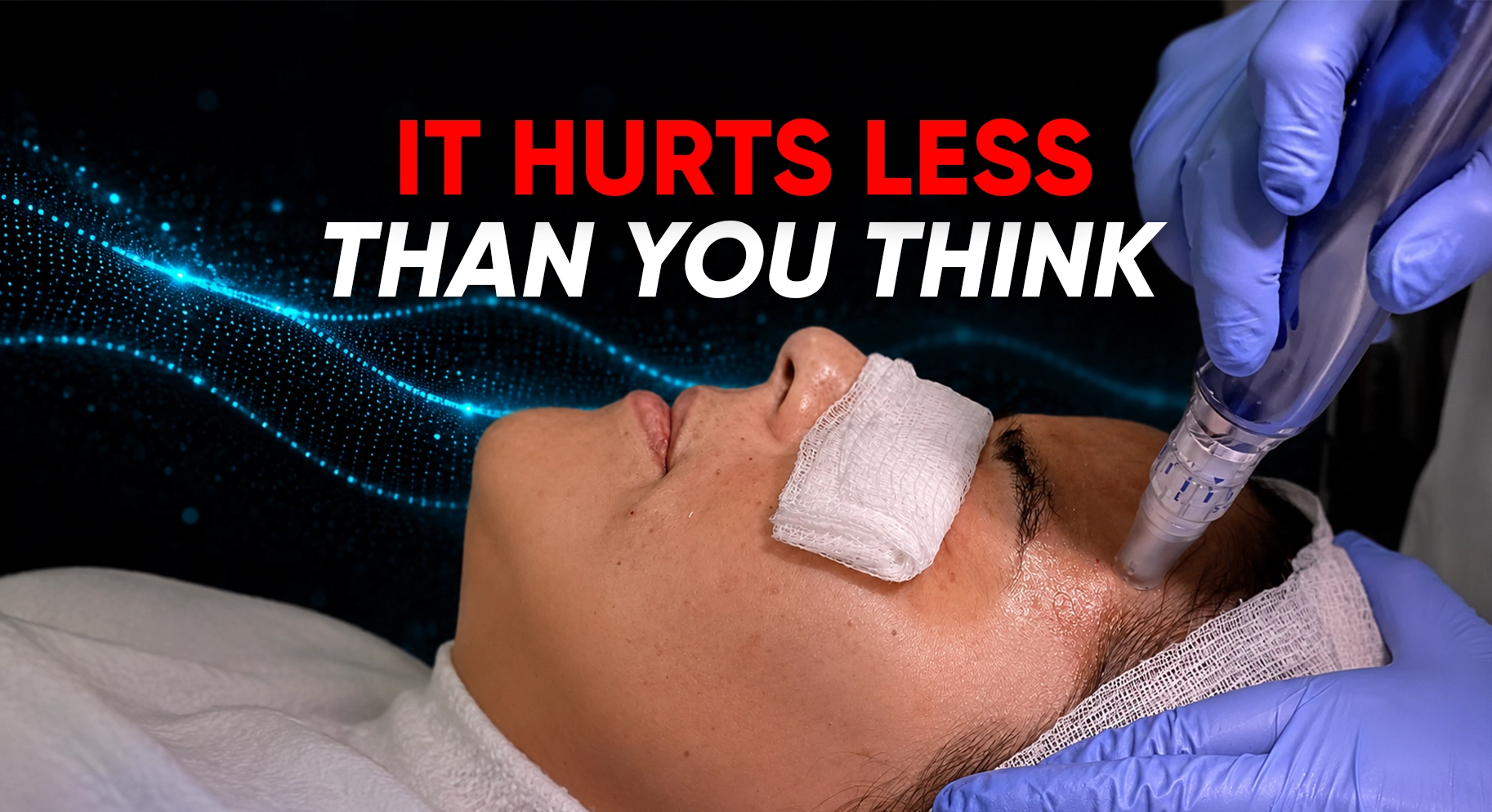
The clinical answer is 2 to 4 out of 10 with proper topical anesthesia applied by a trained provider. Without numbing, that number rises to 5 to 7, varying significantly by area. Most patients describe does microneedling hurt as a vibrating pressure, not sharp pain. Some areas feel more like sandpaper moving across the surface. A few spots, particularly the nose bridge and forehead, register more clearly. The cheeks and jawline, where tissue is thicker, barely register at all.
What changes the experience more than anything else is not the device but the protocol. A medical clinic applies topical anesthesia long enough before the session for it to fully absorb, sets needle depth precisely for each zone, and adjusts treatment pressure in real time. That clinical approach is what separates a tolerable session from an uncomfortable one.
Does microneedling hurt? The honest answer is no, not in any way that keeps most patients from returning. What it feels like is a clinical procedure, not a cosmetic shortcut.
Key Takeaways on Does Microneedling Hurt
- Pain level with numbing: With topical anesthesia applied 30 to 45 minutes before treatment, most patients rate SkinPen microneedling at 2 to 4 out of 10. Vibrating pressure is what most people describe, not sharp pain.
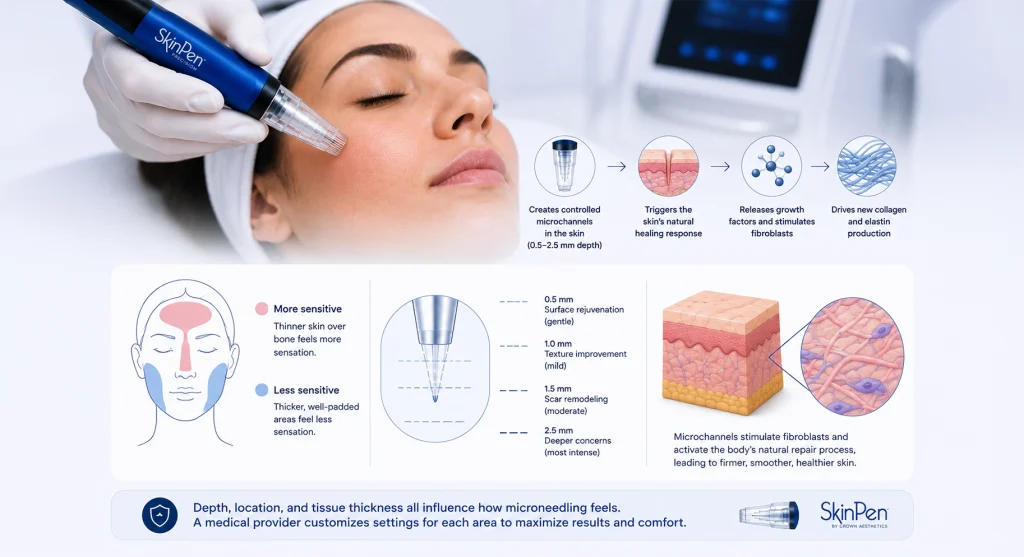
- Pain varies by area: The forehead and nose bridge are more sensitive due to thinner skin and proximity to bone. The cheeks, jawline, and neck are consistently the most comfortable zones.
- RF microneedling adds heat: Morpheus8 adds a heat sensation to the needle sensation. With proper numbing, it remains tolerable for most patients at roughly 3 to 5 out of 10, a step above standard SkinPen.
- Microneedling recovery time is short: Expect 1 to 3 days of redness and sensitivity after standard SkinPen. Full microneedling results develop over 4 to 6 weeks as new collagen matures beneath the surface.
- Fitzpatrick III-VI patients need strict SPF compliance: Patients with darker skin tones, the majority at our clinic in Doral, FL, must treat post-treatment sun protection as a clinical requirement. Sun exposure during the recovery window is the primary driver of post-inflammatory hyperpigmentation after microneedling.
What the Needle Actually Does: Why Sensation Varies
SkinPen, the FDA-cleared device used at Perfect B, creates controlled microchannels in the skin at a depth ranging from 0.5 to 2.5 millimeters, depending on the treatment area and clinical objective. The device tip contains a cluster of sterile micro-needles that penetrate the epidermis and enter the dermis at high frequency, producing what is called percutaneous collagen induction. The mechanical disruption triggers the skin’s wound-healing cascade, releasing growth factors, stimulating fibroblast activity, and driving new collagen and elastin production.
The reason is microneedling painful has no universal answer is that sensation depends on where the needle tip is working, how deep it penetrates, and how much tissue sits between the needle and the underlying bone or cartilage. Thin skin over bony prominences, such as the nose bridge, the temples, or the forehead, conducts sensation more directly. Thicker, well-padded areas like the mid-cheek or jawline absorb more of the mechanical input before it registers as sensation.
Needle depth also matters. Shallow settings of 0.5 to 1.0 millimeters used for general skin rejuvenation and texture improvement feel different from the 1.5 to 2.5 millimeter depths used for acne scar remodeling. A trained APRN calibrates depth per zone, not per session, which is why a full-face treatment at a medical clinic does not feel uniformly intense across all areas. This zone-by-zone calibration is what separates medical-grade microneedling from the superficial protocols common at non-clinical settings.
Numbing Cream: What Changes When You Apply It 30 Minutes Early
The most important variable in whether does microneedling hurt is the numbing protocol, not the patient’s pain tolerance. Topical anesthetics containing lidocaine or a combination of lidocaine and prilocaine work by blocking sodium channels in sensory nerve endings, preventing pain signals from reaching the brain. But they require adequate time and occlusion to reach therapeutic depth in the dermis, which is exactly where the SkinPen needle tips are working.
At a medical clinic, numbing cream is applied under occlusion for a minimum of 30 to 45 minutes before the procedure begins. This timing matters significantly. A 15-minute application or a thin layer without occlusion does not fully anesthetize the dermis. Inadequate numbing preparation is the most common reason patients describe microneedling as painful at facilities where the pre-treatment window is rushed.
The cream is fully removed before treatment begins to prevent the anesthetic from interfering with the skin’s collagen induction response. The session starts once the provider confirms adequate anesthesia across all treatment zones, adjusting pressure and speed in real time as they move through areas of varying skin thickness. This active monitoring is part of what clinical supervision adds to the procedure.
Microneedling Pain by Area: Where It Feels Like More and Where It Doesn’t
Microneedling is not uniform across the face, and patients asking does microneedling hurt are often surprised by how much the answer changes depending on which zone is being treated.
Areas that register more clearly include the forehead, where thin skin lies close to the frontal bone and the vibrating sensation is more pronounced. Patients often describe this zone as a scratching pressure rather than a soft buzz. The nose bridge is the least padded area of the face and is treated at shallower depths for this reason. The upper lip has both thin skin and high nerve density, making it the area most patients point to when asked where the treatment felt strongest.
Areas that are consistently more comfortable include the cheeks, where thick subcutaneous tissue absorbs most of the mechanical input. Most patients describe this zone as mild pressure or a dull vibration. The jawline and chin have good tissue depth and few bony prominences, making them the most comfortable zones at most treatment depths. The neck and decollete fall in between, more responsive than the cheeks but significantly more comfortable than the forehead.
One clinical note specific to South Florida patients: those with Fitzpatrick III through VI skin tones often have slightly higher collagen density in the dermis, which affects the tactile feedback during treatment. Needle depth and device settings are calibrated before each session based on individual skin assessment, not a one-size protocol applied uniformly across all skin types.
Does RF Microneedling Hurt More Than Standard Microneedling?
RF microneedling with Morpheus8 adds radiofrequency energy delivery to the mechanical channel creation of standard SkinPen microneedling. The RF energy is delivered as a controlled burst of heat into the dermis once the needles reach their target depth. That heat sensation is what most patients identify as different from standard microneedling, and it is the most common source of the question does microneedling hurt more when RF is involved.
With proper numbing, most patients rate RF microneedling at 3 to 5 out of 10, compared to 2 to 4 for standard SkinPen. The heat pulse does not feel sharp. It registers as a brief, deep warmth at each needle grouping. At higher energy settings used for skin tightening and deeper scar remodeling, the thermal sensation is more pronounced but remains within a range that most patients describe as manageable.
Microneedling downtime with RF microneedling is slightly longer than with standard SkinPen. Expect 2 to 4 days of visible redness compared to 1 to 2 days for SkinPen alone. This is because the thermal component adds to the mechanical micro-injury, producing a more substantial inflammatory response. The tradeoff is clinically significant: RF microneedling reaches deeper tissue planes and drives more substantive collagen remodeling, making it the preferred modality for patients treating atrophic acne scars, significant skin laxity, and deep dermal remodeling goals that standard microneedling cannot reach.
Microneedling Recovery Time: What to Expect Day by Day
Understanding the microneedling recovery timeline removes most of the anxiety around the procedure. The skin’s response follows a predictable sequence that most patients move through in 5 to 7 days before returning to full baseline, with the deeper collagen-building work continuing beneath the surface for weeks afterward.
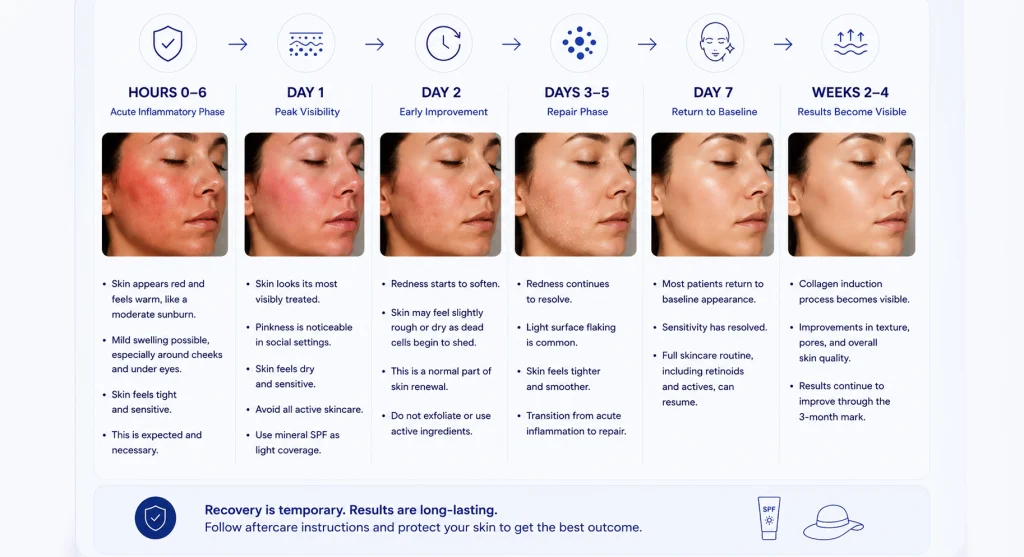
Hours 0 to 6 mark the acute inflammatory phase. The skin appears red and feels warm, similar to a moderate sunburn. Mild swelling is possible, particularly around the cheeks and under the eyes. The skin is sensitive to the touch and feels tight. This is the expected and necessary response.
Day 1 is typically when the skin looks its most visibly treated. Pinkness is noticeable in social settings. The skin feels dry and sensitive. Most patients return to work during this period if comfortable with the redness, or if they can use mineral SPF as light coverage. Avoid active skincare entirely during this phase.
Day 2 brings the beginning of improvement. Redness starts to soften. The skin may feel slightly rough or dry on the surface as dead epidermal cells begin to shed. This is a normal part of the skin’s renewal process. Do not exfoliate mechanically or with chemical actives.
Days 3 to 5 see redness resolving for most patients. Light surface flaking is common. Beneath the shedding layer, the skin begins to feel tighter and smoother. This is the transition from acute inflammation to the early repair phase.
By day 7, most patients have returned to their baseline appearance. Sensitivity has fully resolved, and the full skincare routine including retinoids and actives can resume. Microneedling results continue to develop silently beneath the surface during this period.
Weeks 2 through 4 are when the collagen induction process becomes visible. Patients begin noticing changes in texture, pore appearance, and overall skin quality. This is when microneedling results become evident to the patient, even though the deeper structural remodeling continues through the 3-month mark.
Microneedling Aftercare: What to Use and What to Avoid
The microneedling aftercare protocol matters as much as the treatment itself. The microchannels created during the session remain open for several hours post-treatment, and what you apply to your skin during that window and the days that follow directly affects your results and your recovery quality.
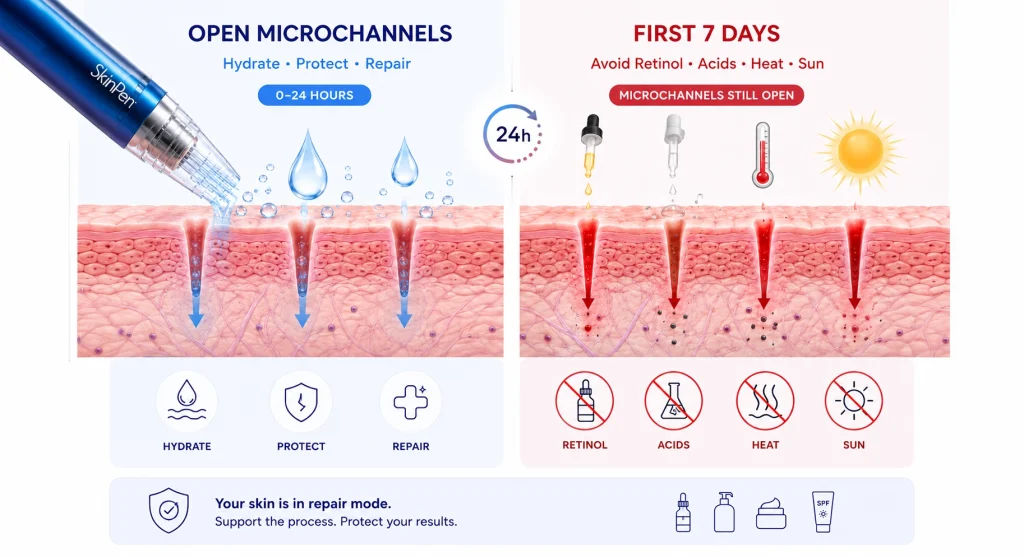
What to use in the first 7 days: hyaluronic acid serum applied immediately post-treatment and continuing at home for 3 to 5 days. The microchannels allow deeper serum penetration during this window, enhancing hydration and reducing the tightness sensation. A gentle, non-foaming, fragrance-free cleanser with lukewarm water for the first 48 to 72 hours. A fragrance-free moisturizer that does not contain retinol, vitamin C, or AHAs to support barrier repair. Mineral-based SPF 30 or higher starting day 2, applied daily without exception.
What to avoid for 7 days post-treatment: retinoids and retinol, vitamin C and antioxidant serums, AHAs and BHAs including glycolic acid, lactic acid, and salicylic acid, any physical exfoliants, heavy or occlusive makeup for the first 24 to 48 hours, saunas, steam rooms, and intense exercise that causes significant sweating, and direct sun exposure without mineral SPF.
For patients receiving the SkinPen microneedling with exosomes or PDRN depending on skin concern, the aftercare protocol is the same but recovery tends to be shorter because the growth factor application accelerates the skin’s repair sequence.
How Skin Tone Affects Your Microneedling Recovery
Fitzpatrick skin type classification describes how skin responds to UV exposure and how it reacts to procedural trauma. Patients with Fitzpatrick III through VI skin tones, which includes most patients of Hispanic, Black, and South Asian background seen at clinics in the Miami area, have higher melanocyte activity than lighter skin types. That means the inflammatory response triggered by microneedling can sometimes stimulate excess melanin production, leading to post-inflammatory hyperpigmentation if the recovery period is mismanaged.
This does not mean microneedling is inappropriate for darker skin tones. It means the protocol needs deliberate calibration. At a medical clinic, needle depth is set conservatively for higher Fitzpatrick types in the first session, particularly if the patient has a history of PIH. Treatment intervals may be slightly extended to allow the inflammatory cascade to fully resolve before the next session. Post-treatment SPF compliance is treated as a clinical requirement, not a preference.
Stacking microneedling with PDRN or exosome growth factors has particular value for patients with Fitzpatrick III through VI because the regenerative compounds accelerate the skin’s repair response and reduce the duration of post-inflammatory redness. This shortens the window during which UV exposure poses a hyperpigmentation risk, which is especially relevant for patients in South Florida managing near-constant sun exposure. See our full clinical guide to microneedling for acne scars covering how protocol adjustments for different Fitzpatrick skin types affect device settings, session count, and expected outcomes.
How Often Should You Get Microneedling?
The recommended protocol for most patients is 3 to 6 sessions spaced 4 to 6 weeks apart. This interval allows the skin’s inflammatory response to fully resolve and the initial collagen induction to progress before the next mechanical stimulus is applied. Compressing sessions too tightly adds inflammatory burden without clinical benefit and increases the risk of prolonged redness, especially in patients with reactive or higher Fitzpatrick skin types.
How often should you get microneedling depends on the indication. Patients seeking general skin rejuvenation and texture improvement typically meet their goals in 3 to 4 sessions. Patients treating moderate to severe atrophic acne scarring generally require 4 to 6 sessions, and cases with deep rolling or boxcar scars often benefit from alternating SkinPen with Morpheus8 RF microneedling to reach the deeper tissue planes where structural scar tethering occurs. Stacking microneedling with PDRN or exosomes tends to accelerate visible progress, sometimes allowing the same clinical outcome in fewer sessions.
How long does microneedling last after completing a series depends on the skin concern being treated and how well maintenance is sustained. Most patients maintain results with 1 to 2 sessions per year. Sun protection and a consistent skincare routine significantly extend the durability of microneedling results between sessions.
Microneedling Results: When Do You Actually See a Difference?
Microneedling results develop over a longer timeline than most patients initially expect. Understanding that timeline prevents the common mistake of judging the treatment in the first week, when the skin is in recovery rather than in transformation.
The first visible change most patients notice is a reduction in surface texture roughness and an overall smoothness at the 2 to 3 week mark. This reflects the epidermal renewal driven by the procedure. It is the easiest result to see early and the one that consistently encourages patients to continue with their session series.
The deeper structural improvements, including reduction in pore size, softening of fine lines, reduction in acne scar depth, and improvement in skin firmness and elasticity, take longer to develop. These reflect new collagen production in the dermis, which matures on a 4 to 12 week timeline. The most meaningful results typically emerge at the 4 to 6 week mark after each session, and the cumulative improvement after a full series of 3 to 4 treatments is substantially greater than after a single session. A 2018 review in Dermatologic Surgery confirming that microneedling produces statistically significant improvements in skin texture and scarring across patient populations, with optimal results requiring multiple treatment sessions.
Frequently Asked Questions
1. Does microneedling hurt without numbing cream?
Without topical anesthesia, microneedling registers at 5 to 7 out of 10 for most patients depending on area and needle depth. The forehead, nose bridge, and upper lip are the most sensitive zones. At a medical clinic, adequate numbing is a clinical standard, not an optional add-on. The anesthetic is applied under occlusion well before the session begins and given the full time needed to reach dermis depth before treatment starts.
2. How long does microneedling recovery take?
Microneedling recovery time after standard SkinPen is 1 to 3 days of redness and sensitivity. Most patients return to normal activity within 24 to 48 hours. RF microneedling recovery with Morpheus8 runs slightly longer at 2 to 4 days due to the thermal component. Microneedling results from the deeper collagen induction process develop over 4 to 6 weeks and continue improving through the 3-month mark.
3. Is microneedling safe for dark skin tones?
Microneedling is safe and effective across all Fitzpatrick skin types, including Fitzpatrick III through VI, when performed by a trained provider who adjusts needle depth and protocol for higher melanocyte activity. The primary risk for darker skin tones is post-inflammatory hyperpigmentation triggered by UV exposure during the recovery window. Strict SPF compliance post-treatment is the key protective measure, and it is treated as a clinical requirement at our clinic in Doral, FL.
4. How many microneedling sessions do I need?
Most patients complete 3 to 6 sessions spaced 4 to 6 weeks apart. General skin rejuvenation and texture improvement typically require 3 to 4 sessions. Acne scar treatment may require 4 to 6, with deeper scars sometimes benefiting from alternating SkinPen with RF microneedling. A provider consultation determines the appropriate protocol based on skin type, concern severity, and baseline condition.
5. Can I wear makeup after microneedling?
No makeup for the first 24 to 48 hours post-treatment. After that window, mineral-based, non-comedogenic formulations applied with clean brushes or clean hands are acceptable. Avoid heavy or occlusive formulations for the first week. Foundation with SPF does not substitute for a dedicated broad-spectrum mineral SPF applied as a separate step before any cosmetic coverage.
6. What is the difference between SkinPen microneedling and RF microneedling?
SkinPen is a mechanical device that creates controlled microchannels to trigger collagen induction through the body’s wound-healing response. RF microneedling with Morpheus8 adds radiofrequency energy delivery through the needle tips to heat the dermis at controlled depths, driving additional collagen contraction and remodeling that mechanical needling alone cannot achieve. RF microneedling is the preferred modality for atrophic acne scars, skin laxity, and deeper dermal remodeling goals. A peer-reviewed study in the Journal of Drugs in Dermatology demonstrating radiofrequency microneedling’s superiority over standard microneedling for moderate-to-severe atrophic acne scars across Fitzpatrick skin types I through VI.
7. Does microneedling hurt more than Botox or fillers?
Most patients find microneedling more intense than Botox and roughly comparable to dermal fillers in overall discomfort. The key difference is duration: a microneedling session covers the full face over 20 to 30 minutes, while injectables are localized to specific points. With adequate topical anesthesia, most patients find the full SkinPen session very manageable and describe the discomfort as significantly less than they anticipated.
Closing: What to Expect from Your First SkinPen Session
Does microneedling hurt? Less than you think, more than a facial, and far less than the results are worth. The procedure works precisely because it creates a controlled injury response in the dermis. That response requires a competent inflammatory phase, which means some redness, some sensitivity, and some patience with the recovery window. None of that is a complication. It is the mechanism. Understanding it is what separates patients who complete a full series from those who walk away after one session before the collagen work has had time to show.
The clinical difference at a medical practice is not only the device. It is the numbing protocol, the depth calibration by zone, the provider monitoring your skin in real time, and the post-treatment guidance that protects your investment during microneedling recovery. Patients in the Miami area who have had microneedling elsewhere and experienced inconsistent results or unexpected pigmentation changes often trace the issue back to a provider who compressed the numbing window or sent them home without adequate aftercare guidance. At our clinic in Doral, FL, every session follows the same clinical protocol: full anesthesia, zone-calibrated settings, supervised treatment, and a clear recovery plan you leave with.
- 📍 Visit us at Perfect B, Doral FL, serving Miami and South Florida patients seeking microneedling and skin rejuvenation.
- 📞 Call or message us at (786) 502-2260 to schedule your microneedling consultation with a licensed medical provider.