
Perfect B, Doral Fl. | 05.15.26 | 11 min read.
This content is for educational purposes only and does not constitute medical advice. Consult a qualified medical provider before beginning any skin treatment protocol. Individual results vary based on skin tone, condition severity, and adherence to treatment.
What Is Post-Inflammatory Hyperpigmentation and Why Does Acne Leave Dark Marks?
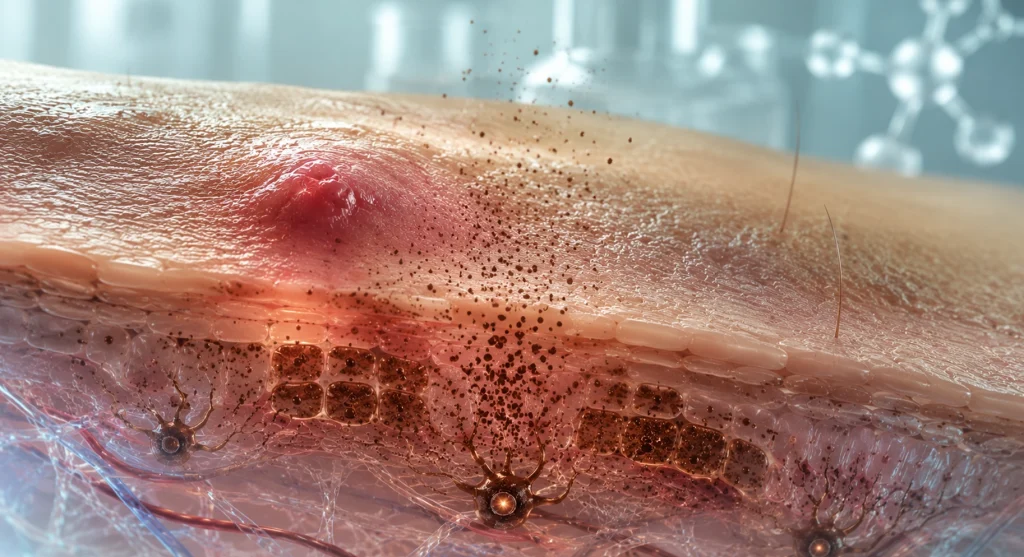
Post-inflammatory hyperpigmentation, or PIH, is what happens when the skin responds to inflammation by overproducing melanin in the affected area. When a pimple becomes inflamed, the inflammatory cascade triggers melanocytes, the pigment-producing cells in the skin, to release more melanin than usual. That melanin gets deposited in the epidermis (the upper layers) or in the dermis (the deeper layers), and the result is a flat, discolored mark that remains after the breakout has cleared.
PIH is not a scar in the clinical sense. No structural damage has occurred. The mark is a pigment deposit, and in most cases it will fade on its own, though how long that takes and whether it requires treatment depends on the depth of the deposit, the patient’s skin tone, and, critically for South Florida patients, how much UV exposure the skin receives during the recovery period. At our clinic in Doral, FL, PIH is one of the most frequent concerns we address in patients who have already completed acne treatment and are managing what the breakouts left behind.
Key Takeaways
- PIH and PIE are different conditions with different mechanisms and different treatments. PIH is a melanin excess (brown or dark marks). PIE is a vascular injury (red or pink marks). Using PIH treatments on PIE, or vice versa, wastes months of effort.
- PIH has two depths: epidermal and dermal. Epidermal PIH is more superficial and responds faster to topical treatment. Dermal PIH has deeper pigment deposits and requires clinical intervention to see meaningful improvement.
- UV exposure is the single most important factor that prolongs PIH, especially in Miami’s year-round sun climate. Without daily SPF 30+, no topical or clinical treatment will hold its results.
- Fitzpatrick III-VI skin types, which represent the majority of our Doral patient population, are significantly more prone to severe and prolonged PIH after acne than lighter skin tones.
- At Perfect B in Doral, FL, PIH is addressed within the broader acne treatment protocol, starting with SPF compliance and topical layering, and escalating to chemical peels and ResurFx when topicals plateau.
PIH vs PIE: The Most Important Distinction Before You Start Any Treatment
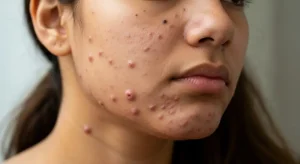
The most common treatment mistake we see in patients who have been self-managing their post-acne marks is using products designed for one condition on the other. PIH and PIE are visually similar at a glance, both are flat marks left by breakouts, but they have entirely different causes and respond to entirely different treatments.
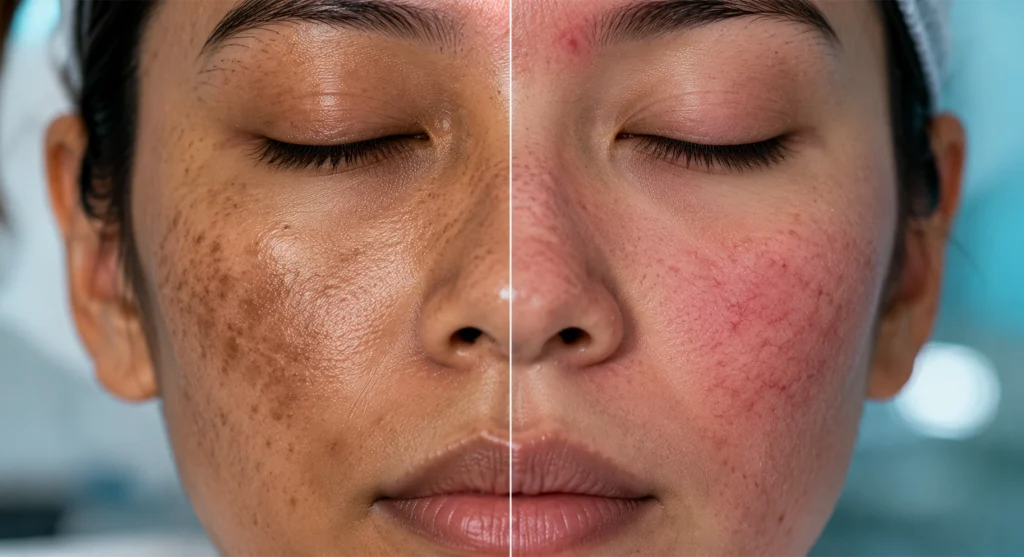
PIH is caused by excess melanin production. The marks are brown, tan, or grayish depending on the skin tone and the depth of the deposit. They do not change color when you press on them. They respond to melanin-targeting ingredients like niacinamide, vitamin C, tranexamic acid, and azelaic acid, and to treatments like chemical peels and laser that target pigment.
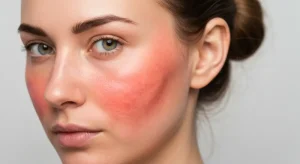
PIE (post-inflammatory erythema) is caused by damaged capillaries that did not fully recover after the inflammation of a breakout. The marks are red or pink. They temporarily lighten or disappear when you apply gentle pressure and the blood is pushed out of the capillaries (this is called blanching). They do not respond to melanin-targeting treatments. They respond to vascular-targeting treatments like azelaic acid, IPL, and vascular lasers.
The practical test: press gently on the mark for 3 seconds and release. If it blanches (goes lighter or white), you likely have PIE. If it stays the same color, you likely have PIH. Many patients have both on different areas of their face simultaneously, which is why a clinical evaluation that maps each type of mark before building a treatment plan produces significantly better results than a blanket approach.
Two Types of PIH: Why Epidermal Marks Fade Faster Than Dermal Ones
Not all PIH is the same depth, and depth is one of the most important predictors of how long it takes to clear and what level of treatment it needs.
Epidermal PIH is the more superficial type. The excess melanin is deposited in the upper layers of the skin, and it typically appears as brown or tan. Because it is closer to the surface, it responds relatively well to topical depigmenting agents and lighter chemical peels. With consistent treatment and strict sun protection, epidermal PIH can show meaningful improvement in 4 to 8 weeks.
Dermal PIH is deeper. The melanin has been deposited in the dermis, the structural layer below the epidermis, often because the original inflammation was more severe or because UV exposure drove the pigment deeper during the healing phase. Dermal PIH appears grayish or blue-gray rather than brown, and it responds poorly to topical treatments alone. Clinical intervention, including deeper chemical peels or non-ablative laser like ResurFx, is typically required to see significant clearing. Dermal PIH can persist for 12 to 24 months without appropriate clinical treatment.
The distinction matters for setting realistic expectations at our Doral clinic. A patient with epidermal PIH who commits to SPF and niacinamide will see a different timeline than a patient with dermal PIH who needs a series of chemical peels to reach the same level of clearing. Both are achievable outcomes, but the path is different.
Who Gets PIH More Severely? Fitzpatrick Type and the South Florida Factor
PIH affects all skin tones, but the severity and duration are significantly higher in Fitzpatrick III-VI skin types. According to the Skin of Color Society, over 65% of African American patients report PIH as a skin concern, and studies in the Journal of Clinical and Aesthetic Dermatology document that Fitzpatrick III-VI patients experience more severe pigmentation, longer fade times, and higher rates of dermal (rather than epidermal) PIH after acne than Fitzpatrick I-II patients.
This is directly relevant to our patient population in Doral, FL. The majority of patients we see at Perfect B have Latin American, Caribbean, or South Asian backgrounds, with Fitzpatrick III-V being the most common skin type range in our clinic. That means PIH is not an occasional secondary concern for us. It is one of the primary treatment targets in most of our acne protocols.
The South Florida factor compounds this. Miami’s year-round UV index, which regularly hits 10 to 11 during peak months, means that even brief unprotected sun exposure during the PIH recovery period drives melanin production back up and undoes weeks of topical progress. A patient in Minnesota managing PIH in winter has a very different UV environment than a patient in Doral managing PIH in July. At our clinic, SPF compliance is treated as a non-negotiable first step, not an optional add-on, because without it no topical or clinical treatment will hold its results in South Florida’s climate.
Topical Ingredients That Actually Work for PIH and in What Order to Use Them
The topical ingredient list for PIH is long on the internet and shorter in clinical practice. Here is what has meaningful evidence behind it, organized by the role it plays in a PIH protocol:
- SPF 30+ broad spectrum (step zero, not optional): UV exposure is the primary driver that converts epidermal PIH into dermal PIH and prolongs both types. No other ingredient in this list works properly without daily SPF application. Mineral formulas (zinc oxide, titanium dioxide) are generally better tolerated on acne-prone skin.
- Niacinamide 5-10%: Inhibits the transfer of melanin from melanocytes to keratinocytes, which is the mechanism by which pigment moves into the visible skin layers. Niacinamide also reduces inflammation, which addresses one of the root triggers of PIH in the first place. For a full breakdown of how niacinamide works at different concentrations, our complete guide to niacinamide benefits for skin explains the melanin transfer mechanism and why 5 to 10 percent concentrations outperform higher doses for PIH without increasing irritation risk.
- Vitamin C (L-ascorbic acid 10-20%): Interferes with tyrosinase, the enzyme that drives melanin synthesis. Effective but unstable , formulas that oxidize quickly lose efficacy fast. Serums in airtight, opaque packaging maintain activity longer.
- Azelaic acid 10-20%: Works on melanin synthesis and has anti-inflammatory properties that address PIH at two points. Also one of the few ingredients clinically studied for PIE as well, making it useful when a patient has both conditions simultaneously.
- Retinoids (tretinoin 0.025-0.05%): Accelerate epidermal cell turnover, which speeds the shedding of pigment-containing skin cells. Most effective for epidermal PIH. Requires careful sun protection as retinoids increase photosensitivity.
- Alpha hydroxy acids (glycolic, lactic): Increase cell turnover and improve penetration of other active ingredients. More useful as supporting ingredients than standalone PIH treatments.
The protocol that has the strongest clinical evidence for PIH in acne patients uses niacinamide or azelaic acid as the baseline, adds vitamin C in the morning under SPF, and introduces a low-dose retinoid at night once the skin has tolerated the first two. This stepwise approach avoids the irritation-induced inflammation that can worsen PIH when too many actives are introduced at once.
In-Clinic Treatments for PIH at Perfect B in Doral
When topical treatment plateaus, or when a patient has dermal PIH that is not responding to at-home care, in-clinic treatments accelerate the clearing process significantly. At Perfect B in Doral, the treatments we use most frequently for PIH are chemical peels and non-ablative laser resurfacing with ResurFx.
Chemical peels for PIH use controlled exfoliation to remove the pigment-containing surface layers and stimulate new cell production. For Fitzpatrick III-VI skin, the peel selection is critical: aggressive or phenol-based peels can trigger post-peel PIH in darker skin types, which defeats the purpose. At our clinic, we use glycolic acid (20-30%) and salicylic acid (20-30%) peels for PIH in skin of color because they have the strongest evidence for safety and efficacy in higher Fitzpatrick types. A series of 3 to 6 peels spaced 3 to 4 weeks apart produces significantly faster clearing than topicals alone. For the full breakdown of how chemical peels are selected by skin type and PIH severity at Perfect B, our complete guide to chemical peels for acne in Doral explains which peel depths are safest for Fitzpatrick III-VI skin and what recovery looks like in Miami’s climate.
ResurFx non-ablative laser targets pigment deposits in both the epidermis and dermis using fractional laser energy, which makes it one of the few treatments that addresses dermal PIH effectively. The non-ablative approach means the surface of the skin is not fully removed, which significantly reduces the risk of post-treatment PIH (a real concern with ablative lasers on darker skin). For patients whose PIH has not responded adequately to peels, or for those with confirmed dermal pigmentation, ResurFx is typically the next step in the protocol. For an overview of all hyperpigmentation treatment options at our clinic, including how PIH fits into the broader brightening treatment plan, the complete hyperpigmentation treatment guide at Perfect B in Doral covers lasers, peels, and the full brightening plan for dark spots including PIH, melasma, and sun damage.
How Long Does PIH Take to Fade? A Realistic Timeline With and Without Treatment
One of the most common frustrations patients bring to our Doral clinic is spending months on products that are not producing visible results. Part of that is product selection (treating PIE with PIH products), but part of it is a timeline mismatch between what patients expect and what is actually realistic for their depth of pigmentation and skin tone.
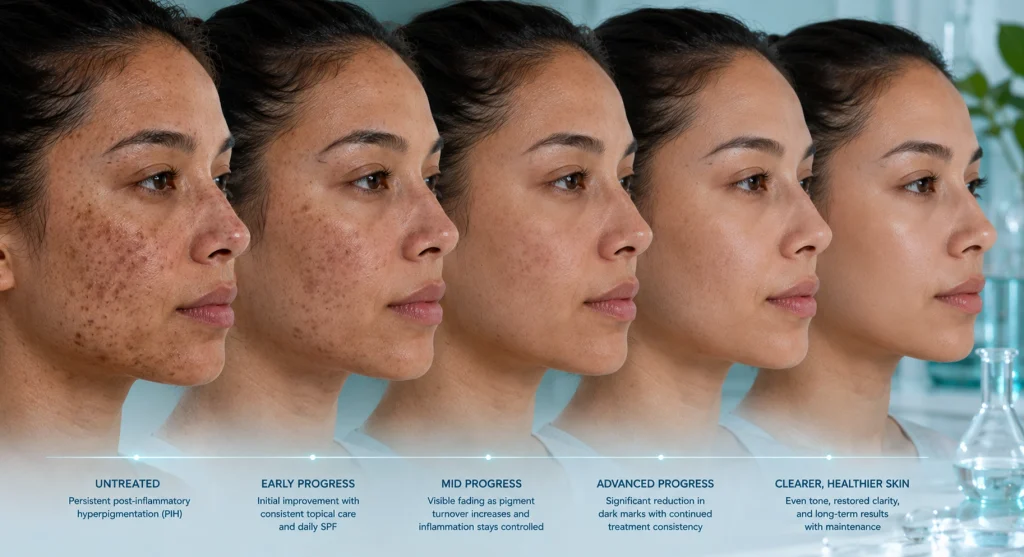
- Epidermal PIH without treatment: 3 to 12 months to fade with strict sun avoidance. In Miami’s UV environment without daily SPF, this extends significantly and can become permanent.
- Epidermal PIH with consistent topicals (niacinamide + vitamin C + SPF): Visible improvement at 4 to 8 weeks. Significant clearing at 8 to 12 weeks.
- Epidermal PIH with chemical peels + topicals: Visible improvement after 2 sessions (typically 6 to 8 weeks). Significant clearing after 3 to 5 sessions.
- Dermal PIH without treatment: 12 to 24 months, and some cases do not fully resolve without clinical intervention.
- Dermal PIH with ResurFx + topicals: Initial improvement visible after 2 to 3 sessions. Most patients reach their best result after 4 to 6 sessions over 4 to 6 months.
- PIE without treatment: Typically 3 to 6 months in lighter skin tones, longer in Fitzpatrick III-VI. Heals through natural capillary remodeling.
- PIE with azelaic acid + vascular-targeting treatment: Visible improvement in 4 to 8 weeks with consistent topical use and earlier with IPL or vascular laser.
What Makes PIH Worse and Keeps It From Clearing
Understanding what prolongs PIH is as important as knowing what treats it. At our Doral clinic, the most common reasons patients plateau or see their PIH worsen are:
- No SPF or inconsistent SPF use: The most common and most damaging factor. UV exposure stimulates melanin production in any area that has experienced inflammation. In Miami, even driving in a car with windows up provides meaningful UV exposure. Physical SPF 30+ applied every morning is the foundation of any PIH protocol.
- Picking or squeezing active breakouts: Mechanical trauma to an active pimple significantly intensifies the inflammatory response and dramatically increases the depth and severity of the resulting PIH. The deeper the inflammation, the more likely the resulting mark is dermal rather than epidermal.
- Using PIH products on PIE: Hydroquinone, kojic acid, and tranexamic acid target melanin production. They have no effect on damaged capillaries. Patients who have PIE and use PIH products for months experience no improvement and often conclude that nothing works for their skin, when the actual problem is product-condition mismatch.
- Over-exfoliation: Aggressive exfoliation on skin that already has active PIH can trigger additional inflammation and worsen the condition. Mechanical scrubs, harsh brush devices, and high-concentration AHAs used too frequently all fall into this category.
- Starting clinical treatments on active acne: PIH treatment is most effective after the active breakout cycle is controlled. Chemical peels and laser on skin that is still breaking out can drive PIH into new areas.
PIH After Acne in Miami: Why South Florida Patients Face Extra Challenges
The combination of year-round high UV index, high humidity, and a predominantly Fitzpatrick III-VI patient population makes post-acne hyperpigmentation a more complex management challenge in South Florida than in most other regions. Patients who moved to Miami from a lower-UV climate often notice that their skin retains marks longer than it did before, even when their skincare routine has not changed.
Heat and humidity also affect how well topical treatments perform. Products that rely on stable active ingredients, particularly vitamin C serums, degrade faster in warm, humid environments. Patients storing vitamin C in a bathroom cabinet in a Miami summer may be applying an oxidized, ineffective product without realizing it. At our clinic, we counsel patients on storage conditions as part of the topical protocol setup.
The good news is that the same climate that prolongs PIH also makes in-clinic treatment more accessible year-round. In colder climates, chemical peels and laser are typically avoided in summer due to sun sensitivity concerns. In Miami, strict post-treatment sun avoidance is required regardless of season, which means peels and ResurFx can be performed throughout the year with appropriate sun protection protocols in place. For the complete acne treatment plan at Perfect B, including how PIH prevention is built into the active breakout protocol from the first appointment, the acne treatment plan at Perfect B in Doral covers the full protocol from active breakout control through PIH management and scar prevention.
Frequently Asked Questions
1. What is the difference between PIH and a scar?
PIH is a flat discoloration caused by excess melanin. No structural damage has occurred to the skin, and PIH will fade over time, though how long depends on depth and sun exposure. A true acne scar involves structural changes, including indentations (atrophic scars like icepick, boxcar, and rolling scars) or raised tissue (hypertrophic scars). Scars do not fade with depigmenting agents and require different treatment approaches like subcision, RF microneedling, or laser resurfacing.
2. How do I know if I have PIH or PIE?
The blanching test is the simplest at-home method. Press firmly on the mark for 3 seconds and release. PIE (damaged capillaries, red marks) will temporarily blanch (go lighter or white) because the blood is temporarily displaced. PIH (melanin deposits, brown marks) will not change color under pressure. Many patients have both simultaneously on different areas of the face, which is why a clinical evaluation at our Doral clinic before starting treatment typically produces faster results than a trial-and-error approach.
3. Does PIH go away on its own?
Epidermal PIH often fades on its own over 3 to 12 months, provided UV exposure is minimized. In Miami’s UV environment without daily SPF, this timeline extends significantly. Dermal PIH, which appears grayish and does not respond to topicals, may not fully resolve without clinical treatment. PIE typically fades over 3 to 6 months through natural capillary remodeling, faster in lighter skin tones.
4. What is the fastest way to treat PIH?
The fastest path for epidermal PIH combines strict SPF use, niacinamide or azelaic acid, and a series of glycolic or salicylic acid peels. Patients at Perfect B who commit to this combination typically see significant clearing in 6 to 10 weeks. For dermal PIH, ResurFx non-ablative laser accelerates the timeline beyond what topicals can achieve, with most patients seeing their best results after 4 to 6 sessions. The most important single step regardless of approach is consistent daily SPF.
5. Can niacinamide treat PIH?
Yes. Niacinamide at 5-10% concentration inhibits the transfer of melanin from melanocytes to keratinocytes, which directly reduces the amount of pigment that accumulates in visible skin layers. It also reduces inflammation, which addresses one of the root triggers of PIH. It is generally well tolerated on acne-prone skin and is one of the most evidence-supported topical ingredients for PIH across Fitzpatrick types. Higher concentrations (above 10%) do not produce significantly better results and can cause flushing in some patients.
6. Is chemical peeling safe for dark skin tones?
Yes, with the right peel selection and provider expertise. Aggressive peels like high-concentration TCA or phenol can trigger post-peel hyperpigmentation in Fitzpatrick III-VI skin, which worsens the condition being treated. Glycolic acid (20-30%) and salicylic acid (20-30%) peels have the strongest evidence for safety and efficacy in darker skin tones. At Perfect B, peel selection is always based on Fitzpatrick type, current skin condition, and the depth of the PIH being addressed.
7. How is PIE treated at a medical clinic?
PIE responds to vascular-targeting treatments because the underlying problem is damaged capillaries, not excess melanin. Azelaic acid 10-20% is the most accessible topical option and addresses both PIE and PIH. IPL (intense pulsed light) and vascular lasers target the hemoglobin in damaged capillaries and significantly accelerate the clearing of red marks. Niacinamide also provides some benefit for PIE through its anti-inflammatory action. At our Doral clinic, patients with confirmed PIE are directed toward azelaic acid as the topical foundation and IPL for clinical acceleration when the marks are persistent.
Closing: The Clinical Bottom Line on Post-Inflammatory Hyperpigmentation
PIH is manageable and in most cases fully reversible with the right protocol. The two most common reasons patients do not see results are misidentifying the condition (treating PIE with PIH products) and UV exposure undermining the treatment (no SPF or inconsistent SPF in Miami’s sun). Address both of those first, and the timeline improves dramatically before a single clinical treatment is added.
For Fitzpatrick III-VI patients in South Florida, which represents the majority of our patient population at Perfect B in Doral, PIH is a primary concern that is built into the acne treatment protocol from the start rather than addressed as an afterthought when the breakouts have cleared. The earlier the pigment is addressed, the more likely it is epidermal rather than dermal, and the faster the response to treatment.
📍 Visit us at Perfect B, 8200 NW 41st St, Doral, FL 33166
📞 Call or message us at (786) 502-2260
→ See the full acne treatment plan at Perfect B in Doral and start your evaluation today.