Perfect B, Doral Fl. | 06.30.26 | 11 min read.
This article is for general educational purposes and is not a substitute for an in-person medical evaluation. Skincare and acne treatment should be personalized to your skin by a licensed provider.
Are Your Acne Products the Problem?
Yes, they very likely are. If you have sensitive, reactive skin and your breakouts are getting worse instead of better, the most common reason we see at Perfect B is over-treatment. Layering harsh actives, scrubbing, and drying everything out strips the protective layer of your skin, and a stripped barrier responds with more oil, more inflammation, and more persistent breakouts. It becomes a cycle: you break out, you attack the skin harder, the barrier weakens, and you break out again. The best acne treatment for sensitive skin is almost never more product. It is the right product, far less of it, and a plan to repair the barrier first.
Key Takeaways
- Over-treatment with harsh actives is one of the most common reasons acne on sensitive skin keeps flaring. More product is rarely the answer.
- The tell-tale sign your routine is the cause is dry, flaky patches sitting right next to oily, broken-out areas. That is a damaged skin barrier, not skin that needs more drying out.
- Over exfoliating acne with scrubs, strong acids, and high-strength benzoyl peroxide raises trans-epidermal water loss, weakens the acid mantle, and increases inflammation.
- The best acne treatment for sensitive skin is barrier-first: a gentle cleanser, niacinamide, ceramides, azelaic acid, and a calmer in-clinic approach instead of aggressive at-home actives.
- Real change takes about 6 to 8 weeks of patience and hydration, not punishment. This is not your fault, and reactive, broken-out skin can absolutely get calm and clear again.
The Sign Your Routine Is the Cause: Dry, Flaky Patches Next to Breakouts
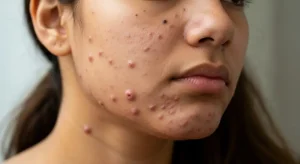
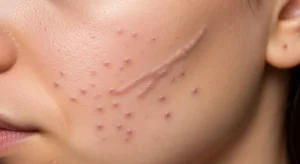
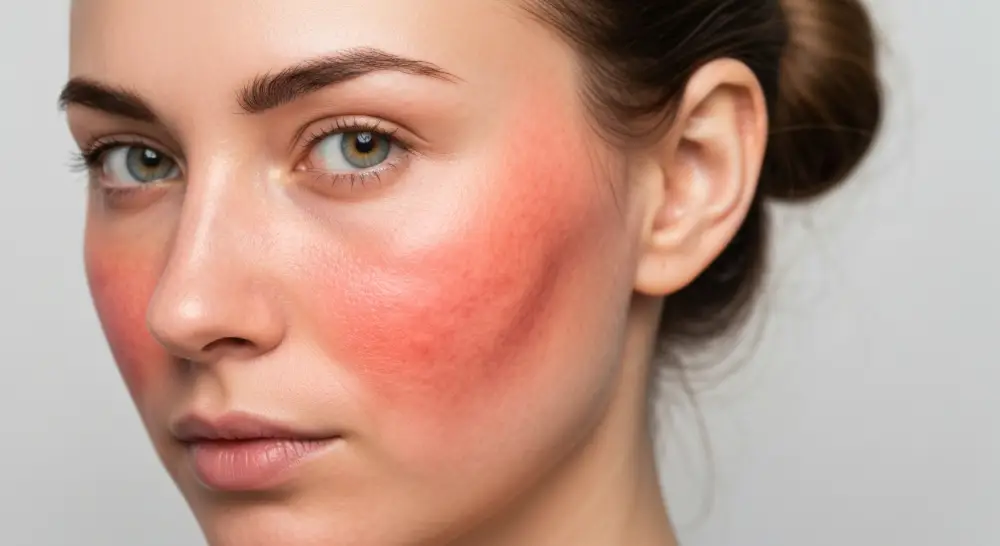
Here is the presentation that tells us almost immediately that the routine, not just the hormones, is driving the problem. You have dry, tight, sometimes flaky patches sitting right next to oily, broken-out areas. Your cheeks might feel like sandpaper while your chin and jaw keep erupting in deep, slow-healing bumps. You notice stinging when you apply your usual serum, redness that will not settle, and a skin tone that looks irritated even when you are not actively breaking out.
Most people read that dryness as a signal to dry everything out even more. It feels logical: if the skin is oily and breaking out, surely you need stronger products. But that is exactly what wrecks the barrier further. When skin is both flaky and oily at once, it is not telling you it needs more actives. It is telling you the barrier is damaged and overwhelmed. This pattern is the clearest example of acne not responding to treatment, because the treatment itself has become the irritant.
Reactive, adult skin behaves differently from teenage skin. It is thinner, drier, and quicker to inflame, yet androgens are still active enough to drive deep bumps that heal slowly and leave dark marks behind. That combination is exactly why acne on sensitive skin can feel impossible to manage with the products that worked for everyone else. Our guide to acne after 40 and during perimenopause explains the hormonal side, but the behavioral fix, the part you control at home, is the focus here.
What Over-Exfoliation Actually Does to Your Skin Barrier
Your skin has a protective outer layer often called the acid mantle, a thin, slightly acidic film of oils, lipids, and beneficial microbes that keeps water in and irritants out. Underneath it, ceramides act like mortar holding your skin cells together. When that system is intact, your skin stays hydrated, calm, and resilient. When it is damaged, everything goes sideways.
Over exfoliating acne is one of the fastest ways to break that system. Every time you scrub, swipe an alcohol toner, or pile on strong acids and high-strength benzoyl peroxide, you remove a little more of that protective film, and doing it daily means the barrier never rebuilds. The result is a damaged skin barrier, and damaged skin barrier acne behaves in a frustratingly counterintuitive way:
- Trans-epidermal water loss goes up. Without an intact barrier, water evaporates faster, leaving skin dehydrated even when it still looks oily.
- Oil production increases. Stripped, dehydrated skin often ramps up oil to compensate, feeding the exact congestion you were trying to clear.
- Inflammation rises. A weakened barrier lets irritants and microbes provoke the skin more easily, so redness, stinging, and inflamed bumps become the norm.
- Breakouts get more stubborn. Inflamed, compromised skin heals slowly, so blemishes linger and dark marks deepen.
The science behind barrier function and trans-epidermal water loss is well established in the dermatology literature, and you can find peer-reviewed studies on skin barrier disruption and acne on PubMed. The practical takeaway is simple: if your skin is flaky, stinging, and still breaking out, the problem is rarely too little aggression. It is over exfoliating acne and a barrier pushed past what it can handle.
Why Teenage-Skin Products Backfire on Adult and Reactive Skin
The single biggest mistake we see at Perfect B is treating acne on sensitive skin with products designed for oily teenage skin. Teenage acne and adult reactive acne are not the same condition, so the same aggressive products do not serve them the same way. The usual culprits are easy to spot:
- Harsh physical scrubs with gritty particles that create micro-tears and inflame fragile skin.
- Alcohol-based toners that strip oil and lipids and leave the barrier dehydrated and reactive.
- High-strength benzoyl peroxide used at full concentration, every day, on skin that is already irritated.
- Multiple strong actives layered at once, such as a high-percentage acid plus a retinoid plus benzoyl peroxide, with no recovery time.
On resilient teenage skin, some of these can be tolerated. On thinner, drier, reactive adult skin, they backfire almost every time, which is precisely why so many patients arrive convinced their acne is simply not responding to treatment. In reality, acne not responding to treatment is frequently a story of over-treatment and damaged skin barrier acne. The skin is not ignoring the products; it is reacting to them. To understand how acne forms and clears at the level of the pore, our overview of how to treat and clear acne vulgaris is a useful companion read.
The American Academy of Dermatology also emphasizes gentle, consistent skincare over harsh routines, and you can review their patient guidance on acne care from the AAD. The throughline is the one we live by in the clinic: gentler beats harsher every time for sensitive skin.
What Is the Barrier-First Reset We Use at Perfect B in Doral?
When a patient with reactive, broken-out skin comes to our Doral clinic, we flip the usual script. Instead of adding more actives, we strip the routine back, calm the inflammation, and rebuild the barrier while we treat the breakouts. We are repairing your skin and clearing your acne at the same time, and that takes patience.
“The biggest mistake I see is women using products meant for teenage skin: harsh scrubs, alcohol toners, strong benzoyl peroxide, and it backfires every time. What works for reactive, perimenopausal skin is patience and hydration, not punishment. We rebuild your barrier while we calm the breakouts, and that takes about 6 to 8 weeks to really see a shift. I always remind patients this is not their fault. It is hormones rearranging everything, and with the right approach the skin absolutely gets calm and clear again.”
Valeria Marulanda, FNP-BC, Perfect B Aesthetics, Doral
Step one: stop the harsh actives and simplify
The first move is almost always subtraction. We pause the scrubs, the alcohol toners, the high-strength benzoyl peroxide, and the competing actives so the barrier can recover instead of fighting a new irritant every night.
Step two: rebuild with gentle, supportive ingredients
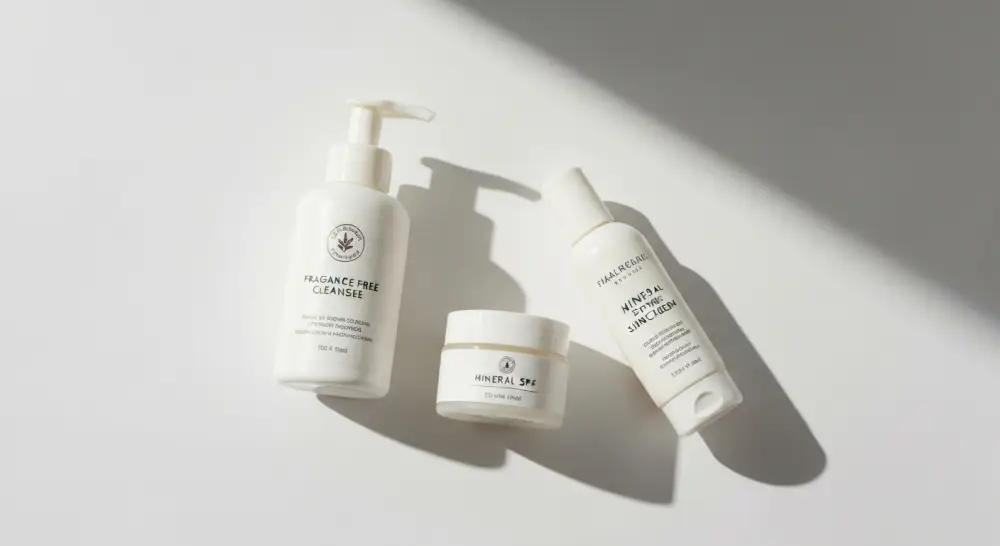
We rebuild the home routine around a small set of barrier-friendly ingredients: a gentle, non-stripping cleanser, plus azelaic acid, niacinamide, and ceramides. Niacinamide is a quiet workhorse for reactive skin because it supports the barrier, regulates oil, and calms inflammation without the sting of harsher actives. Our breakdown of the benefits of niacinamide for skin explains why it is a cornerstone of barrier repair.
Step three: calm and treat in-clinic
In the clinic, we keep it gentle and targeted. Light mandelic or lactic acid peels exfoliate and brighten without the trauma of over exfoliating acne at home. HydraFacials with calming serums hydrate and decongest. Red LED therapy brings down inflammation across the whole face. Every step has the same goal: reduce inflammation and support healing rather than provoke the skin. This barrier-first sequence is, in our clinical experience, the best acne treatment for sensitive skin because it treats the cause of the flare instead of punishing the symptom.
Step four: add texture work only once the skin is calm
Once the skin stops flaring and the barrier is stronger, we can address residual texture or scarring with treatments like microneedling. We never start with aggressive resurfacing on inflamed skin; we earn that step by calming things down first.
For hormonal acne specifically, there are oral and prescription options your provider may consider after an in-person evaluation. Those are decided case by case, and the barrier-first foundation still applies.
What Does a Realistic 6 to 8 Week Barrier-Rebuild Timeline Look Like?
Healing a damaged barrier is not instant, and anyone promising overnight clearing on reactive skin is not being honest. The best acne treatment for sensitive skin works on a realistic timeline, and in our experience it takes roughly 6 to 8 weeks to see a real shift. The principle to hold onto is patience over punishment.
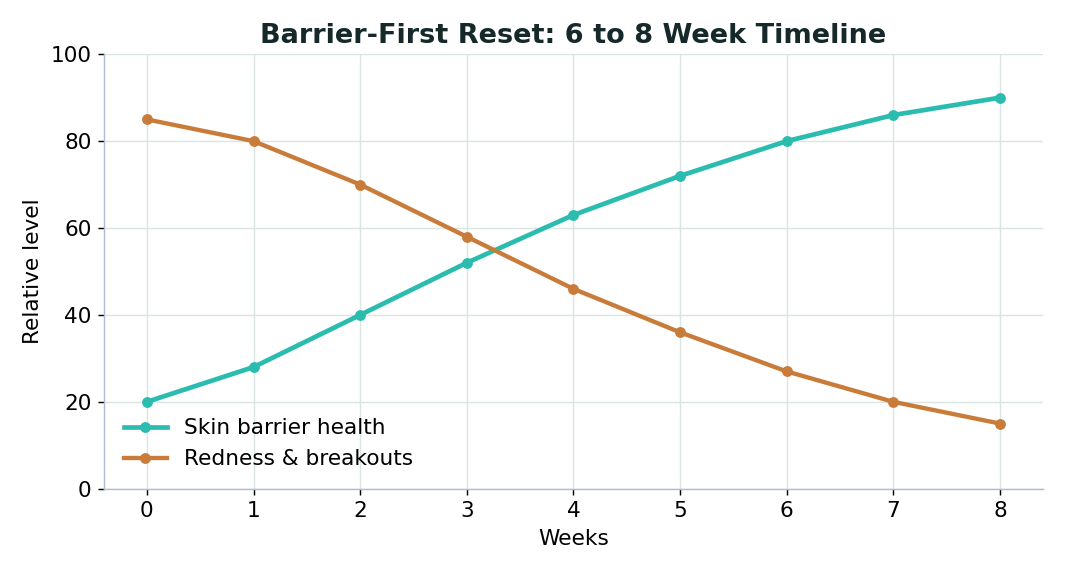
| Phase | Focus | What you may notice |
|---|---|---|
| Weeks 1 to 2 | Stop the harsh actives. Simplify to a gentle cleanser and a barrier moisturizer with ceramides. Hydrate. | Less stinging and tightness. Flaking starts to settle. Active breakouts may not change much yet, and that is expected. |
| Weeks 3 to 4 | Layer in gentle support: niacinamide and azelaic acid. Begin in-clinic calming care such as a light peel or red LED. | Redness eases. Skin feels more comfortable and less reactive. Fewer new inflamed bumps appearing. |
| Weeks 5 to 6 | Maintain the simplified routine. Continue spaced in-clinic treatments. Protect daily with non-comedogenic SPF. | A visible shift: existing breakouts calming, skin tone more even, barrier noticeably stronger. |
| Weeks 7 to 8 | Reassess with your provider. Skin is calmer and more resilient. Plan any texture work for residual marks. | Clearer, calmer skin overall. Dark marks beginning to fade. Ready to consider microneedling for texture if needed. |
Some weeks will feel slow, and that is normal. Barrier repair is cumulative, and the reward is skin that stays calm.
How Do Acne, Sensitive Skin, and Miami Humidity Interact?
Living in South Florida adds a layer that aggressive routines make worse. Miami heat and humidity mean more sweat and more occlusion, where sweat, sunscreen, and oil sit trapped against the skin in a warm, damp environment. For reactive, broken-out skin, that already nudges things toward congestion and inflammation. Add a stripping routine on top and the barrier is attacked from both sides: dried out by harsh products and stressed by heat and sweat.
An aggressive routine a friend tolerated in a drier climate can backfire here in Doral. The fix is not to scrub harder after a sweaty day. It is to cleanse gently, keep the barrier supported, and avoid heavy occlusive layers that trap heat against the skin.
Sun protection is non-negotiable under the strong South Florida sun, and it does not have to make acne worse. Choose a lightweight, non-comedogenic SPF that will not clog pores, and reapply without scrubbing the previous layer off. Daily sun protection also helps the dark marks left behind by breakouts fade instead of deepening.
When Should You Stop DIY and See a Clinic?
Trying gentler skincare at home is a smart first step, but there is a point where it stops being enough. Consider booking a professional evaluation if any of these sound like you:
- You have simplified your routine and your skin is still flaring, stinging, or breaking out after several weeks.
- You are dealing with deep, painful bumps that heal slowly and leave persistent dark marks.
- You keep cycling through products, and every new one seems to irritate your skin further.
- You suspect a hormonal component, especially breakouts along the jaw and chin in your 30s, 40s, or perimenopause.
- The emotional toll is real, and the constant trial and error is wearing you down.
A provider can look at your skin in person, identify whether over-treatment and a damaged barrier are driving the problem, and build a plan that treats the cause instead of layering on more actives. See how we structure that process on our acne treatment plan page.

Frequently Asked Questions
1. Can over-using acne products actually cause more acne?
Yes. Over-using harsh actives strips the protective barrier, increases water loss, and triggers more oil and inflammation. That cycle drives more breakouts, not fewer. For sensitive, reactive skin, less and gentler is usually more effective than more and harsher.
2. What does a damaged skin barrier look like with acne?
The classic sign of damaged skin barrier acne is dry, flaky, tight, or stinging patches sitting right next to oily, broken-out areas. You may also see persistent redness, sensitivity to products you used to tolerate, and breakouts that heal slowly. It is a barrier problem, not a signal to dry the skin out more.
3. How do I know if I am over exfoliating?
Signs of over exfoliating acne include stinging on application, tightness, flaking, shiny or waxy-looking skin, increased redness, and breakouts that keep coming despite frequent exfoliation. If you use scrubs or acids daily and your skin is irritated, that is a strong cue to scale back and let the barrier recover.
4. Why is my acne not responding to treatment?
Acne not responding to treatment is often a case of over-treatment. When the products meant to clear your skin are themselves irritating a damaged barrier, the skin stays inflamed and keeps breaking out. Hormones and an inconsistent routine also play a role. A provider can sort out which factor is driving yours.
5. What is the best acne treatment for sensitive skin?
The best acne treatment for sensitive skin is barrier-first: stop the harsh actives, simplify to a gentle cleanser, and rebuild with niacinamide, ceramides, and azelaic acid, paired with gentle in-clinic care like light mandelic or lactic peels and red LED. The aim is to calm inflammation and repair the barrier while clearing breakouts.
6. How long does it take to repair a damaged skin barrier?
For most reactive-skin patients, it takes about 6 to 8 weeks to see a meaningful shift once you stop the over-treatment and focus on hydration and barrier support. The early weeks settle stinging and flaking; visible clearing comes later. Patience over punishment is the rule.
7. Does Miami humidity make sensitive acne-prone skin worse?
It can. Heat, sweat, and occlusion in South Florida add stress and congestion to reactive skin, and an aggressive, stripping routine on top makes it worse. Gentle cleansing, a supported barrier, lightweight non-comedogenic SPF, and skipping heavy occlusive layers help your skin handle the climate.
Closing: Patience Over Punishment
If your acne products have been making things worse, this is the moment to stop and let the skin recover. Reactive, broken-out skin is not a sign you have failed. It is a damaged barrier driven by over-treatment, and with a barrier-first approach it can get calm and clear.
The distinction between barrier damage and active acne requires an in-person assessment, because the two look similar but respond to opposite interventions. At Perfect B in Doral we evaluate before prescribing, so the plan rebuilds the barrier first and clears second, in the order your skin actually needs.
- 📍 Visit us at Perfect B, 3905 NW 107th Ave, Suite 104, Doral FL 33178
- 📞 Call or message us at (786) 502-2260
- 💳 Financing available through Cherry, Klarna, Afterpay, and CareCredit