
Perfect B, Doral FL | Perimenopause Acne | 9 min read
This content is for educational purposes only and does not constitute medical advice. Consult a qualified medical provider before beginning any acne treatment protocol. All treatments referenced on this page require a clinical evaluation from a licensed provider at Perfect B. Results vary by patient.
Why Perimenopausal Acne Is Not Your Teenage Acne
You handled acne at 16. You handled it again at 22. You assumed it was done. Then at 42, 45, 48, the breakouts came back along the jawline, the chin, the neck. Deep. Painful. Slow to heal. And nothing you used in your twenties is touching them.
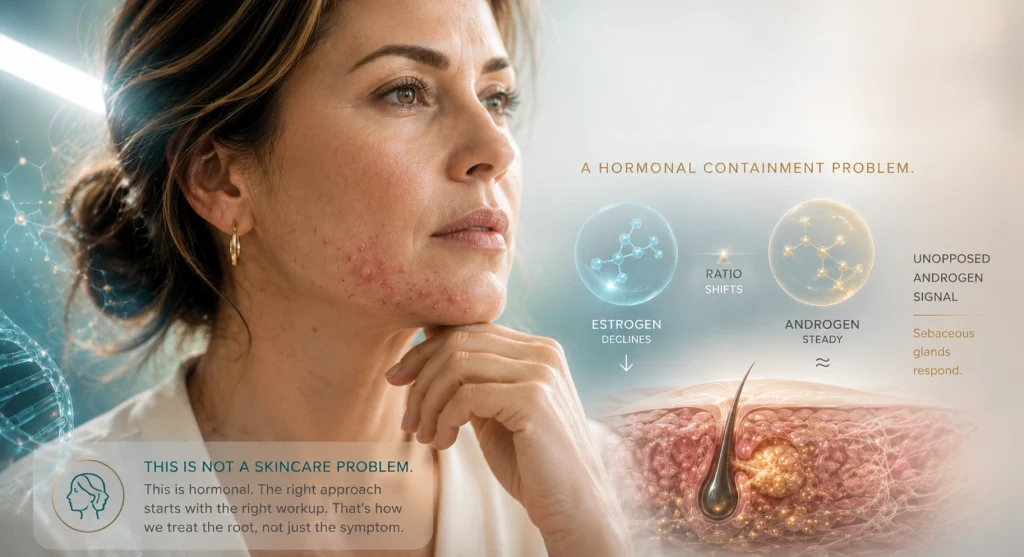
That is not the same acne. Teenage acne is driven by a surge in androgens that floods the sebaceous system. Perimenopausal acne is driven by something different: estrogen is dropping, but androgen output stays roughly the same. The ratio shifts. Suddenly the androgen signal that your body used to balance out is unopposed, and the sebaceous glands respond.
At Perfect B in Doral, FL, this is one of the most common presentations we see in women over 40. Same patient who never had cystic acne in her life. Same patient who tried three new cleansers and a $200 serum. Same patient who is now seeing damage build along the jaw because the topicals are not reaching the problem.
The right approach starts with understanding that this is a hormonal containment problem, not a skincare problem.
Key Takeaways
- It is not a skincare failure. Perimenopausal acne is driven by the shift in the estrogen-to-androgen ratio, not by your face wash.
- It needs a workup, not a product. Labs reveal what is actually driving the breakouts so the protocol matches the patient.
- Topicals alone rarely resolve it. Deep mandibular and chin lesions sit below the depth most over-the-counter products can reach.
- Procedural treatment matters more after 40. Skin heals slower, scars more, and benefits from in-office therapies that handle active acne and post-inflammatory damage together.
- Coordination is the difference. When a patient needs systemic medication, Perfect B coordinates referrals so the protocol is complete, not piecemeal.
The Hormonal Mechanism: It Is a Containment Problem, Not a Production Problem
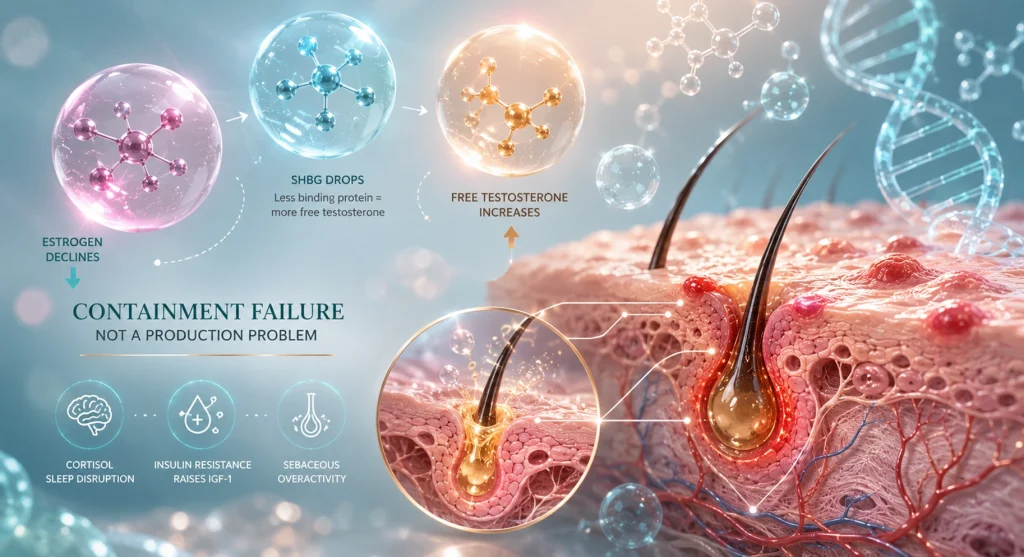
Most articles describe perimenopausal acne as if androgens were suddenly rising. They are not. In most women, total testosterone and DHEA hold steady or even decline slightly with age. What changes is the counterbalance.
Estrogen drops. Sex hormone-binding globulin (SHBG), the protein that keeps testosterone bound and inactive, drops with it. That means more free testosterone reaching the sebaceous receptors, even though the lab number for total testosterone may look completely normal. A peer-reviewed review on menopausal acne pathogenesis in the International Journal of Women’s Health documents this exact mechanism across multiple patient cohorts.
On top of that, cortisol from perimenopausal sleep disruption pushes the adrenals to convert more DHEA into active androgens. Insulin resistance, which becomes more common after 40, raises IGF-1 and amplifies sebaceous response. The result is not a flood of new hormones. It is a containment failure of the hormones that were always there.
This is why topical adapalene and benzoyl peroxide produce limited results. They address the comedone at the surface. They do not address the cascade three layers deeper.
The Two Presentations Victoria Sees Most at Perfect B
Across the perimenopausal patients who walk into the Doral clinic, two patterns repeat.
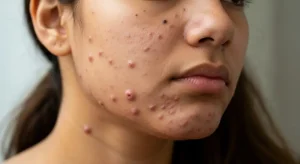
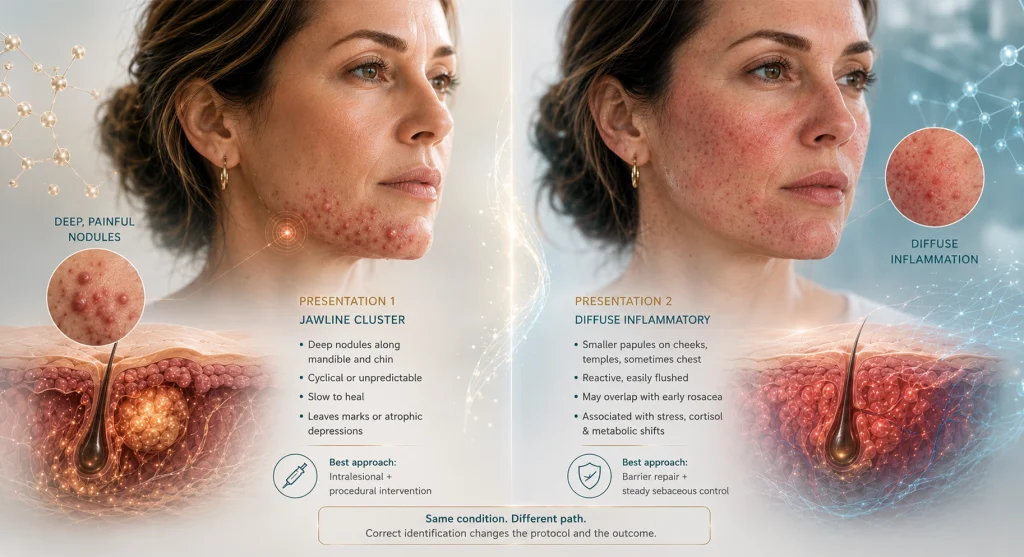
Presentation 1: The classic jawline cluster. Deep, painful nodules along the mandible and chin, often appearing seven to ten days before menses (when menses is still happening) or in unpredictable waves once cycles are irregular. Skin in the rest of the face may look fine. Makeup does not cover the texture. The patient often reports that one cyst takes three to four weeks to fully resolve and leaves a flat brown mark or a small atrophic depression behind.
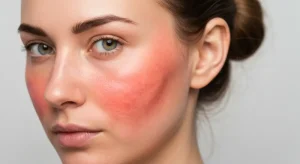
Presentation 2: The diffuse inflammatory pattern. Smaller papules scattered across the cheeks, temples, and sometimes the chest. Skin is reactive, easily flushed, sometimes overlapping with early rosacea. This pattern is more common in women with elevated cortisol, disrupted sleep, and metabolic shifts that are not always obvious at the surface.
Identifying which presentation is in front of us changes the protocol. The jawline cluster needs aggressive intralesional work and procedural intervention on the lesions that have already formed. The diffuse inflammatory pattern needs barrier repair and a slower, steadier reduction in sebaceous activity. Same condition, different paths.
How Perfect B Approaches the Workup
Every patient at Perfect B starts with a $150 medical consultation. That is not a sales call. That is a full evaluation by a medical provider who looks at the skin, takes a history, and decides what data is missing before any treatment is recommended.
For perimenopausal acne, the data we typically want includes:
- Free and total testosterone. Total can read normal while free is elevated, which is the actual driver of acne.
- DHEA-S. Adrenal contribution to the androgen pool, especially relevant when stress is high.
- SHBG. If low, even normal testosterone behaves like elevated testosterone.
- Cortisol. Often a morning serum or a four-point salivary, depending on the pattern.
- Fasting insulin and HbA1c. Insulin resistance amplifies acne and is common after 40.
- Vitamin D and key inflammatory markers. Often deficient, often quietly driving inflammation.
These labs are not always all needed. The provider decides which to order based on the presentation in front of them. The point is that the treatment plan responds to the patient, not to a template.
This is the difference between cookie-cutter dermatology and the personalized approach Perfect B builds into every acne treatment plan in Doral. Standard guidance for adult acne management from the American Academy of Dermatology on severe and persistent acne confirms the value of a workup-first approach when topicals are no longer enough.
Treatment Options: What Works and What Needs Coordination
Perimenopausal acne almost never resolves on a single lane of treatment. The protocol Perfect B builds usually combines three things:
1. In-clinic procedural work that handles active lesions and post-inflammatory damage.
- Medical-grade chemical peels calibrated to mature skin. The goal is not a beauty peel. It is a controlled reduction of sebaceous activity, surface clearing, and stimulation of healthy turnover without aggravating the barrier.
- RF microneedling for patients with deeper nodular lesions and early scarring. Radiofrequency energy reaches sebaceous depth that topicals cannot, and the same session begins remodeling collagen against the scarring that perimenopausal skin produces more readily.
- Intralesional treatment for active cysts that need to come down quickly, especially before a wedding, a campaign, or a moment that matters.
Patients who follow through with this lane often see clearer skin in six to eight weeks, with continued improvement over the three-to-six-month plan window.
2. A medical-grade topical protocol built for thinner, more reactive skin.
The products that worked at 22 do not work at 45. The protocol Perfect B builds prioritizes barrier repair, controlled exfoliation through tolerable acids, and pigment management for the marks left behind by inflammation. Routines are designed so the patient can tolerate them long-term, not abandon them in three weeks.
3. Coordination with the patient’s medical team when systemic therapy is appropriate.
When labs indicate that hormonal therapy or systemic acne medication is the right path, Perfect B coordinates with the patient’s gynecologist, endocrinologist, or primary care provider. This is where the “what needs coordination” piece matters. Some patients benefit from hormonal management of perimenopause itself, and that work belongs with a specialist. The acne protocol at Perfect B is built around that medical work, not in competition with it.
For patients already carrying scarring from this cycle, our acne scars treatment plan in Doral integrates with the active-acne protocol so we are not chasing damage that is still forming.

The Miami Lifestyle Factor
South Florida adds variables most national articles do not mention.
Heat and humidity raise the baseline of sebaceous output. Skin that would have settled in a dry climate often does not settle here. A protocol built for Boston will under-treat in Doral.
UV exposure runs year-round. That means post-inflammatory hyperpigmentation darkens faster, stays longer, and is harder to clear if sun protection is not built into the daily routine. Many patients are surprised by how much pigment work shows up in their plan, because they never connected the marks to the daylight.
Lifestyle stress matters too. Travel, time-zone shifts, late dinners, irregular sleep, all elevate cortisol, all push perimenopausal acne harder. The protocol takes this into account. We do not ask patients to become monks. We ask them to protect the few habits that move the needle.
Perfect B’s skin rejuvenation treatment plan often runs alongside acne treatment to handle the photoaging that has been accumulating under the breakouts. For many women in their forties, the rejuvenation work is the unexpected upside of treating the acne.
Frequently Asked Questions
1. Is it normal to get acne in perimenopause if I had clear skin my whole life?
Yes. The estrogen-to-androgen shift can produce acne for the first time in your forties, even with no teenage history. It surprises patients, but clinically it is one of the most predictable patterns at this stage of life.
2. Can I just use the topicals I used in my twenties?
Usually no. Mature skin is thinner, drier, and more reactive. The actives that cleared your skin at 22 often inflame it at 45. The protocol needs to respect the barrier you have now.
3. Will perimenopausal acne go away on its own when menopause is done?
Sometimes. Once hormones stabilize post-menopause, the driver often eases. But waiting it out has a cost. Every month of active inflammation produces more scarring, more pigment, and more skin that needs to be repaired later. Treating during perimenopause is the cheaper, gentler path long-term.
4. Should I see a dermatologist, a gynecologist, or come to Perfect B?
If the acne is your main concern, Perfect B is built for this. The consultation will identify whether your case is fully within our scope or whether you would benefit from parallel care with a gynecologist or endocrinologist. If a referral is the right answer, you get it.
5. How long until I see clearer skin?
Most patients see meaningful improvement within six to eight weeks of starting a coordinated protocol. The full plan usually runs three to six months, depending on severity and on the scarring that needs to be addressed alongside active breakouts.
6. Can scars from this cycle be treated?
Yes. Once active acne is controlled, the scarring lane begins. RF microneedling and other modalities in the Perfect B clinic are highly effective for ice pick, rolling, and atrophic scars common in perimenopausal patients.
7. Will my insurance cover this?
Aesthetic and cosmetic treatments are typically not covered by insurance. The acne treatment plan at Perfect B is priced transparently, and the consultation establishes the full scope before any treatment begins.
8. What if I cannot start treatment right now?
Start with the consultation anyway. Having the workup and the plan on file means you act quickly when you are ready. Waiting until the scarring is severe makes the rebuild longer and more expensive.
Closing: The Workup Changes Everything
Perimenopausal acne is one of the most frustrating conditions a woman can face in her forties, because it shows up without warning, on skin that already has other things going on, and it does not respond to the strategies that worked in the past.
The path forward is not another cleanser. It is an evaluation. Labs where labs are needed. A protocol that fits the patient, not a template. Procedural work for what topicals cannot reach. And coordination with the rest of the medical team when systemic care is appropriate.
At Perfect B in Doral, FL, Victoria Diartt builds every perimenopausal acne protocol on a full skin evaluation and a workup, not a category label. If the jawline pattern, the chin cysts, or the slow-healing marks were not there a year ago, the conversation starts with understanding your full hormonal picture, not just the lesion in front of you.
📍 Perfect B | 8200 NW 41st St, Suite 100, Doral, FL 33166
📞 (786) 502-2260