
Perfect B, Doral FL. | 04.01.26 | 10 min read.
This content is for educational purposes only and does not constitute medical advice. Consult a licensed medical provider before beginning any treatment.
Acne Scar Treatment in Miami: Why the Approach Matters More Than the Device
Acne scars are a structural problem. The inflammation from past breakouts leaves fibrous bands that tether skin downward and collagen deficits that permanently change skin topography. A cream cannot release a tethering band. A single laser session cannot rebuild missing collagen. That is why acne scar treatment in Miami requires a staged clinical plan, not a single procedure and not a one-size-fits-all device protocol.
At Perfect B in Doral, FL, we regularly see patients from across South Florida who have tried over-the-counter treatments, at-home devices, and single-session spa facials with no lasting improvement. The issue is not product quality. It is that acne scars require mechanism-matched treatment: release the tether first, then remodel the tissue, then resurface the top layer, then address color. Skip a step, and the results will be partial and temporary.
Key Takeaways
- Acne scars are structural, not surface stains: Fibrous tethering bands and collagen loss change the architecture beneath your skin. Topical products alone cannot correct this.
- Scar type determines the treatment method: Ice pick, boxcar, rolling, and hypertrophic scars each respond to different techniques. Classification always comes before treatment.
- The 6-month mark is when collagen peaks: Patients see solid improvement at 3 months, but the full benefit of subcision, Morpheus8, and laser becomes visible at 6 months when collagen remodeling matures.
- Subcision with Radiesse is a core structural tool: Releasing tethering bands and immediately supporting the void with a biostimulator produces better long-term results than subcision alone.
- Darker skin tones are treatable with the right protocol: Most of our Miami patients are Fitzpatrick IV. Proper device selection and energy calibration make effective treatment safe across all skin tones.
What Scar Types We See Most in South Florida
The patient population at Perfect B reflects South Florida broadly: a significant majority are Fitzpatrick skin type IV, most with Hispanic heritage. That clinical reality shapes how we approach every treatment plan, from device selection to energy parameters to the topicals we prescribe at home.
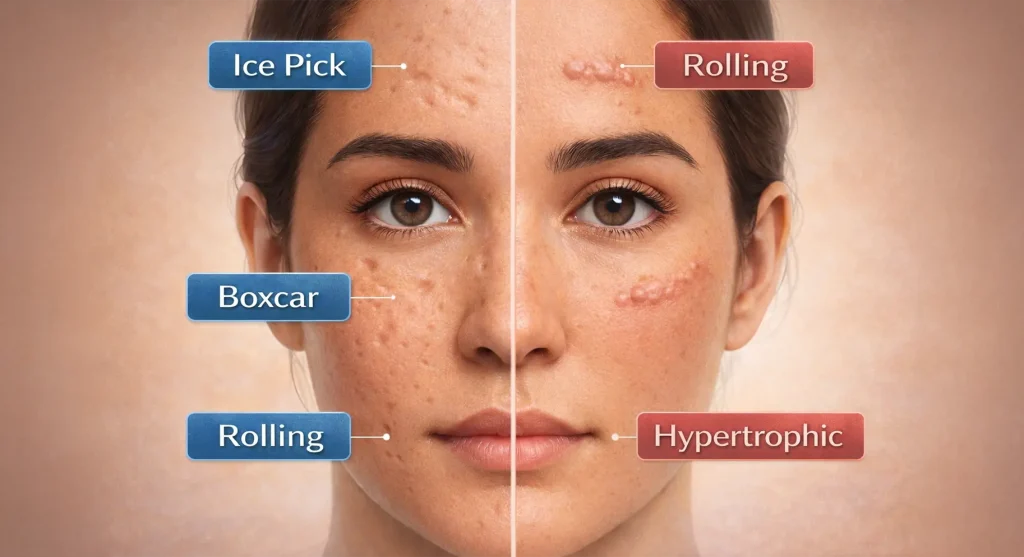
In terms of scar types, ice pick scars are the most common single presentation we see, though most patients arrive with a combination of ice pick and boxcar patterns on the same face. Rolling scars from fibrous tethers beneath the surface are also frequent. Hypertrophic and keloid scars, which appear as raised firm tissue, present more often on the chest, shoulders, and jawline and require a separate management approach from atrophic (depressed) scars.
Most patients do not have one clean scar type. They have a mix. That is precisely why a single-device cookie-cutter protocol consistently underperforms a staged, scar-mapped clinical plan.
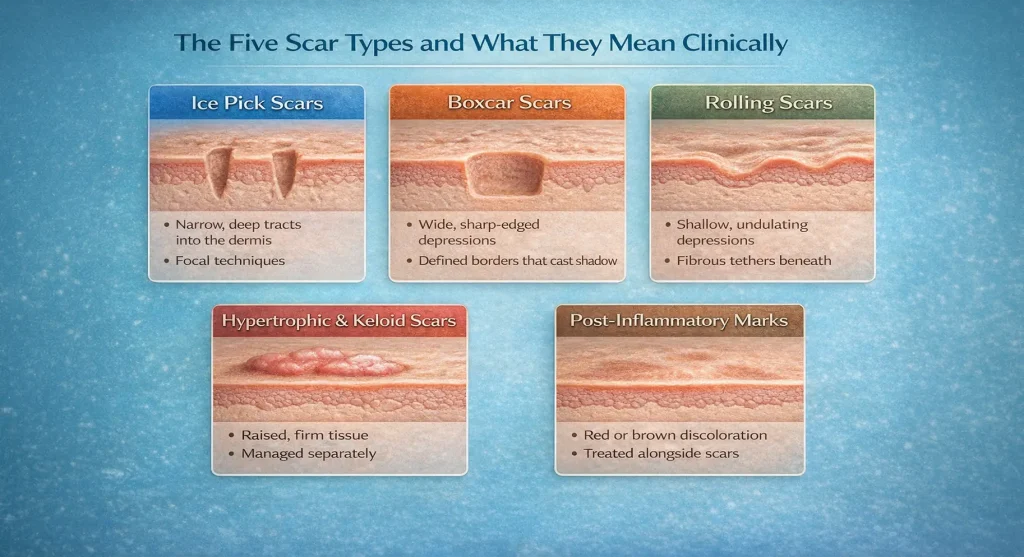
The Five Scar Types and What They Mean Clinically
- Ice pick scars: Narrow, deep tracts into the dermis that look like pinpricks. Respond best to focal techniques rather than broad resurfacing.
- Boxcar scars: Wide, sharp-edged depressions with defined borders that cast visible shadows. Respond to fractional resurfacing and targeted biostimulators or fillers.
- Rolling scars: Shallow, undulating depressions from fibrous tethers beneath the skin surface. Subcision is the primary release method.
- Hypertrophic and keloid scars: Raised, firm tissue, managed separately from atrophic scars with intralesional therapies and silicone protocols.
- Post-inflammatory marks: Red or brown discoloration remaining after acne clears. Not true scars, but managed alongside scarring with IPL and targeted topicals.
The Perfect B Protocol: Release, Remodel, Resurface, Re-Color
Every acne scar treatment plan at our Doral, FL clinic follows a four-stage framework built around biology. The stages are sequenced intentionally: each one prepares the tissue for the next. Jumping to resurfacing before releasing tethers produces surface improvement over a structure that is still being pulled down from below. The sequence matters as much as the individual treatments.
- Release: Subcision with cannula to break fibrous tethering bands and free the scar depression from below the skin surface.
- Remodel: Morpheus8 RF microneedling and resurfacing laser to stimulate deep, sustained collagen production in the treated zones.
- Resurface: Fractional laser or controlled chemical peels to refine texture, soften scar edges, and improve overall skin tone.
- Re-color: IPL and targeted topicals to address post-inflammatory redness and pigment that emphasize scar appearance.
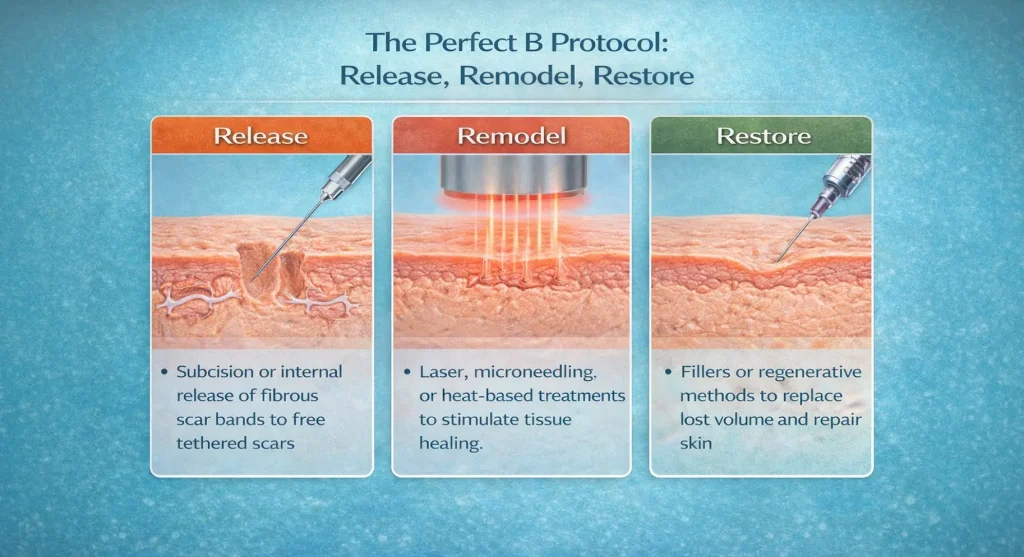
Not every patient requires all four stages. The scar map established at your first consultation determines which stages apply, in what order, and with what technologies. This is the clinical evaluation that distinguishes the Perfect B Acne Scars Treatment Plan from device-of-the-month approaches.
Subcision with Radiesse: The Structural Foundation of Acne Scar Correction
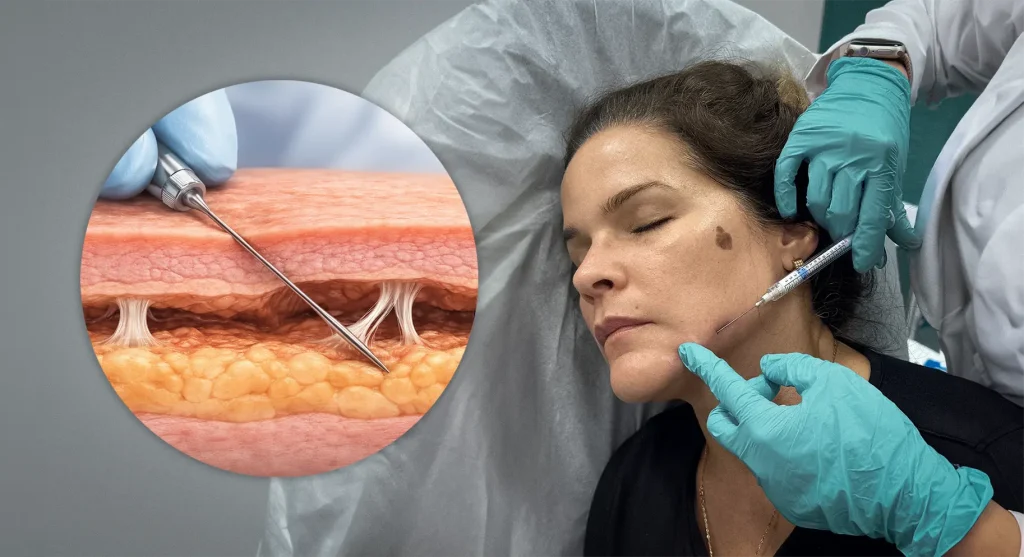
Subcision is one of the most critical tools in acne scar treatment and one that is frequently absent from spa-based or device-only protocols. At Perfect B, we use a cannula for subcision in most cases. The cannula provides controlled, sweeping movement beneath the scar that releases fibrous tethers with less surface trauma than a needle approach.
What differentiates our subcision is what happens immediately after the release. Rather than leaving the freed space empty and relying solely on the inflammatory response, we inject Radiesse, diluted or hyperdiluted, as a biostimulator directly into the treatment area. Radiesse stimulates collagen production at exactly the site where new structure is needed while providing immediate volumetric support. The day after treatment, patients may notice mild itching or awareness of the product in the area. That is the extent of it for most patients. There is no significant downtime.
When clinically appropriate, we also incorporate exosomes or PRP directly into the Radiesse injection during the subcision phase. This creates a concentrated regenerative environment at the treatment site, accelerating the tissue response and improving the structural outcome over the following weeks and months. A peer-reviewed analysis in Dermatologic Surgery confirming that combination therapy for acne scars significantly outperforms single-modality approaches in producing sustained structural improvement supports this sequenced, multi-tool method.
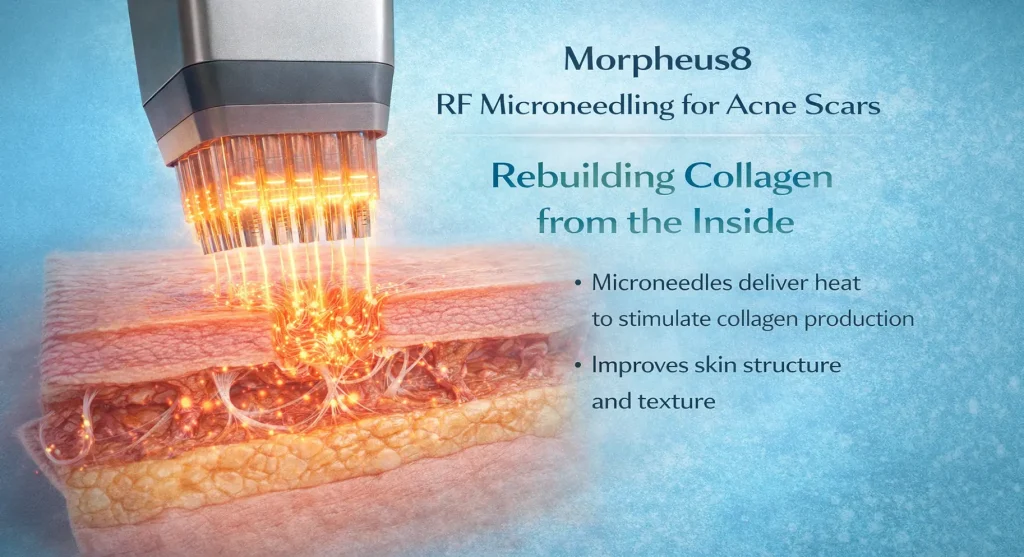
Morpheus8 RF Microneedling for Acne Scars: Rebuilding Collagen from the Inside
Morpheus8 is our primary RF microneedling device for acne scar remodeling at Perfect B. It combines microneedling with radiofrequency energy to reach the deeper dermal and subdermal layers where scar tissue lives. The controlled thermal injury triggers a wound-healing response that builds new collagen precisely where the deficit exists.
For South Florida patients, particularly those presenting as Fitzpatrick IV, Morpheus8 offers a meaningful safety advantage. Its insulated needles protect the epidermis during energy delivery, reducing the risk of surface-level pigmentation changes that are a real concern for patients with naturally deeper skin tones. We calibrate depth and energy parameters based on each patient’s scar map, skin type, and healing history. There is no universal setting.
RF microneedling for acne scars typically requires a series of sessions spaced 4 to 6 weeks apart. Patients often notice visible texture improvement after the first or second visit. The cumulative collagen response, however, is what produces the deep scar remodeling that becomes apparent at the 3 and 6-month marks. Each session stacks on the last.
Resurfacing Laser for Acne Scars: Refining the Surface After Structural Work
Alongside Morpheus8, the resurfacing laser is one of the devices we use most frequently in acne scar treatment at Perfect B. Where RF microneedling works deep to remodel structural collagen, the resurfacing laser refines what is visible at the surface. It improves texture, softens the edges of boxcar and rolling scars, and addresses the tone and luminosity changes that often accompany significant scarring.
In most plans, Morpheus8 and the resurfacing laser are not alternatives. They are complements used at different stages and sometimes in the same treatment visit. Morpheus8 targets the dermis and subdermis. The resurfacing laser targets the epidermis and papillary dermis. Used in the right sequence with appropriate healing time between sessions, they address different layers of the same problem.
For acne scar laser treatment in Miami, where most patients have medium to deeper skin tones, technique and parameter selection are the clinical variables that separate safe, effective treatment from treatments that risk post-inflammatory hyperpigmentation. We assess Fitzpatrick type, recent sun exposure, and healing history before setting any parameters. Evidence-based guidance on treating acne scars in darker skin types emphasizing conservative energy settings and device selection to prevent PIH in Fitzpatrick III through VI patients informs our calibration decisions.
Exosomes, PRP, and PDRN: How We Use Regenerative Additives in the Protocol
Exosomes, PRP, and PDRN are not standalone acne scar treatments at Perfect B. They are precision additions used at specific points in the protocol to accelerate recovery, reduce downtime, and improve the tissue response to each procedure.
During subcision with Radiesse, we sometimes incorporate exosomes or PRP directly into the injection. This creates a concentrated regenerative signal at the exact site where new collagen needs to form. The exosomes direct faster cellular regeneration. The Radiesse provides the biostimulatory scaffold. The combination produces better structural outcomes than Radiesse alone when the clinical picture calls for it.
Topically, exosomes and PDRN are part of almost every post-treatment visit. Applied after Morpheus8 or laser sessions, they dramatically reduce visible recovery time. Most patients experience near-zero downtime with mild redness that fades within hours rather than days. PRP is the third topical option in this category when exosomes or PDRN are not selected. Together, these regenerative tools are why Perfect B patients can typically return to normal activities the same day as treatment or by the following morning. For patients exploring the broader scar reduction options we offer, our Scar Reduction Treatment Plan at Perfect B in Doral covers the full range of non-acne scar types and the technologies we use to address them.
What Results Look Like at 3 Months vs. 6 Months
Unrealistic timeline expectations are one of the most common sources of frustration in acne scar treatment. At Perfect B, we address this directly at the first consultation.
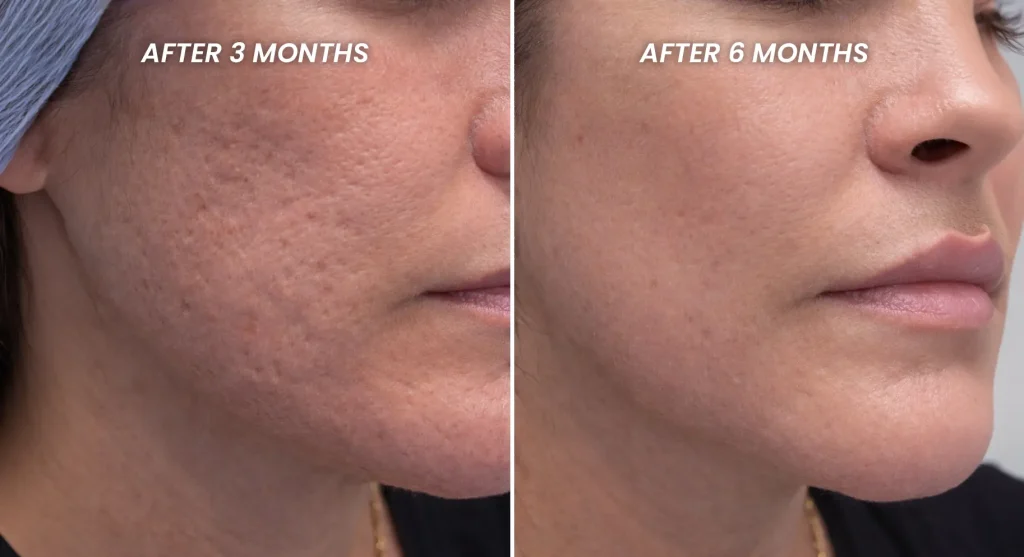
At the 3-month mark, most patients are seeing solid, visible improvement. Scar depth has reduced. Skin texture is noticeably smoother. The surface reflects light differently. Patients who have had subcision with Radiesse often notice improvement relatively quickly after that session because of the immediate volumetric effect from the filler, while the biostimulatory response continues building underneath. After each Morpheus8 session, the progressive collagen response means the improvements compound: each visit adds to the last.
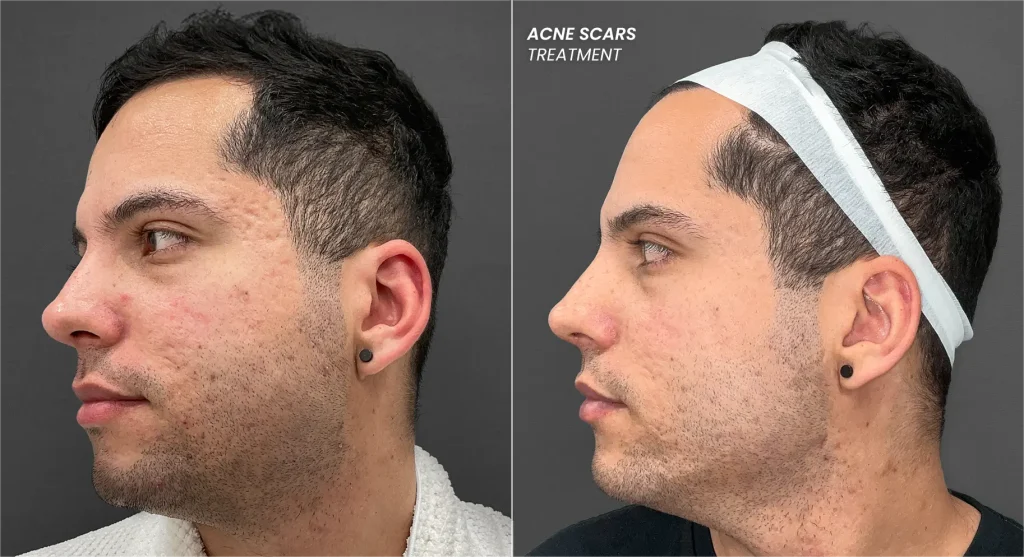
The 6-month mark is when the real acne scar before and after photographs happen. Collagen remodeling stimulated by subcision, Morpheus8, and resurfacing laser peaks around this point. Scars that were clearly visible at the start of the plan become significantly less pronounced. Rolling waves flatten. Boxcar edges soften. Shadow depth decreases. The overall skin surface reads as smoother and younger across its full texture, not just in isolated treated spots. The difference between the 3-month and 6-month results is substantial enough that we encourage patients to wait for the 6-month comparison before concluding how the plan performed.
Acne Scar Treatment for Fitzpatrick IV Patients in South Florida
A significant portion of patients who come to Perfect B for acne scar treatment in Miami are Fitzpatrick type IV, which reflects the large Hispanic heritage population across South Florida. These patients bring specific clinical considerations that require experience to manage correctly.
The primary concern with type IV skin is post-inflammatory hyperpigmentation. Aggressive energy settings, incorrect device choice, or poorly timed sessions can activate melanin production and leave darker patches that outlast the original scarring. This is not an uncommon outcome with untrained or overly aggressive protocols. It is a predictable risk that is mitigated through conservative energy settings, appropriate pretreatment topicals, careful sun avoidance guidance, and session timing that accounts for healing dynamics.
Our clinical team has extensive experience treating Fitzpatrick III through VI. We photograph baselines, track progress, and adjust parameters session by session. The outcome we work toward is meaningful scar improvement without triggering the dyschromia that an aggressive, standardized approach would risk in this population.
Your Post-Treatment Protocol at Home
At Perfect B, patients do not leave a session with generic instructions. After every acne scar treatment visit, you go home with the specific products your skin needs for that phase of recovery.
- Retinol: Used between sessions to accelerate cell turnover and maintain the collagen-building momentum initiated by in-clinic procedures.
- Prescribed moisturizer: Selected for post-procedure skin specifically, not a generic drugstore product. Barrier support is critical while tissue is actively remodeling.
- Specific cleanser: Gentle enough for the first 48 to 72 hours post-treatment, effective enough to keep follicles clear and prevent new breakouts from interrupting scar recovery.
- Regenerative topicals: Growth factor serums, exosome-containing preparations, or PDRN formulas to accelerate healing and reduce the visible recovery window between visits.
- SPF 50+: Non-negotiable daily use for the full duration of the treatment plan, particularly in South Florida where UV exposure is year-round and a leading trigger of post-inflammatory pigmentation in treated skin.
The home protocol is not an afterthought. It is the bridge between your in-clinic sessions. Patients who follow it consistently recover faster, reduce their risk of complications, and maintain the structural improvements their procedures produce.
Acne Scar Treatment Cost in Miami: What a Staged Plan Actually Costs
Acne scar treatment in Miami varies significantly depending on scar severity, the number of modalities required, and the total number of sessions in your plan. At Perfect B in Doral, FL, comprehensive acne scar treatment plans typically range from $1,695 to $3,300.
That range reflects real clinical variation: a plan addressing mild boxcar scarring with a focused number of Morpheus8 sessions differs significantly from a full staged protocol combining subcision with Radiesse, RF microneedling, resurfacing laser, and exosomes across a 3 to 6 month timeline. Your plan is built at consultation based on what your skin actually requires.
Payment plans are available starting at $50 per month. We structure flexible payment options so that a clinically appropriate plan does not need to be cut short or reduced to a single session for budget reasons. A partial plan produces partial results. Full plans produce the acne scar before and after outcomes that are actually worth photographing. If you are ready to see our full protocol and pricing structure, our Acne Scars Treatment Plan page at Perfect B in Doral covers the full protocol, technology stack, and how to book your consultation.
Frequently Asked Questions
1. What is the best acne scar treatment in Miami for deep ice pick scars?
Ice pick scars are narrow, deep tracts that do not respond well to broad resurfacing. At Perfect B, we address them with focal techniques combined with Morpheus8 RF microneedling to stimulate collagen in the surrounding dermis. For patients presenting with a mix of ice pick and boxcar scars, which is the most common pattern we see in our Doral, FL clinic, the plan typically layers subcision, RF microneedling, and resurfacing laser to address each scar type according to its mechanism. A single device will not produce comprehensive results on mixed presentations.
2. How many Morpheus8 sessions does it take to improve acne scars?
Most patients notice visible texture improvement after the first or second Morpheus8 session. Significant reduction in scar depth and surface irregularity typically requires 3 to 5 sessions spaced 4 to 6 weeks apart. Because each session builds on the collagen response from the last, the cumulative effect at 6 months is substantially greater than the result at any single visit.
3. What does subcision feel like, and what is the recovery?
We apply topical numbing before subcision at Perfect B. During the procedure, most patients feel mild pressure or movement sensation rather than sharp pain. The day after subcision with Radiesse injection, the treated area may feel slightly itchy. There is no significant downtime. Most patients return to normal activity the same day or the following morning.
4. Is acne scar treatment safe for darker skin tones?
Yes, with the right clinical approach. Most of our acne scar patients at Perfect B are Fitzpatrick type IV, reflecting South Florida’s largely Hispanic patient population. We use Morpheus8’s insulated-needle technology to protect the epidermis during RF energy delivery, apply conservative parameters for resurfacing laser, prescribe pretreatment topical protocols to reduce PIH risk, and time sessions to avoid periods of heavy sun exposure. Darker skin requires more careful calibration, not avoidance of treatment.
5. When do you add exosomes or PRP to the acne scar protocol?
We use exosomes and PDRN topically after nearly every Morpheus8 or laser session to accelerate recovery and reduce visible downtime. During subcision visits, we sometimes incorporate exosomes or PRP directly into the Radiesse injection for enhanced biostimulatory support at the treated site. PRP is the third topical option when exosomes or PDRN are not selected. In all cases, these are precision additions to a structured plan, not standalone treatments.
6. How much does acne scar treatment cost in Miami, and are payment plans available?
Comprehensive acne scar treatment plans at Perfect B in Doral, FL range from $1,695 to $3,300 depending on scar severity, surface area, and treatment modalities required. Payment plans start at $50 per month. We build the plan your skin needs first, then structure payment options around it. A partial plan produces partial results. Payment plans exist so that the full, clinically indicated protocol is accessible.
7. Can I start acne scar treatment if I still have active acne?
Active acne should be controlled before beginning scar treatment. Treating scars while breakouts are ongoing creates new inflammation that can worsen existing scarring and undermine the results of each procedure. At Perfect B, we assess acne control at the initial consultation. Patients with active breakouts may benefit from starting with our Acne Treatment Plan at Perfect B in Doral, FL, which addresses active breakouts, inflammation, and follicular congestion before scar work begins. Some patients can have both managed in parallel depending on severity.
Closing: The Clinic Takeaway on Acne Scar Treatment in Miami
Acne scars are among the most treatable conditions in medical aesthetics when the protocol is built around the biology, not the available device. The trap most patients fall into is chasing single-session fixes: one laser, one RF microneedling visit, one peel. Those can improve the surface. They do not release tethering bands, rebuild collagen deficit in depth, or address the architectural damage that makes scarring visible. A staged plan does. At Perfect B in Doral, FL, every acne scar treatment plan starts with classification, follows a mechanism-matched sequence, and tracks to the 6-month mark where collagen remodeling has peaked and real before-and-after results emerge. Payment plans make the full plan accessible from $50 per month, because a partial plan produces partial outcomes.
If you are in the Miami area and ready to treat your acne scars with a plan matched to the actual structure of the problem, the first step is a consultation. We photograph, document, and adjust every session. You will know the clinical rationale behind every procedure and every product we send home with you.
- 📍 Visit us at Perfect B, 3905 NW 107th Ave #104, Doral, FL 33178
- 📞 Call or message us to schedule your acne scar consultation: (786) 502-2260