
Perfect B, Doral Fl. | 05.07.26 | 9 min read.
This post is for educational purposes only and does not substitute for personalized medical advice. Peptide therapy protocols vary based on individual health history, labs, and clinical evaluation. Consult a licensed medical provider before beginning any peptide protocol.
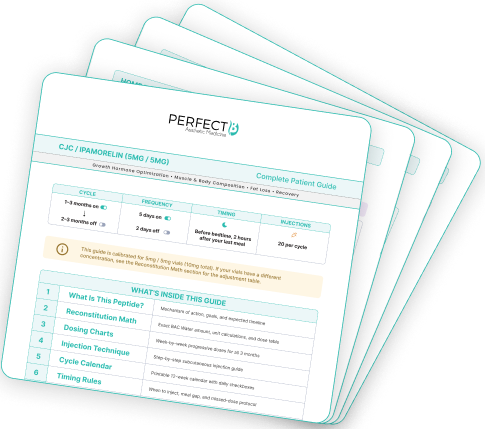
Skip Ahead to the Perfect B Peptide Protocol Tool. See Reconstitution, Daily Units, and Cycle Structure.
Perfect B’s peptide protocol tool is built on real clinical data from 2,000+ patients treated in South Florida.
Answer 6 questions and see what patients with similar goals are running: which peptides they use, typical dosing, injection schedule, reconstitution steps, cycle length, and when they pause.
Are Peptides Actually Safe, or Does It Depend on How You Get Them?
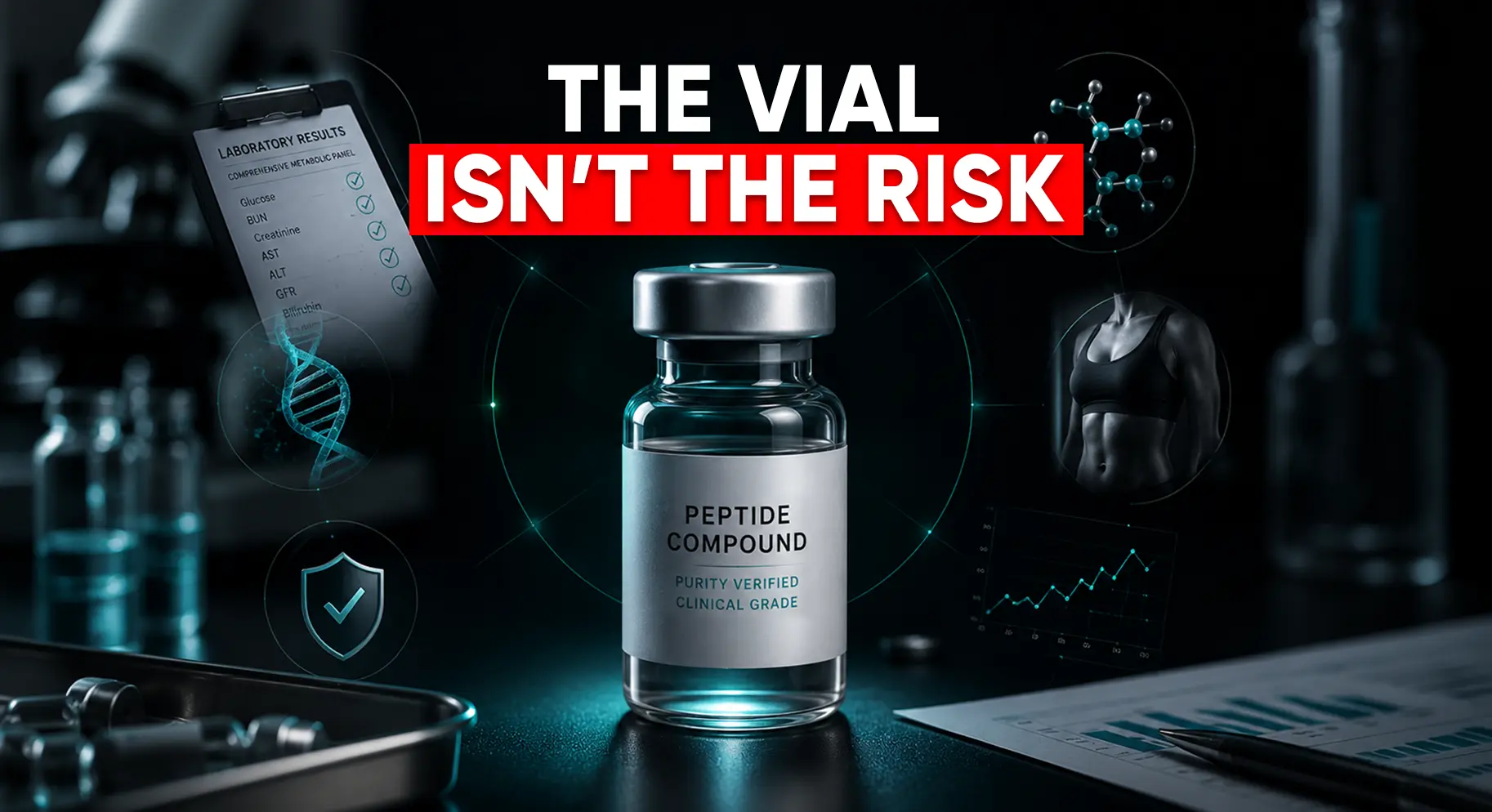
The honest answer is both. Peptides are short chains of amino acids. Your body already produces many of them naturally. They function as signaling molecules, telling cells to repair, regulate, recover, and communicate. When used correctly, under medical supervision, with verified sourcing, and in genuinely healthy patients, they are among the safest tools in a longevity-focused clinical practice. When purchased online without screening, sourced from unregulated channels, or administered without oversight, they carry real risks that have nothing to do with peptides themselves and everything to do with how they arrived in that vial.
At Perfect B in Doral, FL, we prescribe peptide therapy differently from how most clinics approach it. The difference is not about which peptides we use. It is about the process that happens before any peptide reaches a patient.
What peptides are and what they are not
Peptides are not drugs in the traditional allopathic sense. We do not prescribe them to treat disease. At Perfect B, peptide therapy is an optimization and longevity tool for patients whose baseline health is already sound. That framing matters because it directly shapes who is and is not a candidate, and it shapes how we evaluate safety at every stage of the protocol.
Key Takeaways
- Peptides are prescribed only to healthy patients at Perfect B: they are a longevity and optimization tool, not a treatment for active medical conditions.
- Active cancer, renal insufficiency, and liver problems are hard exclusions that disqualify a patient from peptide therapy regardless of their goals.
- Source quality is a primary safety variable: peptides from unregulated online sources, often originating overseas, cannot be verified for purity, concentration, or sterility.
- The most common side effects at Perfect B are mild injection site irritation and drowsiness with GH stimulants, both expected and manageable. Serious systemic side effects are rare with correct sourcing and dosing.
- Ongoing monitoring includes an optimization panel and body composition analysis at every visit, giving both provider and patient objective data on how the protocol is working.
Who Is a Good Candidate for Peptide Therapy at Perfect B?
Patient selection is where safety begins, not where it ends. The population we serve with peptide therapy is narrow by design. We are not casting a wide net. We are looking for patients who have the biological foundation to benefit from optimization and who do not have conditions that would make that optimization risky.
Why we only prescribe to healthy patients
Peptide therapy at our clinic is treated as a supplement-class intervention with the purpose of longevity. That means the patient starting a protocol should not be fighting a serious underlying condition at the same time. When the body is in active disease, its regulatory systems are already stressed. Introducing peptides that stimulate growth hormone, accelerate tissue repair, or modulate cellular signaling into that context creates unpredictability. For healthy patients, those same signals produce the intended result: improved recovery, better metabolic markers, enhanced skin and hair quality, sharper cognitive function, and better body composition. The patient population matters as much as the protocol. → See the full range of peptide therapies offered at Perfect B in Doral, FL, including the clinical criteria we apply before starting any protocol.
Who we turn away and why
There are three primary categories of patients we do not accept for peptide therapy, regardless of what they are hoping to achieve. Patients with active cancer are excluded without exception. Many peptides stimulate cellular growth and repair pathways, and those same pathways can accelerate the growth of existing malignancies. Patients with renal insufficiency are excluded because impaired kidney function affects the clearance of bioactive compounds, including peptides. Patients with significant liver impairment are excluded for similar reasons related to metabolic processing. Beyond those hard stops, we run a metabolic panel when clinical history gives us reason to look more closely at organ function before making a prescribing decision.
What Does the Evaluation Process Look Like Before Any Peptide Is Prescribed?

The evaluation process is not a checkbox. It is the first clinical decision we make about a patient. How thorough it needs to be depends on what the patient’s history and presentation suggest, but the minimum standard is a metabolic panel that gives us a snapshot of kidney function, liver function, glucose regulation, and overall metabolic health. We do not prescribe without that baseline. A peer-reviewed analysis in the Journal of Clinical Endocrinology confirming that growth hormone peptide safety is substantially improved with baseline metabolic screening and ongoing monitoring compared to unsupervised use supports this clinical approach.
The metabolic panel: what we are looking for
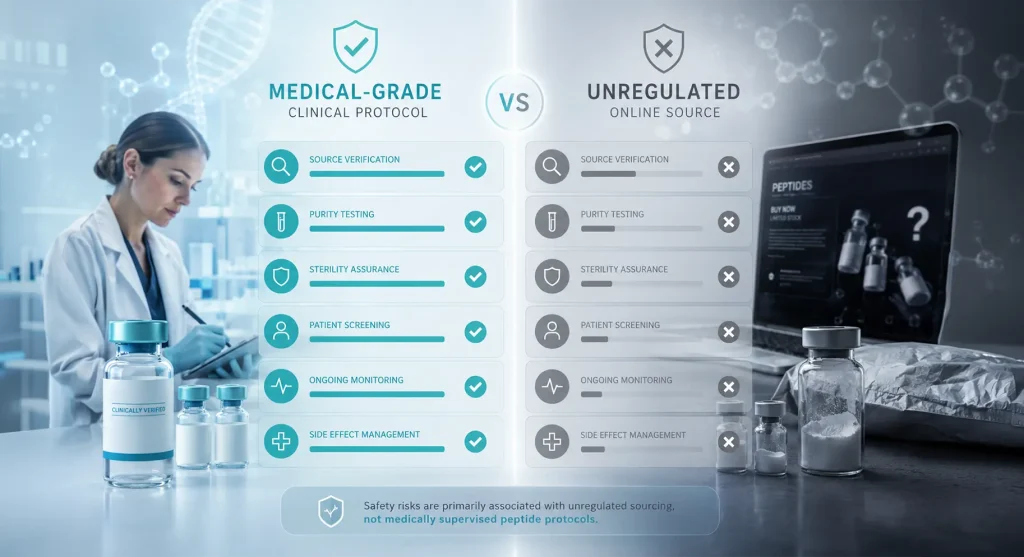
The metabolic panel tells us whether the patient’s organ systems are performing within a range that makes peptide therapy safe to start. Specifically, we are looking at creatinine and eGFR for kidney function, liver enzymes for hepatic health, fasting glucose and insulin markers for metabolic regulation, and a general chemistry panel for electrolyte balance and overall systemic health. If something looks unusual, we investigate before prescribing. If the patient is taking medications that interact with the pathways a given peptide targets, we factor that in. None of this is standard practice in unregulated online channels, and that gap is a large part of why adverse events happen.
The optimization panel: tracking biomarkers before you start
Beyond the basic metabolic panel, patients at Perfect B can access an optimization panel that tracks a broader set of biomarkers covering how major organ systems are performing, inflammatory markers, hormonal baselines, and metabolic indicators. This panel serves two purposes. Before starting, it establishes the patient’s true baseline so we know what normal looks like for this specific individual. After the protocol begins, it becomes the measurement tool. We can see which biomarkers are moving in the right direction, which are holding steady, and whether anything warrants a protocol adjustment. Optimization is not possible without data, and data without a baseline is just a number without context.
Does the Source of Your Peptides Actually Determine the Risk?
Yes, to a degree that most patients do not fully appreciate when they start researching peptides online. The peptide itself, as a molecular compound, is not inherently dangerous in a properly screened healthy patient at the correct dose. What is dangerous is not knowing what is actually in the vial. Impurities, degradation products, bacterial endotoxins from improper storage, incorrect concentration, and mislabeled compounds are all documented problems with unregulated peptide sources. These are not theoretical risks. They are the primary reason adverse events occur in people who use peptides outside of medical supervision.
US labs with third-party testing vs online sources
Compounding pharmacies in the US are currently not authorized to produce most peptides. At Perfect B, we source our peptides from US-based laboratories, and every batch is third-party tested for purity before we use it. Third-party testing means an independent laboratory verifies that what is on the label is what is in the vial, at the stated concentration, without contamination. When patients purchase peptides online, the majority of those products originate overseas. There is no independent verification of what is inside, no chain of custody documentation, no sterility assurance, and no regulatory oversight of the manufacturing process. The risks that patients read about online are almost exclusively linked to this unregulated supply chain, not to peptides prescribed and administered under clinical supervision.
What the 2026 FDA regulatory context means for patients
The regulatory landscape for peptides has been shifting significantly. In 2023, the FDA placed 19 widely used peptides on a restricted list that effectively prevented compounding pharmacies from producing them. In 2026, federal reclassification is expected to restore legal clinical access to approximately 14 of those peptides through licensed medical channels, with the FDA Pharmacy Compounding Advisory Committee scheduled to review the changes in the second half of the year. This is why searches for “are peptides legal” have increased dramatically in 2026. The answer, in clinical terms, is that peptides prescribed by a licensed physician and sourced from a compliant, third-party tested US facility are the appropriate path. What circulates in unregulated online markets occupies a gray area that carries both safety risk and legal ambiguity. → Learn how Perfect B navigates current peptide regulations to ensure every protocol is both clinically sound and properly sourced in Doral, FL.
What Are the Most Common Side Effects We See in Practice?
One of the most consistent findings in our practice is that patients who start a properly evaluated and correctly dosed peptide protocol at Perfect B experience far fewer side effects than what they anticipated based on what they read online. That discrepancy is not a coincidence. Most of the adverse event reports circulating online describe experiences with impure, misdosed, or inappropriate compounds in patients who were not properly screened. That is a fundamentally different clinical situation from what we manage here in Doral.
Injection site reactions: mild and expected
The most common side effect we see is mild injection site irritation: localized redness, minor swelling, or tenderness at the injection point. This is expected with subcutaneous injections and is not a clinical concern. It typically resolves within hours. Proper injection technique, rotating injection sites, and ensuring the peptide solution is at room temperature before injection all reduce the frequency and severity of site reactions. We review injection protocol with every patient at the start of their treatment and address technique questions at follow-up visits.
Drowsiness and increased hunger with GH stimulants
Growth hormone peptides, including CJC-1295/Ipamorelin and Tesamorelin, stimulate the pituitary to release growth hormone in a pulsatile pattern that mimics the body’s natural overnight GH surge. Because of this mechanism, some patients experience drowsiness when injecting in the evening, which is actually aligned with the intended timing of the protocol. We advise patients to inject before bed for this reason. Increased appetite is another common observation with GH stimulants, related to the metabolic activation these peptides produce. Neither of these is a safety concern. Both are expected physiological responses that we discuss before the protocol begins so patients are not surprised when they experience them.

Not sure which peptide protocol fits your goals?
Perfect B’s peptide protocol tool is built on real clinical data from 2,000+ patients treated in South Florida.
Answer 6 questions and see what patients with similar goals are running: which peptides they use, typical dosing, injection schedule, reconstitution steps, cycle length, and when they pause.
What We Tell Patients Who Come In Worried About What They Read Online
We hear this regularly. A patient researches peptides, reads several alarming accounts, and arrives at the consultation genuinely unsure whether the therapy is safe. Our answer is consistent: if something went wrong with a peptide, it is almost always traceable to one of two causes. Either the peptide was not pure, meaning it was sourced outside of a verified, third-party tested supply chain, or it was misprescribed, meaning the patient received the wrong peptide, the wrong dose, or a protocol that was not appropriate for their clinical profile.
At Perfect B, neither of those situations applies. We source from US labs with third-party testing, which eliminates the purity question. And all of our peptide treatment plans are prescribed directly by our clinical team under full medical supervision. We do not allow patients to self-select their protocols or acquire peptides outside of our supply chain. When those two variables are controlled, the risk profile of peptide therapy changes substantially. A peer-reviewed study in a 2025 clinical review of peptide therapy safety outcomes confirming that adverse events cluster overwhelmingly in unsupervised, unverified sourcing contexts rather than in medically supervised protocols reflects precisely what we observe in practice.
How Does Perfect B Monitor Safety and Results Once a Protocol Starts?
Starting a protocol is not the end of clinical responsibility. It is the beginning of an ongoing relationship between the patient’s biology and the treatment. Monitoring is how we make sure the protocol is working as intended, catch anything that needs adjusting early, and give patients objective evidence of progress rather than relying on subjective impressions alone. In South Florida, where patients are often juggling high activity levels, sun exposure, and demanding schedules, that real-time data matters more, not less.
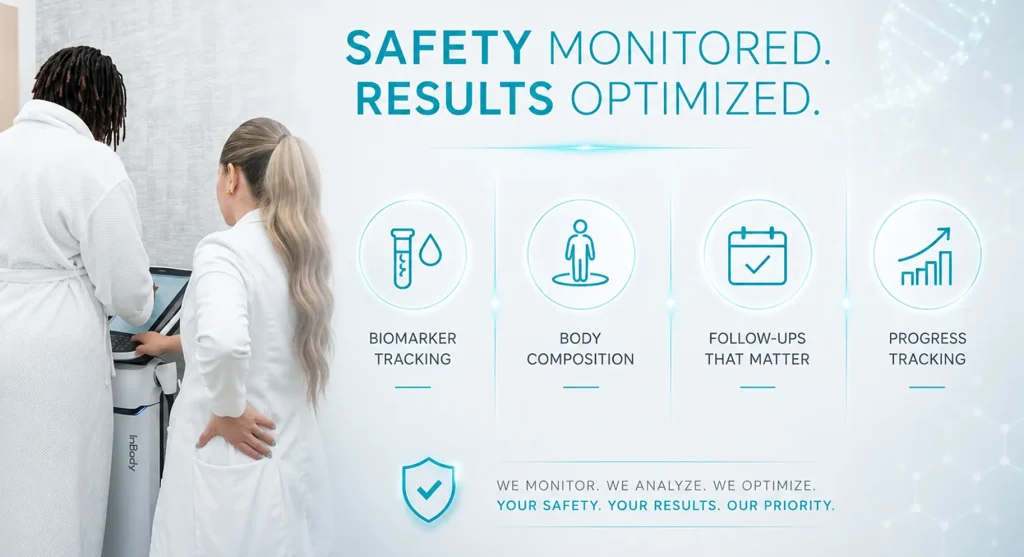
Ongoing optimization panel: biomarker tracking over time
The optimization panel we run at baseline becomes a longitudinal tracking tool once the protocol is underway. We can observe how the peptide protocol is affecting liver and kidney function, inflammatory markers, hormonal levels, and metabolic indicators over time. If a biomarker shifts in a direction we did not anticipate, we investigate and adjust. This is standard clinical management, but it is almost entirely absent from unregulated peptide use. The optimization panel also gives patients something they deeply value: proof. Seeing objective biomarker improvement is a different experience from simply feeling better and wondering if it is real.
Body composition analysis at every visit
At every follow-up visit, we perform body composition analysis to track changes in muscle mass, fat distribution, and metabolic indicators. This is not a scale. Body composition analysis measures lean mass versus fat mass, hydration, and metabolic rate, giving us a precise picture of how the patient’s tissue is responding to the protocol. For patients on growth hormone peptides aimed at improving recovery, body composition, or metabolic function, this data is the clinical feedback loop. We are also consistently assessing perceived lifestyle changes: sleep quality, energy levels, recovery time, cognitive clarity. All of these data points together give us the full picture of whether the protocol is producing the intended clinical outcome.
Frequently Asked Questions
1. Are peptides safe for healthy people?
Yes. At Perfect B, we prescribe peptides exclusively to healthy patients. Peptide therapy is a longevity and optimization tool, not a treatment for active disease. The clinical safety profile for properly sourced, correctly prescribed peptides in healthy adults is strong. The adverse events reported online are almost entirely tied to unregulated sourcing and absent clinical oversight, not to the peptides themselves when used appropriately.
2. What labs do you run before prescribing a peptide?
At minimum, we run a metabolic panel covering kidney function (creatinine, eGFR), liver enzymes, fasting glucose, and general chemistry. We also offer an optimization panel that creates a comprehensive biomarker baseline across organ systems, hormones, and metabolic markers. Patients with any clinical history that warrants a closer look receive additional evaluation before any prescription is written.
3. Are peptides from online sources safe?
No. Most peptides purchased online come from unverified sources, frequently from overseas, with no independent purity testing. You cannot confirm what is in the vial, at what concentration, or under what conditions it was produced. Impure peptides can trigger immune reactions, produce unexpected side effects, or fail entirely because the active compound has degraded. At Perfect B, all peptides come from US labs with third-party purity verification. That distinction is not administrative. It is a primary safety control.
4. Are peptides legal in the United States in 2026?
The regulatory landscape is actively evolving. The FDA restricted compounding of 19 peptides in 2023. Federal reclassification in 2026 is expected to restore legal clinical access to approximately 14 of those peptides through licensed medical channels. Peptides prescribed by a licensed physician and sourced from a compliant, third-party tested US facility are the legally and clinically appropriate pathway. Unregulated online peptides operate in a gray area that carries both safety and legal risk.
5. What side effects should I expect from peptide therapy?
The most common side effects at Perfect B are mild injection site irritation and drowsiness with growth hormone stimulants like CJC-1295/Ipamorelin or Tesamorelin. Some patients also notice increased appetite with GH peptides. These are expected physiological responses, not safety concerns. Serious systemic side effects are rare when peptides are properly sourced, correctly prescribed, and monitored over time.
Not sure which peptide protocol fits your goals?
Perfect B’s peptide protocol tool is built on real clinical data from 2,000+ patients treated in South Florida.
Answer 6 questions and see what patients with similar goals are running: which peptides they use, typical dosing, injection schedule, reconstitution steps, cycle length, and when they pause.
6. How does Perfect B monitor patients once a peptide protocol starts?
We use two primary tools. The optimization panel tracks biomarkers over time, showing how organ function and metabolic markers respond to the protocol. Body composition analysis at every visit tracks lean mass, fat distribution, and metabolic rate changes objectively. We also assess perceived lifestyle improvements including sleep, energy, recovery, and cognitive clarity at each follow-up. Contact us at (786) 502-2260 to learn more about our monitoring protocols.
7. Can I get peptides without a prescription at Perfect B?
No. All peptide protocols at Perfect B are medical prescriptions given under direct clinical supervision. We do not allow patients to self-select peptides, dosages, or protocols. The entire point of our process is that the prescribing decision is a medical decision, informed by labs, clinical history, and provider judgment. That supervision is not a barrier to access. It is what makes the therapy safe and effective.
Closing: The Clinic Takeaway on Peptide Safety
Peptides are safe in the context where safety has been built: healthy patients, verified sourcing, proper clinical evaluation, and ongoing monitoring. That context does not exist when someone orders a vial online and injects it without a provider involved. The peptide molecule is not the variable. The system around it is. At Perfect B, that system includes a full pre-prescription evaluation, US-lab third-party tested sourcing, direct provider oversight, an optimization panel that tracks biomarkers over time, and body composition analysis at every visit. We are not managing risk by hoping for the best. We are managing it with data.
If you have been hesitant about peptide therapy because of what you have read online, the right conversation to have is with a medical provider who can review your labs, discuss your goals, and tell you clearly whether you are a candidate. That conversation looks very different from what the internet offers. → Read Perfect B’s guide to peptides for weight loss to understand how the same clinical principles apply specifically to metabolic and fat loss protocols.
📍 Visit us at Perfect B, Doral FL
📞 Call or message us at (786) 502-2260