Perfect B, Doral Fl. | 06.12.26 | 10 min read.
This article is for educational purposes only and is not a substitute for individualized medical advice. Peptide therapy at Perfect B is supervised by licensed medical providers, requires a clinical workup, and is dispensed only through a licensed compounding pharmacy. Speak with our team before changing any protocol.
Can You Drink on Peptides? The Honest Clinical Answer
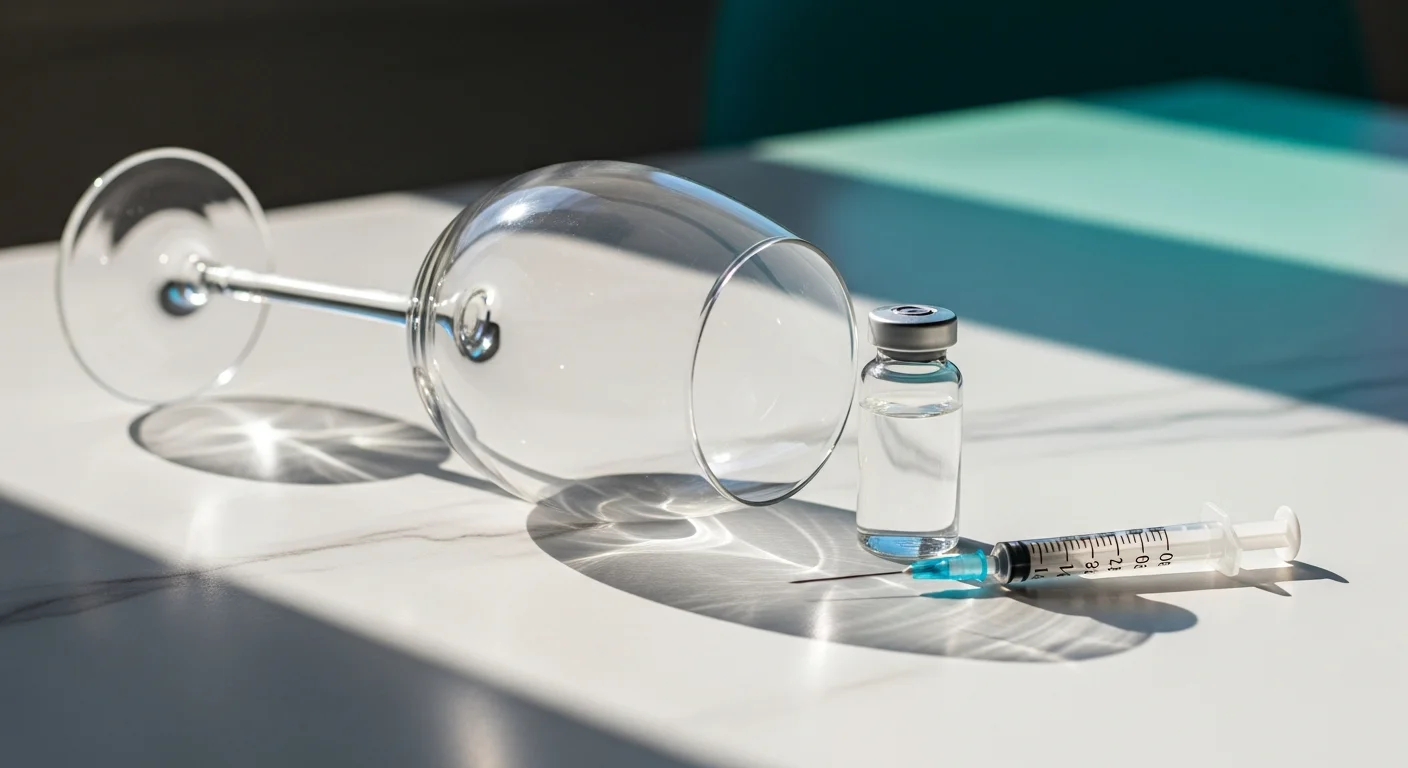
The honest answer from our clinic in Doral, FL is yes, you can technically drink while you are on peptides. But every drink past the first one is taking efficacy off the table, and a binge night during a CJC-1295 with Ipamorelin or Tesamorelin cycle can wipe out an entire week of protocol response. That is not opinion. That is what the sleep architecture and growth hormone secretion data show, and it is what we see in our first-time peptide patients who walk in at week 8 frustrated that nothing is changing.
Most blog content about this topic falls into two camps. One camp says “do not drink anything ever,” which is unrealistic and patients tune it out. The other camp says “moderation is fine” without explaining what moderation actually means or what is happening biologically. This guide is the third option: what the mechanism actually is, what the dose-response looks like, and what we tell patients at Perfect B about drinking during a cycle.
Key Takeaways on Alcohol and Peptide Therapy
- Alcohol blunts growth hormone peptides at the source: it suppresses the nocturnal GH pulse that CJC-1295 with Ipamorelin and Tesamorelin are designed to amplify.
- The damage happens in deep sleep: alcohol cuts slow-wave sleep, and slow-wave sleep is when the biggest growth hormone pulse of the day occurs.
- This is different from drinking on Ozempic or Tirzepatide: GLP-1 drugs have a different mechanism, and the alcohol question is not the same medical question.
- One drink early in the day is far less damaging than 2 to 3 drinks close to bedtime: timing matters more than total volume.
- Alcohol is one of four lifestyle habits that quietly blunt the protocol: the others are poor nutrition, no strength training, and inconsistent dosing days.
Why This Question Is Different for Growth Hormone Peptides Than for Ozempic
If you searched “can you drink on peptides,” half of the results you saw are actually about semaglutide, tirzepatide, or retatrutide. Those are GLP-1 receptor agonists, not growth hormone peptides. The alcohol concern there is mostly about nausea, hypoglycemia, and pancreatic stress. It is a legitimate question for that drug class, but it is a completely different question from ours.
At Perfect B we prescribe growth hormone secretagogue peptides like CJC-1295 paired with Ipamorelin and Tesamorelin, recovery peptides like the Wolverine stack of BPC-157 with TB-500, and tissue-renewal peptides like GHK-Cu. None of these are GLP-1 drugs. The way alcohol blunts these protocols has nothing to do with nausea or pancreatic load. It has everything to do with what alcohol does to your nighttime hormone secretion and sleep depth. That is the actual conversation, and almost no other site has it.
The Mechanism: How Alcohol Shuts Down the Pulse Your Peptide Is Amplifying
To understand why alcohol is so destructive to a peptide cycle, you need to understand what these peptides are actually doing in the body.
What CJC-1295 with Ipamorelin actually does
This stack does not flood your body with synthetic growth hormone. It signals your own pituitary gland to release a pulse of growth hormone in the way that nature designed: in waves, mostly at night, during the first 60 to 90 minutes of deep sleep. The peptide is amplifying a signal that is already there. If the signal is there, it grows. If the signal is missing, there is nothing to amplify.
Where alcohol breaks the chain
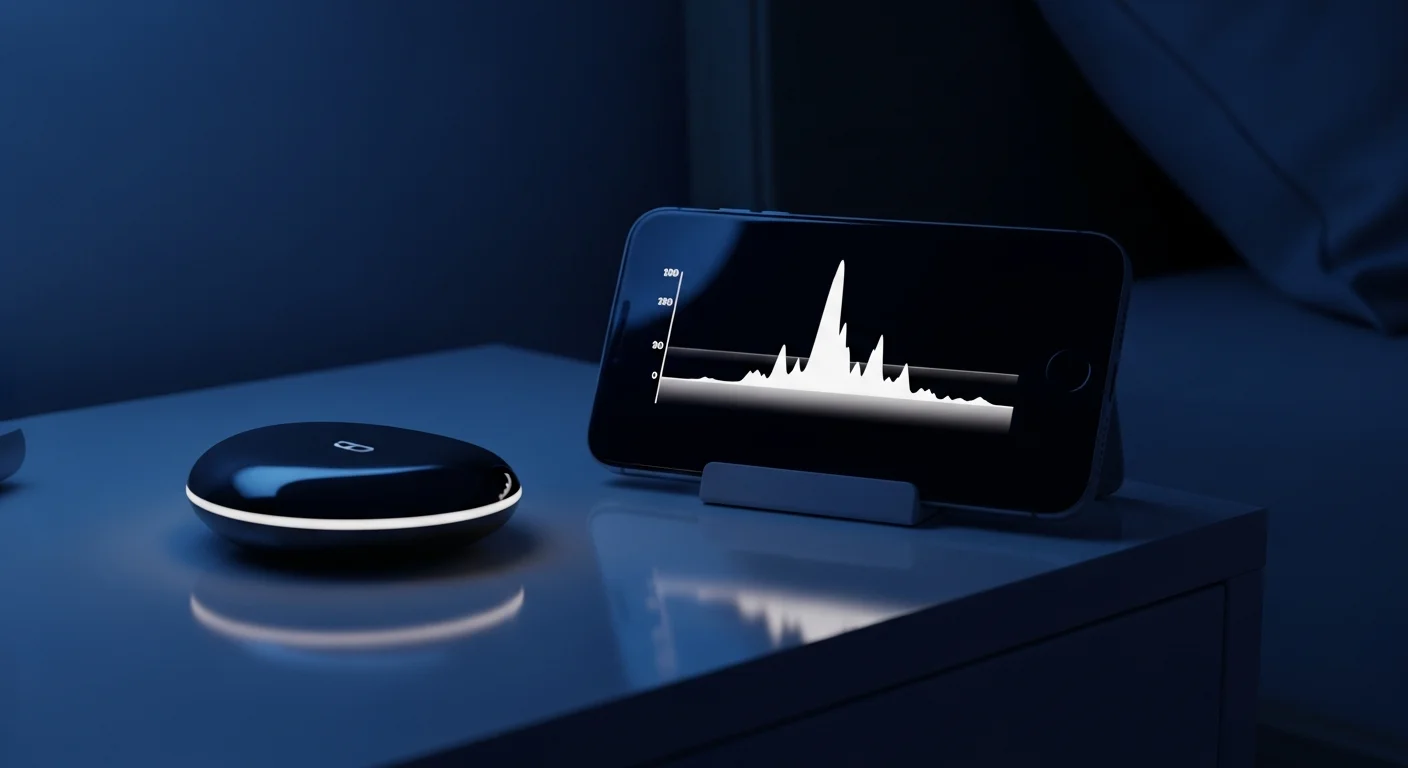
Alcohol disrupts sleep architecture in a very specific way. It sedates you in the first 30 minutes, which feels like better sleep, then aggressively cuts slow-wave sleep and REM sleep across the rest of the night. The nightly growth hormone pulse happens during slow-wave sleep. If slow-wave sleep is shortened or fragmented, the peptide you injected that evening has nothing to amplify. You spent the dose and got a fraction of the response.
A peer-reviewed study in the Journal of Clinical Endocrinology and Metabolism by Prinz and colleagues demonstrating that acute alcohol intake produces a significant suppression of nocturnal growth hormone secretion alongside reduced slow-wave sleep has been the foundational reference for this effect for decades, and the relationship has been replicated in newer literature on adult sleep architecture.
A separate 2013 review in the peer-reviewed journal Alcoholism: Clinical and Experimental Research synthesizing how alcohol consistently reduces slow-wave sleep duration and disrupts the nighttime endocrine pulse pattern reaches the same conclusion across multiple study populations. The effect is dose-dependent and well documented.
The Dose Response: What Each Drinking Pattern Actually Costs You
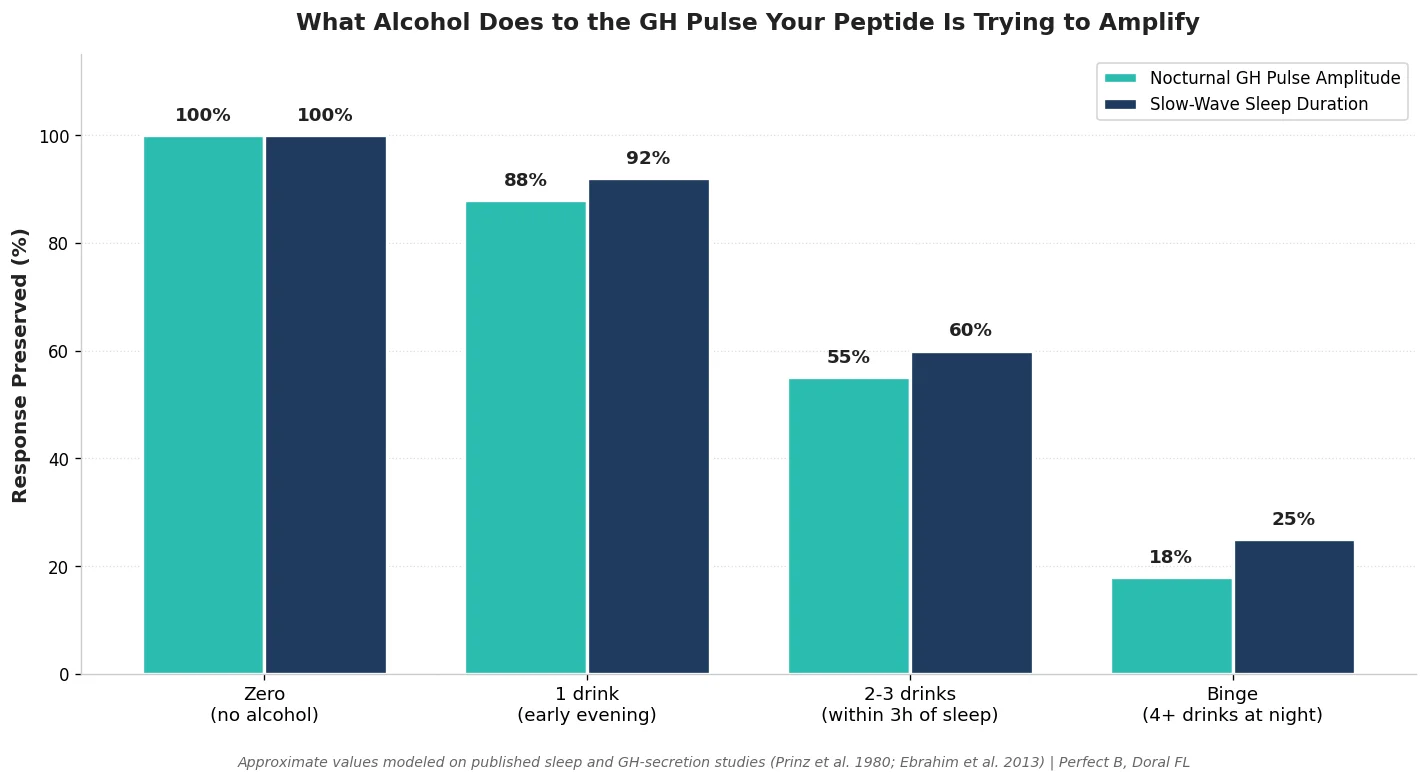
Not all drinking is the same. A glass of wine at lunch on a non-injection day is in a different universe than four drinks at 10 PM on a night you injected CJC-Ipamorelin at 9. Here is how we frame it for patients at Perfect B.
Zero alcohol
The fastest path to a full 12-week response. The peptide is doing the work the peptide is designed to do. Sleep architecture is intact, GH pulse is intact, muscle protein synthesis the next day is intact.
One drink early in the evening
One standard drink consumed 4 to 6 hours before bed produces a measurable but modest effect on slow-wave sleep and a small dip in nocturnal GH amplitude. For most patients this is the realistic upper limit of “safe” drinking on a cycle. You will not derail the protocol with this pattern. You will give up a little efficacy, not all of it.
Two to three drinks within three hours of sleep
This is the cliff. The combination of timing and dose strongly suppresses slow-wave sleep and substantially blunts the nighttime GH pulse. Patients who drink at this level on injection nights consistently report that their week-4 sleep and energy improvements either never arrive or vanish. The protocol is technically still running, the response is not.
Binge: four or more drinks at night
A single binge night during a cycle effectively cancels the previous several days of dosing. Slow-wave sleep is decimated, REM is fragmented, the GH pulse is largely absent. South Florida patients who have a big weekend during cycle weeks 2 to 4 typically arrive at the week-12 follow-up Inbody scan disappointed and confused. We can usually pinpoint the weekend on the calendar that explains the result.
Want to see what protocol patients with your goals are actually running?
Perfect B’s peptide protocol tool is built on real clinical data from 2,000+ patients treated in South Florida. Answer 6 questions and see what patients with similar goals are running, what timeline they hit, and how alcohol changes that response.
What About BPC-157, TB-500, and GHK-Cu? Is Alcohol Just as Damaging?
The peptides that are not growth-hormone secretagogues have a different alcohol problem, but it is still a real problem.
BPC-157 and the Wolverine stack
These are recovery and tissue-repair peptides. Alcohol is a known pro-inflammatory and impairs gastric mucosal healing. Drinking during a Wolverine stack cycle creates exactly the kind of tissue damage and inflammation that the peptide is trying to resolve. The cycle becomes a tug of war you are paying for. The full mechanism and dosing schedule is covered in our complete clinical breakdown of the Wolverine peptide stack with BPC-157 and TB-500 for healing and recovery.
GHK-Cu for skin and hair
Alcohol dehydrates the skin, increases inflammatory cytokines, and disrupts collagen synthesis. None of those are compatible with the regenerative signaling that GHK-Cu is sending. A patient on a 12-week GHK-Cu protocol who is drinking heavily will see a fraction of the skin texture and hair density improvements that a sober counterpart sees on the same protocol.
Tesamorelin
Tesamorelin works on the same pituitary axis as CJC-1295 with Ipamorelin and depends on the same nighttime GH pulse to drive visceral fat reduction. The alcohol effect is essentially identical. Patients on Tesamorelin who continue weekend binge patterns lose the visceral fat reduction at the week-12 Inbody scan.
The Four Other Lifestyle Habits That Quietly Blunt the Protocol
Alcohol gets the headline because it is the most acute saboteur, but it is not the only one. At our clinic in Doral, FL, the patients who fail to hit their week-12 follow-up targets almost always have one or more of these four habits running in parallel.
1. No strength training
Growth hormone signals are useless without the mechanical stimulus that tells your body where to put new tissue. Skip strength training and your CJC-Ipamorelin cycle will produce sleep and energy gains but very little body composition change. We tell every patient: at least 3 strength sessions per week or the protocol underperforms. Not cardio. Not yoga. Resistance load.

2. Ultra-processed diet
Chronic systemic inflammation from a diet of ultra-processed food cancels regenerative signaling. The peptide is trying to build, the diet is signaling damage. A protein-adequate, whole-food diet is not a lifestyle preference at this point in the cycle. It is part of the protocol. Patients in the Miami area who continue the typical ultra-processed convenience eating during a cycle leave significant body composition response on the table.
3. Random injection days
The 5 days on, 2 days off schedule is not arbitrary. It mimics the pulsatile rhythm of natural growth hormone and gives the pituitary axis a recovery window twice a week. Patients who inject 7 days a week thinking “more is better” typically blunt their own response by week 6. Patients who inject 3 random days a week never reach steady state. The schedule is the protocol.
4. Inconsistent sleep schedule
Sleep regularity matters almost as much as sleep duration. A patient who sleeps 5 to 10 hours on a random schedule produces a chaotic hormone profile that the peptide cannot consistently amplify. Bedtime within a 60-minute window, dark room, no late screens, no alcohol close to bed. Boring, free, decisive.
For the complete clinical framework on how we start first-time peptide patients, including the body composition workup that drives protocol selection, see our complete medical clinic guide to how Perfect B starts a first-time peptide patient with an Inbody scan and a 12-week protocol.
What We Actually Tell First-Cycle Patients in Doral About Drinking
The honest rule we give patients at Perfect B is this: for the 12 weeks of your first cycle, keep alcohol to one drink early in the evening, no more than 2 to 3 times per week, never on the night of an injection, and never to the point of measurably worse sleep the next morning. That is realistic for South Florida patients with a social life. It is also enough of a guardrail that the protocol produces the response we are paying for.
If a patient cannot or will not commit to that for 12 weeks, we have an honest conversation about whether the cycle is the right tool right now. The protocol is expensive and the time investment is real. It is not a good purchase if the lifestyle is going to fight it the entire time. For the broader context on what supervised peptide therapy looks like at our clinic, see our complete medical clinic guide to what peptide therapy in Miami actually offers that a med spa cannot deliver.
For patients sourcing peptides outside a clinical setting, the alcohol question is the smaller of two problems. The bigger problem is unverified compounds, which is covered in our in-depth medical provider guide to compounding pharmacy peptides versus online research peptides and how to source them safely in 2026.
Frequently Asked Questions
Q1: Can I have one glass of wine on the night I inject CJC-Ipamorelin?
It is not what we recommend. The injection is meant to amplify the slow-wave sleep growth hormone pulse, and even one drink close to bed measurably reduces slow-wave sleep depth. If you must have one drink that day, push it to early evening, 4 to 6 hours before bed, and avoid drinking again that week.
Q2: How long after drinking should I wait to inject?
The injection timing matters less than the sleep timing. The issue is not the peptide interacting with alcohol in the bloodstream. The issue is the slow-wave sleep window that night being compromised. If you drank heavily, the night is already lost. Take your scheduled day off, return to the schedule the next normal night.
Q3: Does alcohol affect BPC-157 too?
Yes, but through a different mechanism. BPC-157 is a healing peptide, and alcohol creates inflammation and gastric mucosal damage that the peptide is then forced to repair instead of repairing the injury you actually started the protocol for. The cycle becomes less effective per dose.
Q4: Is drinking on peptides safer than drinking on Ozempic?
These are different questions with different mechanisms. Ozempic and similar GLP-1 drugs have acute issues with nausea, hypoglycemia, and pancreatic stress when combined with alcohol. Growth hormone peptides do not share those acute concerns, but they are blunted by alcohol through the sleep and GH pulse mechanism. Different drug class, different risk profile, but neither is “safe” with heavy drinking.
Q5: Will one bad weekend ruin my whole cycle?
It will not ruin the entire 12 weeks. It will cost you a measurable chunk of week-12 response. Patients who have one binge weekend during weeks 2 to 4 typically arrive at the week-12 Inbody scan with results that look like a 9-week protocol, not a 12-week protocol. Recoverable but visible.
Q6: What about non-alcoholic beverages and supplements?
Coffee, tea, and water are fine and have no meaningful interaction with our protocols. Sleep-disrupting stimulants late in the day are not. Cannabis affects sleep architecture too, and although the data is less robust than for alcohol, the principle is the same: anything that flattens slow-wave sleep flattens your response.
Q7: I drink socially in South Florida. Is peptide therapy even worth it for me?
Yes, with realistic expectations. A South Florida patient who has one or two drinks at dinner most weekends and protects the nights they inject can absolutely run a successful cycle. The patients who fail are not the social drinkers. They are the patients who binge during cycle weeks and then blame the peptide.
Q8: What is the alcohol rule at Perfect B during a cycle?
For most first-time patients we recommend: one drink, early evening, no more than 2 to 3 times per week, never on injection nights, never to the point of disrupted next-day sleep. That is the realistic guardrail that keeps the protocol producing the response patients paid for, without asking them to disappear socially for 12 weeks.
Curious which peptide protocol fits your goals and your lifestyle?
Perfect B’s peptide protocol tool is built on real clinical data from 2,000+ patients treated in South Florida. Answer 6 questions and see what patients with similar goals and habits are actually running.
Closing: The Clinic Bottom Line on Drinking During a Peptide Cycle
The question is not whether you “can” drink on peptides. You can. The question is what you are paying for. A 12-week cycle of CJC-1295 with Ipamorelin or Tesamorelin is an investment in a specific biological response that depends on a specific sleep window. Every drink past the first is taking a piece of that response off the table, and a binge night near an injection takes a much bigger piece than most patients realize.
Supervised peptide therapy at Perfect B in Doral, FL is built on matching the right protocol to the right patient, then protecting the lifestyle conditions that let the protocol work. The alcohol conversation is part of that, not separate from it. Patients who follow the realistic guardrail above hit their week-12 Inbody scan with measurable change. Patients who do not, do not.
- 📍 Perfect B | 3905 NW 107th Ave, Suite 104, Doral FL 33178
- 📞 Call or message us at (786) 502-2260
- 💳 Buy Now Pay Later: Cherry, Klarna, Afterpay, CareCredit
→ Book your first peptide consultation and Inbody scan at Perfect B in Doral, FL today.