
Perfect B, Doral Fl. | 05.21.26 | 12 min read.
This article is for educational purposes only and does not substitute professional medical advice. Always consult a licensed medical provider before starting any skin treatment.
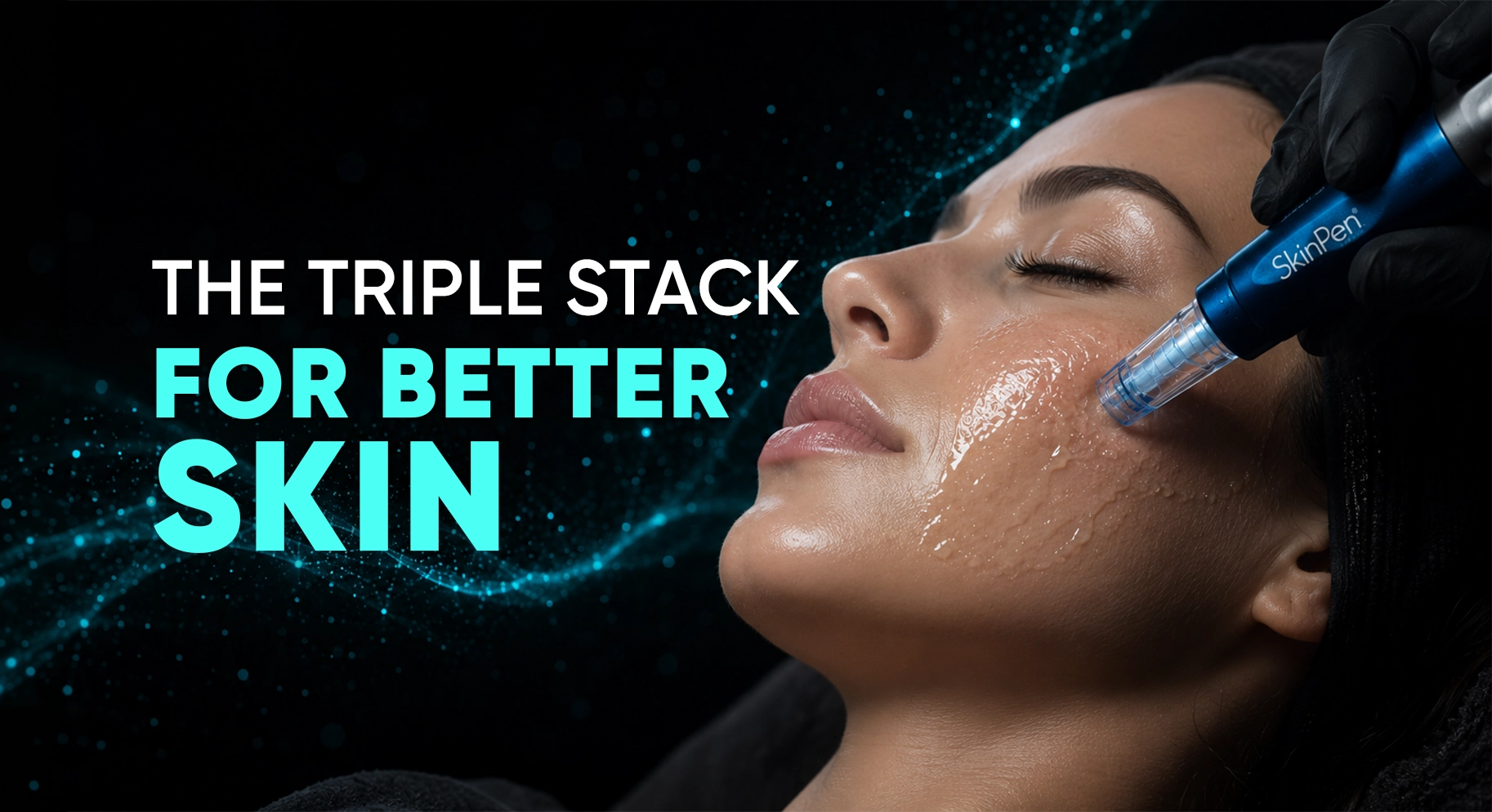
Standard microneedling creates the injury. Exosomes determine what happens next. When exosomes are applied immediately after microneedling, they enter the microchannels created by the device and deliver growth factors, cytokines, and signaling proteins directly to the dermis, where cellular repair actually begins. The result is not just faster healing but a fundamentally different quality of skin regeneration than microneedling alone produces.
At Perfect B in Doral, exosome microneedling is performed with the FDA-cleared SkinPen and can be stacked with PDRN as an add-on depending on the patient’s skin concern and clinical assessment. This guide covers what exosomes are, how the treatment works, who it is right for, and what makes the Perfect B approach different from a standard exosome facial.
Key Takeaways on Exosome Microneedling
- Exosomes amplify microneedling: Applied immediately after the SkinPen creates microchannels, exosomes penetrate the dermis and activate fibroblasts to produce collagen and elastin at a higher rate than microneedling alone.
- No blood draw required: Unlike PRP, exosome microneedling requires no blood draw. The exosome preparation comes ready to apply, which simplifies the procedure and reduces chair time.
- Faster healing: Growth factors in the exosome preparation accelerate the skin’s repair response, which typically shortens post-treatment redness and sensitivity compared to standard microneedling.
- Stackable add-ons: Depending on the patient’s skin concern, exosome microneedling can be combined with PDRN as a separate add-on. The right combination is determined at APRN consultation based on individual skin assessment.
- Fitzpatrick III-VI specific expertise: South Florida patients present predominantly with Fitzpatrick III-VI skin types that require specific device settings, needle depths, and recovery protocols. Perfect B’s APRN team has deep experience with this patient profile.
- APRN consultation required: All exosome microneedling at Perfect B begins with a full intake. Device settings, needle depth, and whether to stack exosomes with PDRN are determined based on individual skin assessment.
What Are Exosomes? The Science Behind the Treatment
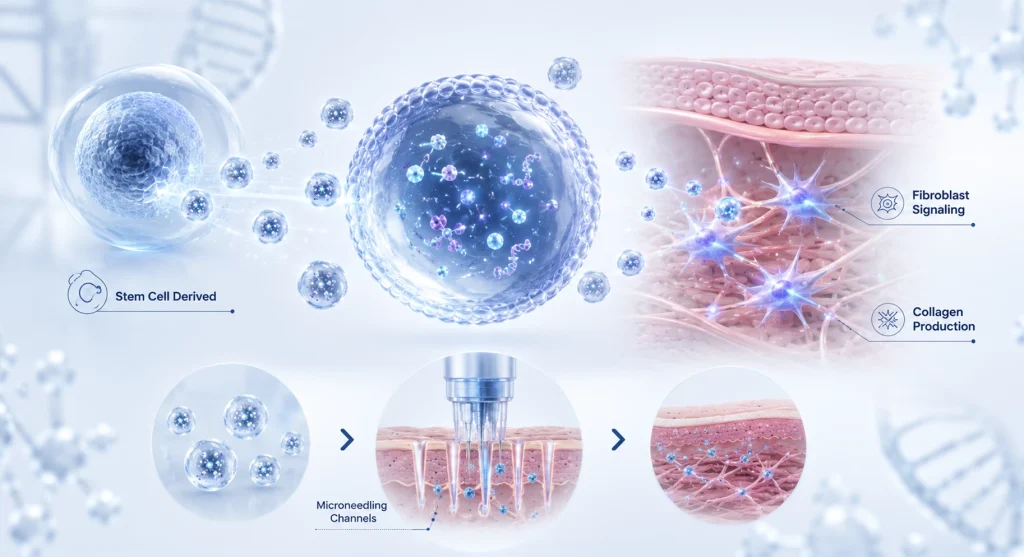
Exosomes are extracellular vesicles measuring between 30 and 150 nanometers. They are produced naturally by cells throughout the body and function as intercellular messengers, carrying growth factors, proteins, lipids, messenger RNA, and microRNA from one cell to another. In skin tissue, exosomes are central to the communication network that coordinates repair after injury.
In aesthetic medicine, the exosomes used clinically are derived from stem cells under laboratory conditions. These stem-cell-derived exosomes carry a concentrated payload of signaling molecules, including epidermal growth factor (EGF), transforming growth factor beta (TGF-beta), vascular endothelial growth factor (VEGF), and a range of anti-inflammatory cytokines. When delivered to skin tissue, they communicate directly with fibroblasts, the cells responsible for producing collagen and elastin.
The scientific interest in exosomes for skin rejuvenation has grown significantly. A 2025 clinical study published in Plastic and Reconstructive Surgery Global Open demonstrated that a combined exosome and microneedling protocol produced measurable reductions in facial pore size and improvements in skin texture across multiple sessions in Fitzpatrick type IV patients, supporting the clinical rationale for the combination approach.
What makes exosomes particularly valuable in a microneedling context is their size. At 30 to 150 nm, they are small enough to pass through the microchannels that microneedling creates. Applied topically on intact skin, their absorption is limited. Applied immediately after microneedling, they reach the dermis where they can interact with fibroblasts at the level where collagen production actually occurs.
How Exosome Microneedling Works: The 3-Step Perfect B Protocol
At Perfect B, the exosome microneedling procedure follows a structured sequence designed to maximize exosome delivery while minimizing recovery time. All protocols are individualized at the APRN intake, but the general framework is consistent across patients.
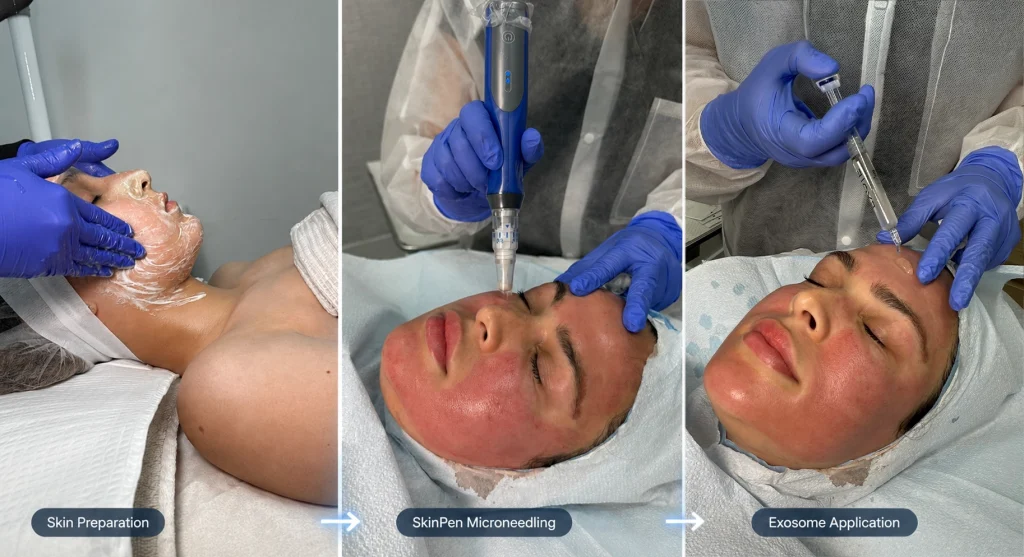
Step 1: Skin Preparation
The skin is thoroughly cleansed and a topical numbing cream is applied and allowed to absorb for 20 to 30 minutes. The APRN assesses the skin condition on the day of treatment and confirms the appropriate device settings, needle depth, and whether any modifications to the standard protocol are indicated based on current skin sensitivity or recent activity.
Step 2: SkinPen Microneedling
The FDA-cleared SkinPen is passed over the treatment area in multiple directions to create a consistent density of microchannels at the prescribed depth. Needle depth is calibrated to the treatment zone: shallower passes for fine texture refinement and superficial pigmentation, deeper passes for acne scarring and more significant collagen remodeling. The SkinPen’s oscillating needle motion minimizes epidermal trauma compared to dragging devices, which is particularly relevant for darker Fitzpatrick skin types where epidermal disruption can trigger post-inflammatory hyperpigmentation.
Step 3: Exosome Application
Immediately after microneedling, while the microchannels are open, the exosome preparation is applied to the treated area. The serum is worked into the skin using gentle pressure to facilitate absorption through the channels. This timing is critical: the window in which microchannels remain open and permeable is limited, so the exosome application follows the microneedling pass with minimal delay. A calming post-treatment protocol then protects the barrier while the exosomes begin their signaling work in the dermis.
For patients in the Perfect B microneedling protocol at Perfect B. When PDRN is clinically indicated alongside exosomes, it is incorporated to add a DNA-repair and anti-inflammatory layer to the regenerative response, addressing tissue quality at a cellular level that exosomes alone do not directly target. Whether to include PDRN is determined at APRN consultation.
Exosome Microneedling vs Standard Microneedling: What Changes
Standard microneedling works by creating controlled micro-injuries that trigger the skin’s healing cascade: inflammation, followed by fibroblast activation, followed by new collagen and elastin synthesis. The results are real and clinically validated, but they depend entirely on the skin’s own repair resources.
Exosome microneedling adds an external signaling component. Instead of waiting for the skin to mount its repair response from scratch, the exosome application delivers ready-made growth factors and signaling proteins directly to the dermis. This means fibroblasts receive a stronger, more immediate activation signal than microneedling alone provides.
The practical differences for patients include a more accelerated onset of visible results, reduced redness duration in many cases, and more significant improvements in skin texture and pore appearance compared to what the same number of standard microneedling sessions would produce. For patients who have done standard microneedling before and want to amplify their results, adding exosomes to the protocol is the logical next step without increasing procedure invasiveness or downtime.
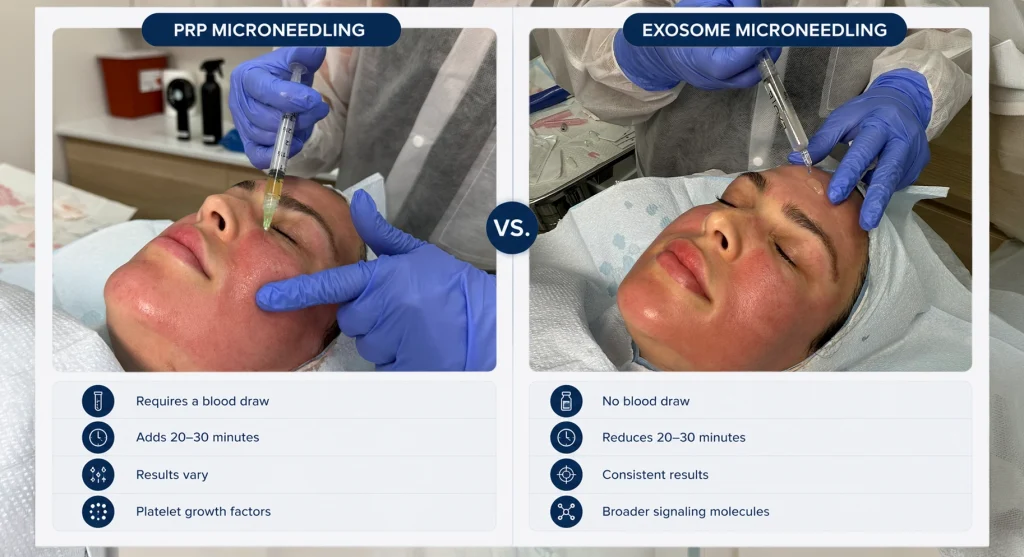
Exosome Microneedling vs PRP Microneedling: Why Patients Are Switching
PRP (platelet-rich plasma) has been the dominant add-on for microneedling for years. It remains an effective option, but exosomes offer several practical advantages that are driving patient preference in clinics that offer both.
No blood draw is the most immediate practical difference. PRP requires drawing blood, centrifuging it, and preparing the plasma before the microneedling session. Exosome preparations come ready to apply, which reduces total procedure time by 20 to 30 minutes and eliminates the variability that comes with individual platelet counts. A patient with naturally low platelet concentration will produce weaker PRP regardless of technique. Exosome preparations deliver a consistent concentration of growth factors every time.
The signaling payload is also different. PRP works primarily through platelet degranulation releasing growth factors at the treatment site. Exosomes carry a broader range of signaling molecules including microRNA, which can influence gene expression in target cells in ways that platelet growth factors alone do not. For patients who have completed a PRP microneedling series and want deeper or more sustained results, exosome microneedling represents a meaningful upgrade rather than a lateral move.
For a detailed comparison of regenerative options available at Perfect B, see our guide on PDRN vs PRP: what the difference is and which is right for your skin.
The SkinPen Advantage: Why the Device Matters
Not all microneedling devices produce the same results, and the choice of device affects both the quality of exosome delivery and the risk profile of the treatment, particularly for patients with Fitzpatrick III-VI skin types.
The SkinPen is the only FDA-cleared microneedling device in its category. Its needle cartridge creates microchannels through a vertical stamping motion rather than a dragging mechanism, which produces consistent channel depth and minimizes lateral tissue shearing. For exosome delivery, this consistency matters: uniform microchannels of known depth create a predictable delivery pathway for the exosome preparation rather than irregular channels that vary in depth and width.
For patients with more melanin-rich skin, the reduced epidermal trauma of the SkinPen’s oscillating motion also lowers the risk of triggering post-inflammatory hyperpigmentation during the healing process. This is not a minor consideration in South Florida where the majority of patients present with Fitzpatrick III-VI skin. Choosing a device with a lower epidermal injury profile is part of how the APRN at Perfect B manages risk for this specific patient population.
When PDRN Is Added to Exosome Microneedling
For patients whose skin concerns extend beyond texture refinement, PDRN can be added to exosome microneedling as a separate add-on based on clinical assessment. The two work through different mechanisms and can be used in the same session when indicated.
The rationale is mechanistic. Exosomes operate at the signaling level: they tell fibroblasts to produce collagen, instruct immune cells to reduce inflammatory activity, and promote vascular repair through VEGF signaling. PDRN operates at the structural cellular level: as a polydeoxyribonucleotide, it provides the building blocks for cellular DNA repair and tissue regeneration through adenosine A2A receptor activation, which reduces pro-inflammatory cytokine expression and accelerates the remodeling phase of healing.
When both are combined with the controlled injury from SkinPen microneedling, the three components address different layers of the repair process simultaneously: the injury stimulus from the device, the signaling amplification from exosomes, and the structural cellular repair support from PDRN. For patients with post-acne scarring, photoaging, or skin that has not responded adequately to standard microneedling, adding PDRN represents a clinically logical escalation rather than simply adding ingredients.
Who Is a Candidate? Skin Concerns Exosome Microneedling Addresses
Exosome microneedling is appropriate for a broad range of patients, but it is particularly well matched to specific skin concerns where standard microneedling produces limited results or where accelerated recovery is a priority.
- Enlarged pores: Clinical evidence supports the combination of exosomes and microneedling for measurable pore reduction. Pore size is influenced by sebum production, skin elasticity, and collagen quality around the pore, all of which the exosome-microneedling combination addresses.
- Uneven skin texture: Patients with rough texture, milia-prone skin, or a dull appearance that topical products have not improved typically see rapid improvement in surface quality after two to three sessions.
- Superficial acne scarring: Exosome microneedling is most effective for atrophic scarring that is shallow enough for the SkinPen to reach the base of the scar. For deeper icepick or boxcar scars, adding PDRN as a clinical add-on provides additional remodeling depth when indicated at APRN assessment. See our guide to microneedling for acne scars for a detailed breakdown of which scar types respond best.
- Photoaging and fine lines: UV-accumulated collagen degradation in South Florida patients responds well to the growth factor stimulation that exosome microneedling provides, particularly in the perioral and periorbital zones.
- Patients upgrading from standard microneedling: Patients who have done multiple sessions of standard microneedling and notice diminishing results are strong candidates for adding exosomes to their next series.
- Patients who want to avoid a blood draw: For patients who are interested in regenerative add-ons but prefer not to do PRP, exosomes provide a comparable or superior clinical outcome without the phlebotomy step.
Fitzpatrick III-VI and Exosome Microneedling: Why South Florida Patients Need Specific Protocols
The majority of patients at Perfect B in Doral present with Fitzpatrick skin types III through VI. This population requires a different clinical approach to microneedling than the predominantly Fitzpatrick I-II populations that many published protocol studies were conducted on.
The primary concern with deeper Fitzpatrick types and microneedling is post-inflammatory hyperpigmentation. When the healing response is triggered, melanocytes in higher-melanin skin can overproduce pigment in response to inflammation, leaving darker patches in the treated area. Managing this risk requires calibrating needle depth carefully, using devices with lower epidermal trauma profiles, selecting appropriate pre-treatment and post-treatment skincare, and spacing sessions to allow complete resolution of any inflammatory response before the next treatment.
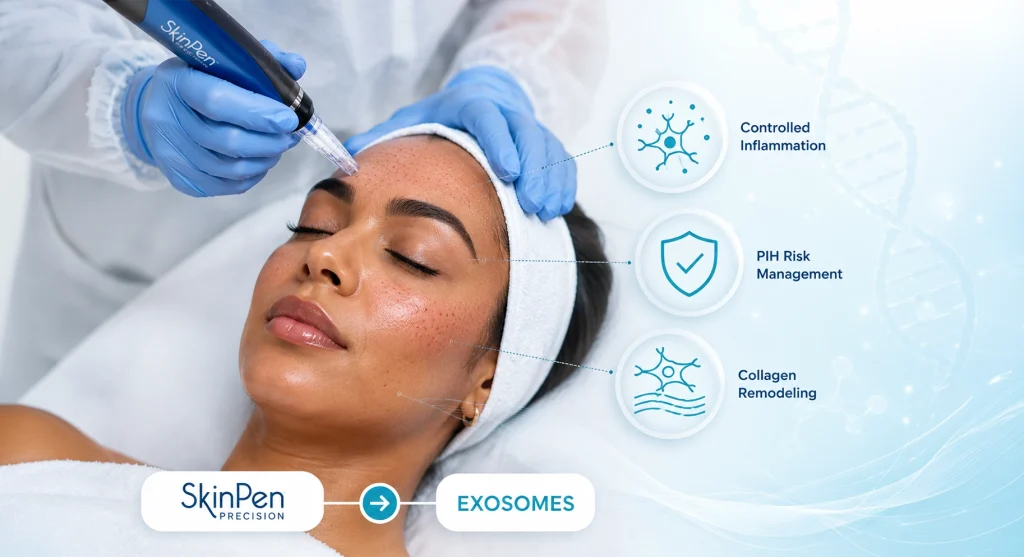
Exosomes contribute positively to this risk profile. Their anti-inflammatory cytokines reduce the magnitude of the inflammatory response that triggers PIH risk. Combined with the SkinPen’s precise channel creation and the APRN’s Fitzpatrick-specific protocol adjustments, the exosome component is not just a result amplifier but a risk management tool for the South Florida patient demographic.
What to Expect: Procedure, Downtime, and Results Timeline
The full exosome microneedling session at Perfect B typically runs 60 to 90 minutes from prep to post-treatment application. Most of that time is occupied by numbing, with the actual microneedling procedure taking 20 to 30 minutes depending on the treatment area.
Immediately after treatment, the skin looks red and feels warm, similar to a moderate sunburn. This is the expected inflammatory response and resolves within 24 to 48 hours in most patients. Patients with Fitzpatrick III-VI may see redness that persists slightly longer, which is normal and resolves without intervention.
The results timeline for exosome microneedling follows a predictable pattern:
- Days 3 to 7: Initial glow and smoothness improvement as the acute inflammatory phase resolves and the repair response begins. Many patients notice this faster than with standard microneedling.
- Weeks 2 to 4: Progressive improvement in skin texture, pore appearance, and tone evenness as new collagen synthesis continues. The exosome-amplified signaling extends the collagen production window beyond what microneedling alone initiates.
- Weeks 4 to 8: Peak results from a single session become visible. For patients with more significant scarring or photoaging, multiple sessions spaced four to six weeks apart produce compounding results.
- Beyond 8 weeks: Results are sustained by the new collagen laid down during the treatment cycle. Maintenance sessions every four to six months help preserve the improvement over time.
Aftercare: What Perfect B Patients Need to Know
Proper aftercare in the first 48 to 72 hours is as important as the treatment itself in determining outcomes. The microchannels that allow exosome delivery also temporarily increase skin permeability to everything else, including irritants and UV radiation.
- Sun protection: Broad-spectrum SPF 30 or higher every morning without exception, starting the day after treatment. In Doral’s climate, patients should reapply every two hours during outdoor exposure for the first two weeks post-treatment.
- No active ingredients for 48 to 72 hours: Retinoids, exfoliating acids (glycolic, salicylic, lactic), and vitamin C serums should be paused for at least three days post-treatment to avoid disrupting the healing barrier.
- Gentle cleansing and hydration: A mild, fragrance-free cleanser and a hydrating barrier-support moisturizer are all that is needed for the first week. The skin does not need additional active ingredients while it is repairing.
- No sweating for 24 to 48 hours: Intense exercise, saunas, and steam rooms should be avoided for the first two days to reduce infection risk and limit unnecessary inflammation while microchannels are healing.
- No makeup for 24 hours: Allow the microchannels to close before applying makeup to avoid introducing bacteria or irritants into the dermis.
Frequently Asked Questions About Exosome Microneedling
1. Is exosome microneedling worth it?
For patients who have already done standard microneedling and want improved results, or for patients who want the most from a single series of sessions, adding exosomes is a meaningful upgrade. Clinical literature supports measurable improvements in texture and pore reduction with the combination compared to microneedling alone. The absence of a blood draw, shorter chair time, and consistent growth factor delivery make it a practical option for most candidates.
2. What is the difference between microneedling and exosome microneedling?
Standard microneedling relies entirely on the skin’s own healing response after controlled injury. Exosome microneedling adds a delivery of stem-cell-derived growth factors and signaling proteins immediately after the microneedling channels are created. This amplifies the fibroblast activation, extends the collagen production window, and typically produces faster visible results and stronger outcomes than the same number of standard sessions.
3. How much does exosome microneedling cost?
Exosome microneedling costs more than standard microneedling because of the additional preparation included in the protocol. At Perfect B, pricing is discussed at the APRN intake consultation based on the specific protocol recommended, the number of sessions, and whether PDRN stacking is indicated. Bundled session packages are typically more economical than single sessions for patients completing a full series.
4. What not to do after exosome microneedling?
Avoid sun exposure without SPF 30+, retinoids and exfoliating acids for 48-72 hours, makeup for 24 hours, and intense exercise or sweating for the first two days. Avoid anything that introduces unnecessary irritants or bacteria to the skin while microchannels are healing. For patients with Fitzpatrick III-VI skin, strict sun protection in the two weeks post-treatment is especially important to prevent post-inflammatory hyperpigmentation.
5. How many sessions of exosome microneedling do I need?
Most patients complete a series of three to four sessions spaced four to six weeks apart for their initial treatment. Patients with significant acne scarring or photoaging may benefit from additional sessions. Maintenance at every four to six months helps sustain results. The exact protocol is determined at the APRN consultation based on your specific skin assessment and goals.
6. Is exosome microneedling better than PRP?
Exosome microneedling delivers a broader and more consistent growth factor payload than PRP, does not require a blood draw, and is not subject to individual variation in platelet concentration. PRP remains a valid option, particularly for patients who have established results with it. For patients starting fresh or looking to escalate from a completed PRP series, exosomes provide a clinically logical upgrade. At Perfect B, PDRN is often the preferred add-on for patients dealing with tissue repair at the structural level, while exosomes are the preferred choice for signaling amplification and anti-inflammatory benefits.
7. How long do exosome microneedling results last?
Results from a complete series of exosome microneedling sessions typically last six to twelve months depending on the patient’s age, sun exposure habits, and skin maintenance routine. The new collagen produced during the treatment cycle continues to improve skin quality for weeks after the last session. Regular sun protection and a consistent skincare routine significantly extend the durability of results.
8. Is exosome microneedling safe for dark skin?
Yes, when performed by an experienced provider using appropriate device settings for the patient’s Fitzpatrick type. The SkinPen’s precise channel creation and the anti-inflammatory properties of the exosome preparation both contribute to a lower post-inflammatory hyperpigmentation risk than older microneedling devices used without regenerative add-ons. At Perfect B in Doral, the APRN team has extensive experience treating Fitzpatrick III-VI patients and calibrates every protocol specifically to the patient’s skin type and baseline pigmentation.
Closing: The Device, the Add-On, and the Protocol Together
Exosome microneedling is not a single intervention but a combination of three interdependent decisions: the device that creates the delivery pathway, the timing and quality of the exosome preparation, and the protocol design that determines how many sessions, at what depth, and with what additional layers are appropriate for the individual patient.
At Perfect B in Doral, these decisions are made at the APRN intake and revisited at each session based on how the skin is responding. The clinic’s combination of SkinPen microneedling with exosomes and PDRN represents the most comprehensive non-surgical regenerative skin protocol available in South Florida for patients dealing with texture, scarring, and photoaging concerns.
- 📍 Visit us at Perfect B, 3905 NW 107th Ave, Suite 104, Doral, FL 33178, serving Miami and South Florida patients.
- 📞 Call or message us at (786) 502-2260 to schedule your exosome microneedling consultation.