
Perfect B, Doral Fl. | 05.11.26 | 9 min read.
This post is for educational purposes only and does not substitute for personalized medical advice. Treatment protocols vary based on individual skin history, labs, and clinical evaluation. Consult a licensed medical provider before beginning any regenerative treatment.
PDRN vs PRP: Two Biological Treatments That Work Very Differently Under the Surface
If you have been researching skin rejuvenation options in Miami, you have likely come across both PDRN and PRP. Both are biological injectables. Both are used in medical aesthetics clinics. Both claim to rejuvenate, repair, and restore. But the mechanism behind each is fundamentally different, and that difference determines which treatment makes sense for your skin, your goals, and your clinical profile.
At Perfect B in Doral, FL, we use PDRN as our primary regenerative tool. That is a deliberate clinical choice, not a marketing preference. Understanding why requires understanding what each treatment actually does at the cellular level, and where each one falls short when used alone.
Key Takeaways
- PDRN and PRP both stimulate skin repair, but through entirely different biological pathways: PDRN works via DNA repair and the A2A adenosine receptor, while PRP releases growth factors from your own platelets.
- PDRN does not require a blood draw, delivers a consistent and predictable dose, and does not depend on the variability of each patient’s platelet concentration.
- PRP is highly individualized because your platelet count directly affects treatment potency, which means results can vary significantly between patients doing the same protocol.
- In Miami’s Fitzpatrick III-V population, PDRN’s anti-inflammatory pathway makes it safer and more predictable for patients with melanin-rich skin who face a higher risk of post-inflammatory hyperpigmentation.
- Perfect B stacks PDRN with exosomes for patients who need deeper regenerative support, a combination that goes beyond what either PRP or standalone PDRN can achieve.
What Is PDRN and How Does It Work at the Cellular Level?
PDRN stands for polydeoxyribonucleotide. It is derived from salmon DNA, specifically from salmon sperm cells, which share a high degree of molecular compatibility with human DNA. This biocompatibility is what makes PDRN well tolerated without triggering an immune response when injected into human tissue.
When PDRN is injected, it works through two distinct mechanisms. The first is activation of the adenosine A2A receptor, a pathway that reduces local inflammation, stimulates fibroblast activity, and promotes the formation of new blood vessels in the treated area. The second is what researchers call the DNA salvage pathway: PDRN breaks down into nucleotides, which damaged cells use as raw material to rebuild their own DNA. You are not just signaling repair. You are supplying the actual molecular components that repair requires. A peer-reviewed study published in the Journal of Medical Sciences confirming PDRN’s role in activating the A2A adenosine receptor to accelerate wound healing, reduce inflammation, and stimulate collagen synthesis in human dermal tissue reflects precisely what we observe in clinical practice at Perfect B.
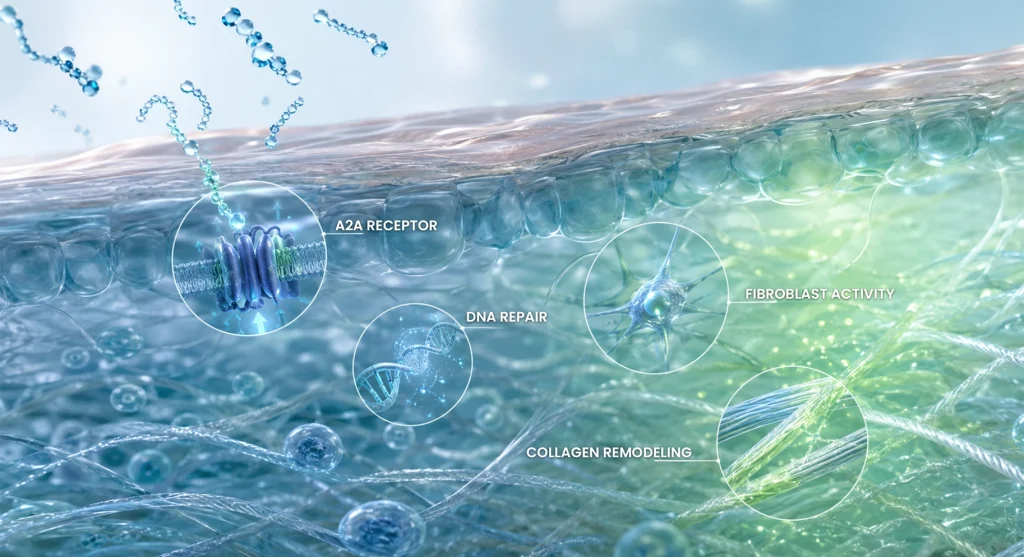
Why the salmon DNA source matters
The use of salmon DNA is not arbitrary. Salmon sperm cells have been used in regenerative research for decades because the DNA fragment length and purity achievable from this source is consistently high. The molecular similarity to human DNA is close enough for cellular uptake but distant enough to avoid triggering an immune response. At Perfect B, we source PDRN from US-based laboratories with third-party purity verification. This matters because the regenerative effect depends entirely on what arrives intact at the cellular level. Degraded or impure PDRN cannot activate the pathways that produce results.
Why PDRN is trending in 2026
Korea has used PDRN clinically for over two decades. The US market is catching up rapidly. Search volume for “what is PDRN” has grown from around 2,400 searches per month in April 2025 to over 18,100 in March 2026, a trajectory that mirrors the growth curve GHK-Cu peptide followed in the two years before it became mainstream in American aesthetics. The treatment is appearing in major beauty publications. At Perfect B, we are already ranking in Google’s top results for PDRN above several of those publications, which means our patients in Doral are finding us when they begin researching this treatment for the first time. → Read Perfect B’s clinical guide to PDRN therapy, including the protocols we use, who benefits most, and what the treatment looks like from consultation through results.
What Is PRP and How Does It Differ at the Biological Level?
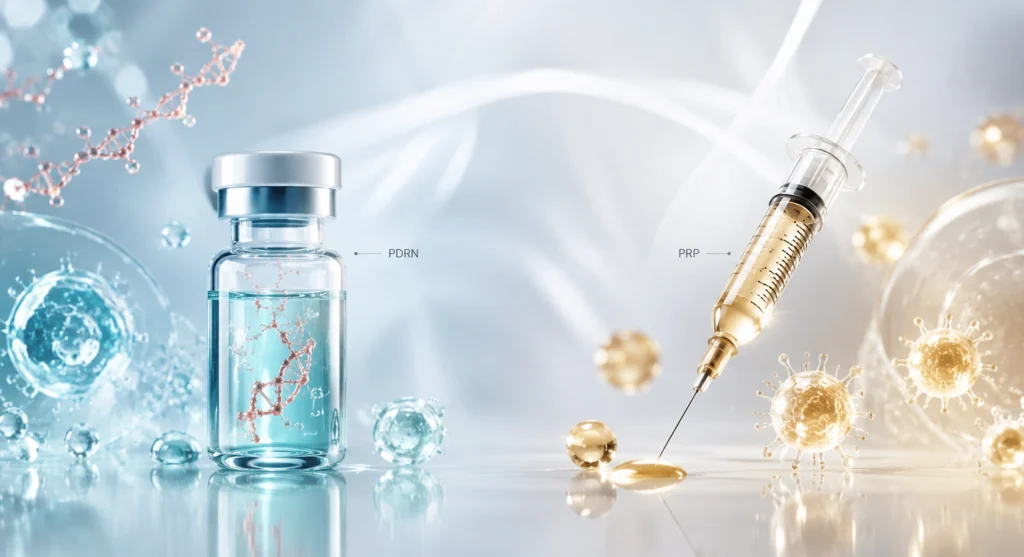
PRP, or platelet-rich plasma, is a concentration of your own blood’s platelets prepared through centrifugation. A blood draw is performed, the sample is spun to separate the platelet-rich fraction, and that fraction is injected back into the treatment area. Platelets contain alpha granules packed with growth factors, including platelet-derived growth factor (PDGF), transforming growth factor beta (TGF-beta), vascular endothelial growth factor (VEGF), and epidermal growth factor (EGF). When the platelets are activated in the skin, those granules release their contents, triggering a cascade of tissue repair signals.
The key limitation of PRP: variability
PRP is autologous, meaning it comes from your own blood. This is often presented as a benefit, and in some ways it is. There is no external biological material being introduced. But this same characteristic introduces a significant source of variability: your platelet count. Patients with naturally lower platelet concentrations receive a less potent treatment, even with the same protocol. Patients on certain medications, with specific medical conditions, or with compromised blood quality may see diminished results. The growth factor content of PRP also degrades rapidly after activation, which creates a narrow therapeutic window. PDRN, by contrast, delivers a consistent, measurable dose that does not depend on the patient’s individual hematological profile.
Not sure which peptide protocol fits your goals?
Perfect B’s peptide protocol tool is built on real clinical data from 2,000+ patients treated in South Florida.
Answer 6 questions and see what patients with similar goals are running: which peptides they use, typical dosing, injection schedule, reconstitution steps, cycle length, and when they pause.
PDRN vs PRP: The Core Difference in How Each Treatment Works
The most direct way to understand the difference is to separate the two categories of biological action each treatment represents.
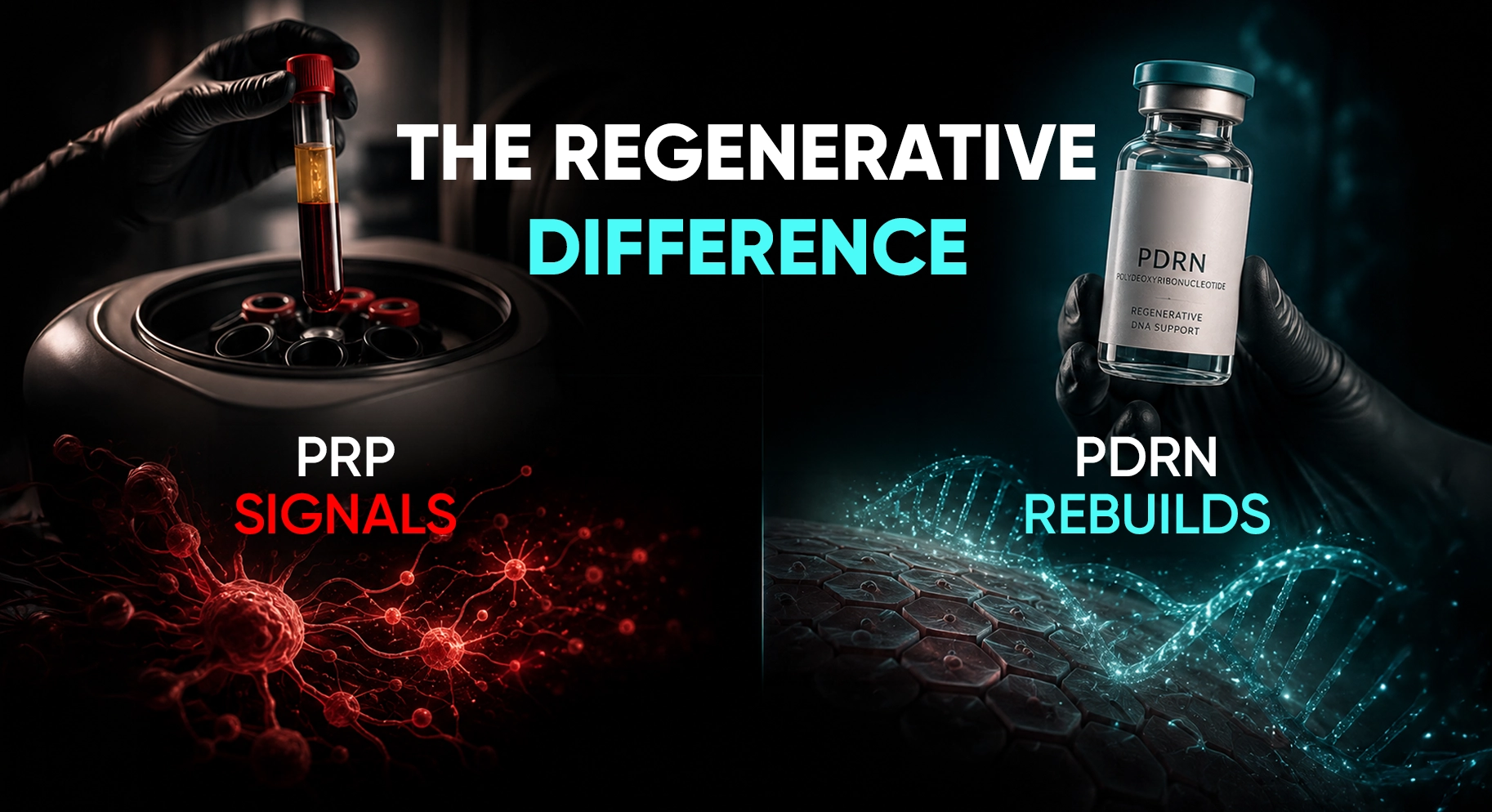
PRP operates through growth factor signaling. You are flooding the treatment area with molecular messengers that tell surrounding cells to proliferate, migrate, and deposit new matrix. The effect is largely downstream: the growth factors trigger a cascade, and the cascade produces tissue remodeling. The quality of that cascade depends on how much signal was released, which depends on platelet quality.
PDRN operates through DNA repair and receptor activation. You are not signaling indirectly through a cascade. You are activating a specific receptor that modulates inflammation and stimulates fibroblasts directly, and simultaneously supplying nucleotide building blocks that cells need to repair their own genetic material. The effect is more foundational. You are not just telling cells to work harder. You are giving them the tools they need to work effectively, particularly in aging or chronically sun-damaged skin where cellular repair capacity has declined.
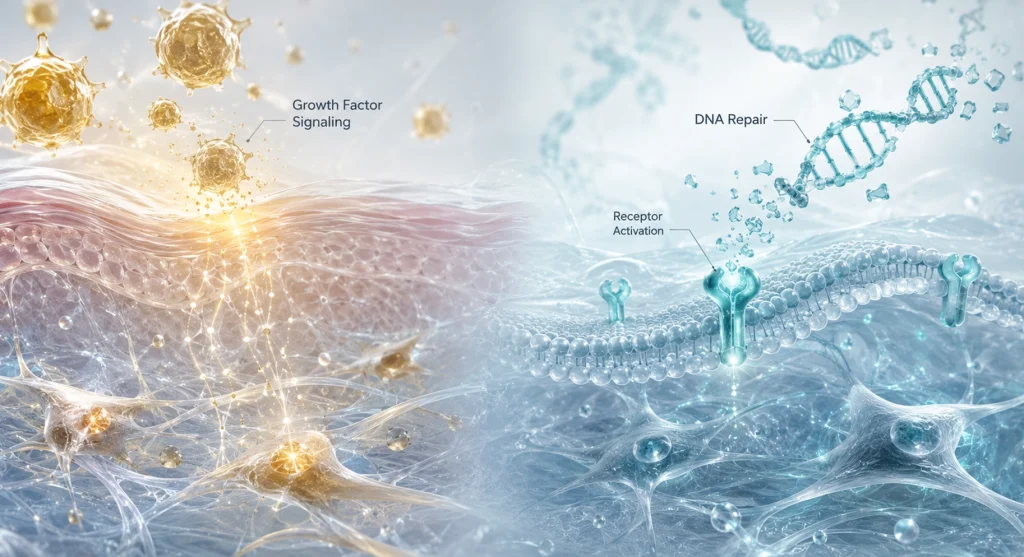
This is the clinical reason Perfect B uses PDRN as its primary regenerative tool rather than PRP. In a South Florida patient population where chronic UV exposure, high heat, and frequent outdoor activity are part of daily life, the regenerative deficit at the cellular level tends to be significant. PDRN addresses that deficit at the source.
Who Is a Better Candidate for PDRN vs PRP at Perfect B?
Candidate selection is where the clinical difference between PDRN and PRP becomes most practically relevant. Both treatments work. The question is which one is the right tool for a specific patient’s skin condition, skin tone, goals, and clinical history.
Patients who respond better to PDRN
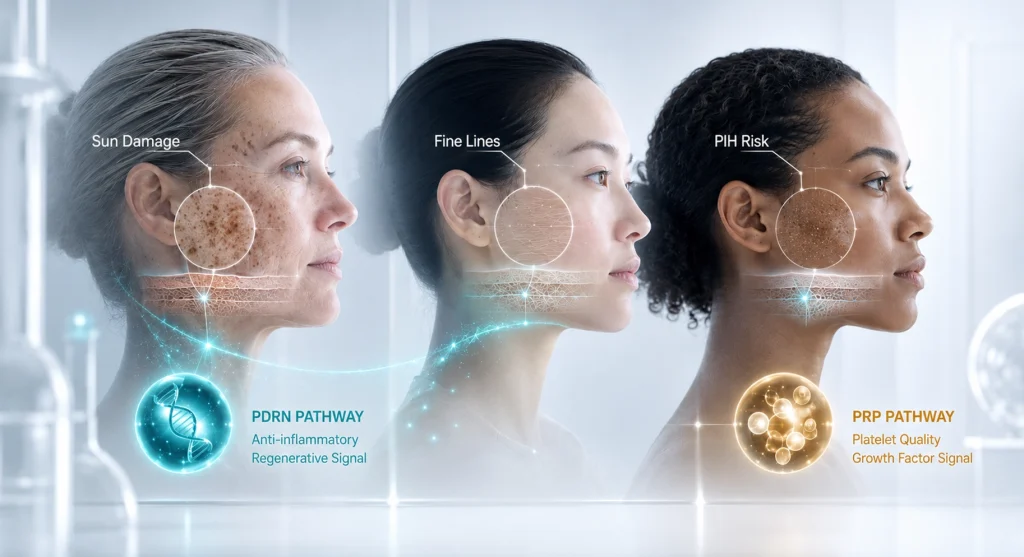
Patients with chronically sun-damaged skin, significant fine lines, persistent dullness, or loss of density tend to respond exceptionally well to PDRN. The treatment is particularly effective for patients who have plateaued with other modalities and are not seeing meaningful collagen improvement. Patients who have had previous inflammatory responses to other injectables also tend to tolerate PDRN well because of its anti-inflammatory A2A receptor mechanism. For Fitzpatrick III to V patients, which represents the majority of our patient population in Doral, PDRN is often the preferred regenerative option because its anti-inflammatory pathway reduces the risk of post-inflammatory hyperpigmentation, a real concern when treating melanin-rich skin with any procedure that triggers tissue activation.
When PRP still makes sense
PRP remains a relevant option in specific contexts. Patients with high platelet counts and strong blood quality can achieve meaningful results from PRP, particularly when the primary concern is stimulating acute repair in a discrete area such as hair loss or a specific zone of structural degradation. At Perfect B, we evaluate each patient individually before recommending any regenerative protocol. The choice between PDRN and PRP, or the decision to combine them or replace both with an exosome-based protocol, is driven by clinical assessment, not by a default preference for one modality.
What to Expect During and After PDRN vs PRP Treatment
One of the practical differences between PDRN and PRP is the session experience itself, and what the recovery period looks like in a high-sun, high-activity environment like Miami.
The PDRN session: what it actually feels like
A PDRN session at Perfect B typically takes 30 to 45 minutes depending on the treatment area. A topical numbing agent is applied before the injections begin. The injections themselves use very fine needles and are administered in a grid or linear pattern depending on the treatment zone. Most patients describe the sensation as mild pressure with occasional brief pinching. Immediately after, the treated area will appear slightly red and may feel warm. This typically resolves within a few hours. Patients can return to normal activity the same day. We recommend avoiding direct sun exposure, intense heat, and exercise that induces significant sweating for 24 to 48 hours post-treatment.
PRP session: the blood draw changes the experience
A PRP session adds the blood draw step before any treatment begins. For most patients this is straightforward, but for those with needle anxiety or blood draw discomfort, it adds a layer to the appointment that PDRN avoids entirely. The centrifugation process takes approximately 10 to 15 minutes, after which the prepared PRP is injected using the same fine-needle approach as PDRN. Post-treatment recovery and restrictions are comparable to PDRN. The key clinical difference in the Miami context is that PRP’s growth factor release activates melanocytes more directly than PDRN’s pathway, which is one reason we default to PDRN for our Fitzpatrick III-V patients rather than PRP. → Learn how Perfect B combines microneedling with PDRN for patients in Miami and Doral, including why the combination produces results that neither treatment achieves alone.
Not sure which peptide protocol fits your goals?
Perfect B’s peptide protocol tool is built on real clinical data from 2,000+ patients treated in South Florida.
Answer 6 questions and see what patients with similar goals are running: which peptides they use, typical dosing, injection schedule, reconstitution steps, cycle length, and when they pause.
Why Perfect B Uses PDRN as Its Primary Regenerative Tool in Doral
The decision to build our regenerative protocols around PDRN rather than PRP was not made in response to trends. It was made after evaluating what our patient population actually needs and which treatment consistently delivers more predictable outcomes in our clinical context.
The Miami skin context: UV, heat, and Fitzpatrick III-V
South Florida patients experience UV exposure levels that are among the highest in the continental United States year-round. Chronic UV damage is cumulative, progressive, and largely invisible until it is not. The cellular repair deficit that develops over years of high UV exposure creates exactly the conditions where PDRN’s nucleotide supply mechanism is most useful. Damaged cells are not generating enough energy or raw material to repair effectively on their own. PDRN gives them what they need to restart that process. Our patient population also skews heavily toward Fitzpatrick III to V skin, which includes Latin American, Caribbean, and South American patients for whom post-inflammatory hyperpigmentation is a consistent clinical concern. PDRN’s A2A adenosine pathway dampens inflammation rather than amplifying growth factor cascades, which makes it a more conservative choice in this demographic.
PDRN plus exosomes: the Perfect B regenerative stack
For patients who need deeper regenerative support than PDRN alone provides, Perfect B uses a PDRN and exosome combination protocol. Exosomes are extracellular vesicles that carry signaling molecules, proteins, and genetic material between cells. They communicate repair instructions across cellular networks rather than working in isolation. When stacked with PDRN, the combination addresses the cellular communication deficit that exosomes target while simultaneously providing the DNA repair substrate that PDRN supplies. The result is a regenerative environment that is broader and more coordinated than either treatment achieves independently. A peer-reviewed analysis in the Journal of Medical Sciences documenting PDRN’s role in coordinating multiple simultaneous repair pathways including adenosine receptor activation, angiogenesis, and nucleotide supply supports the clinical rationale behind combination protocols. → See the full range of regenerative skin treatments at Perfect B in Doral, FL, including how PDRN, exosomes, and microneedling are combined into complete treatment plans.
PDRN Before and After: What Clinical Results Look Like at 4, 8, and 12 Weeks
One of the most common questions patients ask before starting PDRN is how quickly they will see a difference and what that difference will actually look like. The timeline is not identical for every patient, but the pattern of improvement follows a consistent clinical arc when the protocol is properly administered.
What changes first and what takes longer
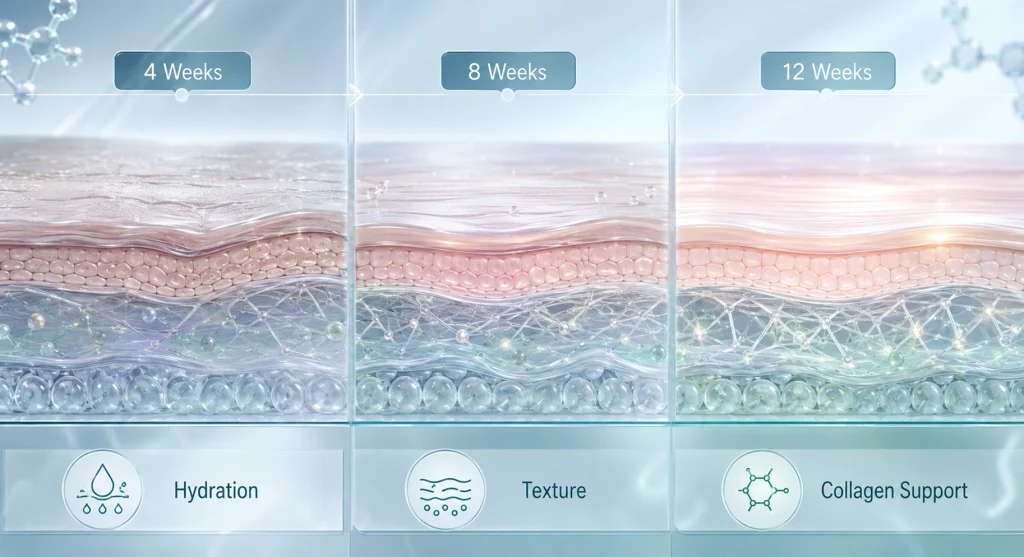
Most patients notice the first changes at around 2 to 3 weeks post-treatment, typically described as improved hydration, a subtle brightening of the skin tone, and a reduction in the grayness or dullness that characterizes chronically stressed skin. These early changes reflect the anti-inflammatory and angiogenic effects of the A2A receptor activation. Blood flow to the treatment area improves. Inflammation that was suppressing normal cellular function begins to resolve. The more structural improvements, including increased firmness, reduced fine line depth, and improved skin texture, tend to emerge between weeks 6 and 12 as new collagen and elastin are synthesized and deposited. Most patients at Perfect B undergo a series of 3 to 5 sessions spaced 3 to 4 weeks apart, with maintenance treatments every 3 to 6 months depending on skin condition and treatment goals.
How many sessions most patients need
Session count depends on the degree of prior damage, the patient’s age, and the specific treatment goal. Patients primarily targeting early fine lines and dullness on relatively healthy skin often see strong results in 3 sessions. Patients addressing significant collagen loss, persistent sun damage, or skin that has not responded well to previous treatments typically require 4 to 5 sessions before reaching a stable maintenance phase. We evaluate progress at each appointment rather than applying a fixed protocol regardless of how the skin is responding.
Frequently Asked Questions
1. Is PDRN better than PRP for skin rejuvenation?
Neither treatment is universally better. The right choice depends on your skin type, skin tone, goals, and clinical profile. PDRN tends to be more consistent and predictable because it delivers a fixed dose that does not vary with platelet quality. For Fitzpatrick III to V skin, PDRN is often preferred because its anti-inflammatory pathway reduces the risk of hyperpigmentation. For patients with strong platelet counts and specific repair needs in a discrete area, PRP can still be highly effective. At Perfect B, we evaluate each patient before recommending a protocol rather than defaulting to one treatment for everyone.
2. Does PDRN require a blood draw?
No. PDRN is an external biostimulator derived from salmon DNA, not from your own blood. There is no blood draw involved. This is one of the practical advantages over PRP, particularly for patients with needle anxiety or blood draw discomfort. The session involves only the topical numbing and the injections themselves.
3. Can PDRN and PRP be used together?
In some combination protocols they can, though at Perfect B we more commonly pair PDRN with exosomes rather than PRP when stacking is appropriate. The decision depends on what the patient’s skin needs and what the treatment plan is designed to achieve. We do not recommend combining treatments simply because combining is possible. Every addition to a protocol should have a specific clinical rationale.
4. What is the salmon DNA facial and is it the same as PDRN?
The salmon DNA facial is a consumer-facing term for PDRN treatment. The underlying biological material, polydeoxyribonucleotide derived from salmon DNA, is the same compound. The distinction at Perfect B is that we use injectable medical-grade PDRN sourced from US labs with third-party purity verification, not topical cosmetic products that carry the same marketing name but may not penetrate to the dermal layer where the regenerative mechanism activates.
Not sure which peptide protocol fits your goals?
Perfect B’s peptide protocol tool is built on real clinical data from 2,000+ patients treated in South Florida.
Answer 6 questions and see what patients with similar goals are running: which peptides they use, typical dosing, injection schedule, reconstitution steps, cycle length, and when they pause.
5. How long do PDRN results last?
Results from a properly completed PDRN series typically last 4 to 6 months before the skin begins to return to its prior baseline. Maintenance sessions every 3 to 6 months sustain the improvement. Patients who also adopt sun protection practices, particularly in a high-UV environment like Miami, tend to maintain their results longer because they are not continuously creating the UV damage that PDRN was used to repair. Results are cumulative: each series builds on the structural improvements made by the previous one.
6. Is PDRN treatment safe for dark skin tones?
Yes. PDRN’s anti-inflammatory mechanism makes it one of the safer regenerative injectables for Fitzpatrick III to V skin. The A2A adenosine receptor pathway dampens the inflammatory response rather than amplifying it, which reduces the risk of post-inflammatory hyperpigmentation that can follow more growth-factor-heavy treatments like PRP. At Perfect B, we treat a majority of patients with melanin-rich skin in Doral and greater Miami, and PDRN is routinely our first-line regenerative recommendation for these patients. Contact us at (786) 502-2260 to discuss your skin type and treatment options directly with our clinical team.
Closing: The Clinical Bottom Line on PDRN vs PRP
PRP and PDRN are both legitimate regenerative tools. The comparison is not about which one is real and which is hype. Both have clinical evidence behind them. The meaningful question is which one addresses the specific cellular deficit your skin has, and which one can do so consistently and safely given your skin type and the treatment environment. In South Florida, where UV damage is chronic, skin tones are diverse, and patients expect results from a medical-grade provider, PDRN’s predictability, anti-inflammatory pathway, and compatibility with stack protocols makes it the more versatile clinical tool in most cases.
PRP still has a role in the right patient. PDRN combined with exosomes addresses cases where standalone PDRN is not enough. The best protocol is the one built around your skin’s actual biology, not the one that happens to be trending. That is the conversation we have with every patient who comes to Perfect B in Doral. → Schedule a consultation at Perfect B in Doral, FL to find out which regenerative protocol is right for your skin type, goals, and clinical history.
📍 Visit us at Perfect B, Doral FL
📞 Call or message us at (786) 502-2260