Perfect B, Doral Fl. | 07.22.26 | 9 min read.
This article is for general educational purposes and is not medical advice. Hair restoration options should be evaluated by a licensed provider, and candidacy and pricing are decided at a consultation. For an overview of the non-surgical options we focus on, start with our overview of non-surgical hair loss treatment options and how a provider builds a plan around your stage of hair loss.
FUE vs Non-Surgical Hair Restoration: The Honest Answer
Here is the honest answer up front: FUE and non-surgical hair restoration are not really competitors, they solve different problems at different stages. A FUE hair transplant is surgery that moves your own follicles to add density where hair is already gone. Non-surgical hair restoration is a set of in-office and at-home treatments that stimulate and protect the hair you still have. The right choice depends on how much hair you have lost and your goal. At Perfect B in Doral we focus on the non-surgical, regenerative side, and we will tell you honestly when a surgical transplant is the better route so you can be referred appropriately. This guide explains the real difference so you can decide.
The single most useful idea is this: FUE restores lost density, while non-surgical treatment maintains and improves existing hair. Understanding which of those you actually need is what makes the decision clear, and it often comes down to how early you act.
Key Takeaways
- FUE is a surgical transplant that moves your own follicles to add density where hair is already lost.
- Non-surgical hair restoration stimulates and maintains the hair you still have, without surgery or downtime.
- The best choice depends on your stage of loss: early or diffuse thinning favors non-surgical, advanced baldness favors FUE.
- The two are often combined, since non-surgical treatment can protect and support a transplant result.
- Starting non-surgical treatment early, before major loss, gives it the best chance to work.
- Perfect B focuses on non-surgical, regenerative hair restoration and refers out for surgical FUE when that is the better route.
What a FUE Hair Transplant Is
Follicular Unit Extraction, or FUE, is a surgical procedure in which individual follicles are harvested one by one from a donor area, usually the back of the scalp, and transplanted into thinning or bald areas. Because it relocates your own permanent follicles, it can restore density in areas where hair is truly gone, and the transplanted hair generally continues to grow. Reported graft survival with FUE is high when performed well, with studies showing strong engraftment of intact follicles (a comparative graft survival study of follicular unit excision grafts). It is a real surgery, performed at specialized hair transplant clinics, and it involves a procedure day and a recovery period. It is the strongest option when there is significant, established baldness and a good donor supply.
What Non-Surgical Hair Restoration Is
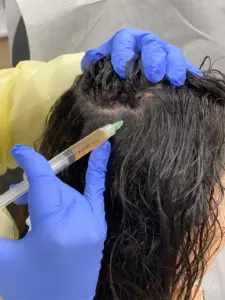
Non-surgical hair restoration is a set of treatments that work with the follicles you still have, stimulating them, improving their environment, and slowing loss, without surgery or downtime. The most studied injectable regenerative approach is platelet-rich plasma, and systematic reviews and meta-analyses of clinical trials have found that it can meaningfully increase hair density in androgenetic alopecia (a systematic review and meta-analysis of regenerative injection therapy for alopecia), including in women (a systematic review of regenerative therapy for female androgenetic alopecia). At Perfect B, the non-surgical toolkit includes regenerative options such as how PDRN is used to support the scalp and existing hair follicles, how exosome therapy is used to stimulate thinning hair, peptide therapy, and microneedling to improve the scalp environment.
The Big Difference: Restore vs Maintain
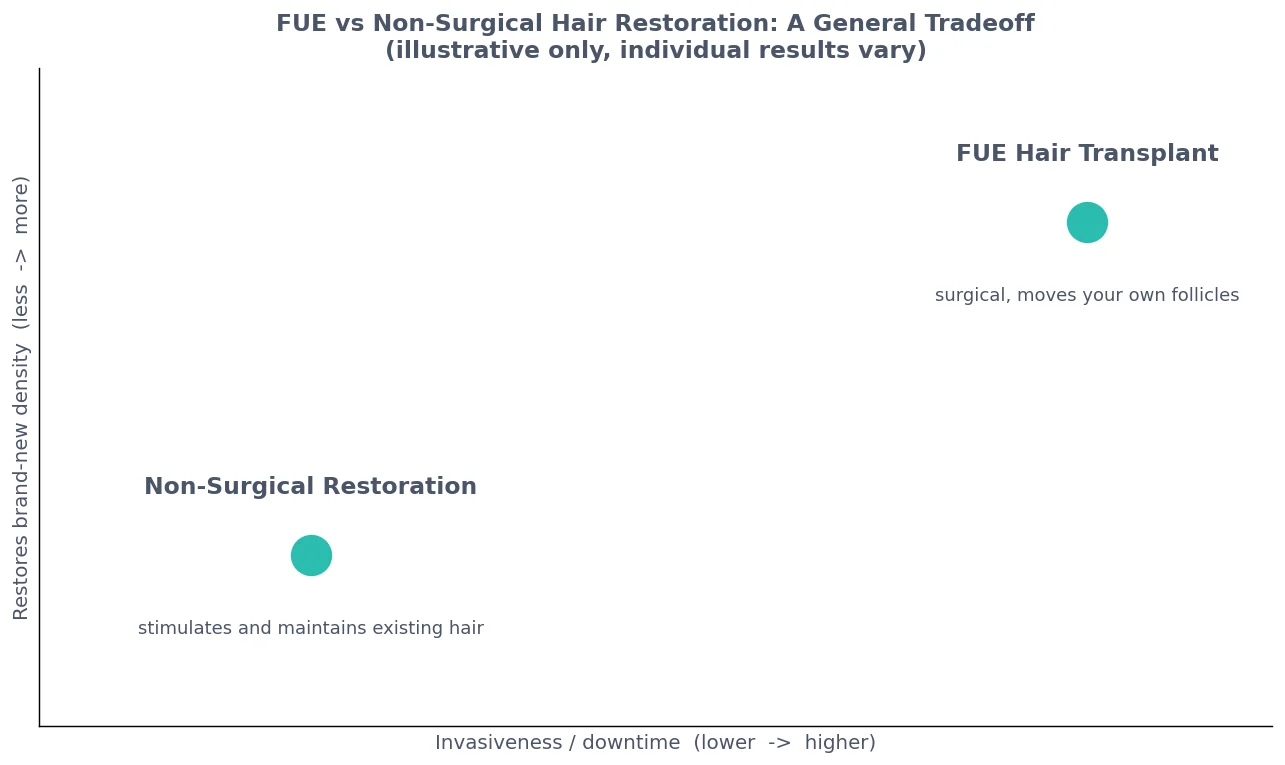
The core difference is simple. FUE adds brand-new density to areas where the hair is already gone, because it physically relocates follicles. Non-surgical treatment does not add follicles you no longer have; instead it strengthens, thickens, and protects the hair and follicles you still have, and can slow further loss. That means non-surgical treatment shines earlier, when there is still hair to save, while FUE becomes the answer once loss is advanced and you want to rebuild a hairline or fill a bald area. Neither is better in the abstract, they simply fit different stages.
Which Is Right for You?
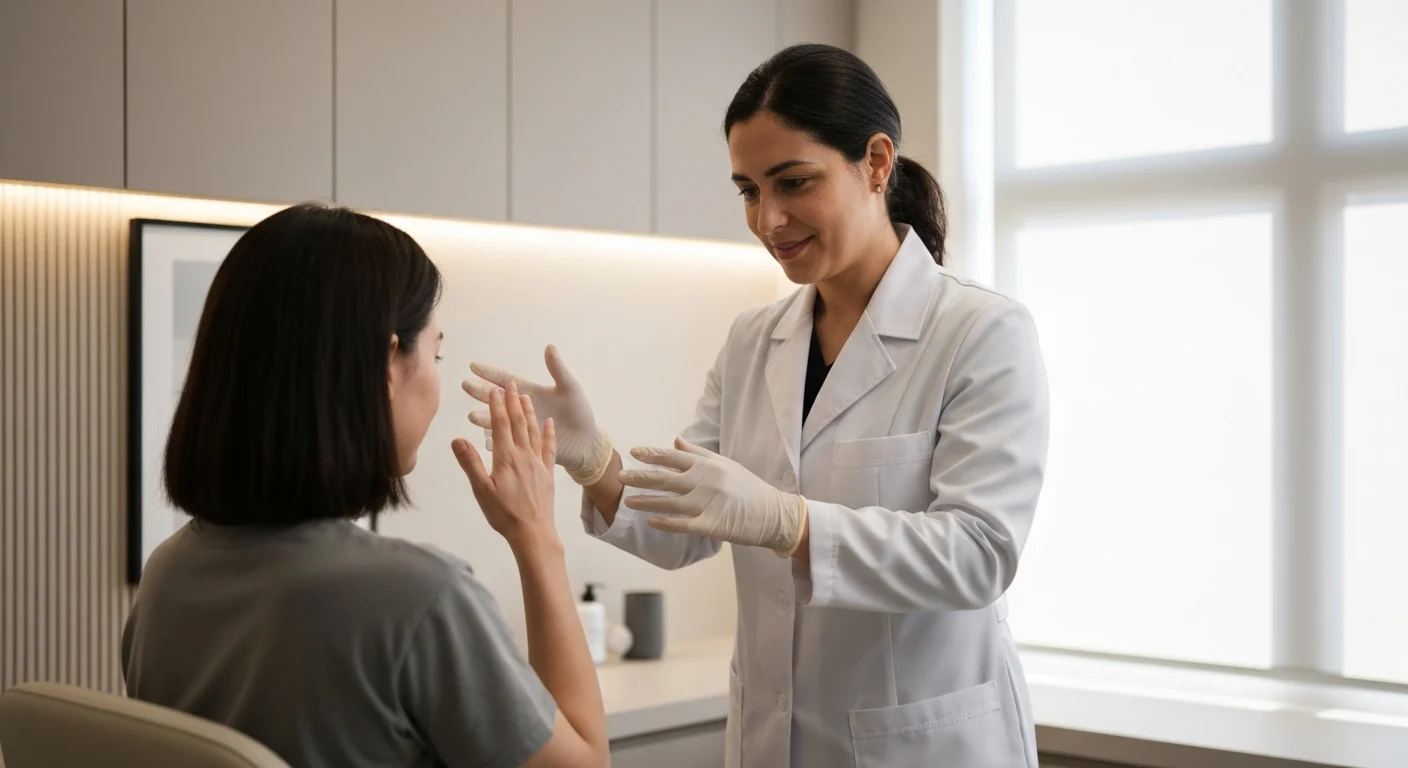
If you are noticing early or diffuse thinning and still have a reasonable amount of hair, non-surgical restoration is usually the smart first step, because it can protect and thicken what you have and slow the process. If you have significant, established baldness, a receded hairline, or a bald crown, and you want to rebuild density in those areas, a FUE transplant is likely the stronger answer. Many people do both: non-surgical treatment to maintain and support the surrounding hair, and a transplant to rebuild the areas that are already gone. A provider looks at your pattern, your stage, and your goal to guide you, and for women, whose hair loss pattern is often diffuse, our overview of how hair loss in women differs and why non-surgical treatment is often first-line is a helpful starting point.
Why Starting Early Matters
The most important timing point is that non-surgical treatment works best before you have lost a lot of hair. Once a follicle is truly gone, no injection or topical can bring it back, only a transplant can add density there. So the earlier you address thinning, the more hair there is to save, and the better non-surgical treatment performs. Waiting until loss is advanced narrows your options toward surgery. If you are just starting to notice more shedding or a widening part, that is the ideal moment for a non-surgical plan, not a reason to wait and see.
How Perfect B Approaches Hair Restoration in Doral
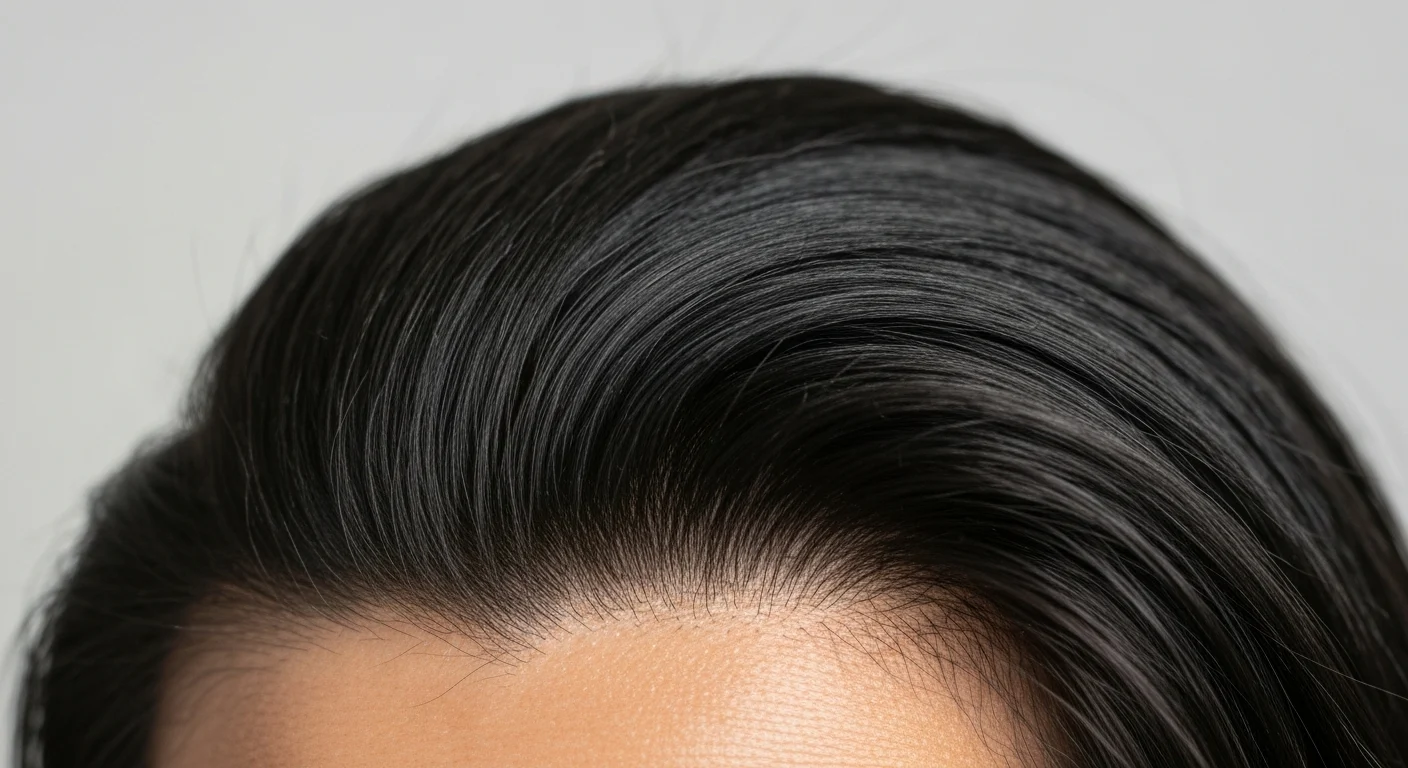
At Perfect B in Doral, we focus on the non-surgical, regenerative side of hair restoration. That means an evaluation of your scalp and stage of loss, then a plan that may combine regenerative treatments like PDRN or exosomes, how targeted peptide therapy is used to support hair growth and scalp health, and how microneedling improves the scalp environment and supports non-surgical hair treatments. We do not perform surgical FUE transplants, so if your stage of loss means a transplant is the better answer, we will tell you clearly and point you to the right surgical care rather than sell you a treatment that cannot deliver what you need.
Cost and Consultation at Perfect B in Doral
Because a non-surgical hair plan depends on your stage of loss and which treatments fit, pricing is shared at your consultation rather than as a flat number online. Your provider evaluates your scalp, explains a realistic plan, and gives you a clear picture. To keep it manageable, financing is available through Cherry, Klarna, Afterpay, and CareCredit.
Frequently Asked Questions
1. Is a FUE hair transplant permanent?
The transplanted follicles are your own permanent hair relocated from a donor area, so they generally continue to grow. However, a transplant does not stop the loss of your other, non-transplanted hair, which is why many people also use non-surgical treatment to protect the surrounding hair over time.
2. Does non-surgical hair treatment actually work?
For the right candidate, yes. Regenerative injection therapy has clinical evidence for increasing hair density in androgenetic alopecia, and it works best when there is still hair to save. It does not regrow hair from follicles that are already gone, which is where a transplant comes in.
3. Can I do both FUE and non-surgical treatment?
Yes, and many people do. Non-surgical treatment maintains and strengthens the hair around a transplant and supports overall scalp health, while the transplant rebuilds density where hair was already lost. A provider can help you sequence them if a transplant is part of your plan.
4. Which is better for a receding hairline versus diffuse thinning?
A clearly receded hairline or bald area with established loss usually favors a transplant to rebuild density. Early or diffuse thinning, where you still have hair throughout, usually favors non-surgical treatment first. Your specific pattern is assessed at a consultation.
5. Is there downtime with non-surgical hair restoration?
Very little. Non-surgical treatments are done in office and most people return to normal activities quickly, with at most brief tenderness or redness on the scalp. This is a major contrast with a surgical transplant, which involves a procedure day and a recovery period.
6. Do you perform FUE transplants at Perfect B?
No. Perfect B focuses on non-surgical, regenerative hair restoration such as PDRN, exosomes, peptide therapy, and microneedling. If your evaluation shows a surgical transplant is the better route for your stage of loss, we will tell you honestly and refer you to appropriate surgical care.
7. How much does non-surgical hair restoration cost in Doral?
Because it depends on your stage of loss and which treatments your plan includes, pricing is shared at a consultation rather than as a flat online figure. At Perfect B in Doral, your provider evaluates your scalp and gives a clear plan, with financing available through Cherry, Klarna, Afterpay, and CareCredit.
Find the Right Hair Plan in Doral
FUE and non-surgical hair restoration are not rivals, they are tools for different stages. If you still have hair to protect, non-surgical treatment is often the smart first move, and the earlier you start, the better it works. If loss is advanced, a transplant may be the answer, and we will guide you there honestly.
If you are noticing thinning, the team at Perfect B in Doral will assess your scalp, explain your options honestly, and build a non-surgical plan or point you to surgical care when that fits better.
- 📍 Visit us at Perfect B, 3905 NW 107th Ave, Suite 104, Doral FL 33178
- 📞 Call or message us at (786) 502-2260
- 💳 Financing available through Cherry, Klarna, Afterpay, and CareCredit