Perfect B, Doral Fl. | 06.01.26 | 8 min read.
This content is for educational purposes only and does not substitute for medical advice. A personalized skin assessment before beginning any treatment series is recommended.
How HydraFacial Removes Blackheads: The Mechanism Behind the Results
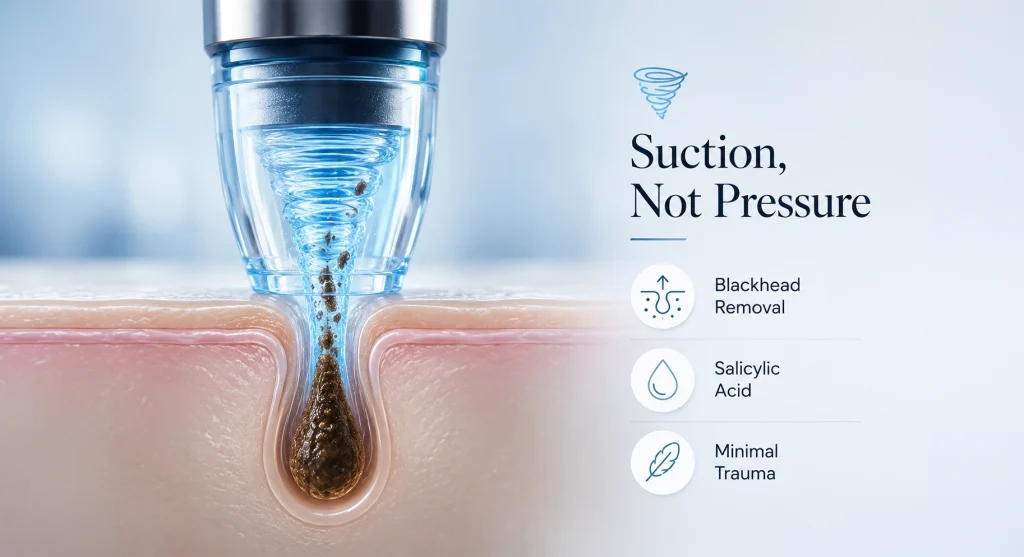
A blackhead forms when a pore becomes clogged with sebum and dead skin cells and the top of the plug oxidizes on contact with air, turning it dark. Manual extraction, the kind performed with fingers or a comedone extractor, removes the plug by applying lateral pressure around the pore. This works but consistently causes micro-trauma: redness, inflammation, and in some cases post-inflammatory hyperpigmentation that can last weeks on Fitzpatrick IV-VI skin tones. For medically guided care, see how acne treatment options are combined at Perfect B in Doral into a realistic, staged plan for clearer skin.
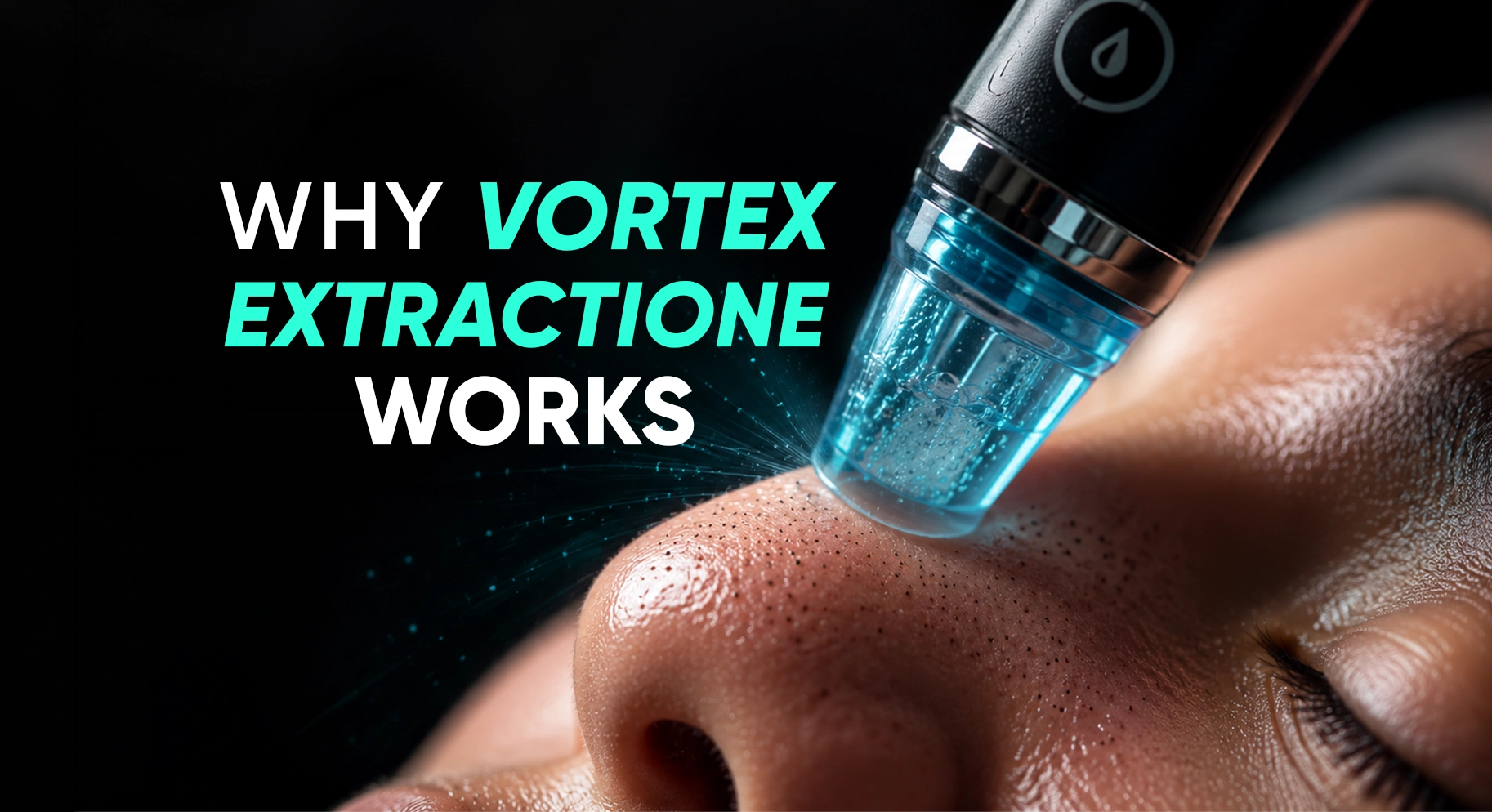
HydraFacial’s extraction step uses a different mechanism. The Vortex-Fusion tip creates a vacuum over the pore opening, drawing the plug upward through suction rather than pushing it from the sides. At the same time, a salicylic and glycolic acid blend is delivered into the pore to soften and dissolve the sebum plug before the vacuum lifts it. The result is extraction without the inflammatory pressure that manual methods create. For patients with dense, persistent blackhead congestion in the T-zone and chin, this is the most clinically relevant difference between HydraFacial and any at-home extraction method.
Key Takeaways
- HydraFacial extracts blackheads via vacuum suction, not manual pressure, which reduces inflammation and post-extraction marks, especially on darker skin tones.
- The Acne Modality at Perfect B adds targeted ingredients for active acne, cold therapy to reduce inflammation, and LED blue light to address acne-causing bacteria.
- Not appropriate for active cystic acne: inflamed, painful nodules or cysts are a contraindication. HydraFacial is indicated for comedonal acne, mild to moderate breakouts, and oily congested skin.
- Recommended frequency for acne-prone skin: every 2 to 4 weeks during a clearing series, then every 4 to 6 weeks for maintenance.
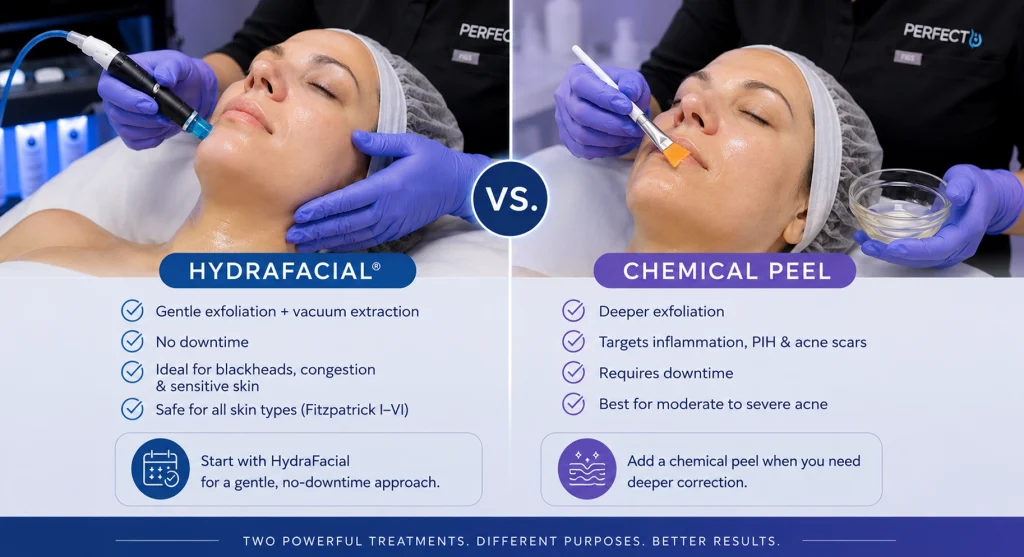
- HydraFacial vs chemical peel: HydraFacial is the better starting point for sensitive skin, darker Fitzpatrick types, and anyone new to clinical acne treatment. Chemical peels deliver deeper exfoliation and are the better option for acne scarring.
The 4-Step HydraFacial Process for Acne-Prone Skin
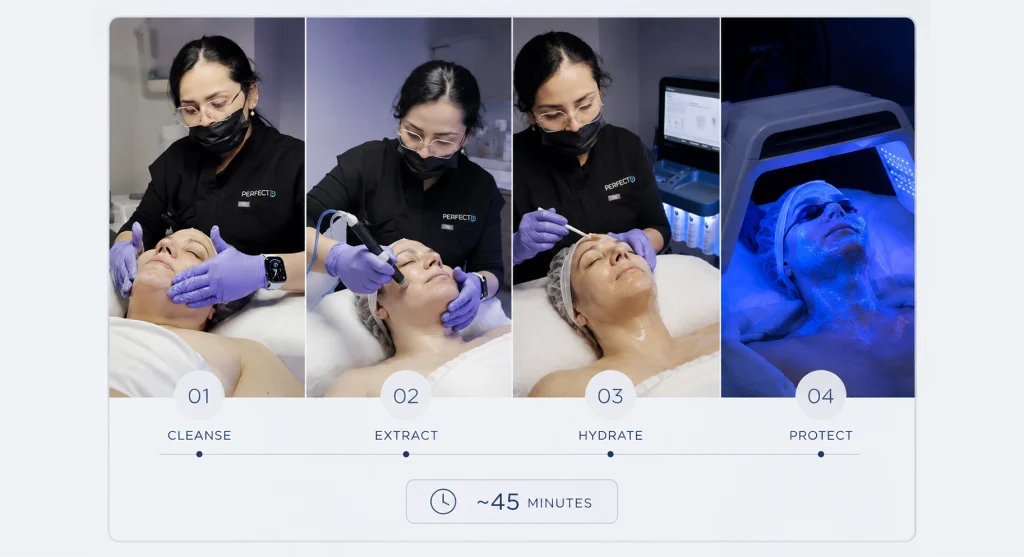
Step 1: Deep Cleanse and Dead Skin Removal
The treatment opens with a vortex-cleansing tip that removes surface oil, debris, and dead skin cells. This step prepares the pore opening before the acid peel is applied, so the exfoliating acids reach the pore lining rather than sitting on top of a layer of surface buildup. For oily and acne-prone skin, this step alone produces a visible reduction in surface congestion.
Step 2: Acid Peel , Glycolic and Salicylic
A blend of glycolic and salicylic acid is applied and left on the skin briefly before the extraction step. Glycolic acid breaks down the bonds between dead skin cells at the pore opening. Salicylic acid is oil-soluble, meaning it penetrates into the sebaceous follicle and dissolves the sebum plug from within. The concentration used in HydraFacial is calibrated to be effective without the peeling, downtime, or PIH risk of a standalone chemical peel, making it appropriate for Fitzpatrick IV-VI skin that requires a more conservative exfoliation approach. Patients who want deeper exfoliation for more significant acne scarring or resistant congestion can consider a dedicated chemical peel series alongside their HydraFacial maintenance. Our full guide on chemical peels for acne covers how we select peel depth and acid type based on skin tone, acne severity, and scarring goals at Perfect B in Doral.
Step 3: Vortex Extraction
The extraction tip creates a controlled vacuum over each pore zone. The softened sebum plug, loosened by the acid step, is drawn out through suction rather than pushed out by manual pressure. The tip moves continuously across the treatment area, covering the nose, chin, and forehead where blackhead density is highest. Patients typically see the extracted material in the device’s collection cup after the session, which provides visual confirmation of what was removed. This step takes approximately ten minutes on average and produces no open lesions, bleeding, or post-extraction marks in the vast majority of cases.
Step 4: Serum Infusion and LED (Acne Modality)
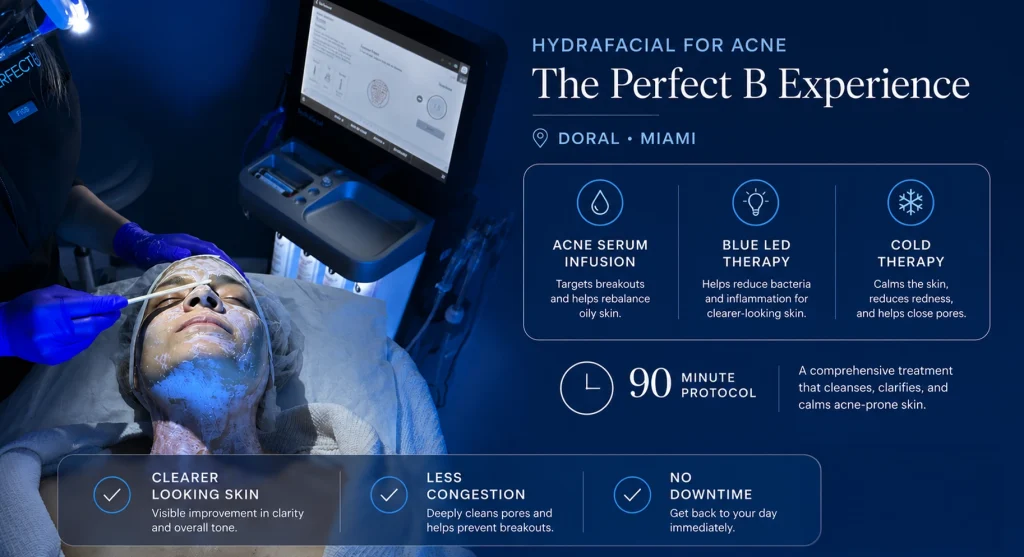
The final step infuses customized serums into the freshly cleared pores. For the Acne Modality at Perfect B, the serum selection targets active inflammation, bacteria reduction, and barrier repair. This is combined with blue LED light therapy, which has documented antibacterial activity against Cutibacterium acnes (the primary acne-causing bacterium), and cold therapy to reduce any residual redness and close pores after extraction. The combination of anti-inflammatory serum, blue LED, and cold therapy is what differentiates the Acne Modality from a standard HydraFacial and makes it specifically appropriate for active breakout skin rather than skin that just needs hydration.
HydraFacial vs Chemical Peel for Acne: When to Use Each
Both HydraFacial and chemical peels address acne through exfoliation, but through different mechanisms and with different indications. Understanding the distinction helps patients choose the right starting point and helps providers sequence treatments appropriately when both are needed.
When HydraFacial Is the Better Choice
HydraFacial is the better starting point for first-time clinical acne treatment patients, for anyone with Fitzpatrick IV-VI skin where PIH risk from deeper exfoliation is a real concern, for patients with sensitive or reactive skin that does not tolerate acid peels well, and for maintaining cleared skin between peel series. It is also the appropriate choice for oily skin with predominantly comedonal acne (blackheads and whiteheads) rather than inflammatory papules and cysts. The treatment produces no downtime and can be performed regardless of whether the patient has an event or social commitment in the same week.
When a Chemical Peel Is the Better Choice
Chemical peels deliver higher acid concentrations to deeper skin layers and are more appropriate for moderate inflammatory acne, significant skin congestion that HydraFacial alone has not cleared after a series, post-inflammatory hyperpigmentation, and textural acne scarring. At Perfect B, we often use HydraFacial and chemical peels in combination: a peel series to clear active moderate acne, followed by HydraFacial maintenance every four to six weeks to prevent recongestion. The two treatments are not competing options but complementary phases of an acne management protocol.
Who Is and Is Not a Candidate for HydraFacial Acne Treatment
Good Candidates
- Mild to moderate acne with predominantly comedonal (blackhead and whitehead) presentation
- Oily and congested skin that breaks out consistently
- Patients with Fitzpatrick IV-VI skin who want clinical acne treatment without the PIH risk of stronger peels
- Teen and young adult acne with active congestion
- Patients who have cleared active acne with other treatments and want maintenance to prevent recongestion
- Anyone seeking a no-downtime treatment that can fit into a regular schedule
Contraindications
- Active cystic or nodular acne: inflamed, painful, deep lesions are a contraindication. HydraFacial does not treat the internal infection in cysts. Treatment on active cysts risks spreading bacteria across the skin surface.
- Open sores or active skin infection in the treatment area
- Rosacea: some patients experience flare-ups after treatment due to the heat and extraction steps
- Very recent chemical peel or laser: the skin barrier needs to fully heal before HydraFacial extraction is appropriate
- Known allergy to salicylic acid or any serum ingredients used in the treatment
How Often to Get HydraFacial for Acne-Prone Skin
Frequency depends on the severity of the acne and whether the goal is active clearing or maintenance. For patients with ongoing breakouts and dense blackhead congestion, a clearing series of one treatment every two to three weeks for the first two to three months accelerates the initial clearing and establishes a clean baseline. Once the skin has cleared and stabilized, a maintenance session every four to six weeks prevents the recongestion that causes the cycle to restart.
In South Florida specifically, the combination of heat and high year-round humidity means patients produce more sebum and sweat more consistently than in drier climates. Patients in Doral and the Miami area who follow a four-to-six week maintenance schedule in cooler months may find they need to shorten that interval to three to four weeks during summer, when sebum production and sweat-driven pore congestion increase. This is a practical consideration specific to South Florida patients that most general HydraFacial guides do not address.
What the Clinical Evidence Shows
HydraFacial’s acne efficacy is not anecdotal. A 12-week clinical study published in the Journal of Clinical and Aesthetic Dermatology evaluated HydraFacial Clarifying Treatment Series in active acne vulgaris patients and found measurable improvement in acne severity across all participants, with reduced lesion counts and patient-reported improvements in skin clarity and texture. Participants ranged from 19 to 48 years of age across varied skin tones, which makes the data directly relevant to the diverse patient population at Perfect B in Doral. The study protocol used treatments every two weeks over 12 weeks, which aligns with the clearing series frequency used in our Acne Modality.
HydraFacial for Acne in Doral and Miami: What Patients at Perfect B Experience
At Perfect B in Doral, HydraFacial is delivered as the Perfect B Facial with the Acne Modality selected based on the patient’s skin assessment on the day of treatment. The session runs 90 minutes and includes the full four-step HydraFacial protocol plus the Acne Modality additions: targeted anti-acne serum infusion, blue LED light therapy, and cold therapy to close pores and reduce post-treatment redness before the patient leaves the clinic.
Most patients notice an immediate improvement in skin clarity and texture after the first session. Pores appear tighter, the skin surface looks less congested, and the characteristic rough texture of blackhead-dense skin smooths out. Consistent results for active acne require the recommended series; single sessions produce noticeable improvement but do not sustain clearing the way a regular protocol does.
Patients dealing with both active acne and existing acne scarring often benefit from pairing HydraFacial with microneedling or chemical peels in a sequenced protocol. Our breakdown of how long acne scar treatment takes at Perfect B covers realistic timelines for each scar type and how we sequence HydraFacial maintenance within a scar reduction protocol.
Frequently Asked Questions
1. Does HydraFacial remove blackheads?
Yes. The vortex extraction step creates a controlled vacuum over pore openings that draws blackhead plugs upward through suction after a salicylic and glycolic acid blend has softened them. Most patients see visibly cleaner pores immediately after treatment. Dense blackhead congestion typically clears progressively over a series of two to four treatments spaced two to three weeks apart.
2. Is HydraFacial good for acne?
HydraFacial is effective for mild to moderate acne, comedonal acne (blackheads and whiteheads), and oily congested skin. The Acne Modality adds anti-inflammatory serum, blue LED therapy, and cold therapy to address active breakouts. It is not indicated for cystic or nodular acne, which requires a clinical evaluation and typically prescription treatment.
3. How often should I get HydraFacial for acne?
Every two to three weeks during an initial clearing series of two to three months, then every four to six weeks for maintenance. In South Florida’s hot and humid climate, the maintenance interval may need to shorten to three to four weeks during summer months when sebum production is higher.
4. Can HydraFacial cause acne purging?
Some patients experience a brief purging response in the days following their first HydraFacial, as the extraction and exfoliation steps accelerate the turnover of congestion that was already forming below the surface. This typically resolves within three to five days and is not a sign that the treatment is making acne worse. Our guide to acne purging explains the difference between a purging response and a true breakout, and how to distinguish one from the other in the days after a clinical skin treatment.
5. Is HydraFacial safe for dark skin tones?
Yes, HydraFacial is one of the safest clinical acne treatments for Fitzpatrick IV-VI skin. The acid concentration is calibrated to exfoliate effectively without the PIH risk of higher-concentration standalone peels. The extraction method avoids the manual pressure that causes post-extraction marks on darker skin tones. For patients in the Doral and Miami area where Fitzpatrick IV-VI is the predominant skin type, this is one of HydraFacial’s most clinically relevant advantages.
6. How does HydraFacial compare to a chemical peel for acne?
HydraFacial is better for sensitive skin, darker skin tones, first-time clinical acne treatment patients, and comedonal acne maintenance. Chemical peels are better for moderate inflammatory acne, resistant congestion, post-inflammatory hyperpigmentation, and textural acne scarring. The two are often used in sequence: a peel series to clear active moderate acne, followed by HydraFacial maintenance to prevent recongestion.
Closing: The Right Tool for Congested, Acne-Prone Skin
Blackheads and comedonal acne are among the most treatable presentations in clinical aesthetics, and HydraFacial’s vortex extraction mechanism addresses the core problem directly without the inflammatory aftermath that makes manual extraction counterproductive for most patients. The Acne Modality at Perfect B takes that mechanism and layers on the antibacterial and anti-inflammatory additions that make it relevant for skin with active breakouts, not just congestion.
For patients in Doral and the greater Miami area dealing with persistent blackheads, oily skin, or mild to moderate acne that has not responded to at-home products, a HydraFacial Acne Modality series is typically the lowest-risk, highest-consistency entry point into clinical skin treatment. HydraFacial’s guidance on selecting the right facial for acne-prone skin provides additional context on how the Clarifying series protocol differs from a standard HydraFacial in serum selection and recommended frequency.
- 📍 Visit us at Perfect B, Doral FL, serving Miami and South Florida patients seeking HydraFacial and acne facial treatments.
- 📞 Call or message us at (786) 502-2260 to schedule your HydraFacial consultation with a licensed medical provider.