

Perfect B, Doral Fl. | 05.27.26 | 11 min read.
This content is for educational purposes only and does not constitute medical advice. PDRN injection is a medical procedure that requires evaluation and supervision by a licensed medical provider. Patients should not attempt self-injection. For the bigger picture, read how PDRN and polynucleotide regenerative therapy works at Perfect B in Doral and where it fits among our skin treatments.
Why “PDRN for Under-Eye Circles” Searches Have Exploded 800% This Year and Why Most Results Are Cosmetic Products
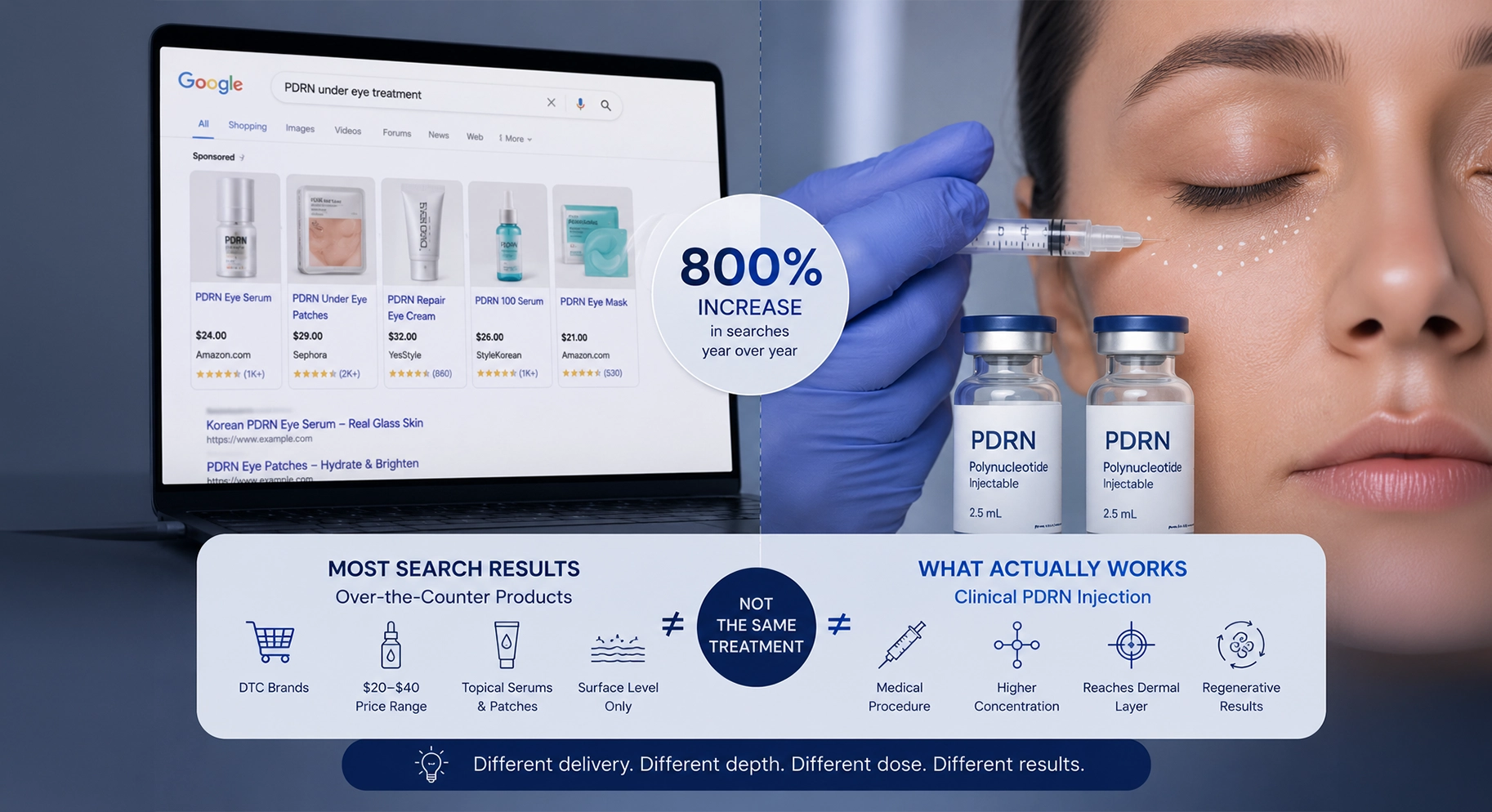
Searches for “PDRN under eye treatment” have grown by approximately 800 percent over the past 12 months, making PDRN one of the fastest-rising terms in aesthetic medicine for 2026. When patients open Google looking for clinical answers, they are shown a different reality: the first page is dominated by direct-to-consumer products, mostly Korean beauty brands selling PDRN eye serums and PDRN patches for 20 to 40 dollars. Amazon listings, Sephora pages, and Instagram product showcases occupy nearly every position. Only a handful of medical clinic articles appear, and most are based outside the United States.
This is the gap that creates confusion. The PDRN serum in a 30 ml bottle and the PDRN injected by a licensed medical provider into the periorbital area are not the same treatment, do not deliver the same dose, do not reach the same tissue depth, and do not produce the same outcome. A patient who buys a Korean PDRN eye serum and applies it for 8 weeks without seeing change is not a failure of PDRN. It is a mismatch between an over-the-counter cosmetic product and the clinical evidence the patient assumed was supporting it. This guide explains what PDRN really is, what clinical injection actually does for under-eye circles, who is a candidate, and how PDRN compares to PRP and dermal fillers in a real medical setting.
Key Takeaways on PDRN for Under-Eye Circles
- PDRN is a clinical regenerative treatment, not a topical cosmetic. Medical-grade PDRN injection delivers concentrated, purified polynucleotide chains directly to the dermis, where they activate tissue repair pathways.
- PDRN works through 3 distinct mechanisms at the cellular level: adenosine A2A receptor activation, the nucleotide salvage pathway, and stimulation of fibroblast metabolic activity that drives collagen synthesis.
- OTC PDRN serums and patches are not equivalent to clinical PDRN injection. Topical products deliver cosmetic-grade concentrations that stay on the skin surface and do not penetrate to the level where regenerative signaling occurs.
- PDRN is best suited for skin-related causes of under-eye circles: thinning, collagen loss, hyperpigmentation, and surface texture. It is less effective for pure volume loss (where fillers may be preferred) or for vascular causes (where lasers may be considered).
- A typical clinical PDRN under-eye protocol uses 3 to 6 sessions spaced 2 to 4 weeks apart, with results visible at 4 to 6 weeks and full evaluation at 12 weeks.
- Contraindications include fish allergy, pregnancy, breastfeeding, active infections at the injection site, and certain autoimmune conditions. All candidates are screened at the initial consultation.
What Causes Under-Eye Circles and Why Most Treatments Fail
Under-eye circles are not a single condition. The shadow or discoloration under the eyes can come from at least five different biological causes, and the right treatment depends on identifying which one is dominant in each patient. The skin in the periorbital area is the thinnest on the face, often measuring less than 0.5 millimeters, which makes vascular structures, pigment changes, and volume loss particularly visible compared to other facial regions.
- Skin thinning and collagen loss: as we age, dermal collagen and elastin decrease, the skin becomes more transparent, and underlying blood vessels become more visible. Regenerative treatments like PDRN target this cause directly.
- Hyperpigmentation: excess melanin in the periorbital skin, often genetic and more common in Fitzpatrick III to V skin types, creates a darkened appearance regardless of fatigue or volume status. Brightening protocols, PDRN, and certain lasers can help.
- Vascular visibility: the blue or purple tint under the eyes is sometimes due to congested vessels and poor microcirculation. Vascular lasers and certain peptide treatments target this cause.
- Tear trough volume loss: starting in the late twenties for some patients, the tear trough area loses subcutaneous fat and ligament support, creating a hollow that casts shadows. Dermal fillers are usually the first-line treatment for true volume loss.
- Allergic and lifestyle factors: chronic allergies, sleep deprivation, dehydration, and chronic eye rubbing can darken the periorbital area independently of skin biology. Treating the underlying trigger usually improves these cases.
The failure of most treatments comes from treating every patient with the same protocol. A patient whose dark circles are 80 percent hyperpigmentation and 20 percent skin thinning will respond very differently to PDRN compared to a patient whose dark circles are 90 percent tear trough volume loss. The first step of any serious under-eye protocol is a clinical evaluation that identifies which causes are dominant. A peer-reviewed clinical review in the Journal of Cutaneous and Aesthetic Surgery on the pathogenesis, evaluation, and treatment of infraorbital dark circles confirms that successful management requires identifying the underlying cause before selecting the modality.
What PDRN Actually Is: Salmon DNA, 50-1,500 KDa Polynucleotides, and Why Purity Matters
PDRN stands for polydeoxyribonucleotide. It is a long-chain DNA fragment isolated from the sperm cells of salmon trout (Oncorhynchus mykiss) or chum salmon (Oncorhynchus keta), processed through controlled purification and sterilization. The result is a mixture of deoxyribonucleotide chains with molecular weights ranging from 50 to 1,500 kilodaltons. The procedure is specifically designed to remove proteins, peptides, and other biological material that could trigger immune reactions, leaving only the purified DNA fragments. This is why properly manufactured medical-grade PDRN has an extremely low allergy and reaction profile in patients without specific fish or seafood allergies.
The reason salmon DNA is used has nothing to do with marketing. Salmon DNA has a high degree of homology with human DNA, meaning the base pair sequences are similar enough that human cells recognize and use the polynucleotide fragments as raw material rather than as foreign material. The DNA fragments are not transcribed into salmon protein or anything else species-specific. They are broken down into nucleotides and nucleosides that the patient cells reuse for their own DNA repair, RNA synthesis, and tissue maintenance.
Purity is what separates medical-grade PDRN from cosmetic-grade PDRN. Pharmaceutical-grade PDRN used in clinical injection has standardized concentration, sterility, and quality control. The Korean and European products used in aesthetic medicine (such as Rejuran I for the periorbital area, or Crystal Hydro PDRN for tear trough) are formulated specifically for sterile injection. Cosmetic PDRN serums are formulated for topical application at much lower concentrations and use additives that would not be acceptable for injection.
OTC PDRN Products vs Clinical PDRN Injection: Why They Are Not the Same Treatment
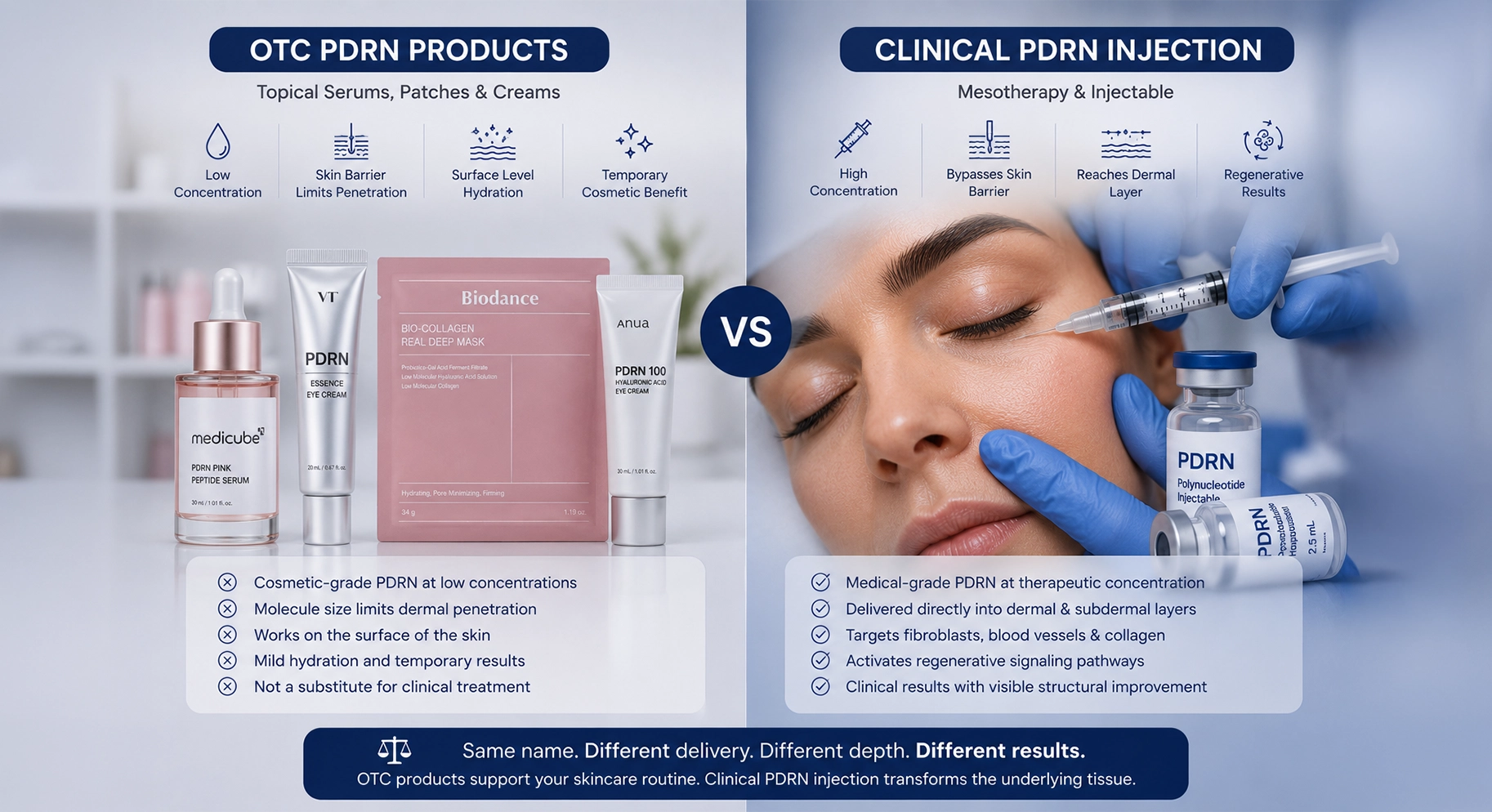
The single most important distinction in any conversation about PDRN is the difference between an over-the-counter product and a clinical injection. They share a name. They share the marketing language of regenerative medicine. They do not share the same biological effect.
- OTC PDRN serums and patches (Medicube, VT, Biodance, and similar brands): these products contain cosmetic-grade PDRN at low concentrations, formulated for topical use. The PDRN molecule is large and the periorbital skin barrier, while thin, still limits how much polynucleotide can penetrate to the dermal layer where fibroblasts live. The result is mild hydration, surface improvement, and short-term cosmetic benefit, but not the regenerative signaling that clinical injection produces.
- OTC PDRN under-eye cream: creams have similar limitations to serums for the same reason. They are formulated for daily use and are valid as part of a maintenance skincare routine, but they are not a substitute for clinical treatment if the goal is structural improvement of the under-eye area.
- Clinical PDRN mesotherapy and injection: the medical-grade PDRN is injected with very fine needles directly into the dermal and subdermal layers of the periorbital area, bypassing the skin barrier entirely. This delivers high concentration of intact polynucleotide chains exactly where the fibroblasts, blood vessels, and structural collagen reside. This is the level at which the mechanisms described in clinical research actually occur.
The dominance of OTC PDRN products in search results reflects the strength of Korean beauty marketing, not the clinical equivalence of the treatments. A 28 dollar eye cream is not delivering the same biological signal as a clinical mesotherapy session, regardless of the brand or the ingredient list. This does not mean OTC PDRN products are useless. It means they belong in a different category of care. → Review the full Dark Circles Treatment Plan at Perfect B to see how PDRN, PRP, dermal fillers, and lasers are evaluated and combined into a personalized under-eye protocol.
The 3 Mechanisms PDRN Uses on Under-Eye Skin: A2A Receptor, Salvage Pathway, Fibroblast Activity
PDRN does not have a single mechanism. It has at least three documented modes of action that work in parallel at the cellular level. Understanding what each one does explains why PDRN produces the type of results it does, and why no single dose or single session captures the full effect.
- Adenosine A2A receptor activation: this is the most studied mechanism. PDRN engages the A2A adenosine receptor on cells, which triggers a cascade that includes anti-inflammatory signaling, increased local microcirculation through angiogenesis, modulation of the apoptotic process, and stimulation of tissue repair. For under-eye skin, this means reduced chronic low-grade inflammation in the periorbital area, improved blood flow that reduces vascular visibility, and active support for tissue regeneration.
- The nucleotide salvage pathway: after the PDRN molecule is broken down by cellular enzymes, the released nucleotides and nucleosides become raw material that surrounding cells reuse for their own DNA repair and RNA synthesis. The patient cells essentially recycle the salmon-derived nucleotides as building blocks for their own biological work, which supports the regenerative effect over time without introducing any foreign protein.
- Stimulation of fibroblast metabolic activity: fibroblasts are the cells responsible for producing collagen, elastin, glycosaminoglycans, and other structural proteins in the dermis. PDRN increases the metabolic activity of these cells, leading to increased synthesis of collagen and other dermal components. Over the course of a treatment series, this is what produces the measurable improvement in skin elasticity and thickness in the periorbital area.
The combination of these three mechanisms produces a profile that no single growth factor or filler material can replicate. A peer-reviewed pharmacological review of PDRN clinical activity in PMC describes the engagement of adenosine A2A receptors as the most relevant mechanism of action and confirms the role of the salvage pathway in delivering nucleosides and nucleotides to surrounding tissues. This is also why PDRN is considered a true regenerative treatment in aesthetic medicine, rather than a filler or volumizer.
Who Is a Candidate (Fish Allergy, Pregnancy, Autoimmune): Patient Selection Criteria
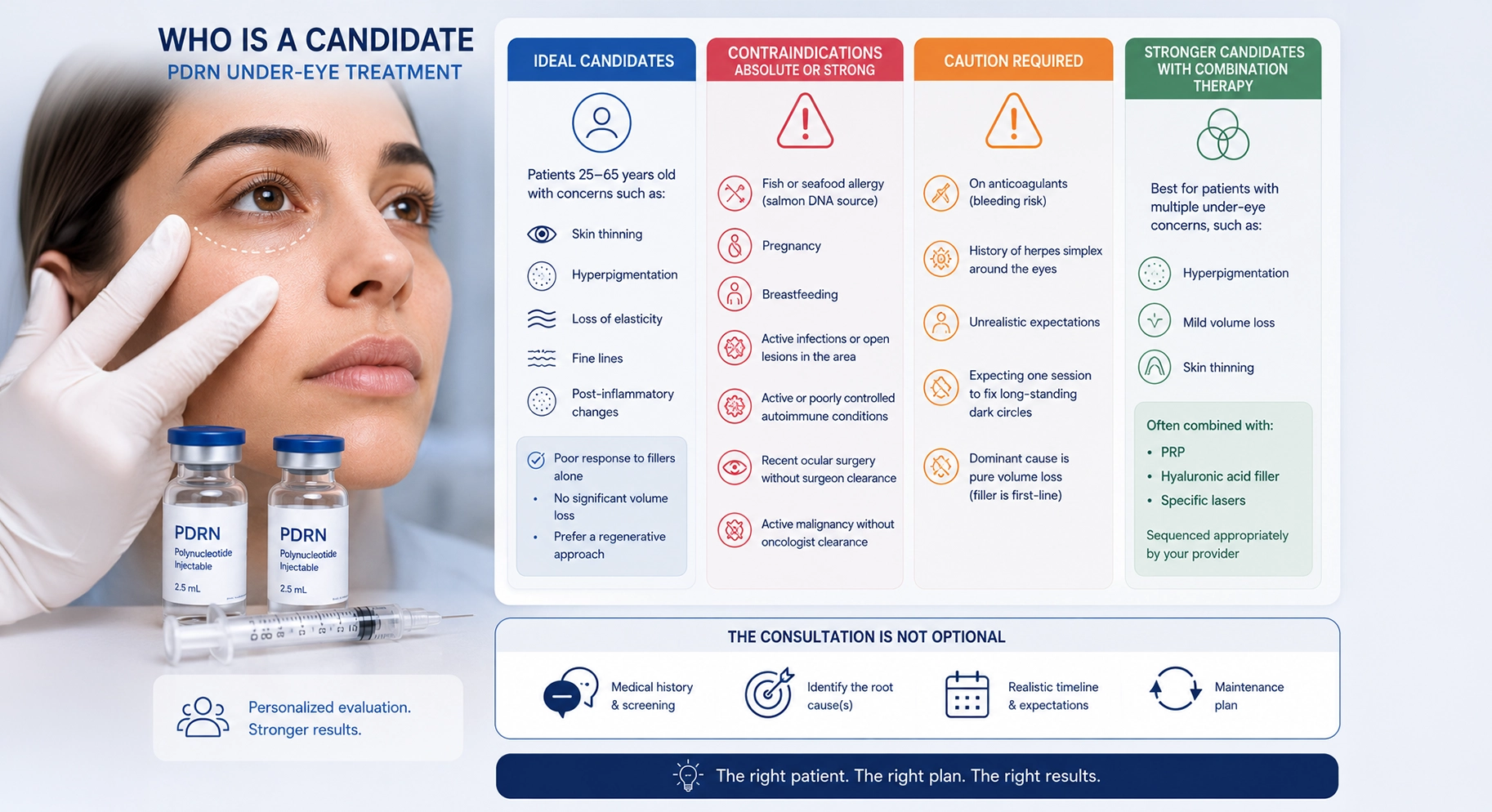
PDRN under-eye treatment is not appropriate for every patient. Candidate selection happens at the initial consultation through clinical evaluation, medical history review, and informed discussion of expectations. The following profile maps the typical candidates and contraindications encountered in aesthetic medical practice.
- Ideal candidates: patients between approximately 25 and 65 years old with under-eye concerns related to skin thinning, hyperpigmentation, loss of elasticity, fine lines, or post-inflammatory changes. Patients who responded poorly to fillers alone, who do not yet have significant volume loss, or who want a regenerative approach rather than a volumizing one are often well suited for PDRN.
- Contraindications, absolute or strong: known fish or seafood allergy (because of the salmon DNA source), pregnancy, breastfeeding, active infections or open lesions in the periorbital area, active or poorly controlled autoimmune conditions, recent ocular surgery without surgeon clearance, and active malignancy without oncologist clearance.
- Caution required: patients on anticoagulants (bleeding risk at injection sites), patients with a history of herpes simplex around the eyes (treatment may activate a flare), patients with unrealistic expectations or those expecting a single session to fully resolve long-standing dark circles, and patients whose dominant cause is pure tear trough volume loss (where filler is the more appropriate first-line treatment).
- Stronger candidates with combination therapy: patients whose under-eye concerns include multiple causes (for example, hyperpigmentation plus mild volume loss plus skin thinning) often benefit from a combined protocol that pairs PDRN with PRP, hyaluronic acid filler, or specific lasers, sequenced appropriately by the treating provider.
The screening conversation should include a discussion of expected results, the realistic timeline, and the role of maintenance. Patients who arrive expecting one session to fully resolve a problem that has been developing for 15 years are not setting themselves up for a satisfactory outcome regardless of the modality chosen. This is why the consultation step is not optional.
The Clinical Protocol: Number of Sessions, Spacing, Timeline, and Expected Results
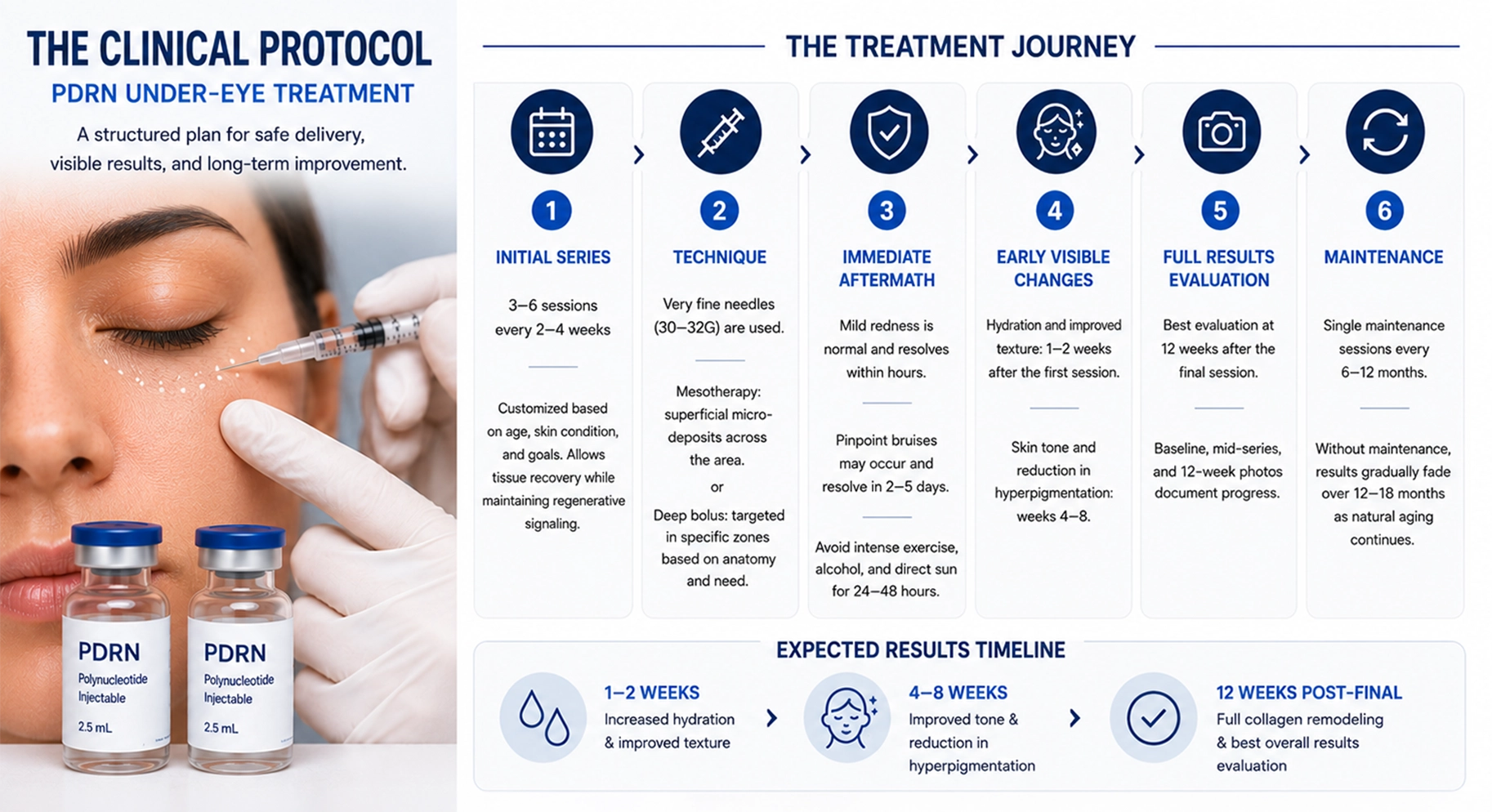
A typical PDRN under-eye protocol is delivered as a series rather than a single session. The exact plan depends on the patient starting condition, age, and goals, but most clinical protocols follow a similar structure:
- Initial series: 3 to 6 sessions spaced 2 to 4 weeks apart. The spacing is designed to allow tissue recovery between sessions while maintaining the regenerative signal at the cellular level. Shorter spacing is sometimes used for patients with significant skin thinning, while longer spacing is used for patients with sensitive skin or slower healing profiles.
- Technique: the PDRN is injected with very fine needles (typically 30 to 32 gauge) using either a mesotherapy pattern of small superficial deposits across the periorbital area, or a deeper bolus technique in specific zones, depending on the patient anatomy and the modality being used.
- Immediate aftermath: minor redness at injection sites is expected and usually resolves within hours. Small pinpoint bruises are possible and typically resolve in 2 to 5 days. Patients are advised to avoid intense exercise, alcohol, and direct sun for 24 to 48 hours after each session.
- Early visible changes: hydration and a subtle improvement in surface texture are often noticed within 1 to 2 weeks of the first session. Skin tone changes (reduction in hyperpigmentation) generally become visible between weeks 4 and 8.
- Full results evaluation: the most accurate assessment of the complete protocol occurs at 12 weeks after the final session, when collagen remodeling has had time to mature. Photographs taken at baseline, mid-series, and 12 weeks post-final provide objective documentation of change.
- Maintenance: single maintenance sessions every 6 to 12 months are typical for sustained results. Without maintenance, results gradually fade over 12 to 18 months as natural aging continues.
Patients who want to understand how PDRN fits into a broader under-eye treatment plan, including combinations with PRP, dermal fillers, or specific lasers, should review the personalized clinical approach. → Review the full Dark Circles Treatment Plan at Perfect B and see every modality, expected timeline, and what is included in the personalized protocol.
PDRN vs PRP vs Dermal Fillers for Under-Eye: What a Medical Clinic Actually Chooses
The three most common injectable modalities for under-eye improvement (PDRN, PRP, and dermal fillers) are often discussed as if they were interchangeable. They are not. Each one targets a different aspect of under-eye aging, and a clinical evaluation determines which one, or which combination, fits the patient.
- PDRN (polydeoxyribonucleotide injection): regenerative treatment that targets skin quality at the cellular level. Best for hyperpigmentation, skin thinning, fine lines, and loss of elasticity. Standardized concentration across patients. Delivered as a series of 3 to 6 sessions. Does not restore lost volume.
- PRP (platelet-rich plasma): autologous treatment derived from the patient own blood, delivering concentrated growth factors that signal tissue repair. Best for patients who prefer an autologous approach or who want to combine multiple growth factors in a single dose. Variable concentration based on the patient blood biology. Delivered typically in 3 sessions spaced 4 weeks apart. Does not restore lost volume.
- Dermal fillers (hyaluronic acid in the tear trough): the gold standard treatment for true volume loss in the tear trough area. Best for patients whose dark circles are caused primarily by under-eye hollowness rather than skin quality issues. Results are visible immediately and last 9 to 18 months. Carries risks specific to the periorbital area including filler migration over time, Tyndall effect if placed too superficially, and rare vascular complications.
What a medical clinic actually chooses depends on the patient. Many patients benefit from combined protocols. A patient with both volume loss and hyperpigmentation may receive filler in the tear trough plus a series of PDRN sessions for skin quality. A patient who responded poorly to PRP elsewhere may benefit from switching to PDRN. A patient with only skin thinning and no volume loss may receive PDRN alone. The personalization is the value of seeing a licensed provider, not selecting a modality based on social media trends. Patients interested in comparing PDRN and PRP in more depth can review the complete PDRN vs PRP clinical comparison at Perfect B covering mechanism, source, sessions, and when each one is preferred.
Frequently Asked Questions
1. What is PDRN for under-eye circles?
PDRN (polydeoxyribonucleotide) for under-eye circles is a clinical regenerative treatment in which purified salmon DNA fragments are injected into the periorbital area to stimulate fibroblast activity, collagen synthesis, and tissue repair. The goal is to improve under-eye skin quality, reduce hyperpigmentation, and increase elasticity over a series of supervised sessions. PDRN injection is fundamentally different from PDRN serums or patches sold over the counter, which deliver lower concentrations and do not reach the dermis.
2. Does PDRN actually work for dark circles?
Clinical evidence supports PDRN for under-eye improvement, particularly for hyperpigmentation, fine lines, and skin thinning. A randomized controlled trial published in the Journal of Dermatological Treatment showed polynucleotide fillers outperformed hyaluronic acid fillers in skin elasticity and collagen synthesis around the eyes. Results depend on the specific cause of dark circles. PDRN works best for skin-related causes (thinning, collagen loss, hyperpigmentation) and is less effective for vascular causes or pure volume loss, where dermal fillers may be preferred.
3. How long does PDRN under-eye treatment last?
Results from a complete PDRN protocol typically last between 6 and 12 months, depending on age, skin condition, lifestyle, and whether maintenance sessions are performed. Most patients begin to see early changes between weeks 4 and 6 after the first session, with full results evaluated at 12 weeks. Maintenance sessions every 6 to 12 months help preserve outcomes.
4. Is PDRN under-eye safe?
PDRN is generally well tolerated when administered by a licensed medical provider in a clinical setting. The medical-grade PDRN used in aesthetic medicine is highly purified and has a very low risk of allergic reaction because proteins and peptides are removed during processing. Side effects are typically mild and self-limiting, including localized redness, minor swelling, or pinpoint bruising at injection sites. PDRN is contraindicated in patients with fish or seafood allergies, during pregnancy, while breastfeeding, in patients with active infections in the treatment area, and in those with certain autoimmune conditions.
5. How is PDRN different from PRP under the eyes?
PDRN and PRP are both regenerative treatments but use different mechanisms. PRP (platelet-rich plasma) is derived from the patient own blood and delivers concentrated growth factors that signal repair. PDRN is sourced from purified salmon DNA fragments and works through adenosine A2A receptor activation, the nucleotide salvage pathway, and fibroblast metabolic stimulation. PDRN is reproducible in concentration across patients, while PRP varies with the patient blood biology. They can be combined in some protocols for complementary effects.
6. How many PDRN under-eye sessions are needed?
Most clinical protocols use 3 to 6 sessions spaced 2 to 4 weeks apart. The exact number depends on the patient starting skin condition, age, and goals. Maintenance sessions are typically scheduled every 6 to 12 months after the initial series. A precise plan is built at the initial consultation based on a full evaluation of under-eye anatomy, skin quality, and the cause of dark circles. Call us at (786) 502-2260 to schedule an evaluation.
7. Can I combine PDRN with dermal fillers under the eyes?
Yes. PDRN and dermal fillers can be combined in a sequenced treatment plan, but the timing matters. Most protocols space PDRN sessions and dermal filler injections at least 2 weeks apart to allow tissue recovery between procedures. The combination is sometimes useful when the patient has both volume loss (addressed with fillers) and skin quality issues like hyperpigmentation or collagen loss (addressed with PDRN). A licensed medical provider designs the sequence based on the patient anatomy and goals.
The Clinic Takeaway: Why PDRN for Under-Eye Belongs in a Supervised Protocol
PDRN for under-eye circles is a legitimate and increasingly important tool in regenerative aesthetic medicine. The clinical evidence is real. The mechanisms are documented at the cellular and molecular level. The outcomes, when delivered properly, are meaningful for the right patient. What the search engine shows is not the same thing as what the science supports, and treating a Korean beauty serum and a clinical mesotherapy session as equivalent leads to disappointment with both.
The right approach to under-eye concerns is not to pick a modality first. It is to identify the underlying cause first, then choose the modality that fits that cause, whether that is PDRN, PRP, dermal filler, laser, or a combination. The clinical evaluation is what makes the difference between a protocol that works and a routine that wastes 6 to 12 months. At our clinic, PDRN is one of several regenerative options available within a broader Dark Circles Treatment Plan that includes PRP, hyaluronic acid fillers, and lasers, evaluated and combined per patient.
- 📍 Visit us at Perfect B, Doral FL, serving Miami and South Florida patients seeking PDRN and regenerative skin treatments.
- 📞 Call or message us at (786) 502-2260 to schedule your PDRN under-eye consultation with a licensed medical provider.