
Perfect B, Doral FL. | 05.15.26 | 11 min read.
This content is for educational purposes only and does not constitute medical advice. Consult a qualified medical provider before beginning any acne scar treatment. Results vary by patient, scar type, skin tone, and protocol adherence.
What RF Microneedling Before and After Actually Looks Like for Acne Scars
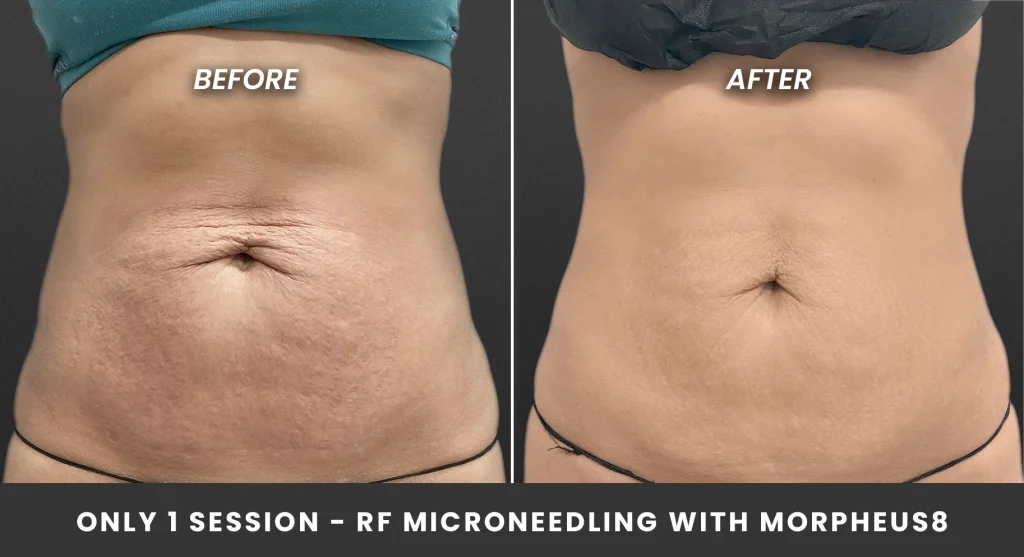
The most consistent change at the 3-month mark is not just smoother texture. It is thicker skin. When you run your fingers over a treated cheek, that thin, crinkly feel from atrophic scarring is replaced by density and bounce. That is the radiofrequency doing what standard microneedling cannot: delivering heat deep into the dermis to contract existing collagen and trigger long-term remodeling.
At Perfect B in Doral, RF microneedling with Morpheus8 is the primary device for atrophic acne scar treatment in patients who have tried standard microneedling elsewhere and came back frustrated. This article explains what Morpheus8 actually does at the tissue level, which scar types respond, how the protocol changes for South Florida patients with Fitzpatrick IV and V skin, and what the before and after timeline looks like for real patients at our clinic.
Key Takeaways
- RF microneedling delivers thermal energy at 2-4mm depth, which is where most atrophic scar bands are tethered. Standard microneedling reaches 0.5-1.5mm and lacks the thermal component entirely.
- Rolling scars and shallow boxcars respond best to Morpheus8 alone. Deep boxcars need RF microneedling plus subcision. Ice pick scars need a different primary approach before RF.
- The 3-month mark is when results become visible from the outside. Collagen remodeling is a slow biological process, not an instant reaction.
- In South Florida patients with Fitzpatrick IV-V skin, the protocol requires tyrosinase inhibitor pretreatment, lower energy settings, deeper cooling, and no overstacking of passes. Post-inflammatory hyperpigmentation is a real risk that demands clinical caution.
- Between sessions (days 5-10), scars can look temporarily worse as microswelling resolves unevenly. This is part of the healing cascade, not a setback.
Why RF Microneedling Produces Different Results Than Standard Microneedling
Most patients who come to Perfect B for Morpheus8 have already tried standard microneedling (SkinPen or similar) at another clinic and did not get the results they expected. The frustration is understandable, and the explanation is mechanical.
Standard microneedling creates controlled micro-injuries that trigger the wound healing cascade at the surface level. The needle depth typically ranges from 0.5 to 1.5mm. This is enough to drive product absorption and stimulate superficial skin renewal, but for atrophic acne scars, the scar bands sit deeper, at the dermal-subcutaneous junction, between 2 and 4mm depending on the scar type. Standard needling barely nudges that layer.
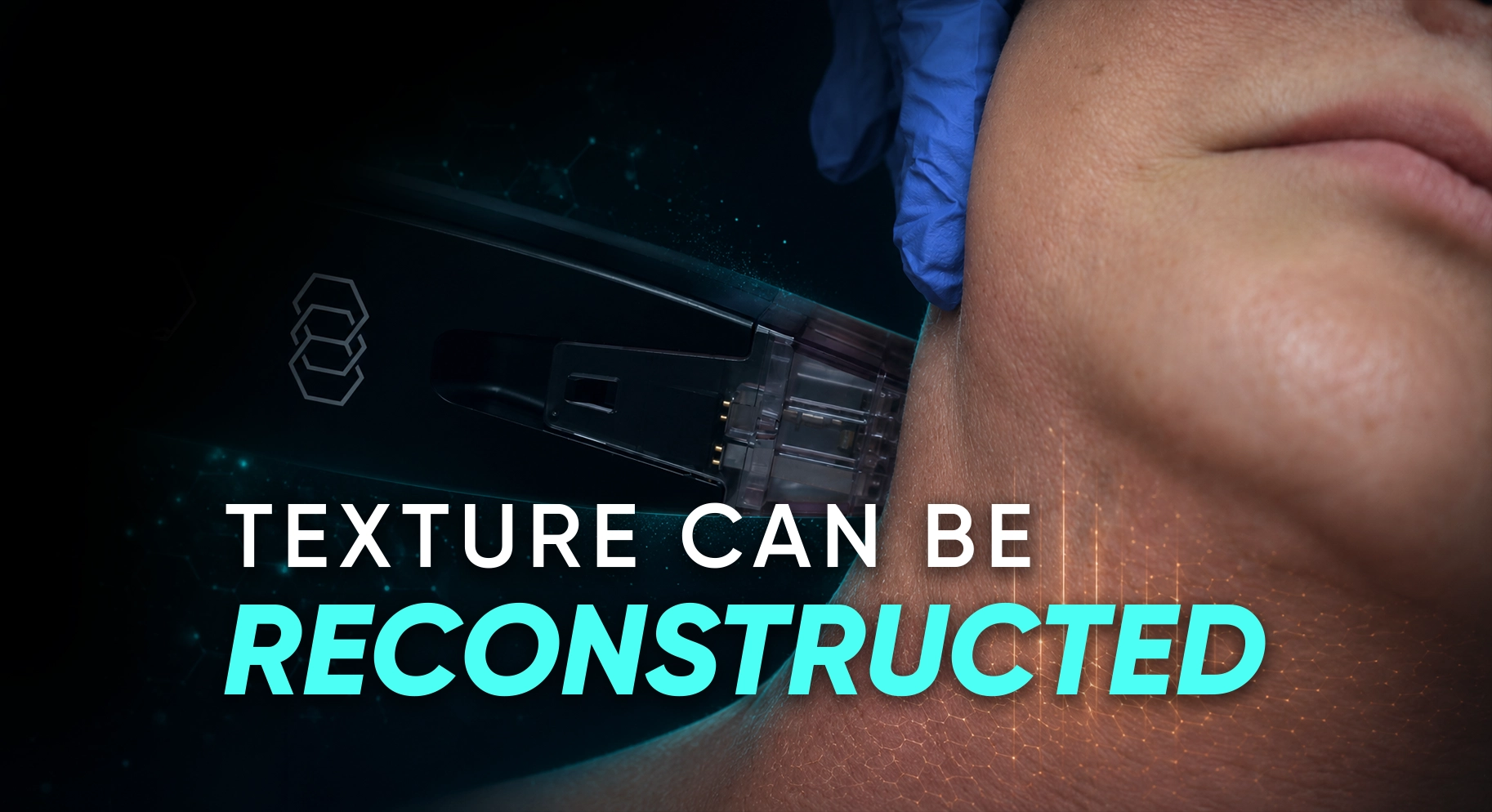
RF microneedling with Morpheus8 adds a critical component: thermal energy delivered precisely at depth. The insulated needles reach 2 to 4mm, and at that layer, they release radiofrequency energy that heats the tissue to around 60-65°C. At that temperature, collagen strands denature and contract. The body then replaces them with fresh, organized collagen fibers. That remodeling process takes 8-12 weeks to complete, which is why the most dramatic before and after changes appear at the 3-month mark, not the day after treatment. → See how Perfect B builds acne scar treatment plans in Doral that combine RF microneedling with targeted adjunct procedures based on scar type.
What Morpheus8 Feels Like in Session: Reading the Tissue Response
For patients preparing for their first Morpheus8 session, knowing what to expect in the room reduces anxiety and helps them communicate accurately with their provider.
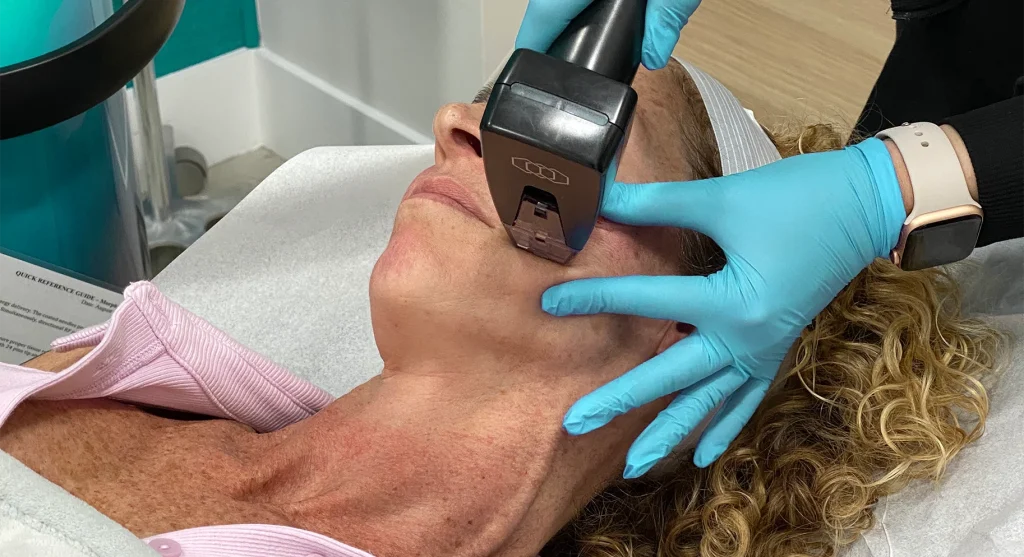
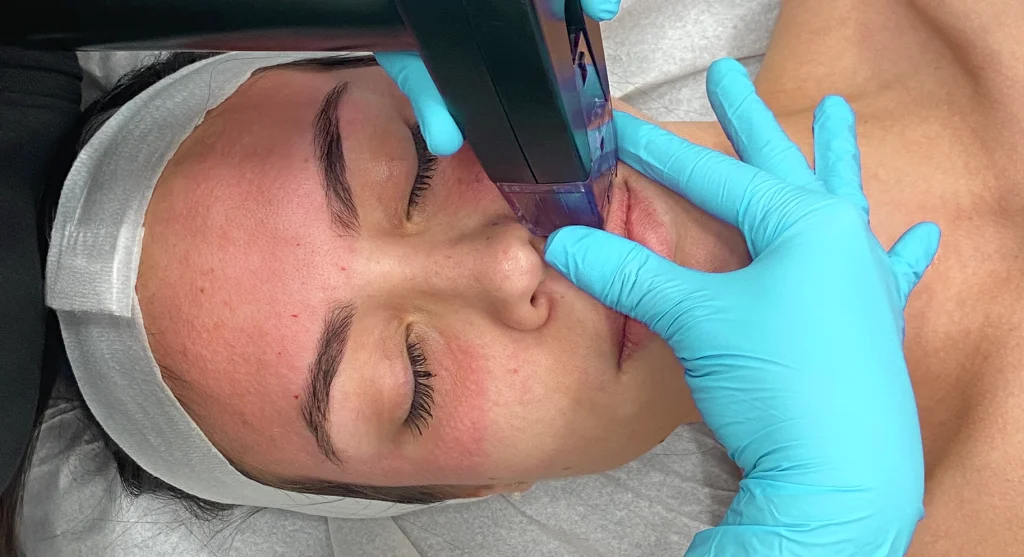
The session starts with topical anesthetic applied for 30-45 minutes before treatment. Once numb, the handpiece is passed over the treatment area in a systematic grid pattern. The sensation is pressure and heat rather than sharp pain, similar to a rubber band snap combined with warmth.
An experienced provider reads real-time tissue feedback during the session. The two primary signals that indicate the tissue is responding at the correct depth: first, a subtle “grip” on the handpiece as the needles retract, which indicates the RF is creating tissue resistance (contraction) rather than just passing through. Second, slight blanching of the skin surface before erythema kicks in. This brief blanching reflects real-time dermal contraction at the target layer. When both signals are present, the provider has confirmed that remodeling is happening at the right tissue level.
Sessions typically last 30-60 minutes depending on the treatment area. Most patients need 3-4 sessions spaced 4-6 weeks apart for atrophic acne scars. The total protocol is 3-5 months from first session to final result assessment.
Which Acne Scar Types Respond to RF Microneedling Alone, and Which Need More
Not every scar type responds equally to RF microneedling alone. One of the most important things a provider does before a patient’s first session is classify the scars correctly, because the treatment plan depends on it.
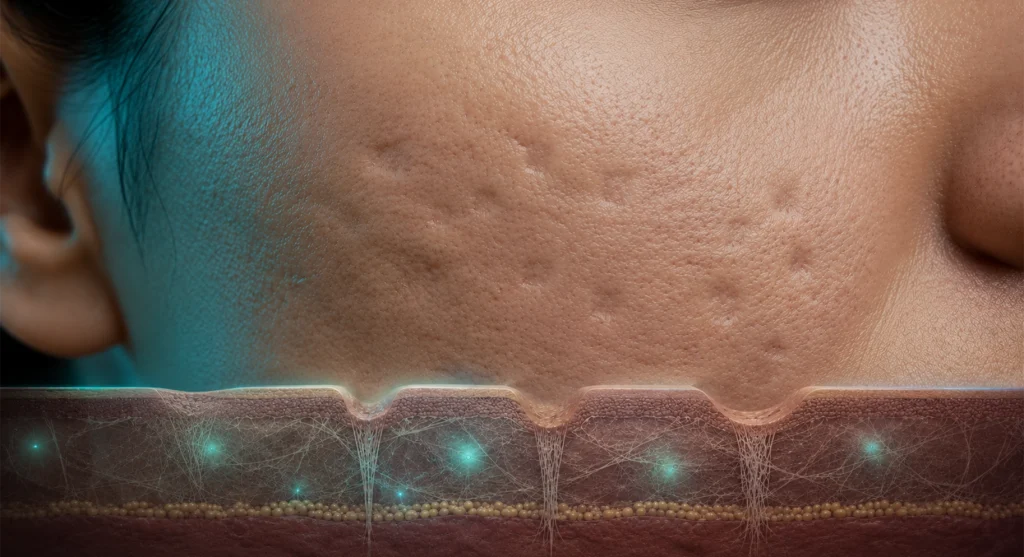
Rolling scars: These are the best candidates for Morpheus8 alone. They are tethered at the dermal-subcutaneous junction, exactly where the RF energy reaches when delivered at 3-4mm depth. The heat breaks the tethering fibers while simultaneously stimulating collagen replacement. Rolling scars show consistent, significant improvement over a 3-4 session series.
Shallow boxcar scars: These also respond well to RF microneedling alone when the depth is less than 0.5mm. The sharp edges soften and the floor elevates as collagen fills in from below. Response is good but slightly slower than rolling scars.
Deep boxcar scars: These need subcision before RF microneedling. The scar band is too deep and too rigid for RF alone to release effectively. Subcision mechanically cuts the tethering band, and then RF microneedling remodels the cavity and prevents re-adhesion as new collagen forms. This combined approach produces significantly better outcomes than either technique alone.
Ice pick scars: These are narrow, deep tracks that extend to the lower dermis or subcutaneous layer. RF microneedling alone does not fully address them because the energy cannot penetrate the narrow channel with the same effectiveness as broader scar types. Ice pick scars are the most structurally challenging acne scar type and typically require a multi-step clinical approach determined at consultation based on depth and severity.
Thick, band-like scars: Subcision is always required before RF microneedling. Attempting RF without subcision on rigid band scars means treating a surface that is still tethered, and results are minimal.
What Patients Are Not Prepared For Between Sessions
The most common source of patient anxiety between sessions is not pain or downtime. It is that scars can look temporarily worse around days 5 to 10, slightly puffy and more visible as the microswelling resolves unevenly.
Here is why this happens: the RF energy creates micro-coagulation zones in the dermis. As the acute inflammatory phase resolves, the tissue fills with new cells and temporary fluid before the remodeling cascade organizes into structured collagen. During this window, the skin surface can look uneven. Existing scar edges sometimes look slightly sharper before they soften. Patients who do not know to expect this interpret it as treatment failure and become discouraged.
At Perfect B, we explain this at the consultation so patients arrive informed. The window of temporary appearance changes is 5-14 days. By day 14-21, the microswelling has resolved and the surface normalizes. By weeks 6-8 before the next session, early improvements in texture become visible. The compound effect of each session builds through the 3-month mark, when the final collagen remodeling result is assessable.
The other thing patients underestimate is sun protection in the weeks after treatment. The dermis is actively remodeling. UV exposure during this period can disrupt collagen organization and, in darker skin patients, trigger hyperpigmentation. Patients at our Doral clinic are told: SPF 50, reapplied every 2 hours outdoors, non-negotiable during the treatment series. → See how Perfect B’s Skin Rejuvenation Treatment Plan in Doral pairs RF microneedling with targeted skincare to protect and maximize results during the remodeling phase.
RF Microneedling for Fitzpatrick IV and V Skin: How Perfect B Adjusts the Protocol
South Florida has one of the most diverse patient populations in the country for skin tone. Fitzpatrick IV and V skin is common at Perfect B, and it changes the Morpheus8 protocol in every meaningful way.
The core risk with darker skin types is post-inflammatory hyperpigmentation (PIH). Melanocytes in Fitzpatrick IV and V skin are more reactive to thermal and inflammatory stimuli. RF microneedling involves both. Without protocol adjustments, even a technically correct session can trigger PIH that takes months to resolve and erases the aesthetic gain from scar improvement.
At Perfect B, the Fitzpatrick IV-V protocol differs in four key ways:
- Tyrosinase inhibitor pretreatment for at least two weeks before the first session. This can be a topical hydroquinone, kojic acid, or tranexamic acid formulation. The goal is to suppress melanocyte reactivity before any thermal stimulus is introduced. We do not skip this step even if the patient is in a time constraint.
- Lower energy settings. The RF energy output is reduced compared to what we would use for lighter skin types. We accept a slightly slower remodeling response in exchange for a dramatically lower PIH risk. An extra session is worth more than a PIH outcome that takes six months to clear.
- Deeper cooling protocol. Active cooling of the surface during and after treatment reduces the thermal gradient at the epidermal level, which is where PIH originates. Our handpiece settings and post-treatment cooling are both adjusted.
- No overstacking of passes. A single, well-controlled pass at the correct depth and energy is safer than multiple overlapping passes chasing a more aggressive outcome. If the result from session one is not as dramatic as it would be on lighter skin, the next session compounds the effect without the risk. Safety over speed, every time.
Patients with Fitzpatrick IV-V skin who have been told elsewhere that RF microneedling is not appropriate for them, or who have experienced PIH from past treatments, often find that the adjusted protocol at Perfect B produces the results they were looking for without the complications they feared. The key is clinical experience with darker skin types, which is a core competency at our Doral clinic given the population we serve. A clinical review in the Journal of Drugs in Dermatology confirming that fractional RF microneedling with modified energy parameters produces effective acne scar improvement in Fitzpatrick III-VI patients with an acceptable safety profile when PIH prevention protocols are followed.
The RF Microneedling Before and After Timeline at Perfect B
Knowing what to expect at each phase of the treatment series helps patients stay on protocol and interpret their results accurately.
Days 1-4 after session: Redness and swelling, similar to a mild sunburn. Pinpoint bleeding from needle entry points resolves in 24-48 hours. Skin feels warm and tight. This is the acute inflammatory phase.
Days 5-14: The period when temporary appearance changes are most likely, particularly for rolling and boxcar scars. Microswelling resolves unevenly. Some patients notice their scars look slightly more defined before they start to soften. This is the most important window for patient education and reassurance.
Weeks 3-6 before next session: Early texture improvements become visible. Pores look tighter. Rolling scar edges begin to soften. Skin surface feels more uniform. Most patients at Perfect B report that their skin “feels different” before they can fully articulate what changed visually.
3 months after the first session (or after completing the series): Collagen remodeling has completed the primary phase. Scar depth decreases. Scar edges soften. Skin density and firmness are noticeably improved compared to pre-treatment. The face looks less “tired” or “textured.” Patients who had rolling scars covering most of their cheeks often report that their cheeks feel like a different person’s skin.
6-12 months: Collagen remodeling continues beyond the active treatment phase for up to 12 months. Patients who maintain sun protection and a good skincare protocol continue to see incremental improvements. → Read our complete clinical guide to microneedling for acne scars in Miami, covering how Perfect B uses SkinPen with exosomes and PDRN alongside Morpheus8 depending on scar type and patient goals.
Frequently Asked Questions
1. How many Morpheus8 sessions does it take to treat acne scars?
Most patients at Perfect B complete 3-4 sessions spaced 4-6 weeks apart for atrophic acne scars. Mild rolling scars may respond well in 2-3 sessions. More complex cases involving multiple scar types or deeper scarring may require 4-5 sessions, with protocol adjustments made at each clinical check-in based on how the skin is responding. A realistic expectation is a 4-5 month protocol from start to final result.
2. Does Morpheus8 work for all types of acne scars?
No. Rolling scars and shallow boxcars respond best to Morpheus8 alone. Deep boxcars may require additional procedures before RF microneedling can be fully effective. Ice pick scars are the most structurally complex type and require a tailored multi-step approach. Hypertrophic scars respond differently and may need a different protocol entirely. This is why scar classification at the first consultation is non-negotiable.
3. How painful is RF microneedling?
With topical anesthetic applied for 30-45 minutes before treatment, most patients describe the sensation as pressure and heat rather than sharp pain. The face is the most sensitive area; thicker skin areas (jawline, forehead) are less uncomfortable. Pain tolerance varies significantly. At Perfect B, we adjust the protocol based on patient feedback during the session.
4. How long does recovery take after Morpheus8?
Most patients return to work within 2-3 days. Redness typically resolves within 3-4 days. Pinpoint marks from needle entry clear within 24-48 hours. Social downtime (visible redness, slight swelling) is generally 3-5 days. The temporary appearance changes around days 5-14 do not usually affect social function unless patients are highly scrutinizing their skin.
5. Is Morpheus8 safe for darker skin tones?
Yes, when performed by a provider experienced with Fitzpatrick IV-VI skin using a modified protocol: tyrosinase inhibitor pretreatment, lower energy settings, deeper cooling, and no overstacking of passes. At Perfect B in Doral, Fitzpatrick IV-V patients are a significant portion of our patient population. We see excellent results with the adjusted protocol and very low PIH rates. The key is provider experience, not device capability. A peer-reviewed study in Lasers in Surgery and Medicine demonstrating the safety and efficacy of radiofrequency microneedling for acne scars in darker skin phototypes when protocol modifications are applied.
6. What is the difference between Morpheus8 and regular microneedling for acne scars?
Standard microneedling (SkinPen) reaches 0.5-1.5mm depth without thermal energy. It works well for superficial skin renewal and product delivery but has limited effect on the deeper scar bands that cause atrophic scarring. Morpheus8 reaches 2-4mm depth with radiofrequency energy that contracts and remodels the dermis at the depth where scar tethering occurs. For atrophic acne scars, the difference in outcome is significant.
7. Can RF microneedling be combined with other acne scar treatments?
Yes. At Perfect B, we frequently combine Morpheus8 with exosome or PDRN infusion immediately after the session to accelerate healing and support the collagen remodeling process. Chemical peels are sometimes used in the series to address surface texture and hyperpigmentation alongside the structural remodeling from RF. The combination approach is designed at your clinical consultation based on your specific scar types and skin profile.
8. When will I see results from Morpheus8 for acne scars?
Early texture improvements (tighter pores, softer scar edges) become noticeable 3-6 weeks after the first session. The most significant before and after changes are visible at 3 months, when primary collagen remodeling has completed. Continuing improvement for up to 12 months after the final session is common as collagen maturation continues.
Closing: The Clinic Takeaway on RF Microneedling for Acne Scars
RF microneedling with Morpheus8 produces changes that standard microneedling cannot because it addresses the dermis at the depth and temperature where scar tethering and collagen disorganization actually live. At the 3-month mark, patients feel the difference before they can fully describe it: the skin is denser, the surface is more uniform, and the face looks less structurally aged by scarring.
The outcomes that last are the ones built on correct scar classification, protocol honesty about what each scar type needs, appropriate adjustments for skin tone, and patient education about the remodeling timeline. At Perfect B in Doral, that clinical rigor is what separates results that hold from temporary improvements that fade.
📍 Visit us at Perfect B, 8200 NW 41st St, Doral FL 33166
📞 Call or message us at (786) 502-2260