
Perfect B, Doral Fl. | 05.15.26 | 11 min read.
This content is for educational purposes only and does not constitute medical advice. Consult a qualified medical provider before beginning any peptide therapy protocol. All peptide medications referenced on this page require a clinical evaluation and prescription from a licensed provider. Results vary by patient.
Skip Ahead to the Perfect B Peptide Protocol Tool. See Reconstitution, Daily Units, and Cycle Structure.
Perfect B’s peptide protocol tool is built on real clinical data from 2,000+ patients treated in South Florida.
Answer 6 questions and see what patients with similar goals are running: which peptides they use, typical dosing, injection schedule, reconstitution steps, cycle length, and when they pause.
Perfect B does not offer Sermorelin. We prescribe CJC-1295/Ipamorelin for general growth hormone optimization and Tesamorelin for visceral fat reduction. This article explains Sermorelin’s before and after timeline based on general clinical literature for patients who are researching all GH-releasing peptide options, but our prescription practice is limited to CJC-1295/Ipamorelin and Tesamorelin, which produce stronger sustained clinical results for our patient population.
What Sermorelin Before and After Results Actually Look Like
Sermorelin is a synthetic analog of growth hormone-releasing hormone (GHRH) that stimulates the pituitary gland to produce its own growth hormone in a pulsatile, physiologically normal pattern. Because it works through the body’s existing GH axis rather than introducing exogenous growth hormone directly, the before and after results build gradually, following the same general arc regardless of which clinic administers it: early improvements in sleep and recovery, mid-protocol changes in body composition, and long-term anti-aging and skin effects that accumulate over months.
The question most patients bring when researching Sermorelin is not whether it works. The research supports it clearly, and patient experience across clinics is consistent. The real question is what the results look like at each stage, what factors determine where you land in the range, and whether sermorelin is actually the right GH-releasing peptide for your goals. At Perfect B we do not offer Sermorelin. We use CJC-1295/Ipamorelin for general growth hormone optimization protocols and Tesamorelin for visceral fat reduction, and we cover the clinical reasoning for that at the end of this guide.
Key Takeaways
- The sermorelin before and after timeline follows a predictable arc: sleep and energy at weeks 1 to 4, body composition changes at months 2 to 3, and skin and anti-aging effects at months 4 to 6.
- Baseline IGF-1 levels before starting treatment are the single strongest predictor of how dramatic the before and after difference will be. Patients with lower baseline GH typically see more pronounced early changes.
- No lifestyle support means no results worth discussing. Sermorelin amplifies GH pulsatility but does not override the hormonal suppression caused by poor sleep, excess body fat, or sedentary habits.
- Perfect B uses CJC-1295/Ipamorelin rather than sermorelin as the standard GH-releasing protocol because the combination produces longer GH pulse duration and more consistent results at the 3-month mark than sermorelin alone.
- The before state matters as much as the after. Patients who are already sleeping well, training consistently, and managing weight typically see less dramatic early changes but better long-term composition results.
What “Before” Looks Like: The Patient Profile That Starts Sermorelin
Understanding the before state is as important as tracking the after. The patients who see the clearest transformations on sermorelin typically share a recognizable pre-treatment profile: they are in their late 30s to mid-50s, their sleep has become lighter and less restorative than it was a decade ago, their recovery from exercise has slowed noticeably, and stubborn abdominal fat has accumulated despite a diet and activity level that used to maintain their weight. Energy is more variable throughout the day, mental clarity is somewhat reduced, and libido has declined from its earlier baseline.
These are the classic signs of adult-onset growth hormone decline. GH secretion peaks in the 20s and decreases at a rate of roughly 15% per decade after that. The decline is normal, but its effects accumulate: less deep sleep triggers less overnight GH release, which further reduces muscle maintenance, which shifts body composition toward higher fat percentage, which further suppresses GH through somatostatin signaling. Sermorelin breaks this cycle by stimulating pulsatile GH release at the pituitary level.
Women in perimenopause or post-menopause represent a significant segment of the patients seeking sermorelin at our Doral clinic. The compounding of estrogen decline and GH decline in the same window produces particularly pronounced fatigue, body composition changes, and sleep disruption. The before state for these patients is often more severe than for men of the same age, which is why the subjective before and after difference is frequently more dramatic for women in their late 40s and early 50s than for men at the same biological stage.
Weeks 1 to 4: The First Signs That Sermorelin Is Working
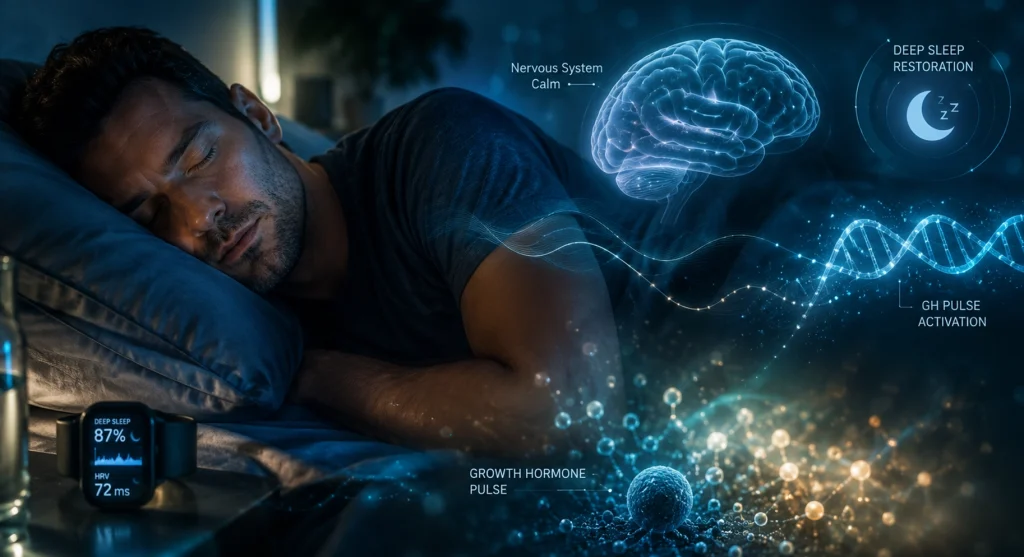
The earliest changes on sermorelin are not visible in the mirror. They are functional, and they are driven primarily by the improvement in slow-wave sleep that follows increased GH pulsatility. Growth hormone is secreted primarily during deep sleep, and the relationship is bidirectional: more GH improves sleep architecture, and better sleep produces more GH. Sermorelin starts this positive cycle from the GH side.
Most patients report their first noticeable change as deeper, more restorative sleep at some point in the first 7 to 14 days of a protocol. The sleep change is often described as returning to a quality of rest they had in their late 20s: falling asleep faster, fewer nighttime awakenings, and waking up feeling more genuinely rested rather than just having logged enough hours. This functional improvement in sleep is typically the clearest early signal that the protocol is active.
By weeks 3 and 4, most patients also report more consistent energy throughout the day, faster recovery from exercise (less soreness at 48 hours versus their pre-treatment baseline), and some improvement in mood stability. These changes reflect the downstream effects of improved GH pulsatility on cellular repair processes, IGF-1 elevation, and the anti-inflammatory signaling that comes with optimized growth hormone rhythms. Body composition at this stage has not visibly changed, but the biochemical foundation for those changes is being established.
Months 2 to 3: When Visible Body Composition Changes Begin
The most commonly searched aspect of sermorelin before and after is the body composition change, and months 2 to 3 is typically when patients first see visible evidence of it. IGF-1 levels have been elevated for long enough that lipolysis (fat breakdown) has meaningfully increased, particularly in visceral and abdominal fat deposits. Muscle protein synthesis has improved, and patients who are training consistently begin to notice that their muscle tone is responding to exercise more effectively than it did before starting the protocol.
The most commonly reported changes at this stage include a reduction in stubborn abdominal fat, improved muscle tone that patients describe as their physique “tightening” rather than dramatically changing, improved libido, and continued improvement in recovery speed. Skin changes at this point are typically subtle, limited to early improvements in hydration and texture that some patients notice but others do not until the 4 to 6 month range.
An important clinical context: the body composition changes at months 2 to 3 are real but not dramatic on their own. Sermorelin optimizes the hormonal environment for fat loss and muscle maintenance. It does not replace the training stimulus required for muscle development or the caloric structure required for meaningful fat loss. Patients who are already training and eating appropriately see the clearest body composition before and after at this stage. Patients who are sedentary typically see the sleep and energy improvements clearly but less pronounced body composition changes until they incorporate resistance training and dietary support.
Months 4 to 6 and Beyond: Skin, Anti-Aging, and Long-Term Results
The most visually striking sermorelin before and after changes often occur in the 4 to 6 month range, particularly for skin and anti-aging outcomes. Growth hormone directly stimulates collagen synthesis by upregulating fibroblast activity. Sustained GH elevation over months increases dermal collagen density, improves skin hydration through enhanced hyaluronic acid production, accelerates skin cell turnover, and increases skin thickness and resilience. Patients in their 40s and 50s who have seen their skin quality decline over the previous decade often describe the skin changes at 4 to 6 months as among the most striking outcomes of the protocol.
Common reports at this stage include firmer jawline definition, reduction in fine lines particularly around the eyes and forehead, improved skin tone and uniformity, and a general improvement in what patients describe as the “quality” of their skin. Hair thickness and nail growth also improve in some patients, reflecting the systemic effect of sustained IGF-1 elevation on tissue renewal across the body.
Beyond month 6, the protocol moves into a maintenance phase. GH levels have been optimized, body composition has shifted toward the patient’s improved baseline, and the goal transitions from building toward a target to maintaining the results achieved. Clinical monitoring of IGF-1 at this stage determines whether the current protocol dose is appropriate or whether a cycle break is indicated before reassessment.
Sermorelin Before and After by Goal: What Changes by Treatment Target
The before and after picture looks different depending on the primary reason a patient starts sermorelin. Here is what the results typically look like organized by treatment goal:
- Sleep and recovery: The most consistent early result across all patient profiles. First improvement at 1 to 2 weeks, significant change by week 4. Patients describe this as among the highest-value outcomes of the protocol because the downstream benefits of restored deep sleep (mood, cognitive function, immune function, tissue repair) compound over time.
- Fat loss and body composition: Visible changes begin at months 2 to 3 with consistent training and dietary support. Abdominal and visceral fat respond most clearly. Sermorelin does not produce dramatic fat loss on its own and works best as part of a broader metabolic protocol.
- Muscle tone and athletic recovery: Faster recovery between training sessions becomes noticeable by weeks 3 to 4. Improved muscle tone and response to resistance training becomes visible at months 2 to 3. Patients who train regularly see the most pronounced before and after difference in this category.
- Skin and anti-aging: The slowest-developing but most visually striking results for many patients. First subtle improvements at months 2 to 3, most visible changes at months 4 to 6. Collagen density, hydration, and skin thickness all improve with sustained GH elevation.
- Energy and mental clarity: Improved energy consistency begins at weeks 1 to 4 alongside the sleep changes. Mental clarity improvements are frequently reported by weeks 3 to 4 and sustained throughout the protocol.
- Libido: Typically improves alongside the general hormonal optimization at months 2 to 3. More pronounced in patients whose baseline decline was significant before starting.

What Determines Your Before and After Results on Sermorelin
The range of sermorelin before and after outcomes is wide because the variables that influence results are numerous. Patients with identical starting profiles can see meaningfully different timelines based on the following factors:
- Baseline IGF-1 levels before starting: The strongest single predictor. Patients with significantly suppressed baseline IGF-1 (typically below 150 ng/mL in adults over 40) tend to see the most pronounced early changes because the distance from baseline to optimized is greatest. Patients with relatively preserved IGF-1 may see subtler improvements.
- Age and degree of GH axis decline: Patients in their late 40s and 50s typically see more dramatic early results than patients in their mid-30s starting preventively, because GH decline is more advanced and the pituitary still has enough reserve capacity to respond meaningfully to stimulation.
- Sleep quality during the protocol: GH is secreted primarily during deep sleep. Poor sleep quality during the protocol reduces the amplitude of GH pulses stimulated by sermorelin and directly limits results. This is the most common reason patients plateau at weeks 4 to 8 without having reached their full potential.
- Training volume and consistency: Exercise is a potent independent stimulator of GH release. Patients who combine sermorelin with consistent resistance training see significantly better body composition outcomes than those who do not exercise.
- Body fat percentage: Higher visceral fat increases somatostatin tone, which suppresses GH pulsatility. Patients starting a sermorelin protocol at a healthy weight typically see faster and more pronounced results than those starting at high body fat percentages.
- Protocol consistency: Sermorelin requires daily subcutaneous injection at a consistent time, typically before bed to align with the natural overnight GH pulse. Missed doses and inconsistent timing blunt results significantly.

Why Perfect B Does Not Offer Sermorelin and Uses CJC-1295/Ipamorelin Instead
Sermorelin was the original GHRH analog used in clinical GH-releasing protocols and remains a well-studied option still prescribed by some clinics. Perfect B does not offer Sermorelin. We prescribe CJC-1295/Ipamorelin as our GH-releasing protocol because of two pharmacological differences that directly affect the before and after picture. The reason comes down to two pharmacological differences that directly affect the before and after picture:
First, sermorelin has a very short half-life of approximately 10 to 20 minutes after injection. It stimulates a single GH pulse and is cleared quickly. CJC-1295 (with DAC) has a half-life of 7 to 10 days, producing sustained GHRH receptor stimulation that generates more consistent GH pulsatility over time rather than a single acute spike. The practical result is that IGF-1 elevation is more stable week to week on CJC-1295 than on sermorelin.
Second, Ipamorelin is a GHRP (growth hormone releasing peptide) that works on a completely separate pathway from CJC-1295, stimulating GH release through the ghrelin receptor. When both are combined, the GHRH pathway (CJC-1295) and the ghrelin pathway (Ipamorelin) produce a synergistic GH pulse that is significantly larger than either compound produces alone. Sermorelin activates only the GHRH pathway with no GHRP component.
In practical terms, patients we evaluate who previously used Sermorelin at other clinics before transitioning to CJC-1295/Ipamorelin at Perfect B typically report more consistent results, more pronounced body composition changes at the 3-month mark, and better skin outcomes at 6 months on the CJC-1295/Ipamorelin protocol. For a full comparison of the two approaches, our complete clinical comparison of sermorelin vs CJC-1295/Ipamorelin at Perfect B in Doral explains the mechanism differences, the result timeline differences, and how we determine which protocol fits each patient at intake.
Who Is a Candidate for GH-Releasing Peptide Therapy at Perfect B in Doral?
The ideal candidate for GH-releasing peptide therapy at our clinic is an adult over 35 with subjective symptoms of GH decline (the “before” profile described earlier) who has had a baseline IGF-1 drawn confirming that GH axis optimization is clinically appropriate. We do not prescribe GH-releasing peptides to patients whose IGF-1 is already in the high-normal range for their age, because stimulating further GH elevation in that context produces diminishing returns and increases the theoretical risk of side effects from GH excess.
Patients who should not use CJC-1295/Ipamorelin include those with active malignancy or a personal history of hormone-sensitive cancer, patients with active acromegaly or pituitary pathology, and patients who are pregnant or breastfeeding. These contraindications apply equally to any GH-releasing peptide therapy, including Sermorelin (which Perfect B does not prescribe). Patients with diabetes require additional monitoring because GH affects insulin sensitivity and glucose metabolism.
Every GH-releasing peptide protocol at Perfect B starts with a licensed APRN intake that includes a review of baseline labs, a discussion of goals and current lifestyle, and individualized dosing based on the patient’s clinical profile rather than a standardized starting dose. For the complete peptide treatment plan at our Doral clinic, including how GH-releasing peptide therapy integrates with other interventions in the protocol, the full peptide treatment plan at Perfect B in Doral explains how each peptide is evaluated, prescribed, and monitored within a supervised clinical framework. For questions about cost and what the protocol includes financially, our complete breakdown of peptide therapy costs at Perfect B covers GH-releasing protocol pricing, what each session includes, and how multi-peptide stacks are structured.
Ready to See What a GH-Releasing Peptide Protocol Looks Like for Your Goals and Profile?
Perfect B’s peptide protocol tool is built on real clinical data from 2,000+ patients treated in South Florida.
Answer 6 questions and see what patients with similar goals are running: which peptides they use, typical dosing, injection schedule, reconstitution steps, cycle length, and when they pause.
Frequently Asked Questions
1. How long does sermorelin take to see results?
The first results on sermorelin are typically sleep and energy improvements at weeks 1 to 2 of the protocol. Body composition changes become visible at months 2 to 3 with consistent training and dietary support. Skin and anti-aging effects accumulate most visibly at months 4 to 6. The full scope of before and after results on a well-managed sermorelin protocol typically requires a minimum of 6 months to assess accurately.
2. Will I gain weight on sermorelin?
Sermorelin does not cause fat gain. Growth hormone stimulation promotes lipolysis (fat breakdown), not fat storage. Some patients notice mild increases in appetite early in the protocol, which reflects the metabolic upregulation that comes with elevated GH and IGF-1. Patients who respond to that increased appetite by eating more than their caloric needs require can gain weight, but this is a behavioral response to the appetite change, not a direct effect of sermorelin.
3. Does sermorelin reduce belly fat?
Sermorelin promotes visceral fat reduction over time by increasing lipolysis and improving the metabolic environment for fat mobilization. Abdominal and visceral fat respond more noticeably than subcutaneous fat in most patients. The effect requires time (typically months 2 to 3 before visible changes) and is significantly enhanced by resistance training and appropriate dietary structure. Sermorelin does not produce dramatic isolated fat loss and works best as part of a broader protocol that includes lifestyle support.
4. Is sermorelin better than TRT?
Sermorelin and testosterone replacement therapy (TRT) address different hormonal systems and are not direct alternatives. Sermorelin stimulates GH production; TRT addresses testosterone deficiency. Both GH decline and testosterone decline occur with aging and can produce overlapping symptoms, which is why many patients with suboptimal results on one approach have the other axis evaluated. At our Doral clinic, we assess both GH axis function and testosterone levels before determining which intervention is most appropriate for a given patient’s symptom profile.
5. Are sermorelin results permanent?
Sermorelin results are not permanent in the sense that stopping the protocol allows GH levels to return to pre-treatment baseline over time. The improvements in body composition, sleep quality, and skin that accumulate during a well-managed protocol can be maintained with periodic cycling, consistent lifestyle support, and reassessment of IGF-1 levels. Most supervised protocols at our clinic involve structured cycle lengths followed by a period off and lab retesting before continuing.
6. What is the difference between sermorelin and CJC-1295/Ipamorelin results?
Both sermorelin and CJC-1295/Ipamorelin stimulate pituitary GH production and produce the same general categories of before and after results: sleep, energy, body composition, skin, and anti-aging. CJC-1295/Ipamorelin typically produces more consistent IGF-1 elevation due to CJC-1295’s longer half-life and more pronounced GH pulses due to the synergistic combination of GHRH and GHRP pathways. Most patients in clinical practice who have experienced both describe the combination protocol as more consistent and producing more visible results at the 3-month mark. For a full breakdown of the clinical comparison, our complete clinical overview of Sermorelin and why Perfect B in Doral uses CJC-1295/Ipamorelin instead explains the mechanism, the clinical evidence, and how it compares to the GH-releasing options we actually prescribe.
7. How does sermorelin before and after compare for women vs men?
The outcome categories are the same for women and men, but the subjective before and after difference is frequently more pronounced for women in perimenopause or post-menopause because GH decline and estrogen decline compound each other. Women in their late 40s and early 50s starting sermorelin often describe more dramatic improvements in sleep quality, energy, and skin compared to men of the same age, because their pre-treatment baseline was more significantly affected by the dual hormonal decline. The timeline is the same: sleep and energy at weeks 1 to 4, body composition at months 2 to 3, skin at months 4 to 6.
8. Does Perfect B in Doral offer Sermorelin?
No. Perfect B prescribes CJC-1295/Ipamorelin for general growth hormone optimization and Tesamorelin for visceral fat reduction. We do not offer Sermorelin. The before and after timeline in this article is based on general clinical literature for patients researching all GH-releasing peptide options. Patients on Sermorelin elsewhere who are considering switching can book a peptide consultation at Perfect B for an evaluation and recommendation based on their goals, labs, and clinical profile.
Closing: The Clinical Bottom Line on Sermorelin Before and After
The sermorelin before and after picture is consistent, well-documented, and predictable when the protocol is managed correctly. Sleep and energy improve first, body composition follows at months 2 to 3, and skin and anti-aging effects accumulate through months 4 to 6. The magnitude of the before and after difference is driven by baseline IGF-1, age, lifestyle support, and protocol consistency, not by the dose alone.
Perfect B does not prescribe Sermorelin. At our Doral clinic we use CJC-1295/Ipamorelin as our GH-releasing protocol because the combination produces more consistent IGF-1 elevation and more pronounced results at the 3-month mark than Sermorelin’s single-pathway brief pulse. But the before and after principles are the same: the more significant the pre-treatment GH decline, the more dramatic the recovery. The better the lifestyle support during the protocol, the clearer the body composition results. And the longer the protocol runs under proper supervision, the more visible the skin and anti-aging effects become. South Florida patients at Perfect B in Doral have 7 hours of sunlight year-round, active lifestyles, and high standards for what results should look like. Our protocols are built around that patient profile.
📍 Visit us at Perfect B, 8200 NW 41st St, Doral, FL 33166
📞 Call or message us at (786) 502-2260
→ See the full peptide treatment plan at Perfect B in Doral and start your clinical evaluation today.