
Perfect B, Doral Fl. | 07.08.26 | 12 min read.
This article is for general educational purposes and is not a substitute for an in-person medical evaluation, diagnosis, or treatment. Tretinoin is a prescription topical retinoid, and skin type, acne severity, and skin tone vary from person to person, so strength, routine, and any in-office support must be selected and supervised by a licensed medical provider. Exact protocols are confirmed at a personal consultation. For more on this, see our guide to Tretinoin Purge: When It Starts, How Long It Lasts, and What to Do, and how it is evaluated and treated at Perfect B in Doral.
Tretinoin Purge Timeline: How Long Before Your Skin Really Clears
A tretinoin purge is the sudden wave of breakouts, dryness, and flaking that can hit in the first weeks after you start tretinoin, and it is the single most searched worry among people beginning this topical retinoid. The good news is that a purge is usually a sign the medication is working, not failing. This guide walks you through the full tretinoin purge timeline week by week, explains why it happens, and shows you exactly when clearer skin is on the horizon so you do not quit right before the payoff.
By the end you will know when the purge typically starts, how long tretinoin purging usually lasts, what it looks like, how it differs from a true breakout, and how to calm your skin so the process is as short and comfortable as possible. You will also see when it is time to bring in a provider rather than tough it out alone. The aim is simple, to help you trust the process with realistic expectations instead of anxiety.
Key Takeaways
- Purging is normal: a tretinoin purge is your skin shedding clogged pores faster, not the medication failing, and it is a temporary phase for many new users.
- Timeline at a glance: purging usually starts around week 2 to 3, peaks near weeks 3 to 4, and eases by weeks 6 to 8, with smoother skin often by week 12.
- Purge is not a breakout: a purge appears in your usual acne zones and moves faster, while a true breakout can linger or spread to new areas.
- Gentle wins: starting low and slow, moisturizing well, and using daily SPF shortens the purge and protects your barrier.
- You do not have to guess: a provider can match the right tretinoin strength to your skin and support lingering marks or scarring afterward.
What Is a Tretinoin Purge?
A tretinoin purge is the temporary flare of breakouts, dryness, and peeling that appears when your skin is first adjusting to tretinoin, a potent vitamin A derivative used to treat acne and soften early signs of aging. This phase, often called skin purging, can look exactly like a worsening breakout, but it is really your skin shedding dead cells and clogged material faster than usual and pushing what was already forming beneath the surface up and out.
The distinction matters because it changes how you respond. A purge is driven by accelerated cell turnover, a controlled speeding up of the renewal process, which briefly increases inflammation before revealing clearer skin underneath. Understanding that this is a known, expected step, rather than a sign the medication is wrong for you, is what helps most people stay consistent long enough to reach the reward. If you want the mechanism in more depth, you can read our complete explainer on what skin purging actually is, why it happens, and how it differs from a genuine acne breakout that needs a change of plan.
Why Does Tretinoin Cause Purging?
Does tretinoin cause purging for a reason, or is it random? It is very much a reason. Your skin is always renewing itself, but that cycle slows with age and can leave dead cells and debris sitting in pores. Tretinoin dramatically speeds that renewal up. As the deeper layers turn over faster, the microcomedones that were quietly forming below the surface are brought to the top all at once, which shows up as a cluster of breakouts in a compressed window of time.
In other words, tretinoin does not create new acne, it fast forwards blemishes that were already on their way. That is why the purge tends to be front loaded into the first weeks and then fades as the backlog clears. Once the skin catches up, the same accelerated turnover that caused the flare is what keeps pores clearer, fades post acne marks, and smooths texture over time. The temporary chaos is the price of a faster path to renewal, according to the patient guidance from the American Academy of Dermatology on how dermatologists diagnose acne and use topical retinoids like tretinoin to treat it over time.
Tretinoin Purge vs a Regular Breakout: How to Tell the Difference
Purging can feel like your acne is getting worse, but it behaves differently from an ordinary breakout in a few telling ways. The clearest clue is timing and location, since a purge starts soon after beginning tretinoin and appears in the same zones where you usually break out. The table below lays out the differences at a glance.
| Feature | Purging | Regular Breakout |
|---|---|---|
| Trigger | Starting a new retinoid such as tretinoin | Hormones, diet, stress, bacteria |
| Where it appears | Your usual acne zones, such as forehead, chin, and jawline | Can appear in new or unusual areas |
| Speed | Comes and clears faster than normal | Can linger or keep spreading |
| Typical duration | About 2 to 6 weeks | Varies widely, often longer |
| Mechanism | Accelerated cell turnover | New inflammation and clogged pores |
If your flare shows up in familiar spots, arrives within the first weeks of tretinoin, and clears faster than your usual acne, it is most likely a purge. If breakouts appear in new areas, keep worsening past the expected window, or feel unusually painful and deep, that points toward something other than a simple purge and is worth a professional look.
When Does the Tretinoin Purge Start?
For most people the tretinoin purge starts within the first two to three weeks of consistent use, though some notice early dryness and irritation within days. The reason it is not instant is that tretinoin needs a little time to accelerate cell turnover before the backlog of clogged pores is pushed to the surface. So a quiet first week, followed by a flare in week two or three, is a completely typical pattern rather than a warning sign.
How soon and how strongly the purge arrives depends on your starting strength, how often you apply it, and how reactive your skin is. A higher concentration or nightly use from day one tends to bring the purge on faster and harder, while easing in slowly can push it later and make it milder. Knowing this up front helps you plan, since it means the worst of the flare is usually behind you within the first month or so of starting.
Tretinoin Purge Timeline: Week by Week
Understanding the tretinoin purge timeline stage by stage helps you know what to expect and when relief is coming. These stages of tretinoin are a general map rather than a guarantee, since every person moves through them at a slightly different pace, but the shape of the journey is remarkably consistent.
Week 1 to 2:
- Skin often feels dry, tight, or slightly irritated as it adjusts.
- Early breakouts may begin to surface in your usual acne zones.
- Mild redness and the first light peeling can appear.
Week 3 to 4:
- Purging usually peaks here, with the most active breakouts.
- Skin can look worse before it improves, which is normal.
- Flaky texture and more noticeable blemishes are common.
Week 5 to 6:
- Active breakouts begin to slow and calm down.
- Inflammation and redness start to settle.
- The first real signs of renewal become visible.
Week 7 to 12:
- Texture smooths and active blemishes become fewer.
- The tretinoin purging timeline is typically complete.
- Post acne marks and pigmentation may start to fade.

Keep in mind that every tretinoin purge timeline is individual. Some people move through the stages sooner, others take longer, and a few barely purge at all. The pattern above is the map, not a deadline.
How Long Does the Tretinoin Purge Last?
How long does the tretinoin purge last is the question almost everyone asks first. For most people, the active purge runs roughly four to six weeks, with some milder cases wrapping up sooner and more reactive skin stretching toward eight to twelve weeks. The purge length tends to track your natural skin cell turnover cycle, which is why younger skin often clears faster than mature skin that renews more slowly.
A helpful way to gauge whether you are still purging or dealing with something else is to watch the trend. During a normal purge, the overall direction is toward improvement even if there are bad days, and breakouts stay in familiar zones. If you are past the twelve week mark and your skin is still flaring or clearly worsening rather than settling, that is the signal to stop waiting and check in with a provider about adjusting your plan.
What Does a Tretinoin Purge Look Like?
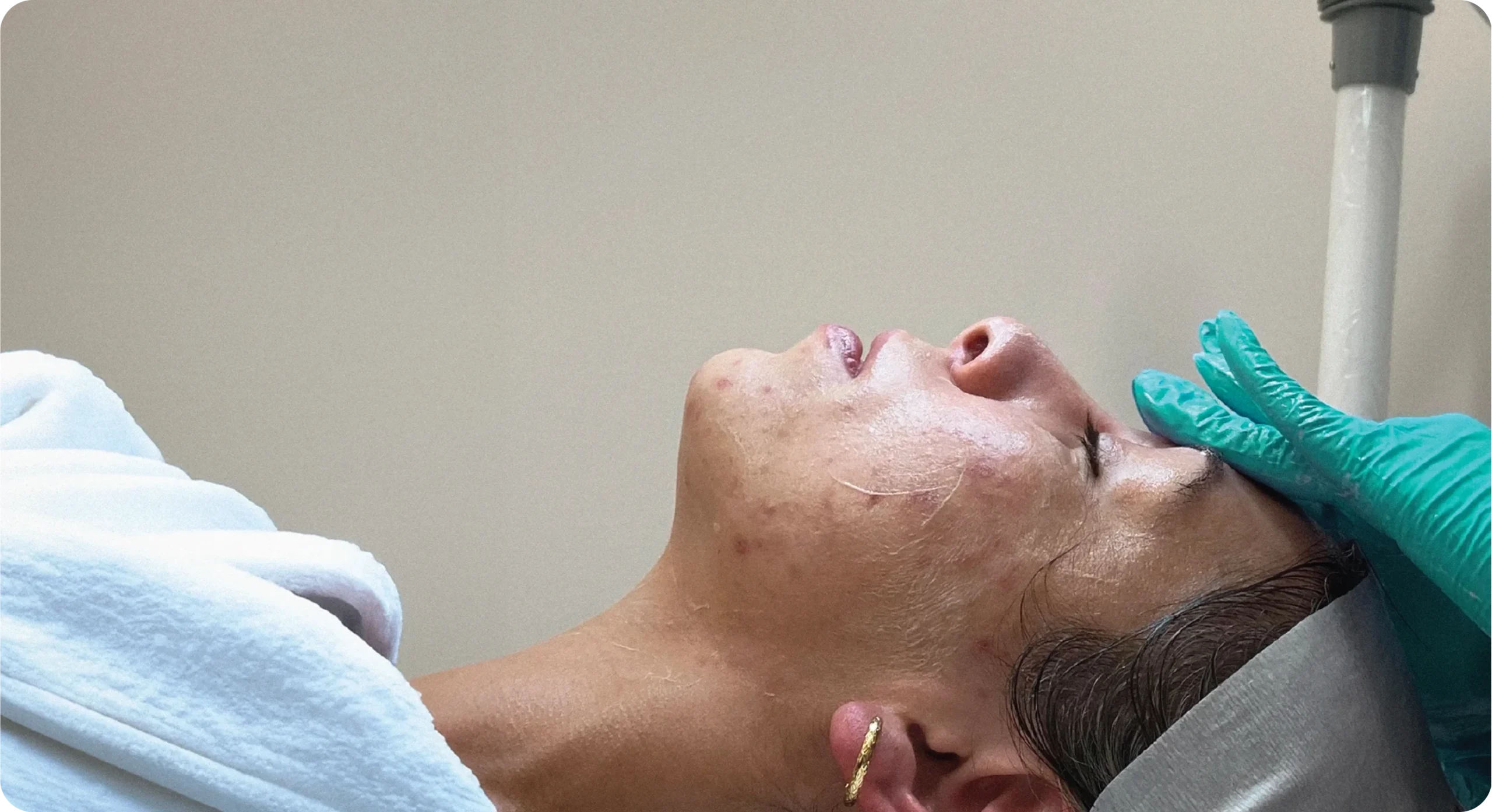
What does a tretinoin purge look like in real life? Most people see a cluster of small whiteheads and inflamed bumps in their usual acne zones, often the forehead, chin, and jawline, arriving faster than a typical breakout. Alongside the blemishes, the skin frequently feels dry, tight, and mildly rough, with light flaking or peeling and patches of pink or red where it is irritated.
The combination is what makes a purge recognizable, breakouts plus dryness, flaking, and sensitivity all at once, in areas where you normally break out. What you should not see is deep, painful cystic acne spreading into brand new areas, or symptoms that keep intensifying week after week. If a quick calming routine is what you need for one stubborn spot in the meantime, you can see our practical guide to calming a single stubborn pimple quickly and safely without derailing the tretinoin routine your skin is still adjusting to.
Tretinoin Purge Before and After: Setting Realistic Expectations

Tretinoin purge before and after can look strikingly different. In the early phase, skin may appear inflamed, uneven, and dotted with whiteheads, which is exactly when people are most tempted to give up. After the purge settles, that same skin usually becomes clearer, smoother, and more radiant, with fewer active breakouts and a more even tone as the weeks go on.
The most important thing this comparison teaches is not to judge your results too early. Most users start noticing genuine improvement between weeks six and twelve, so the middle of the purge is the worst possible moment to quit. A practical tip is to photograph your skin in the same light once a week, since day to day changes are hard to see but week to week progress is often obvious and motivating.
Does the Tretinoin Strength Change the Purge?
Yes, the concentration you start with has a real effect on how the purge plays out. Lower strength tretinoin tends to produce a gentler, sometimes later purge with less irritation, while a higher strength can bring the flare on faster and more intensely. That is why many providers start new users on a lower concentration and step up only once the skin has adapted, rather than beginning at full strength and forcing a harsher adjustment.
It is also worth knowing that increasing your strength later, or moving from another retinoid up to tretinoin, can trigger a smaller second adjustment period as your skin recalibrates. This is normal and usually much milder than the first purge. Gentler formulations such as a tretinoin lotion, sometimes prescribed under the brand Altreno, are one option a provider may consider for sensitive skin, which is a decision best made with professional guidance rather than by self adjusting your dose.
How to Manage the Tretinoin Purge and Reduce Irritation
You cannot skip the purge entirely, but you can make it shorter and far more comfortable by protecting your skin barrier while tretinoin does its work. The goal during this window is restraint and hydration, not piling on more active products in the hope of speeding things up. A few simple habits make the biggest difference for reducing tretinoin side effects during the purge.
- Start low and slow, applying one to two nights per week, then build up frequency as your skin tolerates it.
- Use the sandwich method, a layer of moisturizer, then tretinoin, then moisturizer again, to buffer irritation.
- Apply only at night, since tretinoin makes skin more sensitive to sunlight.
- Wear a broad spectrum SPF 30 or higher every morning without exception.
- Pause harsh actives during the purge, including strong exfoliating acids, physical scrubs, and benzoyl peroxide, which can compound irritation.
- Support your barrier with gentle, fragrance free products containing ceramides, niacinamide, or hyaluronic acid.
Consistency matters more than intensity here. A calm, simple routine gives your skin the stability it needs to move through the purge efficiently, whereas constantly changing products or over exfoliating tends to prolong the irritation. If dryness or flaking becomes uncomfortable, easing back the frequency for a week is far better than stopping tretinoin altogether and losing your progress.
How Perfect B Supports Your Skin Through the Purge
Going through a tretinoin purge alone can feel like guesswork, and that is exactly where professional guidance changes the experience. At Perfect B in Doral, a licensed provider can confirm that what you are seeing is truly a purge, match the right tretinoin strength and routine to your skin type and tone, and adjust the plan if your skin is struggling, so you are supported through the phase rather than white knuckling it on your own.
Support does not stop when the purge ends either. Once your skin settles, in office options can address what tretinoin alone works on slowly, such as professional care for the post acne dark marks and uneven tone that often linger, or a staged plan for texture and scarring. If you want the full picture first, compare every professional acne treatment option available to Miami and Doral patients, from prescription topical care through advanced in office procedures.
For lingering discoloration after the purge, many patients ask about targeted care, and you can learn how our professional brightening treatments are used to fade the post acne dark marks and uneven tone that can linger long after the purge itself settles. Pairing prescription tretinoin with a supervised plan is how surface care and in office support work together toward lasting results.
When to See a Provider About Your Tretinoin Purge
Most purges resolve on their own with patience and a gentle routine, but some situations call for professional input sooner rather than later. It is time to check in with a provider if your skin is not improving at all after ten to twelve weeks, if you develop severe itching or burning, or if you start seeing deep, painful cystic acne rather than the surface breakouts typical of a purge.
A provider can help you adjust your strength, dial back irritation, switch to a gentler formulation, or confirm whether what you are dealing with is a purge at all. Persistent adult acne in particular often needs more than a single product, so if breakouts keep returning it is worth understanding the bigger picture. Our overview covers why adult acne keeps returning well after your twenties and which medical treatment options finally bring it under lasting, supervised control.
Frequently Asked Questions
1. How long does the tretinoin purge last?
For most people the active tretinoin purge lasts about four to six weeks, with milder cases resolving sooner and more reactive skin stretching toward eight to twelve weeks. The length tends to follow your natural skin cell turnover cycle, so younger skin often clears faster than mature skin.
2. When does the tretinoin purge start?
The purge usually starts within the first two to three weeks of consistent use, though early dryness and irritation can appear within days. A quiet first week followed by a flare in week two or three is a completely normal pattern, not a sign the tretinoin is wrong for you.
3. Does tretinoin cause purging for everyone?
No. Many new users purge, but not all do, and the intensity varies widely. Some people move through four to eight weeks of breakouts while others barely notice a flare. How much you purge depends on your skin, your starting strength, and how gradually you introduce tretinoin.
4. What does a tretinoin purge look like?
A purge usually looks like a cluster of small whiteheads and inflamed bumps in your usual acne zones, arriving faster than a typical breakout, alongside dryness, light flaking, and pink or irritated patches. Deep cystic acne spreading to new areas is not a normal purge and deserves professional review.
5. Can I prevent a tretinoin purge?
You cannot fully avoid it, but you can soften it. Starting with a lower strength, applying only one to two nights per week at first, using the sandwich method, and keeping your barrier hydrated all tend to make the purge milder and shorter than diving in at full strength every night.
6. Is skin purging a good sign?
In most cases, yes. Purging means tretinoin is accelerating your cell turnover and clearing pores that were already congested, so it often signals the medication is working. It still needs to be managed gently, and a flare that keeps worsening past the expected window should be checked by a provider.
7. Does a stronger tretinoin cause a worse purge?
Often, yes. A higher concentration tends to bring the purge on faster and more intensely, while a lower strength produces a gentler, sometimes later flare. This is why many providers start new users low and increase strength gradually once the skin has adapted rather than beginning at full strength.
8. Is the tretinoin purge just my acne getting worse?
No. A purge is a temporary spike in breakouts caused by faster cell turnover pushing existing clogged pores to the surface, not new acne forming. It appears in your usual zones and clears faster than ordinary breakouts, then gives way to smoother, clearer skin as your skin catches up.
Trust the Process, Support the Skin
Starting tretinoin can be an emotional journey, especially when your skin gets worse before it gets better. But understanding the science behind the tretinoin purge timeline is what helps you stay committed through the toughest weeks and reach the clearer skin waiting on the other side. The purge is temporary, the payoff is not, and the middle of the flare is the worst moment to give up on a routine that is already working.
At Perfect B, our goal is not just to help your skin survive the purge but to thrive beyond it, with a plan matched to your skin type and tone and in office support for anything tretinoin leaves behind. Trusted references such as the tretinoin topical medication overview published by MedlinePlus, the consumer health service of the United States National Institutes of Health, reinforce that supervised use is the safest path through it.
- 📍 Visit us at Perfect B, 3905 NW 107th Ave, Suite 104, Doral FL 33178
- 📞 Call or message us at (786) 502-2260
- 💳 Financing available through Cherry, Klarna, Afterpay, and CareCredit
→ See how every acne treatment option compares, then book your personal consultation with a licensed provider at Perfect B in Doral. For a fully managed option, consider the acne treatment plan at Perfect B in Doral, which pairs prescription actives with in-office care and provider guidance.