
Perfect B, Doral FL. | 05.14.26 | 15 min read.
This content is for educational purposes only and does not constitute medical advice. Consult a licensed medical provider before beginning any hair loss treatment.
PDRN for Hair Loss: Does Salmon DNA Actually Regrow Hair?
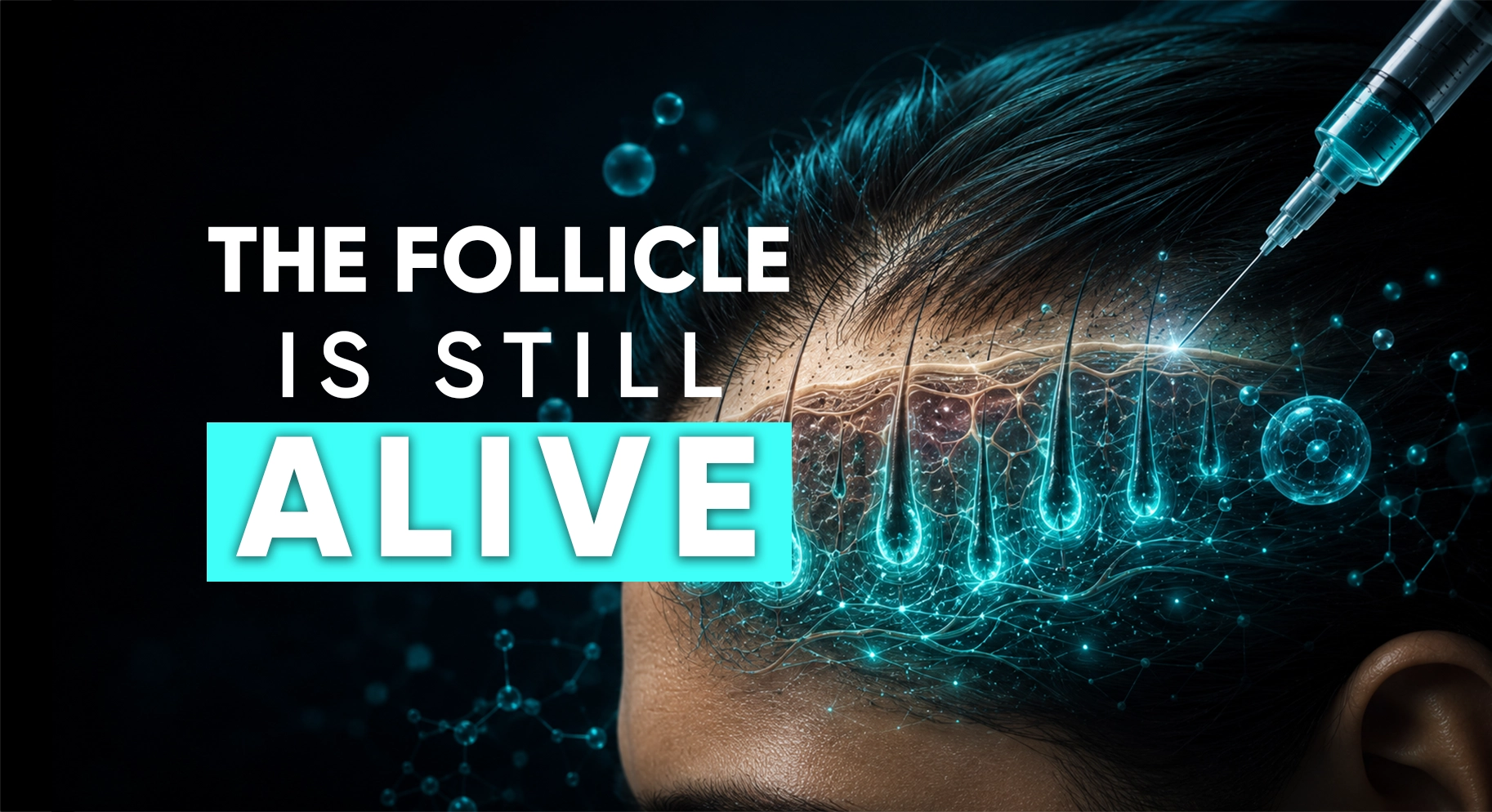
Most of the content you find on PDRN hair growth is about K-beauty ampoules and topical serums. That is because those products dominate the search results. What is largely missing from that conversation is a clinical explanation of what injectable PDRN actually does when delivered directly into the scalp under medical supervision. The mechanism is different, the depth of action is different, and the patient selection is different. This guide covers all three.
At Perfect B in Doral, we use PDRN as part of our hair restoration protocols. It is not a standalone miracle treatment. It works because of where it is delivered and what it is combined with. Here is the clinical case for it.
Key Takeaways
- PDRN hair growth depends almost entirely on delivery method. Topical serums cannot reach the dermal follicle layer where PDRN needs to act.
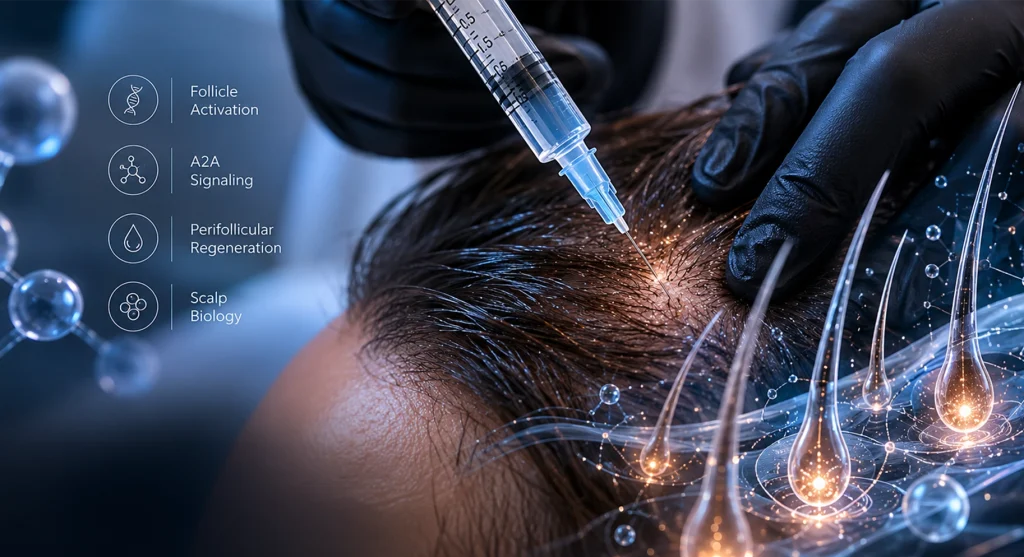
- Injectable PDRN activates the A2A adenosine receptor pathway, reduces follicular inflammation, and improves local tissue oxygenation at the scalp.
- Best candidates are patients with early to moderate androgenetic alopecia, telogen effluvium, or post-partum hair loss who still have living follicles.
- At Perfect B in Doral, PDRN is combined with exosomes for most hair loss patients because the two mechanisms work on different biological targets.
- Results from injectable PDRN protocols are gradual. Clinical studies show measurable improvement in hair thickness and density after a course of 12 sessions.
What Most People Think They Know About PDRN and Hair
If you have searched ‘pdrn hair growth’ recently, the results are almost entirely about one product: the VT Cosmetics PDRN Reedle Shot Hair Ampoule, a Korean beauty serum that costs around $30 and delivers polydeoxyribonucleotide through a topical application method. That product category is legitimate. But it is a fundamentally different intervention from what a medical clinic administers via injection, and conflating the two leads to misaligned expectations.
The K-beauty serum version vs the injectable clinical version
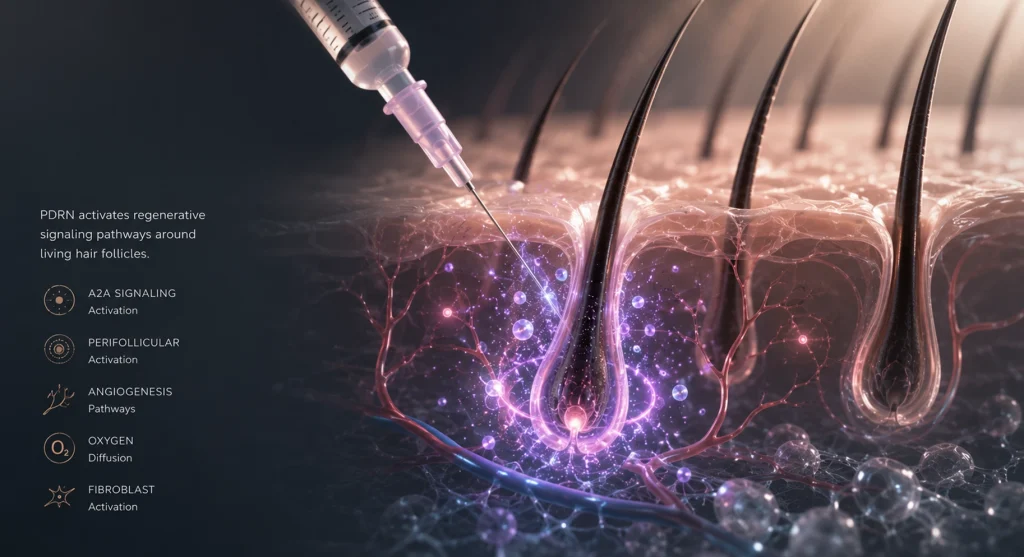
Topical PDRN products rely on micro-spicule technology or needle-free delivery systems to push the active compound into the upper dermis. They improve scalp condition, reduce surface inflammation, and support circulation in the outermost layers. That is genuinely useful for scalp health and mild shedding. What topical products cannot do is reach the dermal papilla at the base of the follicle, which sits 3 to 4 millimeters below the surface of the skin. The dermal papilla is where follicle signaling actually happens. Injectable PDRN for hair loss deposits the compound directly into the perifollicular tissue, the area immediately surrounding each follicle, at the depth where A2A receptor activation can occur.
Why the delivery method changes everything
A compound that cannot reach its receptor cannot activate it. PDRN’s primary mechanism for follicle stimulation runs through the A2A adenosine receptor, a cell surface receptor expressed by fibroblasts and follicle cells in the dermal layer. Topical delivery gets you surface-level benefits. Injection-based delivery gives you the clinical tool that the peer-reviewed literature is actually studying. A 2015 study published in PubMed (PMID 25524027, cited 104 times) found that patients treated with 12 sessions of intra-perifollicular PDRN injection alone showed clinical improvement in hair thickness and density, independent of PRP.
How Injectable PDRN Works on the Scalp
PDRN, or polydeoxyribonucleotide, is a purified nucleotide compound derived from salmon DNA. Salmon DNA shares enough structural similarity with human DNA that PDRN fragments can interact with human cell receptors and activate biological repair processes. In the scalp, three mechanisms are particularly relevant to hair loss.
The A2A receptor pathway and follicle activation
When PDRN binds to the A2A adenosine receptor on follicle cells and surrounding fibroblasts, it triggers a cascade that increases cellular energy production (ATP), stimulates growth factor synthesis, and activates the follicle’s own repair mechanisms. This pathway is also involved in transitioning follicles from the telogen (resting) phase back into the anagen (active growth) phase. Follicles that have miniaturized due to DHT exposure or chronic inflammation still carry A2A receptors. If the miniaturization has not progressed to complete follicle death, PDRN can engage the signaling pathway and begin a recovery process.
Reducing scalp inflammation: the underrated mechanism
Chronic low-grade inflammation is a driver of hair loss that does not get enough attention in most treatment discussions. Androgenetic alopecia, in particular, involves an inflammatory component at the follicle level that accelerates miniaturization. PDRN has well-documented anti-inflammatory properties, including suppression of pro-inflammatory cytokines and modulation of macrophage activity in the treatment zone. In an inflamed scalp environment, reducing that baseline inflammation is often a precondition for any other treatment to work properly. This is one reason why PDRN pairs well with exosomes, which act on a different set of signaling targets.
Improving local tissue oxygenation for follicle survival
Hair follicles are metabolically demanding structures. They require consistent oxygen and nutrient delivery to sustain the growth phase. PDRN promotes angiogenesis, the formation of new capillaries, in the treated tissue. In a scalp where circulation has declined due to chronic tension, inflammation, or the progression of androgenetic alopecia, PDRN’s angiogenic effect improves the microenvironment available to existing follicles. Better oxygen delivery supports follicle survival and extends the anagen phase.
Who Is a Good Candidate for PDRN Hair Loss Treatment?
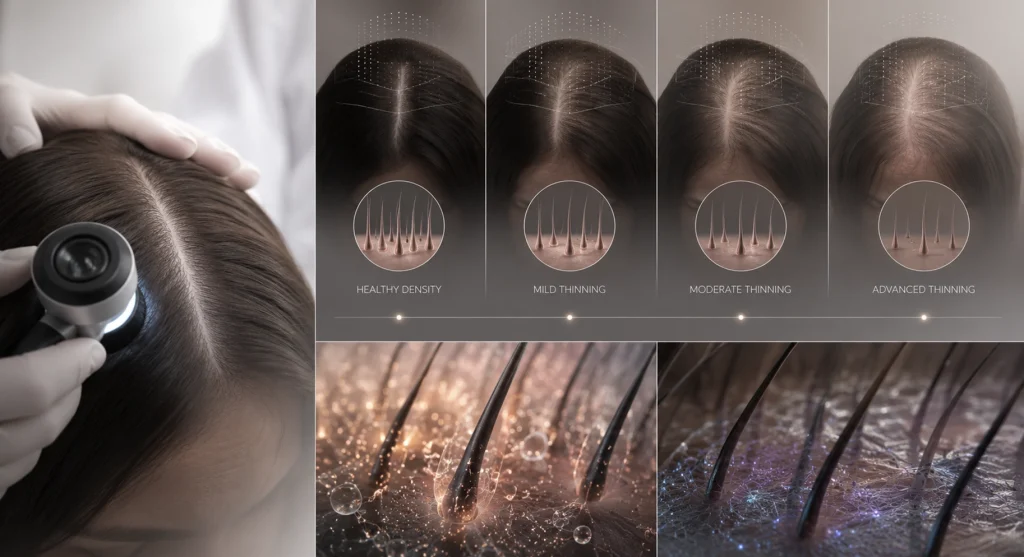
Injectable PDRN for hair loss is a regenerative tool, not a rescue intervention. It works best when living follicles are present but underperforming, not when follicles have been absent for years and the follicle matrix is gone. Patient selection is the most important variable in determining whether a PDRN scalp protocol produces results.
Androgenetic alopecia (early to moderate)
Patients with early to moderate androgenetic alopecia, the most common type of hair loss in both men and women, are the primary candidates for injectable PDRN. In this stage, follicles are miniaturized but still present. The androgen-driven inflammation that is causing thinning has not yet destroyed the follicle architecture. PDRN’s anti-inflammatory and angiogenic effects can interrupt this process and create a more favorable environment for growth factor signaling. Patients in this category who are already using finasteride, minoxidil, or both often see enhanced results when PDRN is added to their protocol.
Telogen effluvium and stress-related shedding
Telogen effluvium, the diffuse shedding triggered by physiological stress, illness, surgery, or rapid weight loss, causes a large proportion of follicles to enter the resting phase simultaneously. PDRN’s ability to push follicles from telogen back into anagen makes it a logical choice for these patients. Because telogen effluvium does not involve follicle miniaturization or androgen damage, recovery rates tend to be faster and more complete than in androgenetic cases. Most patients we see with stress-related shedding in Miami respond well to a shorter protocol.
Post-partum hair loss
Post-partum hair loss is a form of telogen effluvium triggered by the hormonal shift after delivery. It typically begins three to six months after birth and peaks around month four to six. Most cases resolve on their own within 12 months, but for patients who want to accelerate recovery or who have underlying androgenetic predisposition that makes post-partum shedding more pronounced, a PDRN scalp protocol with exosomes offers a safe, non-hormonal intervention that supports faster follicle reactivation.
PDRN vs PRP for Hair Loss: Why We Use Both Differently at Our Doral Clinic
PRP (platelet-rich plasma) and PDRN are both biological treatments derived from naturally occurring compounds, and both are used for hair loss. But they work through different pathways and serve different functions in a clinical protocol. Understanding the distinction helps patients ask the right questions when evaluating their options. Our full clinical breakdown is available in our detailed PDRN vs PRP comparison post covering the biological differences and when each treatment applies.
PRP delivers a concentrated dose of growth factors by drawing the patient’s own blood, spinning it to isolate the platelet-rich fraction, and injecting that fraction into the scalp. The growth factors in PRP stimulate follicle cells directly and support tissue repair. PDRN works differently: it activates a cell receptor, the A2A adenosine receptor, and triggers the cell to produce its own growth factors and engage its own repair pathways. One provides growth factors from outside the cell; the other instructs the cell to generate its own. Both approaches are valid. They are not interchangeable.
At Perfect B, we favor exosomes over PRP for most hair loss patients because exosomes deliver a consistent, concentrated growth factor signal without requiring a blood draw and without the variability that comes with patient-to-patient platelet concentration differences. When we do use PDRN alongside exosomes, the two treatments address different targets: exosomes deliver growth factor cargo directly into follicle cells, while PDRN reduces the inflammatory and hypoxic environment that would otherwise work against those growth signals.
The PDRN + Exosome Stack: Why Perfect B Combines Both
Our standard approach to medically supervised hair loss at Perfect B combines PDRN with exosomes rather than using either as a standalone treatment. The reason is that they operate on complementary biological targets. Exosomes are extracellular vesicles derived from stem cells that carry growth factors, proteins, and signaling molecules directly into follicle tissue. When combined with PDRN, the protocol addresses follicular inflammation and tissue oxygenation with PDRN while delivering direct growth factor signaling through exosomes. A full explanation of what this protocol delivers and who benefits most is available in our comprehensive hair loss treatment guide covering every protocol we offer at our Miami clinic.
PDRN extends the anti-inflammatory effect of the treatment and improves local tissue oxygenation. Both of these factors matter for follicle survival in a chronically inflamed or poorly perfused scalp. Patients who use this combined approach generally see better outcomes than patients who use either treatment alone, which reflects the synergistic relationship between the two mechanisms. GHK-Cu, a copper peptide, is a third option we sometimes incorporate for patients with skin thinning or collagen degradation on the scalp, but it is a supporting element rather than a primary driver of hair regrowth.
What to Expect: Timeline and Sessions at Perfect B in Doral
Injectable PDRN for hair loss is not a one-session treatment. The clinical literature supports protocols of eight to twelve sessions for meaningful improvement, and our patients in Doral generally follow a similar schedule. Results are gradual because the mechanism, shifting follicles from telogen to anagen and improving the follicle microenvironment, operates on the timeline of the hair growth cycle itself, not on the timeline of a wound healing response. Detailed before and after timelines and what patients actually see at each stage are documented in our PDRN before and after results guide covering session-by-session changes in skin and scalp patients.
- Sessions 1 to 3: Scalp inflammation begins to reduce. Shedding may decrease. No visible density change yet.
- Sessions 4 to 6: New vellus hairs may begin emerging in areas with surviving miniaturized follicles. Scalp texture improves.
- Sessions 7 to 12: Measurable improvements in hair thickness and density become visible. Terminal hair replaces vellus hair in responsive follicle zones.
- Maintenance: After the initial course, monthly or bimonthly maintenance sessions preserve and extend results.
Session frequency is typically every two weeks during the initial phase, then monthly once stabilization is achieved. The full protocol is reviewed and adjusted at each visit based on how the scalp is responding.
Hair Loss in South Florida: Why the Climate Matters
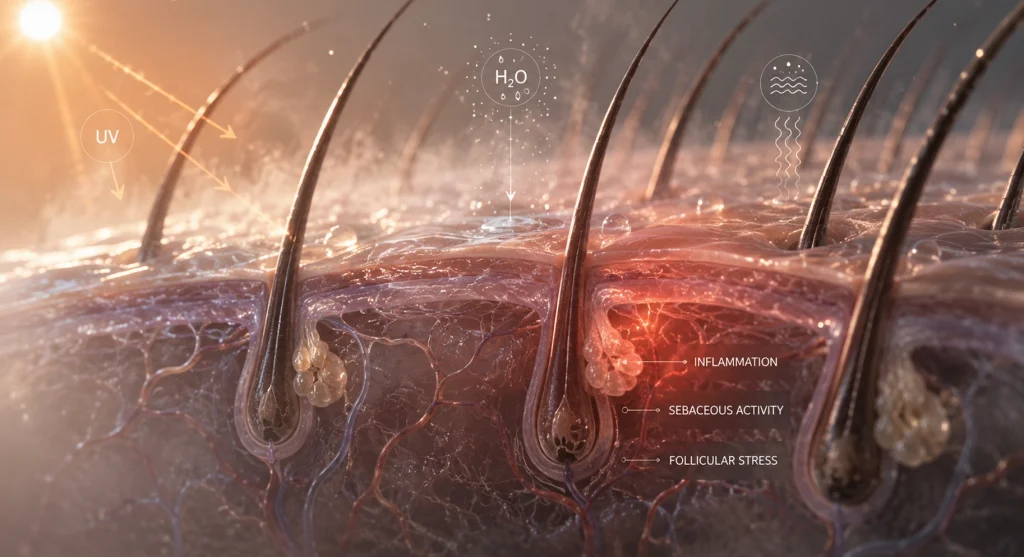
South Florida patients dealing with hair loss are managing a specific environmental context that most hair loss research does not account for. Year-round heat, high humidity, UV exposure, and the physiological stress load of a lifestyle in Miami create scalp conditions that can accelerate androgenetic progression and worsen telogen effluvium episodes. Chronic scalp heat increases sebum production and can worsen the follicular inflammatory environment. UV damage to the scalp affects the skin’s structural integrity over time. Humidity fluctuations affect sebaceous function.
These are not reasons to avoid injectable PDRN. If anything, the anti-inflammatory and oxygenation-improving effects of PDRN are more relevant in a climate where the scalp is chronically under environmental stress. Patients in the Miami area who incorporate PDRN scalp treatment into our Hair Quality Restoration program at Perfect B in Doral are addressing both the biological drivers of their hair loss and the environmental factors that compound it. That combination is what makes the treatment protocol here different from a generic approach.
Research published in the Annals of Surgery (PMID 18673453) confirmed that PDRN accelerates tissue repair and promotes angiogenesis in compromised tissue environments, which is directly relevant to scalp conditions where blood flow and oxygenation are already reduced.
Frequently Asked Questions
1. Does PDRN actually regrow hair, or does it just improve scalp health?
Both, and the distinction matters. Topical PDRN primarily improves scalp condition: reducing surface inflammation, supporting circulation, and creating a healthier environment for follicles. Injectable PDRN goes further by activating A2A adenosine receptors in the perifollicular tissue, which can push miniaturized follicles back into the growth phase and increase hair thickness and density. Whether PDRN regrows hair in a given patient depends on whether living follicles are still present. For patients with early to moderate androgenetic alopecia or telogen effluvium, injectable PDRN can produce measurable regrowth over a course of 8 to 12 sessions.
2. How is injectable PDRN different from the VT Cosmetics PDRN serum?
The VT Cosmetics PDRN Reedle Shot and similar K-beauty topical products deliver polydeoxyribonucleotide to the upper dermis using micro-spicule technology. They are legitimate scalp care products with real benefits for scalp health and mild shedding. Injectable PDRN is delivered by a medical professional directly into the perifollicular tissue, 3 to 4 millimeters below the skin surface, where the dermal papilla and follicle receptors are located. This is the depth where A2A receptor activation occurs and where the clinical studies on PDRN hair loss have been conducted. The two approaches are not interchangeable.
3. How many PDRN sessions are needed for hair loss?
Clinical protocols for injectable PDRN hair loss treatment typically involve 8 to 12 sessions, delivered every two weeks during the initial phase. The hair growth cycle operates on a timeline of months, not days, so results from PDRN scalp treatment are gradual. Most patients begin to see reduced shedding and early density improvements between sessions 4 and 6. Measurable changes in hair thickness and terminal hair density are more visible in the latter half of the initial protocol. Maintenance sessions, typically monthly or bimonthly, are recommended after the initial course to sustain results.
4. Is PDRN better than PRP for hair loss?
PDRN and PRP work through different mechanisms and are not direct substitutes. PRP delivers concentrated growth factors from the patient’s own blood to stimulate follicle cells directly. PDRN activates the A2A adenosine receptor and instructs follicle cells to generate their own growth factors and engage repair pathways. At our Doral clinic, we typically favor exosomes over PRP because they deliver a consistent growth factor concentration without the variability of patient-to-patient platelet levels. When we use PDRN, it is often combined with exosomes to address follicular inflammation and tissue oxygenation at the same time as growth factor delivery.
5. Who is not a good candidate for PDRN scalp treatment?
Patients who have experienced complete follicle loss in a given area, where the follicle matrix is gone and no vellus or miniaturized hairs are present, are unlikely to see hair regrowth from PDRN or any biological treatment. PDRN works by supporting existing follicles, not by creating new ones. Patients with active scalp infections, certain autoimmune conditions affecting the scalp, or contraindications to injectable treatments should discuss eligibility with a medical provider before starting. A clinical evaluation at Perfect B includes an assessment of follicle status to determine whether PDRN is an appropriate intervention.
6. Can PDRN be combined with other hair loss treatments like minoxidil or finasteride?
Yes. PDRN scalp injections can be used alongside topical or oral medications for hair loss. Minoxidil and finasteride address hair loss through hormonal and vascular mechanisms that are distinct from PDRN’s receptor-activation pathway, so the treatments can be complementary rather than redundant. Patients using minoxidil or finasteride who add injectable PDRN to their protocol are addressing multiple drivers of hair loss simultaneously, which is generally a more effective strategy than any single treatment alone. Our clinical team reviews all current treatments at the initial consultation.
7. What is the difference between PDRN and GHK-Cu for hair loss?
GHK-Cu, or copper peptide, is a different compound that promotes collagen synthesis, stimulates angiogenesis, and has been shown to enlarge hair follicle size and reduce the miniaturization associated with androgenetic alopecia. At our clinic, GHK-Cu is used as a complementary element rather than a standalone treatment for significant hair loss. For patients dealing with meaningful thinning, PDRN or exosomes are the primary tools because they operate more directly on follicle reactivation. GHK-Cu is incorporated into protocols where scalp skin quality and follicle structure also need support, often as part of the same session.
Closing: The Clinical Bottom Line on PDRN for Hair Loss
Injectable PDRN for hair loss is a clinically supported treatment that works through mechanisms that topical products simply cannot replicate. If you have been researching PDRN and found mostly serum reviews, the reason is that the medical use of polydeoxyribonucleotide for scalp injection is still a relatively niche topic in English-language content, even though the clinical evidence for it has been building for years. The published data supports its use in androgenetic alopecia and telogen effluvium when delivered at the correct depth and in an appropriate protocol.
At Perfect B in Doral, we do not use PDRN in isolation. We combine it with exosomes to address both the inflammatory environment and the growth factor signaling that follicles need to recover. Patient selection matters, protocol length matters, and the clinical evaluation that happens before treatment matters. If you are dealing with hair thinning in South Florida and want a protocol that is based on what is actually happening at the follicle level, that is the conversation we have at your first visit.
- 📍 Visit us at Perfect B, 8323 NW 12th St Suite 102, Doral, FL 33126
- 📞 Call or message us at (786) 502-2260