
Perfect B, Doral Fl. | 05.27.26 | 11 min read.
This content is for educational purposes only and does not constitute medical advice. Persistent or severe acne should be evaluated by a licensed medical provider before, during, and after any topical or oral treatment. To understand where this fits, learn how acne treatment options are combined at Perfect B in Doral into a realistic, staged plan for clearer skin. For more on this, see our guide to How Long Does Acne Treatment Take?, and how it is evaluated and treated at Perfect B in Doral.
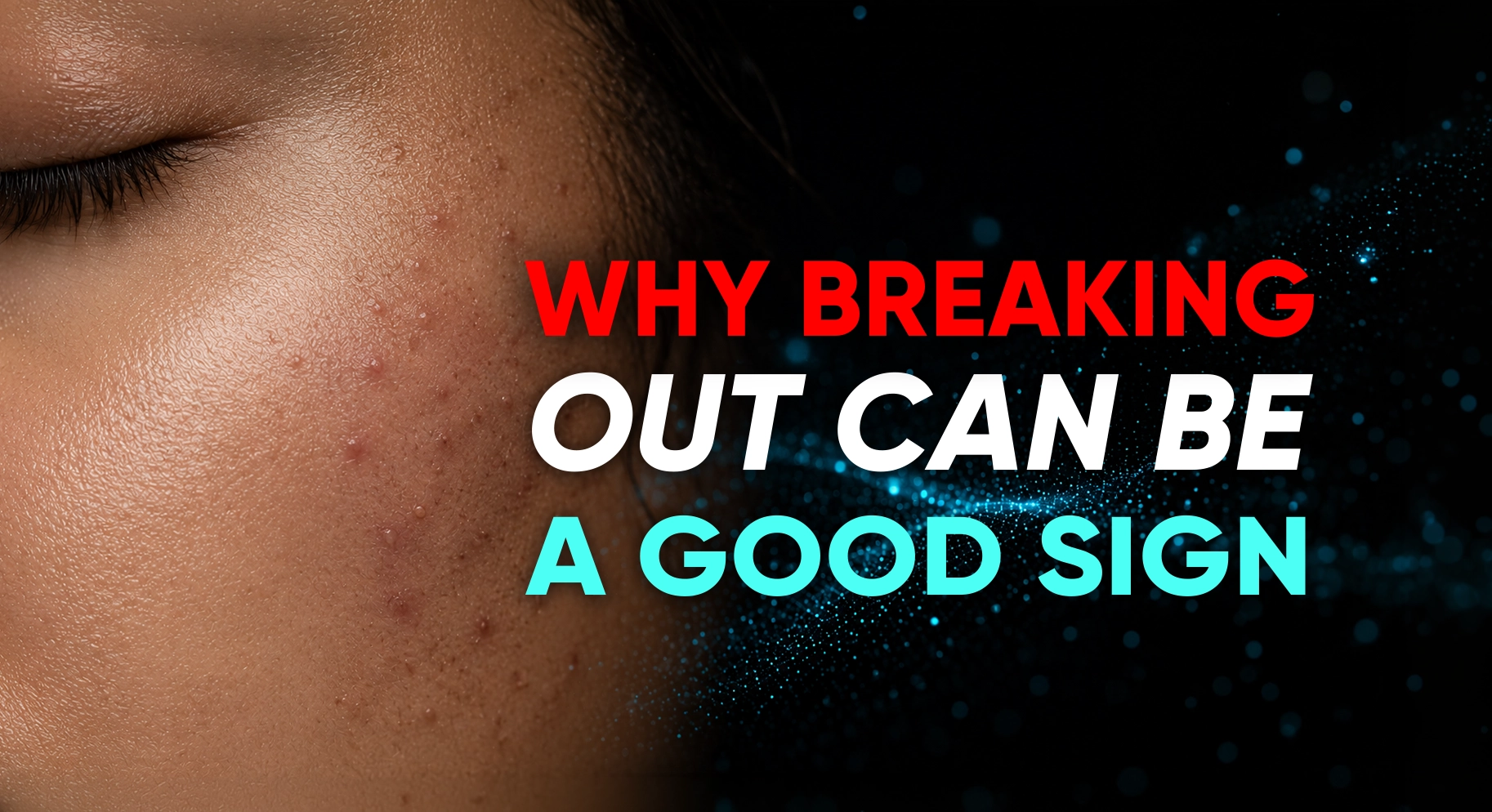
Why “Acne Purging” Is the Most Misunderstood Skincare Term of 2026
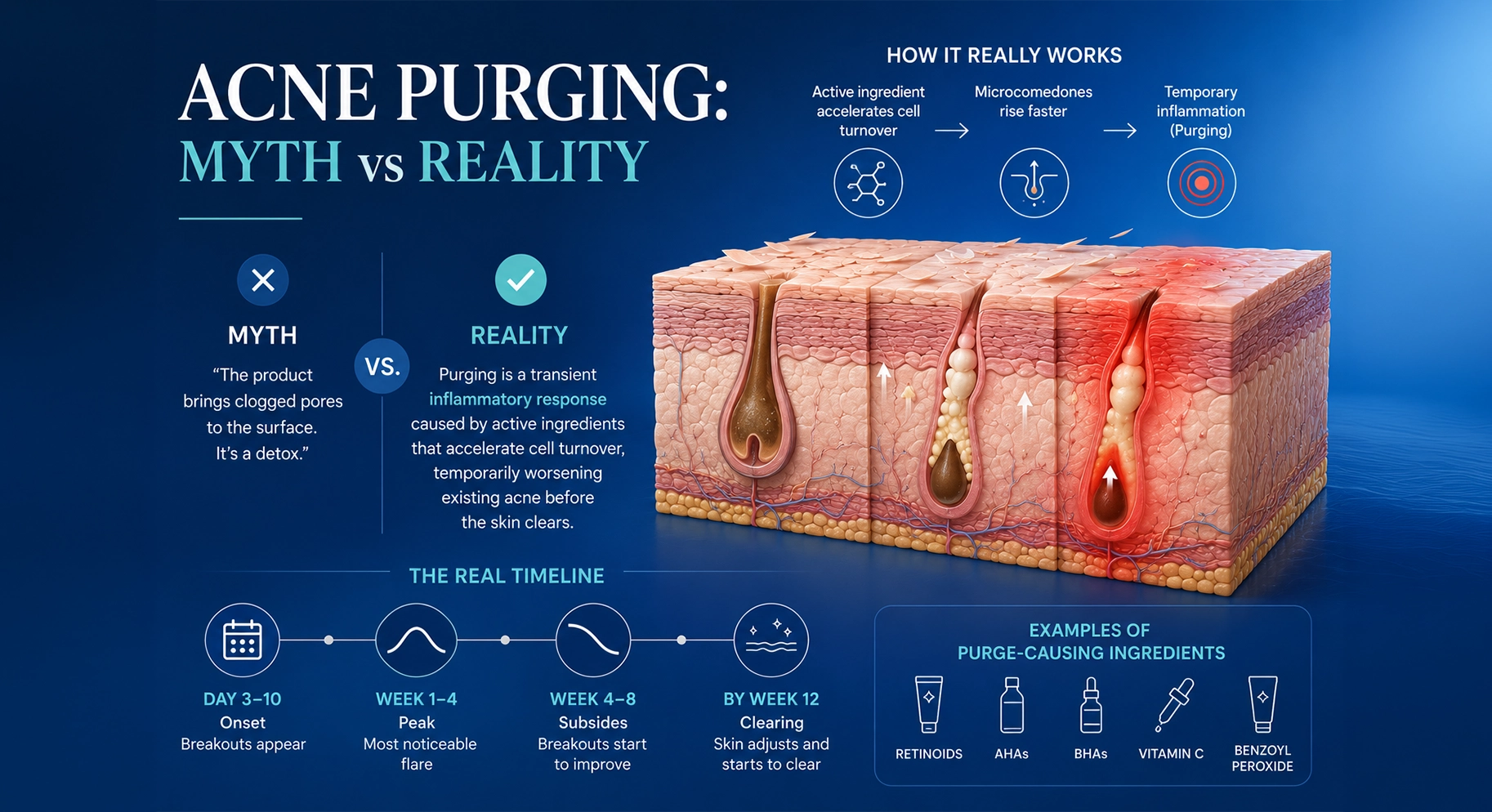
Search any social platform for “acne purging” and the same explanation appears in nearly every result. The product is bringing clogged pores to the surface. The skin is detoxing. The active ingredients are flushing out impurities. It sounds intuitive, it gets shared millions of times, and it is wrong. The dermatology research that actually explains what is happening goes back to Albert Kligman in 1972, when he coined the term acne cosmetica, and it has been updated as recently as 2025 by peer-reviewed work on the comedone switch and the microcomedone biology. What the research describes is not a detox. It is a transient inflammatory response driven by the active ingredient itself, which temporarily worsens existing acne lesions before the skin acclimates and clears. Related reading: Benzoyl Peroxide vs Salicylic Acid for Acne, and how it is evaluated and treated at Perfect B in Doral.
This distinction matters because patients who believe the detox story make predictable mistakes. They stop the product the moment the breakouts get worse, assuming the active is making their acne worse permanently. They layer multiple actives at once thinking faster cell turnover means faster results. They mistake true irritation for purging and continue using a product that is genuinely damaging their skin barrier. This guide explains what acne purging actually is, the 4 clinical signs that separate it from a regular breakout, the realistic Day 3 to Week 12 timeline, which ingredients cause it (and which do not despite popular belief), why combining multiple actives multiplies your risk, and the 6 red flags that mean stop the product immediately and see a medical provider.
Key Takeaways on Acne Purging
- Acne purging is not a detox. The real mechanism is transient inflammation from active ingredients that accelerate cell turnover, based on dermatology research dating to Kligman 1972 and updated in 2025.
- Approximately 20 to 25 percent of patients starting a new effective acne treatment experience purging.
- The typical timeline runs from Day 3 to Week 12: onset between Day 3 and Day 10, peak between Week 1 and Week 4, subsidence between Week 4 and Week 8, and clearing by Week 12.
- 4 clinical signs separate purging from a regular breakout: timing (after a new active ingredient), location (areas where you already get acne), appearance (lesions resolve faster), and trigger (clear product start, not stress or hormones).
- Ingredients that cause purging: retinoids, AHAs, BHAs, vitamin C, benzoyl peroxide, isotretinoin, chemical peels.
- Ingredients that do NOT cause purging: niacinamide, peptides, hyaluronic acid, basic moisturizers, sunscreen, antioxidants. A breakout from these is irritation, not purging.
- Stopping the product mid-purge resets the process and delays the clear-skin outcome, but there are 6 specific red flags where you should stop and see a medical provider immediately.
What Acne Purging Actually Is: The Inflammation Mechanism (Not the “Detox” Myth)
The popular explanation is that active ingredients accelerate skin cell turnover, which brings clogged pores and microcomedones to the surface faster, producing a visible flare. Half of that is true. Cell turnover does accelerate. But the visible breakout is not because impurities are being pushed to the surface. The breakout happens because the active ingredient creates a transient inflammatory environment in the skin, and that inflammation aggravates the existing microcomedones and early acne lesions that were already developing beneath the surface. The skin is not detoxing. The skin is reacting.
This was first described in 1972 by Albert Kligman, the dermatologist who coined the term acne cosmetica to describe how skincare products could worsen acne in susceptible patients. The mechanism has been refined repeatedly since then. A landmark 2015 paper in the journal Dermatology by Jean-Hilaire Saurat, titled Strategic Targets in Acne: The Comedone Switch in Question, described the microcomedone as the primary acne lesion and identified the LRIG1+ sebaceous stem cells in the pilosebaceous duct as the molecular switch that initiates acne pathogenesis. The peer-reviewed Karger Dermatology paper details the cellular sequence by which a normally functioning sebaceous gland transforms into a microcomedone, and a 2025 update by the same author argues that the microcomedone is not just a plug but functions more like an egg, an active biological structure with its own developmental trajectory.
Why this matters in practice: if you understand that purging is an inflammatory response and not a detox, you stop expecting the breakout to resolve itself in a week, you stop layering additional actives thinking you can speed it up, and you start being able to identify when a reaction is genuinely irritation or sensitivity rather than the normal acclimation phase. The myth of detox makes patients impatient. The reality of inflammation makes them strategic.
Purging vs Breakout: 4 Clinical Signs That Tell Them Apart
The single most useful skill in managing your skin through a new active ingredient is being able to identify whether what you are experiencing is normal purging or a true breakout that signals you should stop. Four clinical signs reliably tell them apart.
- 1. Timing. Purging begins shortly after starting a new active ingredient, typically between Day 3 and Day 10 of consistent use. A regular breakout has no clear trigger event and may have been building gradually for weeks before becoming visible. If you cannot tie the worsening to a specific product introduction, you are most likely not purging.
- 2. Location. Purging happens in areas where you already get acne, because those are the areas with existing microcomedones that the active is accelerating. Forehead, chin, jaw, sides of the nose, wherever your typical pattern is. If you are getting cystic acne in new areas you have never broken out before, the bumps in new locations are not purging, they are something else (potentially product comedogenicity, allergic reaction, or unrelated breakout).
- 3. Appearance and resolution. Purging lesions tend to come to a head faster and resolve faster than regular acne. The bumps are usually smaller, less inflammatory, and clear in days rather than weeks. Regular breakouts can be deeper, more painful, more cystic, and slower to resolve. If the lesions are taking longer than your usual acne to heal, the reaction is likely not normal purging.
- 4. Trigger. Purging has a clear and recent trigger: a new active product, a new chemical peel, a new prescription. Regular breakouts have triggers that are biological or environmental: hormonal cycle, stress, diet shift, sleep deprivation, allergens, comedogenic products. If you started a new active and your acne worsened within 10 days, the link is real. If your acne worsened during a stressful month with no skincare change, that is a breakout, not purging.
The cleanest decision rule when in doubt: was there a new active ingredient (retinoid, AHA, BHA, vitamin C, benzoyl peroxide, chemical peel) introduced in the past 1 to 2 weeks? If yes, the worsening is most likely purging. If no, it is most likely a true breakout and the cause is elsewhere. → Review the Acne Treatment Plan at Perfect B to see how a licensed provider evaluates your skin, current regimen, and timeline to identify which path you are on.
The Real Timeline: Day 3 to Week 12 of What to Expect
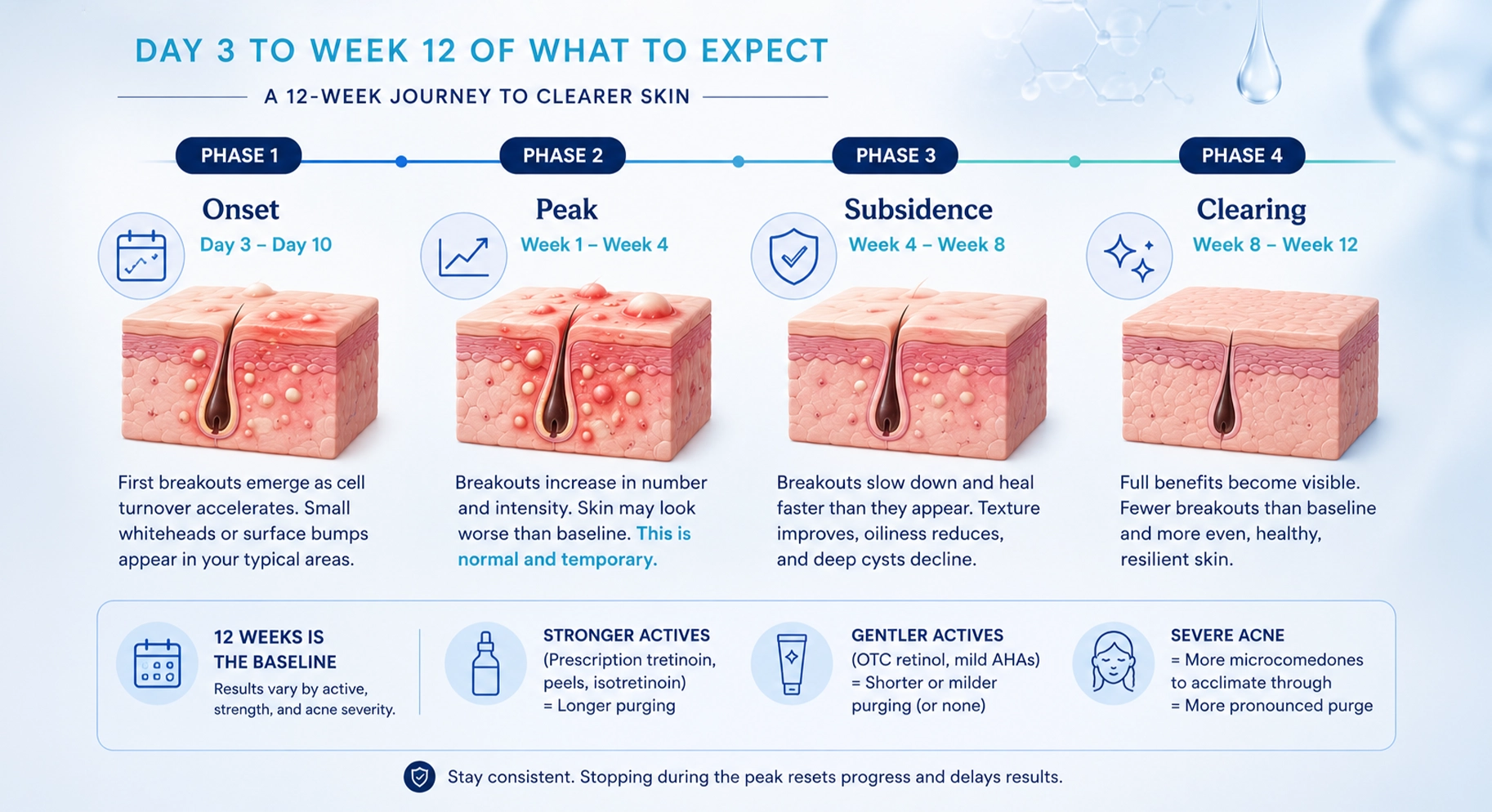
The realistic timeline for a complete purging cycle runs about 12 weeks from product start to fully cleared skin, structured in 4 phases. Knowing these phases lets you set expectations and avoid the most common mistake (stopping the product during the peak, which is exactly when patients quit and lose the protocol):
- Phase 1: Onset (Day 3 to Day 10). The first breakouts emerge as the active ingredient begins to accelerate cell turnover. Lesions appear in your typical acne areas, often small whiteheads or surface bumps. Easy to miss or dismiss as a single bad day.
- Phase 2: Peak (Week 1 to Week 4). This is the most frustrating phase and the one most patients abandon during. Breakouts increase in number and intensity, the skin may look worse than your baseline acne, and the temptation to stop the product is highest. This phase is normal. The skin is acclimating to the active ingredient and the inflammatory response is at maximum.
- Phase 3: Subsidence (Week 4 to Week 8). The breakouts begin to slow and existing lesions heal faster than they appear. The skin starts to feel different, often with subtle texture improvements, slightly less oiliness, and a reduction in deep cystic activity. By Week 6, most patients see that the trajectory has reversed.
- Phase 4: Clearing (Week 8 to Week 12). The full benefit of the active ingredient becomes visible. Skin texture improves, breakouts decrease to below baseline, and the cumulative effect of 12 weeks of accelerated cell turnover starts to translate into clearer, more even-toned skin.
The 12-week timeline is a baseline, not a guarantee. Stronger actives (prescription tretinoin, deep chemical peels, isotretinoin) often produce longer purging phases. Lower-strength actives (over-the-counter retinol, gentle AHAs) often produce shorter and milder purging or none at all. Patients with more severe baseline acne typically experience more pronounced purging because there are more microcomedones to acclimate through. Tretinoin specifically has a well-documented purge timeline, and patients on prescription retinoids may want to review the full tretinoin purge timeline with survival tips and what to expect by week for a more detailed week-by-week walkthrough of that specific ingredient.
Ingredients That Cause True Purging (Retinoids, AHAs, BHAs, Vitamin C, Benzoyl Peroxide)
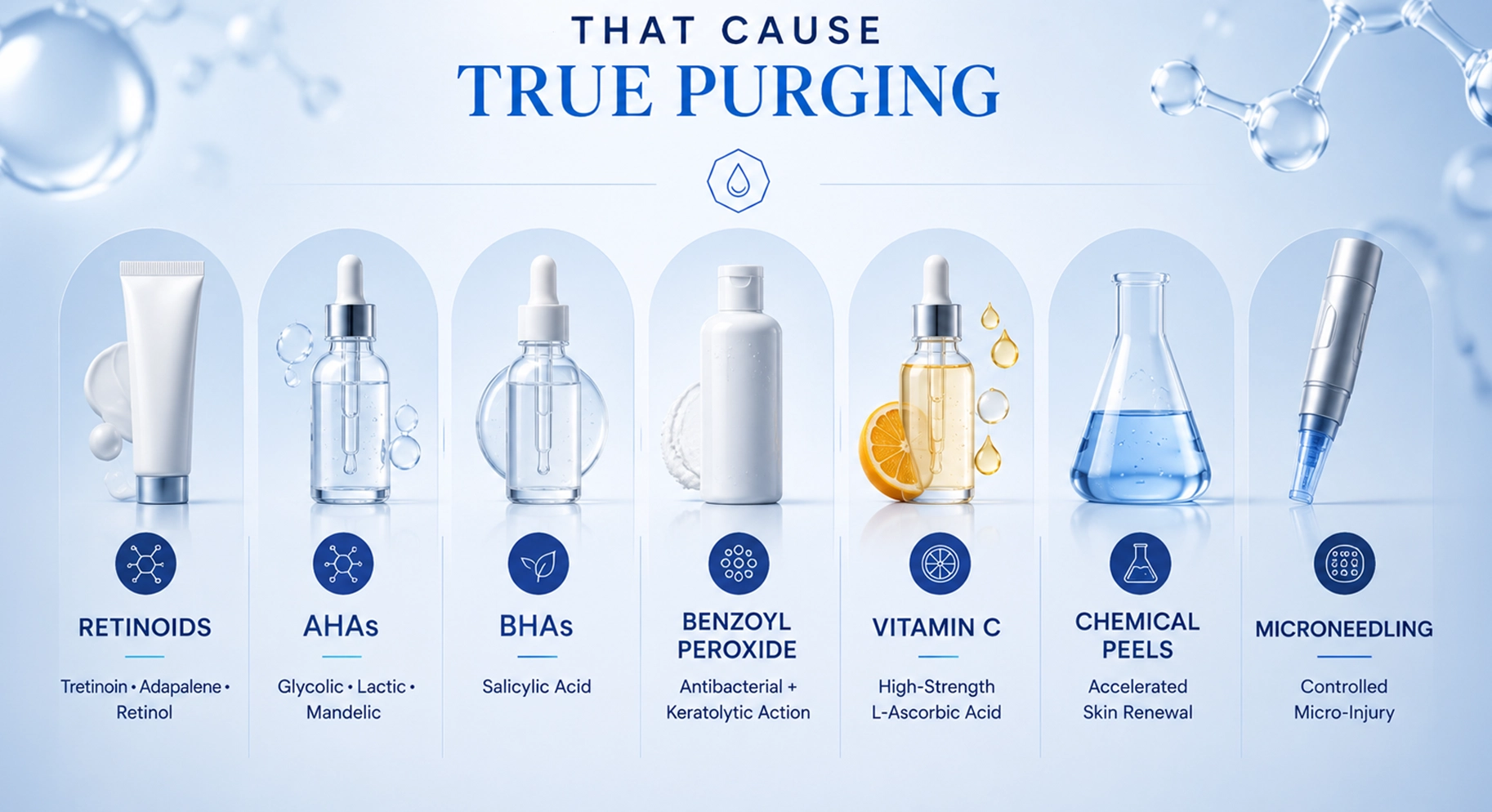
True acne purging is caused by ingredients that accelerate skin cell turnover. The category is narrower than most patients assume. Here are the documented offenders, grouped by mechanism:
- Retinoids. The most well-documented cause of purging. Includes prescription tretinoin (Retin-A) at strengths from 0.01 to 0.1 percent, adapalene (Differin) at 0.1 to 0.3 percent, over-the-counter retinol, retinaldehyde, and oral isotretinoin (Accutane). Stronger formulations and higher concentrations produce more pronounced purging.
- Alpha Hydroxy Acids (AHAs). Glycolic acid (the most aggressive), mandelic acid (gentler), lactic acid, citric acid. Used in serums, toners, and chemical peels. The exfoliation mechanism is direct removal of dead skin cells, which accelerates turnover at the surface.
- Beta Hydroxy Acids (BHAs). Primarily salicylic acid, which is lipid-soluble and penetrates the pore. Used in over-the-counter acne products at 0.5 to 2 percent and in clinical chemical peels at higher concentrations. Patients interested in the specific BHA mechanism can review the clinical guide to salicylic acid for acne.
- Benzoyl Peroxide. Acts through bacterial destruction and mild keratolysis. The rapid bacterial die-off can trigger an immune response that briefly worsens inflammation.
- Vitamin C (L-ascorbic acid forms). Some patients experience purging from high-concentration L-ascorbic acid serums (10 to 20 percent), though this is less consistent than the other categories.
- Chemical peels. Glycolic, salicylic, lactic, TCA, and Jessner-based peels all accelerate cell turnover at the depth of the treatment. Stronger peels produce more visible purging. For a clinical overview, see the full guide on chemical peels for acne including peel types, depths, and what to expect.
- Microneedling and microdermabrasion. Both mechanically accelerate cell turnover through controlled micro-injury, which can produce a brief purging phase in patients with active microcomedones.
Ingredients That DO NOT Cause Purging (Niacinamide, Moisturizers, Peptides, Sunscreen)
An equally important list, often missing from the social media explanation, is what does not cause purging. If you are experiencing worsening acne after starting one of these ingredients, what you are experiencing is irritation, sensitivity, comedogenicity, or an unrelated breakout, not purging. Continuing the product hoping the breakout will resolve is the wrong move.
- Niacinamide. Does not accelerate cell turnover. Niacinamide is anti-inflammatory and supports skin barrier function. If your skin reacts negatively to niacinamide, the issue is sensitivity or product formulation, not purging. Full background on the ingredient: what niacinamide actually does for your skin.
- Peptides. Small chain amino acid sequences that signal collagen and elastin production. No cell turnover acceleration mechanism. Peptides do not purge.
- Hyaluronic acid. Pure hydration. No active mechanism that would trigger purging.
- Ceramides and barrier-repair ingredients. Restore the lipid layer. Do not accelerate turnover.
- Basic moisturizers without actives. A moisturizer without retinoids, acids, or other actives cannot purge skin. If a moisturizer is causing breakouts, the issue is comedogenicity (often from oils or thickeners) and the product should be changed.
- Sunscreen. A breakout from sunscreen is comedogenicity or barrier-disrupting formulation, never purging. Switch to a non-comedogenic mineral or hybrid formulation.
- Antioxidants (resveratrol, green tea extract, ferulic acid). No turnover mechanism. These do not purge.
The decision rule: only ingredients that accelerate skin cell turnover can produce true purging. If the ingredient does not mechanically or chemically increase cell turnover, the breakout is something else.
Why Combining Multiple Actives Multiplies Your Purging Risk
One of the most common reasons patients have severe and prolonged purging is stacking. They start tretinoin on Monday, add a glycolic acid toner on Wednesday, and layer in a salicylic acid cleanser by the weekend, thinking that more actives equal faster results. The opposite is true. Each active independently accelerates cell turnover and produces inflammation. When multiple actives are combined in the same regimen, the inflammatory load compounds, the purging response is more severe, and the recovery phase is longer.
The clinical recommendation across dermatology literature is to introduce active ingredients one at a time, allowing 4 to 6 weeks for the skin to acclimate before adding the next one. For example:
- Week 1 to 6: Introduce retinoid only (start with the lowest effective concentration, every other night for the first 2 weeks, then nightly). All other skincare stays basic: gentle cleanser, moisturizer, sunscreen.
- Week 6 to 10: If retinoid is tolerated and the purge has cleared, consider adding a single second active (such as a BHA cleanser or a low-concentration vitamin C in the morning).
- Week 10+: If the regimen is tolerated, evaluate whether a third active or a chemical peel is appropriate. Many patients do not need more than 2 actives at any given time.
Patients on prescription retinoids should also consider the escalation protocol. Tretinoin is available at 0.01 to 0.1 percent, and starting at the lowest concentration with gradual escalation typically reduces the severity of the purge while preserving the efficacy of the treatment. This is the approach used by most acne-focused dermatology practices for first-time retinoid patients.
The 6 Red Flags That Mean Stop the Product and Call a Medical Provider
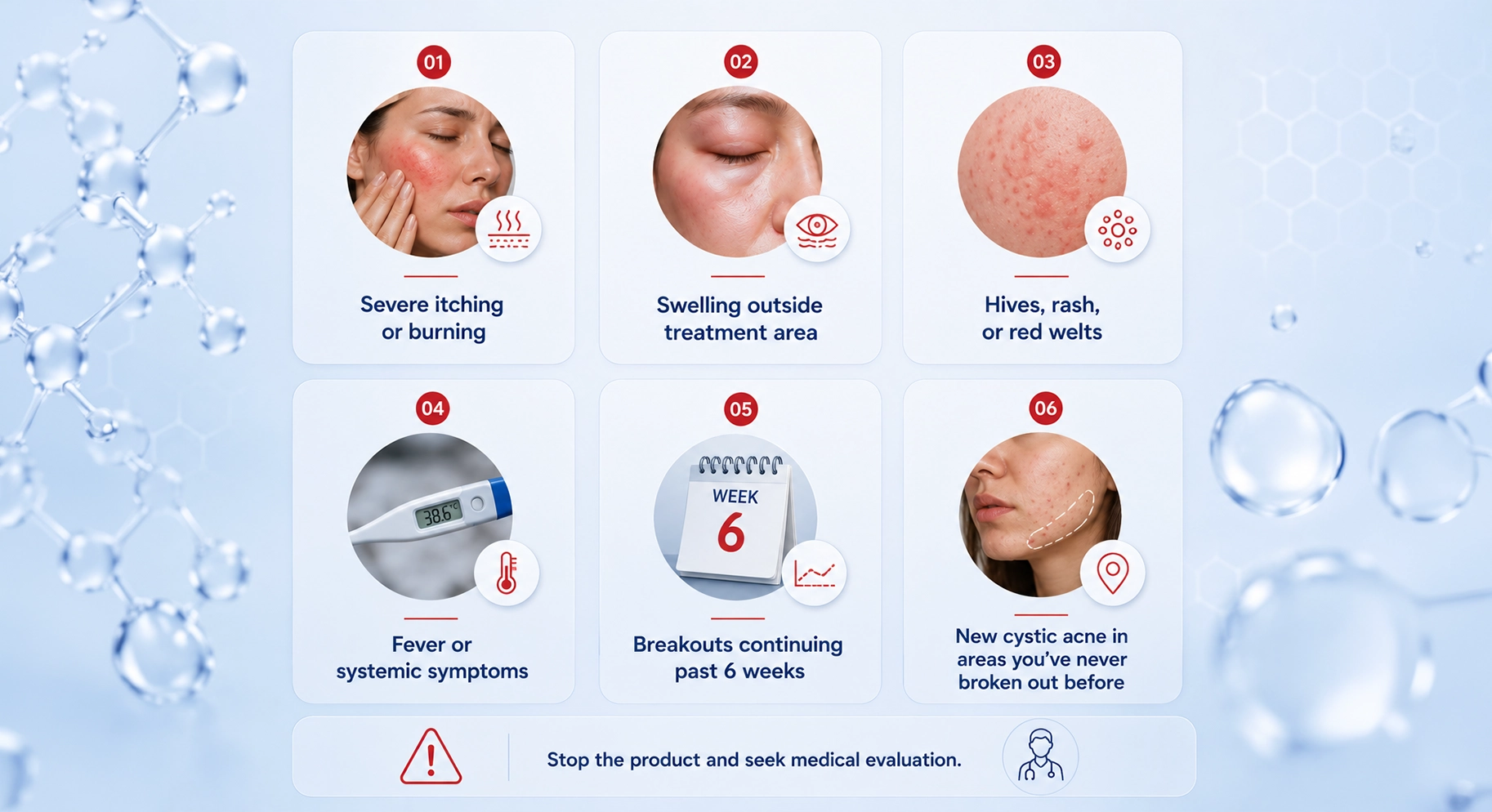
Most patients with mild to moderate purging should continue their product through the 12-week protocol. Stopping mid-purge resets the cell turnover process and delays the clearing phase, sometimes by months. However, there are 6 specific signs that what you are experiencing is not normal purging and you should stop the product immediately and contact a medical provider:
- 1. Severe itching or burning. Mild dryness and tightness during the first weeks of a retinoid is expected. Intense itching, burning that persists hours after application, or skin that feels chemically irritated indicates a reaction or contact dermatitis, not purging.
- 2. Swelling that spreads outside the treatment area. Purging produces lesions in the areas where acne typically appears. Swelling of the eyelids, lips, or large areas of facial skin that were not directly product-treated indicates an allergic reaction.
- 3. Hives, rash, or red welts. Raised red patches, urticaria, or geographically defined rash patterns are allergic or irritant reactions. Stop the product and assess with a medical provider before reintroducing.
- 4. Fever or systemic symptoms. A topical skincare product should never produce fever, fatigue, or systemic illness. If you experience any systemic symptoms while using a new product, stop immediately and seek medical evaluation.
- 5. Breakouts continuing past 6 weeks of consistent use. True purging follows a predictable arc and should be visibly improving by Week 4 to 6. If breakouts continue to worsen or stay at peak intensity past 6 weeks, the reaction is not normal purging and a clinical evaluation is needed.
- 6. New cystic acne in areas you have never broken out before. Purging happens in your acne-prone areas. If new cystic lesions are appearing in entirely new locations (jawline if you have only ever had forehead acne, for example), the cause is not purging and a medical provider should evaluate whether the product is comedogenic for your specific skin or whether there is another driver.
None of these signals are common. Most patients who follow a properly prescribed retinoid or chemical peel protocol experience normal purging and clear through it. But when red flags appear, the safest path is to stop the product, document the timeline, and have a licensed medical provider evaluate what is happening. → Book an Acne Treatment Plan consultation at Perfect B to evaluate whether you stopped during a normal purging phase that would have resolved, or whether a different approach is needed.
Frequently Asked Questions
1. What is acne purging in simple terms?
Acne purging is a temporary increase in breakouts that happens when you start using a skincare ingredient that accelerates cell turnover, such as retinoids, AHAs, BHAs, vitamin C, or benzoyl peroxide. The real mechanism is transient inflammation from the active ingredient, not the popular myth of the product bringing clogged pores to the surface as a detox. Approximately 20 to 25 percent of patients starting a new acne treatment experience purging, and it typically resolves within 4 to 6 weeks.
2. How long does acne purging last?
A typical acne purging timeline runs from Day 3 to about Week 12. The breakouts begin between Day 3 and Day 10 after starting the product, peak between Week 1 and Week 4, subside between Week 4 and Week 8, and the clearing phase is usually complete by Week 12. If breakouts continue or worsen beyond 6 weeks of consistent use, the reaction is most likely not normal purging and a medical provider should evaluate it.
3. How do I know if it’s purging or a regular breakout?
The 4 clinical signs that separate purging from a regular breakout are timing, location, appearance, and trigger. Purging begins shortly after starting a new active ingredient and follows a predictable 4 to 6 week course. The breakouts appear in areas where you typically get acne, not in new locations. The pimples come to a head faster and heal faster than your usual acne. And there is a clear trigger event, the new product. A regular breakout has none of these signals, lasts longer, may appear in new areas, and is often driven by hormones, stress, or other lifestyle factors.
4. Which ingredients cause purging?
Five categories of active ingredients are documented to cause purging: retinoids (tretinoin, adapalene, retinol, isotretinoin), alpha hydroxy acids (glycolic, mandelic, lactic, citric), beta hydroxy acids (salicylic acid), benzoyl peroxide, and certain forms of vitamin C. Chemical peels and microdermabrasion also commonly cause purging. The common mechanism is acceleration of skin cell turnover, which produces transient inflammation that worsens existing acne lesions before the skin clears.
5. Which ingredients do NOT cause purging?
Niacinamide, peptides, hyaluronic acid, ceramides, basic moisturizers, sunscreen, and antioxidants like resveratrol or green tea extract do not cause purging because they do not accelerate cell turnover. If you experience a worsening breakout when starting one of these ingredients, what you are experiencing is most likely irritation or a reaction, not purging, and the product should be reconsidered with a medical provider.
6. Should I stop the product if I am purging?
In most cases, no. Stopping mid-purge resets the cell turnover process and delays the clear-skin outcome. However, there are 6 red flags that indicate you should stop the product and contact a medical provider: severe itching or swelling, swelling that spreads outside the treatment area, hives or rash, fever or systemic symptoms, breakouts that continue past 6 weeks of consistent use, or new cystic acne in areas you have never broken out before. These signal a reaction or irritation, not normal purging. Call us at (786) 502-2260 to schedule an evaluation.
7. Why does combining retinoids with AHAs or BHAs make purging worse?
When multiple active ingredients that accelerate cell turnover are used in the same regimen, the inflammatory load on the skin compounds, and the purging response is typically more severe and longer-lasting. The clinical recommendation is to introduce one active ingredient at a time, allow 4 to 6 weeks for the skin to acclimate, and only then layer in the next one. A medical provider designs the sequence based on the patient skin type, acne severity, and tolerance.
The Clinic Takeaway: How a Medical Provider Manages Purging Properly
The detox story is comforting but inaccurate, and the cost of believing it is real. Patients abandon their treatment at the peak of purging, thinking the active is making things worse permanently. Patients stack 3 actives at once and produce purging severe enough to mimic a true allergic reaction. Patients continue using genuinely irritating products thinking the breakout will eventually resolve into clear skin. Understanding what acne purging actually is, an inflammatory response to accelerated cell turnover, transforms how you interpret what you see in the mirror at Week 2.
A licensed medical provider does three things differently from self-directed skincare. First, they identify the right active for your skin type, acne pattern, and baseline severity, rather than recommending the most popular or most aggressive option. Second, they sequence the regimen, introducing actives one at a time with adequate acclimation between them, rather than stacking from day one. Third, they monitor the purging trajectory and intervene if red flags appear, rather than letting the patient decide alone whether to continue or stop. At Perfect B, the Acne Treatment Plan integrates full evaluation, customized protocol, and progress monitoring across more than 21,000 acne treatments performed.
- 📍 Visit us at Perfect B, Doral FL, serving Miami and South Florida patients seeking acne treatment and skin care.
- 📞 Call or message us at (786) 502-2260 to schedule your acne consultation with a licensed medical provider.