
Perfect B, Doral Fl. | 06.10.26 | 9 min read.
This article is for educational purposes only and is not a substitute for medical advice. Always consult a licensed provider about your skin.
Azelaic Acid: What It Does for Acne, Rosacea, and Dark Spots
Azelaic acid is one of the few skincare ingredients that earns the word multitasker. It treats acne, calms the redness of rosacea, and fades the dark spots left behind by both, all from a single bottle. It is gentle enough to be considered safe in pregnancy, yet effective enough that dermatologists prescribe it at higher strengths. This guide covers what azelaic acid actually does, the azelaic acid benefits that matter most, how to use azelaic acid without irritation, what to expect, and how it compares to other actives.
Key Takeaways
- Azelaic acid is a multitasker: it works on acne, rosacea, and pigmentation at the same time.
- It is well tolerated: low irritation for most people and considered safe during pregnancy (FDA category B).
- It targets pigment at the source: it calms overactive melanocytes, so it fades dark spots without bleaching healthy skin.
- Strength matters: drugstore serums run 10 percent, prescription versions reach 15 to 20 percent.
- Consistency wins: most azelaic acid benefits show up after 8 to 12 weeks of nightly use.
What Is Azelaic Acid and What Does It Do?
Azelaic acid is a naturally occurring acid found in grains like barley and wheat. On the skin it does three useful things at once: it is mildly antibacterial against the bacteria involved in acne, it is anti-inflammatory so it calms redness, and it interrupts the enzyme that drives excess pigment. That combination is what makes the azelaic acid benefits so broad. The U.S. National Library of Medicine’s overview of topical azelaic acid explaining how it treats acne and rosacea and how it is applied is a solid plain-language reference if you want the clinical basics.
What Azelaic Acid Treats, Compared to Other Actives
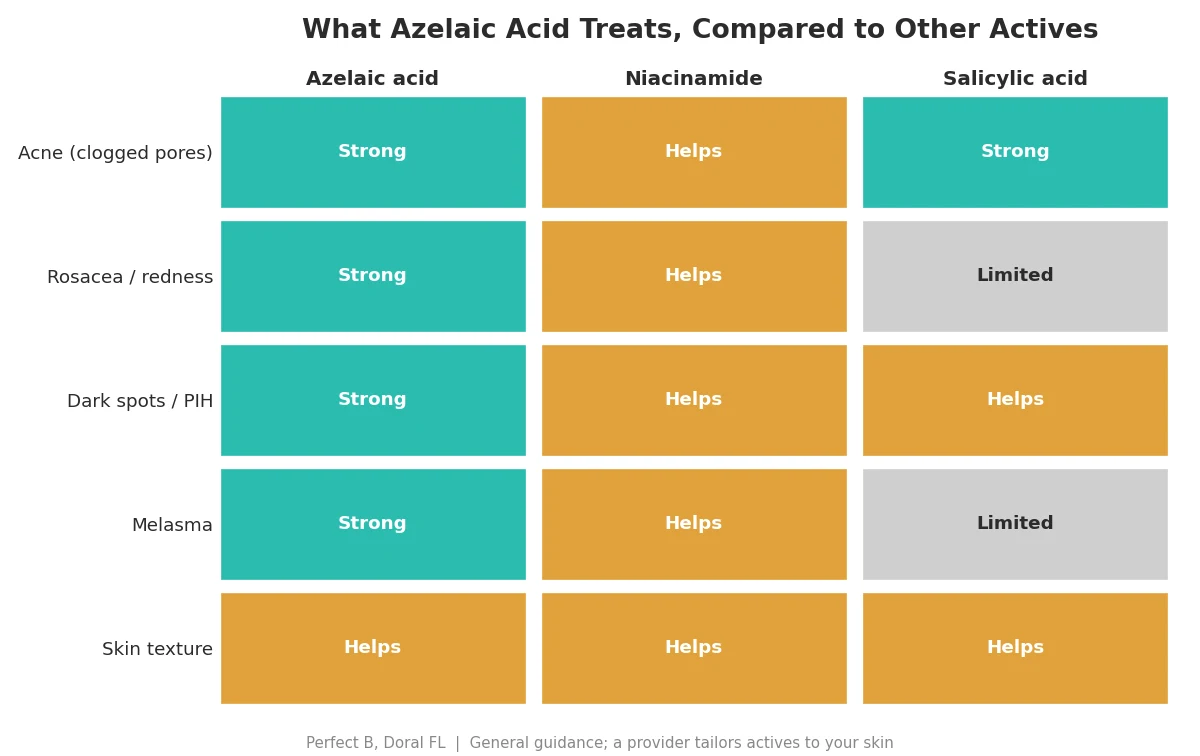
The reason azelaic acid shows up in so many routines is that it covers concerns that usually need separate products. The chart below compares where it is strong against niacinamide and salicylic acid, so you can see why it is often the anchor of a simple routine.
Azelaic Acid for Acne and Clogged Pores
For acne, azelaic acid works on two fronts: it reduces the bacteria that inflame breakouts and it helps normalize the way dead skin cells shed, so pores clog less. It is especially useful for people who cannot tolerate stronger actives, and it has a bonus the others lack: because it also fades pigment, it treats the dark marks acne leaves behind while it treats the acne itself. We use it in our own formulations too: Perfect B’s Perfect Body Wash and Body Lotion combine azelaic acid with glycolic acid and glutathione for brighter, clearer skin. For breakouts specifically, a provider can build the right azelaic acid routine into your plan, which you can explore in our staged medical acne treatment plan at Perfect B in Doral, FL.
Azelaic Acid for Rosacea and Redness
Azelaic acid for rosacea is one of its best-supported uses. Its anti-inflammatory action calms the persistent flushing and the small bumps of papulopustular rosacea, and it is gentle enough that sensitive, reactive skin usually tolerates it. Many people who cannot use harsher actives find that azelaic acid for rosacea is the one ingredient they can stay on long term. For South Florida patients dealing with heat-triggered flushing, a consistent azelaic acid for rosacea routine plus sun protection makes a real difference, and a provider can confirm the right strength and routine for your skin.
Azelaic Acid for Hyperpigmentation, Dark Spots, and Melasma
Azelaic acid for hyperpigmentation is where it really stands out. It works by inhibiting tyrosinase, the enzyme that overactive pigment cells use to make excess melanin, so it targets the spots that are misbehaving and leaves normal skin alone. That selectivity makes azelaic acid for hyperpigmentation a strong, lower-risk option for the medium and deeper skin tones we treat across Miami, where harsher brighteners can backfire. It helps post-acne marks, sun spots, and melasma. Used alongside daily sunscreen, azelaic acid for hyperpigmentation pairs well with a fuller plan like our guide to medical hyperpigmentation treatment in Miami covering dark spots, melasma, and sun damage. To understand why it layers so well, see what niacinamide does for tone and barrier support alongside other actives.
How to Use Azelaic Acid
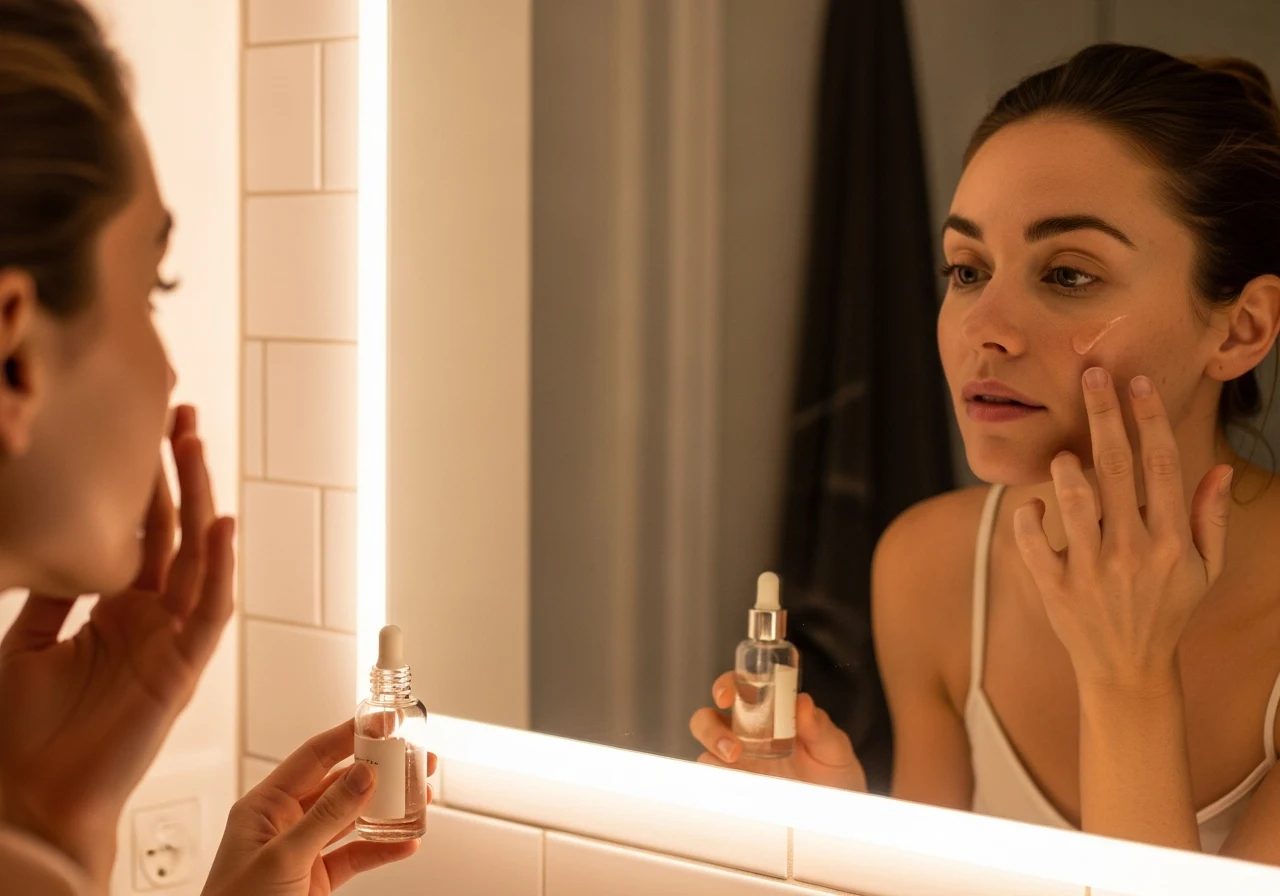
Knowing how to use azelaic acid is mostly about consistency and patience. Here is the simple version.
- Cleanse and dry: apply to clean, dry skin so it absorbs evenly.
- Start once daily: a thin layer at night, building to morning and night if tolerated. This is the core of how to use azelaic acid without irritation.
- Moisturize and protect: follow with moisturizer, and always use sunscreen in the morning since you are treating pigment.
- Layer smart: it pairs well with niacinamide and can be alternated with a retinoid on separate nights.
If you are unsure how to use azelaic acid with the rest of your routine, a quick provider visit saves months of guesswork.
Side Effects and the Purging Question
Azelaic acid is well tolerated, but the first few weeks can bring mild tingling, itching, or dryness as skin adjusts. These usually settle. Some people notice an early uptick in breakouts often called purging, as faster cell turnover pushes existing congestion to the surface. Easing in slowly and keeping the skin moisturized minimizes both. If irritation is severe or lasts beyond a few weeks, scale back the frequency and check with a provider.
Azelaic Acid vs Niacinamide: Which One?
This is not really an either-or. Niacinamide is a gentle, barrier-supporting all-rounder that calms redness and helps regulate oil. Azelaic acid is more targeted and stronger on active acne and stubborn pigment. The best results often come from using both: niacinamide to support the skin and azelaic acid to treat the concern. If you can only pick one for breakouts plus dark marks, azelaic acid does more of that specific job.
Is Azelaic Acid Safe During Pregnancy?
Yes, and this is one of its biggest advantages. Azelaic acid is rated FDA pregnancy category B, the most reassuring rating an acne active can carry, while retinoids and many other treatments are off the table during those months. That makes it a first-choice ingredient for breakouts and pigmentation while expecting. We cover the full picture in our guide to pregnancy acne treatment, including which ingredients are safe and which to avoid.
Frequently Asked Questions
Q1: What are the main azelaic acid benefits?
The core azelaic acid benefits are clearing acne, calming rosacea and redness, and fading dark spots and melasma, all with low irritation. It is one of the few actives that addresses breakouts and pigmentation at the same time.
Q2: How long does azelaic acid take to work?
Most people see meaningful change in 8 to 12 weeks of consistent nightly use. Redness can improve sooner, while pigment and dark spots take the longest because they fade over a full skin cycle.
Q3: Is azelaic acid for rosacea better than other options?
Azelaic acid for rosacea is a first-line, well-tolerated choice, especially for the redness and bumps of papulopustular rosacea. A provider can tell you whether prescription strength or a combination approach fits your case.
Q4: Can I use azelaic acid for hyperpigmentation on darker skin?
Yes. Azelaic acid for hyperpigmentation is a lower-risk brightener for medium and deeper skin tones because it targets only overactive pigment cells and does not bleach normal skin.
Q5: What strength of azelaic acid should I use?
Over-the-counter serums are usually 10 percent, which suits most people. Prescription strengths of 15 to 20 percent are stronger and best used under a provider’s guidance.
Q6: Can I use azelaic acid with retinol or niacinamide?
Yes. It layers well with niacinamide and can be alternated with a retinoid on separate nights. Introduce one active at a time so you can tell what your skin is responding to.
Closing: Why Azelaic Acid Earns Its Spot
Azelaic acid is rare in that it does the work of several products at once: acne, redness, and pigment, with low irritation and a safety profile good enough for pregnancy. The catch is the same as every good active, it only works if you use it consistently and protect your skin from the sun while it does its job. For most people it is one of the easiest, most forgiving ways to treat breakouts and dark marks together.
If you are not sure which strength to use, how to layer it, or whether your spots are post-acne marks versus melasma, that is exactly what a provider visit sorts out. The right plan turns a good ingredient into a real result instead of a guessing game.
- 📍 Perfect B | 3905 NW 107th Ave, Suite 104, Doral FL 33178
- 📞 Call or message us at (786) 502-2260 to schedule your skin consultation with a licensed medical provider.
- 💳 Buy Now Pay Later: Cherry, Klarna, Afterpay, CareCredit