
Perfect B, Doral Fl. | 06.10.26 | 9 min read.
This article is for educational purposes only and is not a substitute for medical advice. Always consult a licensed provider about your skin.
Whiteheads and Closed Comedones: What They Are and How to Clear Them
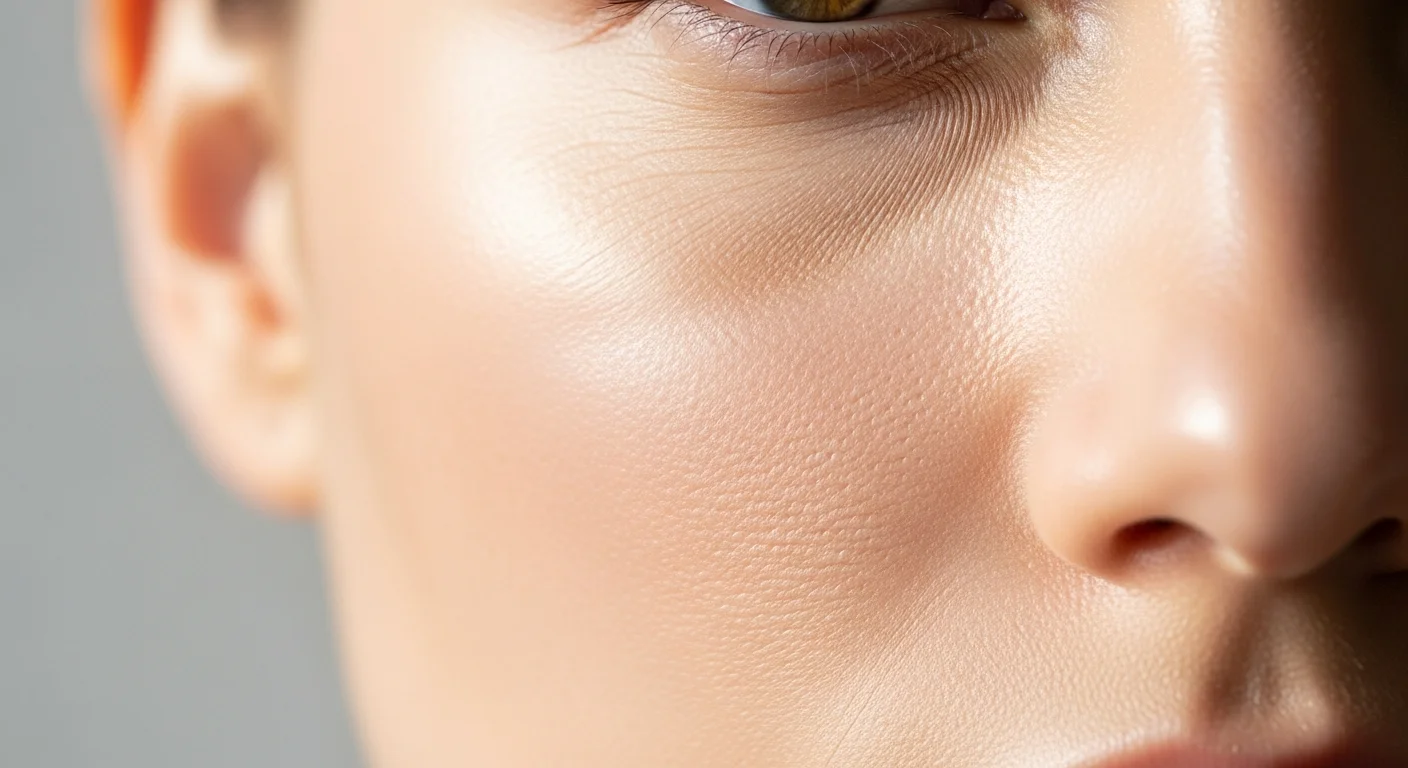
Whiteheads are one of the most common forms of acne, and they are also one of the most misunderstood. The clinical name for a whitehead is a closed comedone, which is why dermatologists use the two terms interchangeably. They show up as small, skin-colored or white bumps that sit just under the surface, most often on the nose, chin, forehead, and around the mouth. The frustrating part is that they are stubborn: they do not come to a head like a pimple, and squeezing them almost always makes things worse. This guide explains what causes whiteheads, how to get rid of whiteheads safely at home, what a medical clinic can add, and how long clearing them actually takes.
Key Takeaways
- Whiteheads are closed comedones: the same lesion, one is the common name and one is the clinical term.
- They are not infections: they form when oil and dead skin plug a pore that stays closed at the surface.
- Three ingredients do most of the work: salicylic acid, a retinoid, and benzoyl peroxide, supported by niacinamide.
- Never squeeze them: picking is the fastest route to scarring and dark marks.
- Clinics add what home care cannot: professional extraction, a HydraFacial, and chemical peels speed up closed comedones treatment.
What Are Whiteheads, and Why “Closed Comedones” Means the Same Thing
A comedone is a clogged pore. When the clog stays open at the surface and oxidizes, it darkens into a blackhead. When the pore stays closed over the top, you get a whitehead, which is why the medical term is closed comedone. Both are non-inflammatory acne, meaning there is no redness or pus, just a plug of sebum and dead skin cells trapped in the follicle. Understanding this is the whole key to treatment: you are not fighting an infection, you are clearing and preventing a plug. If you want the blackhead side of the story, see our guide to how a HydraFacial clears blackheads and congested pores without aggressive squeezing.
What Causes Whiteheads?
So what causes whiteheads in the first place? Three things combine inside the follicle: excess oil (sebum), a buildup of dead skin cells that do not shed normally, and the closed surface that traps both. Hormones are the most common driver, which is why whiteheads flare during puberty, around the menstrual cycle, and with stress. Heavy or pore-clogging products, sweat trapped under masks or hats, and simply touching your face can all add to it.
Location often hints at the trigger. Whiteheads on nose skin and the rest of the oily T-zone usually track with sebum production, and whiteheads on nose and forehead are some of the first spots people notice. Whiteheads on the chin and jawline lean hormonal, tracking with the cycle or stress. Wherever they sit, the mechanism is the same closed comedone, so the treatment principles do not change by zone.
Whiteheads vs Blackheads vs Milia: How to Tell Them Apart
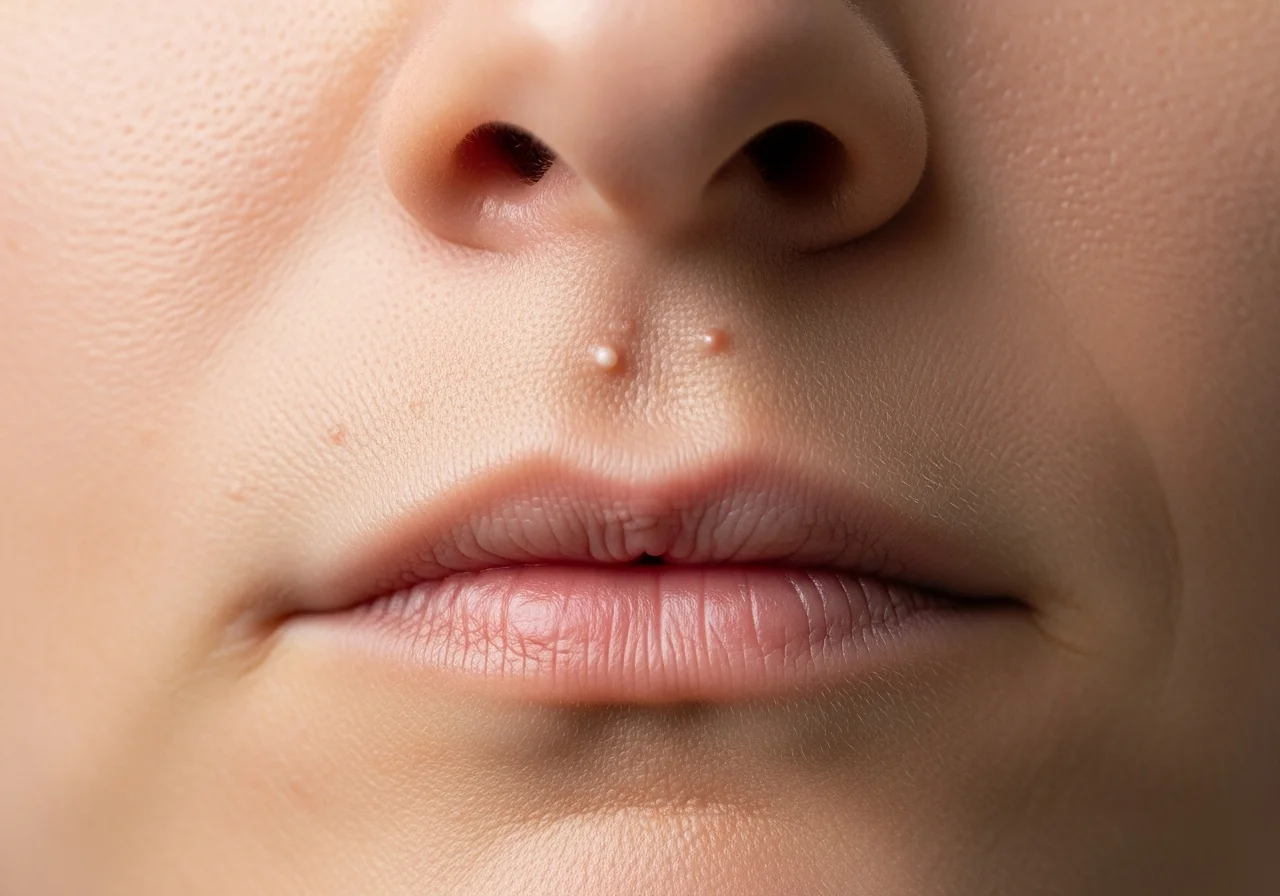
- Whitehead (closed comedone): soft, skin-colored or white bump under a closed pore. Squeezable plug of oil and dead skin.
- Blackhead (open comedone): same plug, but the pore is open and the surface has oxidized dark.
- Milia: tiny, firm white spheres of trapped keratin. They look like whiteheads but are not acne and will not respond to acne actives. They usually need professional removal.
Telling them apart matters because milia and true whiteheads are treated differently. If a bump never changes with months of good acne care, it may be milia, and that is a good reason to have it looked at in person.
How to Get Rid of Whiteheads at Home
The home plan for how to get rid of whiteheads is built on a small set of proven actives, used consistently. More products is not better; the right few used nightly is what clears closed comedones.
- Salicylic acid: an oil-soluble BHA that gets inside the pore and dissolves the plug. The single best daily ingredient for whiteheads. See our daily-use guide to salicylic acid for acne, including how to use it without over-drying the skin.
- Retinoids: adapalene or prescription tretinoin speed up cell turnover so pores stop getting plugged. This is the most effective long-term fix for closed comedones.
- Benzoyl peroxide: useful when whiteheads are mixed with inflamed pimples.
- Niacinamide: calms the skin and helps regulate oil. Read what niacinamide actually does for oily, congestion-prone skin and why it layers well with acids and retinoids.
Pair these with a gentle cleanser, an oil-free non-comedogenic moisturizer, and daily sunscreen. Give any routine eight to twelve weeks before judging it, and add actives one at a time so you can tell what is working.
Closed Comedones Treatment: What a Clinic Adds
When home care stalls, in-clinic closed comedones treatment does what creams cannot. At our Doral, FL clinic the difference is doing it safely, without the scarring that DIY squeezing causes.
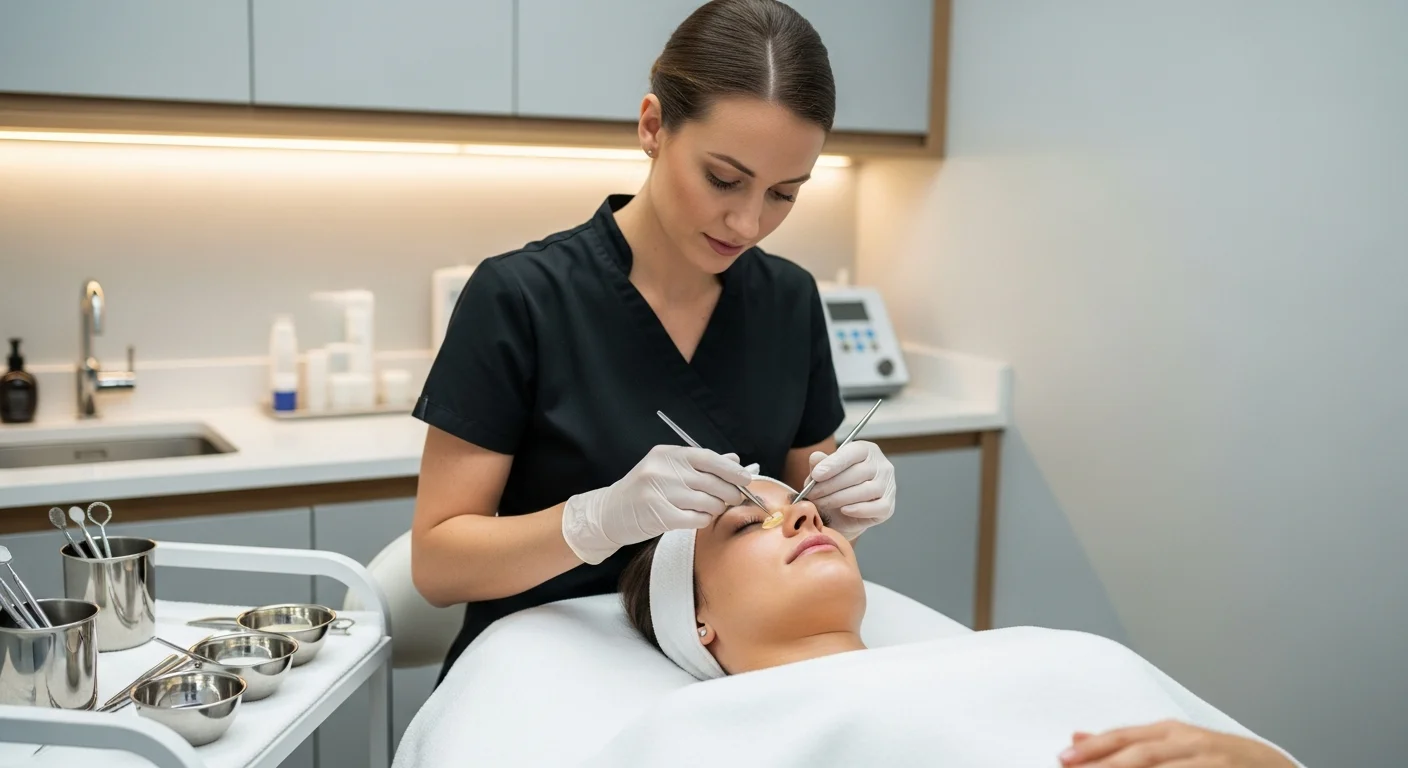
- Professional extraction: a trained provider clears the plug with sterile tools and proper pressure, so the pore empties without trauma to the surrounding skin.
- HydraFacial: gentle suction plus exfoliation lifts oil and debris from congested pores in one session.
- Chemical peels: a salicylic or other professional peel exfoliates deeper than home products. See our staged medical acne treatment plan at Perfect B that combines extractions, peels, and prescription actives for stubborn congestion.
Why You Should Never Pick or Squeeze a Whitehead
Because whiteheads are closed, squeezing them forces pressure into the follicle wall instead of out through the surface. That can rupture the follicle under the skin, spread the contents, and trigger real inflammation where there was none. The result is often a bigger, redder spot, and worse, a dark mark or a scar that lasts far longer than the original bump. The single most effective thing you can do for whiteheads on the nose, chin, or anywhere else is to stop touching them and let your actives and your provider do the work.
How Long Do Whiteheads Take to Clear?
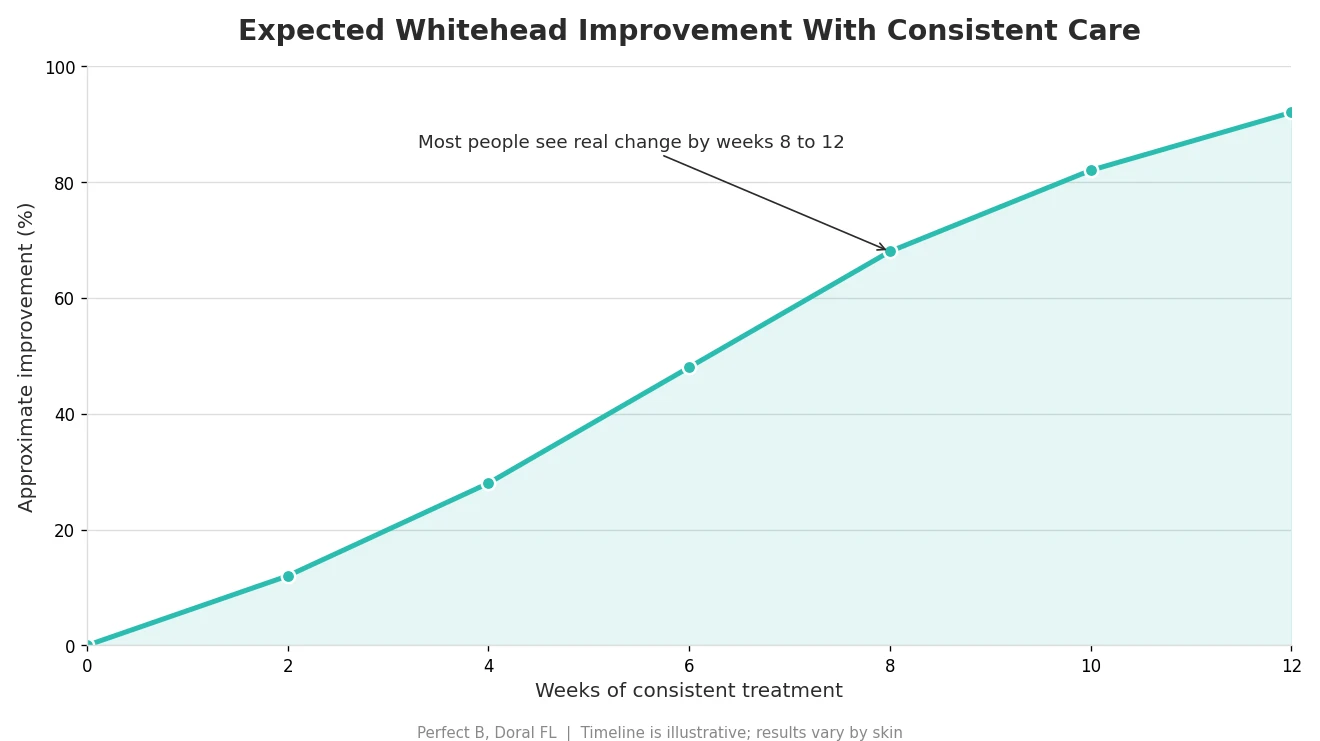
Honest timelines prevent people from quitting too early. With consistent home care, most people see real improvement in eight to twelve weeks, because that is how long it takes a retinoid to normalize the cell turnover that was plugging pores. Individual whiteheads may clear faster, but the goal is to stop new ones from forming, and that takes a full skin cycle. Adding in-clinic extractions or a HydraFacial can speed up the visible result while your home routine handles prevention.
How to Prevent Whiteheads From Coming Back
Clearing them is only half the job. Once you understand what causes whiteheads, prevention is mostly about not re-triggering that plugged-pore cycle. The same habits that teach you how to get rid of whiteheads are what keep them from coming back.
- Keep using a retinoid: prevention is the retinoid’s real job, even after the skin clears.
- Choose non-comedogenic products: makeup, sunscreen, and moisturizer should all be labeled non-comedogenic.
- Do not over-wash or over-scrub: stripping the skin triggers more oil and more whiteheads.
- Wash after sweating: trapped sweat under hats, helmets, and masks feeds congestion.
Frequently Asked Questions
Q1: Are whiteheads and closed comedones the same thing?
Yes. “Whitehead” is the common name and “closed comedone” is the clinical term for the same lesion: a pore plugged with oil and dead skin that stays closed at the surface.
Q2: What is the fastest way to get rid of whiteheads on nose skin?
Daily salicylic acid plus a nightly retinoid is the most effective home approach for whiteheads on nose and T-zone skin. For a faster visible result, a professional extraction or HydraFacial clears the congestion safely in one session.
Q3: Can I pop a whitehead if it looks ready?
No. Because the pore is closed, squeezing forces the contents into the skin and can cause inflammation, dark marks, and scarring. Let actives or a provider clear it instead.
Q4: How long does closed comedones treatment take to work?
Expect eight to twelve weeks of consistent care for clear results, since that matches the skin’s cell turnover cycle. In-clinic treatments can speed up what you see while your routine prevents new ones.
Q5: Why do I keep getting whiteheads on my chin?
Chin and jawline whiteheads are often hormonal, tracking with the menstrual cycle or stress. A retinoid plus non-comedogenic products helps, and a provider can assess whether a hormonal pattern needs more.
Q6: Are whiteheads the same as milia?
No. Milia are firm keratin cysts that look similar but are not acne and will not respond to acne actives. They usually need professional removal, which is why a bump that never changes should be evaluated in person.
Closing: The Clinic Takeaway on Whiteheads
Whiteheads and closed comedones are the same simple problem: a plugged, closed pore. The fix is not aggressive and it is not fast, it is consistent. Salicylic acid, a retinoid, and niacinamide clear most cases over a skin cycle, professional extractions and a HydraFacial speed up the visible result, and never squeezing protects you from the scars that are far harder to treat than the bumps themselves.
If your whiteheads are not budging, or you are tempted to pick at them, that is the right moment to bring in a provider. A supervised plan combines the right home actives with safe in-clinic clearing, so you stop the cycle instead of fighting it month after month.
- 📍 Perfect B | 3905 NW 107th Ave, Suite 104, Doral FL 33178
- 📞 Call or message us at (786) 502-2260 to schedule your acne and congestion consultation with a licensed medical provider.
- 💳 Buy Now Pay Later: Cherry, Klarna, Afterpay, CareCredit