
Perfect B, Doral Fl. | 06.16.26 | 10 min read.
This post is for educational purposes only and does not substitute for personalized medical advice. Treatment protocols vary based on individual skin history, Fitzpatrick type, and clinical goals. Speak with our team before starting any regenerative skin protocol.
Key Takeaways
- PDRN repairs, exosomes signal: PDRN provides DNA fragments that fuel tissue repair; exosomes carry growth factors and miRNA that direct cell behavior.
- PDRN is our primary regenerative tool at Perfect B in Doral, FL: a deliberate clinical choice, not a marketing preference.
- Exosomes are a stack, not a replacement: we add exosomes to PDRN protocols when patients need deeper, faster regenerative response.
- Skin type matters: Fitzpatrick III to VI skin, common in our South Florida Hispanic patient population, requires specific protocol adjustments to avoid post-inflammatory hyperpigmentation.
- Stacked protocols outperform either alone: in clinical observation, combined PDRN plus exosome protocols deliver superior skin improvement timelines compared to either modality used in isolation.
What Is PDRN and How Does It Work at the Cellular Level?
PDRN stands for polydeoxyribonucleotide. It is a chain of DNA fragments, typically sourced from purified salmon trout sperm, that closely matches human DNA structure. When injected or delivered through microchannels into the skin, PDRN does three specific things at the cellular level.
- Adenosine A2A receptor activation: PDRN binds to adenosine receptors on fibroblasts, triggering collagen production, anti-inflammatory cascades, and improved microcirculation.
- Salvage pathway substrate: the DNA fragments are reused by surrounding cells to build new nucleic acids without expending cellular energy on de novo synthesis. This is energy-efficient repair.
- Angiogenesis and tissue remodeling: PDRN promotes new capillary formation, which is why post-procedure redness, scar texture, and barrier dysfunction respond particularly well.
For a deeper breakdown of PDRN mechanism and how it compares to dermal fillers, see our complete clinical guide to PDRN, salmon DNA polynucleotides, and what they actually do for skin regeneration at Perfect B.
What Are Exosomes and Why Are They Different From PDRN?
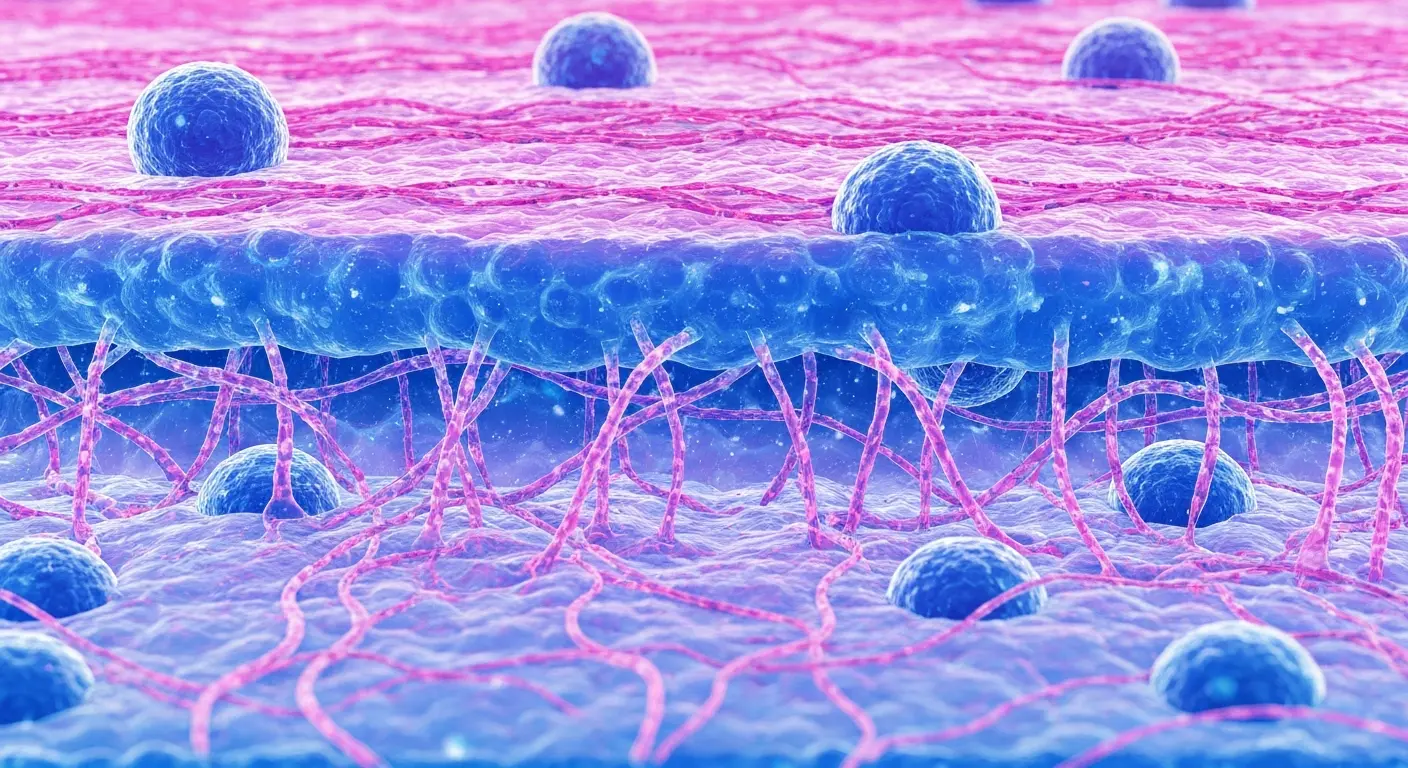
Exosomes are nano-sized vesicles, typically 30 to 150 nanometers in diameter, released by stem cells and other cell types. They carry a cargo of proteins, lipids, growth factors, and microRNA that instructs target cells on how to behave. In aesthetic medicine, exosomes are most commonly sourced from human mesenchymal stem cells or platelet-derived sources, processed to be cell-free and pathogen-screened.
The clinical distinction matters: PDRN provides raw repair material, while exosomes provide instructions. Think of PDRN as supplying the bricks and adenosine signaling to the construction crew. Exosomes deliver the architectural blueprints that tell the crew which kind of building to construct. Both are valuable. They are not the same intervention.
A 2025 peer-reviewed review in PubMed Central detailing how mesenchymal stem cell-derived exosomes deliver growth factors, miRNA, and proteins directly to skin cells to drive cutaneous regeneration confirms that exosomes function as cell-to-cell communicators, not as raw repair substrate. The mechanism is signaling, not material supply.
Modern exosome therapy for skin sits inside a broader category of regenerative skin treatments that also includes PDRN, growth factor preparations, and stem cell-derived secretomes. The PDRN vs exosomes question, framed as either-or, misses the clinical reality at Perfect B. Most demanding cases benefit from layered protocols where exosomes for skin rejuvenation are added on top of a PDRN baseline, not used in isolation.
Side-by-Side: How PDRN and Exosomes Compare on the Outcomes That Actually Matter
Patient questions usually come down to four practical dimensions: how fast does it work, how long do results last, what does recovery feel like, and which skin issues respond best. The chart below summarizes clinical improvement observations across a 24-week timeline for PDRN alone, exosomes alone, and the combined protocol Perfect B uses for patients with more advanced concerns.
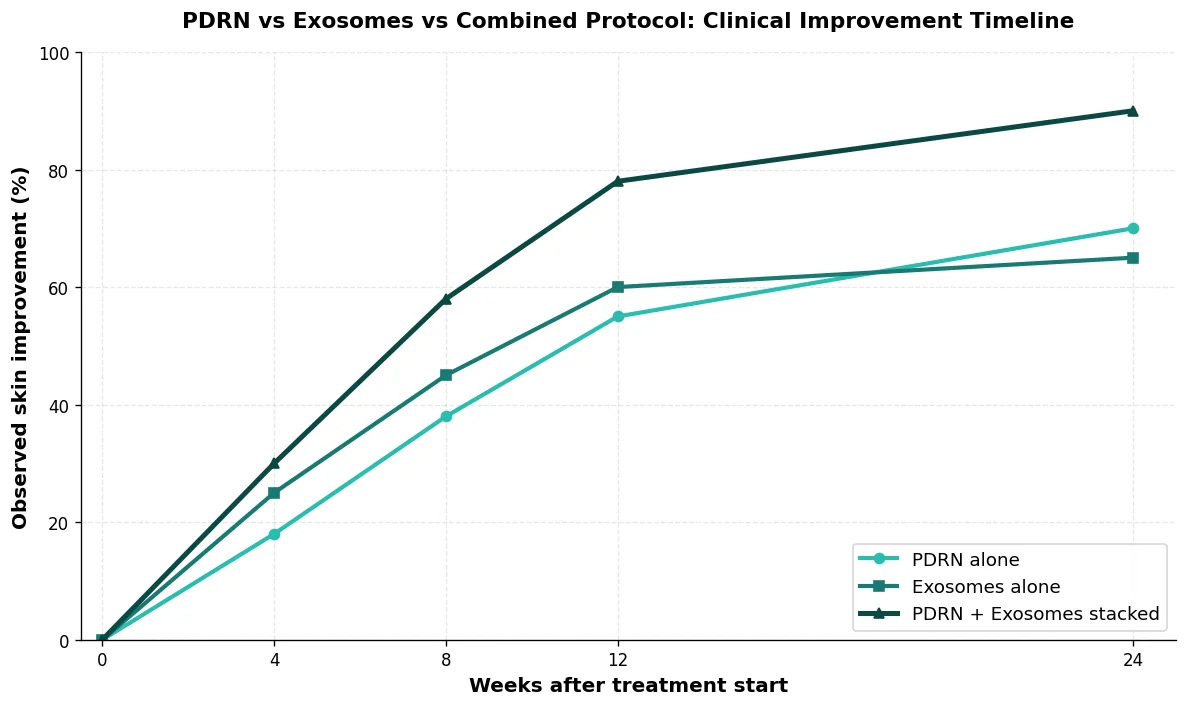
Three observations stand out from clinical experience at our Doral clinic:
- Exosomes show faster early response: patients often notice texture and glow changes by week 4, slightly ahead of PDRN alone. This is consistent with their role as direct cellular signalers.
- PDRN delivers more durable structural change: by week 24, PDRN protocols typically continue improving as collagen remodeling progresses, while exosome-only protocols can plateau.
- Combined protocols outperform either alone: the stacked approach shows both faster onset and continued progression, which is why Perfect B reserves it for patients with more demanding regenerative needs.
Why Perfect B Uses PDRN as the Primary Regenerative Tool in Doral, FL
At Perfect B in Doral, FL, we use PDRN as our primary regenerative tool. That is a deliberate clinical choice, not a marketing preference. Three reasons drive that decision.
- Predictable safety profile: PDRN sourced from purified salmon DNA has decades of clinical data behind it across orthopedics, ophthalmology, and dermatology. The molecular structure is well characterized.
- Lower post-inflammatory hyperpigmentation risk: for our South Florida patient population, which skews heavily toward Fitzpatrick III to VI, PDRN tends to produce less inflammatory rebound than aggressive exosome-only protocols. PIH avoidance is a primary clinical concern.
- Cost-stable supply chain: PDRN sourcing is mature and regulated. Exosome sourcing remains more variable across the industry, and quality varies considerably by supplier. We control what we can validate.
For the full context on how PDRN compares to platelet-rich plasma and why that comparison also favors PDRN at our clinic, read our complete clinical comparison of PDRN versus PRP at Perfect B in Doral, where we lay out exactly why we chose PDRN as the primary regenerative tool over PRP.
When We Stack Exosomes With PDRN: The Clinical Indications That Trigger the Combined Protocol
Perfect B stacks PDRN with exosomes for patients who need deeper regenerative support, a combination that goes beyond what either PRP or standalone PDRN can achieve. The decision is not automatic. It depends on the clinical picture.
- Advanced photoaging: sun-damaged skin with deep wrinkles, dyschromia, and elasticity loss often needs both the repair substrate from PDRN and the signaling acceleration from exosomes.
- Post-procedural recovery: patients recovering from ablative laser, deep microneedling, or surgical scarring benefit from the faster early healing exosomes provide stacked on PDRN baseline support.
- Acne scar remodeling: for atrophic acne scars where both collagen rebuild and active cellular signaling matter, the combined protocol outperforms PDRN alone.
- Hair loss adjuncts: in early to moderate androgenetic alopecia and post-PRP responders looking for the next step, exosomes added to a PDRN scalp protocol can extend the response window.
The standalone exosome protocol Perfect B uses for skin rejuvenation is documented in our clinical breakdown of how exosome microneedling combines SkinPen with exosomes to amplify regenerative results for patients who need faster textural and luminosity changes.
Skin Type Matters: Fitzpatrick III to VI and What South Florida Patients Need to Know
Our Doral, FL clinic serves a patient population that skews heavily Fitzpatrick III to VI, reflecting the Hispanic and Latin demographics of South Florida. Skin tone matters as much in regenerative therapy as it does in laser treatment. Three points patients should know before choosing exosomes or PDRN.
- Inflammatory rebound is the enemy: Fitzpatrick III to VI skin responds to inflammation by depositing melanin in the wrong places. Any regenerative protocol that triggers excess inflammation risks creating new pigmentary problems while trying to fix existing ones.
- PDRN bias toward calming response: the adenosine pathway PDRN activates is anti-inflammatory by design. This makes it a safer starting point for darker skin tones than aggressive exosome-heavy protocols.
- Stacking is dose-controlled: when we add exosomes for advanced cases, the dose, depth, and frequency are adjusted for Fitzpatrick category. A protocol that works on Fitzpatrick II Eastern European skin is not the same protocol we run on Fitzpatrick V Latin American skin.
A comprehensive peer-reviewed review in the Journal of Clinical and Aesthetic Dermatology covering exosomes for practicing dermatologists, including mechanisms, clinical evidence, and protocol customization for aesthetic use highlights why protocol customization, not generic recipes, defines safe outcomes in regenerative practice.
Treatment Protocol at Perfect B: Sessions, Recovery, and Realistic Timeline
What a patient should actually expect during a PDRN or stacked PDRN plus exosome protocol at our Doral, FL clinic.
- Session structure: Standard PDRN protocols typically run 3 to 5 sessions spaced 2 to 4 weeks apart. Stacked PDRN plus exosome protocols often use the same cadence with exosomes added at specific session points based on goals.
- Recovery window: Mild redness and minor swelling for 24 to 48 hours is normal. Most patients return to normal activity the next day with sunscreen and barrier care.
- When results show: Texture and luminosity changes are often noticeable around weeks 3 to 4. Structural collagen remodeling continues progressing through week 24.
- Maintenance schedule: Once the initial series is complete, most patients return for a single maintenance session every 4 to 6 months to preserve gains.
Our broader skin rejuvenation philosophy and how PDRN, exosomes, microneedling, and peptide stacks fit together is laid out in our complete Skin Rejuvenation Treatment Plan at Perfect B in Doral, where we explain how each modality is sequenced for the specific clinical picture in front of us.
Frequently Asked Questions
1. Is one treatment better than the other for fine lines?
For fine lines specifically, PDRN tends to outperform exosomes alone because the issue is structural collagen loss, which PDRN addresses directly through fibroblast activation. Exosomes can accelerate the response when stacked on PDRN, but as a standalone tool for fine lines they are not our first choice at Perfect B.
2. Can I do exosomes if I am pregnant or breastfeeding?
No. Both PDRN and exosomes are not recommended during pregnancy or breastfeeding. Regenerative therapies fall outside the safety data set for those windows. We will not perform either treatment in those conditions.
3. How many sessions before I see results?
Most patients notice textural and luminosity changes by session 2 or 3, typically around weeks 4 to 6. Deeper structural changes such as scar improvement and elasticity gains continue progressing through month 6 after the final session.
4. Are exosomes FDA approved?
Exosomes are currently used in an off-label aesthetic context. PDRN has a more established global regulatory profile but in the U.S. is also used off-label in aesthetics. Both are administered in supervised medical settings at Perfect B. We do not recommend either treatment from non-medical providers.
5. What is the difference between exosomes and stem cell therapy?
Exosomes are cell-free vesicles released by stem cells. They carry the signaling cargo of stem cells without the cells themselves. This eliminates the regulatory and safety concerns of using live cellular material while preserving most of the biological signaling activity that drives the desired effect.
6. Can I combine PDRN or exosomes with other treatments at Perfect B?
Yes. PDRN and exosomes are commonly stacked with microneedling, peptide therapy such as GHK-Cu, and certain laser protocols. The right combination depends on the clinical picture. We map this out during the consultation, not as a default package.
7. How do I know which treatment is right for my skin?
The answer comes from a clinical consultation that maps your Fitzpatrick type, current skin concerns, past procedures, and goals. We do not sell single treatments. We build protocols. Book a consultation at our Doral clinic and our medical team will walk you through what fits your case.
Closing: The Clinical Bottom Line on Exosomes vs PDRN
Exosomes vs PDRN is not a contest with a single winner. They solve different clinical problems. PDRN is the workhorse for tissue repair, anti-inflammatory healing, and structural collagen rebuild, particularly for Fitzpatrick III to VI skin where PIH risk shapes every clinical decision. Exosomes are the accelerator we layer in when the regenerative demand goes beyond what PDRN can do alone.
The differentiator is not the molecule. It is the protocol design, the supervision, and the willingness to say no to combinations that look good on a marketing page but do not match a real patient case. That clinical judgment is what separates a supervised medical clinic from a walk-in spa offering the latest trending treatment.
- 📍 Visit us at Perfect B | 3905 NW 107th Ave, Suite 104, Doral FL 33178
- 📞 Call or message us at (786) 502-2260
- 💳 Buy Now Pay Later available: Cherry, Klarna, Afterpay, CareCredit