
Perfect B, Doral Fl. | 06.16.26 | 9 min read.
This post is for educational purposes only and does not substitute for personalized medical advice. Maskne treatment depends on your skin type, current routine, and underlying conditions. Speak with our team before starting any active protocol.
Key Takeaways
- Maskne is not regular acne: it is a combination of acne mechanica, friction irritation, and barrier disruption from prolonged mask wear. Treating it like standard acne often makes it worse.
- Three drivers, three fixes: occlusion drives clogged pores, friction drives inflammation, and humidity drives microbial overgrowth. A working protocol addresses all three at once.
- Salicylic acid plus barrier repair beats aggressive treatment: a 2 percent BHA cleanser layered with niacinamide and a non-comedogenic moisturizer outperforms harsh benzoyl peroxide on most maskne cases.
- Fitzpatrick III to VI skin needs barrier-first care: for our South Florida Hispanic patient population, aggressive maskne treatment frequently triggers post-inflammatory hyperpigmentation that lasts longer than the original breakouts.
- Mask habits matter as much as products: swapping masks every 4 hours, washing reusable masks daily, and skipping makeup under the mask reduces flares more than any single ingredient.
What Is Maskne and Why Did It Become So Common?
Maskne is the colloquial term for mask-induced acne, a specific form of acne mechanica that develops in the zone covered by a face mask, typically the chin, jawline, cheeks, and around the nose. The medical literature catalogued the phenomenon long before face coverings became universal, but post-2020 it became the most common reason patients walk into a Doral, FL clinic asking about a new breakout pattern they have never had before.
Maskne is not the same condition as standard hormonal or comedonal acne. It looks similar in the mirror. The underlying biology is different, and that is why treating it with whatever-cleared-acne-in-high-school usually backfires. Patients at our Doral, FL clinic frequently arrive with raw, irritated skin from over-treating a problem that needed barrier support more than aggressive intervention.
The Real Causes of Maskne: Three Mechanisms Working Together
Understanding why maskne flares is the entire point of treating it well. Three mechanisms drive it, and they reinforce each other:
- Occlusion and pore clogging: a mask creates a microclimate that traps sebum, sweat, and skin cells against the surface. Pores that would normally clear themselves get plugged.
- Friction and inflammation: the constant rubbing of fabric against skin causes microabrasions and triggers an inflammatory cascade. This is the acne mechanica component, well documented in athletes who wear chin straps and helmet pads.
- Humidity and microbial shift: trapped warmth and moisture change the skin microbiome, favoring Cutibacterium acnes and Malassezia overgrowth. The skin pH rises, the barrier weakens, and breakouts follow.
A peer-reviewed analysis in PubMed Central examining the dermatologic consequences of prolonged personal protective equipment and face mask use, including acne mechanica, contact dermatitis, and barrier disruption patterns confirms that the mechanism is multifactorial rather than a single pathway. Treating one factor while ignoring the others is exactly why most over-the-counter maskne fixes underdeliver.
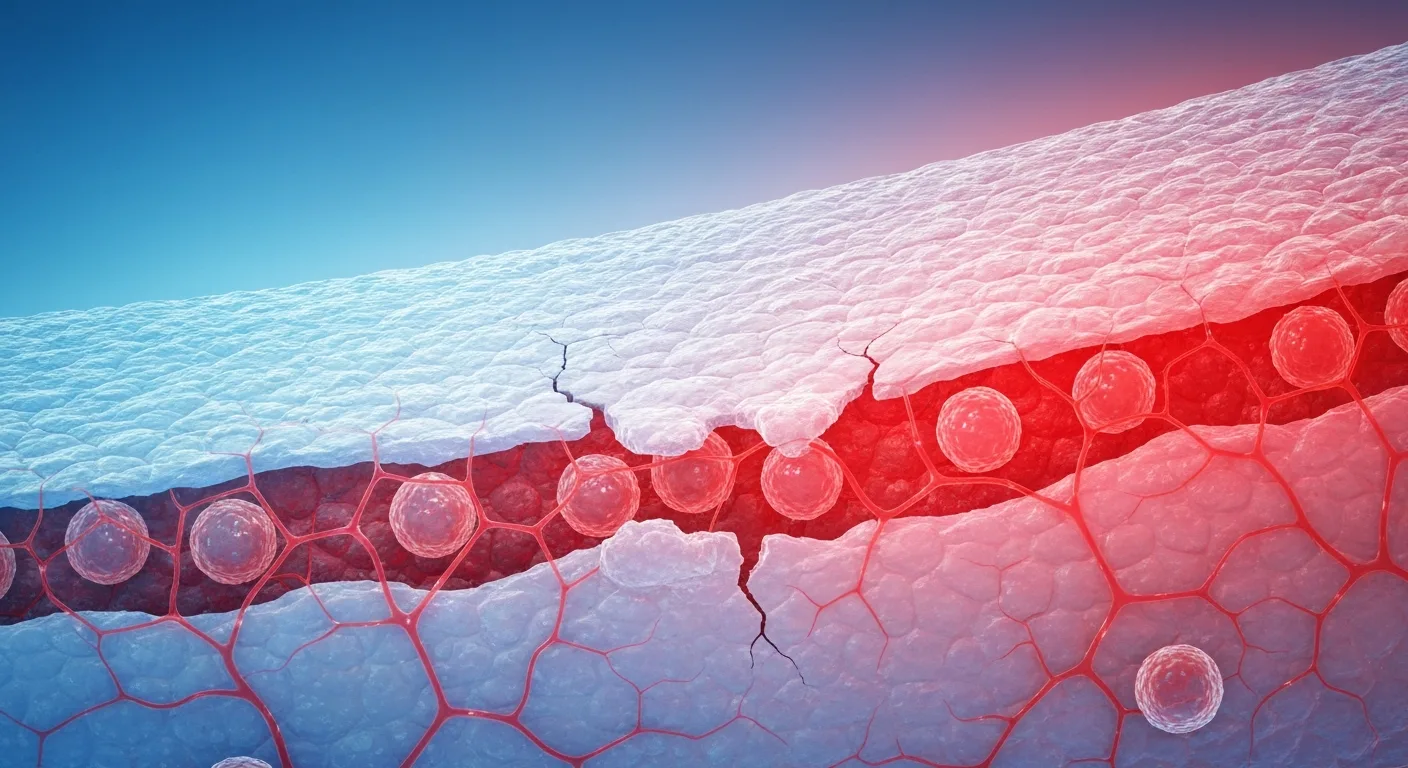
Side-by-Side: How OTC Maskne Care Compares to a Supervised Protocol
Most patients try the same OTC stack before they reach our Doral clinic: harsh benzoyl peroxide wash, a generic spot treatment, and a forgotten moisturizer. It clears some lesions, then triggers a wave of new ones along with redness and post-inflammatory hyperpigmentation. The chart below tracks what we actually see across three patient pathways: no structured plan, OTC-only, and supervised clinical care.
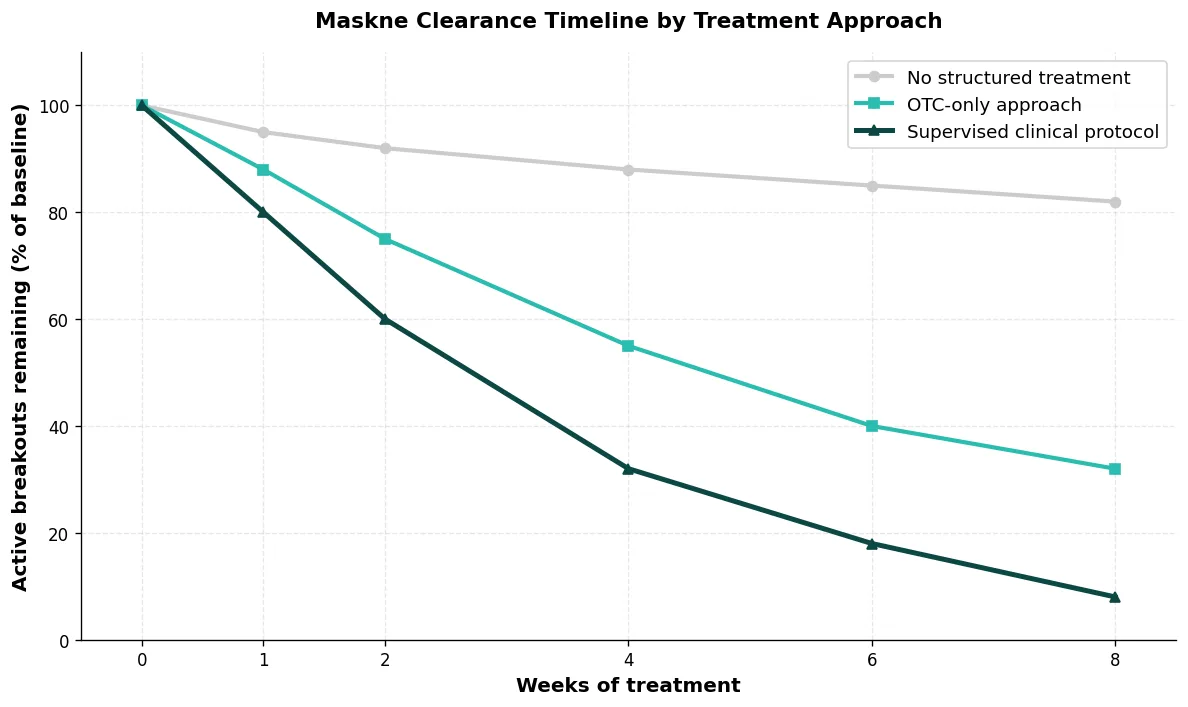
The difference between OTC and supervised care is not about a single magic product. It is about sequencing, dosing, and matching the protocol to the skin in front of us. Aggressive starts on the wrong skin type can stall progress for weeks. A barrier-first approach often clears maskne faster, even though it looks slower on day one.
Maskne Treatment That Actually Works: The Layered Protocol
A working maskne protocol does three jobs at once: unclogs pores, calms inflammation, and rebuilds the barrier. Here is the layered approach Perfect B uses for most maskne cases at our Doral, FL clinic.
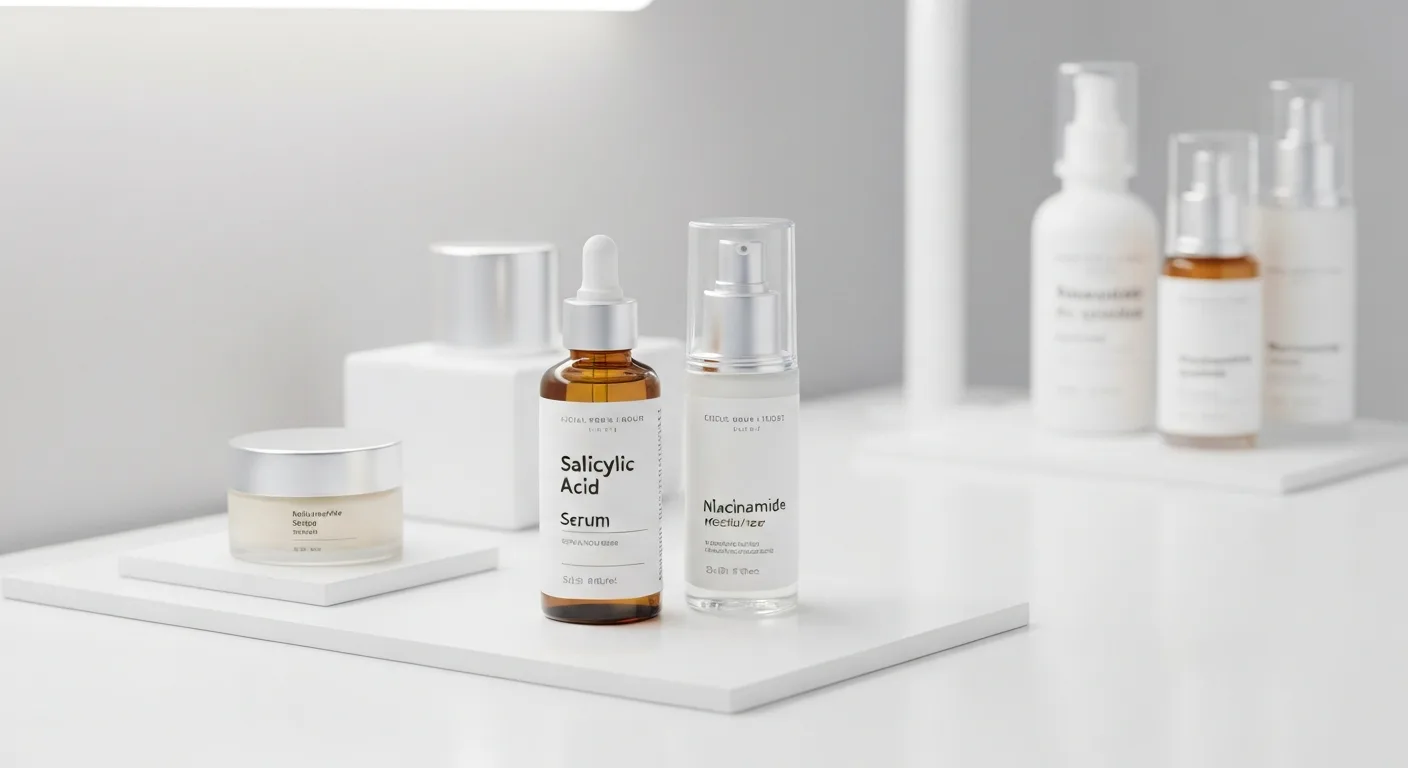
- Gentle cleansing with a 2 percent BHA: salicylic acid penetrates oil to unclog pores from inside without sandpapering the surface. See our complete clinical guide to using salicylic acid for acne, including daily use protocol, concentration choices, and when BHA outperforms benzoyl peroxide for the specific dosing logic.
- Niacinamide for inflammation and barrier: a 5 to 10 percent niacinamide serum reduces redness, normalizes sebum output, and supports ceramide production. Our breakdown of how niacinamide actually works at the cellular level for acne-prone, redness-prone, and barrier-compromised skin covers the dose-response that matters here.
- Non-comedogenic, fragrance-free moisturizer: ceramide and hyaluronic acid based, applied morning and night. The biggest mistake on irritated maskne skin is skipping moisturizer. Dry skin makes everything worse.
- Mineral SPF 30+ daily: friction-irritated skin pigments fast in South Florida sun. UV protection is part of the protocol, not optional.
- Targeted treatments only when needed: azelaic acid for stubborn redness, retinoid only after the barrier is back, and benzoyl peroxide as spot-only, not all-over.
Skin Type Matters: Fitzpatrick III to VI in South Florida
Our Doral, FL clinic serves a heavily Fitzpatrick III to VI patient population, reflecting the Hispanic and Latin demographics of South Florida. For these skin tones, maskne behaves differently and the treatment plan looks different too.
- Inflammation deposits melanin: any inflammatory cascade in Fitzpatrick III to VI skin creates pigment in places you do not want it. Maskne lesions that come and go in lighter skin frequently leave dark marks that stick around in darker skin.
- Aggressive actives are a trap: high-strength retinoids, harsh exfoliants, and abrasive cleansers can clear surface lesions while triggering long-term hyperpigmentation that takes 6 to 12 months to fade.
- Barrier first, then actives: for our patients, the order of operations is repair the barrier, calm inflammation, then layer in actives at low strengths and increase only if the skin tolerates it. The reverse order causes most of the bad outcomes we see.
- Sun protection is non-negotiable: South Florida UV exposure plus inflammation equals stubborn dark marks. Daily mineral sunscreen is part of the maskne protocol, not a separate concern.
The American Academy of Dermatology consumer guidance on preventing face mask skin problems including maskne, irritation, and barrier damage reinforces the barrier-first principle. Our Miami protocol layers Fitzpatrick-specific adjustments on top of that foundation.
Maskne Prevention: Daily Habits That Stop the Cycle
Products fix flares. Habits prevent them. Most patients see the biggest improvement once these basics are dialed in:
- Swap masks every 4 hours of continuous wear: sweat, oil, and bacteria saturate the fabric. A fresh mask resets the local environment.
- Wash reusable masks daily: fragrance-free detergent, hot water, full dry. Cloth masks are dermal contact, treat them like underwear.
- Skip foundation under the mask: heavy makeup under occlusion is the single fastest way to clog pores in the masked zone. Tinted SPF is the maximum, no more.
- Choose 100 percent cotton or silk for daily wear: synthetic fabrics trap more heat and friction. If you need an N95 for medical or work reasons, line it with a cotton barrier insert.
- Wash your face right after removing the mask: gentle cleanser, then immediately moisturize. Letting trapped sebum sit on the skin after the mask comes off is when many flares start.
- Sleep is real treatment: stress acne mechanisms compound maskne. Patients dealing with both should read our clinical breakdown of how cortisol and chronic stress trigger breakouts and exactly what clears them at a medical clinic level for the full mechanism.
How to Get Rid of Maskne Fast Without Triggering a Worse Cycle
How to get rid of maskne quickly comes down to two parallel tracks: stop the trigger and rebuild the barrier. Mask hygiene reduces the source. Acne from masks responds to barrier-first protocols within days when the inflammatory load is removed before active ingredients are layered on. Friction acne in particular benefits from a cotton liner and 4-hour mask swaps before salicylic acid or retinoids enter the routine. Patients who try to brute-force clearance with aggressive actives on irritated skin almost always extend their flare window instead of shortening it.
When to See a Medical Provider for Maskne
Most maskne responds to a disciplined home protocol within 4 to 6 weeks. Some cases need more. Indicators that it is time to come in:
- Cystic or nodular lesions: deep, painful, slow-healing bumps suggest the inflammation has moved past the surface. OTC will not reach that depth.
- Post-inflammatory hyperpigmentation already setting in: if dark marks are appearing as lesions heal, the protocol needs targeted pigment management on top of acne care.
- Symmetric breakouts persisting after 8 weeks: if you have followed a clean OTC plan and the pattern is not shifting, something else is driving it. Diet, hormones, comedogenic products, or sleep are the usual suspects, and a structured workup matters.
- Open wounds, oozing, or signs of infection: bacterial overgrowth needs medical attention, not another cleanser.
The full clinical pathway for stubborn or scarring acne is laid out in our complete Acne Treatment Plan at Perfect B in Doral, FL, where we walk through diagnostic workup, layered medical protocols, and when in-office procedures join the home routine.
Frequently Asked Questions
1. How is maskne different from regular acne?
Maskne is a specific form of acne mechanica driven by occlusion, friction, and humidity, all under the mask. Regular acne is more typically driven by hormones, genetics, and pore biology across the whole face. Maskne tends to map exactly to the mask outline. Treating maskne like standard acne with harsh actives often worsens it.
2. Can I use benzoyl peroxide for maskne?
Yes, but only as a targeted spot treatment on active inflamed lesions, not as an all-over wash. Benzoyl peroxide is drying and irritating to already-compromised mask-friction skin. Salicylic acid is usually a better baseline. Benzoyl peroxide also bleaches fabric, including masks, so timing matters.
3. How long does maskne take to clear?
With a disciplined protocol, most patients see significant improvement in 4 to 6 weeks and substantial clearance by 8 weeks. Pigment marks that follow severe maskne take longer, typically 3 to 6 months to fade with consistent sunscreen and supportive treatment.
4. Should I stop wearing makeup under my mask?
Heavy foundation under occlusion is the fastest way to clog pores in the masked zone. The best option is no makeup under the mask. The second best is tinted mineral sunscreen, which still provides UV protection without the comedogenic load. Concealer for spot coverage is fine if applied minimally.
5. Does the type of mask matter?
Yes. Soft, breathable cotton or silk minimizes friction and lets some heat escape. Synthetic disposable masks trap more moisture and cause more friction. If you need a higher-protection mask for medical or occupational reasons, layering a cotton liner between the mask and your skin reduces direct synthetic contact.
6. Can hormonal changes make maskne worse?
Yes. Pregnancy, perimenopause, menstrual cycle hormones, and stress all amplify maskne by changing sebum output and inflammatory responsiveness. If breakouts pattern with your cycle or major life changes, the maskne protocol may need adjustments around hormonal triggers, sometimes with a referral to your primary medical provider.
7. Do you offer maskne treatment at Perfect B in Doral?
Yes. Maskne falls under our broader acne treatment plan, customized to your skin type, current routine, and the specific pattern of your breakouts. We assess Fitzpatrick category, current barrier status, and any underlying contributors before mapping a layered protocol. Book a consultation at our Doral, FL clinic and we will walk you through it.
Closing: The Clinical Bottom Line on Maskne
Maskne is fixable. What stops most patients from clearing it is not the absence of a good product, it is the misdiagnosis of the problem. Aggressive acne treatment on barrier-compromised friction-irritated skin makes everything worse. Patient skin needs barrier support first, targeted active ingredients second, and habit changes around mask hygiene running underneath the whole protocol.
The difference between a fast clearance and a 6-month dark mark situation is matching the protocol to the actual skin in front of us, not the average skin in a marketing campaign. That is what a supervised medical consultation gives you that a drugstore aisle cannot.
- 📍 Visit us at Perfect B | 3905 NW 107th Ave, Suite 104, Doral FL 33178
- 📞 Call or message us at (786) 502-2260
- 💳 Buy Now Pay Later available: Cherry, Klarna, Afterpay, CareCredit