
Perfect B, Doral FL. | 05.13.26 | 9 min read.
This content is for educational purposes only and does not substitute professional medical advice. If you are experiencing persistent or severe acne, consult a licensed medical provider.
Key Takeaways: 5 Things to Know About Stress and Acne
- Cortisol directly triggers sebum overproduction, which is why stress breakouts follow a predictable timeline after a high-stress event.
- Stress acne and hormonal acne feel similar but have distinct patterns in location, texture, and timing.
- The cortisol-to-breakout lag is typically 2 to 7 days, meaning the breakout you see today often traces back to stress from last week.
- South Florida patients face a compounding factor: heat and humidity accelerate sebum oxidation, making stress breakouts more severe and harder to clear.
- Treating stress acne requires addressing both the skin response and the inflammatory trigger, not just topical spot treatment.
Does Stress Actually Cause Acne? What the Research Confirms
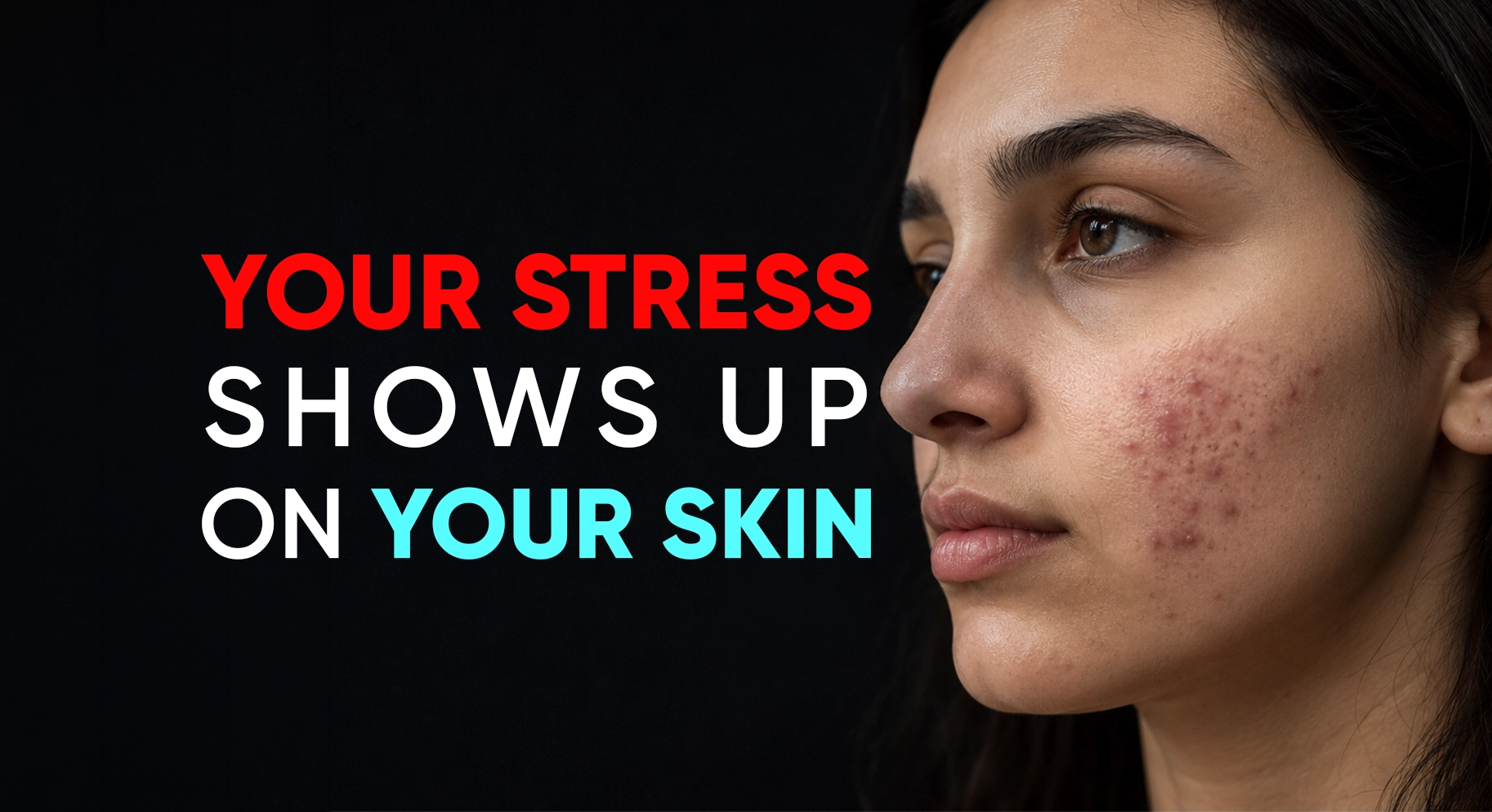
Yes, and the mechanism is now well-documented. A peer-reviewed study published in Clinical, Cosmetic and Investigational Dermatology confirming a statistically significant correlation between increased stress severity and increased acne severity across female medical students confirmed what clinicians have observed for years: stress does not just contribute to acne indirectly. It triggers a specific biological cascade that begins in the adrenal glands and ends on your skin.
The word “cause” is technically imprecise. Stress does not create acne de novo. What it does is amplify the biological conditions that allow acne to develop: excess sebum, inflammation, and compromised barrier function. In a patient who is already acne-prone, a cortisol spike can turn a manageable skin situation into an active breakout within days.
How Cortisol Triggers Breakouts: The Cascade That Runs Deeper Than Oily Skin
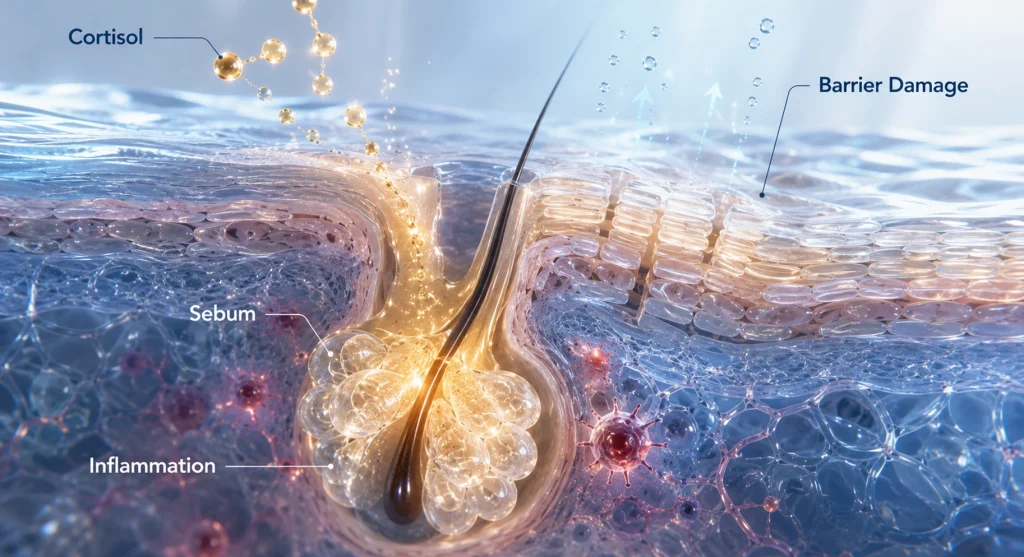
The cortisol-sebum connection
When the body perceives stress, the hypothalamic-pituitary-adrenal axis activates and cortisol is released into the bloodstream. Sebaceous glands throughout the skin carry cortisol receptors. When cortisol binds to those receptors, sebum production increases. More sebum means more material for Cutibacterium acnes to metabolize, more follicular occlusion, and more inflammatory lesions.
The inflammation component
Cortisol also disrupts the skin barrier by reducing ceramide synthesis. A compromised barrier lets environmental irritants penetrate more easily and keeps moisture from staying in. The result is skin that is simultaneously overproducing oil and losing moisture, which creates the specific texture and sensitivity that stress breakouts are known for: oily at the surface, tight and reactive underneath.
Why the breakout appears days later, not immediately
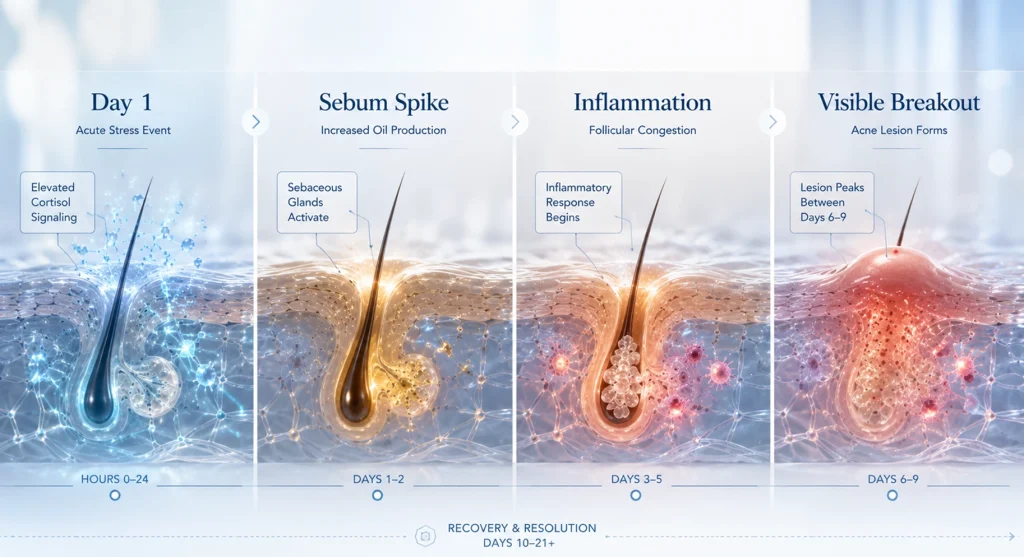
The cortisol spike is immediate. The sebum response begins within 24 to 48 hours. The follicular occlusion and inflammatory response that produce a visible pimple take another 3 to 5 days to surface. This is why patients often cannot connect the breakout they see on Monday to the stressful weekend that preceded it.
The Cortisol-to-Breakout Timeline: What Happens Inside the Follicle
The timeline below represents the sequence that clinical observation supports: cortisol peaks first, sebum production follows within 24 to 48 hours, and the visible breakout reaches its worst point between day 6 and day 9. Recovery without intervention typically takes 2 to 3 weeks.
Understanding this timeline changes how patients approach treatment. Treating on day 7 when the breakout is visible is reactive. The more effective window is days 1 to 3, when the sebum response is beginning and barrier support can interrupt the cascade before follicular occlusion sets in.
Stress Acne vs Hormonal Acne: How to Tell the Difference
The two are often confused because cortisol affects hormone regulation, meaning stress acne and hormonal acne share some overlapping characteristics. The distinctions that matter clinically come down to location, timing, and lesion type.
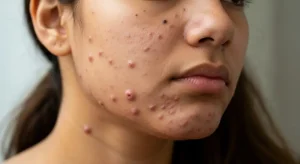
- Stress acne location: tends to appear across multiple zones simultaneously, often T-zone and lower face together, because cortisol receptors are distributed widely.
- Hormonal acne location: concentrates along the jawline, chin, and lower cheeks and follows the androgen distribution pattern.
- Stress acne timing: appears 3 to 7 days after an identifiable stress event or period of sustained high stress.
- Hormonal acne timing: follows a monthly cycle in women, appearing in the 5 to 7 days before menstruation.
- Lesion type: stress acne tends to produce a mix of whiteheads, papules, and cysts. Hormonal acne more consistently produces deep, painful nodules along the jawline.
- The overlap: cortisol suppresses progesterone and elevates androgens, which means chronic stress can trigger breakouts that look hormonal and respond partially to hormonal interventions.
Where Stress Acne Appears on Your Face and Why
The forehead
The forehead concentrates stress-related breakouts because it sits in the T-zone where sebaceous glands are densest. Forehead stress acne tends to present as small clustered whiteheads or inflamed papules during acute high-stress periods.
The cheeks and mid-face
Mid-face breakouts during stress periods often reflect the combination of cortisol-driven sebum and the facial touching that high-stress patients engage in more frequently. Touching the face transfers bacteria and disrupts the barrier in areas that cortisol has already made more vulnerable.
The chin and jawline
Chin and jawline breakouts during stress periods are particularly frustrating because they are deep, slow to surface, and slow to heal. This is where the cortisol-androgen overlap is most visible. Cortisol suppresses progesterone, which elevates relative androgen activity, and the chin and jawline are the most androgen-sensitive zones on the face.
Why South Florida Patients See Worse Stress Breakouts
At our clinic in Doral, FL, we see a pattern that patients who move from cooler climates often notice immediately: stress breakouts in South Florida tend to be more severe and take longer to resolve than the same patient experienced elsewhere. The reason is environmental.
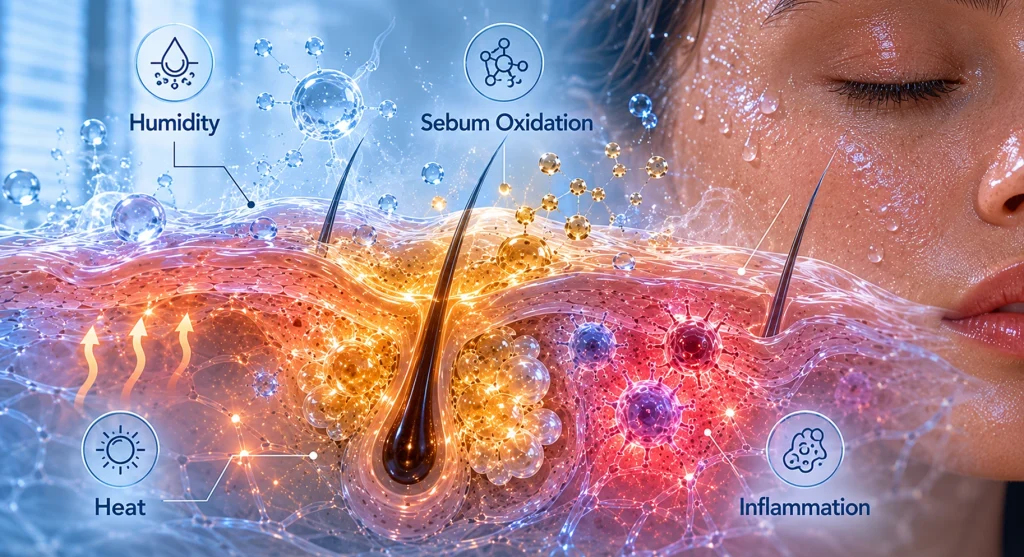
Miami-Dade summers regularly exceed 90 degrees with humidity above 70 percent. Heat accelerates sebum secretion independently of cortisol, which means that a stress-triggered sebum spike is compounding on top of a baseline that is already elevated by the climate. Sweat mixes with that excess sebum, creating occlusion that accelerates follicular plugging. The inflammatory response that follows is faster and more pronounced.
This context matters for treatment decisions. A basic salicylic acid routine that controls stress acne adequately in New York may be insufficient for the same patient in Doral during summer. Our protocols for acne treatment at Perfect B in Doral account for the regional sebum load that South Florida patients carry year-round.
What Actually Clears Stress Acne: The Clinical Approach
Chemical peels for active stress breakouts
A light to medium chemical peel accelerates cellular turnover, clears the keratin debris that traps sebum in follicles, and reduces the inflammatory environment that stress has created. Our clinical guide to chemical peels for acne at Perfect B covers how we select peel depth based on skin type, Fitzpatrick classification, and breakout severity. For South Florida patients with Fitzpatrick IV and V skin, we select acids and concentrations that deliver results without post-inflammatory hyperpigmentation.
OxyGeneo and skin oxygenation
OxyGeneo treatment addresses the compromised barrier and inflammatory state that cortisol creates. By delivering CO2 bubbles that stimulate natural oxygenation in the skin, the treatment improves circulation, reduces inflammation, and creates an environment that is hostile to the bacterial activity driving the breakout. Patients with chronic stress patterns often benefit from a monthly OxyGeneo session timed around their highest-stress periods.
Microneedling for post-stress skin repair
For patients who experience recurring stress breakouts followed by post-inflammatory hyperpigmentation, SkinPen microneedling accelerates the repair phase. Collagen induction stimulates the healing response that stress-disrupted skin delays. We address how microneedling supports acne scar repair and post-inflammatory skin recovery at Perfect B in Doral in our clinical overview.
At-Home Steps That Support Your Skin During High-Stress Periods
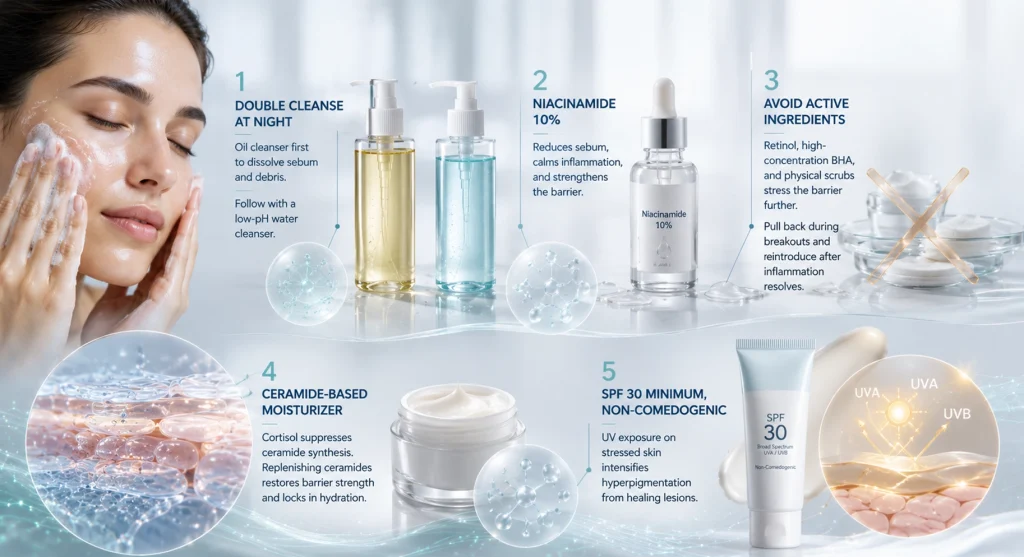
Clinical treatment addresses the acute breakout. What patients do between sessions determines whether the next stress event triggers the same cascade or a milder version. The following are the interventions we consistently recommend at our Doral clinic for patients managing chronic stress exposure.
- Double cleanse at night: a gentle oil cleanser first to dissolve excess sebum and environmental debris, followed by a low-pH water cleanser. Do not skip this step during high-stress periods.
- Niacinamide 10 percent: reduces sebum production, calms inflammation, and strengthens the barrier. A clinical review in the Journal of Cosmetic Dermatology confirming niacinamide’s role in reducing sebum excretion rate and improving barrier function in acne-prone skin supports its use as a first-line topical during stress flares. Apply as the first leave-on step after cleansing.
- Avoid active ingredients during peak stress: retinol, high-concentration BHA, and physical scrubs all stress the barrier further. Pull back on actives during a breakout and reintroduce after the inflammatory phase resolves.
- Ceramide-based moisturizer: cortisol suppresses ceramide synthesis. Replacing ceramides topically directly counters one of the primary mechanisms through which cortisol damages the barrier.
- SPF 30 minimum, non-comedogenic: in South Florida, unprotected sun exposure on stressed skin accelerates hyperpigmentation from healing lesions.
When to See a Medical Aesthetics Provider for Stress-Triggered Acne
Self-managed stress acne protocols work for mild to moderate breakouts that clear within 3 weeks and do not leave lasting marks. There are specific patterns that indicate a clinical evaluation will produce better outcomes than continued self-management.
- Breakouts persist beyond 3 to 4 weeks despite consistent at-home care.
- Cystic or nodular lesions appear along the jawline or chin. These require intervention to prevent scarring.
- Post-inflammatory hyperpigmentation is accumulating across multiple breakout cycles.
- Breakouts are worsening with each stress cycle rather than stabilizing, which often indicates that the inflammatory response is becoming more sensitized.
- The pattern has shifted from occasional flares to chronic low-grade acne with stress-triggered spikes, which suggests a systemic inflammatory state that topical care cannot address alone.
For patients in Miami and Doral who recognize these patterns, our clinical overview of cystic acne and what actually works at our South Florida clinic covers the full evaluation and treatment approach, including when hormonal co-management is part of the plan.
Frequently Asked Questions
1. How do I know if my acne is from stress or hormonal causes?
The clearest indicator is timing and location. Stress acne appears 3 to 7 days after a stressful event and tends to distribute across multiple zones of the face. Hormonal acne follows a monthly cycle and concentrates along the jawline and chin. In many patients both factors are active simultaneously, because cortisol suppresses progesterone and elevates relative androgen activity.
2. How long does a stress breakout last?
Without intervention, a cortisol-triggered breakout typically peaks between day 6 and day 9 after the stress event and resolves over 2 to 3 weeks. With targeted treatment, including appropriate actives and clinic procedures, the resolution timeline can be shortened to 10 to 14 days.
3. Can anxiety cause acne even without an acute stress event?
Yes. Chronic low-grade anxiety maintains a baseline cortisol elevation that never fully resolves between flares. Patients with generalized anxiety often present with persistent low-grade acne that worsens unpredictably, rather than the identifiable spike-and-clear pattern of acute stress acne.
4. Does exercising help with stress acne or make it worse?
Exercise lowers cortisol over time, which supports clearer skin. The risk is post-workout: sweat combined with sebum creates an occlusive environment on the skin. Cleansing within 30 minutes of exercise is essential for patients prone to stress breakouts. A gentle cleanser immediately after working out removes the sweat-sebum combination before occlusion can develop.
5. What is the fastest way to treat a stress pimple?
For a single inflamed lesion, a benzoyl peroxide 2.5 percent spot treatment applied directly to the lesion reduces bacterial activity within 24 to 48 hours. For a widespread stress breakout, a salicylic acid cleanser clears excess sebum from the surface while a niacinamide serum reduces inflammation. Picking or extracting stress pimples significantly increases the risk of post-inflammatory hyperpigmentation, particularly in darker skin tones.
6. Can stress acne cause permanent scarring?
Superficial stress acne papules and whiteheads rarely scar if left untreated and not picked. Cystic or nodular stress acne lesions, particularly those along the jawline and chin, carry a higher scarring risk if not treated appropriately. Post-inflammatory hyperpigmentation from stress acne is common but temporary, usually resolving in 3 to 6 months with proper sun protection and targeted brightening support.
7. Does the acne treatment at Perfect B work for stress-related breakouts specifically?
Yes. Our acne protocol at Perfect B in Doral is designed to address the inflammatory and sebum-related components of acne regardless of the primary trigger. For patients whose primary trigger is stress, we combine in-clinic treatment with a between-session at-home protocol tailored to their stress patterns, South Florida climate, and skin type. Call us at (786) 502-2260 to schedule a consultation.
Closing: The Clinical Bottom Line on Stress Acne in South Florida
Stress acne is not a cosmetic inconvenience. It is the visible output of a well-documented hormonal and inflammatory cascade that responds to the same environment your nervous system lives in. Understanding the cortisol mechanism changes how you approach it: less reactive spot treatment, more proactive barrier support, and clinical intervention timed to the cascade rather than the breakout.
At Perfect B in Doral, FL, we work with patients across Miami-Dade who are managing acne in one of the most demanding climates in the country. Victoria Diartt builds every acne protocol on a full skin evaluation, not a category label. If stress is a consistent trigger for your breakouts, the conversation starts with understanding your full breakout pattern, not just the lesion in front of you.
📍 Perfect B | 8200 NW 41st St, Suite 100, Doral, FL 33166
📞 (786) 502-2260