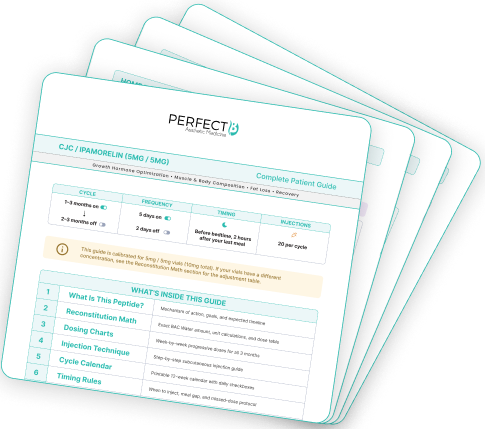
Curious which recovery peptides athletes like you are actually running?
Perfect B’s peptide protocol tool is built on real clinical data from 2,000+ patients treated in South Florida.
Answer 6 questions and see what patients with similar goals are running: which peptides they use, typical dosing, injection schedule, reconstitution steps, cycle length, and when they pause.
Perfect B, Doral Fl. | 07.09.26 | 13 min read.
This article is for general educational purposes and is not medical advice, a diagnosis, or a substitute for an in-person evaluation. Peptides discussed here are used only under a licensed medical provider, are not FDA approved for athletic recovery or performance, and are prohibited for tested and competitive athletes. Individual candidacy, protocols, and dosing are decided at a personal consultation.
Peptides for Athletes in Miami: Recovery You Can Actually Supervise
Search for peptides for athletes and you will find two extremes: hype pages that read like a shopping list, and skeptical takes that tell you to avoid everything. Neither is useful if you are an active adult in Miami trying to recover faster from training, nagging tendon pain, or a slow healing injury. The honest middle ground is where a medical clinic lives, and it starts with a clear split most articles skip entirely: whether you are a drug tested competitor or a non tested adult, because that single fact changes what is even legal for you.
This guide explains what peptides for athletes actually are, what they can and cannot do for recovery and performance, the anti doping reality you must understand before anything else, and how a supervised plan is built at a medical clinic in Doral. The goal is not to sell you a vial, it is to help you decide, with real information, whether physician supervised peptide therapy makes sense for your recovery goals.
Key Takeaways
- Recovery, not magic: peptides for athletes are studied mainly for tissue repair and recovery support, not as a shortcut to performance gains.
- Anti doping comes first: most recovery peptides are prohibited for tested and competitive athletes, so this therapy is for non tested adults only.
- Supervision matters: these are prescription level compounds, so a licensed provider, real sourcing, and follow up separate a safe plan from a risky one.
- Evidence is still emerging: much of the research is preclinical, so honest expectations and a provider who says so are part of good care.
- Doral based and planned: a supervised protocol is built around your goals at a consultation, with financing through Cherry, Klarna, Afterpay, and CareCredit.
What Are Peptides, and How Do They Signal Recovery?
Peptides are short chains of amino acids, the same building blocks that make up proteins, and your body already uses thousands of them as signaling molecules. In a recovery context, the peptides for athletes that clinics discuss are lab made versions of these signals, chosen because they may nudge specific repair pathways, such as forming new blood vessels, calming inflammation, or supporting tendon and ligament tissue. They are not steroids and they are not growth hormone, they are messengers that ask the body to do more of what it already does when it heals.
That distinction matters because it sets realistic expectations. A signaling molecule can support a process, but it cannot override poor sleep, undertraining, or an injury that needs rest and rehab. This is why a serious clinic treats peptides for athletes as one input inside a recovery plan, alongside load management, nutrition, and physical therapy, rather than as a standalone fix. If you want the deeper mechanism, our explainer on what BPC-157 is and the tissue repair and angiogenesis mechanisms researchers believe give it its recovery reputation is a good place to start.
Recovery Versus Performance: What Peptides Realistically Do
The most important reframe for anyone researching peptides for athletes is that the honest use case is recovery, not raw performance enhancement. The peptides used in supervised settings are studied for helping soft tissue heal, supporting connective tissue, easing recovery between hard sessions, and in some cases supporting body composition and sleep quality. None of that is the same as a promised jump in strength, speed, or endurance on demand, and any source implying otherwise is overselling.
Framed correctly, that is still valuable. Faster, cleaner recovery lets a non tested athlete train more consistently, and consistency is what actually drives progress over months. So the realistic promise of peptides for athletes is indirect: support the recovery, and the training does the rest. A provider will tell you where the current evidence is strong, where it is thin, and where a peptide simply is not the right tool for your goal.
The Anti Doping Reality: Are Peptides Allowed for Tested Athletes?
This is the section most peptides for athletes articles avoid, and it is the one that matters most. If you compete in any drug tested sport, from the NCAA to Olympic and professional levels, you must assume these peptides are off limits. Compounds like BPC-157, TB-500, and growth hormone releasing peptides are prohibited, and a positive test can mean a suspension measured in years, not weeks. No recovery benefit is worth ending a season or a career.
The rule is simple: tested and competitive athletes should not use these peptides, period, and a responsible clinic will tell you exactly that. Non tested adults, weekend athletes, and people focused on general recovery are a different conversation, but even they should verify their own status. Before considering anything, review the current World Anti Doping Agency Prohibited List, which every tested or competitive athlete should check because prohibited substances and their categories are updated each season, and if there is any doubt, confirm through the United States Anti Doping Agency resources that let athletes check whether a specific substance is allowed in their sport.
BPC-157 and TB-500: The Wolverine Blend for Tissue and Injury Recovery
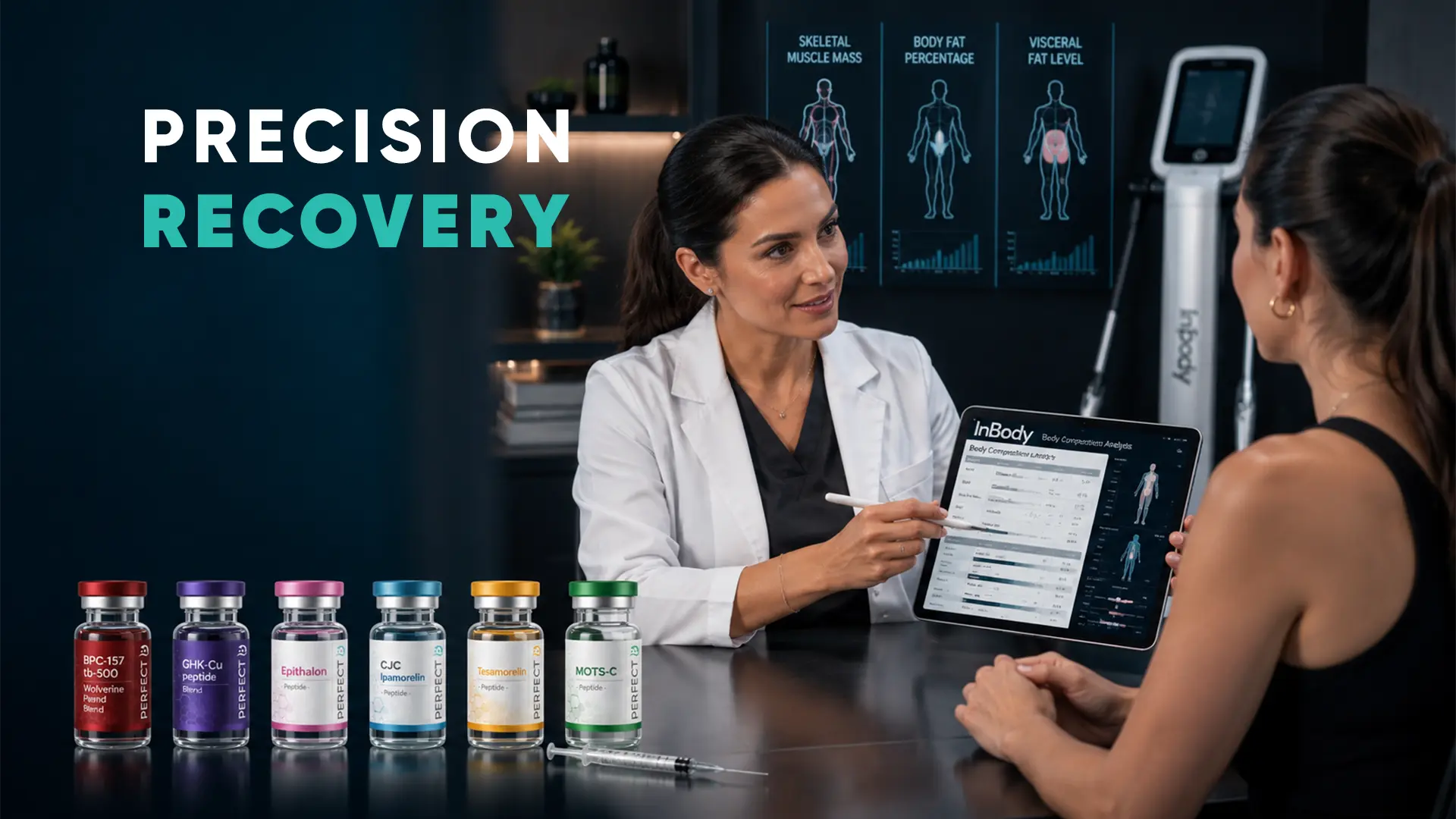
When people picture peptides for athletes and recovery, they are usually picturing BPC-157 and TB-500, often combined in what clinics call a Wolverine blend. BPC-157 is studied for supporting tendon, ligament, and gut tissue repair, partly through forming new blood vessels, while TB-500, related to thymosin beta-4, is studied for systemic recovery and tissue flexibility. Together they are the pairing most associated with nagging tendon pain, slow healing strains, and post injury recovery in the non tested population.
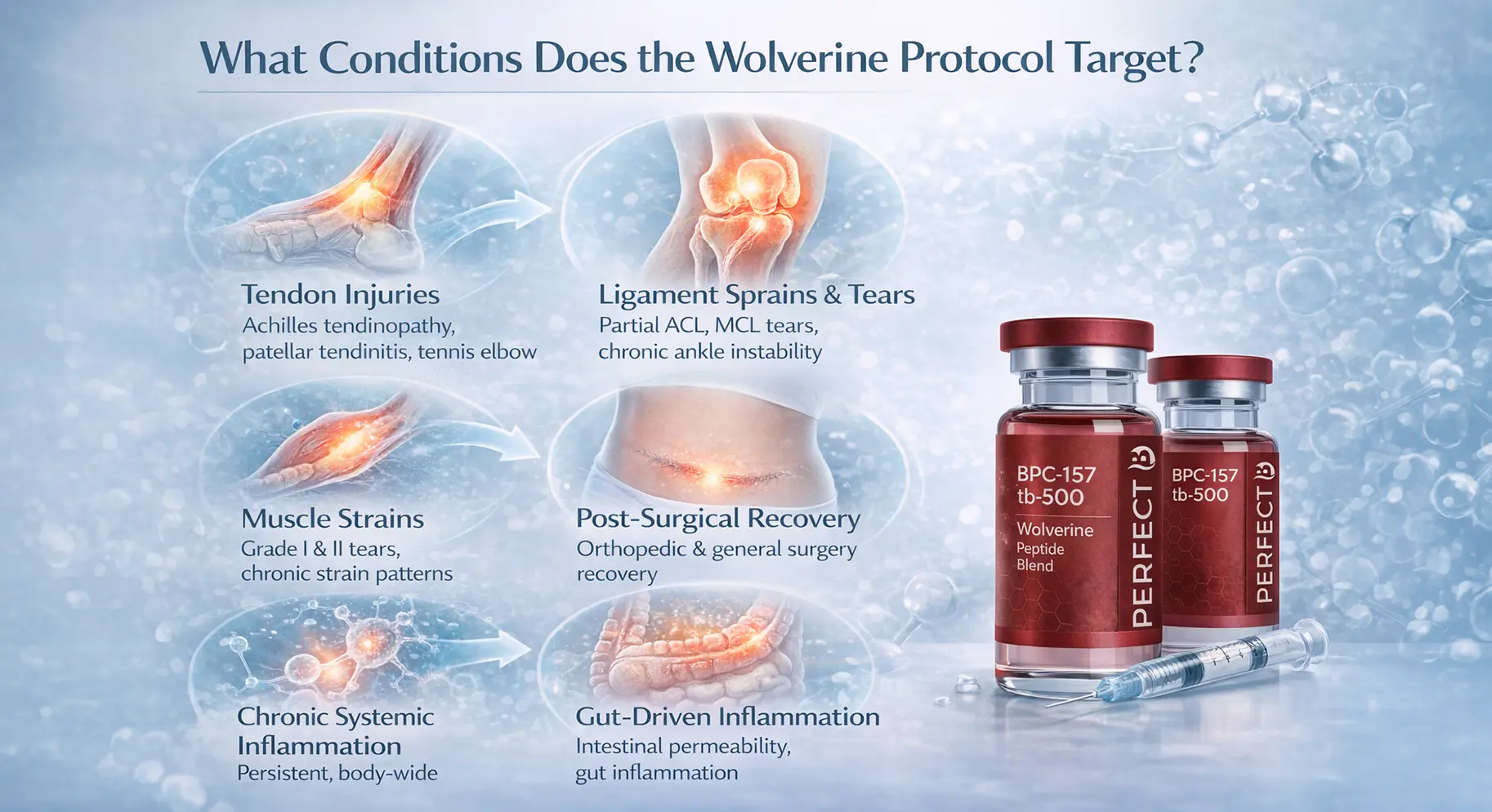
It is worth repeating that BPC-157 and TB-500 are not FDA approved for these uses and remain largely supported by preclinical research, which is exactly why supervision and honest expectations matter. For the full picture of how the pairing is used and where the evidence stands, see our complete clinical breakdown of the Wolverine peptide stack and how BPC-157 is used alongside TB-500 to support tendon, ligament, and soft tissue recovery, and if joints are your main concern, how a supervised protocol applies BPC-157 and TB-500 to joint pain and connective tissue recovery at a medical clinic in Miami goes deeper.
See how BPC-157 and TB-500 fit into real patient recovery protocols.
Perfect B’s peptide protocol tool is built on real clinical data from 2,000+ patients treated in South Florida.
Answer 6 questions and see what patients with similar goals are running: which peptides they use, typical dosing, injection schedule, reconstitution steps, cycle length, and when they pause.
CJC-1295, Ipamorelin, and MOTS-c: Body Composition and Endurance Recovery
Beyond tissue repair, some peptides for athletes target recovery through body composition and energy. CJC-1295 and Ipamorelin, which at our clinic are dispensed as a single combined blend vial rather than two separate injections, are growth hormone releasing peptides studied for supporting lean body composition, sleep, and general recovery. MOTS-c is a mitochondrial derived peptide studied for endurance and metabolic recovery. All of them share the same caveats: prescription level, supervision required, and off limits for tested competition.
Because these work through different pathways than BPC-157 and TB-500, a provider chooses among them based on your specific goal, not a one size fits all stack. You can read how the combined vial is handled in our protocol guide explaining how the CJC-1295 and Ipamorelin blend is reconstituted and used as a single combined vial within a medically supervised plan, and for the endurance side, what MOTS-c is and how this mitochondrial peptide is used for endurance and metabolic recovery under medical supervision in Miami explains where it fits.
Recovery Peptides Compared at a Glance
The table below summarizes how the main recovery peptides differ in their primary role, their status for tested competition, and how mature the evidence is. It is a starting point for a conversation with a provider, not a menu to order from, and every status should be re verified against the current anti doping list before any decision.
| Peptide | Primary recovery role | WADA status (tested competition) | Evidence maturity |
|---|---|---|---|
| BPC-157 and TB-500 (Wolverine blend) | Tendon, ligament, and soft tissue repair | Prohibited for tested sport | Mostly preclinical |
| CJC-1295 and Ipamorelin (single blend) | Growth hormone support, body composition, sleep | Prohibited for tested sport | Emerging clinical |
| MOTS-c | Endurance and metabolic recovery | Prohibited for tested sport | Early and preclinical |
| GHK-Cu | Connective tissue and skin recovery | Not specifically listed, verify each season | Emerging |
Copper peptide, or GHK-Cu, sits slightly apart because it is best known for skin and connective tissue support, and you can explore how GHK-Cu is used within a supervised protocol for connective tissue and skin recovery, including why sourcing and provider oversight still apply if that is your interest.
What the Evidence Actually Shows
Being honest about evidence is part of good medical content. Much of the excitement around peptides for athletes comes from animal and laboratory studies, which are promising but do not automatically translate to large, high quality human trials. For BPC-157 in particular, the recovery reputation rests heavily on preclinical work, so a careful provider frames it as supportive and investigational rather than proven. That honesty is not a weakness, it is the difference between medicine and marketing.
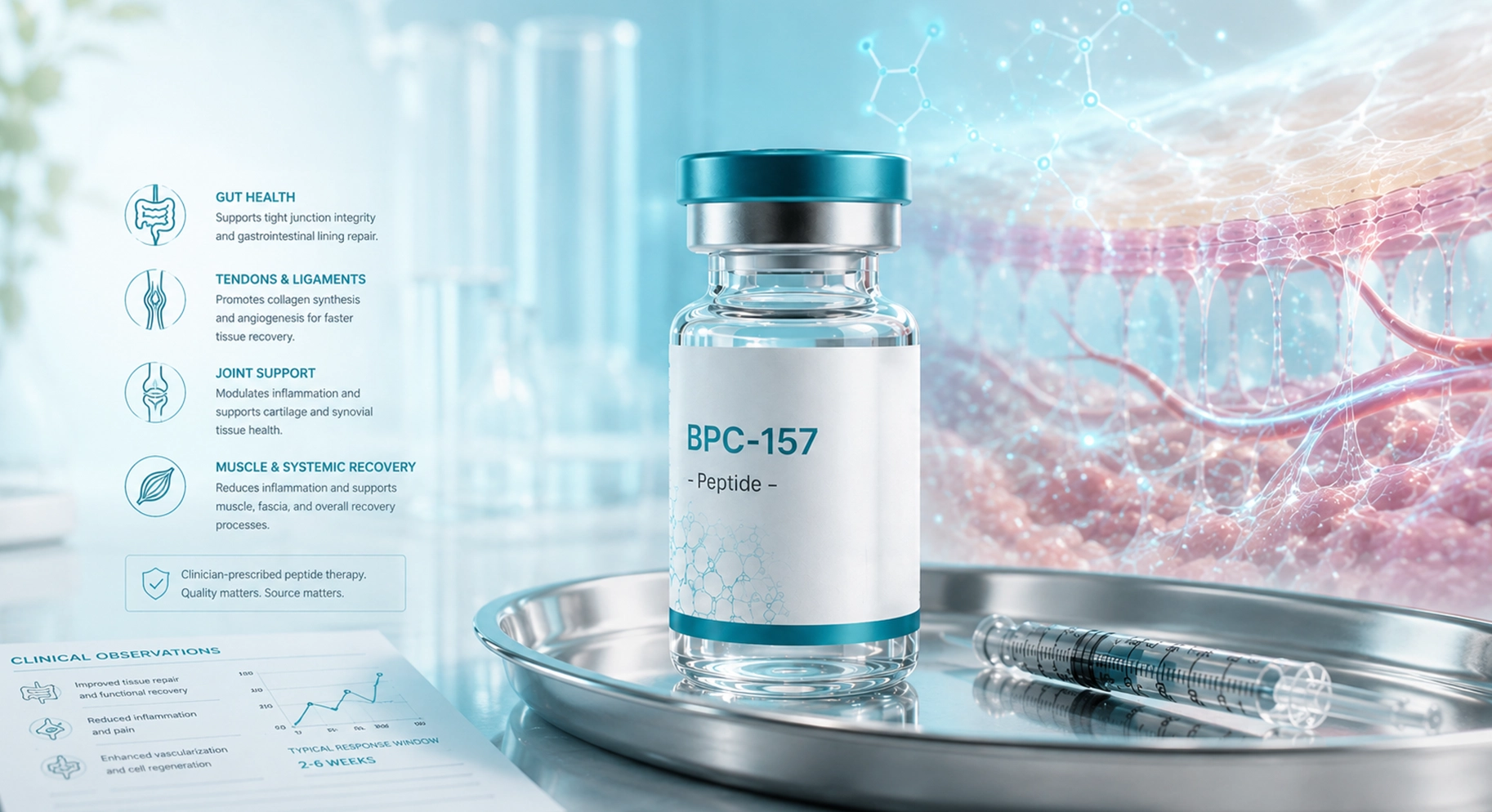
What this means for you is practical. Ask any provider what the evidence looks like for your specific goal, whether the benefit is likely modest or meaningful, and how they will measure progress. A clinic that reviews the research with you, sets a realistic timeline, and is willing to say a peptide is not worth it for your case is one that treats peptides for athletes as medicine, which is exactly the standard you want.
Safety, Side Effects, and Who Should Not Use Peptides
Because peptides for athletes are prescription level compounds, safety depends heavily on supervision, sourcing, and screening. Reported side effects are generally mild in supervised use, such as injection site reactions, but the real risks come from unregulated products, incorrect self dosing, and skipping medical evaluation. Peptides should be avoided by anyone who is pregnant or breastfeeding, by tested or competitive athletes, and by people with certain medical histories that a provider must review first.
This is why a screening consultation is not a formality. A provider reviews your health history, current medications, and goals before deciding whether therapy is appropriate at all. If you are new to this entirely, our beginner guide to how a first peptide protocol is planned, from the initial consultation and baseline lab work through structured follow up walks through what responsible screening and monitoring look like from the start.
Sourcing and Supervision: Why Pharmacy Grade and a Provider Matter
The single biggest safety factor with peptides for athletes is where the product comes from and who is overseeing it. Research chemicals sold online for not for human use are unregulated, may be mislabeled or contaminated, and put you at real risk. A medical clinic dispenses pharmacy grade compounds and pairs them with a provider who sets the plan, monitors your response, and adjusts as needed. That combination of quality sourcing and oversight is the whole point of doing this through a clinic.
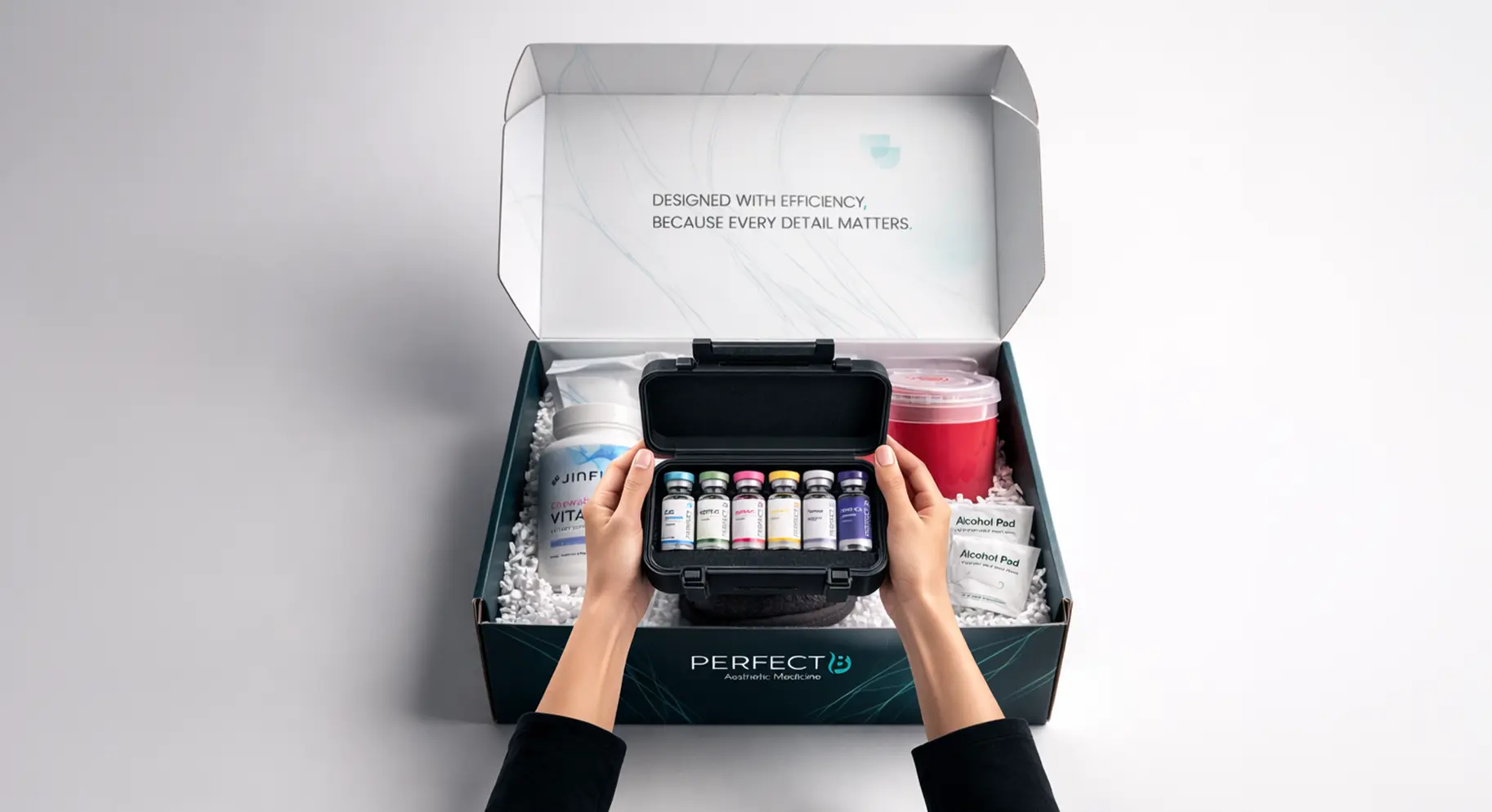
Cost usually reflects that difference, and it is fair to ask about it up front. For a transparent breakdown, our clear explanation of what supervised peptide therapy actually costs, what a plan includes, and why pharmacy grade sourcing and monitoring are part of the price lays it out, and financing is available so a real plan does not have to be paid all at once.
Supervised Peptide Therapy for Recovery in Doral and Miami
At Perfect B in Doral, peptides for athletes are handled the same careful way as any medical therapy. It starts with a consultation where a provider reviews your goals, training, health history, and, importantly, your competition status, since tested athletes are advised against this therapy. From there, if appropriate, a plan is built around a specific recovery goal, with realistic timelines, pharmacy grade sourcing, and follow up to see how you respond. Results and timelines vary, and no outcome is guaranteed.
If you want the full picture before booking, the complete overview of physician supervised peptide therapy at our Doral clinic, including who it is appropriate for and how an individualized plan is built and monitored is the best starting point. It connects the recovery goals in this guide to the practical steps of getting evaluated and, if it fits, beginning a supervised protocol.
Frequently Asked Questions
1. Are peptides legal for athletes?
For tested and competitive athletes, no. Most recovery peptides are prohibited in tested sport, and a positive test can bring a multi year ban. Non tested adults are a separate conversation, but everyone should verify their own status against the current anti doping list before considering any peptide.
2. Are BPC-157 and TB-500 banned by WADA?
Yes, you should treat BPC-157 and TB-500 as prohibited for tested competition, which is why this therapy is not for competing athletes. Categories on the World Anti Doping Agency list are updated each season, so always confirm current status before making any decision.
3. Do peptides really help muscle and injury recovery?
They may support recovery by signaling repair pathways, but much of the evidence is still preclinical, so benefits are best described as supportive rather than proven. A provider can explain where research is stronger and set realistic expectations for your specific recovery goal.
4. Are peptides for athletes safe?
Under medical supervision with pharmacy grade sourcing, reported side effects are generally mild, such as injection site reactions. The real risks come from unregulated products and self dosing without evaluation. A screening consultation decides whether therapy is appropriate for you at all.
5. How long does BPC-157 take to work?
Timelines vary by person, goal, and the tissue involved, and no result is guaranteed. Because much of the evidence is preclinical, a provider will set an honest, individualized timeline and measure your response rather than promise a fixed number of weeks.
6. What is the Wolverine peptide stack?
The Wolverine blend combines BPC-157 and TB-500, the pairing most associated with tendon, ligament, and soft tissue recovery. At Perfect B it is used only under supervision, is not FDA approved for these uses, and is not appropriate for tested or competitive athletes.
7. Can peptides help tendon and ligament injuries?
Peptides like BPC-157 and TB-500 are studied for supporting connective tissue repair, which is why they interest people with nagging tendon and ligament issues. The research is largely preclinical, so they are used as one supportive part of a recovery plan alongside rest and rehab.
8. Where can I get supervised peptide therapy in Doral or Miami?
Perfect B in Doral offers physician supervised peptide therapy for non tested adults, starting with a consultation that reviews your goals, health history, and competition status. From there a provider decides whether a plan is appropriate and builds it around your recovery goal.
Recover Smarter, With a Provider in Your Corner
The smartest way to approach peptides for athletes is to skip the hype and the fear and get a real evaluation. If you are a non tested adult chasing better recovery, a provider can tell you honestly whether peptide therapy fits your goals, what the evidence supports, and how a supervised plan would look. If you are a tested competitor, the same provider will tell you just as honestly that this is not for you, and that guidance is exactly what a medical clinic is for.
Perfect B builds recovery plans around you in Doral, with pharmacy grade sourcing, provider follow up, and financing through Cherry, Klarna, Afterpay, and CareCredit so a real plan stays within reach. Reach out and turn a pile of conflicting internet advice into a plan a licensed provider actually stands behind.
- 📍 Visit us at Perfect B, 3905 NW 107th Ave, Suite 104, Doral FL 33178
- 📞 Call or message us at (786) 502-2260
- 💳 Financing available through Cherry, Klarna, Afterpay, and CareCredit