
Perfect B, Doral Fl. | 05.15.26 | 10 min read.
This content is for educational purposes only and does not constitute medical advice. Consult a qualified medical provider before beginning any peptide therapy protocol. All peptide medications referenced on this page require a clinical evaluation and prescription from a licensed provider. Results vary by patient.
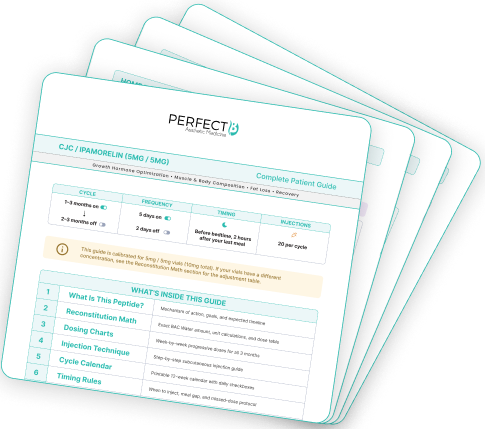
Skip Ahead to the Perfect B Peptide Protocol Tool. See Reconstitution, Daily Units, and Cycle Structure.
Perfect B’s peptide protocol tool is built on real clinical data from 2,000+ patients treated in South Florida.
Answer 6 questions and see what patients with similar goals are running: which peptides they use, typical dosing, injection schedule, reconstitution steps, cycle length, and when they pause.
What Are the Real BPC-157 Benefits and Which Have Clinical Support?
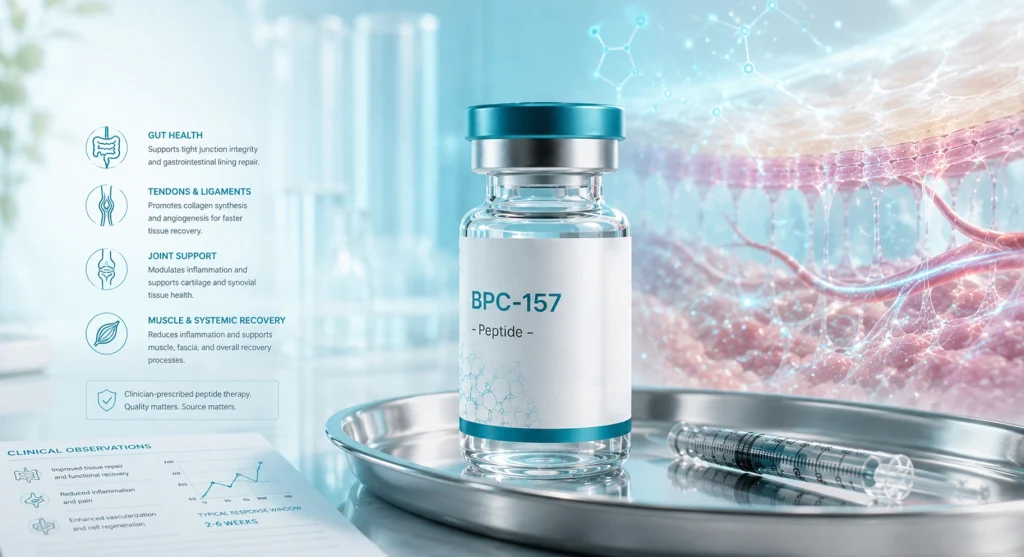
If you have spent any time researching BPC-157 online, you have seen lists of claimed benefits that range from tendon healing to neuroprotection to anti-aging. Some of those claims have genuine preclinical backing. Others are extrapolations from animal data that have not been studied in humans. At Perfect B in Doral, FL, we prescribe BPC-157 for a narrower and more defensible set of indications than most websites suggest, because that is what our patients actually benefit from.
The four categories where BPC-157 consistently delivers at our clinic are gut lining repair, tendon and ligament recovery, joint inflammation support, and systemic tissue repair after injury or surgery. Within those categories, the clinical picture is clearer than the internet makes it seem. This guide covers what BPC-157 does in each area, what our patients see, and how long it takes.
Key Takeaways
- Gut lining repair is one of BPC-157’s strongest applications, with patients reporting meaningful improvement in GI symptoms within the first 30 days, particularly those with SIBO residuals or NSAID-induced gastritis.
- Tendon and ligament recovery is the most common reason patients request BPC-157 at our Doral clinic, with most noticing changes in pain and range of motion within 3 to 4 weeks after a protocol that stalled in physical therapy.
- BPC-157 is a repair assist for joint pain, not a cure for arthritis. It reduces local inflammation and supports tissue maintenance, but it works best alongside a broader treatment plan that addresses mechanical load.
- The source matters significantly for results. Clinical injectable BPC-157 from a licensed US compounding pharmacy is not the same compound as unregulated OTC powders sold online.
- Every BPC-157 protocol at Perfect B starts with a licensed APRN intake to confirm indication, dosing, and any contraindications before the first injection.
BPC-157 Benefits for Gut Health: What Patients With SIBO, Gastritis, and Leaky Gut Actually See
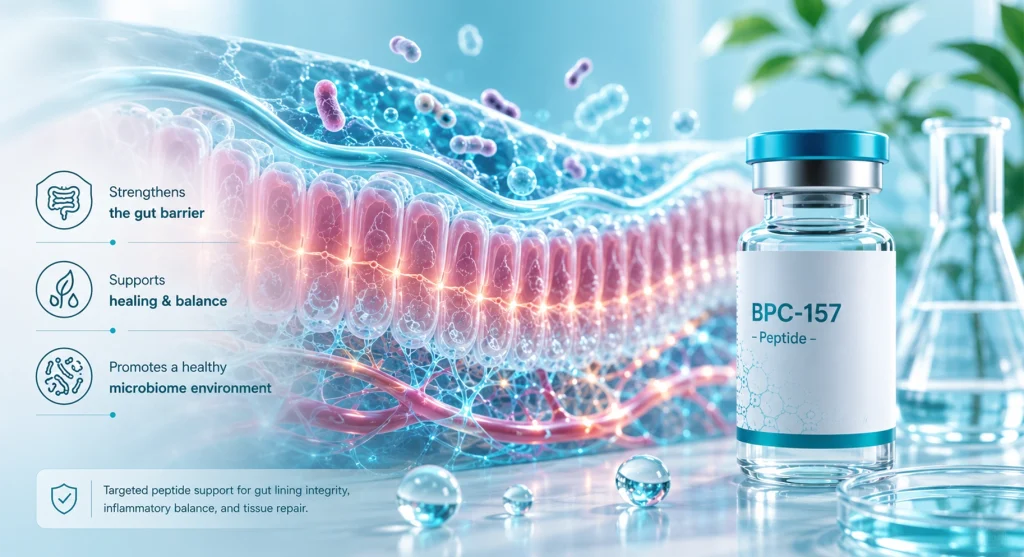
Because BPC-157 is derived from a protein found in human gastric juice, its gastrointestinal effects are arguably the best-studied of all its applications. The mechanism is specific: BPC-157 promotes the repair of tight junctions, the protein structures that hold intestinal epithelial cells together and prevent undigested particles from passing through the gut wall into systemic circulation. When those junctions are compromised, by NSAIDs, alcohol, chronic stress, or repeated antibiotic courses, the result is a low-grade inflammatory state that shows up as bloating, systemic fatigue, food sensitivities, and immune dysregulation.
At our clinic, the patients who respond best to BPC-157 for gut indications fall into three groups. Patients with a history of long-term NSAID use who have developed gastric irritation or mucosal damage that persists despite stopping the NSAIDs. Patients who completed SIBO treatment and cleared the bacterial overgrowth but are still symptomatic because the underlying mucosal damage was never addressed. And patients with chronic GI inflammation who have been through standard GI workups without a clear diagnosis.
In those patients, subjective improvement in GI symptoms typically appears within the first 30 days of a subcutaneous BPC-157 protocol. The gut-brain axis response, including improvements in fatigue and cognitive clarity that many patients attribute to gut inflammation, often follows several weeks later. BPC-157 also promotes local angiogenesis in gut tissue, meaning it improves blood supply to the mucosal lining, which accelerates the repair cycle beyond what the tight junction repair alone would produce.
Tendon and Ligament Benefits: Why Stalled Injuries Respond to BPC-157
Tendon and ligament injuries are the single most common reason patients request BPC-157 at our Doral clinic. The reason is straightforward: tendons and ligaments have poor native blood supply, which means they heal slowly under the best circumstances and often stop progressing entirely after initial recovery. A patient who comes in with Achilles tendinopathy that has plateaued after 10 weeks of physical therapy, or a rotator cuff partial tear that is still symptomatic after conservative management, is precisely the profile where BPC-157 offers something that rest and rehabilitation cannot.
BPC-157 upregulates VEGF (vascular endothelial growth factor) in tendon tissue, which drives the formation of new capillaries that deliver oxygen and nutrients to a repair site that was effectively starved of vascular support. It also stimulates fibroblast proliferation in connective tissue, increasing collagen synthesis and improving the structural quality of the repair. The practical result, in our clinical experience, is that patients with a subacute tendinopathy that has stalled at 6 to 12 weeks of physical therapy tend to notice a meaningful change in pain level and range of motion within 3 to 4 weeks of starting a BPC-157 protocol.
The conditions we treat most frequently with BPC-157 in this category include Achilles tendinopathy, patellar tendinitis, lateral epicondylitis (tennis elbow), rotator cuff partial tears, partial ACL and MCL tears, and chronic ankle instability. For patients who need comprehensive repair across both localized and systemic healing pathways, BPC-157 is frequently combined with TB-500 in what our patients know as the Wolverine protocol. For the full breakdown of how that combination works and why the two peptides are synergistic, the complete Wolverine stack guide at Perfect B explains the BPC-157 and TB-500 combination protocol, the 3-phase healing timeline, and what patients in South Florida typically see from the combined approach.
Joint Pain Benefits: What BPC-157 Can and Cannot Do for Knees, Shoulders, and Hips
Joint pain is where patient expectations most often need to be calibrated before starting a protocol. BPC-157 is not a cure for osteoarthritis. It does not regenerate cartilage that has been lost to years of mechanical wear. What it does is reduce local inflammation, support the maintenance of remaining tissue, and in some cases improve synovial health in a way that changes the pain experience meaningfully.
At our clinic, the joint pain patients who see the most benefit from BPC-157 are those with chronic knee, shoulder, or hip pain that has plateaued after standard orthopedic treatment, particularly where inflammatory load is a significant component of the symptom picture. BPC-157’s modulation of pro-inflammatory cytokines, without suppressing normal immune function the way corticosteroids do, makes it a useful tool for patients who need repeated joint management but want to avoid the tissue-degrading effects of repeated cortisone injections.
An important context for our South Florida patient population: many patients running a BPC-157 protocol for joint support are simultaneously enrolled in our medically supervised weight loss plan. Reducing mechanical load on compromised joints while using BPC-157 to support tissue repair is a more complete approach than either intervention alone. BPC-157 keeps joints tolerant of new activity volume while the weight loss reduces the structural stress those joints are managing. For patients in that situation, the complete peptide treatment plan at Perfect B in Doral, FL explains how BPC-157 fits into a supervised protocol alongside other interventions, with licensed APRN intake and individualized dosing at every stage.
Muscle Recovery and Systemic Inflammation: When BPC-157 Goes Beyond the Injury Site
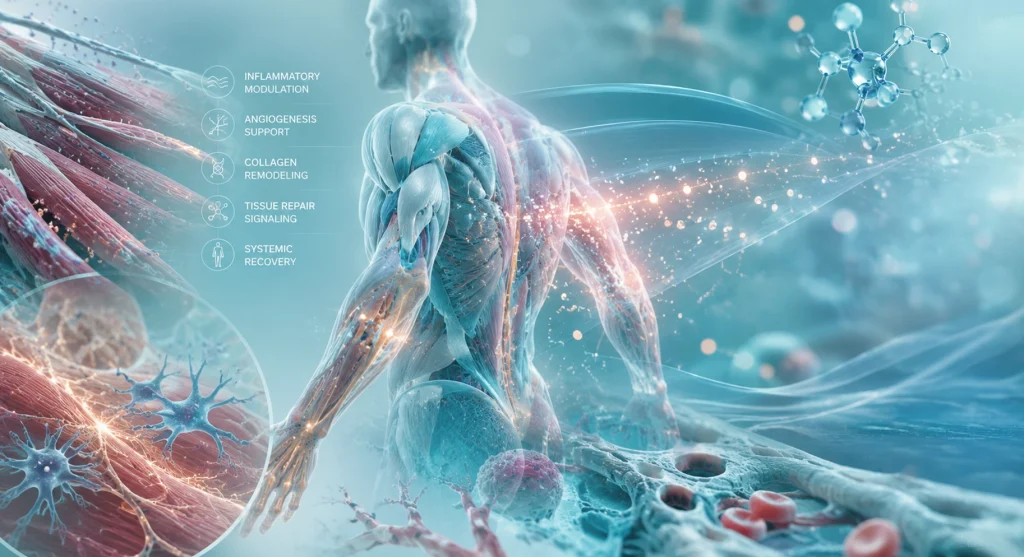
For Grade I and Grade II muscle strains, BPC-157 accelerates the proliferation phase of healing by increasing fibroblast activity and collagen deposition in damaged muscle tissue. Athletes managing a hamstring strain, a grade II calf tear, or chronic muscle tension patterns that are limiting training load are a common profile in our Miami practice. The mechanism here overlaps with the tendon application: BPC-157 improves local blood supply and growth factor signaling at the repair site, shortening the window between injury and return to full loading.
Post-surgical recovery is a separate but related category. Patients who have had orthopedic or general surgery and want to optimize their tissue repair beyond what standard post-op protocols offer are using BPC-157 as an adjunct to their recovery plan. In those patients, the goal is not to accelerate healing past the point of safety, but to support the quality of repair during the remodeling phase, particularly for soft tissue that was disrupted during the procedure.
Systemic inflammation that has no single injury source, the kind that shows up as widespread musculoskeletal pain, persistent fatigue, and poor recovery from training, is typically where BPC-157 works best as part of a stack rather than in isolation. BPC-157 addresses the localized repair signal. When systemic mobilization is also needed, it is combined with TB-500. That is the clinical rationale behind the Wolverine protocol, which we cover in full detail in our dedicated guide to the Wolverine peptide stack at Perfect B, explaining the BPC-157 plus TB-500 combination protocol for comprehensive recovery.
How Long Do BPC-157 Benefits Take to Appear? A Timeline by Use Case
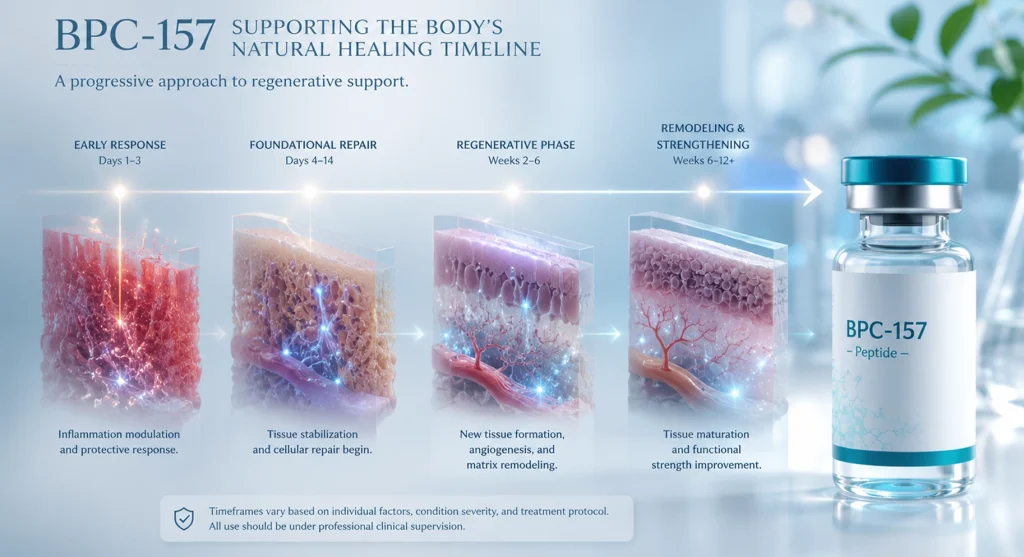
One of the most common questions at intake is how long it takes to feel a difference. The honest answer is that it depends on the indication, and the timeline varies enough between tissue types that a single number is misleading. Based on what we observe at our Doral clinic, here is a realistic framework:
- Gut health (SIBO residuals, NSAID gastritis, leaky gut): First subjective improvements in GI symptoms typically appear within the first 2 to 4 weeks. Meaningful change in bloating, food tolerance, and digestive comfort is usually noticeable by 30 days. Systemic effects like fatigue improvement often follow at weeks 4 to 6.
- Tendon and ligament injuries (stalled recovery): Patients with subacute tendinopathy that has plateaued in PT typically notice a meaningful change in pain level and range of motion within 3 to 4 weeks. Full benefit for chronic tendinopathy usually requires a complete 8 to 12 week cycle.
- Joint pain (chronic knee, shoulder, hip): Anti-inflammatory effects can begin at 2 to 3 weeks. Structural tissue support benefits accumulate more slowly, typically 4 to 6 weeks into a protocol.
- Muscle strains (Grade I/II): Accelerated progression through the proliferation phase is often noticeable at 2 to 3 weeks versus an untreated baseline.
- Post-surgical recovery: Timeline depends on procedure type and surgeon’s guidance on loading. BPC-157 supports the remodeling phase, which begins at approximately 3 weeks post-op and continues for months.
BPC-157 Side Effects: What Is Normal, What Passes, and What to Watch
BPC-157 has a strong preclinical safety profile across decades of animal research, and the side effect picture at clinical doses in supervised settings is generally mild. That said, informed patients who know what to expect tolerate the protocol far better than those who encounter side effects without context.
The most commonly reported side effects at therapeutic doses include mild nausea, particularly in the first week of a protocol, which typically resolves by day 7 to 10 without any dose adjustment. Injection site reactions such as minor redness, transient swelling, or localized soreness are normal and usually resolve within 24 hours. Some patients report a temporary increase in fatigue or mild headache in the first few days, which resolves without intervention.
What warrants attention and a call to the clinic: persistent nausea beyond the first 10 days, injection site reactions that worsen rather than resolve, or any signs of systemic allergic response. BPC-157 is also classified by WADA as a prohibited substance for competitive athletes, which is a regulatory consideration separate from safety. As a 2025 narrative review in PubMed confirming BPC-157 promotes angiogenesis, accelerates tendon and bone healing, and protects gastrointestinal lining across multiple animal models notes, the current evidence base is robust in preclinical settings with no approved human trials completed to date. That is why supervised administration and regular follow-up are non-negotiable at our clinic.
Compounded vs Online BPC-157: Why the Source Matters for Results
One of the most important conversations we have at intake with BPC-157 patients is about sourcing. There is a significant difference between clinical injectable BPC-157 from a licensed US compounding pharmacy and the unregulated research-grade powders sold online as “not for human use.” The difference is not just regulatory. It is practical.
Compounded BPC-157 from a licensed pharmacy is tested for sterility, potency, and the absence of contaminants. The concentration is verified. The reconstitution instructions are specific to the batch. The patient is injecting a product with a known composition under medical supervision. Unregulated online powders have none of those assurances. Independent testing of research peptide products has found significant variability in actual peptide content, including products that contained substantially less active compound than labeled, and products that failed sterility testing.
For a complete picture of what peptide therapy costs at a supervised clinic in Doral versus what patients find online, including how compounded pricing compares across protocol options, our complete breakdown of peptide therapy costs at Perfect B in Doral covers BPC-157 protocol pricing, multi-peptide stack options, and how clinic prices compare to research chemical sources.
Who Is a Good Candidate for BPC-157 at Perfect B in Doral?
BPC-157 is not a first-line treatment for most conditions. It is most useful when a conventional treatment path has been followed appropriately and has plateaued. The patient profile that benefits most at our clinic looks like this:
- Soft tissue injury that has stalled: The patient has completed physical therapy, has no surgical indication, but is still symptomatic at 8 to 12 weeks. BPC-157 restarts the repair signal in tissue that stopped progressing.
- Chronic GI inflammation with no clear diagnosis: Standard GI workup was negative, but the patient continues to experience bloating, food sensitivities, and post-meal fatigue. BPC-157 addresses the mucosal layer rather than bacterial overgrowth or motility.
- Post-surgical recovery optimization: The surgery went well, but the patient wants to support tissue quality during the remodeling phase. BPC-157 is used as an adjunct, not a replacement, for standard post-op care.
- Athletes managing recurring soft tissue issues: Patients with high training volume who are managing recurring tendon irritation, muscle strain patterns, or joint inflammation that limits performance and recovery.
Patients who should wait before starting BPC-157: those with active malignancy or a personal history of hormone-sensitive cancer, pregnant patients, and anyone who has not yet completed a basic anti-inflammatory protocol for an acute injury. BPC-157 is a repair signal, not an anti-inflammatory drug. In the acute inflammatory phase of a new injury, the inflammation is doing necessary work. Starting BPC-157 too early can interfere with that process rather than accelerate it. For the complete clinical picture of what BPC-157 is, how it works at the molecular level, and how we evaluate candidates at intake, our full guide to BPC-157 at Perfect B in Doral covers the molecular mechanism, the compounding and prescription process, and what the initial evaluation looks like.
Ready to See What a BPC-157 Protocol Looks Like for Your Goals? Our tool shows real South Florida patient data in 6 questions.
Perfect B’s peptide protocol tool is built on real clinical data from 2,000+ patients treated in South Florida.
Answer 6 questions and see what patients with similar goals are running: which peptides they use, typical dosing, injection schedule, reconstitution steps, cycle length, and when they pause.
Frequently Asked Questions
1. What does BPC-157 do for your body?
BPC-157 is a signaling peptide that upregulates growth factors involved in tissue repair, particularly VEGF (new blood vessel formation), fibroblast activity (collagen production), and nitric oxide signaling. In practical terms, it accelerates healing in gut lining, tendons, ligaments, muscle, and joint tissue by restarting a repair process that has stalled or by supporting tissue that is under chronic inflammatory stress. It is not a hormone, not a steroid, and not a stimulant.
2. How long does it take for BPC-157 to work?
Timeline depends on the indication. Gut health patients typically see the first subjective changes within 2 to 4 weeks, with meaningful improvement by 30 days. Tendon and ligament patients with stalled recovery usually notice a change in pain and range of motion within 3 to 4 weeks. Joint pain patients typically feel the anti-inflammatory effect at 2 to 3 weeks, with structural support benefits accumulating at 4 to 6 weeks. Muscle recovery is often the fastest, with changes in healing progression at 2 to 3 weeks for Grade I/II strains.
3. What are the side effects of BPC-157?
At clinical doses under supervision, the most common side effects are mild nausea in the first week (typically resolves by day 7 to 10), injection site reactions (redness, minor swelling, localized soreness lasting 24 hours), and occasional transient fatigue or mild headache in the first few days. Persistent or worsening symptoms should be reported to the prescribing provider immediately.
4. Can you take BPC-157 daily?
Daily subcutaneous injection is the standard protocol in supervised clinical settings, typically dosed once daily or split into twice daily depending on the indication and the provider’s assessment. The cycle length at our Doral clinic is typically 8 to 12 weeks for musculoskeletal indications and 4 to 8 weeks for gut health, with a structured off-cycle period before reassessment.
5. Is BPC-157 safe without a prescription?
BPC-157 is not FDA-approved for human use and requires a prescription from a licensed provider to be dispensed from a US compounding pharmacy. Using unregulated research-grade powders purchased online carries risks including unknown potency, contamination, and no medical supervision for dosing or monitoring. Self-administration without clinical oversight removes the safety layer that makes the protocol viable.
6. What is the difference between oral and injectable BPC-157?
Oral BPC-157 is sometimes studied for gastrointestinal indications because the peptide naturally survives the acidic stomach environment. However, for musculoskeletal and systemic applications, subcutaneous injection delivers the peptide directly into systemic circulation at predictable concentrations. At Perfect B, we prescribe injectable BPC-157 for all indications because the dosing is controlled and the delivery is consistent regardless of the patient’s GI absorption status.
7. Can BPC-157 be stacked with TB-500?
Yes. The BPC-157 and TB-500 combination, known as the Wolverine stack, is one of the most commonly prescribed peptide protocols at our clinic for patients with significant soft tissue injuries, post-surgical recovery needs, or systemic inflammation. The two peptides address different but complementary stages of the healing cascade: BPC-157 handles localized repair signaling, TB-500 handles systemic mobilization and anti-inflammatory signaling. The combination produces a faster and higher-quality repair than either peptide alone.
Closing: The Clinical Bottom Line on BPC-157 Benefits
BPC-157 works best when it is used for the right indication, at the right time in the recovery process, with the right source compound. The internet version of BPC-157 benefits is a long list that implies it can do almost anything. The clinical version is narrower, better defined, and more reliably delivered. Gut lining repair, stalled tendon and ligament recovery, joint inflammation support, and post-surgical tissue quality are where we see consistent results at Perfect B in Doral. The timelines are real, the mechanism is understood, and the protocol is individualized at intake by a licensed APRN who reviews your specific history before the first dose.
If you have been managing a chronic soft tissue issue, GI inflammation that standard approaches have not resolved, or post-surgical recovery that is progressing slower than expected, a BPC-157 consultation at our Doral clinic starts with a full clinical intake, not a generic protocol handed off without context. South Florida patients dealing with the combined demands of year-round activity, heat-related recovery challenges, and high training volume are a patient population we understand well.
📍 Visit us at Perfect B, 8200 NW 41st St, Doral, FL 33166
📞 Call or message us at (786) 502-2260
→ See the full peptide treatment plan at Perfect B in Doral and start your clinical evaluation today.