
Perfect B, Doral FL. | 05.12.26 | 9 min read.
This post is for educational purposes only and does not substitute for personalized medical advice. Peptide therapy protocols vary based on clinical history, goals, and individual response. Consult a licensed medical provider before beginning any peptide treatment.
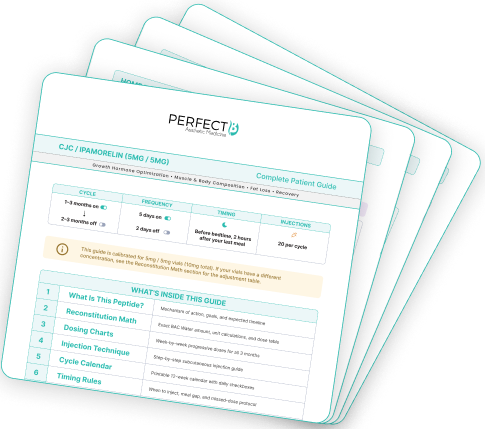
Skip Ahead to the Perfect B Peptide Protocol Tool. See Reconstitution, Daily Units, and Cycle Structure.
Perfect B’s peptide protocol tool is built on real clinical data from 2,000+ patients treated in South Florida.
Answer 6 questions and see what patients with similar goals are running: which peptides they use, typical dosing, injection schedule, reconstitution steps, cycle length, and when they pause.
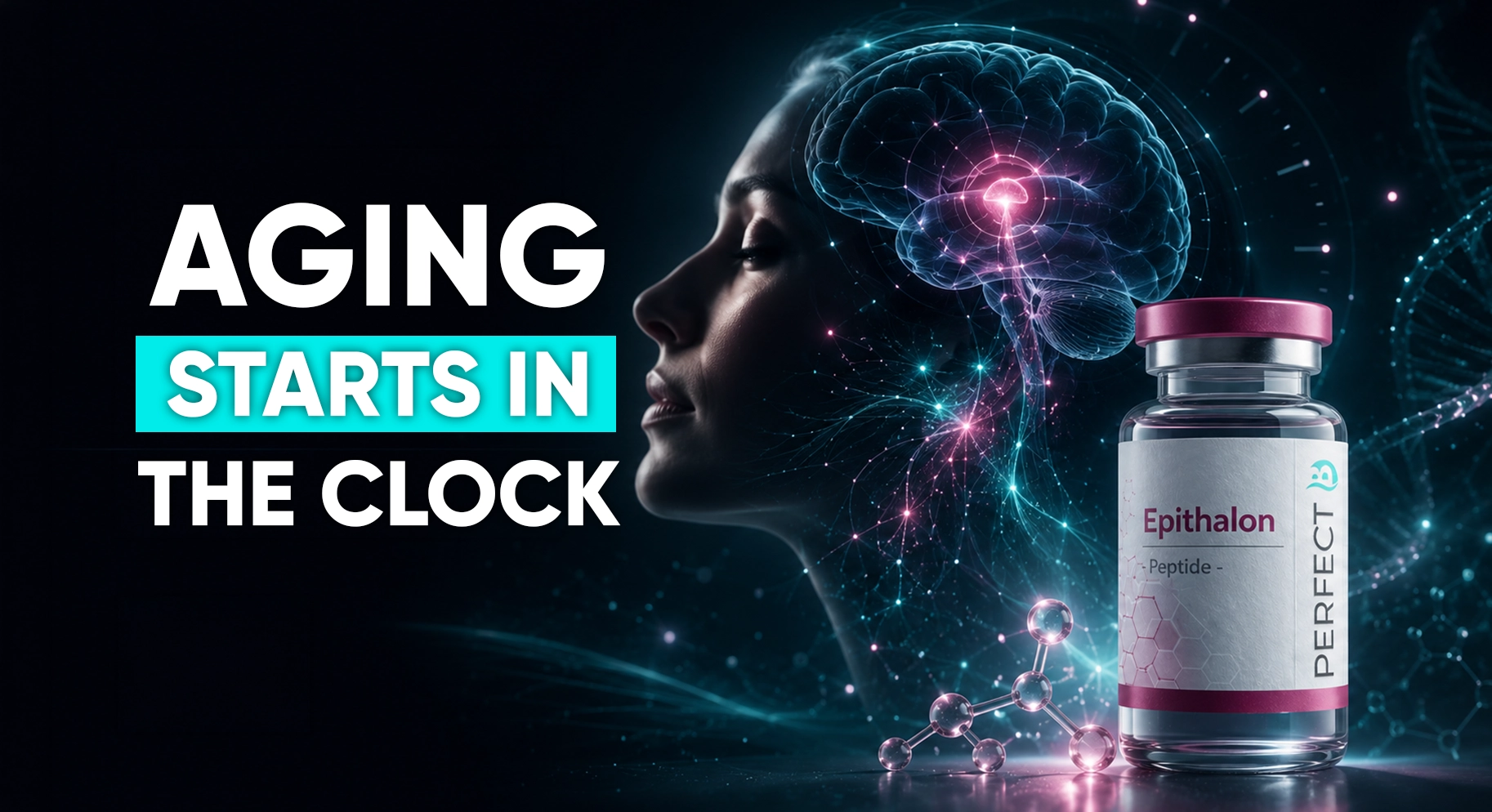
What Is Epithalon? The Pineal Peptide That Targets Aging at the Cellular Level
Most anti-aging interventions work at the surface or at best at a single biological pathway. They improve how the skin looks, or they boost one hormone, or they reduce one inflammatory marker. Epithalon is different in a way that matters clinically: it is a synthetic tetrapeptide derived from pineal gland research, and the evidence behind it suggests it operates on five distinct hallmarks of aging simultaneously.
That combination is rare. Understanding why Epithalon works, what it actually does inside the cell, and who benefits most from it requires looking past the longevity marketing language that now surrounds it and reading the science directly. At Perfect B in Doral, FL, Epithalon is one of the eight peptide options available in our protocol menu. It is most often selected by patients with declining sleep quality, patients on longevity and biological age optimization protocols, and patients who want to support cellular health in ways that go beyond what standard aesthetic or recovery peptides address.
Key Takeaways
- Epithalon is a synthetic tetrapeptide (Ala-Glu-Asp-Gly) developed from pineal gland research by Professor Vladimir Khavinson in Russia, with over 40 years of study behind its mechanisms.
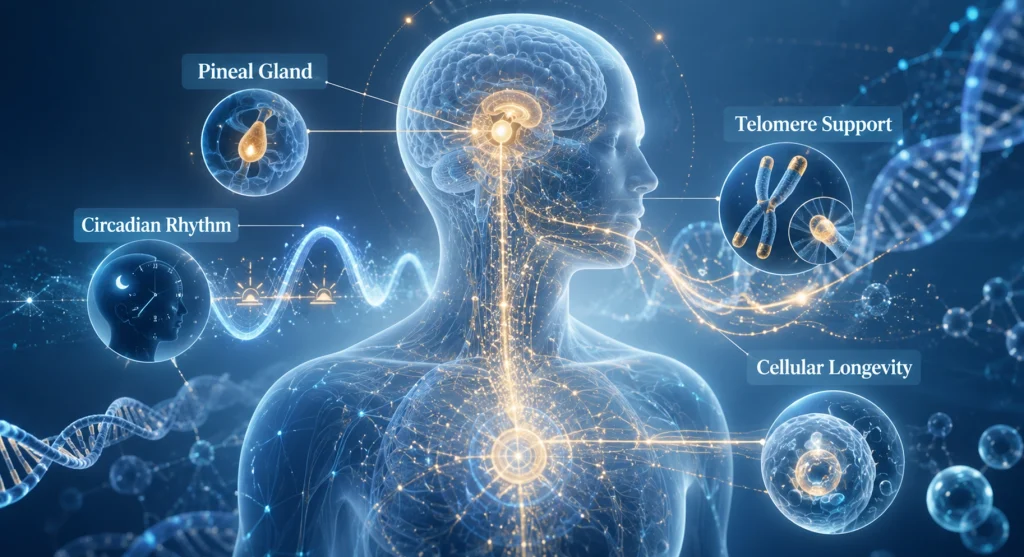
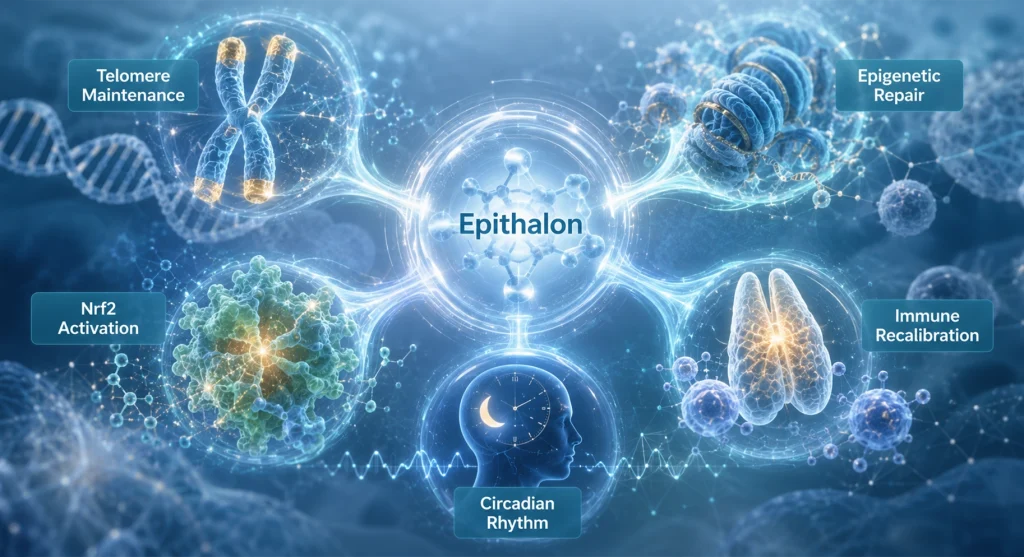
- It addresses five hallmarks of aging at once: telomere maintenance, epigenetic regulation, antioxidant defense via Nrf2, immune recalibration, and circadian rhythm restoration.
- Its most clinically noticeable early effect for most patients is improved sleep quality and morning energy, driven by pineal gland stimulation and melatonin normalization, typically visible within weeks two to three.
- The telomere research behind Epithalon is peer-reviewed and real, but it requires honest context: telomerase activation is both the mechanism of action and a reason for careful patient selection in certain clinical histories.
- At Perfect B, Epithalon is priced as a 1-Peptide Stack at $445 per cycle and can be combined with CJC/Ipamorelin, GHK-Cu, or other peptides in a multi-peptide protocol built at your clinical intake.
How Epithalon Works: 5 Hallmarks of Aging It Addresses Simultaneously
Epithalon’s breadth of action is what separates it from most peptides in clinical use. A 2025 review published in the International Journal of Molecular Sciences at the Medical University of Warsaw documented five distinct biological pathways the peptide activates. Understanding each one explains both why Epithalon works and who benefits most from it.
1. Telomere maintenance and telomerase activation
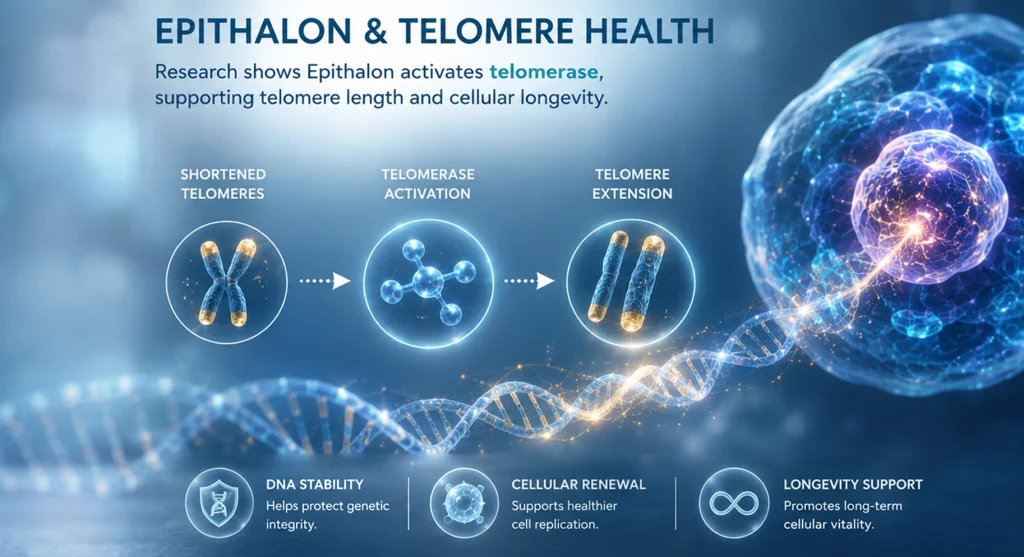
Telomeres are the protective caps at the ends of chromosomes. Each time a cell divides, they shorten slightly, eventually reaching a length that triggers cellular senescence. Telomerase is the enzyme that can add nucleotides back to telomeres, potentially extending cellular replicative lifespan. In most adult human cells, telomerase activity declines sharply with age. Epithalon has been shown in cell studies to activate telomerase and extend telomere length beyond what cells would achieve in its absence, pushing cells past the Hayflick limit while preserving function and morphology. This is Epithalon’s signature mechanism and the one most cited in longevity literature.
2. Epigenetic regulation and gene expression restoration
Aging is not just about DNA damage. It is also about which genes get expressed and which go silent. The epigenome drifts significantly with age, silencing genes associated with repair and activating genes associated with inflammation and dysfunction. Epithalon has been shown to bind to promoter regions and alter chromatin structure in ways that may restore more youthful gene expression patterns. The 2025 review describes this as Epithalon functioning as a precision gene-expression modulator rather than a blunt genetic tool, supporting reduced mutation load and enhanced DNA repair over time.
3. Antioxidant defense via Nrf2 pathway activation
Oxidative stress, the accumulation of reactive oxygen species that damage cells, mitochondria, and DNA, is a foundational driver of accelerated aging. Epithalon activates the Nrf2 pathway, which regulates the production of the body’s intrinsic antioxidant enzymes including superoxide dismutase, glutathione peroxidase, and catalase. This is not supplementing antioxidants from outside. It is stimulating the body’s own antioxidant infrastructure. For patients in South Florida dealing with chronic UV and heat-related oxidative load year-round, this mechanism is particularly relevant to what we see in our Doral patient population.
4. Immune system recalibration
Immunosenescence, the gradual deterioration of immune function with age, is one of the most significant contributors to age-related disease risk. Epithalon has been shown to restore thymus function and support T-cell maturation in aging subjects, effectively recalibrating immune surveillance toward a more youthful functional profile. This is not an acute immunostimulant effect. It is a regulatory shift that appears to develop over the course of a treatment series. A peer-reviewed overview in the International Journal of Molecular Sciences (Araj et al., Medical University of Warsaw, 2025) establishing Epithalon as a highly bioactive pineal tetrapeptide with documented mechanisms spanning telomere maintenance, epigenetic regulation, antioxidant defense, immune recalibration, and circadian rhythm restoration provides the scientific framework for all five mechanisms described in this section.
5. Circadian rhythm restoration and melatonin regulation
This is the mechanism most immediately noticeable to patients. The pineal gland, from which Epithalon was originally derived, governs melatonin production and circadian rhythm. Epithalon stimulates the pineal gland to produce melatonin more efficiently, which improves the body’s internal clock synchronization, deepens slow-wave sleep, and reduces the cortisol dysregulation that follows from poor sleep architecture. Patients on Epithalon consistently report this as one of the earliest changes they notice, typically within the first two to three weeks of a protocol. → See Perfect B’s full peptide treatment plan in Doral, FL, including all eight peptide options, protocol structures, and how multi-peptide stacks are built around each patient’s clinical goals.
Epithalon and Sleep: Why It Is One of the Best Peptides for Circadian Optimization
The query “peptides for sleep” brings patients to Epithalon regularly, and for good clinical reason. But the mechanism behind Epithalon’s sleep effect is indirect and distinct from other peptides that act on sleep directly, a distinction that matters for patient selection.
How Epithalon improves sleep: the pineal gland pathway
Epithalon does not sedate. It does not act on GABA receptors or suppress the nervous system the way sleep medications do. Its sleep benefit comes from restoring the pineal gland’s melatonin output capacity, which declines significantly with age. By the time most patients are in their late 30s or 40s, pineal calcification and reduced melatonin synthesis have already begun degrading sleep architecture, particularly the slow-wave deep sleep phases where cellular repair, growth hormone release, and memory consolidation occur. Epithalon addresses this at the source, stimulating the gland rather than bypassing it.
DSIP vs Epithalon: two different mechanisms, two different patients
Delta Sleep-Inducing Peptide (DSIP) is a neuropeptide that acts directly on sleep centers in the brain to initiate sleep onset and increase non-REM sleep time. It is a more direct intervention for acute sleep initiation problems. Epithalon is better understood as a circadian architecture restoration tool: it improves the depth, consistency, and hormonal quality of sleep over time rather than inducing sleep on a given night. A patient who struggles to fall asleep may benefit more immediately from DSIP. A patient whose sleep is not restorative, who sleeps for seven or eight hours but wakes unrefreshed with elevated cortisol and poor morning energy, is typically a better Epithalon candidate. At Perfect B, protocol selection between these options follows from a clinical intake conversation, not a default recommendation.
The Telomere Research Behind Epithalon: What the Evidence Actually Shows
The telomere story is the most cited and most misrepresented aspect of Epithalon. Here is what the evidence actually says, including the parts that require clinical judgment.
The Hayflick limit and why telomere length matters
In 1961, Leonard Hayflick demonstrated that normal human cells have a finite replication capacity of approximately 50 to 70 divisions, after which they enter senescence or apoptosis. This limit is largely governed by telomere length. Shorter telomeres are associated with accelerated biological aging, increased disease risk, and reduced tissue repair capacity. Longer telomeres, in controlled contexts, are associated with extended cellular vitality. An early publication in the Annals of the New York Academy of Sciences documenting the original discovery of telomere shortening as a primary mechanism of cellular senescence and its relevance to human aging biology provides the foundational framework for understanding why telomerase-activating compounds attract longevity research attention.
What the 2025 research review found on Epithalon and telomeres
The 2025 overview in the International Journal of Molecular Sciences examined the full body of Epithalon research and concluded that the peptide can activate telomerase and extend telomere length in human cell cultures, with effects observed beyond the standard Hayflick limit while preserving cellular morphology and function. The review documented five concurrent mechanisms and positioned Epithalon as one of the broadest-reaching peptides studied in longevity science.
The cancer question: what you need to understand before starting
Telomerase activation is not unconditionally beneficial. The same mechanism that extends the replicative life of healthy cells also supports the proliferation of cancer cells, which are defined by their ability to bypass normal telomere-based growth limits. This is not a theoretical risk unique to Epithalon: it is a fundamental biological property of telomerase activation as a class. At Perfect B, we address this directly in the clinical intake. Patients with a personal or strong family history of certain cancers are not automatically excluded from Epithalon therapy, but the risk-benefit discussion is mandatory before protocol initiation. This is the honest clinical picture, and it is one that most Epithalon content online omits entirely. Discussing it openly is how we operate at our Doral clinic. → Read how Perfect B approaches regenerative protocols with a two-phase results arc, including what early biological changes look like and how structural improvements compound over a full treatment series.
Who Is a Candidate for Epithalon at Perfect B in Doral, FL?
The clinical profile that responds best
Patients in their late 30s through 60s who report declining sleep quality, reduced energy that is not explained by obvious lifestyle factors, a sense of slower recovery from physical activity or illness, and a general interest in longevity and cellular health represent the core Epithalon population at Perfect B. Lab findings that support candidacy include elevated inflammatory markers, declining melatonin on baseline testing, and any evidence of accelerated biological aging on available metrics. Patients who have plateaued on other protocols, whether peptide-based or otherwise, also benefit from Epithalon’s breadth, which addresses pathways that single-target compounds leave untouched. In our South Florida and Doral patient population, where chronic UV exposure accelerates the cellular aging timeline faster than in most other US markets, the combination of Nrf2 antioxidant activation and epigenetic repair makes Epithalon a particularly well-matched tool for the local clinical context.
How Epithalon fits into a multi-peptide protocol
Epithalon is one of the eight peptide slots in Perfect B’s protocol model, priced as a 1-Peptide Stack at $445 per cycle. It pairs well with CJC/Ipamorelin in patients who want both circadian optimization and growth hormone support, addressing sleep architecture from two complementary angles. It also pairs well with GHK-Cu in patients focused on skin, tissue repair, and systemic cellular regeneration alongside the longevity mechanisms Epithalon provides. Adding a second peptide to an Epithalon protocol moves it to a 2-Peptide Stack at $795 per cycle. The combination is determined at your clinical intake, not selected from a menu.
Ready to find out how Epithalon fits into your personalized protocol?
Which peptides are patients like you using, and what do their protocols look like? Perfect B's peptide protocol tool is built on real clinical data from 2,000+ patients treated in South Florida. Answer 6 questions and the tool shows you what patients with similar goals are running: which peptides they use, typical dosing, injection schedule, reconstitution steps, cycle length, and when they pause.
Epithalon Protocol at Perfect B: Cycle Structure and What to Expect
Dosing structure and cycle length
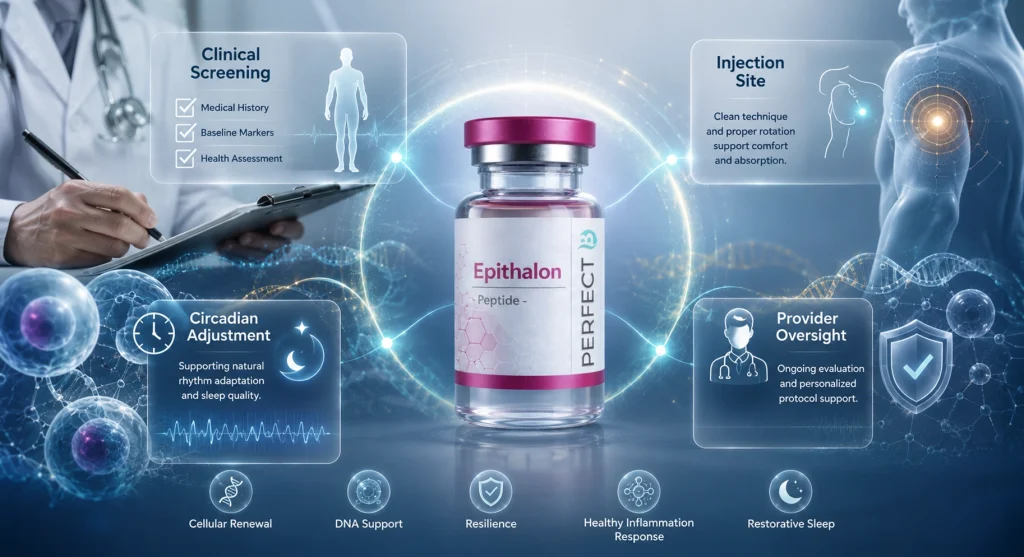
Epithalon protocols at Perfect B follow the standard 1-Peptide Stack cycle structure, with the specific dosing schedule established at your clinical intake based on health history, goals, and baseline labs. Patients leave their first appointment with a complete supply kit: peptide vials, bacteriostatic water, syringes, alcohol swabs, sharps container, dosing calendar, and step-by-step instructional videos for self-injection at home. Access to your provider for questions during the cycle is included. There are no separate supply charges or monitoring fees on top of the protocol price.
Timeline: when patients notice changes
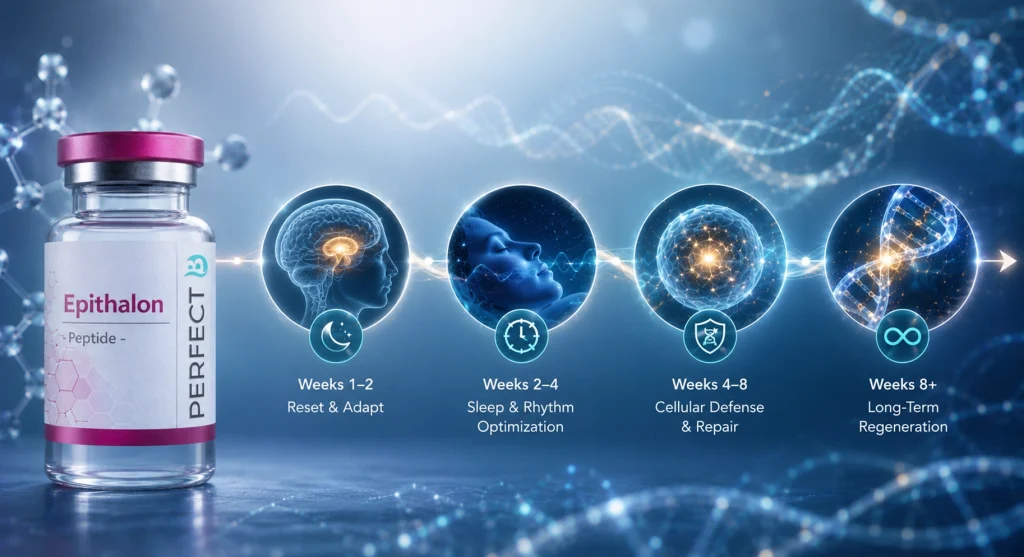
The first changes most patients report are sleep-related, typically improved sleep depth and morning energy levels, appearing within weeks two to three of the first cycle. These early improvements reflect the pineal gland and melatonin normalization effect. Changes associated with the epigenetic, antioxidant, and immune mechanisms are slower to manifest and are best assessed through follow-up body composition and lab data rather than subjective experience alone. Patients who commit to a multi-cycle series report a compounding improvement pattern: the first cycle establishes the biological foundation, and subsequent cycles build on it, consistent with what we see across all peptide protocols at Perfect B. → See Perfect B’s complete peptide therapy pricing in Doral, FL, including stack options from $445 per cycle, multi-cycle savings, Cherry financing, and what every protocol includes.
Epithalon Side Effects and Safety: The Clinical Picture
What the research says on tolerability
Across the studies reviewed in the 2025 International Journal of Molecular Sciences analysis and in earlier clinical work, Epithalon has demonstrated a favorable tolerability profile. The most commonly reported effects are mild and transient: slight redness at the injection site, occasional mild fatigue in the first few days of a protocol reflecting the circadian recalibration effect, and in some patients a temporary increase in dream vividness associated with improved REM architecture. No serious adverse events have been reported in the available literature at therapeutic doses.
Contraindications and who should approach with caution
Patients with active malignancy or a strong personal history of hormonally driven cancers should discuss the telomerase activation mechanism specifically with their provider before beginning Epithalon. The risk is not established at the doses and durations used in clinical peptide protocols, but the theoretical basis for the concern is real and should not be minimized. Pregnant and breastfeeding patients should avoid Epithalon, as safety data in those populations does not exist. Patients on immunosuppressive therapy should have a provider review potential interactions before initiating any peptide protocol. At Perfect B, all of these are addressed during the mandatory clinical intake before any protocol is prescribed.
Frequently Asked Questions
1. How long does it take for Epithalon to work?
Most patients notice the first changes within two to three weeks, primarily in sleep quality, morning energy, and a general sense of improved recovery. These early effects reflect the melatonin and circadian regulation mechanism. The deeper anti-aging effects, epigenetic, antioxidant, immune, are measured over a full cycle and beyond, best assessed through objective follow-up data rather than subjective experience alone. Committing to a full cycle before evaluating results gives the most clinically accurate picture of how your biology is responding.
2. What is the difference between Epithalon and Epitalon?
They are the same compound. Epithalon and Epitalon are two spellings of the same synthetic tetrapeptide (Ala-Glu-Asp-Gly). The variation comes from transliteration differences between English and Russian sources, since the original research was conducted by Professor Vladimir Khavinson at the St. Petersburg Institute of Bioregulation and Gerontology. Both spellings refer to the same molecular structure, the same mechanisms, and the same clinical applications.
3. Is Epithalon the best peptide for sleep?
Epithalon is one of the most effective peptides for sleep when the issue is circadian dysregulation, melatonin decline, or non-restorative sleep architecture. If the primary complaint is difficulty initiating sleep, DSIP addresses that more directly. If the issue is sleep depth, morning recovery, and the hormonal quality of sleep, Epithalon is typically the more appropriate choice. For patients whose sleep issues are connected to growth hormone decline, CJC/Ipamorelin addresses sleep as a secondary benefit. At Perfect B, we assess sleep complaints specifically before recommending a peptide: the right answer depends on which part of the sleep architecture is dysregulated.
4. Can Epithalon be stacked with other peptides?
Yes. At Perfect B, Epithalon can be combined with any of the other seven peptide options in our protocol menu. Common combinations include Epithalon with CJC/Ipamorelin for patients targeting both sleep and body composition, Epithalon with GHK-Cu for patients focused on cellular repair and skin quality alongside longevity support, and Epithalon with MOTS-c for patients on metabolic and mitochondrial optimization protocols. The combination is determined at clinical intake based on your specific goals and health profile. → See how Perfect B structures multi-peptide stacks in Doral, FL, including available combinations, cycle pricing, and what the clinical intake process looks like.
5. How much does Epithalon cost at Perfect B?
Epithalon is priced as a 1-Peptide Stack at $445 per cycle, which includes all supplies, instructional materials, and medical supervision. Multi-cycle commitments reduce the per-cycle cost: two cycles are $800 (saving $90) and three cycles are $1,135 (saving $200). Adding a second peptide to an Epithalon protocol moves the stack to $795 per cycle. Cherry financing is available with no hard credit inquiry for patients who prefer to spread the investment. See the full pricing breakdown at the Perfect B peptide therapy cost guide.
6. Is Epithalon FDA approved?
Epithalon is a compounded peptide used in clinical practice under off-label provisions, consistent with how most peptide therapies are prescribed in the United States. It does not have FDA approval for any specific indication. In February 2026, HHS announced that approximately 14 previously restricted peptides are expected to return to Category 1 compounding status, a regulatory development that supports the continued availability of compounded peptides at clinics like Perfect B. Your prescribing provider will discuss the current regulatory context and what it means for your protocol at your consultation.
7. Who developed Epithalon and how long has it been studied?
Epithalon was developed by Professor Vladimir Khavinson at the St. Petersburg Institute of Bioregulation and Gerontology in Russia, where it has been studied for over 40 years. The original research focused on its role as a synthetic analog of the natural pineal peptide Epithalamin. Initial studies were conducted in animal models and progressed to human clinical observations, with particularly strong work on immune function, longevity markers, and circadian regulation. The 2025 review in the International Journal of Molecular Sciences represents the most comprehensive English-language synthesis of this body of research to date. Contact us at (786) 502-2260 if you want to review the primary literature before your consultation.
Closing: Epithalon Addresses What Most Anti-Aging Protocols Miss
The aging process is not a single event. It is the simultaneous drift of dozens of biological systems away from their optimal states over decades. Most interventions target one drift at a time. A retinoid for skin. A hormone for one axis. A supplement for one inflammatory marker. Epithalon’s value is precisely that it does not work that way. Its five concurrent mechanisms, telomere maintenance, epigenetic regulation, antioxidant defense, immune recalibration, and circadian restoration, address the underlying biology of aging from multiple angles in a single protocol.
For patients in South Florida, where chronic UV exposure and heat-driven oxidative stress accelerate the cellular aging timeline faster than in most other US markets, having a tool that addresses cellular health at this depth is clinically meaningful. Epithalon is not a cure for aging. No peptide is. But as a component of a thoughtfully built longevity and optimization protocol, the evidence supports its use in the right clinical profile. At Perfect B in Doral, we evaluate your biology before recommending any protocol. If Epithalon belongs in your stack, we will explain exactly why.
Find out if Epithalon belongs in your protocol.
Which peptides are patients like you using, and what do their protocols look like? Perfect B's peptide protocol tool is built on real clinical data from 2,000+ patients treated in South Florida. Answer 6 questions and the tool shows you what patients with similar goals are running: which peptides they use, typical dosing, injection schedule, reconstitution steps, cycle length, and when they pause.
📍 Visit us at Perfect B, Doral FL
📞 Call or message us at (786) 502-2260