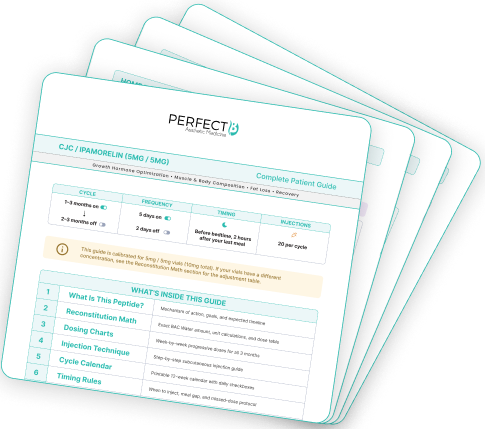

Still Deciding? Let Our Peptide Guide Point You to the Right Protocol.
Reading about one peptide is a start, but seeing how it fits a full protocol is what makes the difference. Our peptide guide walks you through 6 questions and shows the reconstitution, dosing, and cycle details patients like you actually use.
Perfect B, Doral Fl. | 05.25.26 | 12 min read.
This article is for educational purposes only. GHK-Cu protocols at Perfect B are prescribed following a full medical intake and APRN evaluation. Results vary by patient. This is not a substitute for medical advice. It is worth knowing how medically supervised peptide therapy at Perfect B in Doral works and how each protocol fits a complete, monitored plan. For more on this, see our guide to Sermorelin Before and After: 3-12 Month Results, and how it is evaluated and treated at Perfect B in Doral.
Skip Ahead to the Perfect B Peptide Protocol Tool. See Reconstitution, Daily Units, and Cycle Structure.
Perfect B’s peptide protocol tool is built on real clinical data from 2,000+ patients treated in South Florida.
Answer 6 questions and see what patients with similar goals are running: which peptides they use, typical dosing, injection schedule, reconstitution steps, cycle length, and when they pause.
Key Takeaways: GHK-Cu Before and After
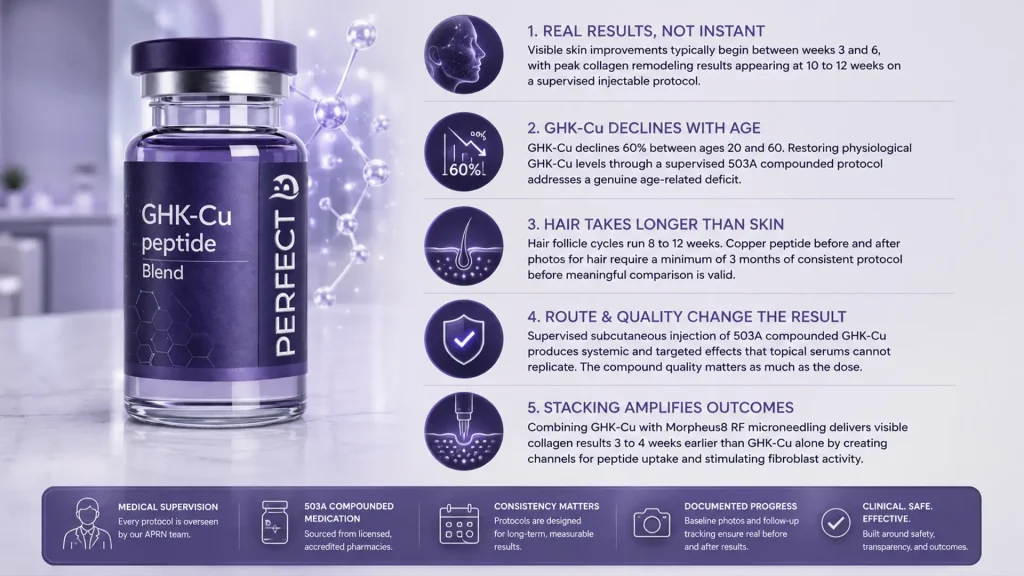
- Copper peptide before and after results are real but not instant: visible skin improvements typically begin between weeks 3 and 6, with peak collagen remodeling results appearing at 10 to 12 weeks on a supervised injectable protocol.
- GHK-Cu declines 60% between ages 20 and 60: this is not a cosmetic add-on. Restoring physiological GHK-Cu levels through a supervised 503A compounded protocol addresses a genuine age-related deficit.
- Hair results follow a longer timeline than skin: because hair follicle cycles run 8 to 12 weeks, copper peptide before and after photos for hair require a minimum of 3 months of consistent protocol before meaningful comparison is valid.
- Route of administration changes the result: supervised subcutaneous injection of 503A compounded GHK-Cu produces systemic and targeted effects that topical serums cannot replicate. The compound quality matters as much as the dose.
- Stacking with RF microneedling amplifies outcomes: at Perfect B in Doral, patients who combine GHK-Cu with Morpheus8 RF microneedling report visible collagen results 3 to 4 weeks earlier than GHK-Cu alone because microneedling creates direct channels for peptide uptake and simultaneously stimulates fibroblast activity.
Why GHK-Cu Produces Visible Results: The Mechanism in Plain Terms
GHK-Cu is a naturally occurring tripeptide composed of glycine, histidine, and lysine bound to a copper ion. At age 20, plasma levels average around 200 ng/mL. By age 60, that concentration has fallen to approximately 80 ng/mL, a 60% decline that correlates directly with reduced healing capacity, collagen loss, and visible aging. This is not a supplement filling a theoretical gap. It is replacing something the body produced abundantly and no longer does.
The mechanism behind copper peptide before and after results involves several simultaneous processes. GHK-Cu activates fibroblasts, the cells responsible for collagen and elastin synthesis, and triggers extracellular matrix remodeling through metalloproteinase regulation. It breaks down damaged, disorganized collagen and replaces it with new, properly structured fibers. It increases glycosaminoglycan synthesis, improving moisture retention at the structural level, not just at the surface. It also upregulates over 4,000 genes involved in tissue repair, angiogenesis, and antioxidant defense while downregulating pro-inflammatory and pro-fibrotic pathways.
What this means clinically is that GHK-Cu works on multiple fronts simultaneously. The skin and hair results patients see are not from a single action. They reflect a cascade of regenerative processes that compound over the 12 to 20 week protocol window.
The GHK-Cu Before and After Timeline: What to Expect Week by Week
Patients who want to understand how GHK-Cu works at the cellular level before reviewing results can read the GHK-Cu clinical guide published by Perfect B and the GHK-Cu dosage and injection protocol used at the clinic in Doral. For South Florida patients considering the full regenerative treatment menu, the peptide treatment plan at Perfect B covers every protocol offered, including GHK-Cu, the APRN intake process, and how protocols are structured before any treatment begins. Hair loss patients in Miami specifically benefit from reviewing the copper peptide for hair loss clinical overview at Perfect B.
The evidence behind GHK-Cu is well-documented. A 2015 review in Biomedical Research International confirming GHK-Cu\’s role in wound healing, collagen synthesis, and skin remodeling across multiple published studies provides the mechanistic foundation for the clinical results reviewed in this post. A peer-reviewed study in the Journal of Cosmetic Dermatology documenting GHK-Cu\’s ability to increase skin firmness and reduce wrinkle depth in clinical trials aligns with the timeline observations reported by patients at Perfect B.
Setting accurate expectations is the difference between a patient who follows through and one who abandons a protocol at week 4 because they expected results at week 2. The GHK-Cu improvement timeline follows the collagen remodeling cycle, which is not adjustable by dose or frequency.
Weeks 1 to 2: The Quiet Foundation Phase
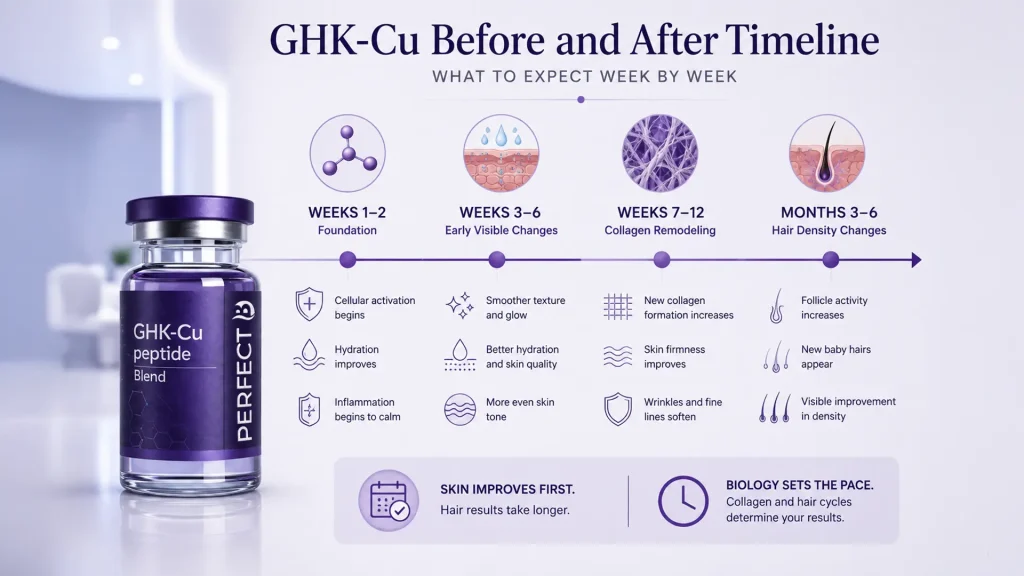
Most patients notice very little at this stage. This is expected. GHK-Cu is initiating fibroblast activation and beginning to break down old, disorganized collagen matrix. Skin may feel slightly more hydrated because glycosaminoglycan synthesis increases early in the protocol. Some patients report their skin appears less dull. These are real changes, but they are not the structural improvements that show in photos.
Weeks 3 to 6: First Visible Copper Peptide Results Appear
This is when patients who are paying attention start to notice. Skin texture becomes smoother as damaged collagen is replaced by new, organized fibers. Fine lines around the eyes and mouth soften because the underlying matrix is more hydrated and structurally supported. Patients with post-inflammatory hyperpigmentation from acne or sun damage often notice the beginning of evenness in skin tone at this stage, because GHK-Cu downregulates inflammatory pathways that drive pigmentation.
At Perfect B, the first APRN follow-up check is typically scheduled between weeks 4 and 6. This is when the provider assesses protocol response and makes any dose or frequency adjustments based on observed outcomes and patient feedback.
Weeks 7 to 12: The Collagen Remodeling Window
This is the primary result window for skin. The collagen remodeling cycle completes its first full pass, and the cumulative effect of new fiber synthesis becomes visible as improved firmness, reduced sagging in the lower face and neck, and a measurable difference in skin density. Patients with acne scars see shallow rolling scars soften because the same mechanism that remodels damaged collagen applies to scar tissue. Pores appear smaller because the surrounding skin matrix is more taut.
South Florida patients, particularly those in the Fitzpatrick III through VI range who have higher baseline melanin activity and different wound healing patterns, sometimes see post-inflammatory hyperpigmentation respond more slowly than texture or firmness. The APRN assessment at this stage determines whether additional support is indicated.
12 Weeks and Beyond: Continued Improvement
GHK-Cu results do not plateau sharply at week 12. Collagen synthesis and matrix remodeling continue as long as the protocol is maintained. Many patients at Perfect B report that their most significant improvement appears between weeks 12 and 20, as multiple collagen remodeling cycles compound. The clinical decision on protocol length and maintenance frequency is made at the APRN evaluation based on the individual patient’s response and goals.
Not sure which peptide protocol fits your skin or recovery goal?
Perfect B’s peptide protocol tool is built on real clinical data from 2,000+ patients treated in South Florida. Answer 6 questions and see which protocol patients with similar goals chose: single peptide at $445, Wolverine Stack at $795, or a custom multi-peptide cycle.
Copper Peptide Before and After: What Changes in the Skin
The documented changes in skin following a supervised GHK-Cu protocol are specific and predictable. Broad claims like “anti-aging” or “skin transformation” do not capture what actually happens mechanistically. These are the observable outcomes ordered by when they typically appear.
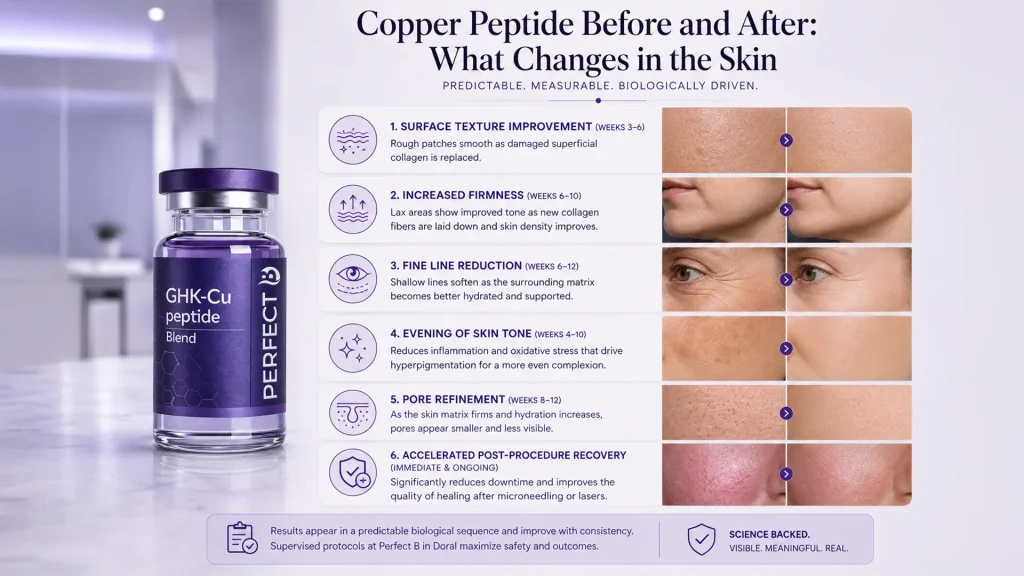
- Surface texture improvement (weeks 3 to 6): rough patches smooth as damaged superficial collagen is replaced. This is often the first change patients notice when touching their skin.
- Increased firmness (weeks 6 to 10): lax areas, particularly the lower face, jawline, and neck, show improved tone as new collagen fibers are laid down. This is not skin tightening in the surgical sense. It is structural density improvement.
- Fine line reduction (weeks 6 to 12): shallow dynamic lines around the eyes and mouth soften as the surrounding matrix becomes better hydrated and structurally supported. Deep static lines require longer protocols and additional modalities.
- Evening of skin tone (weeks 4 to 10): GHK-Cu’s anti-inflammatory mechanism reduces the oxidative stress that drives post-inflammatory hyperpigmentation. Patients with sun damage or acne PIH in South Florida often see significant evenness in this timeframe, particularly when sun protection protocols are followed consistently.
- Pore refinement (weeks 8 to 12): as the surrounding skin matrix firms and hydration increases structurally, pores appear smaller. This is a secondary effect of overall matrix improvement, not a direct pore-targeting action.
- Accelerated post-procedure recovery (immediate and ongoing): for patients receiving GHK-Cu alongside microneedling or laser treatments at Perfect B, the peptide significantly reduces downtime and improves the quality of healing. This is one of the most consistently documented clinical applications of GHK-Cu in regenerative aesthetics.
GHK-Cu Before and After for Hair: Why It Takes Longer Than Skin
Hair follicle biology operates on a different timescale than skin collagen remodeling. The anagen (growth) phase of a follicle runs 2 to 6 years. The telogen (resting) phase runs 2 to 3 months. A single growth cycle takes 3 to 6 months to complete. This means that copper peptide before and after results for hair require a minimum of 3 months of consistent protocol before any meaningful comparison is valid, and full assessment typically takes 6 months.
GHK-Cu acts on hair follicles through several mechanisms. It increases follicle size, which produces a thicker, denser hair shaft. It extends the anagen phase, keeping more follicles in active growth simultaneously. It stimulates the dermal papilla cells that signal follicle activity. And it reduces the scalp inflammation that, in many patients with pattern hair loss, is actively shrinking follicles.
- Months 1 to 2: minimal visible change at the scalp surface. Follicle cycling is occurring but the new, peptide-stimulated growth has not yet reached the surface. Some patients report reduced scalp sensitivity or oiliness, which reflects the anti-inflammatory action.
- Month 3: the first round of GHK-Cu-influenced follicles begins emerging. Patients often describe seeing more baby hairs or increased density at the hairline and crown. Hair that is present may feel thicker because the shaft diameter has increased.
- Months 4 to 6: meaningful visual comparison becomes possible. Photographic documentation from month 1 versus month 4 to 6 typically shows measurable differences in density at areas of prior thinning, particularly the temples, crown, and frontal hairline. The improvement is cumulative and continues as long as the protocol is maintained.
Injectable GHK-Cu vs Topical: Why the Source and Route Change Everything
The consumer market for copper peptide serums is large. The clinical market for supervised injectable GHK-Cu is different in kind, not just degree. The distinction matters for understanding what before and after results are realistic from each approach.
Topical GHK-Cu serums contain the peptide at concentrations that vary widely by brand. Penetration through the skin barrier is limited, particularly for larger molecules, and results depend heavily on the delivery vehicle and formulation. Consistent topical use can produce meaningful improvements in surface texture and hydration, particularly when applied post-microneedling when the barrier has been temporarily disrupted. But systemic and deep dermal effects require systemic delivery.
Subcutaneous injection of 503A compounded GHK-Cu delivers the peptide into circulation, where it can reach target tissues throughout the body, including deeper dermal layers, hair follicles, and any tissue currently in a healing or remodeling phase. The 503A designation is critical. It means the compound is prepared by a licensed compounding pharmacy to FDA standards for safety and purity, using pharmaceutical-grade ingredients. Research chemicals sold online without this designation have no verified purity or concentration, and results from them cannot be meaningfully compared to a supervised clinical protocol.
At Perfect B in Doral, GHK-Cu is prescribed as part of a protocol that begins with a full medical intake, includes baseline photography, and is adjusted based on observed response. The difference between topical and injectable is not a marginal efficiency gain. It is a different category of treatment entirely.
Not sure which peptide protocol fits your skin or recovery goal?
Perfect B’s peptide protocol tool is built on real clinical data from 2,000+ patients treated in South Florida. Answer 6 questions and see which protocol patients with similar goals chose: single peptide at $445, Wolverine Stack at $795, or a custom multi-peptide cycle.
How Perfect B Stacks GHK-Cu With RF Microneedling for Amplified Results
One of the consistently observed patterns at Perfect B is that patients combining GHK-Cu with Morpheus8 RF microneedling reach visible milestones 3 to 4 weeks earlier than patients on GHK-Cu alone. The mechanism behind this is synergistic rather than additive.
Morpheus8 delivers fractional radiofrequency energy through microneedles to the subdermal layer, creating controlled micro-injuries that immediately trigger the body’s wound healing cascade. This cascade involves the same fibroblasts and collagen synthesis pathways that GHK-Cu activates. When the peptide is present in circulation at the time of microneedling, it amplifies the healing response and directs it toward organized collagen synthesis rather than scar formation. The micro-channels created by the needles also temporarily increase permeability, improving topical GHK-Cu uptake if applied in the post-procedure window.
This combination is particularly relevant for patients presenting with acne scarring, skin laxity, or texture irregularities in South Florida’s Fitzpatrick III through VI population. RF microneedling is considered safer and more predictable for melanin-rich skin tones than ablative laser approaches, and combining it with GHK-Cu addresses both the structural deficit and the inflammatory component that often drives post-inflammatory hyperpigmentation in these patients.
What Slows or Stops GHK-Cu Results: Protocol Errors Most Competitors Do Not Mention
Not every patient who starts a GHK-Cu protocol sees the expected results by the expected time. The reasons are specific and addressable when identified early in the protocol.
- Inconsistent dosing: GHK-Cu works through cumulative collagen remodeling. Missing doses resets parts of the cycle. Consistent frequency matters more than any single dose optimization.
- Poor compound quality: unverified research-grade peptides may contain degraded or impure product. The concentration printed on a label from an unregulated source is not verified. Results from these products are unpredictable, and side effects from contaminants are a real risk.
- Zinc deficiency: GHK-Cu requires adequate copper and zinc metabolism to function. Patients with significant nutritional deficiencies may see blunted responses. A basic metabolic panel before starting the protocol can identify this.
- Unaddressed inflammation: GHK-Cu is anti-inflammatory, but it works upstream, not against active inflammatory conditions. Patients with untreated rosacea, active acne, or other inflammatory skin conditions often see slower results because the inflammatory environment is counteracting the remodeling signal. Addressing the underlying condition first, or simultaneously, is the clinical approach at Perfect B.
- No baseline documentation: without pre-protocol photography, patients lose their reference point. Week 10 of a GHK-Cu protocol often looks so much better than week 1 that the difference is remarkable, but memory is not an accurate baseline. The APRN documents the starting point at the intake evaluation.
Who Sees the Best GHK-Cu Results at Perfect B in Doral
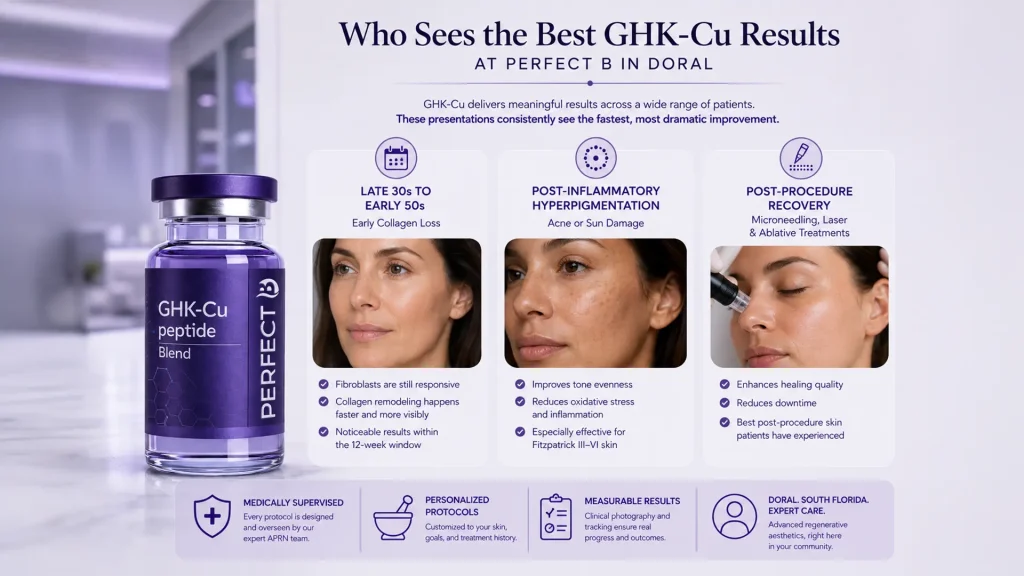
GHK-Cu is not a treatment for one patient type. The range of presentations at Perfect B in Doral reflects South Florida’s demographic diversity, and results are meaningful across that range. But certain presentations consistently produce faster, more dramatic before and after outcomes.
Patients in their late 30s to early 50s who have begun noticing collagen loss but have not yet developed deep structural atrophy represent the sweet spot. Their fibroblasts are still responsive, and the collagen remodeling signal from GHK-Cu generates new fiber at a rate that shows clearly within the 12-week window. Patients presenting with post-inflammatory hyperpigmentation from acne or sun damage, which is especially prevalent in South Florida’s Fitzpatrick III through VI population, see meaningful tone evenness improvements alongside texture changes. Patients recovering from microneedling, laser, or other ablative procedures consistently report the best post-procedure skin quality of their experience when GHK-Cu is part of the protocol.
Frequently Asked Questions
1. How long does GHK-Cu take to work?
Initial changes in skin hydration and surface texture typically appear between weeks 2 and 4. Structural improvements including firmness, fine line reduction, and collagen density changes become visible between weeks 6 and 12, as the first full collagen remodeling cycle completes. Hair results require a minimum of 3 months because follicle cycles are longer than skin turnover cycles. Results on a supervised 503A injectable protocol develop faster and more consistently than topical application alone.
2. Is there a difference between GHK-Cu and copper peptide before and after results?
GHK-Cu is the specific compound: glycyl-L-histidyl-L-lysine complexed with a copper ion. When product labels or social media content refer to “copper peptide before and after,” they are typically describing GHK-Cu, which is the primary copper-binding peptide researched for skin and hair applications. The results differ significantly by administration route: topical serum, topical post-microneedling, and supervised subcutaneous injection produce different outcomes, with injectable 503A compounded GHK-Cu producing the most consistent and comprehensive results in clinical settings.
3. Can GHK-Cu be combined with other peptides at Perfect B?
Yes. GHK-Cu is commonly prescribed alongside other peptides depending on patient goals. At Perfect B, it is often paired with BPC-157 and TB-500 for patients whose primary goals include recovery, tissue healing, or skin quality improvement alongside musculoskeletal objectives. The peptide treatment plan at Perfect B in Doral is structured at the APRN consultation based on the patient’s full clinical picture.
4. What is 503A compounding and why does it matter for GHK-Cu results?
503A refers to a section of the Federal Food, Drug, and Cosmetic Act that governs compounding pharmacies operating under a licensed physician or APRN prescription. A 503A compounding pharmacy prepares GHK-Cu to verified purity and concentration standards for a specific patient, using pharmaceutical-grade ingredients. Research chemicals sold online without a prescription and without pharmacy oversight are not subject to these standards. Purity, concentration, and sterility are unverified. The clinical results from supervised 503A compounded GHK-Cu are not comparable to results from unverified online purchases.
5. Does GHK-Cu work on dark skin tones?
GHK-Cu is particularly useful for Fitzpatrick III through VI skin tones because its anti-inflammatory mechanism addresses the inflammatory pathways that drive post-inflammatory hyperpigmentation in melanin-rich skin. Patients in South Florida who have struggled with PIH from acne, sun damage, or previous procedures often see meaningful tone improvement alongside the texture and firmness changes that characterize GHK-Cu results across all skin types. The protocol may be adjusted for skin tone-specific considerations at the APRN intake evaluation.
6. How much does GHK-Cu cost at Perfect B?
GHK-Cu is available as a standalone protocol starting at $445 per cycle and as part of the Wolverine Stack at $795, which combines BPC-157 and TB-500 for patients with recovery and skin quality goals. The appropriate protocol and pricing is confirmed at the APRN consultation after review of the patient’s goals and medical history. More detail on protocol structure is available at the peptide treatment plan page for Perfect B in Doral, FL.
The Copper Peptide Protocol That Produces Real Before and After Results Requires Real Clinical Oversight
The before and after photos and forum threads about GHK-Cu that circulate online represent a wide range of protocols, compounds, and administration methods. Some produce real results. Many do not, because the compound quality is unverified, the dose is based on internet research rather than clinical assessment, and there is no baseline, no follow-up, and no protocol adjustment based on individual response. The difference between those outcomes and what patients experience at Perfect B is the medical infrastructure around the peptide: the intake that identifies contraindications, the baseline documentation that creates an honest reference point, the 503A compounding that ensures the compound is what it claims to be, and the APRN evaluation that adjusts the protocol when response is faster or slower than expected.
GHK-Cu produces measurable, documented changes in skin collagen density, hair follicle activity, and tissue repair quality. Those changes require a legitimate protocol to produce. At Perfect B in Doral, that protocol starts with a consultation, not a shopping cart.
📍 Perfect B | 8200 NW 41st St, Suite 100, Doral, FL 33166
📞 (786) 502-2260