Perfect B, Doral, FL. | 03.20.26 | 7 min read.
What GHK-Cu Actually Does in a Weight Loss Protocol and When It Makes Sense to Add It
This content is for educational purposes only and does not constitute medical advice. Consult a qualified medical provider before starting any peptide or weight loss protocol.
GHK-Cu and Weight Loss: The Honest Clinical Answer
If you are searching for a peptide to help with appetite suppression or body fat reduction, GHK-Cu is not the one to lead with. At our Doral, FL clinic, we do not typically see patients lose weight or experience meaningful appetite changes as a primary effect of GHK-Cu therapy. It is not designed for that purpose, and positioning it as a weight loss peptide would be clinically inaccurate.
That said, GHK-Cu has a legitimate and valuable role in weight loss protocols, just not the role most people are searching for. Understanding the distinction is what separates a well-designed protocol from a misdirected one.
GHK-Cu in Weight Loss Protocols: The Clinical Truth
- GHK-Cu does not cause meaningful weight loss or appetite suppression in most patients. That is not its mechanism or its clinical application.
- It reduces systemic inflammation, which may make some patients feel less bloated, but this is not the same as losing body fat.
- For weight loss, GLP-1s are the first clinical choice: Tirzepatide and Semaglutide are the tools that actually drive fat reduction and appetite regulation.
- GHK-Cu earns its place as an add-on in a weight loss protocol when the patient also has skin laxity concerns, hair thinning, acne, or needs help with tissue quality during rapid body composition change.
- Daily injection compliance matters: GHK-Cu requires daily subcutaneous injection, which is not the right fit for patients who only want to inject their GLP-1 once a week.

What GHK-Cu Actually Does to Skin, Collagen, and Tissue in the Body
GHK-Cu is a naturally occurring copper peptide that functions primarily as a systemic repair and regeneration signal. It acts on fibroblasts to stimulate collagen and elastin production, accelerates wound healing and tissue remodeling, supports hair follicle cycling, and has well-documented anti-inflammatory effects across multiple tissue types. Our full overview of GHK-Cu and its clinical applications at Perfect B covers its mechanism, dosing, and the patient profiles where it consistently produces results.
None of these mechanisms directly target appetite, fat metabolism, or caloric regulation. GHK-Cu does not inhibit ghrelin, does not stimulate GLP-1 receptors, and does not meaningfully alter insulin sensitivity. Patients who report feeling “less bloated” on GHK-Cu are likely experiencing a secondary effect of its systemic inflammation reduction rather than any specific metabolic action.
Why GHK-Cu Gets Searched Alongside Weight Loss Peptides
The connection between GHK-Cu and weight loss in online searches likely comes from two places. First, GHK-Cu’s anti-inflammatory properties are well-documented, and chronic low-grade inflammation is one of the factors that drives metabolic dysfunction and weight gain. The logic follows: reduce inflammation, improve metabolism, lose weight. That chain is too many steps removed from reality to hold up clinically. GHK-Cu’s anti-inflammatory effect does not translate into measurable fat loss in our patient population.
Second, many patients using GHK-Cu are also using it alongside GLP-1s, peptide combinations, or NAD protocols. Any weight loss they experience is attributable to those co-treatments, not to GHK-Cu itself. It is a case of correlation in a multi-treatment protocol being misattributed to a single component.
Not sure which peptide protocol fits your goals?
Perfect B’s peptide protocol tool is built on real clinical data from 2,000+ patients treated in South Florida.
Answer 6 questions and see what patients with similar goals are running: which peptides they use, typical dosing, injection schedule, reconstitution steps, cycle length, and when they pause.
The Right Tools for Weight Loss: Where GLP-1s Lead
For a patient whose primary goal is weight loss, the clinical conversation starts with GLP-1 receptor agonists. Tirzepatide (Mounjaro/Zepbound) and Semaglutide (Ozempic/Wegovy) are the interventions that have demonstrated clinically meaningful, sustained fat reduction across large patient populations. Peer-reviewed clinical trial data published in the New England Journal of Medicine establishing semaglutide’s efficacy for chronic weight management, with average weight loss of 14.9 percent of body weight at 68 weeks positions these as a fundamentally different category of intervention than peptides like GHK-Cu.
GLP-1s work by suppressing appetite, slowing gastric emptying, and improving insulin sensitivity in ways that compound over months of consistent use. They are the clinical anchor of a weight loss protocol. Everything else, including peptides, is added on top to address specific secondary concerns that GLP-1s don’t cover. See our weight loss treatment plan at Perfect B for how we structure these protocols at our Doral clinic.

See what patients like you are running at Perfect B.
Perfect B’s peptide protocol tool is built on real clinical data from 2,000+ patients treated in South Florida.
Answer 6 questions and see what patients with similar goals are running: which peptides they use, typical dosing, injection schedule, reconstitution steps, cycle length, and when they pause.
When GHK-Cu Makes Sense in a Weight Loss Protocol
This is where GHK-Cu earns its place: not as a weight loss tool, but as a precision add-on for patients who are losing weight and facing specific tissue challenges as a result.

Skin Laxity During Rapid Weight Loss
One of the most common concerns among patients on GLP-1 therapies is skin quality. Rapid fat loss, particularly from the face and neck, can accelerate the appearance of skin laxity. GHK-Cu’s collagen and elastin signaling properties make it a logical addition for patients who want to support skin tightening during weight loss. Our skin tightening treatment plan and skin rejuvenation treatment plan both pair well with GHK-Cu for this indication.
Hair Thinning Associated with Caloric Deficit
Significant caloric restriction and rapid weight loss are known triggers for telogen effluvium, a temporary but distressing form of hair shedding. GHK-Cu’s effects on hair follicle cycling and its role in tissue repair make it a reasonable intervention for patients experiencing hair thinning during an aggressive weight loss phase. Our hair quality restoration treatment plan covers this in detail.
Acne or Skin Inflammation Flares
Some patients experience acne flares during hormonal shifts that accompany significant weight loss. GHK-Cu’s anti-inflammatory and wound healing properties can help manage the skin quality aspect of this, though it is not an acne treatment in the primary sense.
Post-Procedure Healing
For patients combining weight loss with aesthetic procedures like liposuction, body contouring, or skin resurfacing, GHK-Cu’s documented acceleration of wound healing and tissue remodeling makes it a strong complementary intervention. In this context, it addresses something specific that no GLP-1 protocol touches.
Who Should Not Add GHK-Cu to Their Weight Loss Protocol
The clinical fit is not universal. GHK-Cu requires daily subcutaneous injection, which is a meaningful compliance requirement. Patients who are already managing the once-weekly injection cadence of Semaglutide or Tirzepatide and do not want to add daily injections are not good candidates for GHK-Cu, not because of any contraindication, but because they won’t maintain the protocol consistently enough to see results.
Patients whose only complaint is weight and who have no secondary concerns about skin, hair, inflammation, or tissue quality are better served by optimizing their GLP-1 protocol, adding resistance training, and addressing nutrition rather than adding a peptide that doesn’t directly address their primary goal. Our evidence review of peptide safety and clinical applications for weight loss covers this candidacy question in more depth.
GHK-Cu vs. Other Peptides for Metabolic Goals
For patients whose goal is body composition change, the peptides that belong in that protocol are not GHK-Cu. They are:
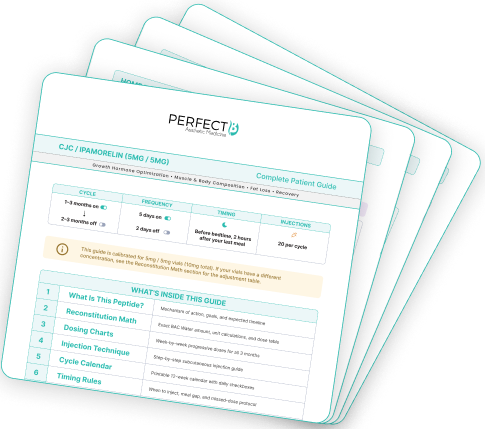
- CJC-1295 / Ipamorelin: stimulates pulsatile growth hormone release, which supports lean muscle preservation and fat metabolism over time. Requires daily injection but produces significant body composition changes over 3 to 6 months.
- Tesamorelin: specifically reduces visceral (abdominal) fat. Has the strongest evidence base among peptides for fat reduction and is a strong choice for patients with central adiposity.
- MOTS-C: a mitochondrial-derived peptide that improves insulin sensitivity and metabolic efficiency, particularly relevant for patients with metabolic syndrome or pre-diabetes alongside weight loss goals.
- BPC-157: primarily for gut inflammation, tendon and ligament repair. Relevant for weight loss patients who also have gut issues or connective tissue problems that are limiting their training.
For skin quality, hair, inflammation reduction, and post-procedure healing during or after a weight loss phase: GHK-Cu is the clear #1 choice. See our head-to-head comparison of GHK-Cu vs NAD+ for patients deciding between these two protocols for a full breakdown of where each one fits in a comprehensive longevity protocol.
Frequently Asked Questions: GHK-Cu and Weight Loss
1. Can GHK-Cu help me lose weight?
Not directly. GHK-Cu does not meaningfully suppress appetite or drive fat loss. Its value in a weight loss context is as a tissue support tool, helping maintain skin quality, hair health, and reduce inflammation during the process of losing weight, not as a cause of weight loss itself.
2. Does GHK-Cu suppress appetite?
No, not as a primary effect. Some patients may feel less bloated due to GHK-Cu’s systemic anti-inflammatory action, but this is not appetite suppression in any clinically meaningful sense. If appetite regulation is the goal, GLP-1 receptor agonists are the appropriate intervention.
3. What peptide is best for weight loss?
For direct fat reduction, Tesamorelin (visceral fat reduction) and CJC/Ipamorelin (growth hormone stimulation for lean body composition) are more relevant than GHK-Cu. For appetite suppression, GLP-1s like Semaglutide and Tirzepatide remain the clinical standard. GHK-Cu is not in the weight loss peptide category.
4. Can I take GHK-Cu while on Semaglutide or Tirzepatide?
Yes, and for the right patient this combination makes clinical sense. GLP-1s drive the weight loss. GHK-Cu addresses the secondary tissue concerns that often accompany rapid weight loss: skin laxity, hair thinning, and inflammation. The two protocols address different systems and are not contraindicated together.
5. How is GHK-Cu administered, and does it require daily injections?
GHK-Cu is typically administered as a daily subcutaneous injection at the target site. This is a meaningful compliance requirement for patients already managing a weekly GLP-1 injection. For patients who want to combine the two, the injection cadence is manageable. For patients who are reluctant to add daily injections to their routine, GHK-Cu may not be the right fit regardless of its other benefits.
Relevant treatment plans at Perfect B: Weight Loss | Peptide Therapy | Skin Tightening | Hair Quality Restoration | Skin Rejuvenation.
If you are in the Miami area and trying to determine whether GHK-Cu has a role in your weight loss protocol, a clinical consultation is the most direct path to a clear answer. The decision depends on what secondary concerns you are managing alongside your weight loss goal.
→ Book a peptide and weight loss consultation at Perfect B, Doral, FL