Perfect B, Doral Fl. | 07.06.26 | 11 min read.
This article is for general educational purposes and is not a substitute for an in-person medical evaluation, diagnosis, or treatment. Acne type, severity, and skin tone vary from person to person, and prescription medications and in-office procedures must be selected and supervised by a licensed medical provider. Exact pricing and protocols are confirmed at a personal consultation.
Non-Comedogenic Sunscreen for Acne-Prone Skin: Your Real Defense Against Dark Marks
Here is the part most people miss about clearing acne in Miami. The breakout is only half the battle, because what a pimple leaves behind can last far longer than the pimple itself. On acne-prone skin, and especially on deeper skin tones, every bit of unprotected sun exposure can darken the mark a healing blemish leaves, turning a temporary spot into a stubborn one that lingers for months. That is why a non-comedogenic sunscreen for acne-prone skin is not a nice-to-have step in a Miami routine. It is one of the most powerful tools you have for walking away from a breakout with even skin instead of a new dark spot.
The catch is that the wrong sunscreen can clog pores and trigger the very breakouts you are trying to prevent, which is why so many people with acne give up on daily protection altogether. This guide explains what to look for, how mineral and chemical formulas differ, why sun protection is the single most important step for preventing dark marks, and when those marks need more than a bottle of sunscreen to fully fade.
Key Takeaways
- Dark marks are the real risk: unprotected sun exposure deepens the spots acne leaves behind, especially on medium and deep skin tones.
- The formula matters: look for non-comedogenic, oil-free, and fragrance-free labels so the sunscreen protects without clogging pores.
- Mineral is often gentler: zinc oxide and titanium dioxide sit on top of the skin and tend to suit reactive, acne-prone skin well.
- Daily and reapplied: Miami heat and sweat mean reapplication is not optional if you want real protection.
- Sunscreen prevents, it does not erase: once dark marks have set in, a provider in Doral can treat them directly while sunscreen keeps new ones from forming.
Why Does the Wrong Sunscreen Make Acne and Dark Marks Worse?
Two problems push acne-prone patients away from sunscreen. The first is texture. Many older or heavier formulas are thick, greasy, and pore clogging, so they sit on oily skin and contribute to the exact breakouts you are fighting. The second is the fear that skipping sunscreen is the safer choice, which is the most damaging myth of all. In a place like Miami, where strong sun is a year round reality, going without protection is what turns a fading pimple into a long lasting dark spot. The answer is not to skip sunscreen, it is to choose the right one.
When a breakout heals, the inflammation can trigger extra pigment in the skin, and sunlight amplifies that response. That is the difference between skin that recovers cleanly and skin that holds onto a brown or gray mark for months. Protecting the skin while it heals is the simplest way to change that outcome, and it costs far less time and money than treating the marks later.
What Does Non-Comedogenic Actually Mean?
Non-comedogenic means a product is formulated not to clog pores, which is exactly what acne-prone skin needs from every layer you apply. A non-comedogenic sunscreen for acne-prone skin is built to protect against ultraviolet light without leaving the heavy, occlusive film that traps oil and dead skin inside the pore. Alongside that label, the words that matter most are oil-free, fragrance-free, and lightweight, because fragrance is a common irritant and oil-heavy textures are a common trigger for congestion.
Labels are not a guarantee, since everyone’s skin is different, but they are a strong starting filter. If a formula is non-comedogenic, oil-free, and made for the face, it is far more likely to earn a daily place in your routine. According to the sun protection guidance published by the American Academy of Dermatology for choosing and using a daily sunscreen, broad spectrum coverage of at least SPF 30 is the baseline, and the best sunscreen is ultimately the one you will actually wear every day.
Which Sunscreen Ingredients Should You Avoid, and Which Ones Help Acne?
The label is where a sunscreen wins or loses for acne-prone skin, and a few ingredients are worth scanning for. Pore-clogging additives like coconut oil, cocoa butter, lanolin, isopropyl myristate, and heavy fragrance are common culprits behind sunscreen related breakouts, so skipping them removes most of the risk. People with reactive skin also sometimes prefer to avoid certain older chemical filters that can sting or irritate, which is one more reason mineral formulas are such a popular default for sensitive, breakout-prone skin.
Just as important are the ingredients that actively help. Niacinamide calms inflammation and helps regulate oil, zinc oxide protects while soothing the skin, and antioxidants such as vitamin E add a layer of defense against daily environmental stress. A sunscreen that pairs broad spectrum protection with these skin-friendly ingredients does double duty, shielding your skin while supporting the acne routine underneath it. One caveat worth knowing is that the term non-comedogenic is not tightly regulated, so the label is a guide rather than a promise, and the surest test is to introduce one new product at a time and watch how your skin responds.
Mineral vs Chemical: Which Is the Best Sunscreen for Acne-Prone Skin?
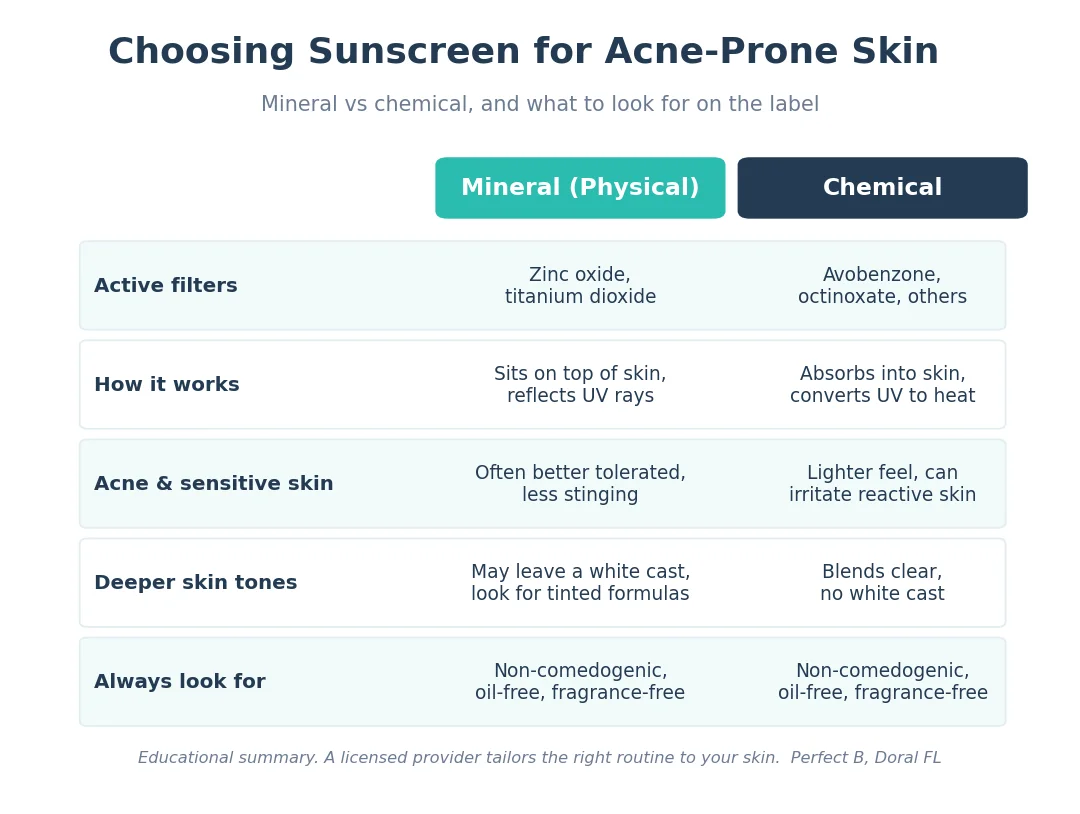
Sunscreens fall into two broad families. Mineral sunscreens use zinc oxide or titanium dioxide to sit on the surface of the skin and reflect ultraviolet light. Chemical sunscreens use filters that absorb into the skin and convert ultraviolet light into heat. For reactive, breakout prone skin, a mineral sunscreen for acne is often the gentler starting point, because zinc oxide is soothing and less likely to sting or irritate. Chemical formulas tend to feel lighter and blend clear, which some people prefer, though the filters can irritate very sensitive skin.
So which is the best sunscreen for acne-prone skin? There is no single winner for everyone. A mineral sunscreen for acne is a smart default if your skin is easily irritated, while a well formulated chemical option can be excellent if you dislike any hint of a white cast. What matters far more than the family is that the formula is non-comedogenic and oil-free. If you are unsure which direction suits your skin, that is a perfect question to bring to a provider who can look at your skin type in person.
How Sun Protection Prevents Post-Inflammatory Hyperpigmentation
The dark marks left after a breakout have a name, post-inflammatory hyperpigmentation, and it is one of the most common and most frustrating parts of acne for patients with medium to deep skin tones. When a pimple inflames the skin, it can stimulate excess melanin, and once that pigment is deposited, ultraviolet light drives it darker and makes it last longer. This is why post-inflammatory hyperpigmentation is so persistent in a sunny climate, and why daily protection is the front line of defense. Sunscreen will not lift a mark that already exists, but it stops the sun from deepening it and buys your skin the chance to fade it naturally.
If dark marks are your main concern, it helps to understand the condition itself, which we cover in depth in our guide to what post-inflammatory hyperpigmentation actually is, why it lingers on skin of color, and how a provider treats it safely. Preventing new marks with sunscreen and treating existing ones with a provider work best as a pair, not as an either or choice.
How to Choose Sunscreen for Acne-Prone Skin in Miami Heat
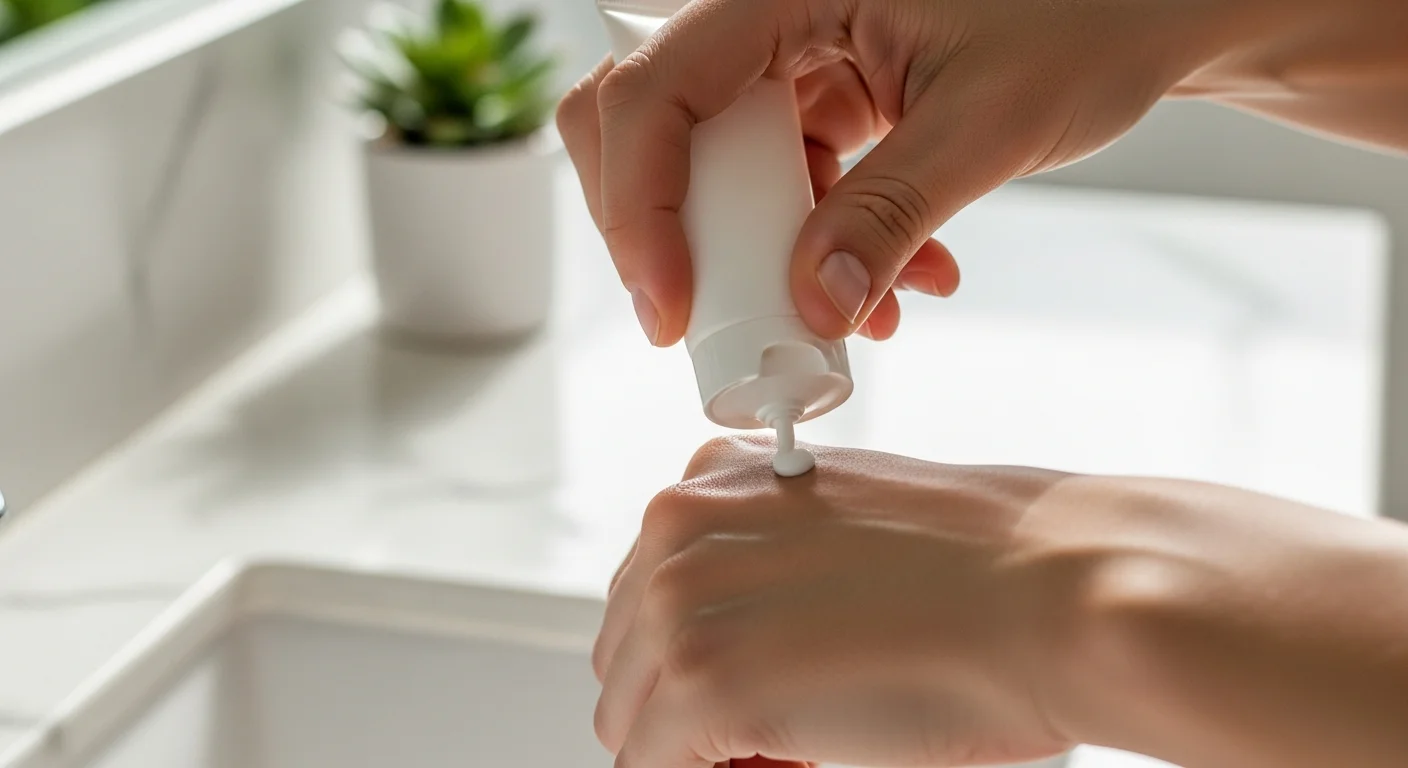
Choosing well comes down to a short, practical checklist. Look for broad spectrum SPF 30 or higher, and confirm the label says non-comedogenic and oil-free. Favor a lightweight lotion, fluid, or gel over a heavy cream, because thinner textures wear better on oily skin in humidity. If your skin is easily irritated, choosing a mineral sunscreen for acne with zinc oxide is a safe first move. A non-comedogenic sunscreen for acne-prone skin should feel comfortable enough that reapplying it midday does not feel like a chore, because in Miami heat and sweat, reapplication every couple of hours outdoors is what keeps the protection real.
Small habits protect your results. Apply sunscreen as the last step of your morning routine, use enough to cover the whole face and neck, and reapply after sweating or swimming. Pairing daily protection with a consistent routine, like the one we outline in our complete step by step acne skincare routine built for breakout prone skin in a hot and humid Miami climate, is how sunscreen becomes a habit instead of an afterthought.
How Do You Layer Sunscreen With Acne Actives Without Breakouts?
Acne routines often include actives like benzoyl peroxide, salicylic acid, or a retinoid, and all of them can make skin more sensitive to the sun, which makes daily sunscreen even more important. The order is simple. In the morning, cleanse, apply any prescribed treatment or a light moisturizer, then finish with sunscreen as the final layer. Save stronger exfoliating or retinoid actives for nighttime so they are not competing with sun exposure. If a treatment leaves your skin dry or tender, a gentle moisturizer under your sunscreen keeps the barrier calm.
If you are using an exfoliating acid and want to understand how it fits with sun care, our overview of how salicylic acid for acne clears clogged pores from the inside and why it pairs so well with daily sun protection is a useful companion. The theme is always the same, protect the skin while the actives do their work.
Do Tinted, Iron-Oxide Sunscreens Fade Dark Marks Faster?
If dark marks are your main concern, the type of sunscreen can make a real difference, and this is where tinted formulas earn their place. A regular sunscreen filters ultraviolet light, but tinted sunscreens contain iron oxides that also block visible light, including the high energy blue light that research links to worsening pigmentation on medium and deep skin tones. For post-inflammatory hyperpigmentation, the stubborn marks acne leaves behind, that extra layer of visible light protection can be the difference between a mark that fades and one that deepens.
Tinted mineral formulas also solve the old white cast problem, blending into a range of skin tones while adding a hint of coverage. They will not erase a mark that has already formed, but they give your skin the best possible chance to clear it on its own. To understand what you are actually treating, our guide to how post-inflammatory hyperpigmentation forms on skin of color and the layered treatments that fade it safely pairs perfectly with a daily tinted sunscreen habit.
Sun Protection for Deeper Skin Tones in Miami
Miami and Doral are home to a beautifully diverse community, and skin of color deserves sun care built with it in mind. The old complaint about mineral sunscreen, the chalky white cast it can leave on deeper skin, is a real reason many people stopped wearing it. The good news is that modern tinted mineral formulas blend far better and add a hint of coverage, while lightweight chemical options leave no cast at all. A non-comedogenic sunscreen for acne-prone skin that matches your tone is one you will actually wear, and consistent wear is what protects against the dark marks that hit deeper skin hardest. Our team’s experience with skin of color is a core part of the tone aware acne care approach we take for patients with medium and deep skin tones across Miami and Doral.
This is also where professional guidance pays off. A provider who treats skin of color every day can recommend the right texture and finish, and can flag the ingredients most likely to irritate or brighten unevenly. For anyone weighing options, medical acne treatment Miami residents rely on starts with that kind of tone aware, personalized advice rather than a one size fits all recommendation.

Do Not Forget Your Body, and How to Reapply Over Makeup
Sun-exposed skin below the neck is easy to ignore, yet the chest, back, and shoulders are common breakout zones that also collect plenty of sun in a Miami climate. An oil-free, non-comedogenic spray or lotion makes covering these larger areas realistic, and a quick reapplication after beach or pool time keeps both breakouts and dark marks in check on skin that rarely gets the attention your face does.
Reapplication is also where most routines quietly fail, especially over makeup. Rather than skip it, reach for a mineral powder sunscreen you can dust over makeup, or a setting mist with SPF, and press it on gently every couple of hours outdoors. It is not a full substitute for a proper morning layer, but in the real world of a long Miami day it is what keeps protection continuous instead of wearing off by lunchtime.
When Dark Marks Need More Than Sunscreen: Medical Care in Miami
Sunscreen is prevention, not a cure. If dark marks are already set into your skin, if breakouts keep coming back, or if the discoloration is affecting your confidence, that is the point to bring in a provider. Only a licensed provider can diagnose your skin, prescribe treatment, and safely use the medical grade options that fade stubborn pigment, and doing this on skin of color takes real experience so the treatment does not create uneven results. A spa facial alone cannot diagnose or prescribe, so persistent marks usually need a medical plan. That is where acne treatment Miami and Doral patients trust makes the difference between guessing and progress.
At Perfect B in Doral, our approach to acne treatment Miami and Doral patients rely on evaluates both the active acne and the marks it leaves, then builds a plan that treats today’s breakouts while fading yesterday’s spots, with the right sun protection woven in. To see how the pieces fit together, our hub on every acne treatment option compared for Miami and Doral patients, from daily skincare to in office procedures maps the full path. You can also learn more about fading existing spots in our guide to safely treating and fading stubborn post-acne dark marks on deeper skin tones without triggering new discoloration.
Frequently Asked Questions
1. What should I look for in a non-comedogenic sunscreen for acne-prone skin?
Look for a broad spectrum SPF 30 or higher that is clearly labeled non-comedogenic and oil-free, ideally fragrance-free and lightweight. Those labels mean the formula is designed to protect without clogging pores, which is exactly what acne-prone skin needs for daily wear.
2. Is a mineral sunscreen for acne better than a chemical one?
A mineral sunscreen for acne with zinc oxide is often gentler and a safe first choice for easily irritated skin. Chemical formulas feel lighter and leave no white cast. Neither is universally best, so the right pick depends on your skin, and both should be non-comedogenic.
3. Can sunscreen really prevent post-inflammatory hyperpigmentation?
Sunscreen cannot erase a mark that already exists, but it strongly prevents post-inflammatory hyperpigmentation from getting darker and lasting longer. Because sunlight deepens pigment, daily broad spectrum protection is the most important step for stopping new dark marks from setting in.
4. Which is the best sunscreen for acne-prone skin in a humid climate?
The best sunscreen for acne-prone skin in Miami humidity is a lightweight, oil-free, non-comedogenic formula in a lotion, fluid, or gel texture. Heavy creams feel greasy and can clog pores, while thinner textures wear comfortably and are easier to reapply through the day.
5. Will sunscreen leave a white cast on deeper skin tones?
Older mineral formulas could, but modern tinted mineral sunscreens blend well and add subtle coverage, and lightweight chemical formulas leave no cast at all. Matching the finish to your skin tone is what makes daily wear realistic on medium and deep skin.
6. How often should I reapply sunscreen in Miami?
Reapply every two hours when you are outdoors, and sooner after heavy sweating or swimming. In Miami heat, one morning application is not enough for a full day outside, so keeping a travel size formula on hand makes consistent protection much easier.
7. Can I use sunscreen with benzoyl peroxide or a retinoid?
Yes, and you should. Acne actives can make skin more sun sensitive, so daily sunscreen matters even more. Apply your morning treatment or moisturizer first, then sunscreen as the last step, and save strong retinoids and exfoliating acids for nighttime.
8. Where can I get help with acne and dark marks in Miami?
Perfect B in Doral offers provider led care for acne and the marks it leaves, tailored to your skin tone. If dark spots are not fading or breakouts keep returning, a licensed provider can build a supervised plan that treats both while protecting your results.
Protect Your Skin Today, Prevent the Marks Tomorrow
Clearing acne is only worth it if you are not left with a map of dark spots afterward, and in the Miami sun that outcome comes down to daily protection. Choose a non-comedogenic sunscreen for acne-prone skin that feels good enough to wear every day, reapply it when the heat and sweat demand it, and treat sun care as part of your acne routine rather than a separate chore. Reliable resources like the acne overview from MedlinePlus, the consumer health information service published by the United States National Institutes of Health reinforce that daily sun protection is a cornerstone of managing acne-prone skin.
When dark marks have already taken hold, you do not have to wait them out alone. For acne treatment Miami and Doral patients can count on, Perfect B builds a plan around your skin, your skin tone, and your goals, with financing that keeps a medical plan within reach. Reach out and let a licensed provider help you protect the skin you are working so hard to clear.
- 📍 Visit us at Perfect B, 3905 NW 107th Ave, Suite 104, Doral FL 33178
- 📞 Call or message us at (786) 502-2260
- 💳 Financing available through Cherry, Klarna, Afterpay, and CareCredit