
Perfect B, Doral Fl. | 05.20.26 | 12 min read.
Medical disclaimer: This article is for educational purposes only and is not a substitute for personalized medical advice. PDRN is a regenerative treatment with specific safety considerations. Always consult a licensed medical provider before starting any aesthetic or injectable therapy. If you are exploring this, it helps to see how PDRN regenerative therapy is used at Perfect B in Doral to support skin repair as part of a complete plan. For more on this, see our guide to PDRN for Surgical Scars: Doral Clinic Protocol, and how it is evaluated and treated at Perfect B in Doral.
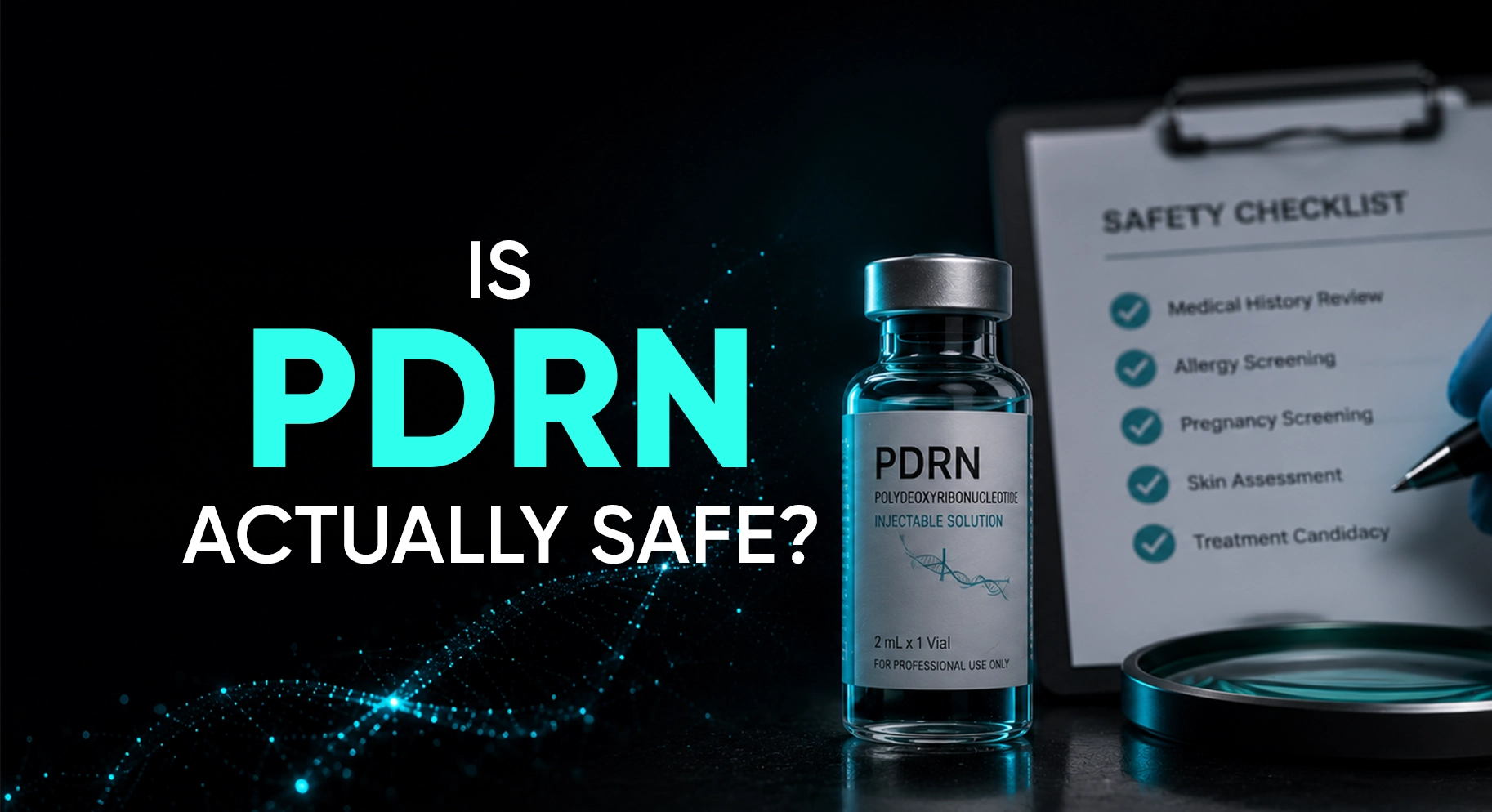
PDRN is safe for most adults when administered by a licensed medical provider, but the safety conversation is not as simple as a yes or no. The honest answer depends on whether you mean topical PDRN in a Korean skincare serum or injectable PDRN delivered into the dermis at a clinic, whether you are pregnant or breastfeeding, whether you have a fish allergy, and which regulatory framework applies to your provider.
This guide explains exactly when PDRN is safe, when it is not, and the six patient groups we screen out before approving treatment at our clinic in Doral, FL. We cover the U.S. regulatory status that most articles skip, the side effects you should expect versus the ones that signal a problem, and the difference between topical PDRN sold in a serum and injectable PDRN administered through a microneedle.
Key Takeaways on PDRN Safety
- Topical and injectable PDRN have different safety profiles: Topical PDRN in serums and creams stays close to the surface and rarely causes more than mild irritation. Injectable PDRN reaches the dermis and carries the standard small-needle side effects.
- Injectable PDRN is not FDA-approved in the United States for cosmetic use: Topical PDRN is legal as a cosmetic, but injection-grade PDRN treatments are administered off-label or accessed abroad.
- Common side effects are mild and short: Redness, swelling, small bruises, and tenderness for one to three days are expected after injection. Anything more severe is the signal to call your provider.
- Pregnancy and breastfeeding remain unstudied territory: There is no safety data confirming PDRN is safe during pregnancy. Most clinicians, including ours in Doral, postpone the treatment.
- Fish allergies require honest conversation: Severe seafood allergies are a reason to skip salmon-derived PDRN even though the purification process removes most allergenic proteins.
The Most Important PDRN Safety Distinction: Topical vs Injectable
Most articles on PDRN safety blur two completely different products into one answer. They are not the same, and the difference changes everything about what risks you should consider.
Topical PDRN (Serums, Creams, Ampoules)
Topical PDRN is a cosmetic ingredient sold in skincare products like Korean beauty serums, ampoules, and pink-toned brightening creams. Brands such as Medicube, Rejuran USA c-PDRN, Anua, and INKEY List offer these formulations widely in the U.S. through Amazon, Sephora, and direct-to-consumer channels.
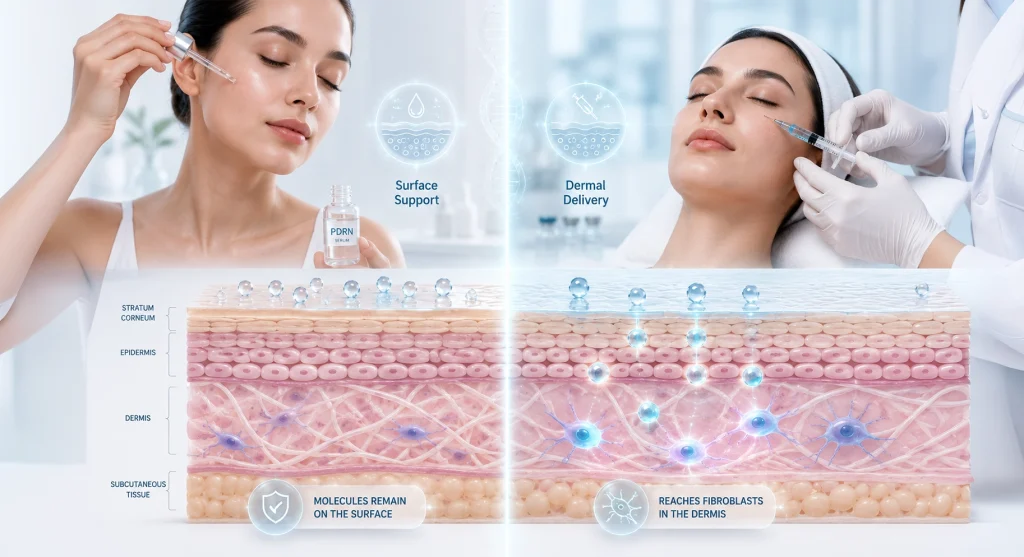
These products stay on the surface of the skin. They support hydration, barrier function, and mild soothing, but they do not penetrate to the dermis where fibroblasts actually produce collagen. The DNA fragment molecules are too large to cross the stratum corneum on their own. The safety profile is therefore similar to other cosmetic serums: mild irritation is possible in sensitive skin, fragrance or preservatives can trigger reactions, and contact dermatitis is the most common complaint.
Injectable PDRN (Skin Boosters, Mesotherapy, In-Clinic Treatments)
Injectable PDRN is delivered with a microneedle into the dermis or subcutaneous tissue. Brand names include Rejuran Healer (the most globally recognized PDRN injectable, manufactured by PharmaResearch in Korea), Plinest, Nucleofill, Plagentic, and Dermaheal. These treatments are designed to reach fibroblasts and stimulate collagen synthesis directly through the A2A adenosine receptor pathway.
Because injectable PDRN crosses the skin barrier, the safety conversation is different. The side effect profile mirrors what you would expect with any small-needle injection plus the considerations specific to a biologic compound derived from another species.
If you are searching “is PDRN safe” because you are thinking about a Korean serum on Amazon, the answer is yes for most people with no fish allergies. If you are searching because someone offered you an injectable treatment in Miami, the answer requires more nuance. Our broader explainer on what PDRN is and how it differs from dermal fillers at the dermal level walks through the mechanism in detail.
The U.S. Regulatory Status: Why “Not FDA-Approved” Matters for PDRN
The most cited reason for PDRN safety concerns is its U.S. regulatory status, and the confusion comes from cosmetic versus medical FDA pathways being completely different.
Topical PDRN cosmetic products do not need FDA pre-approval because cosmetics in the U.S. are regulated after they reach the market, not before. As long as a product makes no medical or drug claims, it can be sold legally with PDRN as an ingredient. This is why you can buy Medicube or Anua PDRN serums from any U.S. retailer.
Injectable PDRN does not have FDA approval for cosmetic use in the United States. Rejuran, Nucleofill, Plinest, and similar products are approved in South Korea, parts of Europe, and other markets, but they have not gone through the U.S. FDA clinical trial process for aesthetic indications. Some U.S. medical providers administer PDRN as an off-label or compounded treatment based on their medical judgment, often after microneedling, laser resurfacing, or as part of post-procedure recovery.
What this means for safety:
- FDA has not independently verified efficacy and dosing for U.S. cosmetic use, so practitioners are relying on international clinical data primarily from Italian, Korean, and Japanese studies.
- Product quality varies by source. A licensed medical clinic using PharmaResearch Korea or another reputable manufacturer is not the same as a clinic importing unknown gray-market vials.
- Provider expertise matters more than usual because there is no FDA-standardized training, dosing chart, or aftercare protocol the way there is for Botox or FDA-approved fillers.
This is not unique to PDRN. Many regenerative aesthetic treatments operate in the same off-label space, including platelet-rich plasma applications and exosome therapies. The difference between a safe and an unsafe experience comes down to the medical provider and the sourcing.
Common PDRN Side Effects: What to Expect After Treatment
The PDRN side effects we see most often at our clinic are predictable, short, and resolve without intervention. Knowing what is normal helps patients avoid panic and recognize when something is not normal.
Expected reactions in the first 24 to 72 hours
- Redness at injection sites: Pink to mild red flushing across treated zones. Typically resolves within 24 hours, though it can last up to 48 hours in fair or reactive skin.
- Mild swelling or puffiness: Some local edema is normal at puncture points. Most patients notice it the evening of treatment and find it gone the next morning.
- Small bruises: Bruising depends more on injection technique and your individual capillary fragility than on the PDRN compound itself. Patients on blood thinners, fish oil, or high-dose vitamin E bruise more.
- Tenderness or warm sensation: Mild discomfort when touching the treated area for the first 24 to 48 hours.
- Pinpoint bumps: Small papules at each injection site, particularly with skin booster techniques that deliver multiple shallow microdoses across the face. These flatten within 12 to 24 hours.
According to the NIH-published review on the pharmacological activity and clinical use of PDRN, the peer-reviewed safety summary of PDRN by Squadrito and colleagues confirms no toxic effects on brain, liver, lungs, skeletal muscle, or heart at therapeutic doses up to 8 mg per kilogram. The compound has been used in European wound healing medicine since the 1980s with a consistently mild side effect profile.
What is not a normal PDRN side effect
- Severe pain that worsens after 48 hours instead of improving
- Spreading redness or warmth that extends beyond treatment points
- Pus, drainage, or fluid collection at any injection site
- Fever or systemic symptoms
- Persistent lumps that do not soften after one week
- Skin discoloration that develops days after treatment
If any of these appear, the right response is to contact your provider directly. At Perfect B, our patients receive direct messaging access to clinical staff during the recovery window so concerns are addressed before they become problems.
Rare and Serious PDRN Complications: When Something Goes Wrong
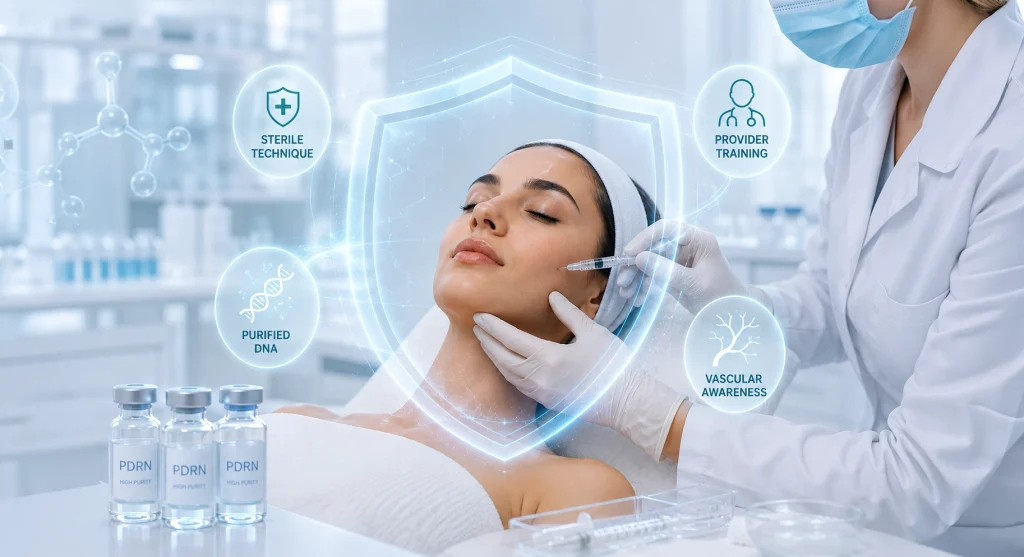
Serious PDRN complications are rare in published clinical literature, but they happen. Most occur in unsupervised, gray-market, or DIY settings rather than in licensed medical clinics. Understanding what can go wrong helps you identify a provider who knows how to prevent it.
Infection
Any time something passes through the skin, infection becomes a possibility. Sterile technique, single-use needles, FDA-graded skin prep, and proper post-treatment aftercare reduce this risk to a very small number. The cases of PDRN-related infection that make it into clinical literature almost always involve unsanitary settings, non-medical providers, or repeated needle use.
Allergic and immune reactions
True allergic reactions to PDRN are uncommon because the purification process removes most of the salmon proteins that could trigger an immune response. Salmon DNA shares more than ninety-five percent of its sequence with human DNA, which is the biological reason your immune system rarely rejects it. That said, hypersensitivity reactions are documented in the literature. Symptoms can range from itching and hives at injection sites to facial flushing or rare anaphylactic responses in patients with severe fish allergy.
Granuloma formation
Persistent lumps or hardened nodules can form weeks or months after treatment in rare cases. These represent the body walling off the injected material as a foreign substance and are treated with steroid injections, hyaluronidase if appropriate, or laser intervention. Granulomas are far more common with permanent fillers like silicone than with PDRN, but they remain a documented possibility.
Vascular events
Any injection near facial vasculature can theoretically cause vascular occlusion if the product enters a blood vessel. This is exceedingly rare with PDRN because the product is typically delivered through shallow microneedling or skin booster technique into the dermis rather than into deeper tissue planes. The risk is far lower than with hyaluronic acid fillers placed in the mid-face or nasolabial folds.
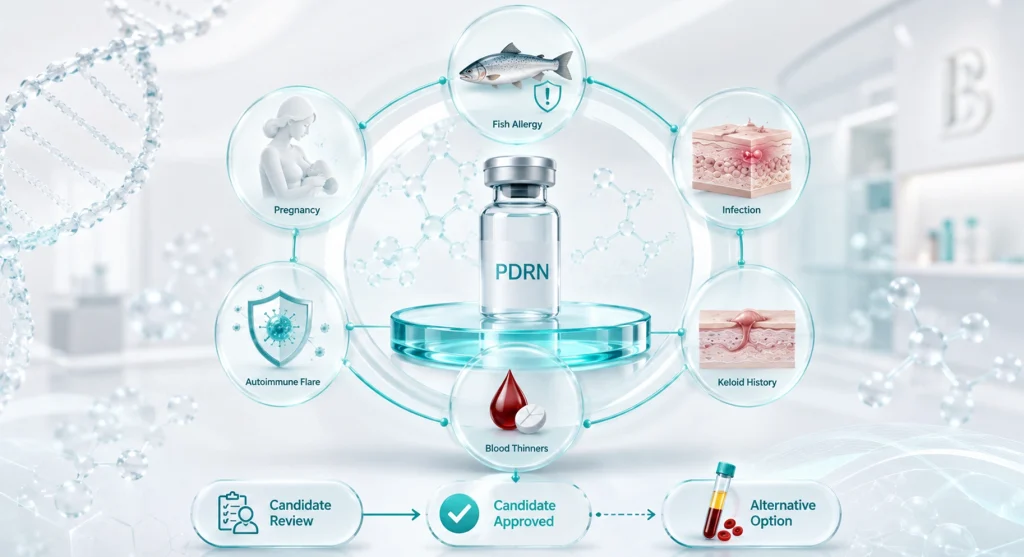
Who Should Avoid PDRN: Six Patient Groups We Screen At Perfect B
Before approving PDRN treatment for any patient at our Doral clinic, we screen for six specific situations that change the safety calculation. Some are absolute contraindications. Others require additional precautions or a delay.
- Patients with severe fish or seafood allergy: Most PDRN products are derived from salmon or trout DNA. Even with purification, residual salmon proteins remain a possibility. Mild fish allergy is usually safe with proper screening, but severe anaphylactic-grade allergy is a clear stop.
- Pregnant or breastfeeding patients: No safety data exists for PDRN use during pregnancy or lactation. We follow the conservative international consensus and postpone treatment.
- Patients with active infection at treatment area: Any active acne breakout, cold sore, eczema flare, or skin infection in the treatment zone is a reason to wait. Injecting through infected skin can spread bacteria into deeper tissue.
- Autoimmune conditions in active flare: Conditions like lupus, dermatomyositis, or active psoriasis can be aggravated by tissue-stimulating treatments. Stable, well-controlled autoimmune patients are evaluated individually.
- Patients on certain anticoagulants: Blood thinners increase bruising risk significantly. We coordinate with the prescribing physician before treatment and may delay the procedure based on the specific medication and indication.
- History of keloid scarring or hypertrophic scarring at injection sites: Patients with documented keloid response need careful evaluation. PDRN itself does not typically cause keloids, but the needle trauma can in predisposed individuals.
For patients in the above groups, we discuss alternatives. Some find the autologous nature of platelet-rich plasma compared to PDRN to be a better fit when allergy concerns arise, since PRP uses your own blood and avoids any cross-species biologic exposure.
Is PDRN Safe During Pregnancy or Breastfeeding?
This is one of the fastest-rising PDRN safety queries, and the answer requires honesty rather than reassurance. There is no human clinical trial data confirming that PDRN is safe during pregnancy or breastfeeding because pregnant patients are appropriately excluded from aesthetic medicine trials.
Topical PDRN serums in pregnancy
Most topical PDRN products such as cica serums, hydrating ampoules, and barrier creams contain PDRN at low concentrations alongside ingredients that already have a safe pregnancy track record like niacinamide, hyaluronic acid, and centella. The PDRN molecule itself is too large to cross the skin barrier in meaningful amounts, which is part of why some pregnancy skincare guides classify it as low risk.
The caveat is that pregnancy safety depends on the full formula, not just the PDRN label. A PDRN essence with simple hydration is different from a PDRN tone-up sunscreen with retinol or strong actives. Patients in Doral and the greater Miami area often ask us about specific Korean brands like Medicube, and the answer varies by product within the same brand. The safer path is to bring the exact product to a prenatal-aware provider rather than assume the trend ingredient is the limiting factor.
Injectable PDRN in pregnancy
Injectable PDRN during pregnancy or breastfeeding is not recommended by any medical board we have seen, and we do not perform it at Perfect B. The reasoning is straightforward. Aesthetic treatments are elective. There is no urgent medical need that would justify an unstudied biologic exposure during pregnancy. The conservative answer is to wait until after delivery and the breastfeeding period ends, then return for treatment with a full health screening.
Patients who are trying to conceive often ask about timing. We typically recommend completing any active PDRN protocol before active conception attempts, since the data on early pregnancy exposure is limited.
PDRN and Fish Allergies: What the Science Actually Shows
The most common worry we hear at consultation is fish allergy. Patients with documented seafood reactions are understandably cautious about anything derived from salmon DNA, and they should be. The answer is more nuanced than either “always safe” or “absolutely not.”
The PDRN purification process removes the salmon proteins that typically trigger allergic reactions. The DNA fragments themselves are not proteins and do not contain the major allergens responsible for fish allergy reactions, including parvalbumin and tropomyosin. In published clinical data, including the peer-reviewed analysis of PDRN-induced extracellular signal-regulated kinase activity in human skin keratinocytes and fibroblasts, the immune response to purified PDRN has consistently been mild even in sensitized populations.
That said, no purification process is one hundred percent perfect. Trace protein residues remain a theoretical possibility, and for patients with anaphylactic-grade fish allergy, the risk is not worth taking. Our protocol at our Doral clinic includes:
- Detailed allergy history during intake covering all fish, shellfish, and seafood reactions including severity and last exposure
- Test spot dosing for mild allergies: A small subcutaneous test injection two weeks before the full protocol with monitoring for any delayed reaction
- Alternative protocols for patients with severe allergy: PRP, ginseng-derived plant alternatives where appropriate, or non-PDRN regenerative protocols using our other skin booster offerings
- Coordination with the patient’s allergist when the reaction history is unclear or recent
Patients with mild fish intolerance, an old childhood allergy that has not been tested in years, or sensitivity rather than true allergy can often proceed safely with the test spot protocol. The conversation should happen during consultation, not at the injection chair.
What Perfect B Does Differently: Provider Supervision in Doral, FL
The difference between a safe PDRN experience and a problematic one usually comes down to the provider, not the product. PDRN is a regenerative compound with a strong safety record when administered by trained medical professionals using properly sourced product. The variability happens at the human level.
At our medical aesthetic clinic in Doral, FL, our PDRN protocol includes the screening and supervision steps that gray-market settings often skip:
- Full medical intake before treatment: Medication review, allergy history, pregnancy screening, autoimmune evaluation, and a discussion of skin goals before any product is ordered or injected.
- Licensed provider administration: Every PDRN treatment is performed by a licensed medical professional working under physician supervision in Florida. We do not delegate PDRN injection to non-medical staff.
- Sourced from reputable suppliers: We use established PDRN formulations rather than unknown imported vials. Sourcing is the single most important quality variable patients cannot personally verify.
- Personalized protocol design: Skin booster sessions, mesotherapy approach, depth and pattern are calibrated to your skin type, Fitzpatrick scale, and treatment goal. Our patient population in Doral and Miami includes a high proportion of Fitzpatrick III through VI skin tones, which informs how we approach pigmentation risk.
- Aftercare protocol with provider access: Written aftercare instructions, expected timeline, and direct messaging access to clinical staff for the first 72 hours after treatment.
- Follow-up assessment: A short follow-up at two weeks for skin booster protocols and at four weeks for cycle-based treatments to track response and adjust the next session.
For patients exploring regenerative skin protocols more broadly, our complete skin rejuvenation treatment plan at Perfect B covers PDRN alongside microneedling, exosomes, and other regenerative options matched to your specific concerns.
How to Choose a Safe PDRN Provider: Seven Red Flags
If you are evaluating providers in Miami, Doral, or anywhere else, these are the patterns that should make you walk away. Each one represents a corner that a safe provider does not cut.
- No medical license verification on staff: Aestheticians and licensed estheticians cannot legally administer injections in Florida. Make sure the person performing your treatment is a physician, nurse practitioner, physician assistant, or registered nurse working under medical supervision.
- No intake or medical history: Skipping the health questionnaire and going straight to injection is the strongest indicator the provider is not screening for contraindications.
- No conversation about pregnancy or fish allergy: If these never come up, the provider is missing the basic safety conversation.
- Unmarked or non-original packaging: Vials should be sealed, labeled with the manufacturer name (Rejuran, Plinest, etc.), and have a verifiable batch number and expiration date.
- Prices significantly below market: A skin booster cycle costing dramatically less than the regional average is a sign the product source may be compromised. In South Florida the typical injectable PDRN session is hundreds of dollars, not tens.
- No aftercare or follow-up plan: Reputable clinics provide written aftercare, a recovery timeline, and a way to contact the provider if something concerns you.
- Pressure to commit on the spot: Same-day discounts that pressure decision making are not characteristic of medical providers. Take time to research and ask questions.
If you are considering PDRN for hair restoration specifically, the screening protocols are similar but the injection technique and patient selection differ. Our guide on how PDRN supports hair restoration including scalp injection considerations and Fitzpatrick-aware safety screening walks through what to expect.

Frequently Asked Questions About PDRN Safety
1. Is PDRN safe for sensitive skin?
Topical PDRN is generally well tolerated on sensitive skin and is often recommended as a soothing, hydrating option after laser or microneedling procedures. Injectable PDRN can also be appropriate for sensitive skin but the screening conversation should include any history of contact dermatitis, rosacea flares, or atopic dermatitis to plan the treatment depth and aftercare correctly.
2. Is PDRN FDA-approved in the United States?
Injectable PDRN is not FDA-approved for cosmetic indications in the United States. Topical PDRN does not require FDA pre-approval because it is regulated as a cosmetic. Some U.S. medical providers administer injectable PDRN off-label or as part of compounded regenerative protocols. The U.S. approval status is one of the most important safety conversations to have with your provider before agreeing to treatment.
3. Can I use PDRN if I have a salmon or fish allergy?
Mild fish allergy is often manageable with a small test dose and monitoring. Severe anaphylactic-grade fish or seafood allergy is a strong reason to avoid salmon-derived PDRN entirely. Plant-derived alternatives such as ginseng PDRN are emerging in the market but they have a smaller body of clinical evidence behind them. The conversation should happen during consultation with your provider and ideally with input from your allergist.
4. How long do PDRN side effects last?
Common side effects from injectable PDRN, including redness, mild swelling, and small bruises, typically resolve within one to three days. Pinpoint bumps from skin booster delivery flatten in twelve to twenty-four hours. Any side effect that worsens or persists beyond a week is not normal and warrants a call to your provider.
5. Is PDRN safe to use while breastfeeding?
Injectable PDRN during breastfeeding is not recommended because there is no human safety data on transfer through breast milk. Topical PDRN products with simple hydration profiles are generally considered low risk during breastfeeding, but specific formulations vary. The conservative recommendation is to postpone injectable treatments until after weaning and to bring topical products to your provider for review.
6. How does PDRN compare to PRP for safety?
Platelet-rich plasma uses the patient’s own blood, which eliminates any cross-species biologic exposure and is therefore a safer choice for patients with fish allergy or strong immune reactivity concerns. PDRN has a different mechanism of action and can be more standardized in dosing because it is a manufactured product. Both have strong safety records when properly administered. The choice depends on individual goals, allergies, and clinical context.
7. Can PDRN cause long-term damage?
No long-term damage from PDRN at therapeutic doses has been documented in the clinical literature spanning more than four decades of medical use. The compound is broken down by normal enzymatic processes and does not accumulate in tissue the way some permanent fillers do. The rare complications that exist, including granuloma formation or persistent nodules, are responsive to standard medical interventions when caught early.
8. Is PDRN safe for darker skin tones in Miami’s diverse population?
PDRN is generally well-tolerated across Fitzpatrick skin types I through VI, which is particularly relevant for our patient population in Doral and the broader Miami area where Hispanic, Caribbean, and African American skin tones are common. The main consideration for darker skin types is the elevated risk of post-inflammatory hyperpigmentation after any injection or microneedling trauma. We adjust the depth, density, and aftercare protocol for higher Fitzpatrick patients to keep pigmentation outcomes optimal.
Closing: The Clinical Bottom Line on PDRN Safety
PDRN is one of the safer regenerative treatments in modern aesthetic medicine when administered by a licensed provider with proper screening and sourcing. Decades of European wound-healing data, recent Korean and Italian clinical trials, and a side effect profile that consists primarily of mild, short-lasting reactions all point to a treatment that earns its safety reputation when it is done correctly. The harder question is not whether PDRN itself is safe but whether the specific provider, product, and protocol in front of you meet the standard.
The patients who have the smoothest experiences are the ones who screen their provider as carefully as the provider screens them. Asking about licensing, sourcing, intake protocols, and aftercare access is not insulting. It is exactly the conversation a responsible clinic expects. If you are exploring PDRN for skin rejuvenation, hair restoration, or scar repair, the decision should be made after a full consultation, not after a social media post.
📍 Perfect B | 8200 NW 41st St, Suite 100, Doral, FL 33166
📞 (786) 502-2260