
Perfect B, Doral FL. | 04.01.26 | 11 min read.
This content is for educational purposes only and does not constitute medical advice. Consult a licensed medical provider before beginning any treatment.
Types of Acne Scars: A Clinical Guide to Identification and Treatment
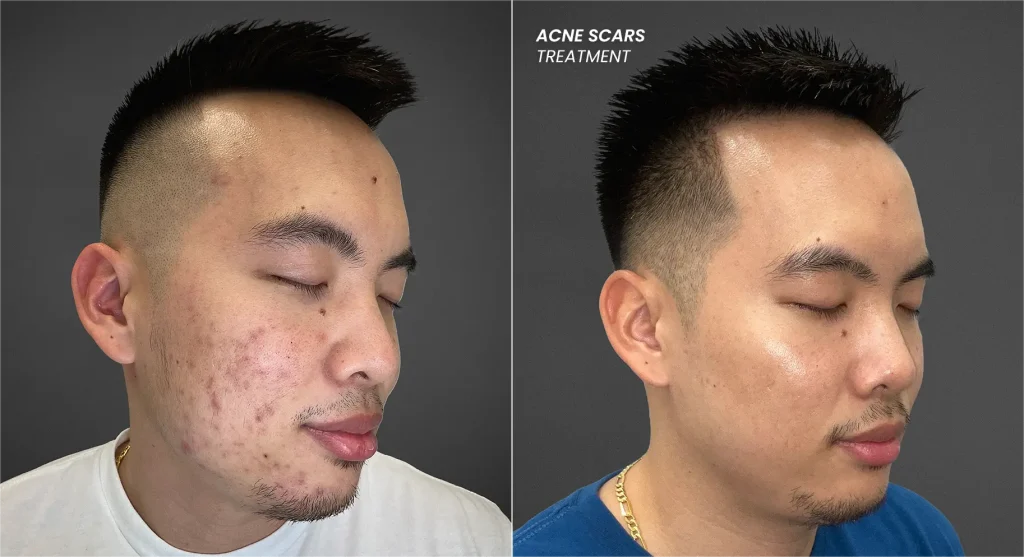
Most patients walk into a clinic knowing they have acne scars. Very few know which type. That distinction is not cosmetic trivia. The type of scar determines whether you need subcision, RF microneedling, resurfacing laser, steroid injections, or some combination, and in what order. A treatment plan built for boxcar scars will underperform on ice pick scars. A plan targeting rolling scars without releasing the underlying tethers will produce surface improvement over a structure still being pulled down from below.
At Perfect B in Doral, FL, classification is the first step in every consultation. We assess scar type using different lighting angles and angles of examination before recommending anything. The type of texture, depth, and pigmentation all factor into the treatment plan. This guide covers what each scar type actually is, how to identify it, and how we treat it.
Key Takeaways
- Scar type determines treatment: Ice pick, boxcar, rolling, hypertrophic, and post-inflammatory marks each require different modalities. There is no universal protocol.
- Ice pick scars are the hardest to treat: They are the deepest and most narrow, requiring a combination approach over multiple sessions with realistic expectations set upfront.
- Rolling scars involve physical tethering: Fibrous bands pull the skin downward. Subcision releases them. No surface-level treatment corrects this.
- Pigment and texture are two separate problems: Post-inflammatory hyperpigmentation will not resolve by treating structural scars. Both must be addressed in the plan.
- Mixed presentations are the norm: Most patients present with two or three scar types simultaneously. The treatment sequence must account for each.
How We Classify Acne Scars at Perfect B
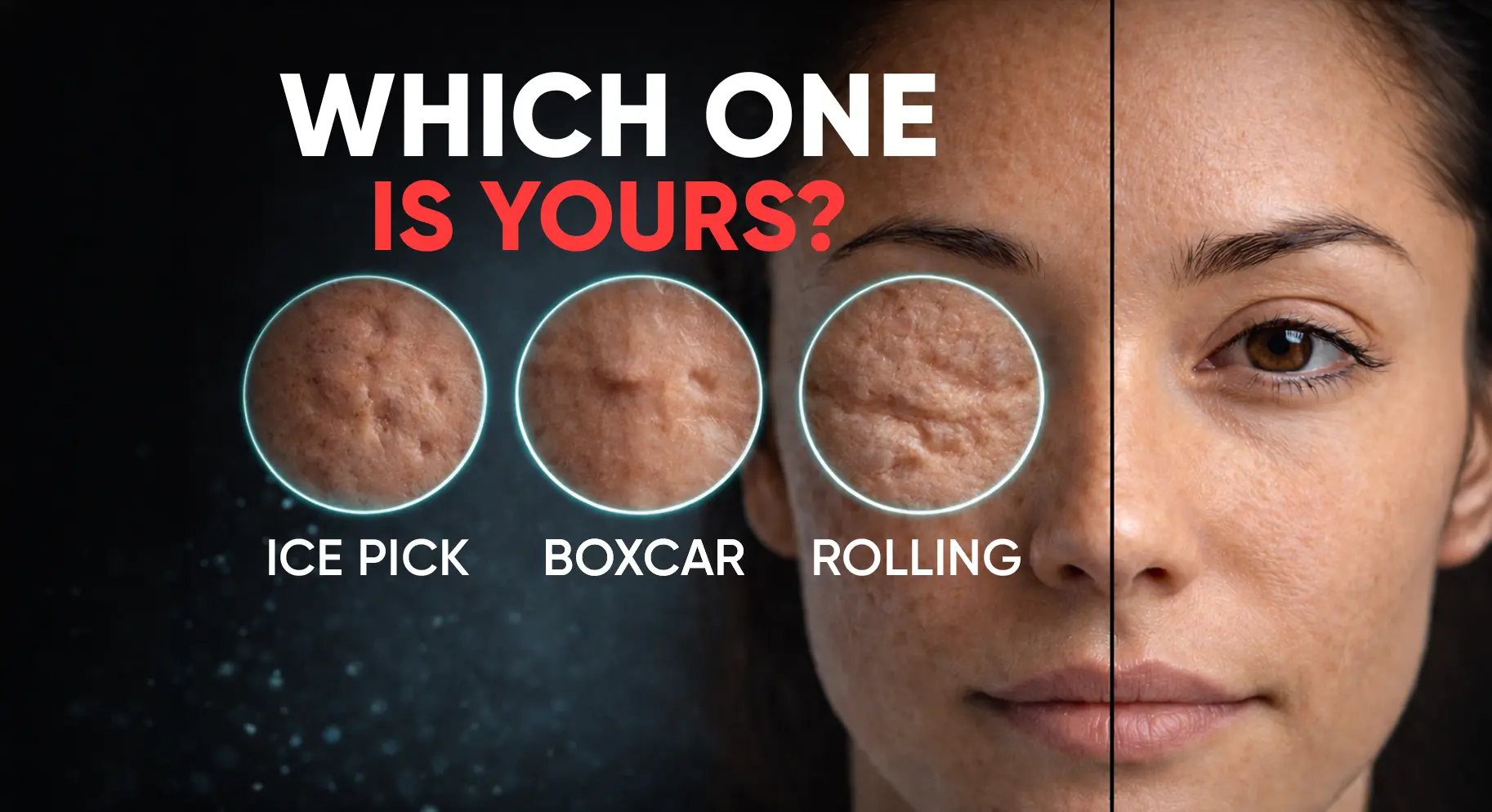
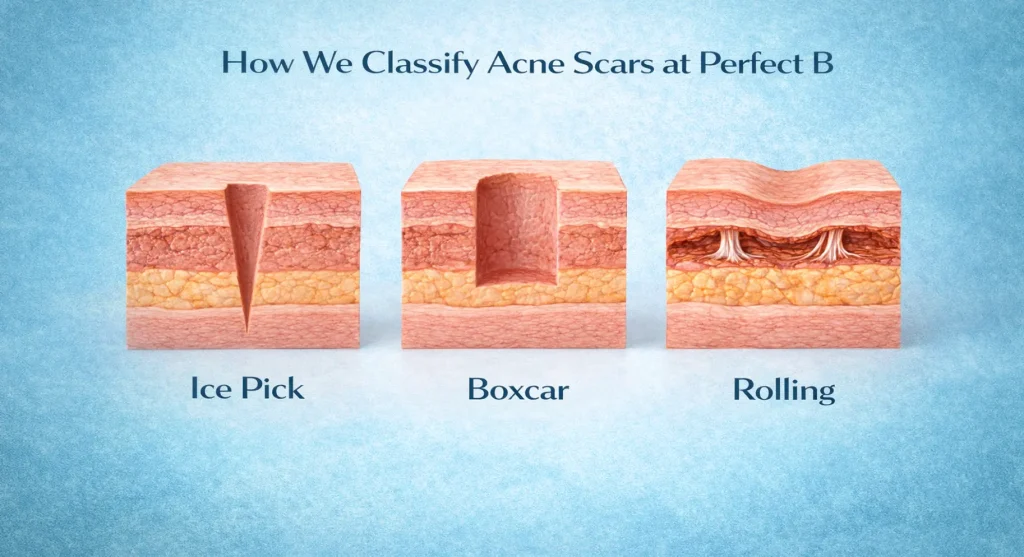
When a patient presents with acne scars at our Doral, FL clinic, the assessment begins before any treatment is discussed. Under different lighting angles, each scar type reveals distinct characteristics: the narrow pinhole depth of ice pick scars, the wide-edged depressions of boxcar scars, the undulating surface of rolling scars. We also examine for post-inflammatory hyperpigmentation, the red or brown marks that remain after acne clears but are frequently confused for structural scars.
This classification step is what most patients have never had done before they arrive. Many have been given a single-modality treatment, a laser session or a peel, without a prior scar map. That is why results are often partial. The type of texture and pigmentation inform the sequence of everything that follows: which devices, which injectables, and in what order.
Ice Pick Acne Scars: The Deepest and Hardest to Treat
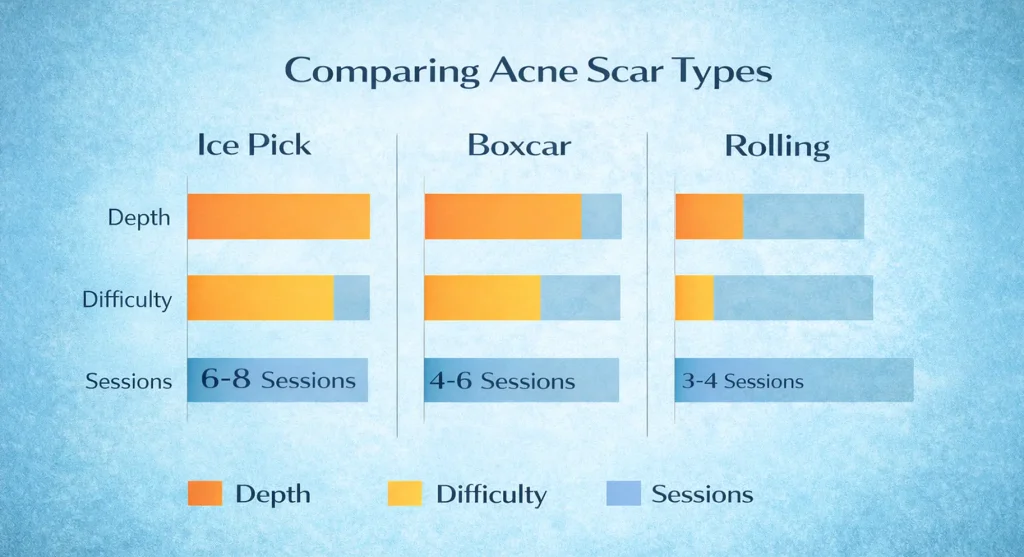
Ice pick scars are narrow, deep tracts that extend into the dermis and sometimes the subcutaneous tissue. They appear as small, pin-like holes in the skin surface and develop most commonly after cystic or nodular acne, where the inflammatory process destroys tissue column from surface to depth.
These are the most difficult acne scars to treat, and patients are often surprised to hear that. Many patients are not even aware there are different types of acne scars, and they arrive expecting the same outcome timeline as someone with shallow boxcar scarring. At Perfect B, we set realistic expectations from the first consultation: ice pick scars will soften and improve significantly, but they will not disappear completely. Their depth means no single surface treatment can fully correct them.
How We Treat Ice Pick Scars
Ice pick scars require a multi-modality approach delivered across multiple sessions over time. Because the tract extends deep into the skin, broad resurfacing alone addresses only the top layer while leaving the core of the scar intact. Our approach combines:
- Subcision: To release any tethering component and stimulate collagen at depth.
- RF microneedling with Morpheus8 + PRP or exosomes: To remodel the dermal column and promote new collagen where tissue was lost.
- Resurfacing laser: To refine the surface and soften the scar opening.
Even with optimal treatment, ice pick scars respond more slowly than other types. Patients need to understand this before starting, not after two sessions when they expected more. For a full overview of how ice pick scars fit into our staged treatment approach, see our complete acne scar treatment guide covering the Release, Remodel, Resurface, Re-color protocol used at Perfect B in Doral, FL.
Boxcar Acne Scars: Wide, Defined, and Responsive to Layered Treatment
Boxcar scars are wider depressions with sharply defined, vertical edges. They look like indentations with clear borders, distinct from the narrow depth of ice pick scars and the undulating surface of rolling scars. They develop when inflammatory acne destroys collagen in a localized area, leaving a void with well-defined walls.
On the skin surface, boxcar scars cast visible shadows, especially in raking or directional light. Patients often describe them as “pits” or “craters.” The defined edge is what gives them their name and is also what makes fractional resurfacing particularly effective: the laser or microneedling energy can target the walls and base of the depression precisely.
How We Treat Boxcar Scars
- Morpheus8 RF microneedling: Targets the dermal collagen deficit at the base and walls of the scar depression.
- Resurfacing laser: Softens the sharp edges and improves surface texture.
- Radiesse biostimulator (diluted/hyperdiluted): When used after subcision, fills the structural void and stimulates ongoing collagen production.
Boxcar scars generally respond better to treatment than ice pick scars because the collagen deficit is lateral rather than deep. Patients with predominantly boxcar presentations tend to see meaningful improvement within the standard 3 to 6 month treatment timeline.
Rolling Acne Scars: The Tethering Problem That Requires Subcision
Rolling scars create an undulating, wave-like surface texture across the skin. They are shallower than ice pick scars but affect a broader area, giving the skin a bumpy, uneven appearance rather than discrete puncture-like marks. Most patients with rolling scars have no idea their skin is being physically pulled downward from beneath the surface.
The mechanism is specific: fibrous bands form between the deep dermis and the superficial skin during the healing process, anchoring the skin surface to a lower layer where it does not belong. This downward tethering creates the rolling wave effect. No laser treatment, peel, or topical can release a fibrous band. That requires subcision.
How We Treat Rolling Scars
Subcision is the primary treatment for rolling acne scars. At Perfect B, we use a cannula in most cases, which provides controlled, sweeping movement beneath the scar with less surface trauma than a needle approach. After the tether is released, we inject Radiesse, diluted or hyperdiluted, to provide immediate volumetric support and stimulate new collagen at the treated site. RF microneedling follows to build sustained structural improvement as the tissue heals.
When we explain subcision to patients who have rolling scars, the response is usually the same: they had never heard of it. Most had been told they needed more laser sessions. Understanding that their skin was being held down by something physical, and that we can go beneath it and release it, changes how they think about their treatment plan entirely. A peer-reviewed analysis confirming that subcision combined with collagen induction therapy produces superior long-term outcomes for rolling acne scars compared to single-modality resurfacing supports this approach.
Hypertrophic and Keloid Scars: When the Body Overproduces Collagen
Hypertrophic and keloid scars are the opposite problem from atrophic scars. Instead of a collagen deficit creating a depression, an excess collagen response creates raised, firm tissue above the skin surface. In the context of acne, these are less common than ice pick, boxcar, and rolling scars, but they do occur, most often on the chest, shoulders, and jawline where the skin is thicker and more prone to exaggerated healing responses.
These scars are triggered by genetics, an excess collagen response, and skin type. Patients with Fitzpatrick IV, V, and VI skin are more prone to hypertrophic and keloid scarring than lighter skin types, which is clinically relevant for our South Florida patient population.
Hypertrophic vs. Keloid: What Is the Difference?
- Hypertrophic scars: Raised, firm, and confined to the borders of the original wound. They can flatten over time with treatment.
- Keloid scars: Extend beyond the original wound borders. They grow outward and can be significantly larger than the original injury. Keloids are more difficult to treat and can recur after removal.
How We Treat Hypertrophic and Keloid Scars
Treatment starts with steroid injections to flatten the raised tissue and break down the excess collagen accumulation. Once the scar has been softened and reduced in height, we can incorporate the resurfacing laser to improve texture and blend the treated area with surrounding skin. For keloids specifically, the approach is conservative: aggressive treatment can trigger new keloid formation, so we proceed carefully and monitor the response between sessions.
Post-Inflammatory Hyperpigmentation: Not a Scar, But Treated Alongside One
Post-inflammatory hyperpigmentation (PIH) is the most common misdiagnosis in acne scar consultations. It presents as flat, discolored patches, red or brown depending on skin tone, that remain after acne clears. It is not a structural scar. There is no collagen deficit, no tethering band, no tissue void. It is a pigmentation response from the inflammatory process.
The confusion arises because PIH and structural scars frequently appear together, and the PIH is often more visually prominent than the underlying scar. A patient may believe they just have a texture issue, but upon examination they also have significant pigmentation that requires its own treatment. Assuming that treating the structural scar will also clear the pigment is incorrect. Both must be addressed, and they require different tools: IPL, targeted topicals, and pigment-correcting agents for PIH; subcision, RF microneedling, and laser for structural correction.
For patients with Fitzpatrick IV skin, which represents a large portion of our Doral, FL patient population, PIH management is a parallel track throughout the entire scar treatment plan, not an afterthought. Sun protection and pretreatment topicals are prescribed from day one. Evidence-based guidance on managing post-inflammatory pigmentation in Fitzpatrick III through VI skin emphasizing conservative parameters and pretreatment protocols informs how we sequence treatment for this patient population.
What Happens When You Have All Three Atrophic Types at Once
Mixed presentations are the rule, not the exception. Most patients presenting for acne scar treatment at Perfect B have more than one scar type on the same face simultaneously. Ice pick scars appear as small, deep holes. Rolling scars create the wave-like unevenness. Boxcar scars produce the wider, shadow-casting indentations. All three can exist in the same area.
When a patient has all three types, the treatment sequence matters more than ever. We start with subcision to release the bands responsible for rolling scars, which also benefits boxcar scars by freeing any tethering component. Next, we target depth with Morpheus8 RF microneedling to rebuild collagen across all scar types. Finally, the resurfacing laser refines the surface and addresses texture at the epidermal level. PIH is managed in parallel throughout.
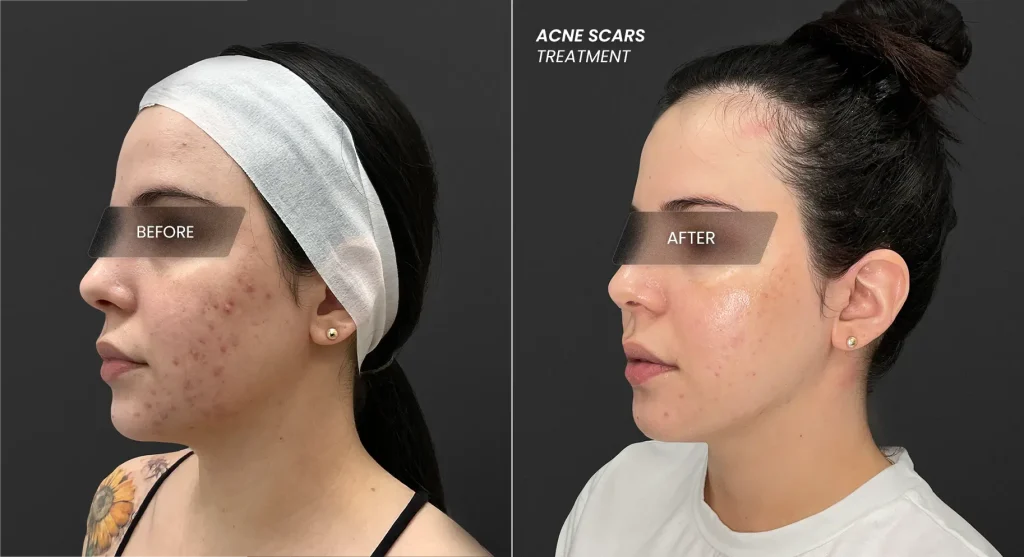
This staged, multi-modality approach across multiple sessions over time is what produces the results patients photograph at the 6-month mark. A single-device protocol on a mixed presentation will always produce partial improvement at best. The skin responds to what the protocol is actually designed to do, and a protocol designed for only one scar type will leave the others largely unaddressed.
Acne Scar Treatment Cost and Payment Plans in Miami
At Perfect B in Doral, FL, comprehensive acne scar treatment plans range from $1,695 to $3,300 depending on scar type, severity, surface area, and the combination of modalities required. A mixed presentation involving subcision, Morpheus8, and resurfacing laser across 3 to 6 months will sit at a different investment level than a focused plan for mild boxcar scarring.
Payment plans are available starting at $50 per month. We build the plan your scar map requires first, then structure payment around it. A plan cut short because of budget rarely delivers the results patients are hoping for. The full plan, completed through the collagen peak at 6 months, is where the real before-and-after outcomes come from. To understand the full protocol and what a treatment plan looks like start to finish, visit our Acne Scars Treatment Plan page at Perfect B in Doral, which details every stage of the protocol, device options, and how to book a consultation.
Frequently Asked Questions
1. What are the main types of acne scars?
The main types are ice pick scars (narrow, deep), boxcar scars (wide, defined edges), rolling scars (shallow waves from tethering bands), hypertrophic and keloid scars (raised tissue from excess collagen), and post-inflammatory hyperpigmentation (flat discoloration, not a true structural scar). Most patients present with a combination of two or more types.
2. Which type of acne scar is hardest to treat?
Ice pick scars are the most difficult. Their narrow, deep tracts extend into the dermis and do not respond well to broad resurfacing. A combination of subcision, RF microneedling with PRP or exosomes, and resurfacing laser over multiple sessions is required. Even with optimal treatment, ice pick scars soften and improve but do not disappear completely.
3. What causes rolling acne scars?
Rolling scars form when fibrous bands develop between the deep dermis and the superficial skin during the healing process, physically pulling the skin surface downward. This tethering creates the wave-like appearance. Subcision with a cannula releases these bands, allowing the skin to lift and smooth. No surface treatment can correct a rolling scar without addressing the tethering component.
4. Is post-inflammatory hyperpigmentation the same as an acne scar?
No. Post-inflammatory hyperpigmentation (PIH) is flat discoloration, red or brown, that remains after acne clears. It is a pigmentation response, not a structural change to the skin. True acne scars involve a change in skin architecture: a collagen deficit (atrophic) or excess (hypertrophic/keloid). PIH and structural scars frequently appear together and require separate treatment approaches. Treating structural scars will not resolve PIH.
5. Can I have more than one type of acne scar at the same time?
Yes, and this is the most common presentation. Most patients arrive with a mix of ice pick, boxcar, and rolling scars on the same face. The treatment plan must account for each type in sequence: subcision first to release tethers, RF microneedling to rebuild collagen at depth, and resurfacing laser to refine the surface. A single-device protocol applied to a mixed presentation will produce partial results at best.
6. How do I know what type of acne scars I have?
A clinical examination under different lighting angles is required for accurate classification. Ice pick scars appear as small deep holes, boxcar scars as wider indentations with defined edges, rolling scars as wave-like unevenness. Post-inflammatory marks appear flat with color change but no depth. Many patients cannot classify their own scars accurately, which is why the consultation at Perfect B begins with a scar map before any treatment is recommended.
7. How much does acne scar treatment cost in Miami?
Acne scar treatment plans at Perfect B in Doral, FL range from $1,695 to $3,300 depending on scar type, severity, and number of modalities required. Payment plans start at $50 per month. The plan is built to match your scar map, not a standard package. The investment reflects what your specific presentation requires to produce results at the 6-month collagen peak.
Closing: Know Your Scar Type Before You Start Treatment
The reason so many patients have been treated multiple times without satisfying results is not that treatment does not work. It is that treatment was applied without a diagnosis. A laser session on a rolling scar will improve texture but will not release the tethering band. A resurfacing peel on an ice pick scar will not reach the depth where the scar lives. The right treatment for the wrong scar type is still the wrong treatment.
At Perfect B in Doral, FL, every acne scar plan starts with classification. We photograph, map, and then build a protocol matched to what your skin actually has, not a standard menu of services. Payment plans from $50 per month make the full, correctly sequenced plan accessible without cutting it short. The 6-month collagen peak is where real results emerge, and the only way to reach it is with a plan built for your specific scar types from the start.
- 📍 Visit us at Perfect B, 3905 NW 107th Ave #104, Doral, FL 33178
- 📞 Call or message us to schedule your acne scar consultation: (786) 502-2260