
Perfect B, Doral Fl. | 05.14.26 | 12 min read.
This article is for educational purposes only and is not a substitute for professional medical advice, diagnosis, or treatment. Always consult a qualified healthcare provider before making changes to your skincare or health routine.
Most people treating acne are focused on one question: what is happening on my skin? The better question is what is happening inside your body. A growing body of peer-reviewed research confirms that the gut microbiome, the trillions of bacteria living in your digestive tract, communicates bidirectionally with your skin through a pathway now called the gut-skin axis. When that pathway is disrupted, the result is often acne that does not respond to topical treatments, returns repeatedly after clearing, or appears in patterns that no cleanser or spot treatment has ever resolved.
Key Takeaways
- The gut is the body’s largest endocrine organ: producing at least 30 hormone-like compounds including short-chain fatty acids, cortisol, serotonin, and GABA. When it is disrupted, those signals change and your skin reflects it.
- Acne vulgaris shows a consistent gut pattern: decrease in Firmicutes and increase in Bacteroides in the gut microbiome, confirming that microbiome composition is directly linked to breakout development.
- Leaky gut drives systemic inflammation: increased intestinal permeability allows microbial toxins into the bloodstream, triggering the inflammatory cascade that increases sebum production and creates conditions for acne.
- The gut-brain-skin triangle: stress, cortisol, and microbiome disruption all feed the same inflammatory cycle. Treating one without addressing the others produces incomplete results.
- Perfect B evaluates the full picture: labs including fasting insulin, cortisol, DHEA-S, and testosterone reveal what the gut-skin axis is actually producing before any treatment protocol is designed.
What the Gut-Skin Axis Actually Means
The term gut-skin axis refers to a bidirectional communication system between the gastrointestinal tract and the skin. That bidirectionality is important: it is not simply a one-way pathway where gut problems cause skin problems. The skin can also influence the gut, and both share structural and immunological features that make them more connected than most people realize.
The Gut as the Body’s Largest Endocrine Organ
Most people think of the gut as a digestive organ. The current science is significantly more complicated. A 2021 peer-reviewed review in Microorganisms (De Pessemier B. et al., PMC7916842, 182 citations) confirming that dysbiosis in the gut and skin microbiome is directly associated with altered immune responses and the development of acne vulgaris, atopic dermatitis, and rosacea describes the gut microbiome as “the largest endocrine organ, producing at least 30 hormone-like compounds” including short-chain fatty acids, secondary bile acids, cortisol, serotonin, GABA, and other neurotransmitters. The gut does not just process food. It produces signals that regulate your immune system, your hormonal environment, your mood, and your skin.
When the composition of gut bacteria is balanced, those signals support anti-inflammatory processes, reinforce the skin barrier, and regulate sebum production. When that balance is disrupted, the signals change. Inflammatory mediators increase. Hormonal patterns shift. The skin becomes a downstream indicator of what is happening upstream in the gut.
How Gut and Skin Barriers Share the Same Architecture
One of the most underappreciated aspects of the gut-skin connection is structural. The gut lining and the skin are both multi-layer physical barriers. Both maintain a resident microbiome. Both use immune cells positioned within the barrier tissue to monitor and respond to external threats. Both produce antimicrobial molecules. Both are regulated by similar tight-junction proteins that control permeability.
This shared architecture means that the processes that compromise the gut barrier are often the same ones that compromise the skin barrier. A patient whose gut permeability is increased due to dysbiosis, poor diet, or chronic stress is also frequently a patient whose skin barrier function is impaired, making them more reactive, more prone to inflammation, and harder to treat with surface-level interventions alone.
What Happens When the Gut Barrier Breaks Down
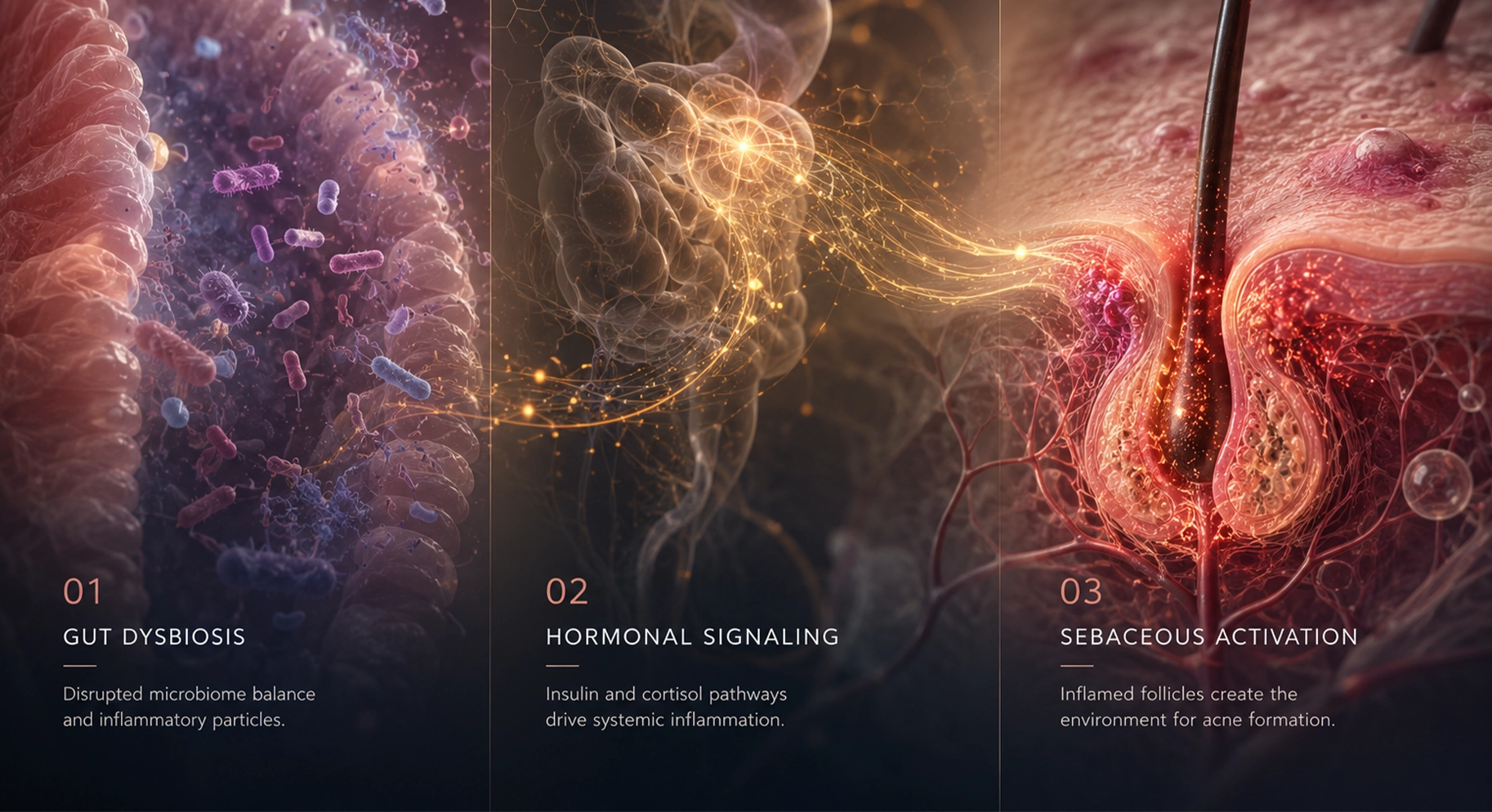
When the tight junctions between intestinal cells loosen, a condition often called leaky gut or increased intestinal permeability, bacterial fragments, lipopolysaccharides, and other microbial products pass from the gut lumen into the bloodstream. The immune system recognizes these as foreign, mounts an inflammatory response, and that systemic inflammation reaches the skin. In the sebaceous follicles, that inflammatory load increases sebum production and creates an environment where Cutibacterium acnes, the primary bacterial driver of acne, can proliferate and trigger the cascade that produces nodules, cysts, and papules.
Three Mechanisms That Connect Your Gut to Your Acne
Dysbiosis and Systemic Inflammation
Dysbiosis is the clinical term for a microbiome that is out of balance: too few of the beneficial bacteria that regulate inflammation, and too many of the bacteria that promote it. A 2019 review in Frontiers in Microbiology (Lee YB et al., PMC6678709, 443 citations) establishing the direct relationship between gut microbiota composition and acne vulgaris development through intestinal permeability and inflammatory signaling pathways confirms that in acne patients, a consistent dysbiotic pattern emerges: decrease in Firmicutes and increase in Bacteroides. The shift in bacterial populations changes which metabolites the gut produces, which immune signals it sends, and how the inflammatory state of the entire body is calibrated.
Beneficial bacteria, particularly Bifidobacterium and Lactobacillus species, produce short-chain fatty acids including butyrate, propionate, and acetate through the fermentation of dietary fiber. Butyrate specifically enhances epithelial barrier function and decreases intestinal permeability. When fiber intake drops, beneficial bacteria decline, butyrate production falls, and the gut barrier becomes more permeable. The downstream effect is increased systemic inflammation that the skin ultimately expresses as breakouts.
Insulin, IGF-1, and the Dietary Connection
A second mechanism connecting gut health to acne runs through the insulin and insulin-like growth factor-1 pathway. High-glycemic diets spike blood glucose, which elevates insulin and IGF-1. IGF-1 directly stimulates sebocyte proliferation and increases sebum production. The gut microbiome influences insulin sensitivity: a dysbiotic gut with reduced microbial diversity produces more inflammatory metabolites that promote insulin resistance, amplifying the hormonal signal that drives acne.
This is why fasting insulin is one of the lab markers we review in acne patients at Perfect B. It is not just a metabolic marker. In the context of the gut-skin axis, elevated fasting insulin tells us that the microbiome is likely contributing to the inflammatory hormonal environment producing breakouts. Addressing insulin sensitivity through microbiome support and dietary modification is often as clinically relevant as any topical or in-office treatment. For a full picture of how diet directly impacts breakout patterns, our guide on what the science shows about diet and acne at Perfect B in Doral covers the dietary drivers we address in every acne protocol.
The Gut-Brain-Skin Triangle: Where Stress Enters the Picture
The gut does not only communicate with the skin. It also communicates bidirectionally with the brain through the vagus nerve and through the neurotransmitters it produces. The gut manufactures approximately 90 percent of the body’s serotonin and significant quantities of GABA. When the gut microbiome is disrupted, those neurotransmitter signals change, affecting mood, stress response, and cortisol regulation.
Cortisol is the direct link between the brain-gut axis and the skin. As we describe in our clinical guide on how stress and cortisol trigger acne breakouts and what actually clears them at our Doral clinic, cortisol directly triggers sebum overproduction with a 2 to 7 day lag between the stress event and the visible breakout. What most patients do not realize is that a dysbiotic gut can elevate cortisol even in the absence of external stress, because the gut microbiome is one of the primary regulators of the hypothalamic-pituitary-adrenal axis. You can have perfect stress management habits and still produce elevated cortisol if your gut microbiome is disrupted.
This triangle, gut dysbiosis driving cortisol elevation driving sebum overproduction, is one of the most common patterns we see in adult acne patients who report that their breakouts feel disconnected from anything they can identify as a clear trigger.
Gut Acne vs Hormonal Acne: How to Tell the Difference
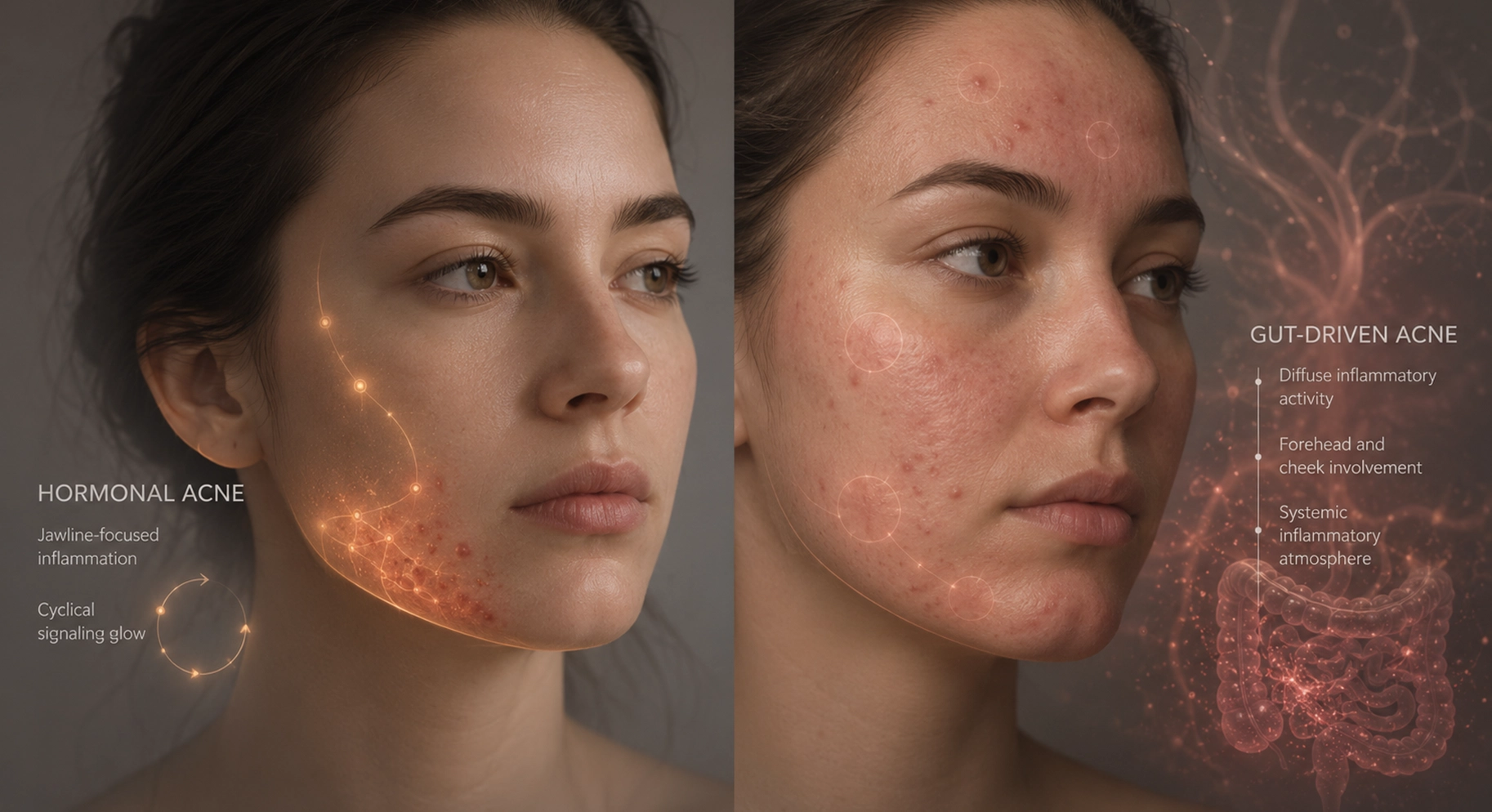
Gut-driven acne and hormonally driven acne overlap significantly because the gut-skin axis influences hormonal signaling. However, there are patterns that help distinguish the primary driver.
Hormonal acne tends to follow a predictable cycle tied to menstruation, appearing consistently in the week before a period along the jawline, chin, and lower cheeks. It often presents as deep, painful cysts that take longer to resolve than surface breakouts. Gut-driven acne tends to be less cyclical and more reactive to dietary and lifestyle variables. Patients often describe flares after eating certain foods, after periods of high stress, or after courses of antibiotics that disrupted the gut microbiome. The location is often more diffuse, appearing across the forehead, cheeks, and sometimes the back.
In practice, most adult acne patients have both hormonal and gut components contributing to their breakouts. That is exactly why our evaluation at Perfect B includes both a hormonal panel and a dietary and lifestyle assessment before we design a protocol. Treating only one driver when two are active produces partial results at best. Our complete guide on what actually works for cystic and severe acne at our medical clinic in Doral explains how we approach patients where both drivers are active simultaneously.
What Perfect B Evaluates Before Treating Acne
The Lab Markers That Reveal Gut-Skin Axis Disruption
Diet is one of the first things we discuss with acne patients at Perfect B, often in the first five minutes of a consultation. Not because food is the only driver, but because what a patient eats directly shapes the gut microbiome that is either supporting or undermining every treatment we apply to their skin.
The labs we review include free and total testosterone, DHEA-S, cortisol, fasting insulin, and vitamin D. These are the markers that most acne patients have never had measured by a general practitioner. From the gut-skin axis perspective, they are the readout of what the microbiome is producing at the systemic level. Elevated fasting insulin indicates impaired insulin sensitivity, often driven by microbiome dysbiosis and high-glycemic dietary patterns. Elevated cortisol points to HPA axis dysregulation, which can have both stress and gut origins. DHEA-S elevations indicate androgen excess that frequently has dietary and metabolic roots traceable to gut function.

Why Treating the Surface When the Problem Is Internal Does Not Work
IPL, chemical peels, LED light therapy, and medical facials all produce real results for acne patients. But a patient with active systemic inflammation driven by gut dysbiosis is working against their treatment at every session. The skin is clearing under the clinical intervention while the body is continuously reloading the inflammatory environment that produced the acne in the first place. This is the pattern we see in patients who respond well during treatment but break out again consistently within weeks of stopping.
Addressing the internal driver does not replace in-office treatment. It makes in-office treatment work better, produce more durable results, and require fewer maintenance sessions over time. The combination of a medically supervised protocol that includes dietary and gut microbiome support alongside targeted skin treatments is what separates outcomes at Perfect B from what patients get at a standard facial clinic. You can review the full range of treatments we offer at our medically supervised acne treatment plan at Perfect B in Doral, FL.
The South Florida Factor: Diet, Climate, and Your Microbiome
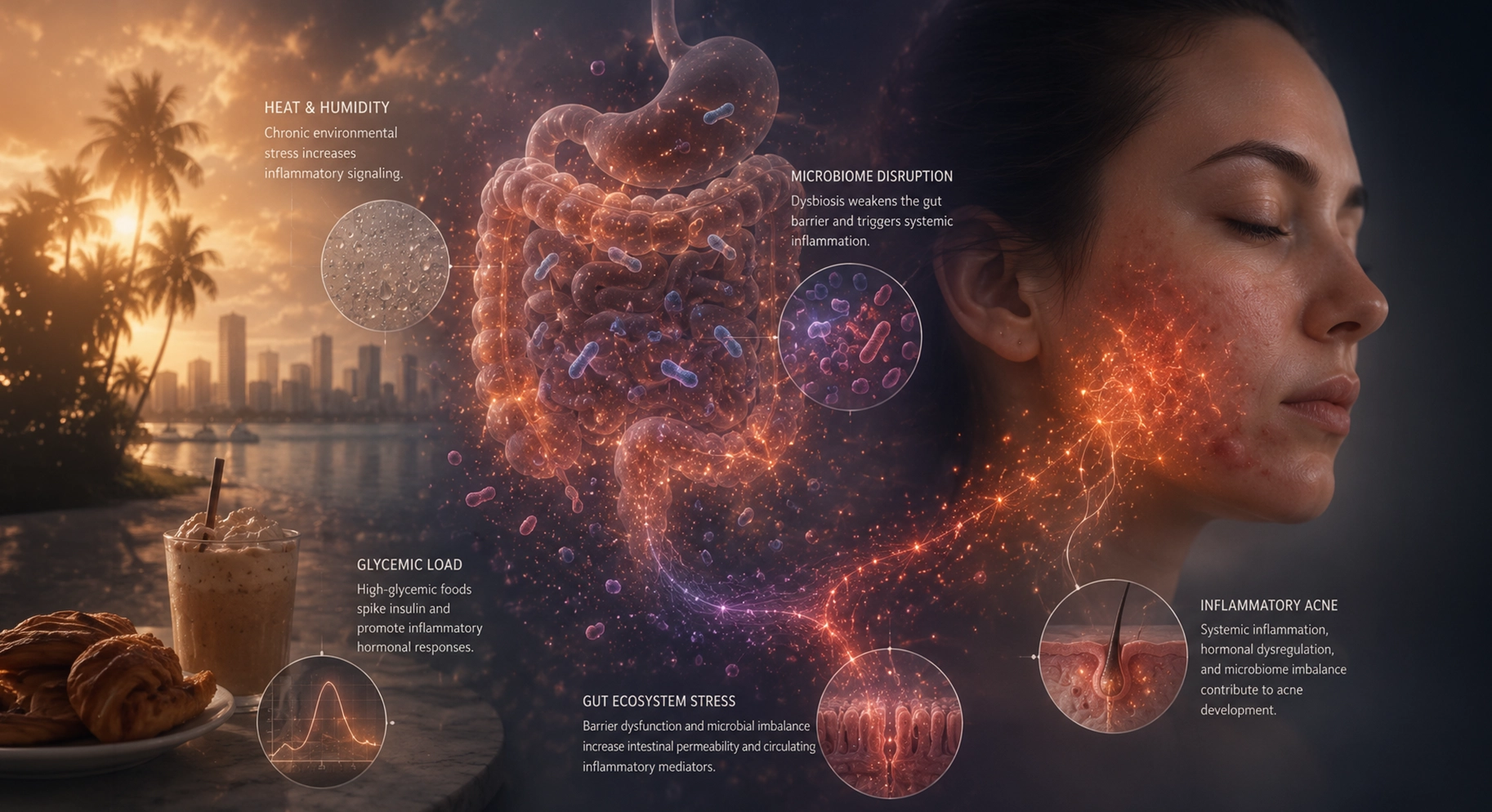
Patients in Doral, Miami, and across South Florida face a specific set of variables that compound the gut-skin axis in ways not typical of other regions.
The dietary patterns common in the Latin community that makes up a large portion of our patient population include significant consumption of white rice, yuca, sweet plantains, and refined starches, all of which carry a high glycemic load. High-glycemic diets are one of the most consistent dietary drivers of both gut dysbiosis and acne. Dairy, particularly skim milk, is the most consistent dietary trigger we identify in acne patients at our Doral clinic. Both operate through the insulin-IGF-1 pathway and directly influence gut microbiome composition.
South Florida’s year-round heat and humidity add a layer of environmental stress. Chronic heat exposure elevates cortisol, which feeds the gut-brain-skin triangle. Sweat accelerates sebum oxidation on the skin surface, making breakouts more severe. For patients who want to support their gut microbiome as part of an acne management approach, the evidence points to increasing dietary fiber from vegetables, legumes, and whole foods, incorporating fermented foods like kefir and kimchi where tolerated, reducing high-glycemic staples that spike insulin, and avoiding unnecessary antibiotic use that depletes microbial diversity. These are not replacement strategies for clinical treatment. They are the internal environment work that makes clinical treatment more effective and durable.
Frequently Asked Questions
1. What does gut acne look like?
Gut-driven acne tends to be diffuse rather than localized, appearing across the forehead, cheeks, and sometimes the back and chest. It is often reactive to dietary changes and may flare after antibiotics, periods of high stress, or changes in eating patterns. Unlike purely hormonal acne, it does not always follow a clear menstrual cycle pattern. The breakouts may be a mix of inflamed papules, blackheads, and in more chronic cases, nodular acne driven by ongoing systemic inflammation.
2. What is the difference between gut acne and hormonal acne?
Hormonal acne is typically cyclical, follows menstrual patterns, and concentrates along the jawline and chin. Gut acne is more reactive to food, stress, and microbiome disruptors like antibiotics, and tends to appear more diffusely. In practice, most adult acne patients have both components active simultaneously. Labs including fasting insulin, cortisol, DHEA-S, and testosterone help clarify which drivers are most prominent in a specific patient’s case.
3. What is the best approach to treating gut-related acne?
Gut-related acne responds best to a combined approach: addressing the internal drivers through dietary modification, microbiome support, and lab-guided hormonal intervention, alongside targeted in-office treatments like IPL, chemical peels, and LED therapy. Treating only the surface when systemic inflammation is active produces results that do not last. At Perfect B in Doral, we build protocols that address both layers simultaneously.
4. Do probiotics help with acne?
Probiotics that support Lactobacillus and Bifidobacterium populations can help restore microbiome balance, increase short-chain fatty acid production, and reduce the systemic inflammation that contributes to acne. However, probiotic supplementation alone is rarely sufficient as a standalone acne treatment. It is one component of a broader internal approach that needs to be paired with dietary changes and, in many cases, targeted clinical interventions to produce meaningful and durable results.
5. How long does it take to see improvement when addressing gut health for acne?
Most patients who address gut health alongside in-office acne treatment begin noticing reduced flare frequency within 6 to 8 weeks of consistent dietary changes. Visible improvement in baseline skin clarity typically becomes apparent between months 2 and 4. The timeline depends significantly on how dysbiotic the microbiome is at baseline, how strictly dietary modifications are followed, and whether there are concurrent hormonal drivers being addressed. At Perfect B, we track response across multiple visits and adjust the protocol based on how both the skin and the lab markers are responding.
6. Does Perfect B address gut health as part of acne treatment?
Yes. At our Doral clinic, every acne patient receives a full medical evaluation that includes lab work, a dietary assessment, and a review of lifestyle factors that influence both gut microbiome health and systemic inflammation. We do not offer supplements or gut protocols independent of clinical evaluation, but we integrate the internal picture into how we design and adjust each patient’s treatment plan. Patients from across Miami-Dade, Coral Gables, Brickell, and Kendall come to Perfect B specifically because our approach addresses acne at the root level rather than as a surface-only problem.
Closing: The Clinical Bottom Line on Gut Health and Acne
The gut-skin axis is not a wellness trend. It is a documented bidirectional communication system that explains why so many patients clear their skin with treatment only to have it return weeks later. When the internal drivers, dysbiosis, elevated insulin, cortisol dysregulation, and compromised intestinal barrier function, are not addressed, the surface-level results are temporary by definition. The skin is a readout of systemic biology. Treating it in isolation is treating the symptom, not the cause.
At Perfect B in Doral, we start where most clinics skip: a full medical evaluation with labs that reveals what is actually driving your breakouts. From that baseline, we build a prescription protocol and pair it with in-office treatments calibrated to your specific skin type and adjusted at every visit. If your acne has not responded to what you have tried so far, the problem is likely not your consistency. It is the protocol.
- 📍 Visit us at Perfect B, 8200 NW 41st St Suite 200, Doral, FL 33166
- 📞 Call or message us at (786) 502-2260