
Perfect B, Doral FL. | 05.12.26 | 9 min read.
This post is for educational purposes only and does not substitute for personalized medical advice. Acne treatment protocols vary based on clinical history, skin type, hormonal profile, and individual response. Consult a licensed medical provider before making significant dietary changes to address a skin condition.
What I Ask Every Acne Patient in the First 5 Minutes at Perfect B
Diet is not the first thing most patients expect me to bring up at an acne consultation. They walk in expecting a prescription, a protocol, a device. What they get, every time, is three questions: How much dairy are you consuming? How much sugar and refined food are you really eating? And are you using any protein powders? Those three questions uncover the primary trigger in most of my acne patients before I have even looked at their skin under the light. At our clinic in Doral, FL, the pattern repeats often enough that I have stopped treating it as a secondary factor and started treating it as the foundation.
This post covers what the science and the clinic actually show about the foods to avoid with acne, which supplements have evidence behind them, and why managing diet-driven acne is a specific challenge in the Miami market that I do not see discussed anywhere in the clinical literature.
Key Takeaways
- Dairy is the most consistent dietary trigger in acne patients at our Miami clinic, and skim milk specifically causes more breakouts than whole milk because of how its hormone concentration affects IGF-1 levels.
- Whey protein causes a distinct type of acne: deep, painful cystic lesions on the jawline, which look and behaves differently from the surface-level inflammation caused by fried food and palm oil.
- Sugar spikes insulin quickly, which activates oil glands and creates the conditions for breakouts within 24 to 72 hours. Cafecitos and refined carbohydrates make this pattern harder to manage in Miami than in most other markets.
- Two supplements have consistent clinical support for acne: zinc picolinate for oil regulation and omega-3s for inflammation. Probiotics can help when gut dysbiosis is contributing, but they are a third-line recommendation, not a first response.
- Diet alone can resolve or significantly reduce acne in a subset of patients without adding a single new treatment. At Perfect B, we have seen it happen with the right elimination.
Dairy and Acne: Why Skim Milk Is the Bigger Problem
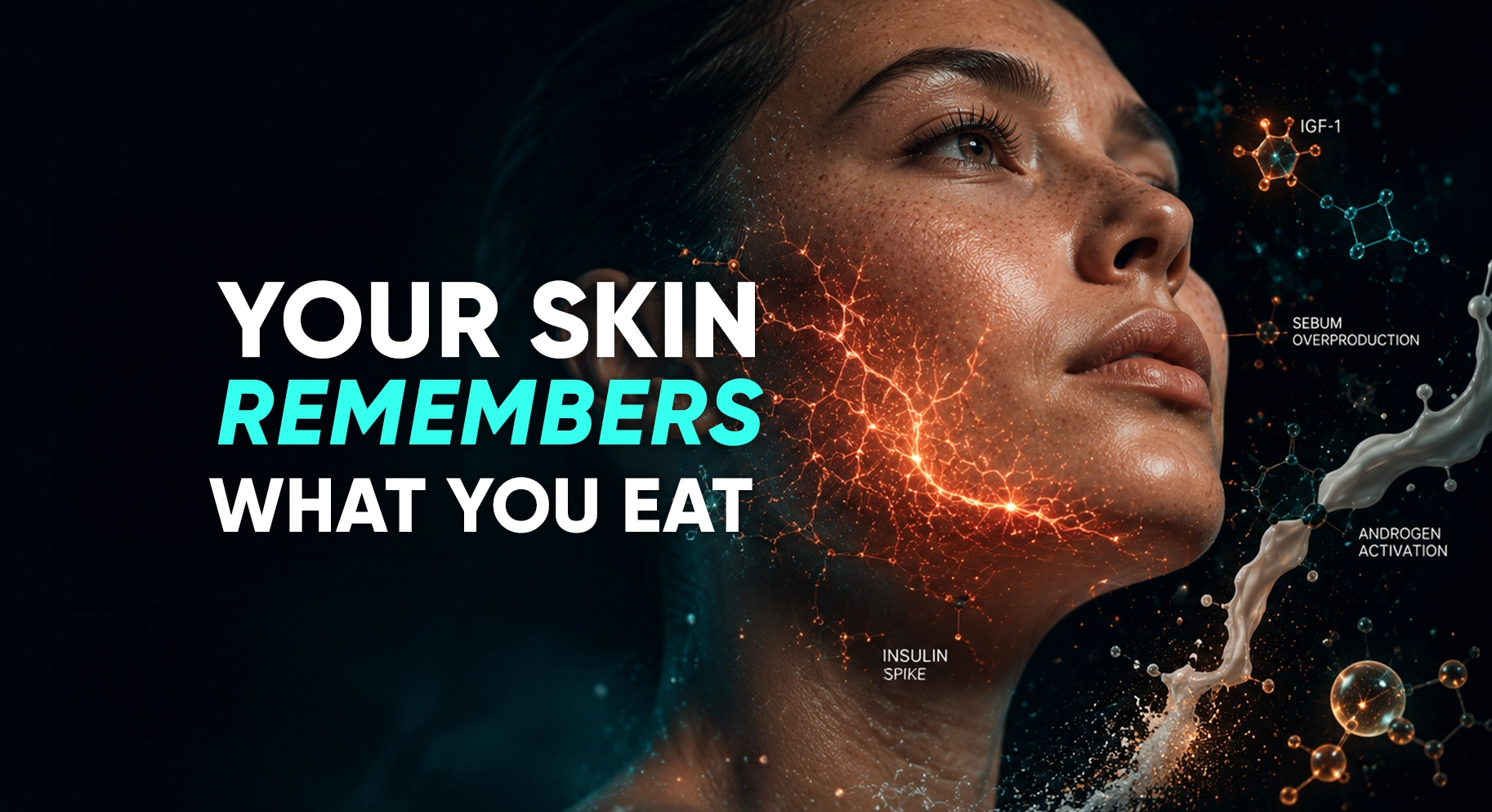
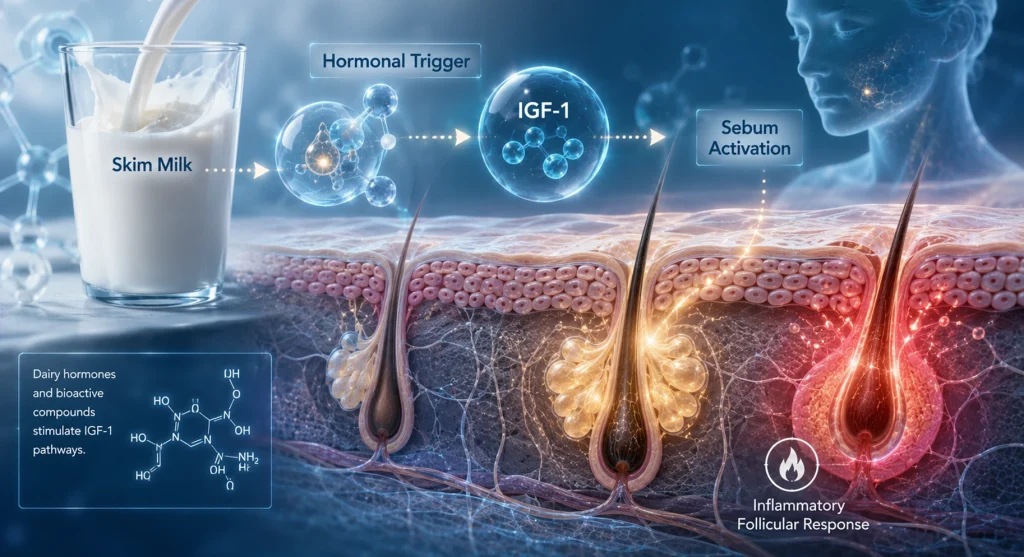
In our Miami practice, dairy is the biggest offender, and it comes up consistently in the history of patients with persistent breakouts who have not responded to topical treatments alone. The mechanism is not straightforward. Milk contains hormones produced by cows during pregnancy, including androgens and insulin-like growth factor 1 (IGF-1). When those hormones are absorbed, they can amplify the body’s own androgen activity, increasing sebum production and accelerating the follicular changes that create acne lesions. This is not a theoretical pathway; the clinical correlation is well-documented, and I see it repeatedly in practice.
Why skim milk causes more acne than whole milk or cheese
The counterintuitive finding that many patients initially resist is that skim milk appears to be a stronger acne trigger than whole milk. The fat in whole milk seems to modulate the hormonal effect. Skim milk, stripped of fat, concentrates the hormones without that buffering factor. Whey, a byproduct of dairy processing, carries a significant hormonal load as well, which is why whey-based protein powders cause the specific type of breakouts I describe below. Hard cheeses and fermented dairy products tend to cause less of a reaction, likely because fermentation alters the hormonal content. The clinical question is always: what specific dairy product is this patient actually consuming, and how much?
Whey Protein and Jawline Cysts: What the Clinic Actually Shows
Whey protein is the most specific and clinically distinct dietary acne trigger I work with. When a patient comes in with deep, painful cystic lesions concentrated on the jawline and lower face, particularly someone who works out regularly, the first thing I ask is whether they are using a whey-based protein powder or shake. The association is striking enough that I can often predict the answer from the skin pattern alone.
The insulin and androgen pathway whey triggers
Whey protein causes a rapid spike in insulin and IGF-1 that is disproportionate to its caloric value. That spike stimulates androgen activity, which triggers sebaceous gland overproduction. The result is deep, inflammatory, cystic acne rather than surface-level congestion. This is mechanistically different from the acne caused by high-glycemic carbohydrates, which also raises insulin but through a slower pathway and without the concentrated IGF-1 load that whey carries. A peer-reviewed review in the International Journal of Women’s Dermatology documenting how dairy-derived proteins stimulate IGF-1 pathways associated with inflammatory acne, including sebaceous gland activation and androgen sensitivity in acne-prone skin supports the clinical observations we see at Perfect B regularly.
Deep cystic acne versus surface-level texture: two different responses
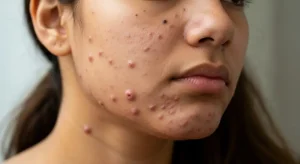
Patients who cut whey protein often see deep jawline cysts calm down within weeks. The improvement can be dramatic. Fried food and palm oil cause a different skin response: small, bumpy surface-level texture and diffuse inflammation rather than painful nodular cystic lesions. This clinical distinction matters because the treatment approach differs. A patient with surface-level texture from dietary fat imbalance may respond well to topical intervention. A patient with deep cystic jawline acne driven by whey may see very limited topical results until the whey is eliminated. → Read how the Perfect B clinical team in Doral distinguishes between different acne subtypes to ensure the right treatment is matched to the right diagnosis from the very first visit.
Sugar, Refined Carbohydrates, and Oil Glands: Why the Breakout Comes Fast
High glycemic load and the insulin spike
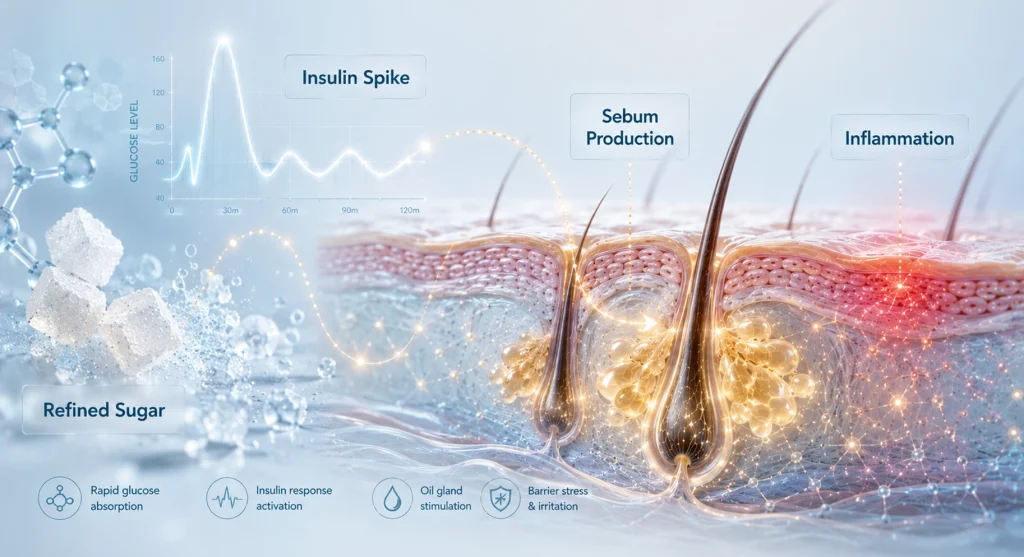
Sugar is my second most consistent finding in the dietary history of acne patients, and its effect is fast. When blood sugar rises sharply through white rice, white bread, pastries, soda, or concentrated sugar sources, insulin spikes. That insulin spike activates androgens, which stimulate the sebaceous glands to produce more oil. The pore environment becomes more hospitable to Cutibacterium acnes, and inflammation follows. The timeline is short enough that patients can often identify the connection themselves once they start tracking it. A heavy sugar load on a Friday night reliably produces breakouts by Sunday or Monday for many of my patients.
What counts as high glycemic in a Miami diet
In Miami, the high-glycemic food environment is particularly dense. The cafecito, a small intensely sweet Cuban espresso that many patients drink two to four times daily, delivers a concentrated sugar hit that most patients do not register as a dietary factor in their skin. White rice is a staple at lunch and dinner. Pastries and sweet breads are culturally embedded. For a patient in Doral or Coral Gables, eliminating sugar means navigating a food culture where sweetness is the baseline, not the exception. I account for this in how I frame dietary recommendations, because telling a patient to “just cut sugar” without understanding what they are actually eating produces compliance rates close to zero. → See Perfect B’s complete acne treatment plan in Doral, FL, including how we combine clinical treatment with lifestyle and dietary guidance to produce results that topical-only protocols cannot achieve.
Fried Food and Palm Oil: Why This Acne Looks Different
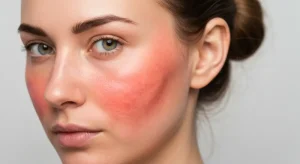
Fried food and foods high in palm oil or omega-6 fatty acids cause a skin response that is qualitatively different from the deep cystic pattern associated with whey and dairy. What I observe clinically is increased surface-level inflammation: small, diffuse bumps, congestion across the cheeks and forehead, and a general roughness to skin texture that does not resolve with topical treatment alone. This is an omega-6 imbalance problem. When the ratio of omega-6 to omega-3 fatty acids in the diet is heavily skewed toward omega-6, which is the case in a diet heavy in fried food, processed snacks, and fast food, the skin’s inflammatory response is amplified and sustained. The fix is not just removing the omega-6 source; it also involves actively adding omega-3s, which I cover in the supplement section below.
The Gut-Skin Connection: When Probiotics Are and Are Not the Answer
What gut dysbiosis does to the skin
The gut-skin axis is real and clinically relevant, but it is not the explanation for every acne case. When gut dysbiosis is present, characterized by bloating, irregular digestion, antibiotic history, or a diet extremely low in fiber and fermented foods, it can contribute to systemic inflammation that manifests on the skin. A disrupted gut microbiome reduces the production of short-chain fatty acids that regulate immune response, increases intestinal permeability, and allows inflammatory compounds to circulate that would otherwise be contained. In that context, probiotics can help. A 2024 study published in Cureus documenting the impact of probiotic consumption on acne outcomes, including improvements in inflammatory lesion counts and markers of gut-skin axis disruption across patients following probiotic supplementation protocols provides useful context for when gut-directed interventions genuinely support acne treatment.
Why probiotics are my third-line recommendation, not the first
In my practice, I keep the probiotic recommendation simple and conditional. If the patient’s history suggests gut involvement, such as antibiotics in the past 12 months, chronic digestive symptoms, or a diet almost entirely lacking in vegetables and fermented foods, then probiotics are worth adding as an adjunct. If the dietary history points clearly to dairy or whey as the driver, eliminating the trigger produces faster and more predictable results than adding a probiotic. Gut support is a layer, not a foundation. Selling patients on the idea that their acne is a gut problem when it is actually a whey problem just delays the improvement they could be seeing in three to four weeks.
Two Supplements Worth Taking: Zinc Picolinate and Omega-3s
Why zinc picolinate specifically, and not other forms
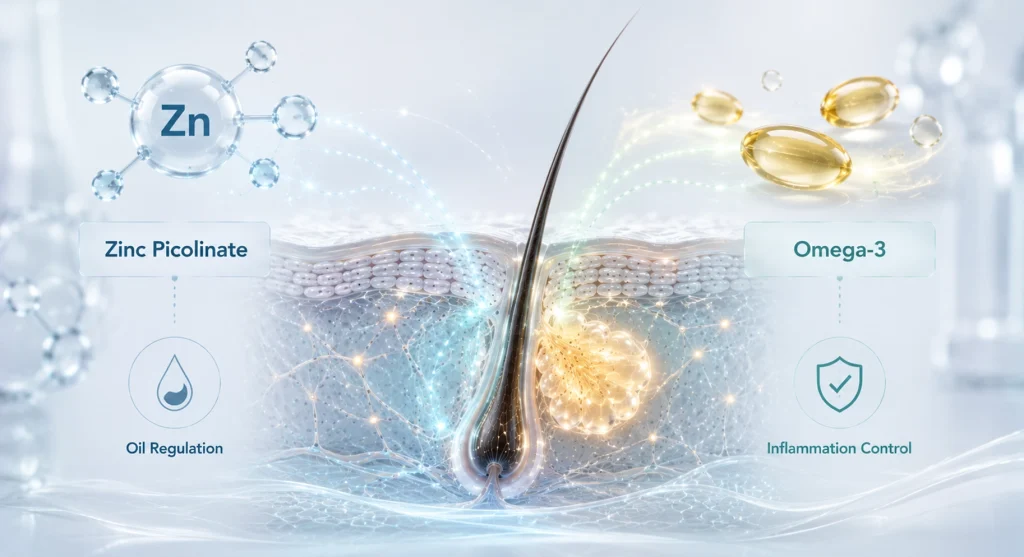
Zinc is one of the few supplements with solid evidence for acne, and the form matters. Zinc picolinate is the most bioavailable form of zinc, meaning the body absorbs and uses it more efficiently than zinc sulfate or zinc oxide. Zinc supports acne treatment through several mechanisms: it reduces sebaceous gland activity, has direct antibacterial properties against Cutibacterium acnes, and modulates the inflammatory response that drives papule and pustule formation. When I recommend zinc for acne patients at Perfect B, I specify zinc picolinate rather than generic zinc because absorption differences between forms are clinically meaningful. A patient taking the wrong form may see no effect and conclude zinc does not work for them, when the actual issue is the formulation. Dosing is individualized based on the patient’s presentation and other supplements being taken.
Omega-3s and how they correct the inflammatory imbalance
Omega-3 fatty acids address the omega-6 imbalance directly. EPA and DHA, the active forms found in fish oil, reduce the production of inflammatory prostaglandins and cytokines that sustain acne lesions. They also improve the skin’s lipid barrier, which affects how the skin responds to environmental triggers. For patients with surface-level inflammatory acne driven by dietary fat quality, omega-3 supplementation alongside the removal of omega-6 dominant fried food produces measurable improvement. The supplement works within the context of the dietary shift, not as a replacement for it. → See Perfect B’s acne scar treatment plan in Doral, FL, including how we address the residual hyperpigmentation and textural damage that persists after active acne is controlled through diet and clinical treatment.
The Miami Factor: Why Diet-Driven Acne Is Harder to Manage Here
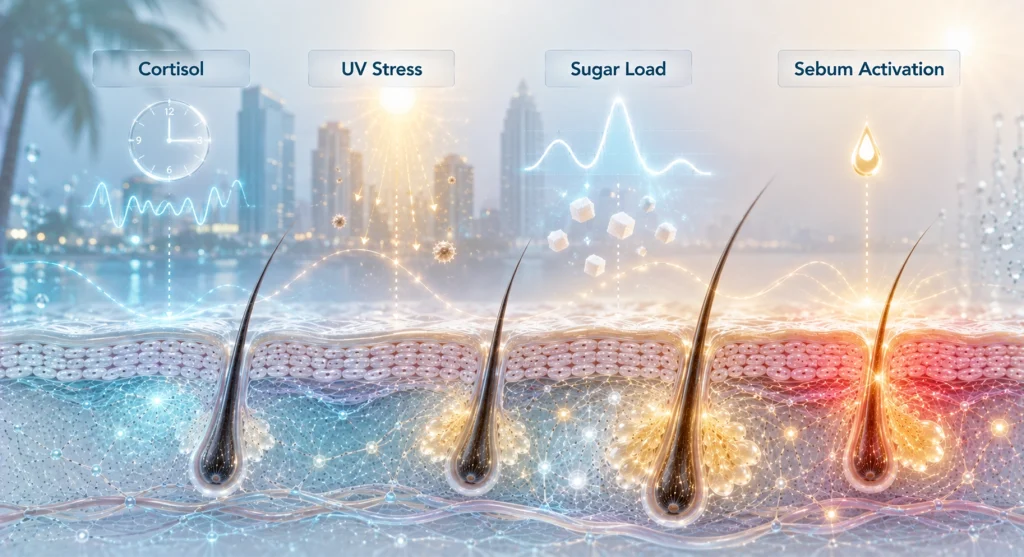
Miami’s lifestyle creates a compounding problem for acne patients that I do not see addressed in any clinical literature on diet and acne. The combination of culturally embedded sugar consumption, a high-stress late-night environment, and chronic UV exposure creates a baseline inflammatory burden that makes dietary acne triggers more impactful than they would be elsewhere.
Cafecitos, sugar culture, and the daily glycemic load
A patient who drinks three cafecitos a day is consuming a significant sugar load that most general dietary guidelines do not account for, because those guidelines were not written for the South Florida food environment. Each cafecito contains roughly two to three teaspoons of sugar in two ounces of liquid. Three of those daily, combined with white rice at lunch and a pastry at breakfast, creates a sustained high-glycemic environment that keeps insulin elevated throughout the day. That chronic insulin elevation keeps sebaceous glands continuously activated in a way that periodic sugar consumption does not. I address this specifically with patients from our Doral and Coral Gables patient population, because generic dietary advice about reducing sugar does not account for how sugar is actually consumed here.
Late nights, cortisol, and sebum production
Miami runs late. The service industry, entertainment, and hospitality culture mean that a significant portion of my patients are sleep-deprived much of the week. Sleep deprivation elevates cortisol, and cortisol is a direct stimulator of sebum production. When you combine elevated cortisol from poor sleep with elevated insulin from high sugar intake and elevated IGF-1 from dairy or whey, you are stacking three independent pathways that all converge on the same outcome: more oil, more clogging, more inflammation. In a quieter market with a different food culture and lifestyle, any one of those triggers might not produce persistent acne on its own. In Miami, the combined load is harder to manage and requires a more complete dietary strategy to address.
When Diet Alone Turned the Skin Around
It does not happen for every patient. Many acne cases require a combination of dietary changes, clinical treatment, and targeted topical protocols to resolve. But there is a subset of patients whose acne responds to a dietary elimination with a speed and completeness that makes everything else secondary. I had a patient who came in with persistent breakouts she had been managing for two years with various topical regimens. Her diet history included a daily vanilla latte and a morning whey protein smoothie. No other new medications, no new products. She cut both. Two months later her skin was quiet. No new prescriptions, no procedures. Just the elimination.
That case is not the norm, but it is not as rare as most patients assume when I describe it. It is the best reminder I have as a provider that food is the foundation. When the foundation changes, the clinical picture can change faster than any device or prescription achieves on its own. → See how Perfect B in Doral treats cystic acne comprehensively, including how dietary history factors into every protocol we build from the first consultation.
Frequently Asked Questions
1. What are the main foods to avoid with acne?
Based on clinical evidence and what I observe consistently at Perfect B, the primary foods to avoid with acne are: skim milk and whey-based protein powders, high-glycemic foods including white bread, white rice, pastries, and sugary drinks, fried food and foods high in palm oil or omega-6 fatty acids, and concentrated sugar sources like sweetened coffee drinks. These are not universally problematic for every patient, but they are the categories that produce the most consistent breakout patterns in the acne patients I see in Doral and the wider Miami area.
2. Does dairy always cause acne?
No. Dairy does not cause acne in every person who consumes it, and the evidence does not support a universal dairy restriction for all acne patients. What the evidence does show is a consistent association between dairy intake and acne in a significant subset of patients, particularly those consuming skim milk or whey protein regularly. At Perfect B, I assess dairy intake at the first consultation because it is the single dietary factor most likely to be contributing to persistent breakouts in my patient population. If a patient eliminates dairy and sees no improvement within four to six weeks, dairy was likely not the primary driver.
3. Why does whey protein specifically cause jawline acne?
Whey protein causes a rapid and significant spike in both insulin and IGF-1. That hormonal response stimulates androgen activity, which increases sebaceous gland output and creates the conditions for deep, inflammatory cystic lesions. The jawline is particularly susceptible to androgen-driven acne because the sebaceous glands in that area are among the most androgen-sensitive on the face. If you are using a whey-based protein powder and experiencing painful cystic lesions on your jawline, switching to a plant-based protein source is a straightforward way to test the connection without eliminating protein from your diet entirely.
4. What is the best zinc supplement for acne?
Zinc picolinate is the form I recommend most consistently for acne patients. It has the best bioavailability of the commonly available zinc forms, meaning the body absorbs a higher proportion of the dose compared to zinc sulfate or zinc oxide. Zinc supports acne treatment by reducing sebaceous activity, limiting bacterial overgrowth, and modulating inflammation. The appropriate dose varies by patient and should be discussed with a provider, as long-term high-dose zinc intake can cause issues including copper depletion. I do not recommend self-prescribing high-dose zinc without clinical guidance.
5. Do probiotics help with acne?
Probiotics can help with acne in patients where gut dysbiosis is contributing to systemic inflammation, but they are not an effective first-line approach for most acne presentations. If you have a history of antibiotic use, chronic digestive symptoms, or a diet almost entirely lacking in vegetables and fermented foods, addressing gut health is worth including in your acne management. If your acne is primarily driven by dairy, whey, or high glycemic foods, eliminating those triggers will produce faster and more consistent improvement than probiotics alone.
6. Can you clear acne with diet alone?
In a subset of patients, yes. When the primary driver is a specific dietary trigger such as whey protein or skim milk in an otherwise well-managed patient, eliminating that trigger can produce significant or complete resolution without adding any new clinical treatment. This does not represent the majority of acne cases, which typically require a combination approach. But it represents a meaningful group of patients, and at Perfect B we consistently see it.
7. Is coffee bad for acne?
Black coffee does not appear to cause acne. The issue is almost always what goes into the coffee: sweetened coffee drinks, lattes made with skim milk, and cafecitos with several teaspoons of sugar all carry the same acne-triggering components. In Miami, where sweetened coffee is a daily cultural staple for many of my patients, the coffee itself is not the problem. The sugar and skim milk are. Switching to black coffee or a plant-based unsweetened alternative is one of the simplest dietary changes I suggest, and one of the easiest for patients to maintain long-term.
Closing: Food Is the Foundation, Not an Afterthought
The clinical literature on diet and acne has been building for decades, and the evidence is now strong enough that any acne protocol that does not include a dietary assessment is missing a critical variable. At Perfect B in Doral, the dietary intake questions are not a courtesy at the first consultation. They are the fastest path to understanding what is driving the breakouts in front of us. When dairy, whey, sugar, or a specific dietary pattern is the primary driver, no topical or clinical treatment will produce lasting results until that driver is addressed. When it is addressed, the improvement can outpace anything else we do.
Diet is rarely the whole picture. Hormonal factors, stress, sleep, and skin barrier function all interact with what a patient eats to determine what their acne looks like and how it responds. The value of a clinical assessment is that it builds a complete picture, including the food, and builds a protocol that addresses every contributing factor, not just the ones that show up on a standard treatment menu.
📍 Visit us at Perfect B, Doral FL
📞 Call or message us at (786) 502-2260