Perfect B, Doral FL. | 06.05.26 | 10 min read.
This content is for educational purposes only and does not constitute medical advice. Consult a licensed medical provider before beginning any tattoo removal treatment.
A Sleeve Tattoo and a Small Wrist Tattoo Are Not the Same Removal Project
Most guides describe tattoo removal as if every tattoo is roughly the same. They cite 6 to 12 sessions and move on. That range is not wrong for a simple black tattoo on the inner wrist. It is significantly wrong for a full sleeve. A full sleeve is not just a bigger tattoo. It is a different clinical category, with more ink layers, more color variation, more surface area per session, and a longer immune clearance timeline that no amount of laser power can compress.
At Perfect B in Doral, FL, we use the PiQo4 laser for all tattoo removal. PiQo4 combines picosecond and nanosecond pulse technology with four wavelengths and a 15mm spot size, the largest in its class. Even with PiQo4, a full sleeve is a multi-year commitment. This guide explains why, and what the realistic numbers look like at every stage.
Key Takeaways
- Full sleeve removal requires 12 to 20 or more sessions spaced 6 to 8 weeks apart, meaning 2 to 3 or more years from first session to final result.
- Ink layering multiplies session count. Sleeves with cover-ups have 2 to 3 ink layers at the dermis, each requiring separate fragmentation cycles.
- Fitzpatrick skin type changes the protocol. Patients with Fitzpatrick III-VI require conservative fluence settings that protect against post-inflammatory hyperpigmentation.
- PiQo4 picosecond technology reduces session count vs. older Q-switch lasers by fragmenting ink into smaller particles that the lymphatic system clears faster.
- Partial sleeves clear faster. A half sleeve on black ink with no cover-ups can clear in 6 to 10 sessions. A full multicolor layered sleeve starts at 12 and often goes higher.
Why Sleeve Removal Takes More Sessions Than a Standard Tattoo
The number of sessions required for tattoo removal is determined by how much ink the laser must fragment and how efficiently your body clears those fragments between sessions. For a sleeve, both sides of that equation are more demanding than for a small isolated tattoo.
Surface area increases treatment time per session
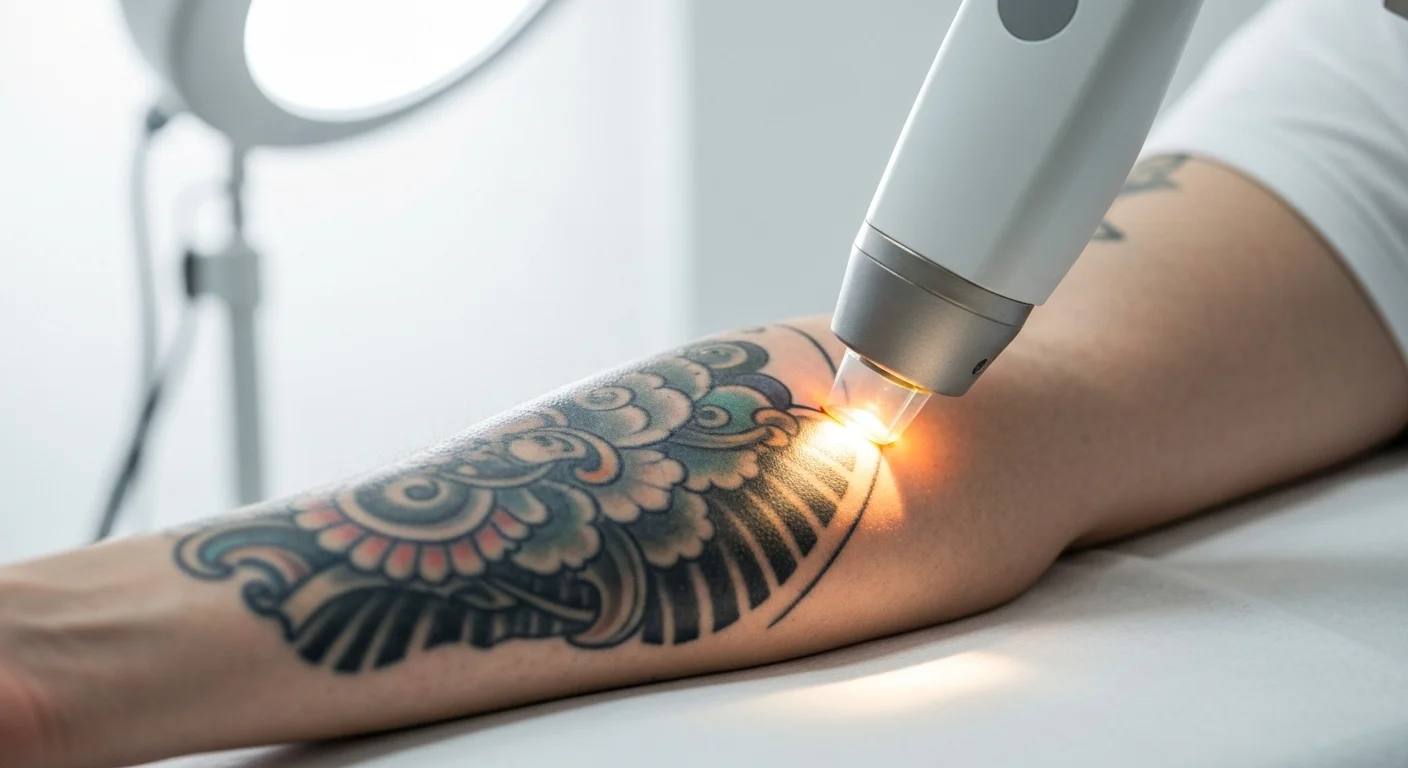
A full sleeve covers roughly 200 to 350 square centimeters of skin. Even with PiQo4 15mm spot size, treating that surface area takes significantly longer per session. Sessions on full sleeves at our Doral clinic typically run 45 to 60 minutes versus 10 to 20 minutes for isolated designs.
Ink layering is the variable most guides skip
Most sleeve tattoos accumulate over years through touchups, added detail passes, and cover-ups. Each layer of ink sits at a slightly different depth in the dermis. The laser must fragment the top layer first, wait for lymphatic clearance, then address the layer beneath it in subsequent sessions. A sleeve with two or three ink layers requires roughly double or triple the sessions of a comparable single-layer tattoo.
Color ink in a sleeve adds wavelength complexity
Black ink absorbs all laser wavelengths efficiently. Color inks are selective: red responds to 532nm, green and blue require 650nm and 585nm. A sleeve with multiple colors requires targeting each color with its optimal wavelength, extending treatment time per session. Our breakdown of how each tattoo ink color responds to laser treatment at Perfect B explains why blues and greens consistently require more sessions than black.
Session Count by Sleeve Type: The Realistic Numbers
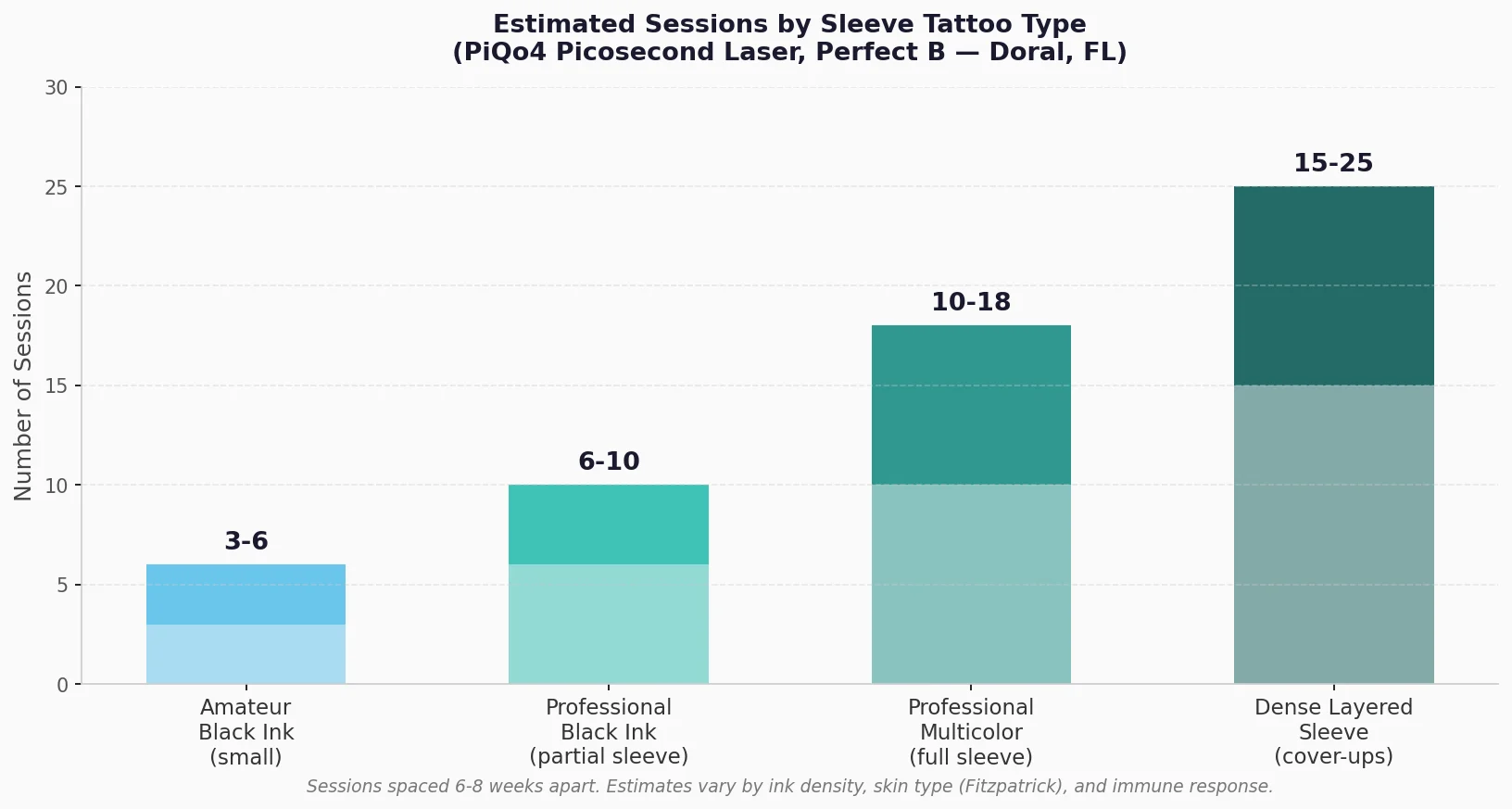
The ranges below reflect what we actually see at Perfect B for patients who follow the recommended 6 to 8 week spacing between sessions and maintain consistent aftercare.
Partial sleeve
Black ink only, professionally done, no cover-ups: 6 to 10 sessions. Add color ink: 8 to 12 sessions. Add a partial cover-up layer: 10 to 15 sessions. Most partial sleeves reach 80 to 90% clearance within 18 months when sessions are kept on schedule.
Full sleeve
Black ink only, single layer: 10 to 15 sessions. Multicolor, single layer: 12 to 18 sessions. Multicolor with layering or cover-ups: 15 to 25 sessions. At 6 to 8 weeks between sessions, 20 sessions means 2.5 to 3 years of treatment.
When the goal is fading for a cover-up
Some sleeve patients want the existing tattoo faded enough that a new design can go on top. For cover-up preparation, 3 to 5 sessions typically lighten ink by 60 to 70%. This is a significantly shorter and less costly path than full removal.
How the PiQo4 Laser Changes the Sleeve Removal Equation
Not all lasers handle sleeve removal equally. The difference between a Q-switch nanosecond laser and a picosecond device like PiQo4 changes the clinical outcome in ways that matter specifically for large, dense tattoos.
Picosecond pulses fragment ink into smaller particles
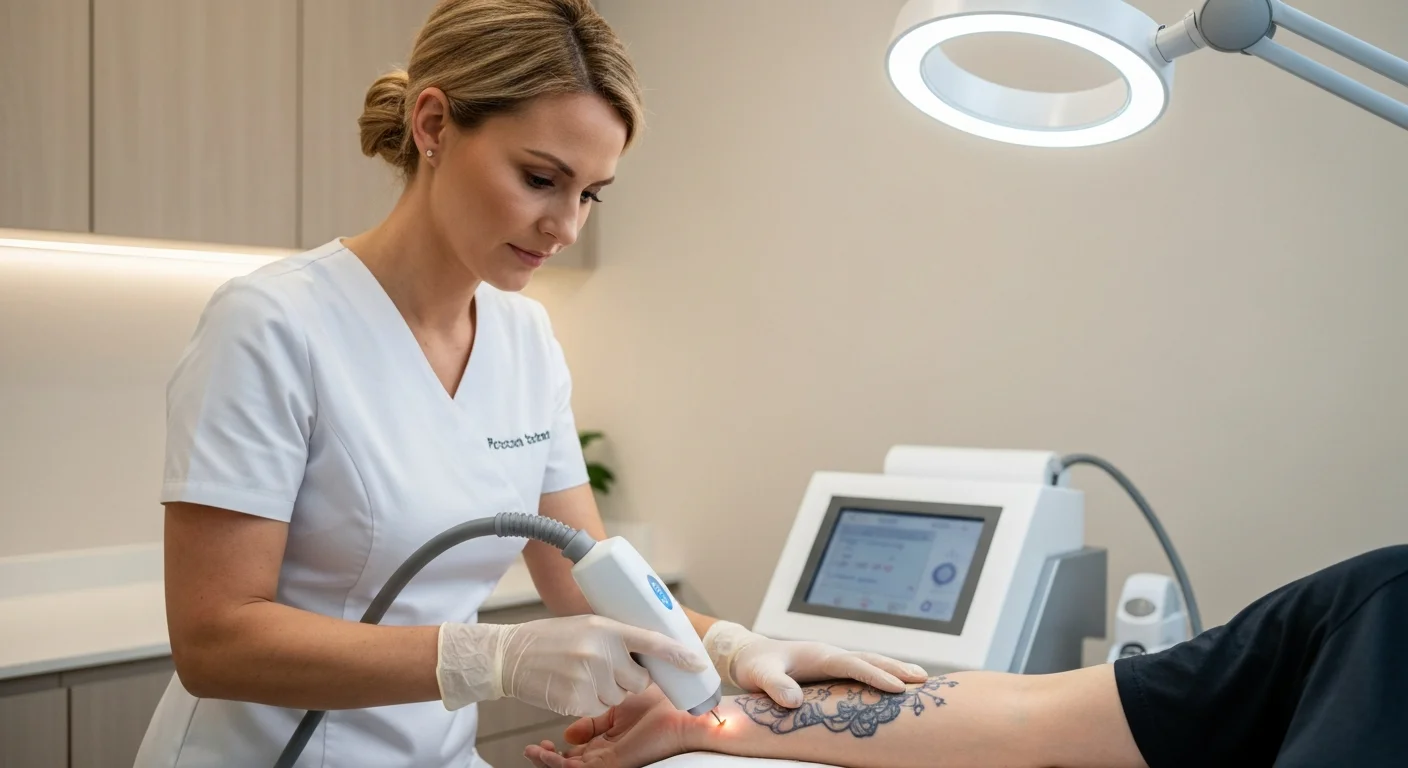
PiQo4 delivers energy in picosecond pulses, 100 times shorter than nanosecond Q-switch pulses, fragmenting ink through photoacoustic pressure rather than heat alone. The result is ink breaking into smaller particles that the lymphatic system clears faster. A 2017 review in Laser Therapy journal documenting that picosecond lasers achieve tattoo removal in fewer sessions than nanosecond devices, with less post-inflammatory hyperpigmentation in PIH-susceptible skin types supports this mechanism directly.
The 15mm spot size advantage for large surface areas
Standard Q-switch lasers operate with spot sizes of 4 to 8mm. PiQo4 maximum spot size of 15mm means each pulse covers more than three times the surface area of a typical 8mm device. For a sleeve covering 250 square centimeters, that difference reduces treatment time and allows consistent energy delivery across the entire sleeve in a single appointment.
Four wavelengths for the full color spectrum
PiQo4 operates at 1064nm, 532nm, 650nm, and 585nm, covering the full range of colors in most decorative sleeves. Having all four wavelengths means the entire sleeve can be treated at each appointment without scheduling separate visits for different colors.
Fitzpatrick Skin Type and What It Means for Sleeve Removal in South Florida
In Doral and throughout the Miami area, the patient population skews heavily toward Fitzpatrick III, IV, and V. That changes the clinical approach in ways that affect both the timeline and the per-session protocol.
Why darker skin types require conservative fluence settings
Melanin in the skin absorbs laser energy alongside the tattoo ink. In Fitzpatrick III-VI patients, higher melanin concentration means the laser must be calibrated carefully to avoid triggering post-inflammatory hyperpigmentation. This typically extends the session count by 2 to 4 sessions compared to lighter skin types on equivalent tattoos. A clinical study of picosecond Nd-YAG laser use in Fitzpatrick IV patients demonstrating over 40% complete removal with conservative settings and 8-week intervals confirms this approach is both safe and effective.
Pre-treatment protocol for Fitzpatrick III-VI patients at Perfect B
Fitzpatrick III-VI patients beginning sleeve removal at our clinic receive a pigment inhibitor protocol before and after each session. Our full protocol for darker skin patients is detailed in the guide covering what Fitzpatrick III-VI patients need to know before starting laser tattoo removal in Miami.
What Happens Between Sessions: How Your Body Does the Actual Work
The lymphatic system clears fragmented ink particles
After a laser session, your lymphatic system transports fragmented ink particles out of the skin over the following weeks. Factors that support lymphatic function, including cardiovascular exercise, consistent hydration, and avoiding tobacco, measurably improve ink clearance between sessions.
Why the interval between sessions cannot be shortened
Spacing sessions closer than 6 weeks does not accelerate removal. The skin needs time to complete the inflammatory response and allow the lymphatic system to clear fragmented ink. The guide covering the session-by-session healing process for South Florida tattoo removal patients at Perfect B covers exactly what happens during each phase of the recovery window.
Sleeve Tattoo Removal Cost: What the Numbers Actually Look Like
Cost for sleeve removal scales with the number of sessions and session price. At Perfect B in Doral, FL, sleeve removal is priced per session based on the area treated. Nationally published data in 2026 shows full sleeve removal typically running $800 to $1,500 per session at specialized clinics in major metropolitan areas. The most cost-effective approach is to book an in-person consultation and get a specific session estimate based on the actual tattoo.
Frequently Asked Questions
1. How many sessions does it take to remove a full sleeve tattoo?
Most full sleeves require 12 to 20 sessions for complete removal, sometimes 25 or more for complex presentations. Partial sleeves with black ink can clear in 6 to 10 sessions. The realistic timeline is 2 to 3 years with sessions spaced 6 to 8 weeks apart.
2. Does a full sleeve cost more to remove than a smaller tattoo?
Yes, in two ways. Per-session cost is higher because the treatment area is larger and sessions take longer. And total session count is higher, so cumulative cost is significantly more than for a small isolated tattoo.
3. Can a sleeve with color ink be fully removed?
Yes. With PiQo4 multi-wavelength picosecond laser, all major tattoo ink colors including black, red, orange, yellow, green, blue, and teal can be targeted. Some colors, particularly blue-green and yellow, require more sessions than black ink.
4. Does darker skin make sleeve removal harder?
It does not make removal impossible, but it changes the protocol. Fitzpatrick III-VI patients require lower fluence settings to protect against PIH, typically adding 2 to 4 sessions to the overall count.
5. What is the minimum number of sessions before a sleeve can be covered up?
3 to 5 sessions typically achieves 60 to 70% ink reduction, which is what most tattoo artists require before working over an existing sleeve.
6. Why does my sleeve fade unevenly between sessions?
Uneven fading is normal and expected. Areas with thinner ink layers clear faster than dense or layered sections. Black ink clears faster than color. Areas closer to the lymph nodes in the elbow often clear faster than the forearm.
7. How does PiQo4 compare to older Q-switch lasers for sleeve removal?
PiQo4 picosecond pulses are 100 times shorter than nanosecond Q-switch pulses, breaking ink into smaller particles cleared more efficiently between sessions. Clinical data shows picosecond devices achieve comparable clearance in fewer sessions. More detail is in our guide on how laser tattoo removal works at the tissue level, including why pulse duration affects clearance speed.
Closing: What Sleeve Removal Actually Requires from You
Sleeve removal requires consistency over a multi-year timeline. Sessions must be kept on schedule. Aftercare must be followed between appointments. Sun exposure on the treated arm must be managed year-round, which in South Florida requires deliberate SPF habits. Patients who begin with the understanding that a complex sleeve takes 2 to 3 years manage the process well.
At Perfect B in Doral, FL, we estimate sessions based on the actual tattoo in front of us, looking at ink density, layer count, color distribution, and skin type. See our real before and after tattoo removal results from Perfect B patients to get a realistic picture of what the process produces.
📍 Perfect B | 3905 NW 107th Ave, Suite 104, Doral FL 33178
📞 Call or message us at (786) 502-2260 to schedule your tattoo removal consultation with a licensed medical provider.
💳 Buy Now Pay Later: Cherry, Klarna, Afterpay, CareCredit
→ Review the full laser tattoo removal treatment plan at Perfect B.