Perfect B, Doral Fl. | 06.30.26 | 11 min read.
This article is for educational purposes only and does not replace a personalized medical evaluation. Treatment recommendations depend on your skin, your scar pattern, and an in-person assessment.
Most people with acne scarring do not have one tidy problem to fix. They have three: a few deep, narrow pits near the temples, some wide depressions with sharp edges across the cheeks, and a soft, undulating shadow that shows up under angled light. When you have icepick, boxcar, and rolling scars on the same face, the most important decision is not which device to buy but the order you treat them in. This is the real question behind how to treat different acne scars: sequence the steps wrong and even good technology underperforms, but sequence them correctly and each stage sets up the next.
In What Order Should You Treat Different Acne Scars?
Treat atrophic acne scars in four stages: release first, then remodel, then resurface, then re-color. Release tethered scars with subcision so they can lift. Remodel the dermis with radiofrequency microneedling such as Morpheus8 to build collagen. Resurface texture with fractional lasers or peels. Re-color last, treating leftover pigment once inflammation settles, because earlier steps can create new discoloration.
Key Takeaways
- Order beats hardware. The release, remodel, resurface, re-color sequence is the difference between modest change and meaningful improvement when you have mixed atrophic acne scars.
- Tethered scars must be freed before resurfacing. Rolling scars are anchored by fibrous bands under the skin. Lasering the surface without releasing them first wastes a session.
- Pigment is treated last on purpose. Every earlier step causes controlled inflammation, and inflammation can darken skin, so chasing spots early is a losing game.
- Mixed scars are a multi-session project. Most patients plan for several visits across roughly six months, not a single appointment, with a realistic goal of meaningful improvement rather than total erasure.
- Skin tone changes the dial, not the plan. On Fitzpatrick III to V skin, the same sequence is used with more conservative settings, longer intervals, and aggressive sun protection, which matters in South Florida.
Why Does Almost Every Scarred Face Have More Than One Scar Type?
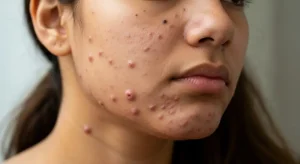
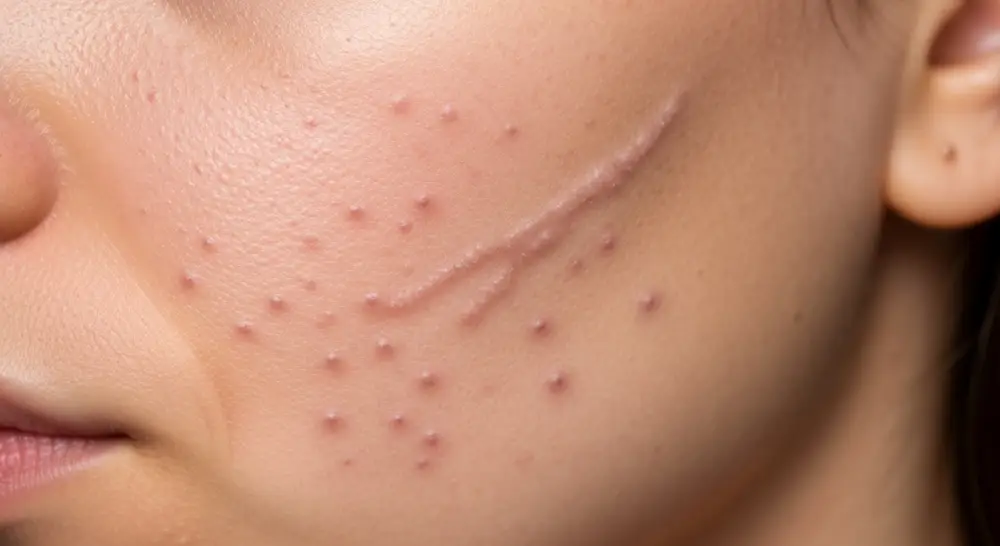
Acne does not damage skin uniformly. A single inflamed cyst can destroy collagen in a deep, narrow column, while a neighboring breakout heals with a broad, shallow loss of support. The result, months or years later, is a mix, and this is the normal presentation rather than the exception. Knowing which indented acne scars you actually have is the first step, because each type responds to different tools. We go deep on identification in our guide to the different types of acne scars and how to tell them apart, so here is the short version you need to follow the sequencing logic below.
| Scar type | How it looks | Depth and shape | Typical first-line approach |
|---|---|---|---|
| Icepick | Small, deep puncture marks, like the skin was pricked with a fine tool | Narrow at the surface, narrowing further as it goes deep | Focal techniques such as TCA CROSS or punch methods, not broad resurfacing. See our guide to icepick acne scars. |
| Boxcar | Round or oval depressions with steep, clearly defined walls | Wider than icepick, with a flat base and sharp edges | Collagen remodeling and resurfacing to soften the rim. See our guide to boxcar scars. |
| Rolling | Soft, wavy dips that give skin an uneven, undulating look in raking light | Shallow but wide, tethered to deeper tissue by fibrous bands | Subcision first to release the tether, then collagen induction. See our guide to rolling scars. |
Atrophic acne scars are the indented, depressed scars in that table, so throughout this article indented acne scars and atrophic acne scars mean the same thing. Once you accept that most faces carry a blend of all three, the question of how to treat different acne scars stops being about one magic procedure and becomes a question of order and timing.
How Does a Clinician Decide What to Treat First?
The decision is not about treating the scar that bothers you most first. It follows the biology of how skin heals. A clinician maps your face, identifies which scars are tethered, deep and focal, or mostly shallow texture, then orders the work so each step makes the next one effective.
The governing principle is simple. You cannot smooth what is still anchored down. Rolling scars are pulled inward by fibrous bands that connect the skin to deeper tissue. Fire a resurfacing laser at a tethered scar and you treat the surface while the anchor keeps dragging it down, so the depression returns. Release comes before resurfacing, every time. This is established best practice, not a clinic preference: tethered scars that are not released first will not respond meaningfully to surface treatments.
The second principle is that pigment is treated last. Almost every effective scar procedure triggers its collagen-building response through controlled injury, and that same inflammation can leave behind post-inflammatory hyperpigmentation, especially in deeper skin tones. Chase brown spots in month one and new procedures will keep generating fresh pigment underneath your efforts. It is far more efficient to complete the structural work on your atrophic acne scars, let inflammation settle, then address whatever discoloration remains. The American Academy of Dermatology offers a helpful overview of acne and its long-term skin effects for readers who want clinical background on why post-acne changes behave this way.
The 4-Stage Sequence: Release, Remodel, Resurface, Re-color
Here is the combination acne scar treatment framework we use at Perfect B. Each stage has a job. You do not always finish one stage before starting the next, because a real plan overlaps and adapts, but the priority order holds.
Stage 1: Release the Tethers With Subcision
Subcision is the foundation for mixed scarring. Using a fine needle or a blunt cannula chosen for your tissue, the provider passes under tethered rolling scars and divides the fibrous bands that hold them down. Freed from their anchor, the depressions begin to lift. Subcision is rarely used alone, because the goal is not just to cut the band but to fill the space it created with new support, which is why it pairs naturally with the collagen work in Stage 2. Releasing first is the step most at-home and bargain approaches skip, and the reason they fail on rolling scars.
Stage 2: Remodel the Dermis With RF Microneedling and Morpheus8
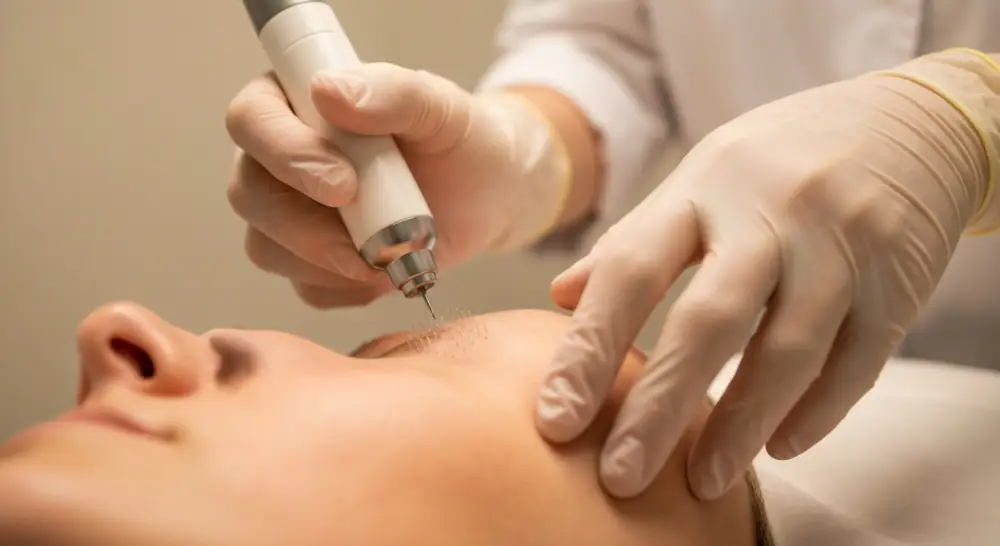
Once tethers are released, the dermis needs to rebuild support from within. Radiofrequency microneedling, including Morpheus8, combines microneedling with controlled heat delivered at depth, which stimulates deeper collagen remodeling than microneedling alone. This is the workhorse stage for boxcar scars, where the goal is to thicken the floor of the depression and soften its steep walls, and it reinforces the lift gained from subcision on rolling scars. Standalone SkinPen microneedling also stimulates new collagen and can join this phase depending on your skin. Biostimulators or plasma therapy may be layered here to support the collagen response, and regenerative agents such as exosomes can be added to support healing between energy-based sessions.
Stage 3: Resurface the Texture With Lasers and Peels
With the structure rebuilt, resurfacing refines what remains. Fractional and resurfacing lasers smooth the top layer of skin for a more even texture, and chemical peels exfoliate the surface. Resurfacing is most rewarding once the deeper work is done, because you are polishing a foundation that has already been lifted and thickened rather than fighting tethers and weak collagen. For deep, narrow icepick scars, broad resurfacing is the wrong tool. These respond better to focal chemical reconstruction such as TCA CROSS or punch techniques, which treat one pit at a time and are woven into this phase rather than handled by a full-face laser pass.
Stage 4: Re-color by Treating PIH and PIE
The final stage addresses color, not contour. After acne and after procedures, skin can hold onto post-inflammatory hyperpigmentation, the brown or gray spots, and post-inflammatory erythema, the lingering red or pink marks. Because the earlier structural stages all generate some inflammation, treating pigment last avoids a frustrating cycle of clearing spots only to create new ones. Targeted devices such as IPL address pigmentation and small vessels, and prescription topicals support an even tone at home. By this stage the indentations have already improved, so correcting color is what makes the overall result look finished.
What Do Months 1, 3, and 6 Look Like? A Realistic Timeline
A useful acne scar treatment timeline is staged, not crammed. Skin needs weeks to build collagen between energy treatments, and rushing only raises the risk of pigment problems. The schedule below is a representative example. Your actual acne scar treatment timeline is set at your consultation and adjusted as your skin responds.
| Phase | Primary focus | What typically happens | What you notice |
|---|---|---|---|
| Month 1 | Release and calm | Scar mapping, then subcision to free tethered rolling scars. Any active breakouts and inflammation are settled first, sometimes with prescription support and in-clinic facials. | Some bruising and swelling that resolves. Tethered areas may already look less anchored. |
| Month 3 | Remodel | One to two sessions of RF microneedling or Morpheus8 to build collagen and soften boxcar walls. Focal work such as TCA CROSS for icepick scars may begin. Exosomes or plasma may support healing. | Texture starts to look smoother. Depressions appear shallower as new collagen forms. |
| Month 6 | Resurface and re-color | Resurfacing laser or peels refine remaining texture once structure has improved. Pigment and redness are treated with IPL and topicals as inflammation settles. | More even surface and tone. Cumulative collagen gains continue for months afterward. |
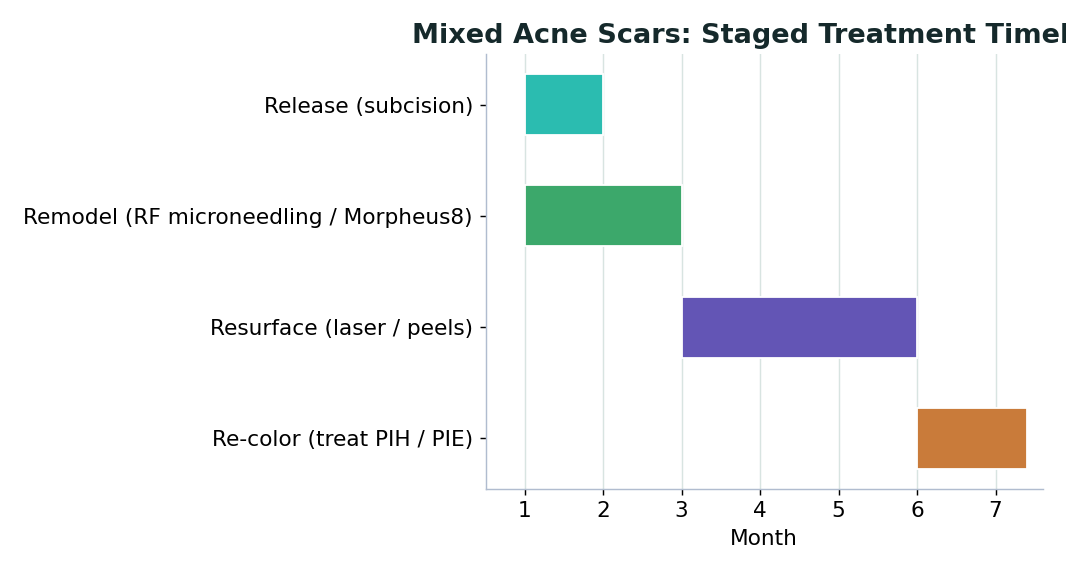
Collagen remodeling keeps working after your last in-clinic session, so the skin you see at month six is usually not the final result. Improvement continues for several more months as the dermis matures.
How Many Sessions Will Mixed Scars Take?
There is no single answer, because the number of sessions depends on how many scar types you have, how deep they are, your skin tone, and how your skin responds. Here is what is clinically typical for combination acne scar treatment.
- Subcision: often more than one pass for tethered rolling scars, since stubborn bands can re-form.
- RF microneedling or Morpheus8: typically a series of several sessions spaced weeks apart, because collagen builds gradually.
- Focal icepick work such as TCA CROSS: usually repeated over multiple visits, treating pits incrementally.
- Resurfacing and pigment care: added toward the end and dosed to your skin, sometimes over more than one session.
The honest framing is this. Mixed atrophic acne scars are a multi-session commitment, generally unfolding across roughly six months or more, and the goal is meaningful, visible improvement rather than perfectly smooth skin. Anyone promising total erasure in one visit is not describing how scar tissue heals. Peer-reviewed dermatology literature, searchable through the PubMed database of clinical studies, consistently supports staged, combined approaches over any single one-and-done treatment.
How Do You Treat Mixed Scars on Fitzpatrick III to V Skin?
If you have a medium to deep skin tone, the sequence does not change, but the settings and pacing do. Deeper skin holds more melanin, which can respond to the inflammation of any procedure with post-inflammatory hyperpigmentation. The plan keeps every benefit of the release, remodel, resurface, re-color order while reducing the risk of new dark spots.
- More conservative energy settings. Lower, controlled settings on RF microneedling and resurfacing reduce the inflammatory load while still building collagen, often traded for a few extra sessions rather than one aggressive pass.
- Longer intervals between sessions. More recovery time between treatments lets inflammation fully settle before the next round, which protects against cumulative pigment changes.
- Proactive pigment management. Prescription topicals before and after procedures help keep melanin calm, and the re-color stage is approached patiently.
- Strict sun protection, especially here. The South Florida sun is intense year-round, and ultraviolet exposure during a months-long scar plan is one of the fastest ways to trigger or deepen PIH. Daily broad-spectrum SPF is non-negotiable, and we often time the most aggressive resurfacing for lower-UV months. Miami humidity also means choosing sunscreen and aftercare that wear well on sweaty days so protection actually stays on the skin.
None of this means deeper skin tones cannot achieve excellent results. They can. It simply means a thoughtful clinician dials the intensity down and the patience up, which is what a proper scar-mapping consultation is for.
How Do We Map and Plan a Mixed-Scar Face at Perfect B in Doral?
We do not start with a device. We start with a map. At your consultation in our Doral clinic, we examine your face under proper lighting, identify each scar type and where it sits, note which areas are tethered, and flag your Fitzpatrick skin type and any pigment already present. That map drives the plan: what we release first, where we stay conservative, how far apart we space sessions, and how we set expectations honestly.
From there we build your staged plan across the four stages, sequenced for your specific blend of icepick, boxcar, and rolling scars, and built around the South Florida calendar, including sun exposure and recovery time. We are direct about outcomes: the aim is meaningful improvement you and others can see, not the erasure of every mark. To understand the full clinical approach before you come in, read our complete acne scar treatment plan, which walks through our mechanism-led method in detail.

Frequently Asked Questions
1. In what order should atrophic acne scars be treated?
Release first with subcision to free tethered scars, then remodel the dermis with RF microneedling or Morpheus8, then resurface texture with lasers or peels, and treat pigment last once inflammation has settled. This order lets each stage support the next.
2. Can I just get one laser treatment to fix all my acne scars?
No. A single laser pass cannot release tethered rolling scars or reach deep icepick pits, and it can trigger pigment problems if used too aggressively. The whole point of how to treat different acne scars is matching each scar type to the right step in a staged, combination acne scar treatment plan across several sessions.
3. Why are rolling scars treated before resurfacing?
Rolling scars are anchored to deeper tissue by fibrous bands. Until subcision releases those bands, the skin keeps getting pulled inward, so surface resurfacing alone will not hold. Releasing the tether first is what allows the depression to lift and stay lifted.
4. How long does a combination acne scar treatment timeline take?
Most plans for mixed indented acne scars unfold across roughly six months of staged sessions, with collagen improvement continuing for months after the final visit. Your exact acne scar treatment timeline is set at your consultation based on your scar pattern and skin tone.
5. Will treatment completely erase my acne scars?
The honest goal is meaningful, visible improvement, not total erasure. Scar tissue is permanently altered skin, so a well-sequenced plan softens, lifts, and evens it substantially rather than making it disappear entirely.
6. I have darker skin and I am worried about dark spots. Can I still treat my scars?
Yes. On Fitzpatrick III to V skin we use the same sequence with more conservative settings, longer intervals between sessions, prescription pigment support, and strict sun protection. This protects against post-inflammatory hyperpigmentation while still building collagen.
7. How are deep icepick scars treated differently from boxcar and rolling scars?
Icepick scars are narrow and deep, so broad resurfacing does not reach them. They respond better to focal techniques such as TCA CROSS or punch methods that treat one pit at a time, woven into the plan alongside the remodeling and resurfacing of the wider scars.
8. Why is pigment treated last instead of first?
Every structural scar procedure causes controlled inflammation, and inflammation can create new discoloration. Treating pigment last means you correct color once the inflammatory phase is over, so you are not generating fresh spots underneath your efforts.
Closing: Sequence Is the Treatment
Most faces with mixed acne scarring do not fail because the technology was wrong. They fail because the steps were applied out of order, or because one scar type received the treatment designed for a different one. The sequence, release, remodel, resurface, re-color, exists because each stage creates the conditions the next one requires.
At Perfect B in Doral, the first appointment is a scar-mapping session, not a treatment. We identify every scar type in your pattern, build the plan around what your skin actually has, and set realistic timelines before a single device is powered on.
- 📍 Visit us at Perfect B, 3905 NW 107th Ave, Suite 104, Doral FL 33178
- 📞 Call or message us at (786) 502-2260
- 💳 Financing available through Cherry, Klarna, Afterpay, and CareCredit