
Perfect B, Doral Fl. | 05.20.26 | 11 min read.
This article is for educational purposes only and does not substitute professional medical advice. Always consult a licensed medical provider before starting any acne scar treatment. To understand where this fits, learn how a realistic, staged acne scar treatment plan is built at Perfect B in Doral for meaningful improvement.
Icepick scars are the deepest and narrowest type of atrophic acne scar, and they are also the most resistant to standard treatments. While boxcar and rolling scars respond well to resurfacing techniques and RF microneedling, icepick scars require a different clinical approach because of how far they extend into the dermis. Understanding what sets them apart is the first step toward a realistic treatment plan.
This guide covers what icepick scars are, how they form, why they are harder to treat than other scar types, and what clinical options exist for improving their appearance. For patients at our clinic in Doral, FL, we explain exactly what our confirmed treatments can and cannot do for this specific scar type.
Key Takeaways on Icepick Scars
- Icepick scars are the deepest acne scar type: They extend into the lower dermis and sometimes into the subcutaneous layer, which is why superficial treatments have limited effect.
- They result from severe inflammatory acne: Cysts and nodules that damage deep tissue are the primary cause. Picking or squeezing acne lesions significantly increases the risk.
- They do not fade on their own: Unlike post-inflammatory hyperpigmentation, icepick scars are structural tissue deficits that require clinical intervention for meaningful improvement.
- OTC products cannot treat them: Topical retinoids, vitamin C, and chemical exfoliants can improve surrounding skin texture but cannot fill or remodel the deep channel of an icepick scar.
- RF microneedling reaches deeper than standard microneedling: The radiofrequency energy delivered at depth stimulates collagen in the dermis, which makes it more relevant for icepick scars than surface-only techniques.
- Results require multiple sessions and realistic expectations: Significant improvement is achievable, but icepick scars rarely disappear completely.
What Are Icepick Scars? Anatomy of the Deepest Acne Scar
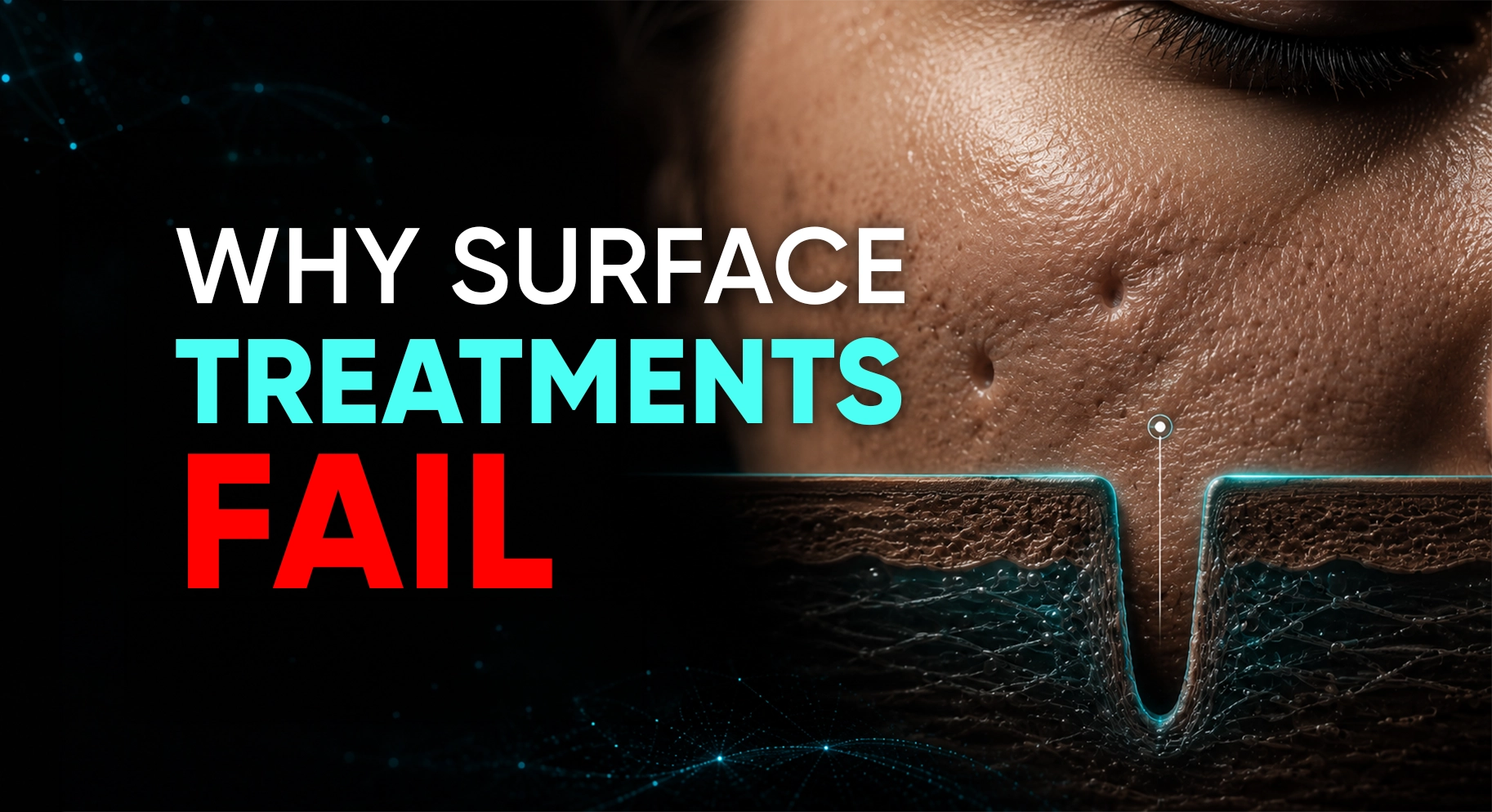
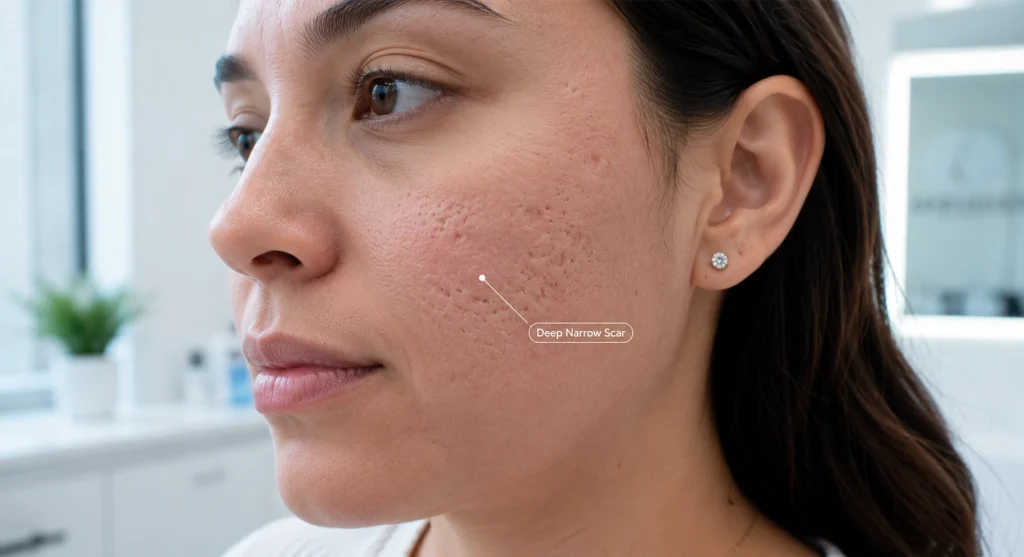
Icepick scars are narrow, deep indentations in the skin that look as if the surface has been punctured by a sharp pointed instrument. They are typically less than 2mm wide at the surface but extend vertically downward through the dermis and in severe cases into the subcutaneous tissue beneath.
The name describes their appearance precisely: a small, sharp opening at the surface that widens slightly as it descends into the deeper skin layers. Unlike other acne scars, icepick scars have a V-shaped or narrow tubular structure that makes them particularly difficult to address from the skin surface alone.
Icepick scars are estimated to represent 60 to 70 percent of all atrophic acne scars. They occur most commonly on the cheeks, where skin is thinner and cystic acne frequently develops, but can also appear on the forehead, chin, and nose. Because of their narrow width, they do not shadow in flat lighting the way boxcar scars do, but in raking light or close-up they are clearly visible as deep puncture-like marks that are difficult to cover with makeup.
Why Icepick Scars Form: The Collagen Deficit Explanation
Icepick scars form when severe inflammatory acne, particularly cystic or nodular acne, damages the skin deeply enough that the body cannot fully repair the tissue defect. During the healing process, the body produces collagen to rebuild the damaged area. When too little collagen is produced relative to the damage, the skin cannot fill the void, and the surface pulls inward as the wound contracts.
According to Sungat K. Grewal, MD, assistant professor of clinical dermatology and co-director of UCSF Laser Surgery and Aesthetic Medicine, icepick scars are less likely to fade significantly on their own and typically require procedural treatments for meaningful improvement. The collagen deficiency that creates them is a structural tissue problem, not a surface discoloration that fades with time.
Several factors increase the likelihood of icepick scar formation: the severity of the original acne lesion, delays in treating active acne, picking or squeezing cysts and nodules (which pushes bacteria deeper and intensifies the inflammatory response), and genetic predisposition to reduced healing collagen output. For patients in South Florida, the combination of high UV exposure and a tendency toward inflammatory acne in Fitzpatrick III through VI skin tones creates an elevated risk profile that we see regularly in our Doral clinic.
Icepick vs Boxcar vs Rolling Scars: How to Tell the Difference
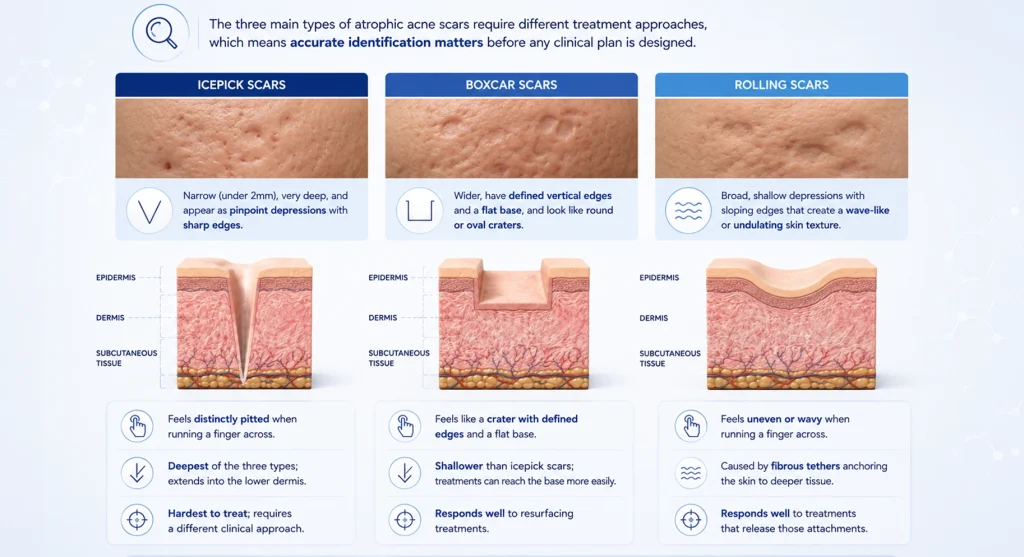
The three main types of atrophic acne scars require different treatment approaches, which means accurate identification matters before any clinical plan is designed.
- Icepick scars are narrow (under 2mm), very deep, and appear as pinpoint depressions with sharp edges. Running a finger across them produces a distinct pitted sensation. They are the deepest of the three types and extend into the lower dermis.
- Boxcar scars are wider, have defined vertical edges and a flat base, and look like round or oval craters. They are shallower than icepick scars and respond better to resurfacing treatments because the energy can reach their base more easily.
- Rolling scars are broad, shallow depressions with sloping edges that create a wave-like or undulating skin texture. They are caused by fibrous tethers anchoring the skin to deeper tissue and respond well to treatments that release those attachments.
Many patients have more than one scar type simultaneously, which is why a clinical assessment at your first consultation is essential before any treatment protocol is designed. What works for rolling scars does not necessarily work for icepick scars, and combining techniques for the wrong scar type wastes sessions and delays results.
Why Icepick Scars Are the Hardest Acne Scar Type to Treat
The depth and geometry of icepick scars is what makes them clinically challenging. Most resurfacing techniques work on the epidermis and upper dermis, which means they improve surface texture and tone but do not reach the bottom of a deep icepick channel. The energy, whether from a laser, a chemical peel, or standard microneedling needles, does not penetrate to where the scar actually originates.
According to research published in the NIH-indexed Journal of Clinical and Aesthetic Dermatology on effective treatments of atrophic acne scars, the narrow tubular architecture of icepick scars means that broad resurfacing approaches improve the surrounding skin while leaving the scar channel largely intact. Results from surface-only treatments on icepick scars are typically modest compared to what the same treatments achieve on boxcar or rolling scars.
This is not a failure of the treatment technology. It is a geometry problem. A fractional laser that resurfaces 20 percent of the skin surface will improve general texture but may miss the narrow 2mm or smaller opening of an icepick scar entirely in some passes. Treatments that deliver energy at depth, such as radiofrequency microneedling, are better positioned to stimulate collagen in the dermis where icepick scars originate.
What Does Not Work on Icepick Scars
Being honest about what will not produce meaningful results saves patients time, money, and frustration. Several popular skincare approaches have little to no clinical evidence for icepick scar improvement.
- Topical retinoids and vitamin C: These improve skin cell turnover, surface brightness, and mild textural irregularities, but they cannot remodel the deep structural defect of an icepick scar. They are valuable for maintaining skin health between treatments and reducing post-inflammatory pigmentation, but they are not scar treatments.
- OTC chemical exfoliants (glycolic, salicylic, lactic acid): Effective for clogged pores and surface texture but do not reach the dermis. No meaningful impact on icepick scar depth or structure.
- Dermal fillers alone: Hyaluronic acid fillers can temporarily plump the surrounding skin, making scars slightly less visible, but the narrow channel of an icepick scar is not easily injected and results are not long-lasting for this specific scar type.
- Standard microneedling (non-RF): Creates micro-injuries that stimulate surface collagen but the needle depth typically does not match the depth of a deep icepick scar. Some improvement is possible for shallower icepick variants, but results are more modest than with RF-assisted delivery.
- Natural remedies (honey, rosehip oil, witch hazel): No evidence for structural scar improvement. These may soothe the skin surface but cannot change the tissue architecture of an icepick scar.
Clinical Treatments for Icepick Scars: What the Evidence Shows
The clinical literature on icepick scar treatment centers on two broad approaches: techniques that physically modify the scar structure, and energy-based treatments that stimulate deep dermal collagen remodeling. Most dermatologists combine both categories for optimal results.
Research from the NIH comprehensive review on non-energy-based treatments for acne scars confirms that the probability of meaningful improvement in icepick scars is highest with procedures that reach the base of the scar channel, either through targeted chemical application, excision, or deep energy delivery. Treatments that operate only at the surface level consistently underperform for this scar type.
For patients considering treatment, the most important question to ask any provider is not which brand or device they use, but whether their treatment protocol specifically addresses the depth of icepick scars and how they classify scar type before designing the protocol. A consultation that includes scar mapping and a frank discussion of realistic outcomes is a stronger indicator of provider quality than any single technology claim.
RF Microneedling and Icepick Scars: What Morpheus8 Can and Cannot Do
Radiofrequency microneedling, including the Morpheus8 platform we use at Perfect B in Doral, delivers both mechanical micro-injury and radiofrequency energy at depth. This combination reaches deeper into the dermis than standard microneedling alone and stimulates collagen remodeling at the levels where icepick scars originate.
For icepick scars specifically, RF microneedling produces measurable improvement but it works differently than it does for rolling or shallow boxcar scars. The energy reaches the dermis and stimulates collagen around and beneath the scar, which gradually elevates the scar base over time. Multiple sessions, typically three to five, are needed before this remodeling becomes visible. The three-month mark is typically when patients first notice meaningful change, with results continuing to develop for up to a year after the final session.
The honest clinical picture: RF microneedling is one of the most relevant energy-based treatments for icepick scars because of its depth capability, but for very deep or severe icepick scars, it works best as part of a multi-modality approach designed after a proper scar classification assessment. Our detailed guide to RF microneedling for acne scars at Perfect B covers the full Morpheus8 protocol, including what to expect by scar type and session number.
Skin Type Considerations: Fitzpatrick III-VI and Icepick Scars in Doral
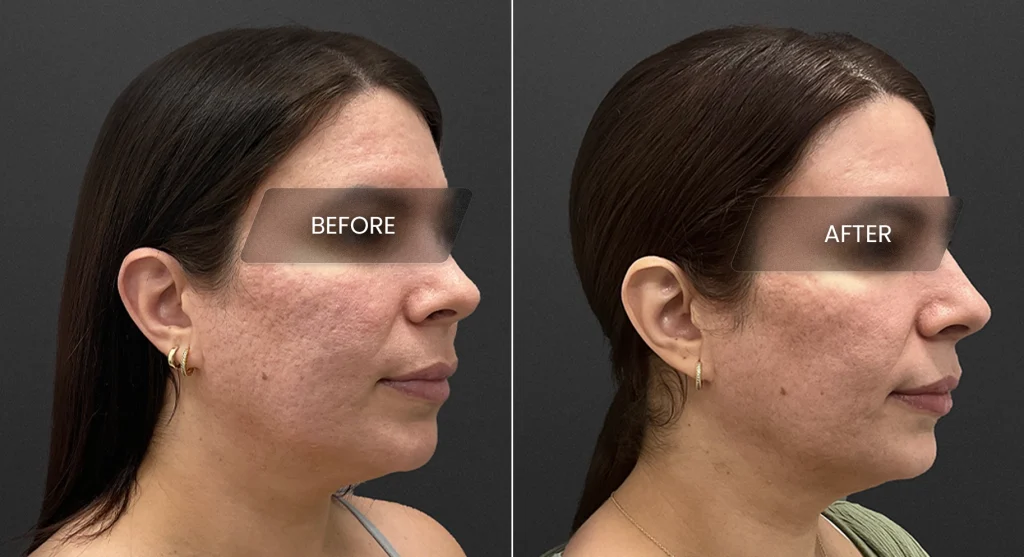
The majority of our patients at Perfect B in Doral are Fitzpatrick skin types III through VI, which includes Hispanic, Caribbean, and African American skin tones that are common throughout the greater Miami area. This matters for icepick scar treatment because darker skin types carry an elevated risk of post-inflammatory hyperpigmentation after any procedure that creates controlled injury to the skin.
Post-inflammatory hyperpigmentation is not a scar itself, but it can compound the visual impact of icepick scars significantly. A patient who undergoes aggressive treatment and develops new hyperpigmentation around their existing scars has not improved their overall appearance, even if the scar depth has been partially reduced. This is why our protocol for Fitzpatrick III-VI patients includes conservative fluence settings, longer intervals between sessions, and rigorous sun protection as a non-negotiable component of aftercare.
For darker skin patients specifically, the sequence of treating active acne first, then post-inflammatory pigmentation, then structural scars is the approach most likely to produce a clear improvement at each stage without creating new problems. Our guide to managing post-inflammatory hyperpigmentation covers the pigmentation component that often accompanies icepick scarring in our patient population.
Prevention: How to Stop Icepick Scars Before They Form
The most effective approach to icepick scars is preventing them from forming in the first place. Once the deep tissue channel is established, treatment is a long process. Prevention requires early intervention in active acne and consistent protective habits.
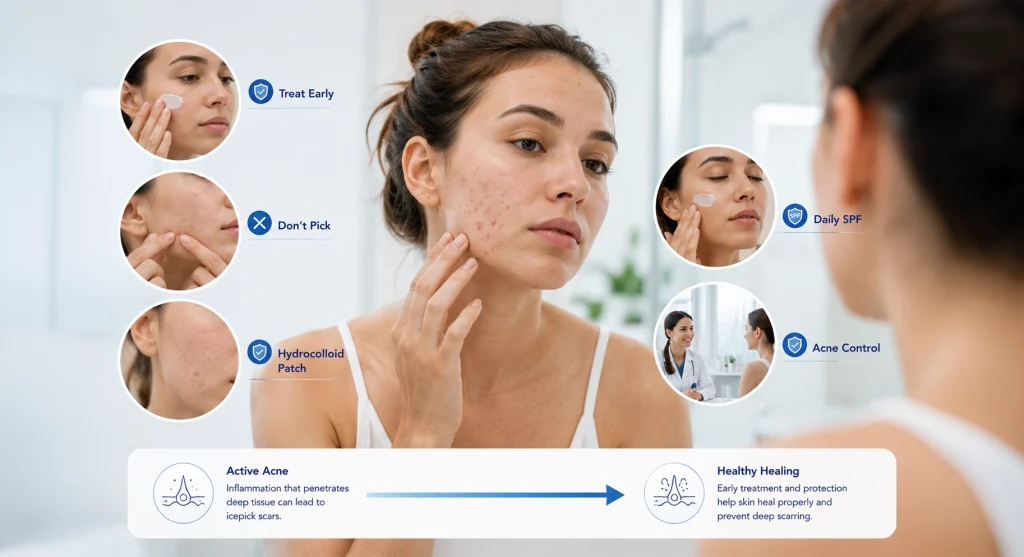
- Treat severe acne early: Cystic and nodular acne that penetrates the lower dermis is the direct cause of icepick scars. Effective treatment of active acne before it reaches this severity is the single most impactful preventive measure.
- Never pick, squeeze, or pop deep lesions: Manipulating a deep cyst or nodule pushes bacteria and inflammatory material further into the dermis, increases the severity of the immune response, and dramatically increases the risk of deep scarring.
- Use hydrocolloid patches on active lesions: Pimple patches reduce inflammation, protect the lesion from manipulation, and create a healing environment that reduces the likelihood of deep scarring.
- Daily SPF 30 or higher: UV exposure does not cause icepick scars directly, but it worsens post-inflammatory pigmentation around existing scars and degrades the collagen framework that determines how the skin heals.
- Maintain active acne control: Ongoing prescription-level acne management prevents new cysts and nodules from forming, which stops new icepick scars from developing while existing ones are being treated.
Frequently Asked Questions About Icepick Scars
1. Will icepick scars go away on their own?
No. Icepick scars are structural tissue deficits, not surface discolorations. Without treatment, they do not fade or improve meaningfully over time. As skin ages and loses elasticity, icepick scars can actually become more visible because the surrounding skin loses the plumpness that partially conceals them. Early clinical intervention produces better outcomes than waiting.
2. Can I get rid of icepick scars at home?
At-home products including retinoids, vitamin C serums, and chemical exfoliants cannot treat the structural depth of icepick scars. They can improve surrounding skin quality and reduce post-inflammatory pigmentation, which makes scars less prominent visually, but they do not change the scar architecture. Clinical intervention is required for meaningful improvement in icepick scar depth and texture.
3. What causes icepick scars?
Icepick scars result from severe inflammatory acne lesions, particularly cysts and nodules, that damage the dermis deeply enough that the body cannot produce sufficient collagen to fully repair the tissue defect. The skin surface contracts inward as the wound heals, leaving a narrow, deep channel. Risk factors include severe cystic acne, delayed treatment, picking or squeezing lesions, and genetic predisposition to reduced healing collagen output.
4. What is the best treatment for icepick scars?
Clinical evidence supports treatments that reach the depth of the scar channel. Energy-based treatments like RF microneedling and fractional laser resurfacing stimulate deep dermal collagen remodeling. The right approach depends on the depth and severity of the individual scars and is best determined after a clinical assessment that classifies your specific scar types. At Perfect B in Doral, we assess scar type at the first consultation before designing a treatment protocol.
5. How deep are icepick scars compared to other acne scars?
Icepick scars are the deepest of the three main atrophic scar types. They extend into the lower dermis and sometimes into the subcutaneous layer below. Boxcar scars are shallower with a flat base. Rolling scars are the shallowest type but are broad and caused by fibrous tethers rather than tissue loss. The depth difference is why treatments effective for boxcar and rolling scars often produce more modest results on icepick scars.
6. Does RF microneedling help icepick scars?
Yes, RF microneedling is one of the most clinically relevant treatments for icepick scars because it delivers energy at dermal depth rather than only at the surface. The radiofrequency component stimulates collagen production in the tissue layers where the scar originates. Multiple sessions are required, and improvement is gradual, becoming most visible at the three-month mark and continuing to develop for up to a year after the final session.
7. How many sessions does it take to improve icepick scars?
Most patients require three to five RF microneedling sessions for meaningful improvement in icepick scar appearance. Sessions are spaced four to six weeks apart to allow adequate collagen remodeling between treatments. Deeper or more severe icepick scars may require more sessions or a combination approach. The number of sessions is determined at consultation based on scar depth, skin type, and the overall treatment protocol.
8. Are icepick scars more common on darker skin tones?
Icepick scars occur across all skin types, but the treatment approach differs for darker Fitzpatrick skin tones. Fitzpatrick III through VI skin has a higher risk of post-inflammatory hyperpigmentation after any procedure involving controlled injury. At Perfect B in Doral, where the majority of our patients are Fitzpatrick III through V, we calibrate treatment parameters specifically for melanin-rich skin to manage this risk while still achieving meaningful scar improvement.
Closing: The Right Approach to Icepick Scars Starts with an Honest Assessment
Icepick scars are the most structurally complex acne scar type, and they respond best to clinical protocols that match the depth of the problem. Surface treatments improve surrounding skin but do not address the scar channel itself. Energy-based treatments that reach the dermis produce more meaningful collagen remodeling. Realistic expectations, scar-type classification before treatment, and patience with the remodeling timeline are the three factors that most determine patient satisfaction.
At Perfect B in Doral, we approach acne scar treatment with a full skin assessment at the first consultation. We classify scar types, evaluate Fitzpatrick skin tone, review your acne history, and design a protocol based on what your specific scars actually need rather than a standard package. If you are dealing with icepick scars alongside other scar types or ongoing pigmentation concerns, our complete skin rejuvenation treatment plan outlines how we approach combination concerns in a structured protocol.
📍 Perfect B | 8200 NW 41st St, Suite 100, Doral, FL 33166
📞 (786) 502-2260