Perfect B, Doral Fl. | 07.15.26 | 12 min read.
This article is for general educational purposes and is not a substitute for an in-person medical evaluation. Peptide therapy is prescribed and administered by a licensed medical provider through a licensed pharmacy. Some peptides discussed here have promising but still largely preclinical evidence, so realistic expectations matter, and candidacy, protocols, and any pricing are confirmed at a personal consultation.
Muscle Recovery vs Muscle Growth Peptides: Which Do You Actually Need?
People often lump peptides together as one thing for the gym, but muscle recovery and muscle growth are two different goals that call for two different classes of peptide. Recovery peptides aim to help tissue repair and calm the aftermath of training or injury, while growth peptides work on your body’s growth hormone pathway to support lean mass and body composition. Choosing the wrong one for your goal is the most common mistake, and the honest answer to which you need comes from your situation, not a label.
This guide breaks down the difference clearly: which peptides sit in the recovery camp, which sit in the growth camp, how a provider decides between them, whether they can be combined, and why any of this belongs in a supervised medical plan rather than a vial ordered online. The goal is to help you walk into a consultation knowing exactly what you are asking for.
Key Takeaways
- Two goals, two classes: recovery peptides target tissue repair, while growth peptides work on the growth hormone pathway for lean mass.
- Recovery camp: BPC-157 and TB-500 (the Wolverine blend) are used for repair and post-training recovery, with evidence that is promising but still largely preclinical.
- Growth camp: growth hormone secretagogues like CJC-1295 with Ipamorelin and Tesamorelin support the body’s own growth hormone and lean mass.
- Your situation decides: healing an injury points to recovery, building or recomposition points to growth, and some plans sequence both under supervision.
- Supervision is non-negotiable: these are prescribed, pharmacy-compounded, and monitored, not gray-market vials bought online.
Repair vs Build: Why the Goal Changes the Peptide
The simplest way to think about it is repair versus build. Recovery is about helping damaged tissue, whether from a hard training block or an injury, heal and calm down. Growth is about supporting the hormonal environment that helps you add and maintain lean muscle over time. They are related, because better recovery lets you train more consistently, but the peptides that serve each goal work through completely different mechanisms. That is why a provider starts with your goal, not with a product.
Getting this right also protects you from wasting time and money on the wrong tool. Someone nursing a stubborn tendon does not need a growth hormone peptide, and someone focused on body composition will not get there with a repair peptide alone. The rest of this guide sorts the options into the two camps so the choice becomes obvious.
Recovery and Repair: BPC-157 and TB-500
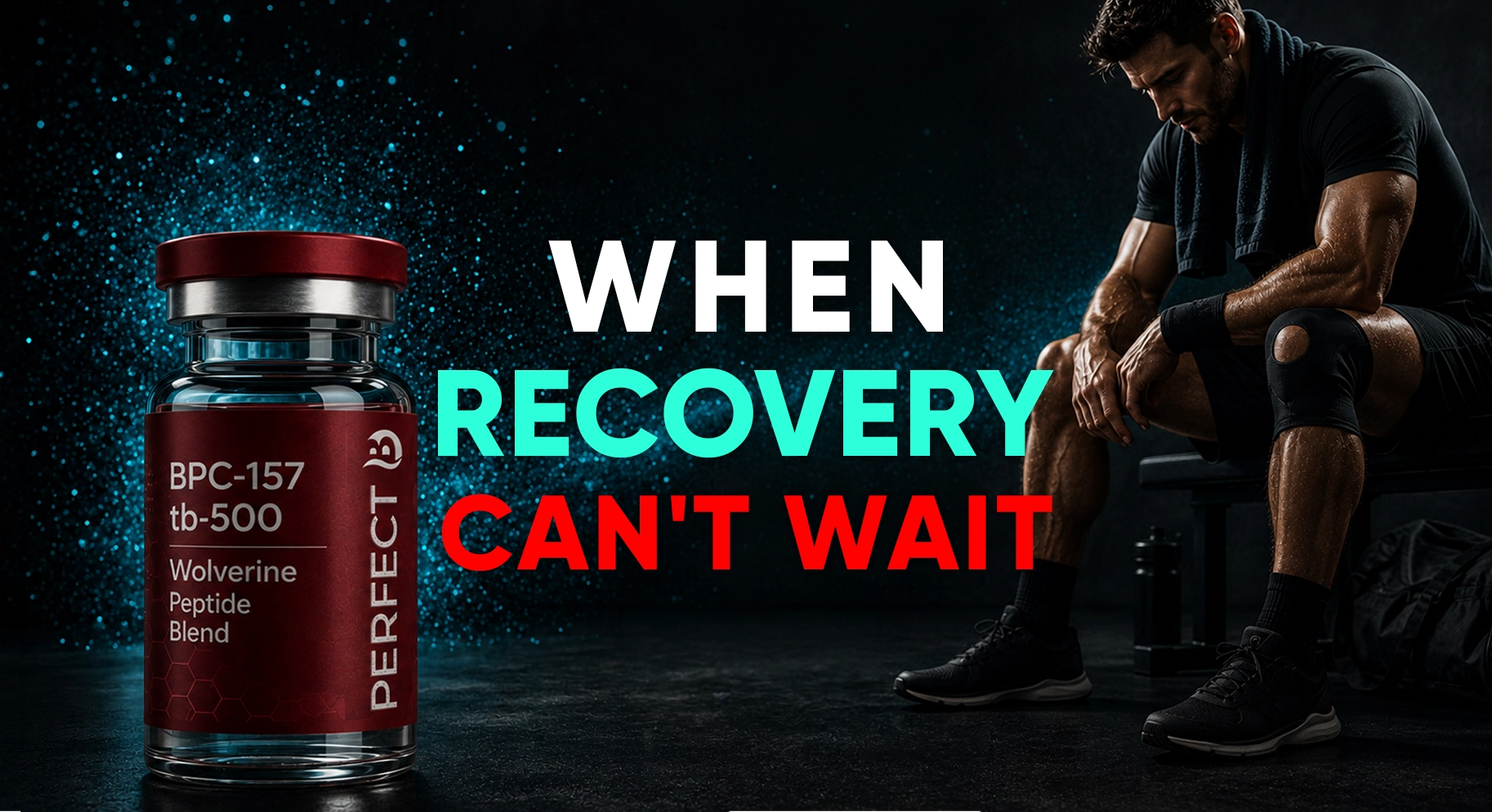
The recovery camp is anchored by BPC-157 and TB-500, often combined in what is nicknamed the Wolverine blend for its focus on tissue repair. These peptides are used to support healing of soft tissue, calm inflammation, and help the body bounce back from the microdamage of hard training or a nagging injury. The honest caveat is important: much of the evidence for these peptides is still preclinical, meaning animal and laboratory research, so they are best understood as a supervised, supportive option with realistic expectations rather than a proven cure. Early research on BPC-157 for tendon and soft-tissue healing is summarized in the peer-reviewed literature on BPC-157 and its role in tendon and soft-tissue healing, which is promising but remains largely preclinical and not yet confirmed by large human trials.
Because the recovery side has its own depth, this guide keeps it high level and points you to the detailed pages. For the full protocol context, our complete guide to the Wolverine BPC-157 and TB-500 peptide blend, covering how it supports tissue repair, recovery, and post-training healing under medical supervision is the authority, and if you are choosing between the two, our head to head comparison of BPC-157 versus TB-500, including how each works and when a provider favors one over the other, breaks down the difference.
Growth and Performance: Growth Hormone Secretagogue Peptides
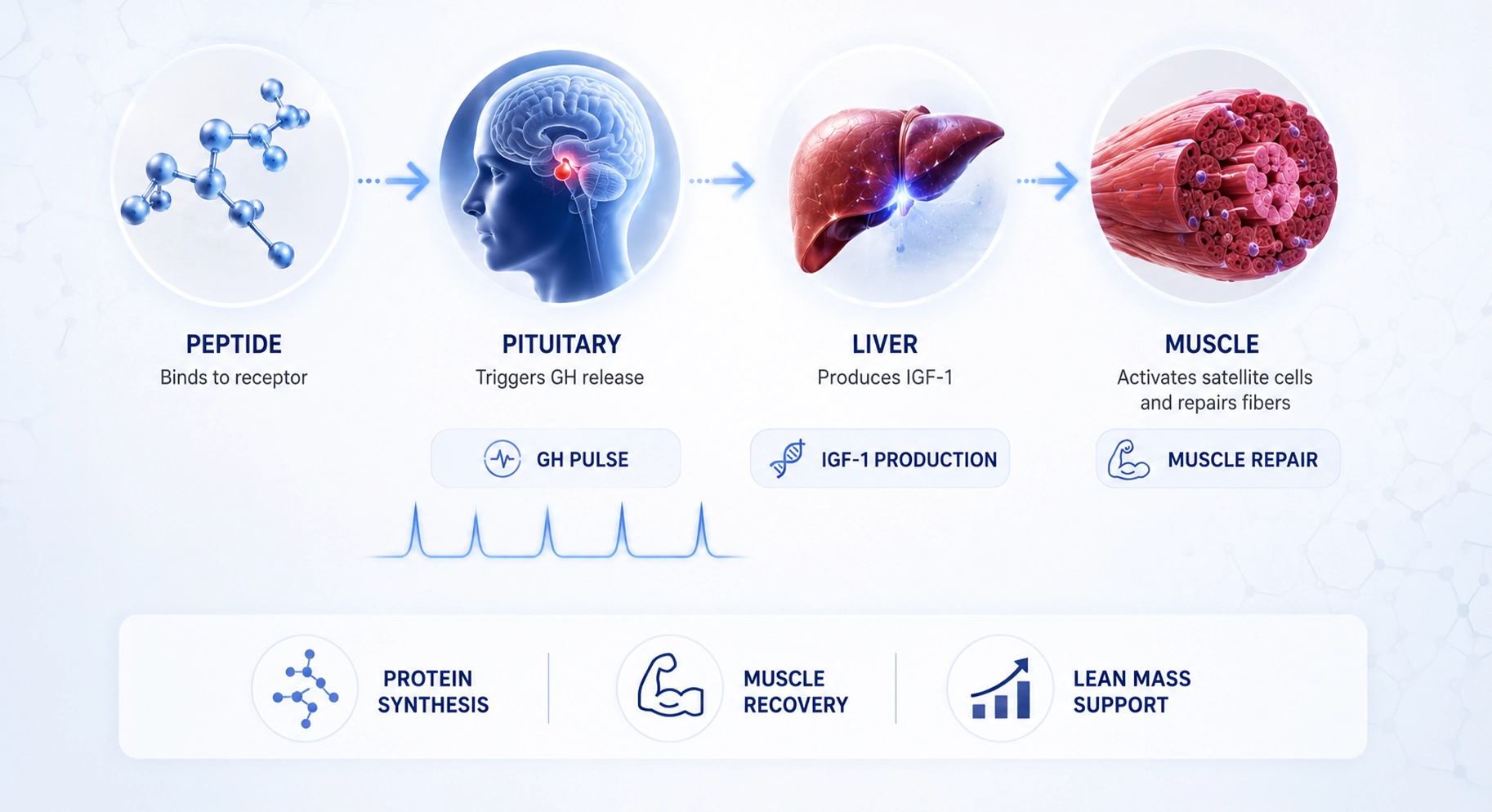
The growth camp works on a different lever entirely: your body’s own growth hormone. Peptides like CJC-1295 combined with Ipamorelin, and Tesamorelin, are growth hormone secretagogues, meaning they signal the pituitary gland to release more of your natural growth hormone in a pulsed, physiologic way rather than injecting synthetic hormone. That growth hormone prompts the liver to produce IGF-1, which supports protein synthesis, lean mass, and body recomposition over time. The pulsed release from a peptide like CJC-1295 is documented in a clinical study showing that CJC-1295 increases growth hormone secretion and IGF-1 levels through a sustained, pulsed physiologic pattern rather than a synthetic spike.
This is the class to look at when the goal is lean mass, strength support, or body composition rather than healing a specific injury. For the deeper dive on candidacy, outcomes, and how these are used, see our guide to peptides for muscle growth, covering the growth hormone secretagogues used for lean mass and how a provider builds a supervised protocol around them. Note that Perfect B does not prescribe every peptide marketed for growth; the plan is built only from options a provider considers appropriate and safe for you.
How to Decide: A Simple Framework
Most people can narrow the choice quickly by matching their situation to the goal. The table below is a general guide; your provider confirms the right path at your evaluation, since your history and health picture matter as much as your goal.
| Your situation | Goal | General peptide direction |
|---|---|---|
| Nagging injury, tendon or soft-tissue issue, slow to heal | Repair | Recovery peptides (BPC-157, TB-500) |
| Hard training blocks, frequent soreness, heavy recovery demand | Repair and bounce-back | Recovery peptides, sometimes alongside training support |
| Building or maintaining lean muscle, body recomposition | Build | Growth hormone secretagogues (CJC-1295/Ipamorelin, Tesamorelin) |
| Both healing and building over a longer timeline | Repair then build | A sequenced plan, decided and monitored by a provider |
Can You Combine Recovery and Growth Peptides?
Sometimes, and it is a provider’s decision, not a stack you assemble yourself. In practice the two goals are often addressed in sequence rather than all at once: a recovery focus while an injury or heavy training load settles, then a growth focus once the tissue is stable, with the timing and spacing mapped by a provider. Combining peptides carelessly is exactly the kind of guesswork that supervision exists to prevent.
For athletes and active adults specifically, the context of your sport, training calendar, and goals shapes how this is planned. Our guide to peptides for athletes in Miami, and how a supervised medical plan is built around training demands, recovery needs, and performance goals, shows how the pieces fit together for an athletic timeline.
Why This Belongs in a Supervised Plan, Not a Gray-Market Vial
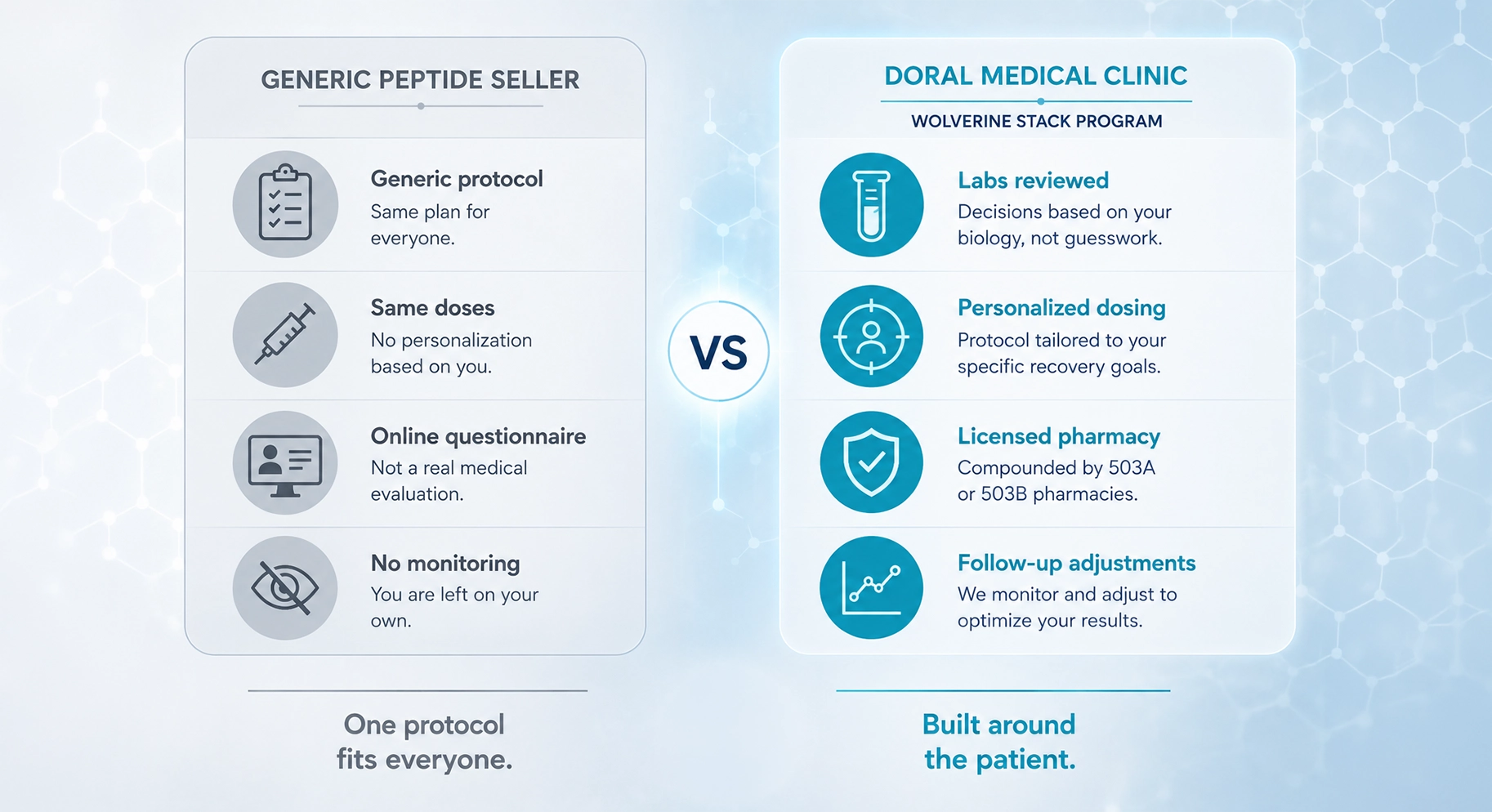
Recovery and growth peptides are sold all over the internet as research chemicals, and that is exactly the wrong way to use them. A supervised medical plan means a provider evaluates whether a peptide is appropriate for you, the medication is prepared by a licensed compounding pharmacy with documented identity and purity, and your response is monitored and adjusted. A gray-market vial offers none of those protections, and with peptides whose evidence is still developing, that oversight is the difference between a considered plan and an experiment on yourself.
If you want the full picture of why the source and supervision matter, our guide to what BPC-157 is, how it is used under medical supervision, and why pharmacy sourcing and monitoring matter for a research-stage peptide, lays out the safety case clearly.
Recovery and Growth Peptides in Miami: How Perfect B Approaches It
At Perfect B in Doral, serving the greater Miami area, peptide therapy for recovery and growth runs through the regulated route from start to finish. A licensed provider evaluates your goals, your training and health history, and whether a recovery peptide, a growth peptide, or a sequenced plan fits you, then prescribes through a licensed compounding pharmacy and monitors your response. To see how it all connects, our supervised peptide treatment plan for Miami and Doral patients maps how evaluation, prescribing, and monitoring work together as one coordinated medical program.
Any dosing and pricing are confirmed in person after your evaluation, never quoted as a fixed number online, and financing is available. For the broader program overview, our supervised peptide therapy program in Miami and Doral explains how recovery and growth protocols are evaluated, prescribed, and monitored by a licensed provider from the first consultation onward.
Frequently Asked Questions
1. What is the difference between recovery peptides and growth peptides?
Recovery peptides, such as BPC-157 and TB-500, are used to support tissue repair and post-training or post-injury healing. Growth peptides, such as CJC-1295 with Ipamorelin and Tesamorelin, are growth hormone secretagogues that support lean mass and body composition. They work through different mechanisms, so the right one depends on your goal.
2. Which peptides are used for muscle recovery?
BPC-157 and TB-500, often combined in the Wolverine blend, are the recovery peptides most associated with tissue repair and post-training recovery. Their evidence is promising but still largely preclinical, so they are used as a supervised, supportive option with realistic expectations rather than a proven cure.
3. Which peptides support muscle growth?
Growth hormone secretagogues like CJC-1295 combined with Ipamorelin, and Tesamorelin, support the body’s own growth hormone in a pulsed, physiologic way, which in turn supports protein synthesis and lean mass. They are the class to consider when the goal is building or maintaining muscle rather than healing an injury.
4. Should I choose recovery or growth peptides?
Match it to your situation. A nagging injury or slow healing points toward recovery peptides, while building or maintaining lean muscle points toward growth peptides. Some people benefit from a sequenced plan that addresses recovery first and growth later. A provider confirms the right direction at your evaluation.
5. Can you combine recovery and growth peptides?
Sometimes, but it is a provider’s decision, not a self-assembled stack. The two goals are often sequenced rather than run at once, with a recovery focus while tissue settles and a growth focus afterward. The timing and spacing are mapped and monitored by a provider to keep the plan safe and coherent.
6. Are BPC-157 and TB-500 proven for recovery?
The evidence is promising but mostly preclinical, meaning much of it comes from animal and laboratory research rather than large human trials. That is exactly why they are used under medical supervision with realistic expectations, and why a provider, not a marketing page, should decide whether they fit your case.
7. Are these peptides safe, and why does supervision matter?
Safety depends on the source and the oversight. Under a supervised plan, a provider screens your candidacy, the peptide is prepared by a licensed compounding pharmacy, and your response is monitored. Gray-market vials sold online carry none of those protections, which matters even more for peptides whose evidence is still developing.
8. Where can I get supervised recovery or growth peptides in Miami?
Perfect B offers supervised peptide therapy at its clinic in Doral, serving the greater Miami area. A licensed provider evaluates whether a recovery peptide, a growth peptide, or a sequenced plan fits your goals, prescribes through a licensed pharmacy, and monitors your response, with dosing and pricing confirmed in person and financing available.
Get the Right Peptide Plan for Your Goal at Perfect B in Doral
Whether your goal is healing an injury, recovering from hard training, or building lean muscle, the smartest first step is an evaluation that tells you which peptide direction actually fits you. At Perfect B in Doral, a licensed provider sorts recovery from growth for your specific situation, prescribes through a licensed pharmacy, and monitors the plan, so you invest in the right approach rather than guessing with a vial from the internet.
Reach out to start the conversation, ask your questions, and let a licensed provider build a supervised peptide plan around your goals.
- 📍 Visit us at Perfect B, 3905 NW 107th Ave, Suite 104, Doral FL 33178
- 📞 Call or message us at (786) 502-2260
- 💳 Financing available through Cherry, Klarna, Afterpay, and CareCredit