Perfect B, Doral Fl. | 07.15.26 | 12 min read.
This article is for general educational purposes and is not a substitute for an in-person medical evaluation. PDRN is a skin booster that supports your skin’s own collagen production; it is not a miracle cure, and results build gradually. It is prescribed and administered by a licensed medical provider, and candidacy, protocols, and any pricing are confirmed at a personal consultation.
Collagen Stimulation with PDRN: How Salmon DNA Therapy Rebuilds Skin’s Foundation
Collagen stimulation with PDRN is one of the most misunderstood ideas in aesthetics, because most people never hear how it actually works. PDRN, short for polydeoxyribonucleotide and derived from purified salmon DNA, does not simply sit in the skin like a filler. It sends a biological signal that prompts your own fibroblasts, the cells that manufacture collagen, to get back to work. That distinction is the whole point: PDRN is a regenerative skin booster, not a volumizer, and the collagen it helps produce is your own.
This guide explains the science of PDRN collagen stimulation in plain language: what PDRN is, why it comes from salmon DNA, the step by step mechanism that reaches your fibroblasts, what the clinical evidence actually shows, and how the injectable version differs from the topical salmon DNA serums flooding your feed. Everything here is framed the way it is handled at Perfect B in Doral, as a supervised medical treatment rather than a shortcut.
Key Takeaways
- PDRN signals, it does not fill: it prompts your own fibroblasts to produce collagen, so the result is regenerative rather than added volume.
- The mechanism is documented: PDRN activates adenosine A2A receptors and feeds the nucleotide salvage pathway, which drives fibroblast activity and collagen synthesis.
- Salmon DNA is used for a reason: it is highly compatible with human DNA, which makes it biocompatible and low in immunogenicity.
- Injectable is not the same as a serum: topical salmon DNA products cannot reliably reach the fibroblasts in the dermis the way a clinical injection can.
- Results are gradual and supervised: collagen remodeling unfolds over weeks to months, and candidacy is decided by a provider, not a label.
What Is PDRN, and Why Is It Made from Salmon DNA?
What PDRN actually is
PDRN is a mixture of purified DNA fragments, or polydeoxyribonucleotides, used as an injectable skin booster. Unlike a hyaluronic acid filler, which physically occupies space, PDRN works at the level of cell signaling. In the clinical literature it is classified among the regenerative or biostimulatory skin boosters, the category of injectables designed to improve skin quality rather than add contour, as set out in a 2024 review in Skin Research and Technology that defines and classifies skin boosters, placing PDRN and polynucleotides among the biostimulatory rather than the volumizing agents.
Why salmon DNA, of all things
The DNA in PDRN is extracted and purified from the reproductive cells of salmon or trout. It sounds strange until you learn why: fish DNA shares a very high degree of similarity with human DNA, which makes it highly biocompatible and low in immunogenicity, meaning the body accepts it without treating it as a foreign threat. The purification process removes proteins and other material that could provoke a reaction, leaving the nucleotide fragments that do the signaling work. The salmon origin is not a marketing gimmick; it is a practical source of DNA that the human body tolerates well.
How PDRN Stimulates Collagen: The Science Step by Step
Here is the part most pages skip. PDRN does not build collagen directly. It sets off a chain of signals that gets your own cells to do it, through two complementary routes.
Step 1: The adenosine A2A receptor signal
As PDRN breaks down in the skin, it releases fragments that activate a cell surface docking point called the adenosine A2A receptor. Switching on this receptor triggers a cascade of anti-inflammatory and pro-regenerative signals that improve local blood supply and wake up the skin’s own repair activity. This A2A driven pathway is the mechanism described in a 2021 review in Pharmaceuticals describing how PDRN engages the adenosine A2A receptor to accelerate tissue repair, angiogenesis, and the regenerative signaling that supports healing.
Step 2: The nucleotide salvage pathway
At the same time, the individual building blocks released as PDRN breaks apart are recycled by the body through what is called the salvage pathway. In plain terms, your cells reuse those nucleotides as ready made raw material to build and repair their own DNA, instead of manufacturing everything from scratch. That saves cellular energy and supports the rapid cell turnover that skin renewal depends on. Together, the A2A signal and the salvage pathway create an environment where regeneration is both switched on and supplied.
Step 3: Fibroblasts, ERK, and new collagen and elastin
The cells that matter most for firmness are fibroblasts, and they are the target of all this signaling. When fibroblasts are activated, they proliferate and ramp up production of collagen, mainly types I and III, along with elastin, the proteins that give skin structure and bounce. This fibroblast response has been observed directly in laboratory research, including a 2023 study in Molecular Medicine Reports showing that PDRN increases ERK signaling and collagen accumulation in dermal fibroblasts, the cells responsible for producing the skin’s structural framework. The takeaway: PDRN does not deposit collagen, it convinces your skin to make more of its own.
Injectable PDRN vs Topical Salmon DNA Serums: Do the Creams Build Collagen?
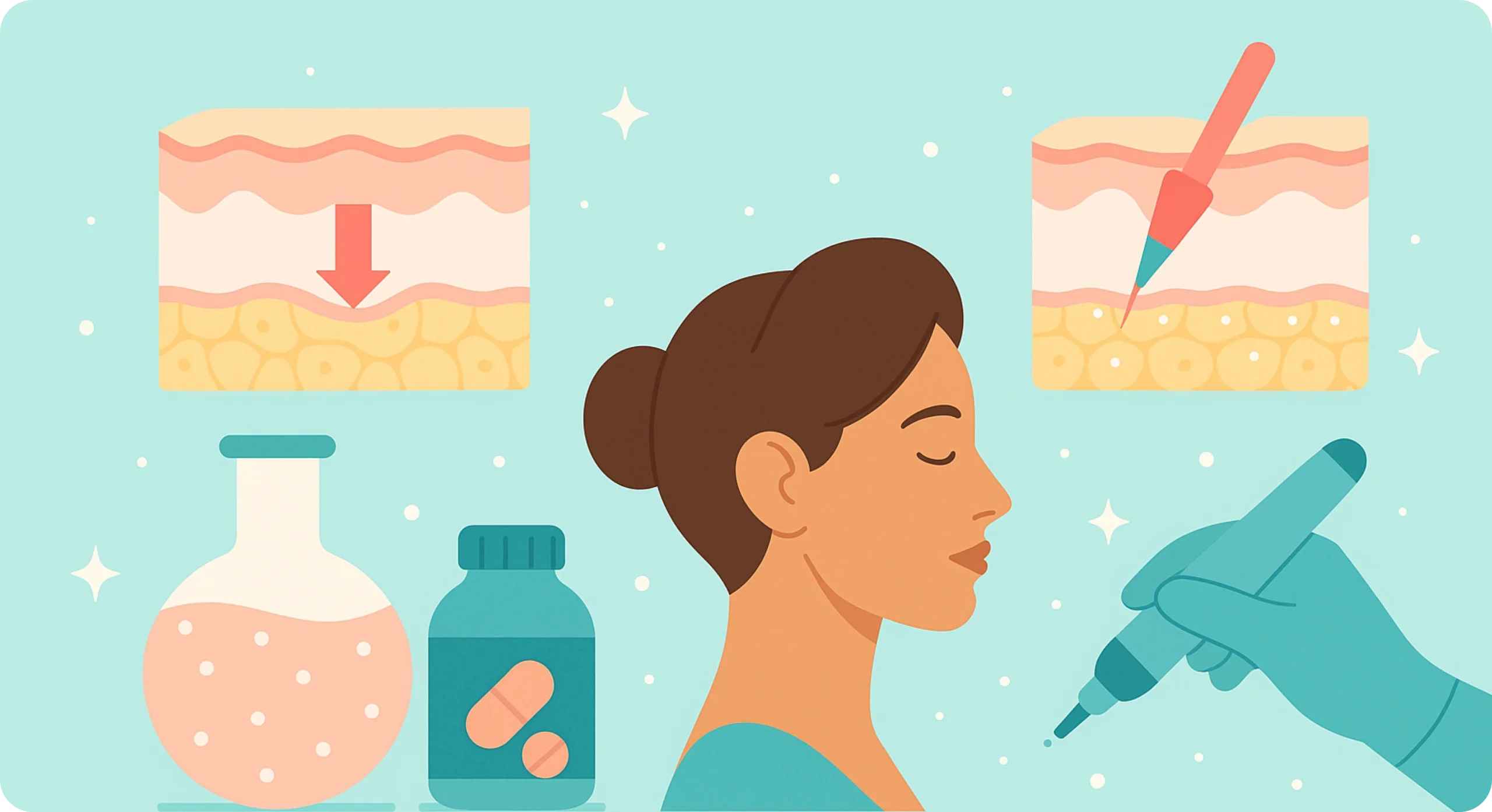
Salmon DNA serums and creams are everywhere right now, and they are not useless: many are pleasant, hydrating, and supportive of the skin surface. But there is a hard biological limit to keep in mind. Collagen is built by fibroblasts that sit in the dermis, the deeper layer beneath the surface. For PDRN to stimulate those fibroblasts, it has to reach them, and a topical product largely stays in the uppermost layers of the skin rather than penetrating to where the collagen work happens.
That is the core difference between a serum and a clinical treatment. Injectable PDRN, administered by a provider, is delivered directly into the dermis where the fibroblasts are, which is why the collagen stimulation described above is associated with the injectable form. A topical is best thought of as skincare support, not a replacement for the in clinic treatment. If you want the full service picture, our overview of the salmon DNA PDRN facial in Miami and Doral, including how the treatment is performed, what it targets, and who tends to benefit most from a supervised course explains how the injectable is used in practice.

What the Clinical Evidence Shows About PDRN and Collagen
Honest framing matters with any treatment, so here is where the evidence stands. Beyond the laboratory mechanism, human studies of polynucleotides and PDRN report improvements in skin elasticity, hydration, and texture. A useful summary is a 2025 systematic review in the Journal of Cosmetic Dermatology examining the effectiveness of polynucleotides in aesthetic medicine, which found consistent skin quality improvements across the studies it reviewed. Controlled trials add detail: a randomized study comparing a polynucleotide preparation against a hyaluronic acid product for periocular skin reported greater gains in elasticity and hydration over time, and histology from earlier trials showed increased collagen composition and reduced roughness.
The reasonable conclusion is measured, not hyped. The evidence supports PDRN as a treatment that improves skin quality and supports collagen, with a favorable safety profile, while study sizes and designs vary and no treatment guarantees a specific result. That is exactly why it belongs in a supervised plan where a provider sets realistic expectations for your skin.
Building Collagen vs Adding Volume: PDRN vs Fillers and Biostimulators
It helps to place PDRN next to the other injectables, because they do genuinely different jobs. A hyaluronic acid filler adds immediate volume by occupying space, and the effect is there the moment it is placed. PDRN adds no volume at all; it works quietly over weeks by improving the quality and collagen content of the skin itself. If you have wondered whether PDRN is a filler, our explainer on how PDRN differs from a dermal filler and what it actually does for your skin quality rather than your facial contour draws the line clearly.
Collagen biostimulators such as Sculptra share PDRN’s philosophy of prompting your own collagen, but they work through a different material and on a deeper structural level, which is why the two are often sequenced together rather than seen as rivals. Our guide to combining Sculptra and PDRN in a full face rejuvenation plan, where a biostimulator rebuilds deep structure and PDRN refines surface skin quality shows how a provider layers them for a complete result.
How Long Until You See Collagen Results?
Because PDRN works by stimulating your own biology, the timeline follows how skin actually renews, not a same day promise. Many patients notice improved hydration and a subtle glow within the first two to four weeks, as the skin becomes better supported. The collagen driven changes in firmness, texture, and fine lines build more slowly, generally across four to twelve weeks and beyond, as fibroblasts lay down new collagen and it matures. This is why PDRN is planned as a short series rather than a single visit.
Patience is part of the design, and it is also the honest version. Seeing how gradual, real world change looks helps set expectations, and our gallery of real PDRN before and after clinical results, showing how skin texture and tone tend to change across a full course of treatment over several weeks illustrates the steady arc that collagen stimulation produces.
Is PDRN Collagen Therapy Right for You? The Limits of the Science
PDRN tends to suit people who want to improve skin quality, firmness, and early laxity without adding volume, and it is often chosen for its calm, low irritation profile. It is not a fit for everyone, though, and the honest limits matter. Because it is derived from salmon DNA, a known fish or seafood allergy must be raised at consultation and assessed before treatment. The published evidence, while encouraging, is still developing, so realistic expectations beat guarantees. For the full safety picture, read our detailed explainer on whether PDRN is safe, the side effects to expect, and the specific situations where a provider would advise caution before any treatment.
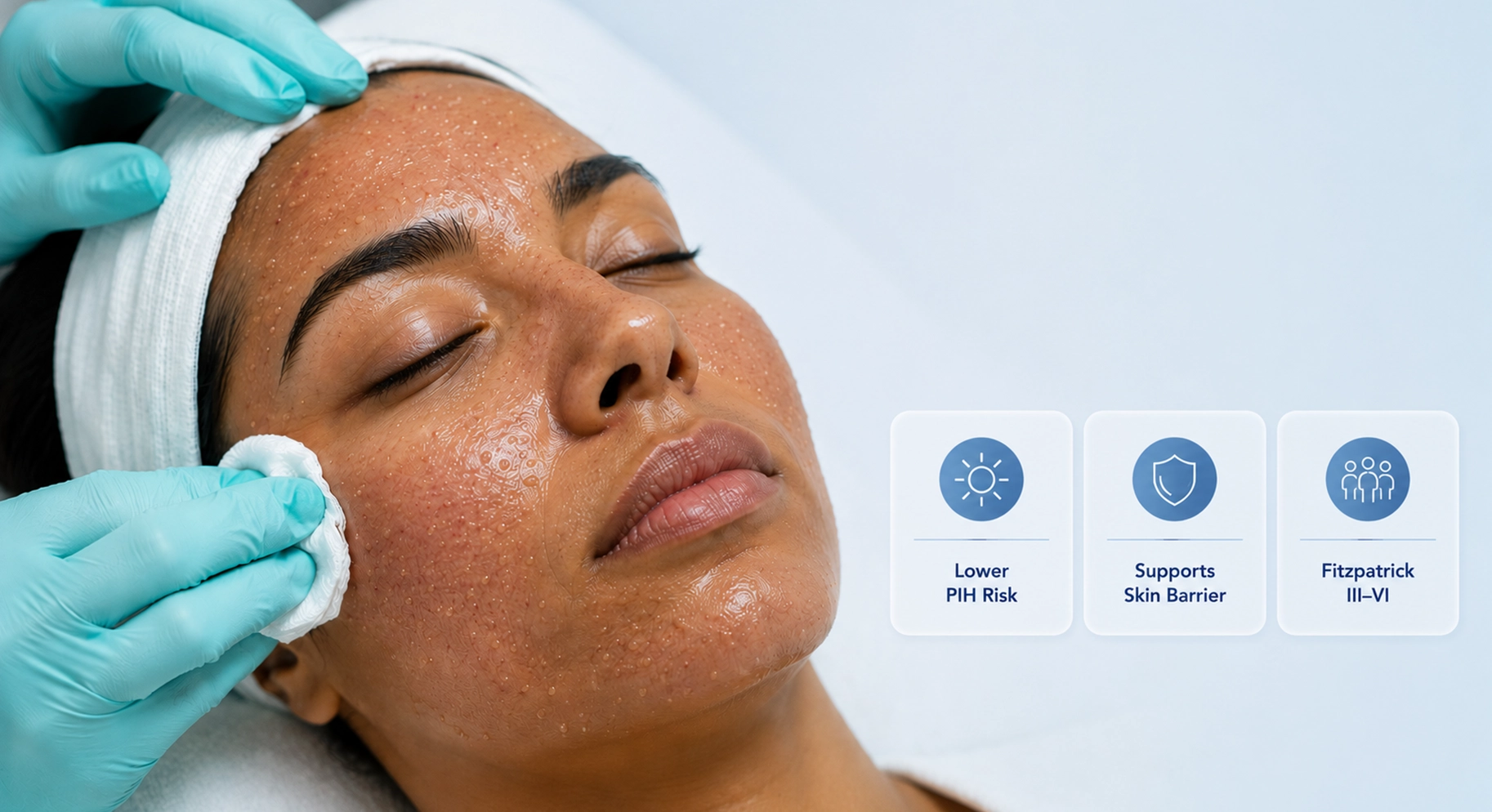
In a diverse city like Miami, skin tone also deserves specific attention. PDRN’s gentle, regenerative profile is one reason it is often selected for deeper skin tones, where the priority is to support collagen without triggering irritation or uneven pigment, and where provider experience matters more than any product name. Candidacy, the number of sessions, and any pricing are always decided in person, backed by financing options, rather than promised online.
Frequently Asked Questions
1. How does PDRN stimulate collagen?
PDRN does not add collagen directly. As it breaks down it activates the adenosine A2A receptor and feeds the nucleotide salvage pathway, which together stimulate fibroblasts, the cells in the dermis that produce collagen. Activated fibroblasts increase production of collagen and elastin, so the new collagen is your own.
2. Is salmon DNA the same as PDRN and polynucleotides?
They are closely related. Salmon DNA is the source material, and PDRN, short for polydeoxyribonucleotide, is the purified DNA fragment product made from it. Polynucleotides are a related, often longer chain version in the same family. All work as regenerative skin boosters rather than volumizing fillers.
3. Do topical salmon DNA serums build collagen like injectable PDRN?
Not in the same way. Collagen is built by fibroblasts in the dermis, and a topical serum largely stays in the surface layers rather than reaching that depth. Injectable PDRN is delivered by a provider directly into the dermis, which is why the collagen stimulation is associated with the clinical treatment. Serums are supportive skincare, not a replacement.
4. How long until I see collagen results from PDRN?
Hydration and a subtle glow often appear within two to four weeks. The collagen driven improvements in firmness and texture build more gradually, generally across four to twelve weeks and beyond, as fibroblasts produce and mature new collagen. PDRN is planned as a short series for this reason, and results vary from person to person.
5. What is the difference between PDRN and a dermal filler for collagen?
A dermal filler adds immediate volume by occupying space, with an effect you see right away. PDRN adds no volume; it works over weeks by improving skin quality and supporting your own collagen production. They solve different problems, and a provider decides whether you need one, the other, or a sequenced combination.
6. Why is PDRN made from salmon DNA specifically?
Salmon and trout DNA share a high degree of similarity with human DNA, which makes it highly biocompatible and low in immunogenicity, so the body accepts it well. The purification process removes proteins that could provoke a reaction, leaving the nucleotide fragments that do the signaling. The fish origin is a practical, well tolerated source, not a gimmick.
7. Is PDRN safe if I have a fish allergy?
Because PDRN is derived from purified salmon DNA, a known fish or seafood allergy must be disclosed at your consultation. The material is highly purified, but the provider assesses your allergy history and will choose a different approach if a salmon derived product is not a safe fit for you. This screening is part of why the treatment is supervised.
8. Is PDRN collagen therapy available in Miami or Doral?
Yes. Perfect B offers supervised PDRN treatment at its clinic in Doral, serving the greater Miami area, with protocols adjusted for your skin and skin tone. A licensed provider evaluates your candidacy, maps the number of sessions, and confirms any pricing in person, with financing available so cost is not a barrier to starting.
Support Your Own Collagen with Supervised PDRN at Perfect B in Doral
If you want firmer, better quality skin without adding volume, PDRN collagen stimulation is worth a real conversation. At Perfect B in Doral, a licensed provider evaluates your skin and skin tone, explains what PDRN can and cannot do honestly, and maps a supervised plan around your goals. To see how it fits alongside other regenerative treatments, our supervised skin rejuvenation treatment plan for Miami and Doral patients maps how skin boosters and biostimulators combine across a personalized timeline, and for the broader science our complete overview of PDRN therapy as a breakthrough in regenerative medicine covers how the treatment developed and where it fits today.
One more honest note: PDRN supports your skin from the inside, while an oral collagen supplement is a different, complementary tool. If you are weighing both, our buyer’s guide to choosing a collagen supplement, comparing the forms and what to look for, works well alongside an in clinic collagen stimulation plan rather than in place of it.
- 📍 Visit us at Perfect B, 3905 NW 107th Ave, Suite 104, Doral FL 33178
- 📞 Call or message us at (786) 502-2260
- 💳 Financing available through Cherry, Klarna, Afterpay, and CareCredit