
Perfect B, Doral Fl. | 05.25.26 | 10 min read.
This article is for educational purposes only and does not substitute for personalized clinical advice. PDRN treatment is administered following an individual clinical evaluation at Perfect B. Results vary by patient. For the bigger picture, read how PDRN regenerative therapy is used at Perfect B in Doral to support skin repair as part of a complete plan.
Salmon DNA Facial in Miami: What PDRN Actually Is and Why It Works
The phrase “salmon DNA facial” spread fast because it is genuinely unusual. The clinical name is PDRN (polydeoxyribonucleotide), and it refers to purified DNA fragments extracted from salmon cells that, when delivered into the skin via microinjection, activate a specific biological repair cascade. The treatment is not a topical product, a filler, or a laser. It is a regenerative skin treatment in a category of its own.
At Perfect B in Doral, PDRN is used as a core regenerative skin treatment. In South Florida, where sun exposure, humidity, and the range of Fitzpatrick skin types we see daily put real demands on skin health, PDRN fits a clinical gap that surface-level treatments do not. It works from within the dermis over weeks, building quality rather than creating temporary surface effects.
Key Takeaways
- Salmon DNA facial and PDRN are the same treatment. PDRN is the clinical name for purified polydeoxyribonucleotide derived from salmon cells. The viral name and the clinical name describe an identical procedure.
- PDRN does not add volume. It activates cellular repair pathways that improve skin texture, tone, firmness, and radiance progressively over 6 to 12 weeks. Results are not immediate.
- Perfect B uses PDRN as a primary regenerative skin treatment, chosen for its anti-inflammatory and anti-melanogenic properties and its suitability for the full range of Fitzpatrick skin types present in the Miami patient population.
- PDRN stacks well with exosomes for patients who need deeper regenerative support, producing outcomes neither treatment achieves on its own.
- Every PDRN session at Perfect B begins with a clinical evaluation. Skin type, history, current conditions, and goals are assessed before any treatment is performed. There are no walk-in injection packages.
How PDRN Works: The Mechanism Behind the Salmon DNA Facial
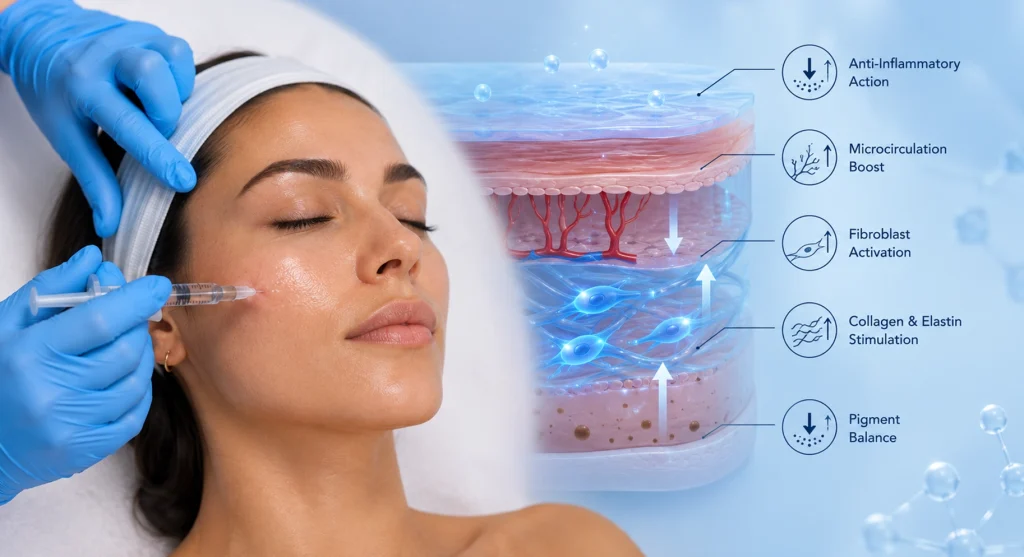
PDRN binds to the A2A adenosine receptor in skin tissue, triggering a repair cascade that works in several directions simultaneously. It down-regulates inflammatory signals, upregulates VEGF to improve microcirculation and nutrient delivery to the dermis, and stimulates fibroblast activity that increases collagen and elastin synthesis. Extracellular matrix remodeling follows over weeks, producing measurable improvements in skin density, texture, and firmness.
There is a second mechanism that matters for the Miami patient population specifically. PDRN inhibits tyrosinase activity and suppresses melanogenic gene expression, moderating excess pigment production at the treatment site. For patients with post-inflammatory hyperpigmentation from sun damage, prior acne, or previous skin procedures, this is clinically relevant. It makes PDRN a well-suited option for Fitzpatrick III through VI skin where aggressive resurfacing treatments carry a higher risk of worsening pigmentation.
A peer-reviewed study in the International Journal of Molecular Sciences on PDRN’s role in A2A receptor activation, tissue repair, and anti-inflammatory action supports what clinical observation at Perfect B reflects: the treatment does not create surface spectacle. It creates conditions under which the skin repairs itself more effectively over 6 to 12 weeks.
→ Book a PDRN consultation at Perfect B in Doral, FL.
What a PDRN Session Looks Like at Perfect B in Doral
Patients in Doral and Miami considering PDRN as part of a broader regenerative skin plan also review the PDRN for hair loss overview at Perfect B and the PDRN before and after results documented at Perfect B\’s Doral clinic.
A 2018 randomized controlled trial in the Journal of Cosmetic Dermatology confirming PDRN injections improve skin hydration, elasticity, and overall quality at 12 weeks vs placebo supports the timeline and result expectations outlined throughout this post.
The gap between what patients expect from a “salmon DNA facial” after seeing social media content and what actually happens in a clinical setting is wide. Social media before-and-afters show dramatic results. The experience in a medical aesthetic clinic is more measured, and the real results take longer to appear than most online content suggests.
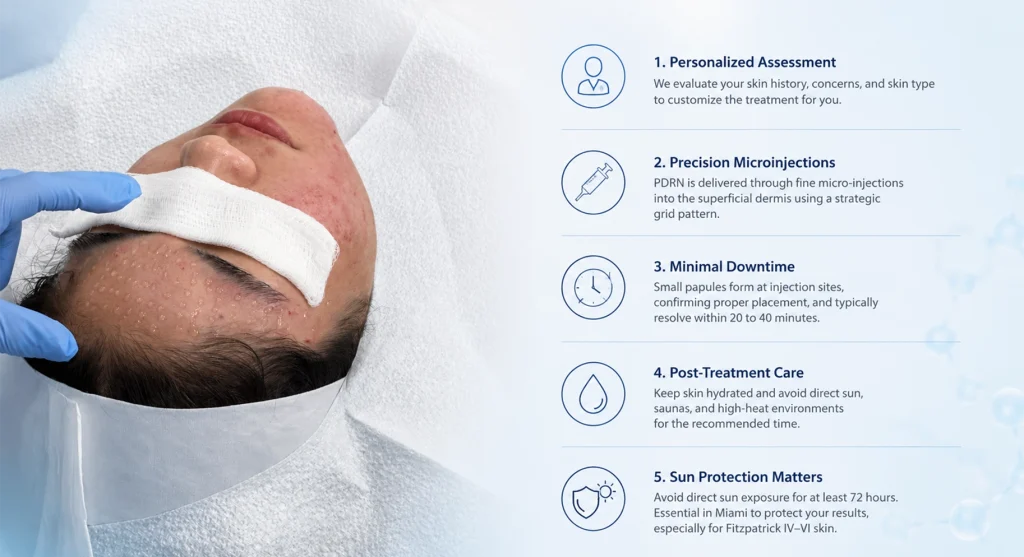
A session at Perfect B begins with a clinical evaluation of skin history, current concerns, and Fitzpatrick skin type. This determines the injection depth and pattern appropriate for the individual. The treatment involves a series of fine micro-injections into the superficial dermis, placed in a grid pattern across the treatment area. The small papules that form at injection sites confirm correct intradermal placement and resolve within 20 to 40 minutes. Most patients describe the session as tolerable, comparable to other skin injection treatments.
Post-treatment protocol in Miami matters. Patients are asked to avoid direct sun exposure for at least 72 hours, stay out of saunas and high-heat environments for 48 hours, and keep the skin hydrated. In South Florida’s UV environment, sun avoidance in the first week is not optional for Fitzpatrick IV through VI patients, where post-treatment photosensitivity can counteract the melanin-moderating effect of the treatment.
The PDRN Results Timeline: What Changes and When
The most consistent feedback from patients at Perfect B after a first PDRN session is that week-one results did not match the before-and-after content they had seen. This is expected. The biological timeline of PDRN does not match the content cycle of social media.
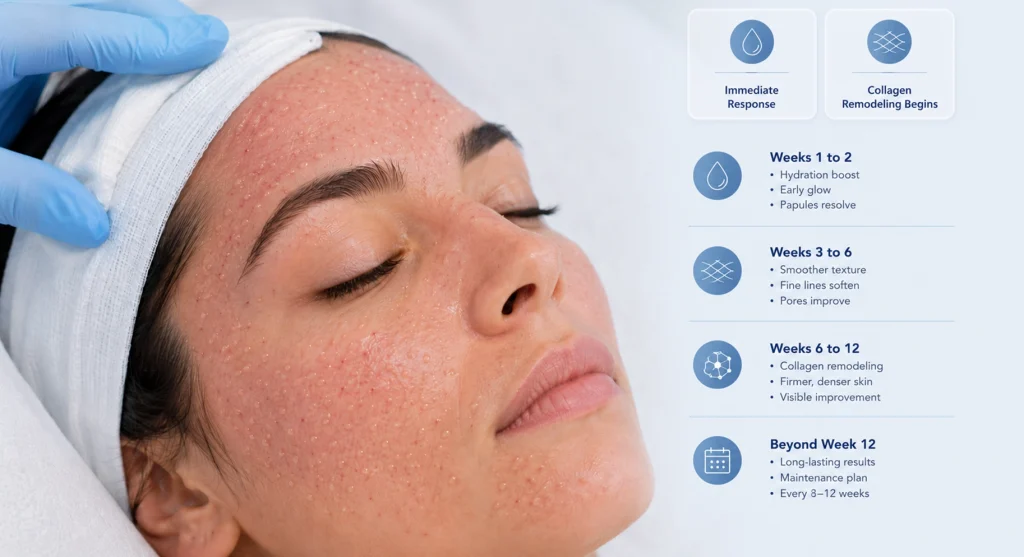
- Weeks 1 to 2: improved hydration and a subtle surface brightness from early microcirculation improvement. Injection site papules resolve. This early glow is not the full result, but it is a visible early signal the treatment is working.
- Weeks 3 to 6: texture begins to improve. Rough patches smooth as the extracellular matrix remodels. Fine lines soften. Pore appearance improves. Changes are gradual and often best noticed in side-by-side photos rather than day-to-day observation.
- Weeks 6 to 12: the primary result window. Collagen synthesis has completed its first full remodeling cycle. Skin density, firmness, and evenness are measurably improved at this point. The clinical follow-up at Perfect B during this period determines whether a second session, an adjusted protocol, or a stacked exosome treatment is appropriate for that patient’s response.
- Beyond week 12: sustained results on a maintenance schedule, typically every 8 to 12 weeks, depending on the patient’s skin condition and goals.
→ Book a PDRN consultation at Perfect B in Doral, FL.
PDRN vs PRP vs Exosomes: How Perfect B Chooses
Three regenerative skin treatments come up frequently in Miami aesthetic consultations: PDRN, PRP, and exosomes. At Perfect B, all three are used, but for different clinical indications.
- PDRN is the first choice for skin texture, tone, and collagen quality improvement in most patients. It delivers a consistent and predictable dose without a blood draw, and its anti-inflammatory and anti-melanogenic mechanisms make it particularly well-suited for South Florida patients across Fitzpatrick types III through VI. A detailed clinical comparison is covered in the PDRN vs PRP comparison published by Perfect B.
- PRP relies on each patient’s own platelet concentration, which varies and makes outcomes less predictable than PDRN for general skin quality improvement. Perfect B uses PRP for specific indications where autologous growth factors are clinically preferred, such as certain scalp treatments.
- Exosomes are extracellular vesicles that carry cellular signaling molecules. At Perfect B, exosomes are combined with PDRN for patients who need deeper regenerative support: those with significant photoaging, post-procedure skin, or active inflammatory conditions. The combination addresses both the repair activation that PDRN initiates and the communication layer exosomes provide.
PDRN for Fitzpatrick III through VI Skin in South Florida
The majority of before-and-after content circulating under “salmon DNA facial” features lighter Fitzpatrick skin types. This leaves a meaningful gap in information for the Fitzpatrick III through VI patients who represent a large part of the Miami and Doral aesthetic patient population that Perfect B serves.
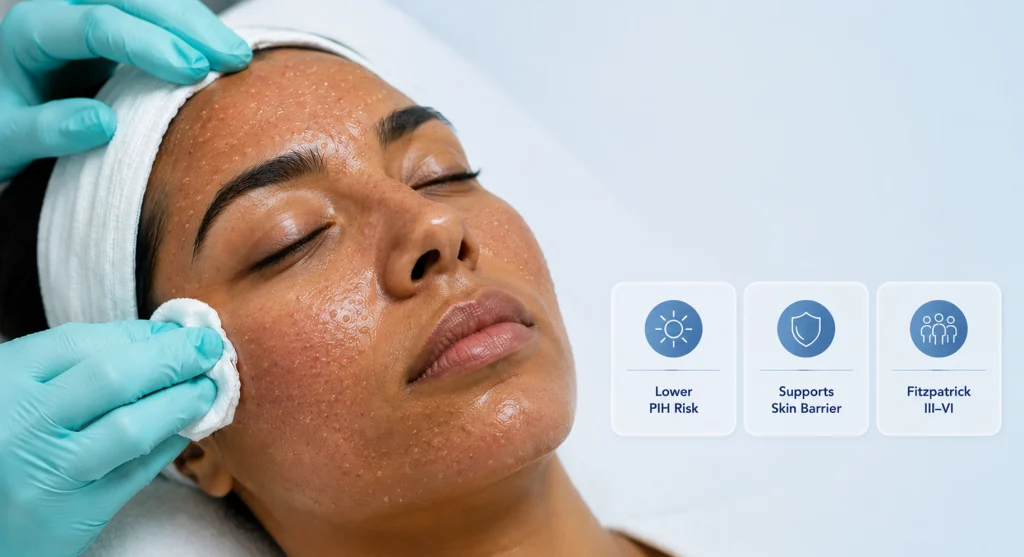
The clinical case for PDRN in melanin-rich skin is strong. The anti-inflammatory pathway directly reduces the inflammatory signals that drive post-inflammatory hyperpigmentation, the skin concern most likely to complicate aggressive skin treatments in Fitzpatrick IV through VI patients. The anti-melanogenic effect addresses existing PIH while improving overall skin quality. And the regenerative effect strengthens the skin barrier, which in South Florida patients is routinely compromised by cumulative UV exposure and environmental stress.
At Perfect B, protocol parameters shift for Fitzpatrick IV through VI patients. Injection depth, session spacing, and post-treatment sun avoidance requirements are adjusted based on individual skin response. The treatment is the same. The clinical management around it is different, and that difference matters for outcomes in this population.
Frequently Asked Questions
1. Is the salmon DNA facial the same as a PDRN injection?
Yes. PDRN stands for polydeoxyribonucleotide, which is the clinical name for the purified DNA fragments extracted from salmon cells used in this treatment. Salmon DNA facial, salmon sperm facial, and PDRN injection all refer to the same procedure. At Perfect B in Doral, we use the clinical term PDRN because it is accurate and avoids the confusion that viral naming creates about what the treatment actually does.
2. How many sessions are needed to see results?
Most patients at Perfect B see meaningful improvement after a series of 3 to 4 sessions spaced 2 to 4 weeks apart. Maintenance sessions every 8 to 12 weeks sustain and build on those results. The starting condition of the skin, the Fitzpatrick skin type, and individual treatment response all influence how the protocol is structured. This is determined at the clinical evaluation, not by a standard package.
3. Is PDRN appropriate for darker skin tones?
PDRN is well-suited for Fitzpatrick III through VI skin. The anti-inflammatory mechanism reduces the inflammatory signals that lead to post-inflammatory hyperpigmentation, and the anti-melanogenic effect directly addresses existing pigmentation concerns. At Perfect B, we adjust protocol parameters for melanin-rich skin, and in many cases PDRN is the preferred regenerative option precisely because it does not carry the PIH risk that more aggressive treatments do in this population.
4. Can PDRN be combined with other treatments at Perfect B?
Yes. PDRN is frequently stacked with exosomes at Perfect B for patients who need deeper regenerative support. It is also used in combination with RF microneedling and other skin treatments where regenerative tissue repair compounds the primary treatment effect. The combination is determined during the clinical evaluation based on each patient’s skin condition and goals. A full comparison of PDRN and PRP at Perfect B is covered in the PDRN vs PRP clinical overview on this site.
5. How is PDRN different from dermal fillers?
Fillers add volume by physically occupying space under the skin surface. PDRN does not add volume. It stimulates the skin’s own repair mechanisms to improve quality from within over 6 to 12 weeks. The improvements are in texture, tone, firmness, and radiance, not in facial structure or contour. The two treatments serve entirely different goals. More on this distinction is available in the PDRN vs dermal fillers overview published by Perfect B.
6. What makes PDRN treatment at a clinical setting different from a med spa?
At Perfect B, PDRN is administered following a clinical skin evaluation that covers skin history, current conditions, Fitzpatrick type, and treatment goals. The protocol is designed for each patient individually. Follow-up assessment at weeks 6 to 12 determines whether the protocol should be adjusted based on how the skin has responded. This level of individualized clinical management, combined with trained staff and verified treatment products, is what a clinical aesthetic setting provides that a standard menu-based service does not. Results documented at Perfect B reflect this approach.
Closing: What the Salmon DNA Facial Is, and What It Is Not
The viral name gave a well-researched treatment broader awareness than it had when it was confined to dermatology and aesthetic medicine circles. That is useful. But the salmon DNA facial that produces documented results over 6 to 12 weeks is not the social media version of a quick glow treatment. It is a regenerative skin procedure that works at the cellular level, administered by trained clinical staff, individualized to the patient in front of them, and followed through with evaluation that adjusts the approach based on real outcomes.
For South Florida patients navigating skin concerns shaped by sun exposure, humidity, and the full range of Fitzpatrick skin types represented across Miami and Doral, PDRN offers a meaningful and well-supported option in the regenerative aesthetics category. The results are real. The timeline is slower than social media suggests. The clinical approach is what makes the difference.
- 📍 Visit us at Perfect B, Doral FL, serving Miami and South Florida patients seeking PDRN skin rejuvenation and salmon DNA facials.
- 📞 Call or message us at (786) 502-2260 to schedule your PDRN consultation with a licensed medical provider.