
Perfect B, Doral Fl. | 05.11.26 | 8 min read.
This post is for educational purposes only and does not substitute for personalized medical advice. Individual results and recovery vary. Consult a licensed provider before beginning any laser treatment.
Does Laser Tattoo Removal Hurt? The Honest Clinical Answer
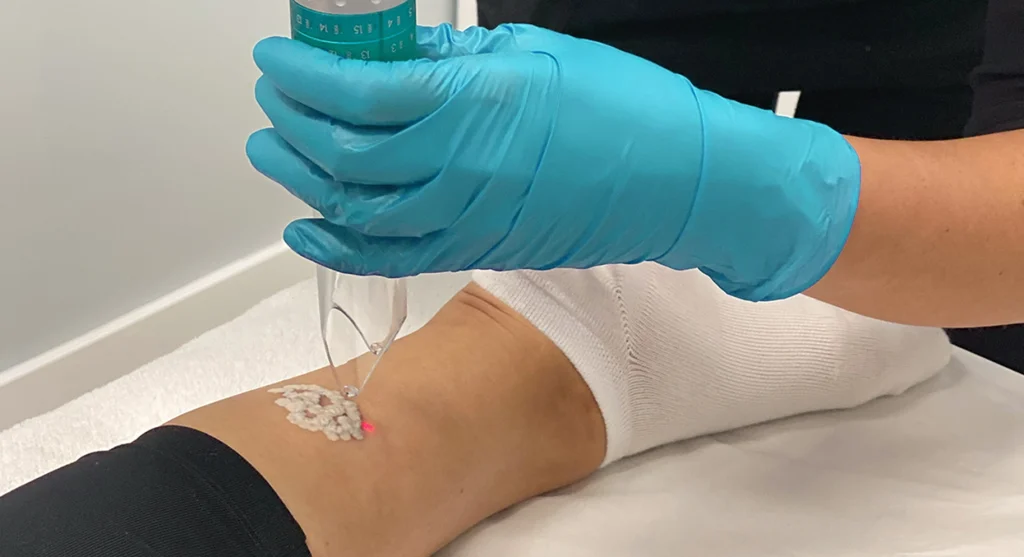
Yes, laser tattoo removal hurts. Most patients at Perfect B in Doral describe it as a sharp snapping sensation, similar to a rubber band flicked hard against the skin, repeated rapidly for the duration of each pass. What makes it manageable is the speed: most tattoos take under two minutes to treat per session. The discomfort is real, it is brief, and it is significantly different from what patients expect after reading vague descriptions like “mild discomfort” on clinic websites.
The more clinically useful question is not whether it hurts but how much, where, and what can be done to reduce it. Those answers depend on body location, tattoo size, ink density, skin tone, and the technology being used. At Perfect B, we use picosecond laser technology, which delivers energy in shorter pulses than older Q-switch lasers, producing faster ink fragmentation with less cumulative thermal damage to surrounding tissue.
Key Takeaways
- Tattoo removal does hurt, but sessions are short (typically under 2 minutes for most tattoos) and the pain is manageable, especially with topical numbing and air cooling applied before and during treatment.
- The first 72 hours after a session are the most critical for aftercare: ice, gentle cleaning, and a thin layer of Aquaphor applied consistently prevent complications and support faster healing.
- Blisters are a normal and expected response to laser treatment, particularly on heavily saturated ink. They should never be popped or picked, as doing so significantly increases the risk of scarring.
- Miami’s climate requires specific aftercare modifications: UV intensity, heat, and humidity in South Florida create a higher risk of post-inflammatory hyperpigmentation and infection if standard aftercare instructions designed for cooler climates are followed without adjustment.
- Ink clearance continues for weeks after each session through lymphatic processing of fragmented pigment particles. How you care for your skin between sessions directly affects how much fading you see before the next one.
Pain by Body Location: Where Tattoo Removal Hurts Most and Why
Pain during laser tattoo removal is not uniform across the body. The two main factors that determine intensity are the density of nerve endings in the treatment area and the proximity to bone. Areas with thin skin directly over bone, few fat deposits, or high concentrations of superficial nerves hurt considerably more than fleshy, well-padded areas.
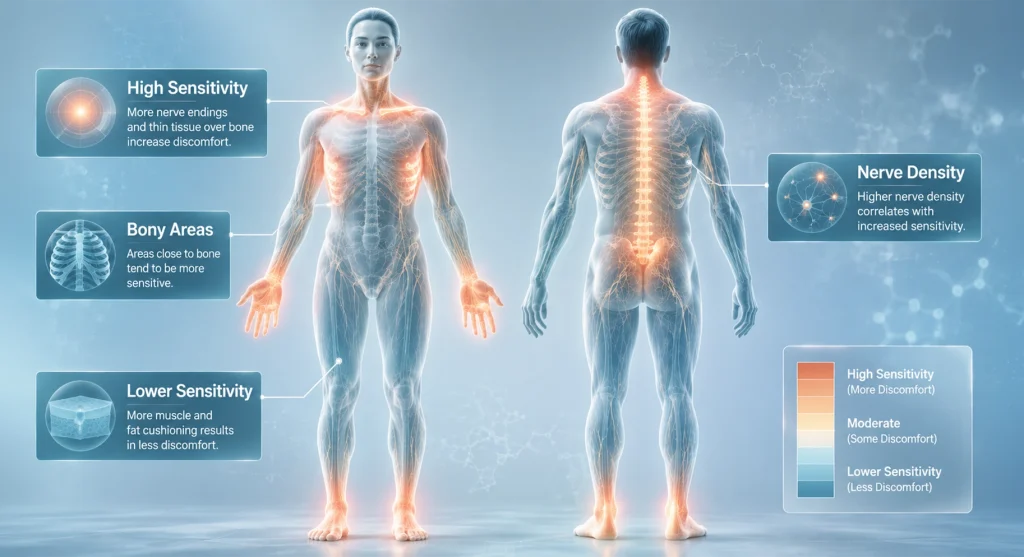
The spine, hands, feet, and ankles consistently rank as the most painful locations. Ribs and collarbone are close behind. The outer thigh and upper arm are among the most tolerable locations, which is why patients with tattoos in multiple areas often notice a significant difference in their experience from one spot to another. At Perfect B, we apply topical numbing cream to the treatment area 45 minutes before every session and use a cold air device during the procedure to reduce surface temperature and minimize the sharpness of each laser pulse. → Read Perfect B’s clinical guide to how laser tattoo removal works, including how picosecond technology fragments ink differently from older Q-switch lasers and why that matters for the number of sessions required.
What Happens to Your Skin Immediately After a Laser Session?
The frosting effect, redness, and pinpoint bleeding: what is normal
Immediately after a picosecond laser pass, the treatment area will show a white or gray frosted appearance. This is a normal reaction caused by rapid heating of ink particles and release of CO2 within the dermis. It resolves within 20 to 30 minutes. Following the frosting, the area will become red, swollen, and warm. Pinpoint bleeding at follicle sites is common and not a cause for concern. The redness and swelling typically peak within the first 24 to 48 hours and then gradually resolve over the following days.
Why blisters form and what they mean clinically
Blisters form when the laser’s thermal energy causes fluid to accumulate between skin layers as part of the healing response. They are most common on areas with dense, saturated ink because the energy required to fragment large amounts of pigment generates more localized heat. Blisters are a sign that the skin is responding actively to treatment, not a sign that something went wrong. The critical rule is to leave them completely alone. Blisters that are popped or scratched open become entry points for infection and can cause scarring in an area where the skin is already compromised. They will reabsorb on their own within 7 to 14 days.
Laser Tattoo Removal Aftercare: The First 72 Hours Day by Day
Hours 0 to 4: ice, elevate, cover
Immediately after leaving the clinic, apply a cold compress (wrapped in a clean cloth, never direct ice contact) to the treatment area for 10 to 15 minutes at a time to reduce swelling and manage heat. If the treated area is on a limb, elevate it when resting. Cover with a clean, non-stick gauze bandage. Do not use tight bandages or plastic wrap, which trap heat and moisture against compromised skin. In Miami’s climate, where ambient temperature and humidity are consistently high, keeping the treatment area cool and ventilated in the first hours is more important than in cooler climates.
Days 1 to 3: cleaning protocol, what to apply, what to avoid
Clean the treatment area twice daily with a mild, fragrance-free soap and lukewarm water. Pat dry gently with a clean cloth. Never rub. After drying, apply a thin layer of Aquaphor or Vaseline to keep the skin surface moist and protected. Reapply the ointment and replace the gauze bandage two to three times per day until the skin surface is no longer raw or open. Avoid: hot water on the area, any active exercise that causes sweating in the treatment zone, sun exposure, tight clothing over the treatment area, any skincare products containing active ingredients (retinoids, acids, vitamin C). The goal in the first 72 hours is to keep the area clean, moist, and protected from mechanical and UV stress.
Healing Stages: What Your Skin Is Doing from Week 1 Through Week 8
Week 1: active healing
The first week involves the most visible healing activity. Blisters, if present, will be at their largest in days 2 to 5 and then begin to flatten. Scabbing may form over the treatment area. The skin will feel tight and dry. Continue the cleaning and ointment protocol through the full first week. Resist any urge to peel or pick at scabs, which are the skin’s natural protective layer over new tissue forming underneath. Scarring from picking scabs after laser treatment is preventable and directly caused by the patient’s management, not the treatment itself.
Weeks 2 to 4: the itch and peel phase
As the skin surface closes and scabs resolve, most patients notice significant itching. This is a sign of new skin cell formation and is expected. Do not scratch. Apply a fragrance-free moisturizer to manage itching, or use a 1% hydrocortisone cream sparingly if itching is intense. The area will begin to peel and the skin tone may appear temporarily uneven or lighter than surrounding skin. This is normal. By week 4, the surface skin is typically fully closed and you can transition out of the bandaging protocol.
Weeks 5 to 8: lymphatic clearance and ink fading
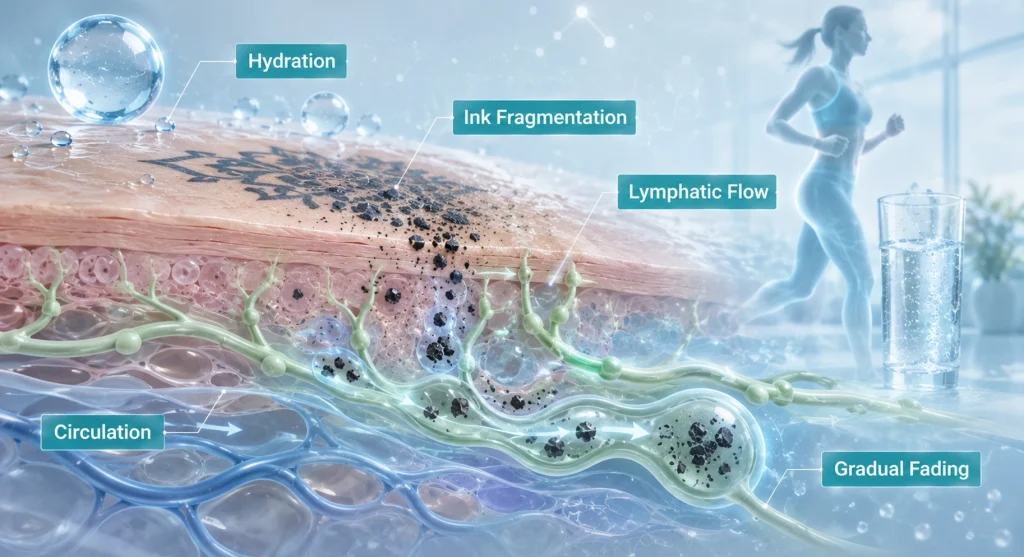
The most important work happening in weeks 5 through 8 is invisible. The immune system’s lymphatic network is processing and removing the fragmented ink particles that the laser broke down during the session. The body cannot clear these particles overnight. It takes weeks of lymphatic processing. This is why the 6 to 8 week wait between sessions is clinically necessary and not arbitrary scheduling. Rushing sessions before the lymphatic clearance is complete means treating ink that the body is still in the process of removing, which reduces the efficiency of the next session. Light, consistent cardio activity during this phase (once the skin is fully healed) can support lymphatic circulation and may modestly accelerate ink clearance. → See Perfect B’s full laser tattoo removal treatment plan in Doral, FL, including the picosecond technology we use, session spacing protocols, and how we customize the approach for different tattoo types and skin tones.
Aftercare in Miami: Why the Heat and Sun Change Everything
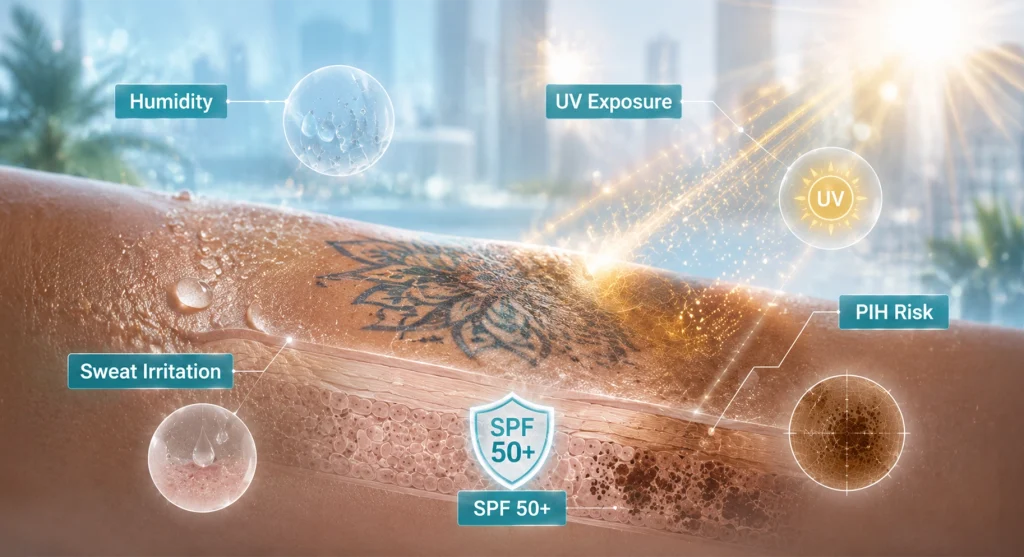
UV exposure and the risk of post-inflammatory hyperpigmentation
Miami’s UV index is among the highest in the continental United States year-round. Fresh laser-treated skin is significantly more vulnerable to UV damage than intact skin, and UV exposure during the healing window is one of the primary causes of post-inflammatory hyperpigmentation (PIH) after tattoo removal. PIH appears as a dark patch that persists long after the treated area has healed. For patients with Fitzpatrick III to V skin tones, which describes the majority of our patient population in Doral given the Latin American, Caribbean, and South American demographics of South Florida, the risk of PIH is substantially higher than for lighter skin tones, and the consequences are more visible and longer-lasting. We require all patients to apply SPF 50 or higher to the treated area beginning in week 2 and continuing through the entire treatment series, even when the area looks fully healed. A peer-reviewed analysis in the FDA’s clinical guidance on tattoo removal documenting that skin discoloration is among the most common and preventable adverse effects of laser tattoo removal, particularly in patients with darker skin tones who do not adhere to sun protection protocols reflects exactly what we manage in Miami’s high-UV environment.
Sweat, heat, and infection risk in South Florida
Sweating on an open or recently healed treatment area introduces bacteria and increases the risk of infection and irritation. In Miami, where temperatures above 85 degrees and humidity above 75% are routine for most of the year, this is a more serious aftercare consideration than in cooler markets. We advise patients to avoid any activity that causes active sweating over the treatment zone for 72 hours post-session, and to shower immediately after any physical activity during the first two weeks of healing. Tight, synthetic clothing over the treated area should be replaced with loose, breathable cotton fabrics that allow the skin to ventilate. These modifications are standard in our aftercare instructions at Perfect B specifically because of Miami’s climate, not because all tattoo removal aftercare guides recommend them.
Fitzpatrick III-V skin: extra precautions at Perfect B
For patients with melanin-rich skin, the laser settings, session spacing, and aftercare protocol all require specific calibration. We use lower fluence settings spaced over more sessions to reduce the thermal load per treatment, and we monitor for any early signs of hyperpigmentation at each follow-up. Patients with Fitzpatrick IV and V skin who follow aggressive aftercare including consistent SPF and gentle moisturizing throughout the series consistently achieve better results with lower complication rates than patients who treat their skin the same way they would after a procedure in a cooler, lower-UV environment. This is one of the primary reasons Perfect B’s aftercare protocol is more detailed than what most national chain clinics provide. → Read how Perfect B approaches treatment for Fitzpatrick III-V patients across all laser-based procedures, including the specific protocol adjustments that reduce hyperpigmentation risk in Miami’s high-UV, diverse-demographics clinical environment.
What You Must Avoid Between Sessions
Exercise, pools, hot tubs, and direct sun: the timing rules
Avoid exercise that causes sweating at the treatment site for 72 hours post-session. Avoid swimming pools, hot tubs, and open water for 2 weeks post-session or until the skin surface is fully closed, whichever is later. Pool water contains chlorine and bacterial loads that are incompatible with compromised skin. Avoid direct sun exposure to the treatment area for the duration of the treatment series, applying SPF 50 or higher from week 2 of each session cycle onward. In Miami, where casual sun exposure is part of daily life, this requires active effort rather than the passive avoidance that works in less sunny climates.
Products and ingredients that interfere with healing
During the active healing phase (weeks 1 to 4 of each session cycle), avoid all products with active ingredients at the treatment site: retinoids, AHAs, BHAs, vitamin C, niacinamide, benzoyl peroxide, and any exfoliants. These disrupt the skin barrier at a time when barrier recovery is the primary biological priority. Fragrance, alcohol-based toners, and essential oils are also inappropriate during healing. After week 4, you can resume your normal skincare routine at the treatment site, but SPF remains mandatory through the end of the treatment series. A clinical study in the University of Rochester Medical Center’s PicoSure post-care protocol documenting that sun exposure, tanning beds, and active skincare ingredients must be avoided for a minimum of two weeks before and after each treatment to prevent complications and maximize therapeutic efficacy reflects the clinical standards we follow at Perfect B.
How to Speed Up Ink Clearance Between Sessions
Once the skin surface has fully healed (typically by week 4), the primary variable you can influence is lymphatic circulation. The lymphatic system is the mechanism that physically removes the fragmented ink particles from the treatment area. Strategies that support lymphatic function include: staying well hydrated, light to moderate cardiovascular exercise (walking, cycling, swimming once healing is complete), dry brushing the surrounding skin (not the treatment area itself), and maintaining a generally anti-inflammatory diet in the weeks between sessions.
None of these interventions are dramatic accelerators. The lymphatic system operates on its own schedule. But the difference between a patient who is consistently hydrated, moderately active, and well-nourished versus one who is dehydrated and sedentary can translate to a visibly greater amount of fading between sessions, which matters when you are managing a multi-session treatment series. In Miami, where heat can reduce motivation for exercise and encourage dehydration, we specifically mention lymphatic health in our patient education at Perfect B as part of the between-session protocol.
Warning Signs: When to Contact Perfect B
Most post-session responses are normal healing activity. Contact your provider if you experience any of the following: fever above 100.4 degrees Fahrenheit, increasing (rather than decreasing) pain after 48 hours, pus or green/yellow discharge from the treatment area, a rapidly expanding area of redness extending beyond the treated zone, blisters that are unusually large, painful, and not resolving within 2 weeks, or any burning, tingling, or numbness that was not present immediately after treatment. These signs are uncommon when aftercare is followed correctly, but they are clinically significant when they occur and should not be managed at home.
Frequently Asked Questions
1. How bad does laser tattoo removal hurt on a scale of 1 to 10?
Most patients rate the sensation between 4 and 7 out of 10, with the average falling around 5 to 6 for common locations like the forearm and upper arm. Bony areas like the ribs, spine, ankles, and hands can reach 8 to 9. With topical numbing cream applied 45 minutes before treatment and air cooling used during the session, most patients find the experience manageable even in sensitive areas. The duration of each pass is very short, which is what makes the overall experience tolerable even when the intensity per pulse is high.
2. Should I pop my blisters after a laser tattoo removal session?
No, never. Blisters should be left completely undisturbed. They are a normal healing response and will reabsorb on their own within 7 to 14 days. Popping or scratching blisters open introduces infection risk to an area where the skin is already compromised and creates a direct pathway to scarring. If a blister is very large, painful, or interfering with daily activity, contact your provider for guidance. Do not attempt to drain it at home.
3. How long until I can exercise after a laser tattoo removal session?
Avoid any exercise that causes sweating at or near the treatment site for at least 72 hours post-session. After that, light activity is acceptable as long as you shower promptly afterward and the treatment area has not been sweating into an open or blistered zone. Full return to normal exercise is typically appropriate by day 4 to 7, depending on how the healing is progressing. In Miami’s climate, take the sweat restriction seriously: the heat makes sweating unavoidable at lower activity intensities than in cooler markets.
4. How long does it take to see results after one session?
Meaningful ink fading becomes visible at the end of the 6 to 8 week healing window between sessions, not in the first few weeks. The initial darkening or redness after treatment is not fading. It is inflammation. The actual ink clearance happens through lymphatic processing and is most visible by weeks 6 to 8. Patients who compare their tattoo immediately after a session to a fresh photograph are not seeing an accurate picture of the treatment’s effect. The true measure is always the before-versus-8-weeks-later comparison.
5. Can I go in the sun after laser tattoo removal?
Not during the active healing phase (weeks 1 to 4), and only with SPF 50 or higher thereafter throughout the treatment series. In Miami, where UV exposure is part of daily life even without deliberate sun-seeking, this means applying sunscreen as a routine step to the treatment area every morning during your treatment series. UV exposure on a healing or recently healed treatment area is the single most preventable cause of post-inflammatory hyperpigmentation, which is both difficult to reverse and particularly visible in the diverse skin tones that represent the majority of Perfect B patients in Doral. Call us at (786) 502-2260 if you have questions about sun protection specific to your skin tone and treatment area.
6. Why do I need to wait 6 to 8 weeks between sessions?
The wait is not for the skin surface to heal, although that is part of it. The primary reason is lymphatic clearance. The laser fragments ink into microscopic particles but does not remove them. The immune system’s lymphatic network removes them over the weeks following treatment. If the next session is scheduled before that clearance is complete, the laser is partially treating ink that is already in the process of being eliminated, which reduces efficiency and increases the total number of sessions required. The 6 to 8 week window is the clinically established minimum for allowing meaningful lymphatic clearance before the next treatment round begins.
Closing: Aftercare Is Half the Treatment
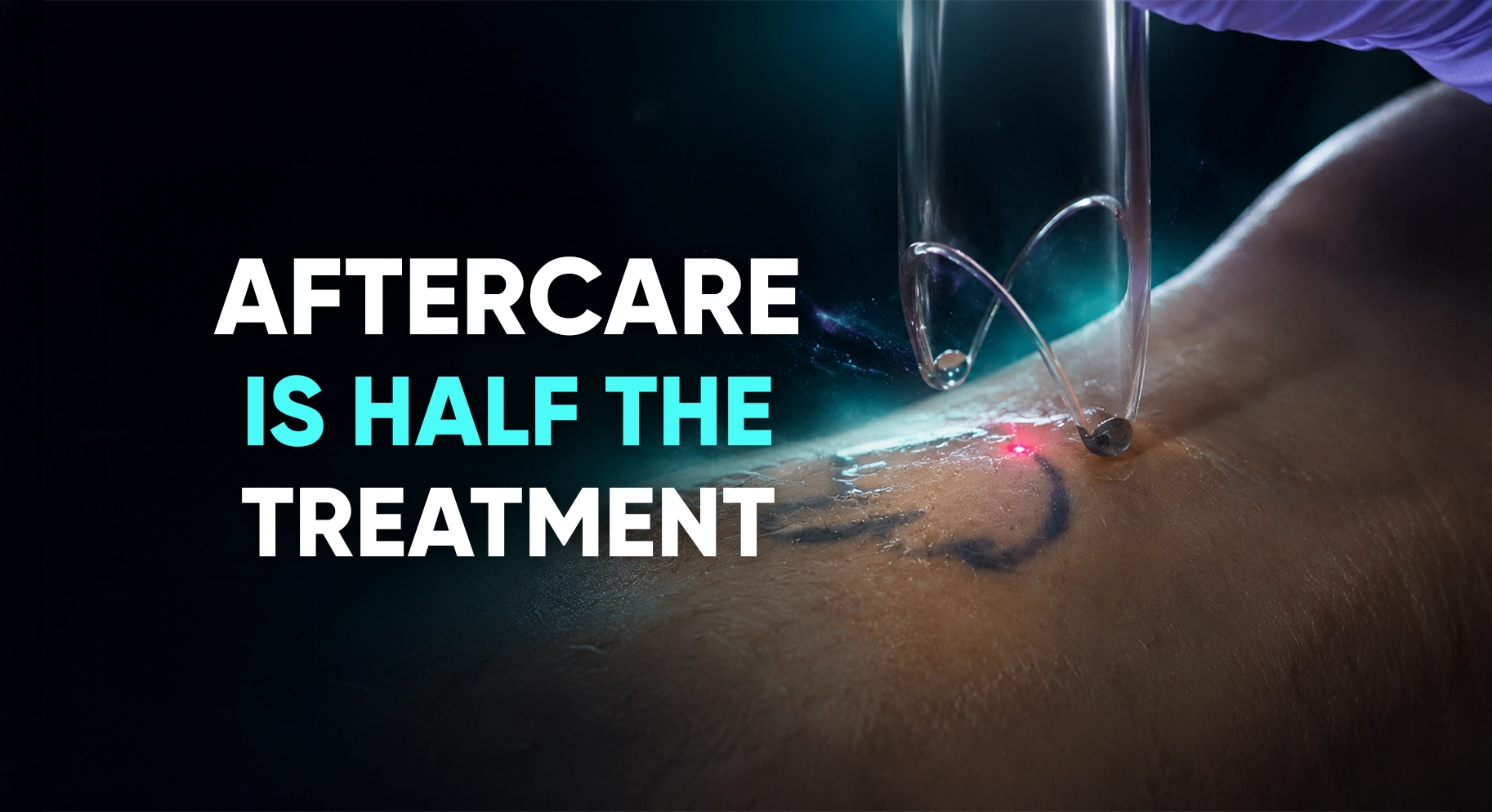
Laser tattoo removal is a process that extends well beyond the clinic. The session itself takes minutes. The healing and lymphatic clearance that determines how much ink fades before the next session takes weeks. How that time is managed has a direct and measurable impact on the total number of sessions required and the quality of the final result. In Miami, where UV intensity, heat, humidity, and diverse skin tones create a more demanding aftercare environment than most tattoo removal guides are written for, following a protocol designed specifically for this climate is not optional.
At Perfect B in Doral, our aftercare instructions are built around the reality of treating patients in South Florida, not a generic protocol derived from clinical studies conducted in cooler, lower-UV markets. If you are in the middle of a treatment series elsewhere and not seeing the fading you expect, or if you are starting a new series and want to do it correctly from the first session, the aftercare approach matters as much as the technology being used. → Schedule a consultation at Perfect B in Doral, FL to review your treatment plan, aftercare protocol, and what to expect at each stage of your tattoo removal journey.
📍 Visit us at Perfect B, Doral FL
📞 Call or message us at (786) 502-2260