
Perfect B, Doral Fl. | 05.21.26 | 11 min read.
This article is for educational purposes only and does not substitute professional medical advice. Always consult a licensed medical provider before starting any peptide therapy protocol. For the bigger picture, read how peptide therapy is supervised at Perfect B in Doral and where a specific peptide fits within a complete treatment plan. For more on this, see our guide to How to Store Peptides: Storage and Shelf Life Guide, and how it is evaluated and treated at Perfect B in Doral.
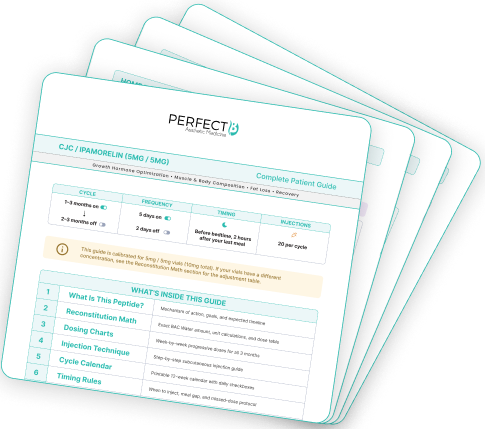
Skip Ahead to the Perfect B Peptide Protocol Tool. See Reconstitution, Daily Units, and Cycle Structure.
Perfect B’s peptide protocol tool is built on real clinical data from 2,000+ patients treated in South Florida.
Answer 6 questions and see what patients with similar goals are running: which peptides they use, typical dosing, injection schedule, reconstitution steps, cycle length, and when they pause.
TB-500 does not have an FDA-approved dosage because it is not FDA-approved as a drug. The protocol structure that a licensed provider uses depends on the patient’s injury history, current tissue condition, treatment goals, and clinical response over time. What the research and clinical literature show is a consistent framework: a loading phase, a maintenance phase, and a rest period, structured across a three-month cycle. At Perfect B in Doral, every TB-500 protocol starts with a full APRN intake and is individualized before any prescription is written.
This guide covers how the TB-500 protocol is structured, how it differs from BPC-157, what the 3-month cycle looks like in practice, how to reconstitute the vial, and how the Wolverine Stack combines both peptides at Perfect B.
Key Takeaways on TB-500 Dosage
- No FDA-approved dose exists: TB-500 is not FDA-approved for human use. All protocols are built from preclinical data and individualized clinical assessment. At Perfect B, dosing is set at the APRN intake.
- 3-month cycle structure: Clinical practice follows a loading phase, a maintenance phase, and a rest period before repeating. Perfect B runs TB-500 on 3-month cycles with a 2-month break.
- Systemic distribution: Unlike BPC-157 which acts locally near the injection site, TB-500 distributes systemically through the body, which is why it addresses multi-site injuries and broader tissue repair needs.
- Subcutaneous or intramuscular: TB-500 is injected subcutaneously or intramuscularly depending on the indication. The injection site and method are determined by your provider at intake.
- Best combined with BPC-157: TB-500 and BPC-157 are mechanistically complementary. Together they form the Wolverine Stack at Perfect B, priced at $795 per cycle.
- 503A compounding pharmacy only: Perfect B sources TB-500 from a licensed 503A compounding pharmacy. Research-grade peptides ordered online without prescription are not equivalent in safety or quality.
How Much Does a TB-500 Dosage Protocol Cost at Perfect B?
At Perfect B in Doral, TB-500 is available as part of the Wolverine Stack combined with BPC-157 at $795 per cycle. Patients who need BPC-157 as a standalone protocol can access that at $445 per cycle. Both options include provider supervision, 503A compounded medication from a licensed pharmacy, dosing instructions, and follow-up. For a complete pricing breakdown see our guide to how much BPC-157 and TB-500 cost in 2026 and what each tier includes.
What TB-500 Is and Why the Dosage Protocol Matters
TB-500 is the synthetic fragment of Thymosin Beta-4, a protein that the body naturally produces in response to tissue injury. It was originally studied in equine medicine for tendon and muscle recovery, and interest in human therapeutic applications grew as the preclinical data on tissue regeneration, anti-inflammatory effects, and angiogenesis accumulated.
What distinguishes TB-500 from most other peptides is its systemic mechanism. It does not stay localized near the injection site the way BPC-157 can in tendon applications. TB-500 distributes broadly through connective tissue, muscles, and joints throughout the body, which makes it particularly useful for patients dealing with multiple injury sites, diffuse connective tissue inflammation, or slower-healing chronic conditions that a localized peptide cannot fully address.
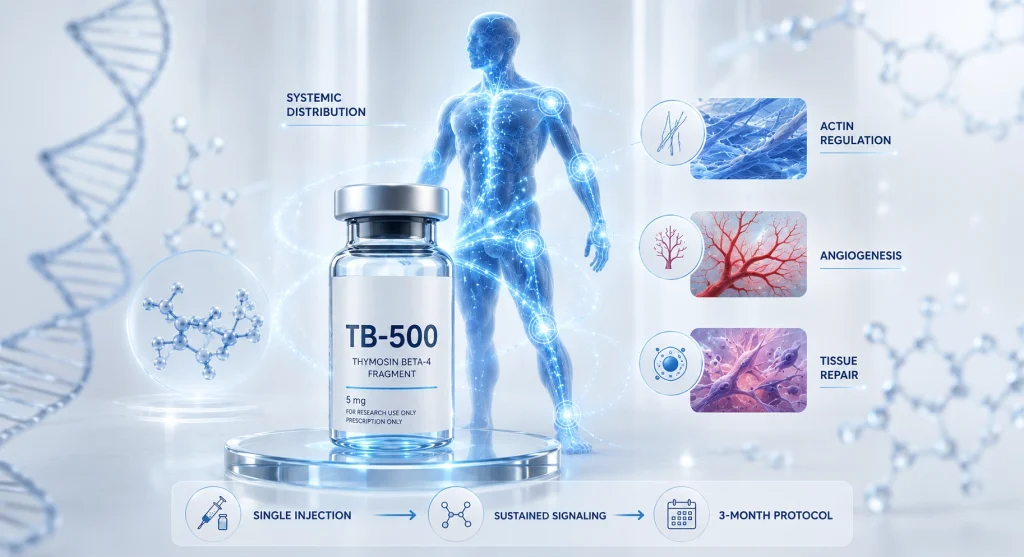
The dosage protocol matters because TB-500’s mechanism relies on sustained tissue signaling rather than a single acute dose. Thymosin Beta-4 regulates actin, the protein that governs cell movement and tissue repair at the structural level. For actin regulation to meaningfully remodel damaged tissue, the signaling environment needs to be maintained across weeks, not days. This is why the 3-month cycle framework exists and why a single injection produces minimal results compared to a structured protocol.
How TB-500 Works: The Systemic Mechanism Behind the Protocol
TB-500’s therapeutic effects operate through three primary pathways that inform how the protocol is structured:
- Actin regulation: Thymosin Beta-4 binds to G-actin (monomeric actin) and regulates its availability for polymerization. This directly controls how cells migrate to repair sites, how they restructure damaged tissue scaffolding, and how quickly the cellular response to injury organizes itself.
- Angiogenesis: TB-500 promotes the formation of new blood vessels in damaged tissue. New vasculature is essential for recovery because oxygen and nutrient delivery to injured areas directly determines the rate of tissue remodeling. This vascular effect is one reason TB-500 produces results in areas with historically poor blood supply, including tendons and ligaments.
- Anti-inflammatory signaling: TB-500 reduces inflammatory cytokine activity in the affected tissue environment. Chronic inflammation is one of the primary barriers to tissue healing in patients with long-standing injuries, and TB-500’s anti-inflammatory pathway is part of why it is particularly relevant for patients who have not responded well to other interventions.
The systemic distribution of TB-500 means that a single injection can influence repair processes across multiple tissue sites simultaneously. For patients at our Doral clinic who present with injuries across more than one joint or muscle group, this systemic reach is a key reason TB-500 is selected over a localized peptide alone.
TB-500 vs BPC-157: Why Dosage Differs Between the Two
Patients who research both peptides before their consultation often ask why the dosage protocols for TB-500 and BPC-157 are structured differently. The answer is mechanistic.
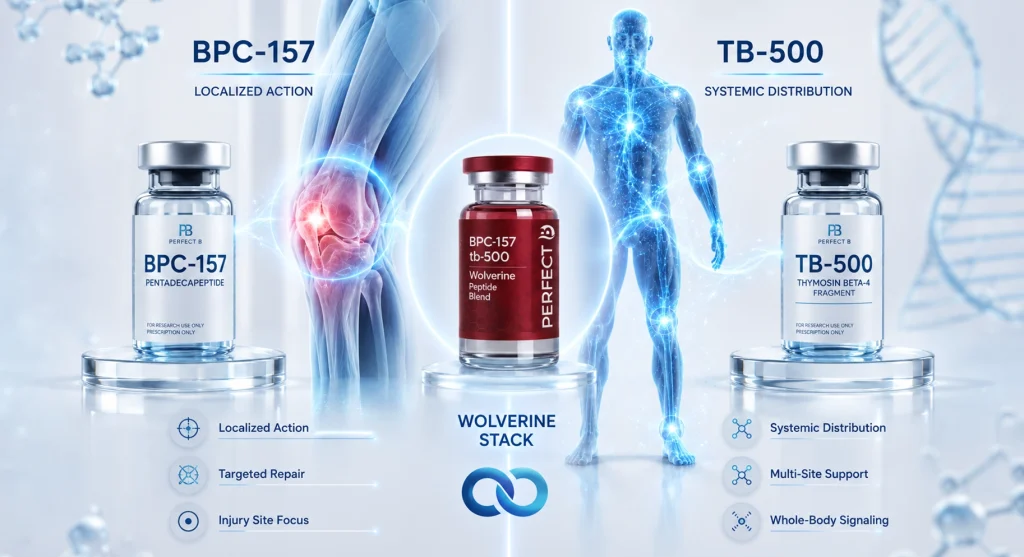
BPC-157 works primarily through localized tissue repair at the site of administration. It supports collagen synthesis, tendon-to-bone healing, and gut mucosal repair through pathways that are most active where the peptide is concentrated. For a specific tendon or joint injury, BPC-157 injected proximal to the site acts in a targeted, local way.
TB-500, by contrast, distributes systemically. This difference has a direct consequence for how the protocol is structured. Because TB-500 reaches all tissues rather than concentrating at one site, the dosing strategy focuses on sustaining a systemic therapeutic level across the cycle rather than targeting a precise anatomical location. The frequency and duration of the protocol reflect this sustained systemic signaling requirement.
For a detailed breakdown of BPC-157’s protocol, including the reconstitution math and injection approach, see our complete BPC-157 dosage protocol guide. The two protocols are often run together as the Wolverine Stack precisely because their mechanisms are complementary rather than redundant.
The 3-Month TB-500 Cycle: Loading, Maintenance, and Break
The 3-month cycle structure used by clinical providers follows the biological requirement for sustained tissue signaling. A short course of TB-500 does not produce the same remodeling outcome as a structured multi-phase protocol. Perfect B runs TB-500 on 3-month cycles with a 2-month break before reassessing whether a second cycle is indicated.
Loading phase
The loading phase establishes the initial therapeutic concentration in the tissue. During this phase, injection frequency is higher to build systemic levels of the peptide and begin the actin regulation and angiogenesis responses. The loading phase is the most intensive part of the protocol in terms of injection frequency.
Maintenance phase
Once the therapeutic level is established, the maintenance phase reduces injection frequency while sustaining the tissue repair environment. Most patients begin noticing changes in pain levels, range of motion, and recovery speed during the maintenance phase. The exact timing depends on the injury type, baseline tissue condition, and individual response rate.
Taper and break
The final weeks of the cycle involve a reduction in dose frequency before the two-month break. The break is important: it prevents receptor accommodation and allows the body to consolidate the tissue remodeling that the protocol initiated. Patients who skip the break period and run continuous cycles do not get proportionally better outcomes and risk diminishing returns on the therapeutic response.
At Perfect B, the decision to run a second cycle is made at a clinical reassessment after the break period, not automatically. If the treatment goals have been met, a second cycle may not be necessary. If there is remaining tissue work to do, the second cycle is structured with the results of the first cycle in mind.
TB-500 Reconstitution: The Math Behind the Vial
TB-500 arrives from the 503A compounding pharmacy as a lyophilized (freeze-dried) powder in a sealed vial. It must be reconstituted with bacteriostatic water before injection. Your prescribing provider gives you written instructions specific to your vial size and prescribed dose.
The general math works as follows: dividing the total content of the vial by the volume of bacteriostatic water added gives the concentration per milliliter. From that concentration, you can calculate the draw volume per dose. Your provider specifies the exact markings on your insulin syringe that correspond to your prescribed dose.
For example, if a vial contains a known total amount of peptide and it is reconstituted with 2 mL of bacteriostatic water, then dividing the total by 2 gives the concentration per mL. Every dose is then drawn as a fraction of that milliliter depending on what the provider has prescribed.
Storage after reconstitution: TB-500 should be stored refrigerated and used within the stability window specified by the compounding pharmacy. Never freeze a reconstituted vial. Your compounding pharmacy documentation will specify the exact beyond-use date.
Injection Site and Technique: Subcutaneous vs Systemic
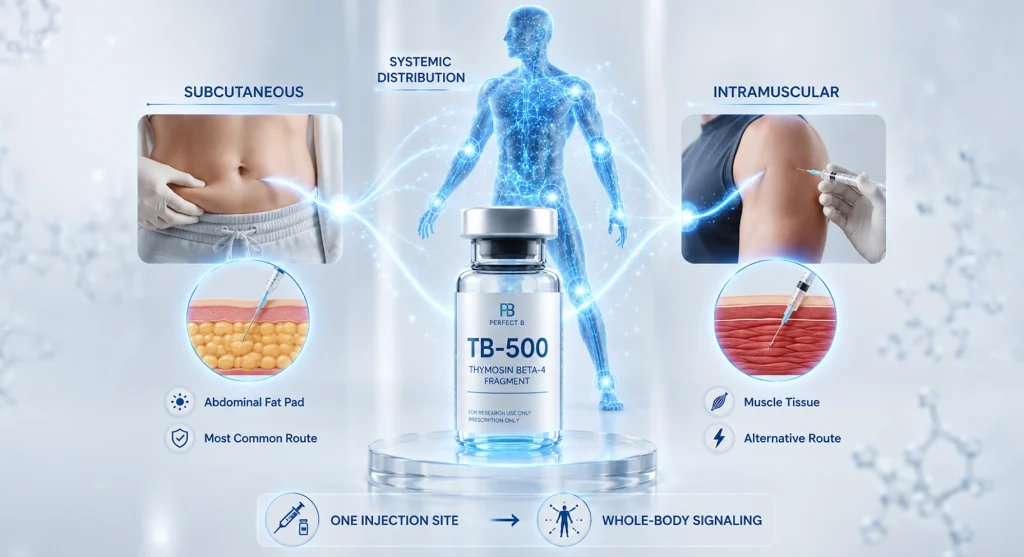
TB-500’s systemic distribution means that the injection site has less anatomical precision than BPC-157. The two main approaches are subcutaneous injection (under the skin, typically in the abdominal fat pad) and intramuscular injection (into a muscle belly).
Subcutaneous is the most common route for general systemic delivery. Intramuscular is sometimes preferred for patients who want faster absorption or who have specific protocols for athletic recovery applications. At Perfect B, the route and injection site are determined at the APRN intake based on your indication and any prior injection history.
Because TB-500 distributes systemically regardless of injection site, there is no clinical requirement to inject near the injury. This is one of the practical differences from BPC-157 where proximity to the affected tissue does influence the local concentration. For patients managing multiple injuries simultaneously, a single systemic TB-500 injection reaches all affected tissues without requiring multiple injection sites per session.
The Wolverine Stack Dosage: TB-500 and BPC-157 Together
The Wolverine Stack is the name Perfect B uses for the combination of TB-500 and BPC-157 run simultaneously as a tissue repair protocol. It is one of the most requested combinations at our Doral clinic and is priced at $795 per cycle.
The rationale for combining them is mechanistic: BPC-157 targets local tissue repair at the specific injury site while TB-500 addresses the systemic tissue environment. BPC-157 drives localized collagen synthesis and tendon-to-bone healing. TB-500 drives systemic actin regulation, angiogenesis, and anti-inflammatory signaling that creates the optimal environment for BPC-157 to work in. The two peptides are not redundant; they address different layers of the healing process.
In the Wolverine Stack, both peptides are dosed individually based on the patient’s injury profile and treatment goals. The interaction between the two is calibrated at intake to ensure they are working on complementary rather than overlapping pathways. For a full breakdown of how BPC-157 fits into the Wolverine Stack and what patients can expect from the combination, see our complete Wolverine Stack guide.
What to Expect: TB-500 Results Timeline Week by Week
Patient experience across the 3-month cycle typically follows a consistent progression, though individual results depend on injury severity, age, baseline tissue condition, and compliance with the protocol.
- Weeks 1 to 2 (loading phase): Most patients notice reduced pain and inflammation before they notice structural improvement. The anti-inflammatory mechanism activates early. Joint stiffness and acute soreness are common first-movers.
- Weeks 3 to 4: Improved range of motion and reduced recovery time after physical activity. Patients who had significant swelling often report visible reduction.
- Weeks 5 to 8 (maintenance phase): Structural tissue changes become more apparent. Tendons feel more resilient, muscles recover faster from loading, and patients report being able to return to activities they had modified or avoided.
- Weeks 9 to 12 (taper phase): Consolidation of gains. Most patients have reached their primary treatment objectives by this point. The final weeks maintain the tissue signaling environment while injection frequency reduces.
- Post-cycle (2-month break): Continued improvement is common as the tissue remodeling initiated by the protocol completes. The break is not a plateau; it is part of the outcome.
Who Is a Candidate for TB-500 at Perfect B?
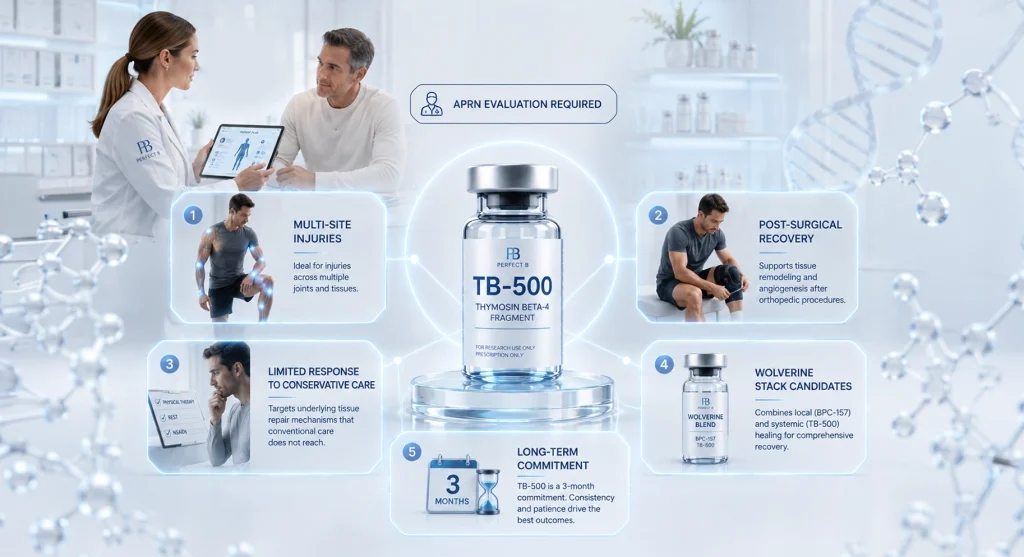
TB-500 at Perfect B is prescribed following a full APRN intake. Based on the patient population we see in Doral, the strongest candidates typically include:
- Patients with chronic or multi-site injuries: TB-500’s systemic distribution makes it particularly relevant for patients with injuries across more than one joint or tissue type, where localized injection alone would require multiple sites per session.
- Post-surgical recovery patients: TB-500 supports tissue remodeling and angiogenesis in the recovery window after orthopedic procedures where connective tissue repair is the primary objective.
- Patients who have not responded to conventional conservative care: Physical therapy, rest, and NSAIDs address symptoms. TB-500 targets the underlying tissue repair mechanisms that those approaches do not reach.
- Patients considering or running the Wolverine Stack: BPC-157 and TB-500 together address local and systemic healing simultaneously. For patients with significant injury histories, the combination is almost always more appropriate than either peptide alone.
- Patients with realistic timelines: TB-500 is a 3-month commitment, not a quick fix. Patients who understand that tissue remodeling takes time and who can commit to the full cycle see the best outcomes.
Research-Grade vs Clinic-Grade TB-500: Why the Source Matters
TB-500 ordered from online research chemical suppliers is categorized for laboratory use, not human administration. These products are not subject to the same pharmaceutical manufacturing standards, sterility testing, or third-party verification that a licensed 503A compounding pharmacy must meet.
At Perfect B, TB-500 is dispensed from a licensed 503A compounding pharmacy that manufactures under pharmaceutical-grade conditions with documented third-party testing and established beyond-use dating. The difference between a research-grade product and a compounded pharmaceutical is not theoretical. It affects sterility, potency accuracy, contaminant screening, and the regulatory accountability that comes with a licensed pharmacy supply chain. For a detailed breakdown of what that difference means in practice, see our guide to compounding pharmacy peptides vs online research peptides.
Frequently Asked Questions About TB-500 Dosage
1. What is the standard TB-500 dosage?
There is no FDA-approved standard dosage for TB-500. Clinical literature references loading phases, maintenance phases, and cycle durations that vary by provider and patient profile. At Perfect B, the dose is individualized at the APRN intake based on your injury history, body weight, treatment goals, and clinical response. No single number applies to every patient.
2. How do you reconstitute TB-500?
Add bacteriostatic water to the lyophilized vial using a sterile syringe. The amount of water determines the concentration per milliliter. Your prescribing provider gives written reconstitution and dosing instructions specific to your vial size and prescribed dose. Never reconstitute without provider instructions. Store reconstituted TB-500 refrigerated and use within the beyond-use date on the pharmacy label.
3. What is the difference between TB-500 and BPC-157 dosage?
BPC-157 is administered near the injury site for localized tissue repair. TB-500 distributes systemically, so injection site precision matters less. BPC-157 protocols often specify injection proximity to the affected tendon or joint. TB-500 protocols focus on frequency and cycle structure for sustained systemic signaling. Together as the Wolverine Stack they address both local and systemic healing.
4. How long is a TB-500 cycle?
Clinical practice and Perfect B’s protocol use a 3-month cycle: a loading phase, a maintenance phase, and a taper, followed by a 2-month break before reassessment. The break is essential for preventing receptor accommodation and consolidating tissue remodeling. Running continuous cycles without a break produces diminishing returns.
5. Where do you inject TB-500?
TB-500 is most commonly injected subcutaneously in the abdominal fat pad, but intramuscular injection is also used depending on the protocol. Because TB-500 distributes systemically regardless of injection site, there is no requirement to inject near the injury. Your provider determines the route and site at intake.
6. Can you stack TB-500 with BPC-157?
Yes. TB-500 and BPC-157 are mechanistically complementary, which is the clinical basis for the Wolverine Stack. BPC-157 targets localized tissue repair; TB-500 addresses systemic tissue signaling, angiogenesis, and anti-inflammatory pathways. Running them together under a prescribed protocol covers both layers of the healing process. At Perfect B, the Wolverine Stack is $795 per cycle.
7. How long before TB-500 shows results?
Anti-inflammatory and pain reduction effects are often the first changes patients notice, typically in the first one to two weeks of the loading phase. Structural improvements in range of motion and tissue resilience become apparent from weeks three to four. The most meaningful tissue remodeling results are typically visible at the three-month mark and continue to develop for several weeks after the cycle ends.
8. Is TB-500 from a compounding pharmacy different from research peptides?
Yes, significantly. A licensed 503A compounding pharmacy manufactures under pharmaceutical-grade conditions with sterility testing, potency verification, and third-party documentation. Research-grade peptides ordered online are classified for laboratory use and are not subject to these standards. At Perfect B, all peptides are sourced exclusively from licensed 503A compounding pharmacies.
Closing: The Protocol Is the Treatment
TB-500’s effectiveness is not about a single injection at the right dose. It is about sustaining the right tissue signaling environment across a 3-month cycle with proper loading, maintenance, and rest. That is why the protocol structure matters as much as the peptide itself, and why the decision about dose, frequency, and cycle length belongs in a clinical consultation rather than a research forum.
At Perfect B in Doral, the patients who see the best outcomes with TB-500 are those who start with a full intake, commit to the cycle structure, and approach the protocol as a clinical intervention rather than a supplement. For patients considering TB-500 alongside BPC-157, or for those who want to understand whether the Wolverine Stack fits their specific injury profile, the right starting point is the intake, not the vial.
For more on how TB-500 relates to the broader Perfect B tissue repair framework, see what TB-500 is and how Perfect B uses it.
📍 Perfect B | 8200 NW 41st St, Suite 100, Doral, FL 33166
📞 (786) 502-2260