Perfect B, Doral FL. | 05.05.26 | 12 min read.
This content is for educational purposes only and does not constitute medical advice. All peptide medications referenced on this page require a clinical evaluation and prescription from a licensed provider. Results vary by patient.
The TB-500 Peptide: What It Is and Why Recovery-Focused Patients Are Searching for It
The tb-500 peptide has become one of the most searched recovery compounds among athletes, post-surgical patients, and anyone dealing with an injury that is healing slower than it should. Search volume for the compound has grown over 800 percent in the past year, and the interest reflects something real: conventional approaches to soft tissue injury often manage pain without addressing the biological process that actually repairs the tissue. TB-500 works differently. As a synthetic fragment of Thymosin Beta-4, it helps cells migrate to injured areas faster, increases blood flow through the formation of new blood vessels, and reduces systemic inflammation that slows the repair process down. At Perfect B in Doral, FL, we explain it to patients as a healing peptide: it does not mask what is happening in the tissue. It accelerates the biology that fixes it.
Key Takeaways
- TB-500 is a synthetic fragment of Thymosin Beta-4: It isolates the active repair sequence of a naturally occurring protein found in virtually every human cell, concentrating the tissue repair and anti-inflammatory signaling without manufacturing the full protein.
- It works systemically, not locally: Unlike BPC-157, which targets a specific injury site, TB-500 travels through the entire body and finds damaged tissue wherever it is, making it effective for diffuse or multi-site injuries.
- The Perfect B protocol runs in three-month cycles: Dosing ramps progressively from 6-8 units in month one to 10 units daily by month three, followed by a two-month break before the next cycle.
- Most patients notice the first changes within two weeks: Pain reduction and decreased inflammation come first, followed by improved range of motion and faster recovery as the protocol progresses.
- Clinic-grade TB-500 is fundamentally different from unregulated sources: Sterile, properly dosed, and third-party tested from a licensed compounding pharmacy, it cannot be compared to online or oral versions that are unreliable in purity and not meaningfully absorbed.
What Is TB-500 and How Is It Different from Thymosin Beta-4?
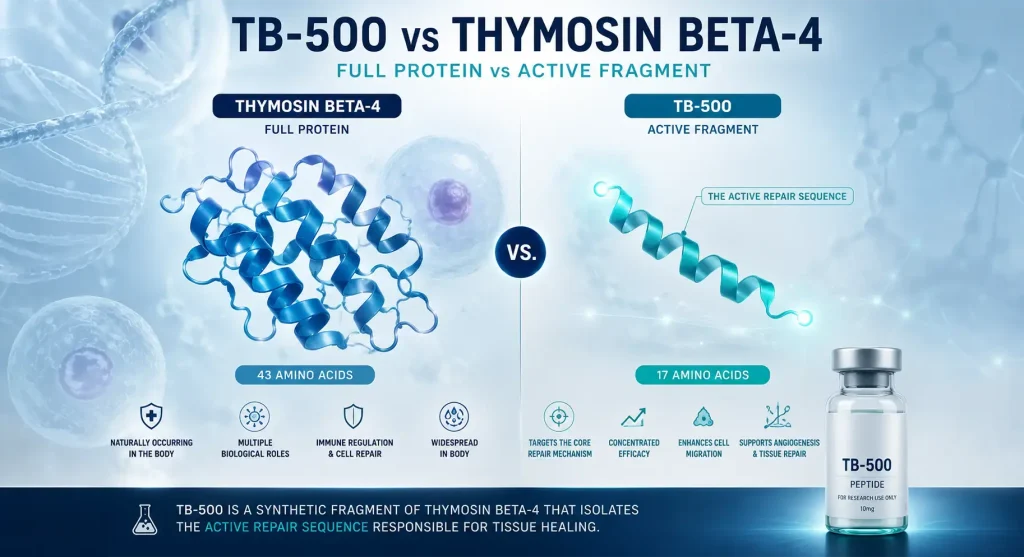
Thymosin Beta-4 is a naturally occurring 43-amino-acid peptide produced primarily by the thymus gland and found in almost every cell in the human body, with the highest concentrations in platelets and wound fluid. Its role in tissue repair, immune regulation, and cell migration has been studied since the 1980s. TB-500 is a synthetic fragment of that molecule, corresponding specifically to the active binding region that drives the repair signaling. The synthetic version isolates and concentrates the healing properties without the complexity of manufacturing the full Thymosin Beta-4 protein.
The compound has a longer history than most patients realize. Thymosin Beta-4 was studied extensively in racehorses before transitioning to human research contexts, and that veterinary track record helped establish its safety profile before clinical use. The full Thymosin Beta-4 molecule, under the name RGN-259, has entered formal clinical trials for conditions including dry eye disease and cardiac recovery, which validates the underlying biological mechanism that TB-500 shares. TB-500 itself remains an investigational compound, meaning it has not been approved as a standalone drug by the FDA. In clinical practice, it is available through licensed 503A compounding pharmacies under prescriber supervision, which is the same regulatory framework as most research-grade peptides prescribed at medical clinics like Perfect B.
How the TB-500 Peptide Works at the Cellular Level: Actin, Angiogenesis, and Migration
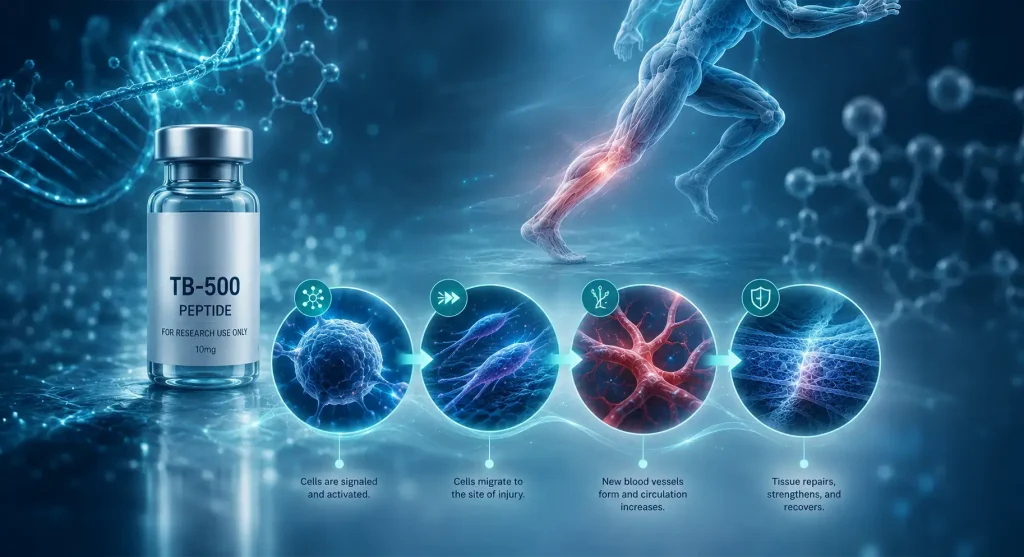
The primary mechanism of the tb-500 peptide is actin polymerization. Actin is the structural protein that forms the cytoskeleton of cells, and its regulation is what enables cells to change shape, divide, and migrate. When tissue is damaged, the body needs to move repair cells to the injury site rapidly. TB-500 accelerates that migration by binding to G-actin and regulating the actin cytoskeleton, allowing cells to move to damaged areas faster than they would without it. This is what Valeria means when she describes it as a healing peptide: it does not create new biology. It helps the existing biology move faster and more efficiently toward where the damage is.
The second major mechanism is angiogenesis: the formation of new blood vessels. Injured tissue heals faster when it has an adequate blood supply delivering oxygen and nutrients. TB-500 promotes the growth of new capillaries into the injury zone, improving the local environment for repair. The third mechanism is systemic anti-inflammatory signaling, which reduces the inflammatory load that would otherwise slow the structural remodeling process in tendons, ligaments, and muscle. All three mechanisms operate simultaneously, which is what makes TB-500 effective for the range of applications where it is prescribed. A 2021 review published by the National Institutes of Health covering the mechanisms by which Thymosin Beta-4 and its synthetic fragment regulate actin polymerization, promote angiogenesis, and enable cell migration across tissue repair contexts provides the scientific foundation behind these three pathways and their interaction in clinical recovery.
What TB-500 Is Used For: Tendons, Ligaments, Muscle, and Who Actually Benefits
The best results with TB-500 are in patients with tendon and ligament injuries, post-surgical healing needs, and chronic inflammation that has not responded well to conventional treatment. The patients who come to Perfect B for this protocol are not always high-level athletes. A significant portion are people who play tennis or golf recreationally and have been dealing with tendon tears or chronic overuse injuries for months. Another group includes patients recovering from orthopedic procedures who want to accelerate the structural repair that physical therapy alone does not fully address. A third group is patients who are trying to avoid surgery and want to exhaust conservative options before making that decision.
Not sure which peptide protocol fits your goals?
Perfect B’s peptide protocol tool is built on real clinical data from 2,000+ patients treated in South Florida.
Answer 6 questions and see what patients with similar goals are running: which peptides they use, typical dosing, injection schedule, reconstitution steps, cycle length, and when they pause.
By tissue type, the application that has the strongest evidence base is soft tissue: muscle strains, ligament sprains, and chronic tendinopathies. Animal models of muscle crush injury and tendon damage have consistently shown faster functional recovery, improved tissue architecture, and reduced scar formation when TB-500 is administered shortly after the injury. Post-surgical healing is the second most common application at Perfect B, where the peptide supports structural remodeling and reduces the inflammation that can slow return to function after orthopedic procedures. Secondary applications with emerging evidence include wound healing in patients with non-healing tissue, hair follicle stimulation, and early-stage research into cardiac recovery effects following the 2026 human trial data on Thymosin Beta-4. These last applications are addressed honestly with patients as preliminary rather than established clinical indications.
The Wolverine Stack: Why TB-500 and BPC-157 Work Better Together
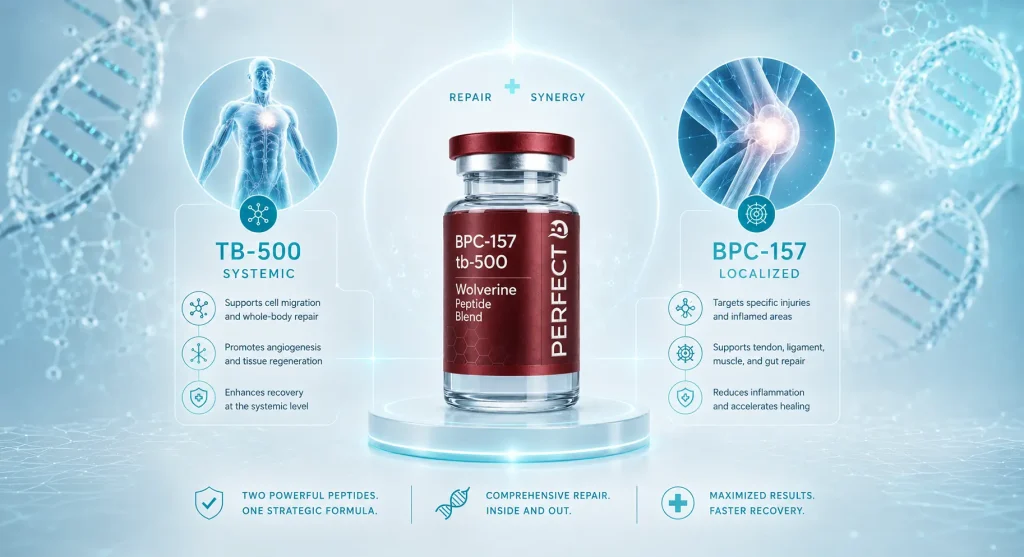
TB-500 is frequently prescribed alongside BPC-157 in what has become widely known as the Wolverine Stack, and the reason is not marketing. The two peptides address tissue repair through complementary mechanisms, and combining them produces faster and more complete healing than either produces alone. TB-500 works systemically: it travels through the entire body and targets injured tissue wherever it finds it. BPC-157 works in a more targeted way: it concentrates its signaling at the specific injury site and promotes localized vascular ingrowth and cellular repair in a focused zone. A patient with a torn tendon in the shoulder benefits from TB-500 addressing the systemic inflammatory environment and BPC-157 driving repair at the specific tear location simultaneously.
At Perfect B, the decision to prescribe them together versus as standalone protocols depends on the patient’s injury profile, the acuity of the damage, and the timeline for recovery. A patient with a single recent injury may respond well to BPC-157 alone. A patient with diffuse or multi-site damage, post-surgical healing needs across multiple tissue types, or chronic systemic inflammation gets the full combination because the systemic reach of TB-500 covers what BPC-157 cannot address on its own. Our complete guide to the Wolverine Stack covers how BPC-157 and TB-500 work as a combination recovery protocol, what patients at Perfect B experience across a full cycle, and how the decision to stack is made clinically. For patients who want to understand BPC-157 in more depth before considering the combination, our standalone guide to BPC-157 explains how this targeted repair peptide works at the injury site and when Perfect B prescribes it as a standalone versus in combination with TB-500.
TB-500 Dosage and Protocol at Perfect B: Loading Phase, Maintenance, and Cycle Length
The dosage protocol at Perfect B is built around a three-month active cycle followed by a two-month break. The progressive ramp through the cycle is intentional: it allows the body to respond to the compound gradually, lets the provider assess tolerance and response before increasing the dose, and avoids the unnecessary load of starting at maximum dosing when the tissue is still in early repair phases.
Month one starts at approximately 6-8 units daily, administered five days on and two days off. The first couple of weeks begin at the lower end of that range, around 6 units, before stepping up to 8 units as the body adapts. Month two increases to 8-10 units daily, again ramping gradually upward through the month. By month three, patients are at 10 units daily, maintained consistently through the end of the cycle. After the two-month break, patients who continue into a second cycle return directly to the month-three maintenance dose rather than restarting the ramp from month one. All injections are subcutaneous, reconstituted with bacteriostatic water, and administered under monitoring with check-ins built into the protocol at Perfect B.
How the TB-500 Dosage Protocol Compares to What You Find Online
The dosage protocols circulating on forums and self-directed research platforms vary widely, often lack the progressive ramp, and are not supervised. The difference between a supervised clinic protocol and a self-directed one is not just about the numbers. It is about having a provider who can assess whether the compound is working, whether the dose is appropriate for the specific injury and patient profile, and whether the response at weeks four and eight warrants continuing, adjusting, or pausing. At Perfect B, that oversight is a structural part of every protocol. The tb-500 dosage that produces consistent results in our South Florida patient population is one that builds progressively and is monitored throughout.
What Patients Notice First: The Recovery Timeline With TB-500
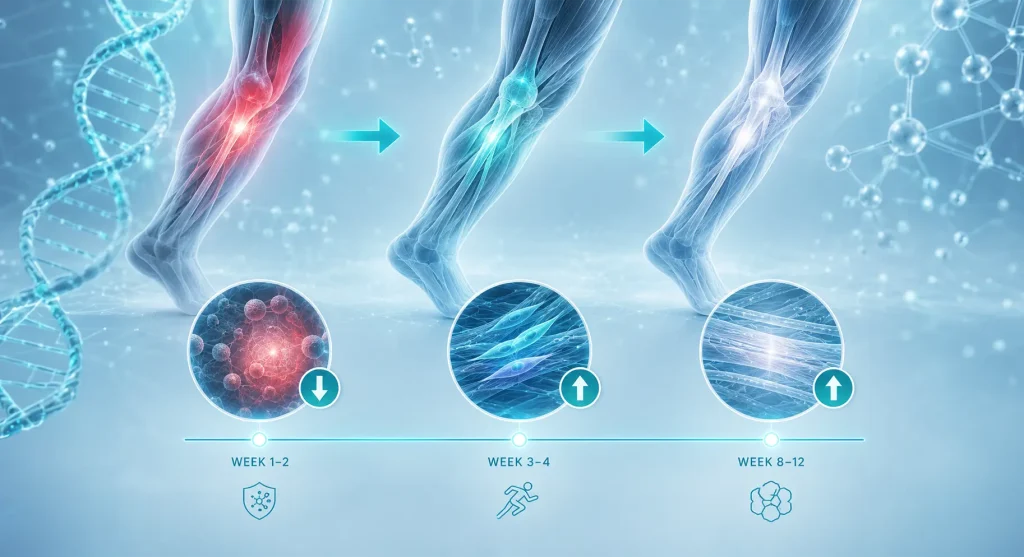
Within the first couple of weeks, patients usually notice less pain and inflammation first. The tb-500 peptide benefits that appear earliest are anti-inflammatory: reduced swelling, less pain at rest and during movement, and improved sleep quality in patients whose injury had been disrupting it. This is consistent across the injury types we see most often at Perfect B, from tendon tears in recreational athletes to post-surgical patients managing inflammation after orthopedic procedures.
Better movement and faster recovery follow as the weeks progress. Range of motion improvements typically become noticeable in weeks three and four as the tissue architecture begins to remodel. By weeks eight to twelve, the structural changes that represent the more durable improvements, the ones that show on imaging when applicable, are visible. Patients in the third month of their protocol often describe the change not just as less pain but as a qualitative shift in how the injured area functions by month three: more fluid movement, faster recovery, and less restriction than before the protocol started. This trajectory, inflammation first and then structural, is what distinguishes a well-run TB-500 protocol from a short-term anti-inflammatory course that produces temporary relief without addressing the underlying repair.
Not sure which peptide protocol fits your goals?
Perfect B’s peptide protocol tool is built on real clinical data from 2,000+ patients treated in South Florida.
Answer 6 questions and see what patients with similar goals are running: which peptides they use, typical dosing, injection schedule, reconstitution steps, cycle length, and when they pause.
Clinic-Grade TB-500 vs. Unregulated Sources: Why the Source Matters
The biggest difference between clinic-grade TB-500 and what circulates online is safety and actual effectiveness. Injectable peptides from licensed compounding pharmacies are sterile and properly dosed. They are third-party tested and only sold to licensed medical providers. The compound that arrives at a patient through Perfect B has a documented chain of custody, confirmed purity, and verified concentration before it is ever prescribed. That is not a marketing claim. It is the regulatory baseline for 503A compounding facilities operating under FDA oversight.
Online or oral versions of TB-500 operate under a different standard entirely. Oral TB-500 is not a clinically valid delivery route: the peptide cannot survive the gastrointestinal tract intact in a way that produces systemic effects comparable to subcutaneous injection. Products sold online without a prescription requirement, through general retail platforms, or without third-party testing documentation are often unreliable in purity, inaccurate in concentration, or in some cases unsafe due to contamination. Patients who arrive at Perfect B having tried unregulated versions typically report inconsistent results, which is expected when the dose is unknown and the compound’s integrity cannot be verified. A supervised protocol from a licensed clinic eliminates those variables entirely. A 2026 report covering the first human trial data on Thymosin Beta-4 in cardiac recovery, confirming the biological mechanisms underlying TB-500’s application in tissue repair through the same angiogenic and cell migration pathways illustrates why understanding the compound’s mechanism matters as much as sourcing it correctly. Athletes competing in sports with active anti-doping programs should note that Thymosin Beta-4 analogs appear on the WADA Prohibited List under S2. For the general patient population seeking medical recovery support, this has no clinical relevance.
Frequently Asked Questions
1. What is TB-500 peptide?
TB-500 is a synthetic fragment of Thymosin Beta-4, a naturally occurring protein found in virtually every human cell. It works by regulating actin polymerization, enabling cells to migrate to injury sites faster, promoting new blood vessel formation, and reducing systemic inflammation. At Perfect B in Doral, FL, we prescribe it as part of a supervised recovery protocol for tendon and ligament injuries, post-surgical healing, and chronic inflammation that has not responded to conventional treatment.
2. What is TB-500 used for?
TB-500 is primarily used for tissue repair and recovery, with the strongest clinical application in tendon and ligament injuries, muscle strains, post-surgical healing, and chronic inflammation. At Perfect B, we prescribe it for recreational athletes with tendon injuries, post-surgical patients, and everyday patients where healing feels slow or surgery alternatives are being explored first.
3. What is the difference between TB-500 and BPC-157?
TB-500 works systemically, traveling through the entire body to find and address injured tissue wherever it is. BPC-157 works more locally, concentrating its signaling at the specific injury site. Perfect B typically prescribes them together as the Wolverine Stack because the combination produces faster and more complete healing than either alone for patients with complex or multi-site injuries.
4. What is the TB-500 dosage protocol at Perfect B?
At Perfect B, the protocol runs three months on and two months off. Month one starts at approximately 6-8 units daily on a five-days-on, two-days-off schedule, ramping gradually. Month two increases to 8-10 units daily. Month three maintains 10 units daily consistently. After the break, continuing patients return to the month-three maintenance dose. All injections are subcutaneous and supervised with provider check-ins.
5. How long does TB-500 take to work?
Most patients notice reduced pain and inflammation within the first one to two weeks. Improved range of motion and faster recovery follow in weeks three and four. Structural tissue remodeling continues through weeks eight to twelve, with objective imaging improvements typically visible at the eight-week mark when applicable.
6. What are the side effects of TB-500?
The tb-500 peptide side effects documented in available research are generally mild and well tolerated. The most commonly reported are mild fatigue or lightheadedness shortly after injection, which typically resolve quickly. Clinic-grade TB-500 from a licensed 503A compounding pharmacy carries a significantly lower risk profile than unregulated sources. At Perfect B, every patient is monitored throughout the protocol and any changes in response are reviewed at provider check-ins.
7. Is TB-500 legal?
TB-500 is legal in the United States when prescribed by a licensed medical provider and dispensed through an FDA-overseen 503A compounding pharmacy. It has not been approved as a standalone drug by the FDA, placing it in the same regulatory category as most research peptides available through compounding under prescriber supervision. Competitive athletes in sports with active anti-doping programs should be aware that Thymosin Beta-4 analogs appear on the WADA Prohibited List under S2. For the general patient population, this has no clinical relevance.
8. What makes Perfect B’s TB-500 different from what you find online?
Clinic-grade TB-500 at Perfect B comes from licensed 503A compounding pharmacies, is sterile, properly dosed, and third-party tested before dispensing. It is only available through licensed medical providers. Online versions sold without a prescription are often unreliable in purity, inaccurate in concentration, or in some cases unsafe due to contamination. Oral TB-500 is not a clinically valid delivery route. A supervised protocol with a progressive dosing ramp and provider monitoring produces outcomes that self-directed use rarely achieves.
The Clinical Takeaway: TB-500 at a Supervised Medical Clinic in Doral, FL
The tb-500 peptide is not a shortcut. It is a clinically researched compound with a defined mechanism, a specific delivery requirement, and a dosing protocol that produces results when it is run correctly under supervision. The patients at Perfect B who see the most consistent outcomes are the ones who come in with a real injury, get a real protocol built around their clinical picture, and follow through on the three-month cycle with provider oversight. That combination, the right compound plus the right protocol plus clinical monitoring, is what separates a peptide that works from one that sits in a drawer after two weeks of inconsistent self-administration.
Not sure which peptide protocol fits your goals?
Perfect B’s peptide protocol tool is built on real clinical data from 2,000+ patients treated in South Florida.
Answer 6 questions and see what patients with similar goals are running: which peptides they use, typical dosing, injection schedule, reconstitution steps, cycle length, and when they pause.
At Perfect B in Doral, FL, we see patients from across Miami, Hialeah, Kendall, and Westchester who are dealing with the full range of soft tissue injuries that the South Florida lifestyle produces. Tennis elbows, golf injuries, post-surgical recoveries, chronic inflammation from years of training without adequate recovery support. The TB-500 protocol is one of the tools we use to address those injuries at the biological level rather than managing symptoms while the clock runs out. Our full peptide therapy program at Perfect B in Doral covers how we evaluate each patient, what the first appointment includes, and how recovery and optimization protocols are structured across the full range of peptide options we prescribe. For patients whose recovery goals also include growth hormone optimization alongside tissue repair, our guide to CJC-1295 with Ipamorelin explains how GH peptides complement recovery-focused protocols like TB-500 and when combining them makes clinical sense.
📍 Visit us at Perfect B, 3905 NW 107th Ave, Suite 104, Doral FL 33178
📞 Call or message us at (786) 502-2260